
Anders Søgaard is a Professor at the University of Copenhagen , affiliated with both the Department of Computer Science and the Department of Communication. His research bridges Natural Language Processing and Machine Learning with a focus on AI ethics , explainability , and human-AI interaction . Primary Affiliation: Department of Computer Science, University of Copenhagen Secondary Affiliation: Department of Communication, University of Copenhagen Email: soegaard@di.ku.dk, soegaard@hum.ku.dk Research Interests His work spans Natural Language Processing , Machine Learning , and AI ethics , with recent studies addressing: Trustworthiness in AI systems Explainable AI (XAI) frameworks Multilingual model fairness and alignment Human-AI collaboration in reasoning tasks Ethical implications of social robots Mental health analytics using ML Recent Publications His 2025 output highlights trends in: AI ethics (e.g., fairness metrics, trustworthy systems) Multilingual model analysis (knowledge retention, cross-lingual transfer) Human-centric AI (gaze data, cultural considerations) Applications in healthcare and social good
جستوجوی استاد و پژوهشگر
استاد راهنما، استاد دانشگاه یا پژوهشگر مناسب برای مسیر پژوهشیتان را پیدا کنید و با او ارتباط بگیرید.
نمایش ۱-۱۵ از ۳۹۹ استاد راهنما
اطلاعات این پروفایلها از صفحات عمومی دانشگاهها جمعآوری شده و ممکن است بهروز نباشد.

Manex Aguirrezabal Zabaleta is an Associate Professor in the Department of Nordic Studies and Linguistics at the University of Copenhagen. He previously held positions as a Postdoc (2017-2019) and Assistant Professor at the same institution. His educational background includes: PhD in Natural Language Processing from the University of the Basque Country (UPV/EHU), conducted at the IXA NLP group. Master's degree in Natural Language Processing from UPV/EHU. Bachelor's degree in Computer Science (5 years) from UPV/EHU. Dr. Aguirrezabal's research focuses on the computational analysis of poetry , particularly stress patterns in English. He explores whether computers can effectively analyze poetic structures, a field with roots in the 1980s but revitalized by modern techniques. Additionally, he investigates language generation , computational morphology and phonology , and finite-state methods . His work bridges traditional linguistic inquiry with cutting-edge natural language processing. Recent publications (2023-2024) demonstrate a diverse engagement with computational linguistics, including poetry generation, multimodal corpus development, clickbait analysis, and fact-checking. His research often employs zero-shot learning and language models, reflecting current trends in AI-driven linguistic analysis. He has contributed to international collaborations such as ParlaMint (multilingual parliamentary corpora) and the GEHM Zoom corpus. While specific grant details are not provided, his active publication record indicates ongoing research support. Dr. Aguirrezabal maintains a strong connection to his Basque heritage, having pursued his early education in the Basque language.

Mikael B. Skov is a Vice Dean and Professor at the Technical Faculty of IT and Design of Aalborg University , Denmark. His research spans human-AI interaction, robotics, and user experience, with a focus on trust signaling in clinical AI, swarm robotics, and sound zones for domestic environments. Role: Vice Dean for Research Department: Computer Science Research Interests: Skov investigates how humans interact with AI and robots in healthcare and domestic settings, emphasizing trust calibration, alert design, and acoustic comfort. His work includes developing frameworks for UX maturity in robotics organizations and studying long-term adoption of sound zone systems. Recent Projects: As principal/co-investigator, he leads the HERD project on human-AI collaboration in robot swarms (2021–2025) and supervises Data og Bæredygtig Mad (2020–2023), an HCI perspective on sustainable food systems. Publications: His 2024 work includes studies on AI explanations in clinical training, music applications with intermittent interactions, and multi-robot supervision. Earlier projects (2001–2020) focused on mobile device usability, UX practices, and context-aware computing.

Mads Albertsen is a Professor in the Department of Chemistry and Life Sciences at the Faculty of Engineering and Science, Aalborg University, Denmark. He leads the Albertsen Lab and is a key member of the Center for Microbial Communities. His research focuses on high-throughput DNA sequencing methods to explore uncultivated microbes and populate the tree of life. He is actively involved in major interdisciplinary projects such as NanoEat , Microflora Danica , and DarkScience , funded by the European Research Council, Villum Foundation, and Poul Due Jensen Foundation. His research interests span metagenomics , long-read sequencing , bioinformatics , microbial ecology , and environmental biotechnology . He develops cutting-edge methods to improve throughput in microbial genome recovery and applies them to diverse areas including wastewater treatment, human microbiome studies, and infectious disease diagnostics. His work has significant implications for public health and sustainability. The recent publications highlight a strong trend in long-read sequencing (Oxford Nanopore), metagenome-assembled genomes (MAGs) , and microbial dark matter . His team has published high-impact papers in Nature , Nature Methods , and Nature Communications , with applications in environmental systems and clinical diagnostics, including SARS-CoV-2 and bloodstream infections. His scientific awards include: The Grundfos Prize (2021) The Fritz Kaufmann Prize (2021) The Rising Star Award by IWA & ISME (2016) Research Result of the Year in Denmark (2015) The Spar Nord Fond Research Prize (2015) Mads Albertsen advises numerous PhD students, leads externally funded research projects, and is involved in technology transfer through his co-founding of DNASense ApS (2014–2020). He also serves on scientific advisory boards and contributes to public policy, including as a member of the Danish SARS-CoV-2 variant risk-assessment group. He teaches courses in Data Science, Bioinformatics, Genomics, and Environmental Microbiology at Aalborg University. His lab, the Albertsen Lab , is part of the Center for Microbial Communities , a leading research center focused on microbial systems biology and environmental applications. The lab collaborates extensively with national and international partners in academia, industry, and public health institutions.
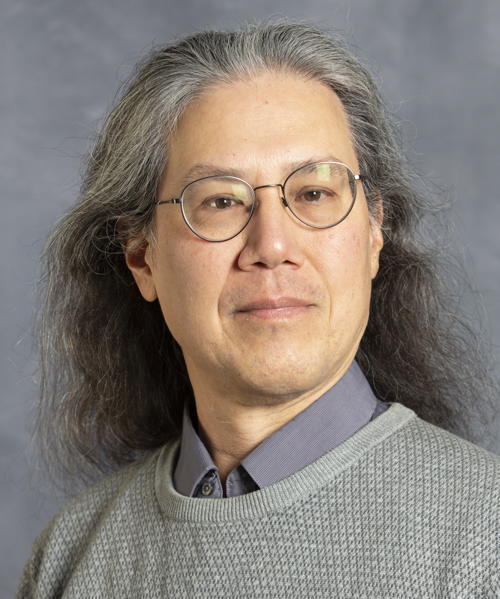
Kevin Crowston is a Distinguished Professor of Information Science at Syracuse University's School of Information Studies (iSchool), where he examines how information technology enables new organizational forms through empirical studies, theoretical modeling, and system design. His work focuses on coordination-intensive processes in virtual settings, with significant contributions to citizen science, data science teamwork, and journalism transformation. Education A.B. in Applied Mathematics (Computer Science), Harvard University, 1984 Ph.D. in Information Technologies, MIT Sloan School of Management, 1991 Research Focus : Crowston investigates coordination mechanisms in human-AI collaboration, particularly through projects like Gravity Spy (combining citizen scientists with machine learning for gravitational wave analysis) and journalism innovation (e.g., ReelFramer for AI-assisted news-to-video translation). His framework addresses how intelligent systems reshape work design, knowledge production, and team dynamics in scientific and media contexts. Publication Trends : Recent articles (2024-2025) reveal three dominant threads: (1) Human-AI co-creation in journalism (deskilling/upskilling dynamics, creative tool adoption), (2) Citizen science evolution with AI (co-learning systems, lexical entrainment), and (3) Socio-technical governance of intelligent machines (control-accountability alignment, project archetypes). These reflect his central inquiry into how technology reconfigures work structures. Scientific Recognition ACM Distinguished Speaker Research Leadership : Crowston currently directs two major NSF initiatives: (1) HCC grant 21-06865 on intelligent support for non-expert information navigation, and (2) FW-HTF grant 21-29047 exploring human-technology collaboration in journalism. He spearheaded a Research Coordination Network establishing socio-technical frameworks for work in the age of intelligent machines, culminating in a special issue of Information, Technology & People . Collaborative Infrastructure : He co-leads the Gravity Spy citizen science ecosystem (integrating LIGO physicists, machine learning systems, and volunteers) and serves as co-editor-in-chief of Information, Technology and People , previously editing ACM Transactions on Social Computing . His MIDST platform research advances stigmergic coordination for data science teams.
Desmond Elliott is an Associate Professor in the Natural Language Processing section at the Department of Computer Science, University of Copenhagen (UCPH). His research focuses on multimodal and multilingual models with specific emphasis on vision-language integration and tokenization-free NLP approaches. He teaches Bachelor and Master's level courses including Advanced Topics in Natural Language Processing (since 2019), Grundlæggende Data Science (since 2023), and previously Data Science (2021-2023). His research interests center on building and understanding multimodal and multilingual models , particularly exploring vision and language interactions through billion-parameter systems. Current work investigates cultural representation disparities in vision-language models, parameter-efficient captioning, and multimodal distributional semantics across diverse domains including food culture and medical imaging. His methodology emphasizes real-world applicability in non-English contexts and ethical considerations in multimodal systems. Elliott's recent publications (2025) demonstrate leadership in multimodal NLP, with significant contributions to vision-language pretraining, multilingual evaluation frameworks, and clinical NLP applications. His work spans theoretical advancements in model architectures and practical implementations addressing challenges in low-resource languages and domain adaptation. Best Long Paper Award at EMNLP 2021 Best Poster Award at COLING 2019 As an active educator, Elliott contributes to courses on Fair and Transparent Machine Learning and previously taught Information Retrieval. His research collaborations span international institutions with particular focus on European and non-English language contexts, reflecting UCPH's recognition as Europe's #1 institution for HCI research over the past decade.

- Geoarchaeology
- Soil Science
- Groundwater
- +۷ مورد دیگر
Søren Munch Kristiansen is an Associate Professor in the Department of Geoscience at Aarhus University, Faculty of Natural Sciences. His interdisciplinary research bridges geoscience and archaeology, focusing on the complex interactions between soil, water, and human societies across time. He is actively engaged in transdisciplinary projects involving geoarchaeology, groundwater, and public health. Research Interests: His work centers on how soil and groundwater have shaped human prehistory and continue to influence modern life. Key areas include safe drinking water from a lifelong perspective, geoarchaeological prospection, Viking Age settlements, and the application of geophysical and geochemical methods in archaeological contexts. He is particularly interested in novel, interdisciplinary methodologies. Recent Research Trends: His recent publications reveal a strong focus on integrating geophysical data (e.g., GPR, borehole databases) with archaeological interpretation, especially in 3D urban modeling and landscape change. Themes include Viking Age sites, interglacial deposits, and anthropogenic soil modifications. His work increasingly employs machine learning and large-scale data synthesis. Scientific Awards: No awards mentioned in the provided text. Advising and Grants: While specific students are not listed, he leads and participates in multiple funded research projects, indicating an active supervisory role. His grants span from 2016 to 2024, including projects like TITAN, SAGA, and 'Fingerprinting displaced molecular substances,' highlighting sustained funding and leadership in interdisciplinary geoscience-archaeology research. Labs and Teams: He is involved in collaborative networks such as the Soil Science & Archaeo-geophysics Alliance (SAGA), suggesting leadership in interdisciplinary research teams. His work often involves multi-proxy analyses and international collaborations, particularly in Scandinavian archaeological geophysics.

- Theoretical Biophysics
- Complex Systems
- Chaos
- +۶ مورد دیگر
Kunihiko Kaneko is a Professor at the Niels Bohr Institute, University of Copenhagen, with a distinguished career in theoretical biophysics and complex systems. He received his PhD and MSc in Physics from the University of Tokyo, and has held leadership roles at the Universal Biology Institute and Center for Complex Systems Biology. PhD Physics, 1984 - University of Tokyo MSc Physics, 1981 - University of Tokyo His research spans five primary areas: Universal Biology, Evolutionary Constraints, Ecosystem Dynamics, Neural Cognition, and Universal Anthropology. He has published extensively on multi-level consistency principles, dimensional reduction in biological systems, and reciprocity between robustness and plasticity across scales. Recent publications show strong focus on microbial ecosystems (2025), evolutionary game theory (2025), neural modular architectures (2024), and dimensional reduction in cellular systems (2024). His work bridges physics and biology through dynamical systems theory applied to diverse phenomena from protocells to human societies.

James A. Evans is the Max Palevsky Professor of Sociology and Data Science at the University of Chicago, where he is a faculty member in the Department of Sociology within the Division of the Social Sciences. He is the director of Knowledge Lab and the Faculty Director of the Masters Program in Computational Social Science . He holds additional affiliations as an External Professor at the Santa Fe Institute , External Faculty at the Complexity Science Hub, Vienna , and Visiting Faculty Researcher at Google . Education: B.A. in Anthropology, Brigham Young University (1994) M.A. in Sociology, Stanford University (1999) Ph.D. in Sociology, Stanford University (2004) His research centers on the collective system of thinking and knowing , exploring how ideas emerge, spread, and evolve through social and technical systems. He investigates innovation, collective intelligence, and the science of science , using large-scale data modeling, machine learning, generative AI, and network analysis to study knowledge creation. His work spans domains including science, technology, law, and religion, with a focus on how AI is reshaping discovery processes. The most recent publications highlight trends in AI and scientific discovery , with a strong emphasis on innovation, knowledge systems, and human-machine intelligence . His research increasingly explores AI as a transformative agent in science , including the concept of 'alien intelligence' and the development of complementary AI to augment human capacity. Projects like the $20M NSF-funded APTO initiative aim to build language models that predict technological outcomes by analyzing historical data. Scientific Recognition and Funding: Research supported by the National Science Foundation (NSF) , National Institutes of Health (NIH) , Air Force Office of Scientific Research (AFOSR) , and philanthropic sources Work published in Nature, Science, PNAS , and leading social science journals Featured in The New York Times, The Economist, The Atlantic, Wired, NPR, BBC, Le Monde , and others James Evans advises on science policy and funding strategies, emphasizing the importance of diversity, interdisciplinary collaboration, and demographic balance in fostering innovation. He critiques current academic incentives and proposes alternative discovery regimes. He leads Knowledge Lab , a collaborative research environment that conducts seminars, grants, and employment opportunities in computational social science and AI.
Hasti Seifiمشاهده پروفایل
دانشیار
Hasti Seifi is an Affiliated Associate Professor at the Department of Computer Science (DIKU), University of Copenhagen, specializing in Human-Centred Computing. Her research focuses on haptics, augmented reality, and human-robot interaction. Institution: University of Copenhagen Department: Department of Computer Science Section: Human-Centred Computing Research interests include: Designing innovative haptic feedback systems Exploring tactile experiences in augmented reality Developing human-robot interaction frameworks Creating generative models for haptic design Investigating social touch technologies Advancing mid-air and ultrasound haptic interfaces Recent publications demonstrate a strong focus on: Generative haptic modeling for AR/XR systems Human-robot interaction dynamics Text input in extended reality environments Visual-haptic multisensory integration Ultrasound mid-air haptic design tools Social touch technologies
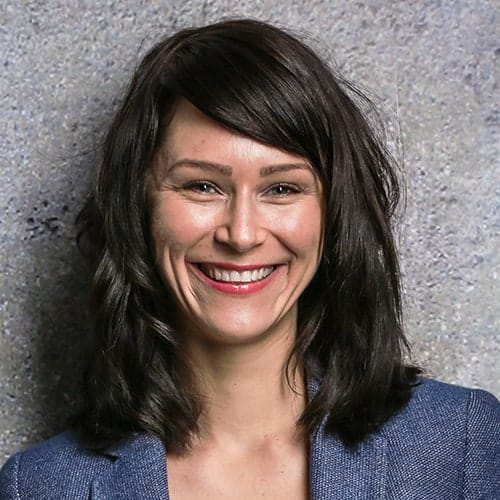
Claudia Wagner is a full professor for Applied Computational Social Sciences at RWTH Aachen University and the Scientific Director of the Computational Social Science department at GESIS—Leibniz Institute for the Social Sciences. She is also an External Faculty member at the Complexity Science Hub Vienna. Her work bridges computer science and the social sciences to study algorithmic systems and their societal impacts. Her research focuses on socio-technical phenomena such as inequality, sexism, and perception bias in algorithmically infused societies. She investigates methodological challenges in using digital behavioral data to study human behavior, attitudes, and group dynamics. Her interests span computational social science, algorithmic fairness, network science, and AI ethics. The analysis of her recent publications reveals a strong emphasis on bias, fairness, and methodological rigor in digital data analysis. Her work spans AI psychometrics, gender inequality in online platforms, and validation frameworks for digital traces. She frequently publishes in top-tier venues such as Nature , Science , and AAAI conferences. DOC-fFORTE fellowship from the Austrian Academy of Sciences Four best paper awards at international conferences (ICWSM, CSCW, WWW, AAAI) Associate Editor, EPJ Data Science Steering Committee Member, International AAAI Conference on Web and Social Media Board Member, International Society for Computational Social Science Claudia Wagner has led and co-led substantial research projects funded by national and international agencies. She mentors a diverse group of PhD students working on topics like algorithmic bias, data quality, and dehumanization. She has organized training events such as the CSS Methods Summer School and delivered keynotes globally on inequality and computational social science. She leads the Computational Social Science department at GESIS and collaborates with interdisciplinary teams at RWTH Aachen and the Complexity Science Hub. Her group develops tools for measuring algorithmic impacts and visualizing disparities in socio-technical systems, such as the 'Planets of Disparity' dashboard.

Daniel Hershcovichمشاهده پروفایل
استادیار
Daniel Hershcovich is a Tenure Track Assistant Professor at the Department of Computer Science (Faculty of Science, University of Copenhagen) specializing in Natural Language Processing and Machine Learning . His research focuses on cross-cultural adaptation of language models, integrating human values into AI, and analyzing food-related cultural narratives for sustainable diets. Education: Ph.D. in Computational Neuroscience from Hebrew University of Jerusalem B.Sc. in Mathematics and Computer Science from Open University of Israel Recent publications highlight his work on multimodal models (haptic captioning, visual assistants for the blind), historical text analysis (Danish/Norwegian literature, euphemism detection), and cross-cultural NLP (recipe adaptation, cultural value alignment, climate awareness). His projects frequently combine AI ethics with domain-specific applications like food studies, historical linguistics, and accessibility research. Key collaborative networks include institutions in Denmark, Israel, and international partnerships through conferences like ACL, EMNLP, and workshops on cross-cultural NLP. The NLP section at DIKU serves as his primary affiliation for these efforts.
- Complex Systems
- Network Science
- Multilayer Networks
- +۱۲ مورد دیگر
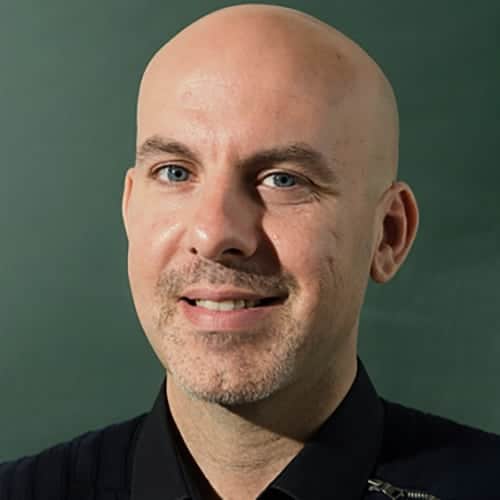
Alex Arenas is a Full Professor in the Department of Computer Engineering and Mathematics at Universitat Rovira i Virgili (URV), Tarragona, Spain. He is also an External Faculty member at the Complexity Science Hub in Vienna and Chief of Complex Systems Science at the Pacific Northwest National Laboratory, USA. His research spans complex systems, network science, computational epidemiology, and multilayer dynamics, with applications in public health, neuroscience, and social systems. Research Interests: His work focuses on the physics of multilayer networked systems, particularly the interplay between structure and function in complex networks. Key areas include synchronization, epidemic modeling, network medicine, the physics of the microbiome, and higher-order interactions in spreading processes. He investigates dynamic transitions using functional multilayer frameworks and develops models for real-world systems like urban mobility and misinformation diffusion. The recent articles highlight a strong trend in computational epidemiology, especially post-COVID modeling of vaccination strategies, rebound dynamics, and wastewater surveillance. There is also significant work on synchronization in oscillator networks, chimera states, and higher-order network effects, reflecting a deep engagement with nonlinear dynamics and theoretical network science. Applications span medicine, urban planning, and social systems. Scientific Awards: Fellow, American Physical Society (2018) Fellow, Network Science Society (2020) ICREA Academia (2011, 2017, 2022) Narcís Monturiol Medal (2022) Web Science Trust Test of Time Award (2024) Complex Systems Society Senior Award (2024) Advising and Grants: Arenas has supervised numerous PhD students and postdoctoral researchers, though specific names are not listed. He has been Principal Investigator on 47 research projects, including EU FP7 projects, a James S. McDonnell Foundation grant, and Horizon Europe's CREXDATA project. He has served as an editor for Physical Review E , Journal of Complex Networks , and Network Neuroscience , and has reviewed for major funding agencies including ERC, MINECO, and international bodies. Labs and Teams: He leads the Alephsys Lab at URV, which develops tools like Radatools for network analysis and community detection. His team focuses on interdisciplinary modeling of real-world complex systems using data-driven and theoretical approaches.

Andrea Burattin is an Associate Professor at the Department of Applied Mathematics and Computer Science, Technical University of Denmark. His work bridges formal methods and practical process analysis, focusing on process mining, business process management, and hybrid modeling techniques. He actively contributes to research in healthcare process optimization, streaming data analysis, and system verification through Petri nets and CCS transformations. UN Sustainable Development Goals: Poverty eradication, environmental protection, and prosperity for all (via process optimization) Active projects: Immersive Process Mining (2024-2027), Usability and Understandability of Hybrid Process Models (2018-2021) His research explores large language model integration with process mining, proposing frameworks like Tiramisù for multi-faceted process visualization and PN2CCS for formal model translation. Recent work emphasizes real-time monitoring, conformance checking, and IoT-driven process analytics. Key trends in his publications include: 1) Streaming process mining pipelines (2022-2025); 2) LLM-plan generation frameworks (2024); 3) Formal verification techniques (Petri nets, CCS); 4) Healthcare process modeling (2019-2023); 5) Behavioral pattern analysis in process compliance. Scientific Awards Best Demo Award (2022, 2016) Best Process Mining Dissertation Award (2014) Best Workshop Paper (EDBA and PODS4H, 2023) As advisor, he supervises PhD projects on process mining and hybrid modeling. His editorial roles include Information Systems reviewer (2024-2025) and past editor for Engineering Applications of AI (2022-2023). Collaborations span Denmark, Italy, and the Netherlands.
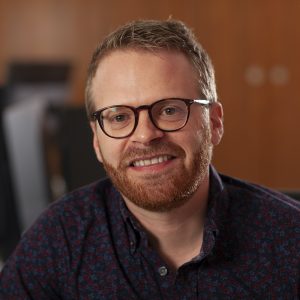
Sebastian Risi is a Professor at the IT University of Copenhagen , where he directs the Creative AI Lab and co-directs the Robotics, Evolution and Art Lab (REAL) . His work bridges computational evolution, deep learning, and collective intelligence for applications in robotics, art, and video game design. His research focuses on self-organizing AI systems that grow or assemble through local interactions, inspired by biological development. Key areas include neuroevolution , neural cellular automata , and generative modeling , with applications in adaptive robotics, game content creation, and damage-resilient AI. Recent publications highlight trends in self-assembling neural architectures (NDPs) and 3D functional machine generation (Minecraft experiments). Awards include ERC Consolidator Grant (2022), Best Paper at FDG’21 , and Google Faculty Award (2019). Scientific Awards : ERC Consolidator Grant (GROW-AI), Best Paper FDG’21, Runner-Up IEEE Games’20, GECCO 2017 Competition Winner, Sapere Aude Grant, Amazon/Google Faculty Awards He advises on projects like GROW-AI (EU-funded), AI-TESTER (game testing), and C2SIM (military systems). Media coverage includes Science , Wired , and Popular Science .