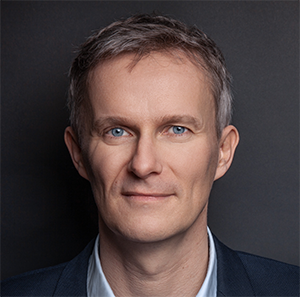
Dr. Christos Papavassiliou is an Associate Professor in the Department of Electrical and Electronic Engineering at Imperial College London, part of the Faculty of Engineering. His research focuses on instrumentation electronics, memristor modeling, signal integrity, and novel device technologies such as SiGe devices, RF MEMS, and ReRAM. He leads the Space Lab and collaborates with the National Centre for Scientific Research in Athens. He holds senior membership in IEEE and is a member of the IET. Education: Ph.D. in Applied Physics, Yale University (1983–1989) MPhil in Applied Physics, Yale University (1983–1988) MS in Applied Physics, Yale University (1983–1985) B.S. in Physics, MIT (1979–1983) Research Interests: Memristor-based neuromorphic computing and stochastic systems High-performance instrumentation hardware and data acquisition Multi-state memristive memory and selectorless arrays Integration of memristors with CMOS for hybrid circuits Applications in biomedical wearables and edge AI deployment Key Contributions: Developed novel memristor models for circuit simulation Pioneered work on memristor-based true random number generators Advanced understanding of resistive drift and energy-constrained storage Designed FPGA-based systems for analog circuit emulation Labs & Teams: Active in the Space Lab at Imperial College, focusing on interdisciplinary research in electronics and space applications.
Yuntian Deng is an Assistant Professor at the University of Waterloo and a Visiting Professor at NVIDIA. He holds affiliations with Harvard SEAS as an Associate and the Vector Institute as a Faculty Affiliate. He completed his PhD in Computer Science at Harvard under Professors Alexander Rush and Stuart Shieber, followed by a postdoc under Yejin Choi. His research focuses on Natural Language Processing and Machine Learning, with notable contributions in chatbot interaction analysis (WildChat), implicit reasoning models, and markup-to-image generation. He has developed influential tools like OpenNMT and WildVis, and his work has been featured in outlets like the Washington Post and used by OpenAI and Anthropic. Education: PhD in CS (Harvard), Postdoctoral Research (University of Washington). Key achievements include the ACM Gordon Bell Prize for GenSLMs, Best Demo Runner-up at ACL 2017, and Best Paper at DAC 2020. His research emphasizes scalable datasets, efficient reasoning techniques, and real-world applications of AI models. Research interests span NLP, machine learning algorithms, and their applications in areas like dialogue systems, generative models, and ethical AI evaluation. Notable projects include WildChat (1M ChatGPT interactions), implicit chain-of-thought reasoning, and neural steganography for text-based information hiding. His articles explore topics ranging from knowledge distillation to diffusion models, with a focus on bridging theoretical advancements and practical implementations. He actively collaborates with industry partners like NVIDIA and maintains open-source tools to advance AI research accessibility.
Sara Martín Alegre is a Professor in the Department of English and German Studies at the Autonomous University of Barcelona (UAB). She specializes in Gender Studies, Science Fiction, and Cultural Analysis, with a focus on posthumanism and masculinity in media. Her research explores themes such as gender fluidity, AI ethics, and the intersection of popular culture with academic discourse. She has directed numerous research projects and supervised doctoral theses, including works on human-eating monsters in film and transhumanism in literature. Her teaching includes courses on contemporary Anglophone literature, gender studies, and Victorian literature. She actively collaborates in publishing initiatives, such as e-books with students and academic monographs on topics like masculinities in cinema and science fiction. Her work bridges traditional literary analysis with modern digital humanities, emphasizing the role of popular fiction in academic exploration. Award-winning scholar and author, her contributions include monographs like *Detrás de la máscara: masculinidades americanas en el documental contemporáneo* (2023) and edited volumes on topics ranging from children in cinema to 21st-century miniseries. Her research highlights the sociopolitical implications of gender representation in media, from Shakespearean adaptations to modern science fiction narratives.
Jason Nelson is a Professor of Digital Culture in the Department of Linguistic, Literary and Aesthetic Studies at the University of Bergen, Norway. He is a creator of digital poems and fictions, builder of surrealist and politically focused art games and digital creatures. His work is exhibited widely in galleries and journals around the globe at FILE, ACM, LEA, ISEA, SIGGRAPH, ELO and numerous other venues. Nelson serves on organizational boards including the Australia Council Literature Board and the Electronic Literature Organization. Nelson's research focuses on the intersection of digital technology, creative writing, and artistic expression. He explores how AI and machine learning can be harnessed for creative purposes, developing new forms of digital literature and interactive art. His work often involves building expansive visual worlds through collaborative AI processes, creating interactive digital poetry, and developing novel approaches to digital narrative. Nelson's research spans digital humanities, electronic literature, AI-generated art, and interactive media, with particular emphasis on how these technologies transform creative processes and experiences. Over the past decade, Nelson's work has increasingly focused on the creative potential of AI technologies, especially in the areas of text-to-image generation and multimodal authorship. His projects often blend game engines with poetic expression, creating immersive experiences that challenge traditional boundaries between human and machine creativity. Recent works explore themes of multispecies futures, time perception, and the transformation of physical spaces through augmented reality. Nelson has received numerous scientific awards and fellowships including: Fulbright Fellowship at the University of Bergen Moore Fellowship at the National University of Ireland Winner of the Digital Writing Prize, Queensland Literary Awards (15,000 AUD) Winner of the Woollahra Library Digital Poetry Prize (5,000 AUD) Runner-Up Prize at the Videomedeja digital art exhibition Finalist for the Turn-on Literature Prize Finalist for the Queensland Literary Awards, Digital Writing Category Multiple finalist nominations for the New Media Writing Prize Nelson actively participates in academic advising and has secured significant research funding, including a 125,000 AUD grant from the Australia Council of the Arts, Literature Board for his project "Cube Cryptext and Nomencluster," which was recognized as the world's largest interactive art-game. His work "Nine Billion Branches" received multiple awards including the Digital Writing Prize from the Queensland Literary Awards. He has also received a 75,000 NOK grant for the "Flood Mosaic Artwork" project featured in the Floodlines Exhibition at the State Library of Queensland. Nelson is affiliated with the Center for Digital Narrative at the University of Bergen, where he collaborates with researchers like Scott Robert Rettberg and Alinta Krauth. Together they form EphemerLab, exploring new creative processes that move beyond simple "ask and generate" AI methods. Their work involves stitching together hundreds of individual image fragments and components into cohesive visual and narrative concepts, pushing the boundaries of what's possible with current AI technologies.
Bruce A. Maxwell is a Teaching Professor and Assistant Director of Computing Programs at Northeastern University’s Seattle Campus, following roles as Chair of the Computer Science (CS) Department at Colby College (2013–2020) and leadership in establishing the Khoury College MS CS Align Program at the Roux Institute (2020–2022). His academic journey includes affiliations with Northeastern’s Seattle Campus and ongoing collaboration with Colby CS as a research scientist. He specializes in Computer Vision, Robotics, Computer Graphics, Game Design, and Data Analysis, with notable contributions to concussion management research through the Maine Concussion Management Initiative (MCMI), focusing on sports-related injury analysis and symptom monitoring. His research spans over two decades, with significant work in human-robot interaction, autonomous systems, and educational technology. Notable projects include developing tools for real-time shadow removal in autonomous driving contexts and analyzing cognitive outcomes in student-athletes post-concussion. Maxwell has authored over 50 peer-reviewed publications, emphasizing interdisciplinary approaches bridging computer science, sports medicine, and educational policy. Teaching innovations include integrating thematic elements (e.g., Lord of the Rings) into CS1 coursework and advocating for writing in computer science curricula. He maintains active roles in academic service, including SIGCSE conference contributions and panel discussions on gender equity in tech education. Education: Ph.D. in Robotics from Carnegie Mellon University (1996), M.Phil. in Engineering from Cambridge University (1993). Awards: Recognized for pedagogical contributions but no named awards listed in provided materials. Labs/Teams: Collaborates with the Maine Concussion Management Initiative and Khoury College’s Align Program team.
Humphrey Southall is Professor of Historical Geography at the University of Portsmouth, affiliated with the Faculty of Science & Health and the School of the Environment and Life Sciences. He has been a key figure in advancing digital historical geography through large-scale projects such as A Vision of Britain through Time and the Great Britain Historical GIS . University: University of Portsmouth Faculty: Faculty of Science & Health Department: School of the Environment and Life Sciences Academic Rank: Professor Education: Bachelor's Degree, University of Cambridge (1976) Special Student, Harvard University (1976–1977) PhD, University of Cambridge (awarded 1984) Humphrey Southall's research centers on historical geography, with a focus on geospatial data modeling, gazetteers, and historical GIS. His work explores the long-term impacts of locality on health inequalities, the North-South divide in Britain, and the political roles of travellers. He has pioneered methods for disambiguating historical place names and constructing digital gazetteers from old maps and census data. His interdisciplinary approach bridges geography, history, and data science, contributing to digital humanities and sustainable development goals related to health and inequality. His recent publications reveal a strong trend toward integrating historical data with modern GIS and ontologies. Themes include electoral analysis (e.g., Reform UK), climate-land use interactions, and the digitization of historical statistics. His work emphasizes data accessibility, public engagement, and the application of historical insights to contemporary policy challenges. Scientific Awards and Recognition: No specific awards listed in the provided text. Humphrey Southall has secured major research grants from the ESRC, AHRC, JISC, and the European Commission. He leads the DDME: Data Discovery Made Easy project, applying machine learning to social science databases. He has supervised PhD students and actively collaborates with researchers across disciplines. His public engagement includes media commentary on homelessness, air pollution, and elections via The Conversation and national press. Labs and Research Teams: Lead Principal Investigator, A Vision of Britain through Time (VoB) Lead, Great Britain Historical GIS (GBHGIS) Team Member, PastPlace and AOU Resources as a Pelagios GIF Resource Collaborator with Patrick Aucott, Chris Thomas, and others on biodiversity and health projects
James C. Kaufman is a Professor of Educational Psychology at the University of Connecticut. He holds a Ph.D. in Cognitive Psychology from Yale University (2001). His research focuses on creativity, including assessment, meaning-making, social justice applications, and interdisciplinary domains. Notable contributions include the Four-C Model of Creativity and co-founding journals like Psychology of Aesthetics, Creativity, and the Arts . He has authored over 50 books and 300 papers, including foundational works like Cambridge Handbook of Creativity . Education: Ph.D., Cognitive Psychology, Yale University, 2001. Research Interests: Creativity Assessment, Creativity and Meaning, Creativity & Social Equity, and Cross-Domain Creativity Applications. His work bridges psychological theory with practical educational strategies. Awards: Mensa Research Award, Torrance Award (NAGC), APA Berlyne & Farnsworth Awards, and leadership in APA Division 10. Advising & Collaborations: Advised students like K. Arrington and C. Connery. Active in mentoring through co-authored research. Collaborates globally on creativity measurement tools like the K-DOCS. Labs/Teams: Leads research teams at UConn focusing on creativity’s societal impact, including pandemic-related studies on creativity and well-being during crises.
Yu Huang is an Assistant Professor of Computer Science at Vanderbilt University with a secondary appointment in the Department of Teaching and Learning at the Peabody School of Education. She is affiliated with the Institute for Software Integrated Systems, the Frist Center for Autism and Innovation, the Vanderbilt Lab for Immersive AI Translation (VALIANT), and the Vanderbilt LIVE Learning Innovation Incubator. Her research focuses on human-centered AI for software engineering, combining human cognition with machine intelligence to enhance software development processes. Educated at the University of Michigan (PhD, 2021), University of Virginia (MS, 2015), and Harbin Institute of Technology (BS, 2011), her work spans software engineering, human factors, AI, and medical imaging. Key projects include the MIND Lab, studying programmer expertise and cognitive processes, and the HumanAISE workshop on Human-Centered AI for Software Engineering. Huang has received significant recognition, including the 2025 ICPC Vaclav Rajlich Early Career Achievement Award and three ACM SIGSOFT Distinguished Paper Awards. Her research is supported by NSF, GitHub, and Vanderbilt initiatives. She advises numerous graduate and undergraduate students, emphasizing diversity and innovation in programming education.
Katy Ilonka Gero is a Lecturer at the University of Sydney's School of Computer Science, with a PhD in Computer Science from Columbia University (2022). She holds a BSc in Mechanical Engineering from MIT, where she received the Carl G. Sontheimer Prize for Excellence in Innovation and Creativity. Education : BSc (MIT), PhD (Columbia) Her research focuses on Human-Computer Interaction , Creative Writing , and AI Ethics , particularly examining how language models impact writing processes, ownership, and agency. She advocates for community-driven language models trained on consensual data and explores technical innovations for personalized AI tools. Recent publications span language model ethics (Nature Machine Intelligence 2023), generative AI (CHI 2025 Best Paper), and creative collaboration (CHI 2023). Key trends include user-centered AI design , creative ownership , and data ethics . Scientific Awards : NSF Graduate Research Fellowship, Brown Institute for Media Innovation, Amazon Research Award, CHI Best Paper (2025), CHI Honorable Mention (2024) As co-founder of Ensemble Park and former taper editor, she bridges computational poetry and traditional literary practices. Her work at startups Rest Devices and Soofa demonstrates technical innovation in consumer and urban tech.
Monideepa Tarafdar is the Charles J. Dockendorff Endowed Professor of Information Systems at the Isenberg School of Management, University of Massachusetts Amherst. She holds a PhD in Management from the Indian Institute of Management Calcutta, specializing in Information Systems and Strategy. Her research focuses on technostress, AI ethics, and the societal impacts of digital technologies. She has held academic roles at Lancaster University and the University of Toledo, and visiting positions at MIT Sloan and LSE. A world-leading scholar, she was named AIS Fellow (2024) and featured in Stanford’s Top 2% Cited Scientists (2024). Her work examines technostress creators like overload, complexity, and invasion, offering coping strategies such as proactive reorientation and organizational support. She studies AI’s role in hiring bias, social media addiction, and gig economy well-being. As Editor-in-Chief of the Journal of AIS and coordinator of Isenberg’s PhD program, she drives interdisciplinary research in IS. Key achievements include over 120 papers, mentorship accolades, and grants addressing ICT-enabled inclusion and algorithmic transparency. Recent awards include the AIS Best Publication Award (2022), multiple Research Excellence Awards, and recognition for her impactful work on workplace resilience. She advises organizations on managing technostress and serves as a scientific advisor to Unplug (Dublin). Her current projects explore gender bias in job ads and the sociotechnical dimensions of climate change discourse.
Margherita Pagani is a Full Professor and Director of the SKEMA Centre for Artificial Intelligence at SKEMA Business School in Paris. She holds a Ph.D. in Management and an HDR (Habilitation à Diriger des Recherches). Her roles include Research Affiliate at UC Berkeley’s APEC Study Center and Advisor to the European Economic Social Committee (EESC) on virtual worlds and the Metaverse. Previously, she founded and led the MSc in Digital Marketing & Data Science and the AIM Research Center at emlyon business school. She has held visiting roles at MIT, UCLA, Georgetown, NUS, and Redlands University. Education: Ph.D. (2015, Lyon), HDR (2016, Évry), MSc (1995, Bocconi), MIT Certifications (2005-2006). Research: Focuses on AI in consumer engagement, digital ecosystems, robotics in services, and metaverse applications. Over 130 publications in journals like MIS Quarterly, MIT Sloan Management Review, and Harvard Business Review. Awards: 2023 International Marketing Trends Award, 2022/2023 Top 2% Cited Scientist (Elsevier), 2009 Mobile Marketing Academic of the Year. Her work bridges AI and marketing creativity, emphasizing human-centric systems. She leads initiatives like the SKEMA AI School and organizes conferences on ethics, AI in education, and service recovery. Active in editorial roles for journals like Micro & Macro Marketing and Industrial Marketing Management . Key affiliations include the Association Française de Marketing and involvement in policy initiatives. Supervised over a dozen PhD students, focusing on AI applications in marketing and entrepreneurship.
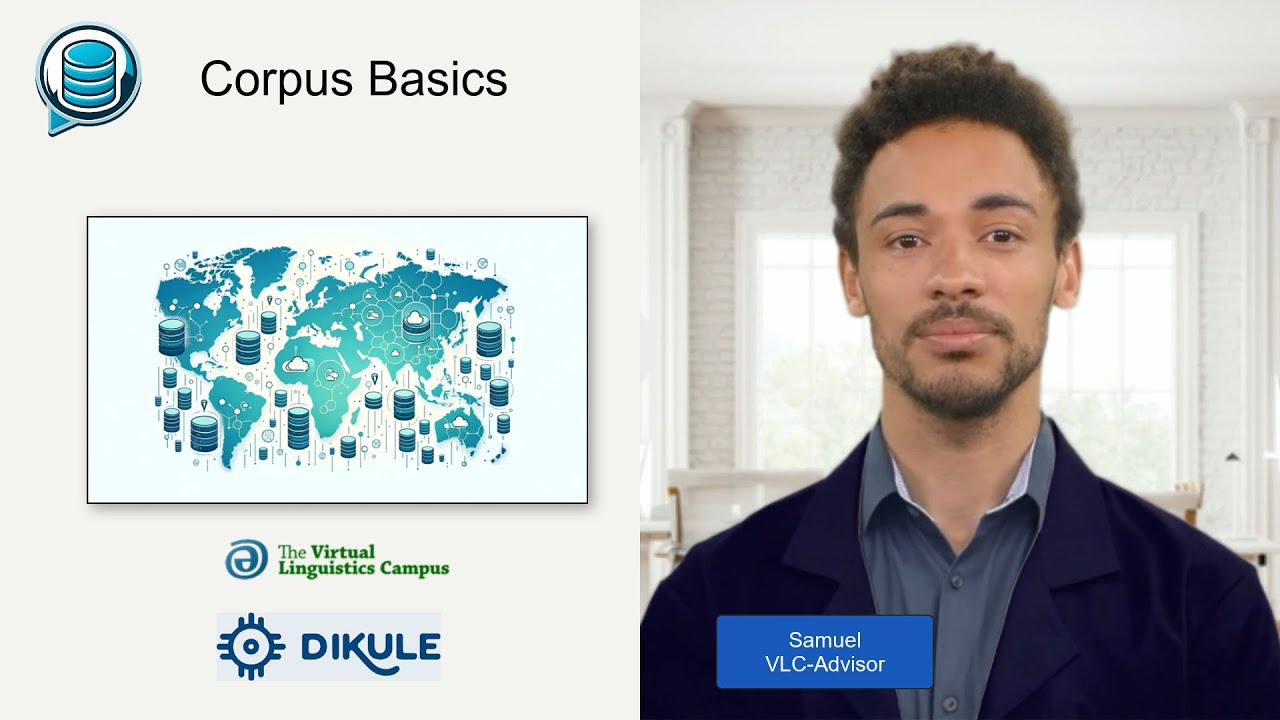
Professor Julia Schlüter is a distinguished academic in the Chair of English Linguistics within the Humanities Faculty at the University of Bamberg, Germany. She has served as Senior Lecturer at the Chair of English Linguistics and Language History under Prof. Manfred Krug since June 2008, holding the title of Professor following her habilitation in 2008. Her institutional profile demonstrates deep commitment to both research and teaching innovation, particularly through her leadership of the KorPLUS project and development of open educational resources for corpus linguistics. Her research interests span corpus linguistics for English language learners, empirical methods for studying language variation and change, and the application of corpus methods to teaching. She specializes in examining grammatical, phonological, and lexical differences between British and American English across historical periods from Middle English to present-day usage. Her work investigates phonological variation (particularly phonotactically controlled alternations), morphological change, and syntactic variation through corpus analysis, with special attention to functional grammar and grammaticalization theory. Professor Schlüter's recent publications (2022-2025) reveal a strategic evolution in her research focus, with increasing emphasis on the intersection of corpus linguistics and digital education. While maintaining her foundational work in historical English linguistics, she has developed significant expertise in applying corpus methods to language teacher education and evaluating AI writing tools. Her work demonstrates consistent methodological innovation, moving from traditional corpus analysis to blended learning approaches and digital educational resource development. Her scientific recognition includes: Winner of the 2025 Teaching Innovation Prize from the International Society for the Linguistics of English for the KorPLUS project University of Bamberg Prize for outstanding habilitation (2009) Lise Meitner Programme post-doctoral scholarship (2005-2006) Rectorate Prize from University of Paderborn for outstanding Ph.D. thesis (2005) Multiple DAAD scholarships for international study Professor Schlüter actively supervises doctoral research, currently guiding three Ph.D. candidates (Katharina Deckert, Aklima Nahar, and Nikolai Beland) while having successfully completed supervision for several others. She leads the KorPLUS project (2021-2025), funded by the Stiftung Innovation in der Hochschullehre, which develops open educational resources for corpus linguistics. Her research has been consistently supported by the German Research Foundation (DFG) and other funding bodies throughout her career. She heads the KorPLUS team (with Carina Großmann and Katharina Deckert) which develops the interactive Open Educational Resource platform for corpus linguistics. Her YouTube channel offers video tutorials on corpus basics, and she has created the Video Podcast Series "How to Update your Grammar" for English teachers. She regularly organizes in-service teacher trainings and collaborates with the Virtual Linguistics Campus at RWTH Aachen University to deliver her educational materials globally.
Susanne Narciss is a Professor at the Psychology of Learning and Instruction department of Technische Universität Dresden, leading the Center of Tactile Internet with Human in the Loop (CeTI). Her research focuses on error processing in educational contexts, with 15 recent publications analyzing error climates, feedback strategies, and motivational frameworks. Key Research Areas : Learning from errors/failure, instructional feedback design, affective-motivational responses, error-related metacognition. Methodological Scope : Combines longitudinal studies, experimental designs, and qualitative analyses across K-12, university, and informal learning settings (museums, home contexts). Her work emphasizes context-specific interventions for educators, parents, and students, including error-competency training programs and metacognitive scaffolding tools. Current projects examine vibrotactile feedback systems for motor learning and cultural responsiveness in psychology education. Collaborative Networks : Works with international teams on the International Competences for Undergraduate Psychology model and cyber-physical system pedagogy. Recent Trends : 2025 articles focus on collaborative error processing, scenario-based human-machine interaction, and generative learning tasks in digital environments.
Randy Harris is a Professor in the Department of English Language and Literature at the University of Waterloo, with a cross-appointment to the David Cheriton School of Computer Science. His career spans over three decades, focusing on the intersection of rhetoric , cognitive science , and computational linguistics . He holds a PhD in Communication and Rhetoric from Rensselaer Polytechnic Institute, with postdoctoral experience at the University of Alberta. Education : PhD (Rensselaer), MSc (Rensselaer, Alberta), MA (Dalhousie), BA (Queen's) Research Interests : Cognitive Rhetoric, Computational Rhetoric, Rhetorical Figures, Construction Grammar, Rhetoric of Science, and Neurocognitive Stylistics. His work explores how rhetorical figures like chiasmus and antimetabole reflect brain structure and cognitive processing. Recent projects involve building the Rhetoricon , a collocational database of rhetorical figures, and investigating their role in large language models . He has received numerous awards, including the University of Waterloo Arts Award for Excellence in Research (2023) and Fellow of the Royal Society of Canada (2022) . Harris has supervised graduate students in professional communication , linguistics , and science writing . His grants include NSERC Discovery Horizon (2024-2029) and multiple SSHRC grants for Computational Rhetoric and Rhetorical Figure Ontology . He actively organizes interdisciplinary workshops like Computing Figures and contributes to media discussions on language, AI, and rhetoric.
Torsten Steinhoff is a Professor of Didactics of the German Language at the Department of Germanic Studies, University of Siegen, Faculty of Arts and Humanities. His research and teaching focus on theoretical, methodological, and empirical aspects of language acquisition and instruction from elementary to university levels. His primary research interests include: Writing didactics (Schreibdidaktik) Vocabulary didactics (Wortschatzdidaktik) Language-specific and disciplinary learning (Sprache im Fach) Digital communication and AI in education Development of complex learning arrangements (Lernarrangements) Steinhoff investigates how digital tools like ChatGPT can be integrated into writing instruction, promoting argumentative writing through structured learning tasks. His recent work (2023–2025) analyzes human-AI collaboration in writing, proposing models such as GPT as Ghost, Partner, or Tutor. He emphasizes a post-digital didactic approach, balancing traditional literacy with digital competencies. His publications reflect a strong trend in digital transformation of writing, multilingual education, and empirical interventions in secondary classrooms. He leads research projects funded by BMBF and MKW NRW, including the "AI Writing Arrangements" project tested in 8th-grade classes. Scientific contributions and collaborations: Co-editor of research handbooks on empirical writing didactics Collaborator with scholars like Nicole Marx, Katrin Lehnen, and Joachim Grabowski Active contributor to journals such as Didaktik Deutsch , BiSS-Journal , and Waxmann publications Hosts a research team at lernarrangements.de He advises on academic language development, text procedures, and vocabulary transfer across modalities and subjects. His lab develops open educational resources (OER) for digital writing and communication, contributing to platforms like Twillo.