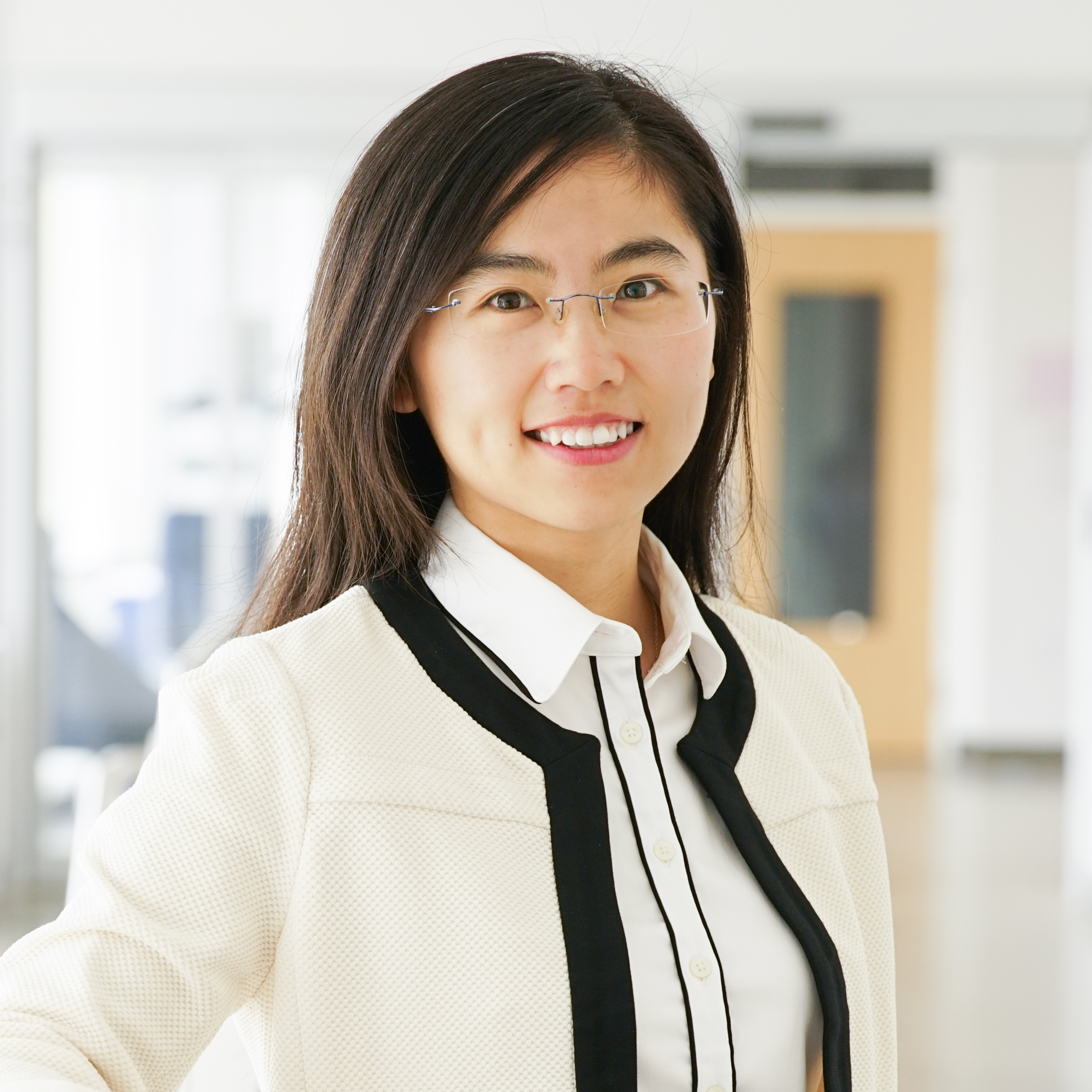
Jean Oh is a Researcher at the Robotics Institute of Carnegie Mellon University (CMU) , leading the interdisciplinary Bot Intelligence Group (BIG) . Her work focuses on developing persistent robots that co-exist and collaborate with humans in shared environments, emphasizing continuous improvement through training, exploration, and human interaction. Education: Ph.D. in Language and Information Technologies, CMU M.S. in Computer Science, Columbia University B.S. in Biotechnology, Yonsei University Oh's research integrates vision, language, and planning systems in robotics, with applications in human-robot teaming , self-driving cars , disaster response , eldercare , and creative robotics . She has pioneered projects like socially-compliant robot navigation in human crowds and AI-driven robotic painting systems. Recent publication trends highlight her work in vision-language planning , social navigation , computational creativity , and human-robot collaboration . Notable contributions include the StyleCLIPDraw algorithm for text-to-art generation and Social-PatteRNN for human-like trajectory prediction. Scientific Awards: Best Paper Award in Cognitive Robotics (ICRA'18, ICRA'15) Best Systems Paper Finalist (HRI'25) Best Oral Paper Finalist (Humanoids'24) Best Paper in Entertainment (IROS'24) Argoverse Challenge Winner (CVPR'24) Best Student Paper (AIAA'24) Best Demo Finalist (RoboSoft'24) Oh mentors a diverse team of PhD, MS, and undergraduate students from CMU departments including Robotics, Computer Science, and Mechanical Engineering. Her research is funded by US Army Research Lab , DiDi Chuxing , and DARPA , with collaborations across industry and academia .
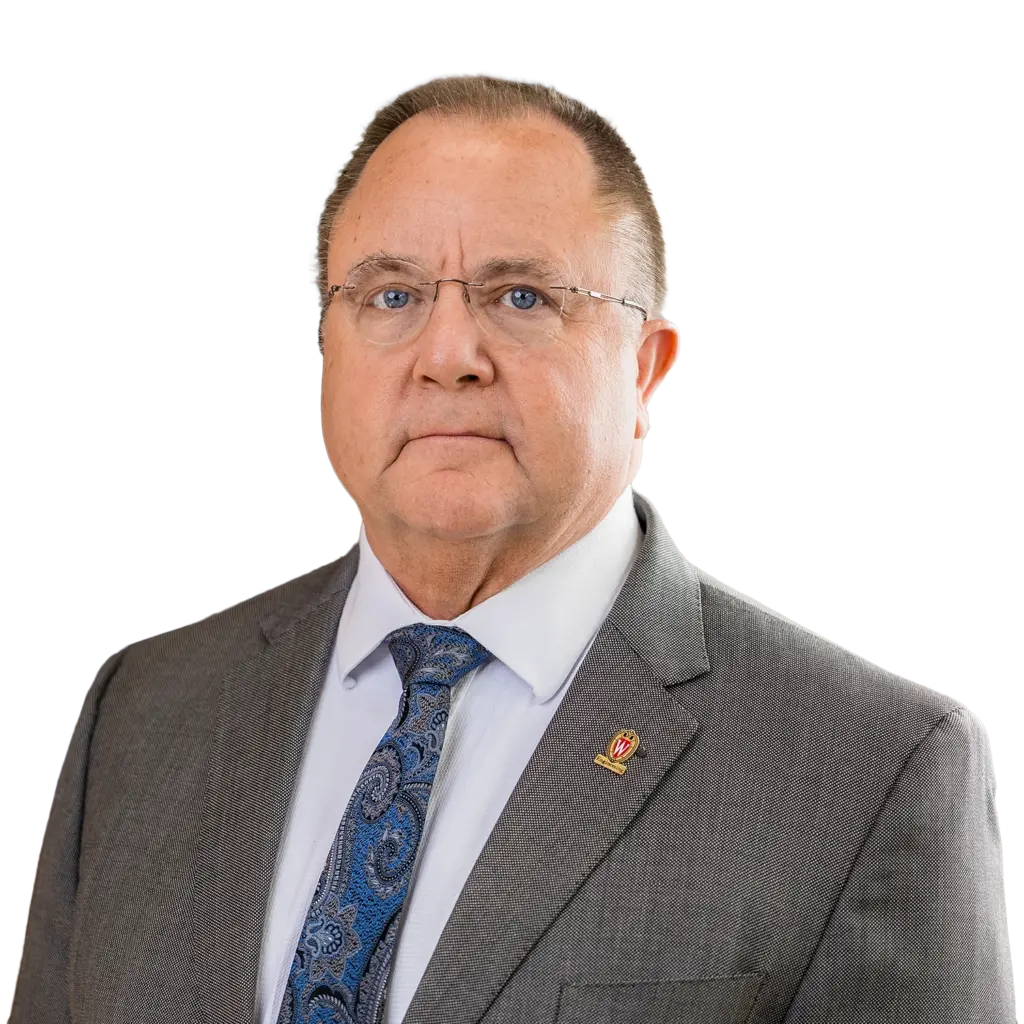
David Noyce is a Professor and Executive Director of the Traffic Operations and Safety (TOPS) Laboratory at the University of Wisconsin-Madison's Department of Civil & Environmental Engineering. He also serves as Associate Director of the Safety Research Using Simulation (SaferSIM) Center, a University Transportation Center. His work focuses on transportation safety, traffic operations, and automated/connected vehicle systems. Key roles include leading over $35M in research since 2003 through the TOPS Lab and advancing technologies like V2V/V2I communication, winter maintenance strategies, and work zone safety. Education: PhD (Texas A&M, 1999), MS (Civil Engineering, UW-Madison, 1995), MBA (UW-Whitewater, 1994), BS (UW-Madison, 1984). Research interests span traffic control devices, driver behavior analysis, crash reconstruction, and multi-modal transportation systems. He pioneered the national implementation of flashing yellow arrow signals and developed the Wisconsin Connected and Automated Transportation Consortium. Current projects include C-V2X localization frameworks, automated vehicle safety testing, and winter maintenance efficiency. Recognized with 20+ awards, including ITE and ASCE Fellowships and the Dr. Arthur F. Hawnn Professorship. His labs offer full-scale driving simulators and field-testing capabilities for real-world validation of innovations.
Indian Institute of Technology Hyderabad (IITH)India
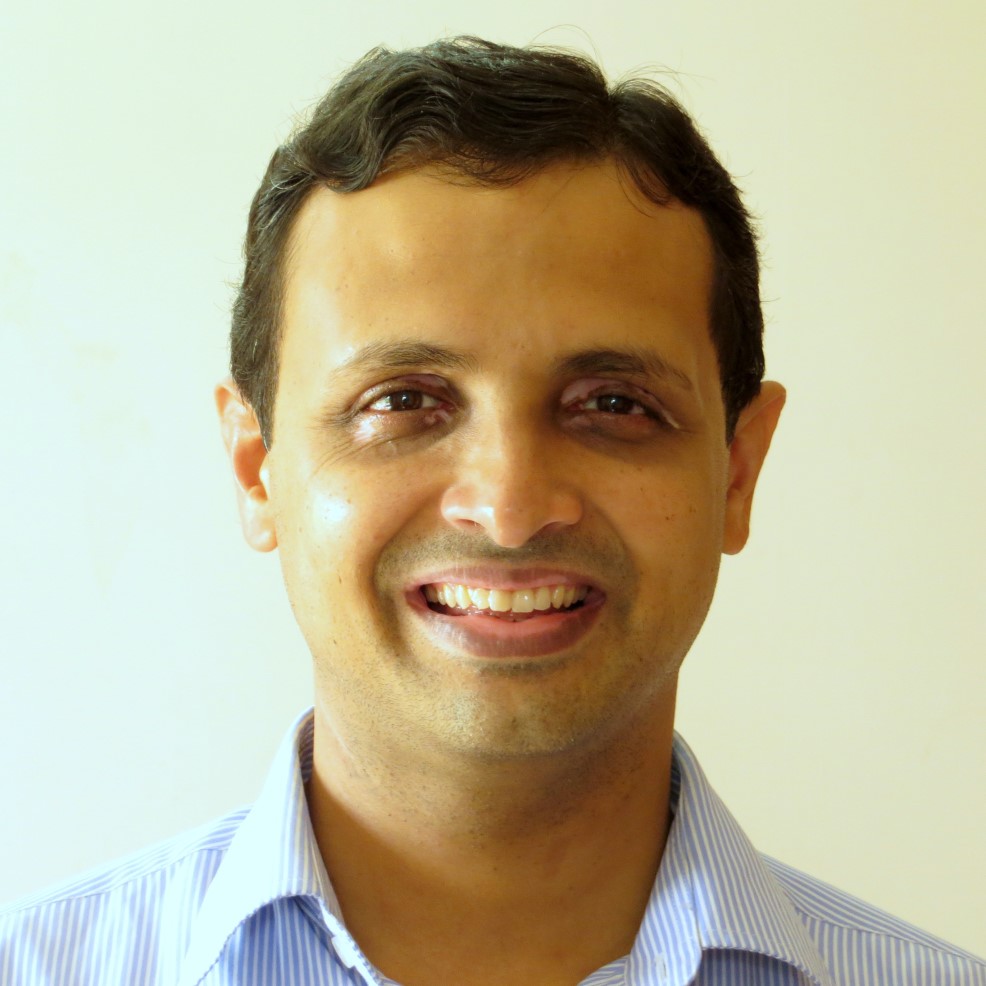
Vineeth N Balasubramanian is a Professor in the Department of Computer Science & Engineering at the Indian Institute of Technology Hyderabad, with affiliate faculty status in the Department of Artificial Intelligence. His research focuses on the intersection of deep learning, machine learning, and computer vision, emphasizing explainability, robustness, and real-world applications. He leads Lab 1055, which investigates problems such as Explainable and robust AI/ML systems Lifelong learning in evolving environments Multimodal vision-language models Applications in agriculture, autonomous navigation, and human behavior analysis His recent work includes causal reasoning in transformers, vision-language model capabilities, and drone-based object detection. Funded by organizations like Google, Microsoft, Intel, and DST, he has received multiple awards including the World's Top 2% Scientists (2022-23), INSA/INAE Fellowships, and Best Paper recognitions. Lab 1055 collaborates with institutions like CMU, UBC, and Monash University, contributing to cutting-edge advancements in AI.
Jiaxuan You is an Assistant Professor at the Siebel School of Computing and Data Science, University of Illinois at Urbana-Champaign, leading the U Lab focused on achieving Artificial General Intelligence (AGI) in digital environments. His research spans graph neural networks (GNNs), relational data, foundation models, and machine learning systems. PhD and MS in Computer Science from Stanford University (2021) Developed GraphGym and PyTorch Geometric (PyG) for graph learning Core member at Kumo AI (2021-2023) His research explores: Graph-enhanced LLMs: Integrating relational structures into foundation models AGI Development: Self-optimizing AI agents and tool utilization ML Systems: Scalable architectures and redundancy-free computation Interdisciplinary Applications: Financial networks, crop yield prediction, and metro systems Recent publications focus on temporal reasoning, multi-agent dynamics, and hybrid architectures for LLMs. He actively develops open-source tools like DBGYM and GraphRouter. Scientific recognition includes: JPMC PhD Fellowship Baidu Scholarship Best Student Paper at AAAI 2017 World Bank Big Data Innovation Challenge winner He mentors PhD and intern students, emphasizing machine learning systems expertise. His lab collaborates on AGI workshops (e.g., ICLR 2024) and industry projects.
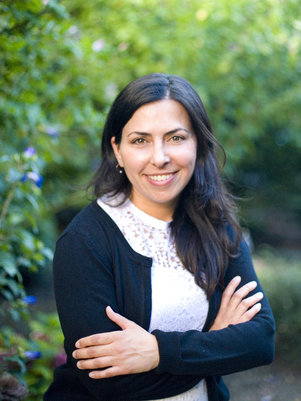
Dr. Haneen Farah is an Associate Professor in the Department of Transport & Planning at Delft University of Technology and co-director of the Traffic and Transportation Safety Lab. She also serves as head of the Traffic Systems Engineering section. Her research focuses on road infrastructure design, road user behavior, and traffic safety, integrating transportation engineering, human factors, and econometrics. Prior to TU Delft, she was a postdoc at KTH Royal Institute of Technology and earned her M.Sc. and Ph.D. in Transportation Engineering from the Technion-Israel Institute of Technology. Her work includes national/international projects like SAMEN (mixed automated/human traffic implications), AfroSAFE (road safety in Africa), and XCARCITY (sustainable city mobility). She teaches undergraduate and graduate courses on road design and traffic safety, including online programs for low/middle-income countries. Farah supervises multiple PhD and Master students in her research areas, contributing to over 50 peer-reviewed publications. Key research themes include infrastructure design for automated vehicles, driver behavior modeling, cyclist safety, and policy implementation of the Safe System approach. Her interdisciplinary approach bridges engineering and psychology to enhance traffic safety and efficiency through advanced analytics and simulation models.
Florentina Bunea is a Professor in the Department of Statistics and Data Science at Cornell University’s Bowers College of Computing and Information Science, and an active member of the Graduate Fields of Statistics, Applied Mathematics, and Computer Science. She also serves on the Diversity and Inclusion Council of her college, championing workforce diversity in data-science disciplines. Education & Institutional Roles Professor, Department of Statistics and Data Science, Cornell University Member, Graduate Fields of Statistics, Applied Mathematics, Computer Science Member, Diversity and Inclusion Council, Bowers College of Computing and Information Science Research Interests Professor Bunea’s research lies at the intersection of statistical machine-learning theory and high-dimensional inference. She develops rigorous methodology supported by sharp theoretical guarantees to tackle core problems in modern data science. Recent themes include: Soft-max mixtures for understanding large-language-model/AI algorithms Optimal transport for high-dimensional mixture distributions Wasserstein-distance inference for sparse mixing measures in topic models Latent-space clustering and cluster-based inference in high dimensions Network modeling and hidden-structure inference Applications spanning genetics, systems immunology, neuroscience, sociology, and economics Research Funding & Awards Her work is supported by grants from the National Science Foundation (NSF-DMS). She is a Fellow of the Institute of Mathematical Statistics and a recipient of the IMS Medallion Award. Editorial & Service Contributions Associate Editor: Annals of Statistics, Bernoulli, JASA, JRSS-B, EJS, Annals of Applied Statistics Co-Editor: Chapman & Hall/CRC Statistics and Applied Probability Monograph Series Advising & Collaboration Professor Bunea has mentored numerous doctoral and post-doctoral researchers, including Xin Bing, Shuyu Liu, Seth Strimas-Mackey, and Yang Ning, among others. Collaborative projects extend across Cornell and external institutions, producing widely-used software packages and high-impact publications. Contact Office: 1184 Comstock Hall, Cornell University Email: fb238@cornell.edu Phone: (607) 255-8449
University of North Carolina at Chapel HillUnited States
Huaxiu Yao is an Assistant Professor at the University of North Carolina at Chapel Hill, holding a joint appointment in the School of Data Science and Society and the Department of Computer Science (College of Arts & Sciences). His research focuses on building reliable large-scale AI models (foundation models) with applications in healthcare, robotics, genomics, and transportation. He leads the AIMING Lab, which explores adaptive intelligence through alignment, interaction, and learning. Education: Ph.D. from Pennsylvania State University (2021), Postdoctoral Scholar at Stanford University (hosted by Chelsea Finn). Research Interests: Generalizable AI agents, preference alignment, out-of-distribution generalization, embodied AI, and multimodal reasoning. Key applications include biomedicine, robotics, and vision-language systems. Notable Awards: KDD Best Paper Award (2024), Amazon Research Awards (2025), TMLR Outstanding Paper Award (2024). Advising & Labs: Recruits Ph.D. and intern students. Leads the AIMING Lab, affiliated with UNC NLP Group. Organizes workshops on foundation models (ICML 2024) and trustworthy AI systems. Publications: Over 40 peer-reviewed papers, including top venues like ICLR, NeurIPS, and ICML. Focuses on AI alignment, multimodal systems, and domain generalization.
Fei Fang is an Associate Professor in the Software and Societal Systems Department at Carnegie Mellon University (CMU) , where she explores the intersection of artificial intelligence and multi-agent systems . Her work integrates machine learning with game theory to address challenges in security , sustainability , and mobility , aligning with the AI for Social Good mission. Ph.D. in Computer Science, University of Southern California (2016) B.Eng. in Electronic Engineering, Tsinghua University (2011) Recent research focuses on reinforcement learning , large language models (LLMs) , and human-AI collaboration . Her team’s work has been recognized with 15+ awards across prestigious venues like IAAI, AAAI, and IJCAI. Notable accolades include the 2023 Allen Newell Award , 2022 Sloan Fellowship , and NSF CAREER Award (2021) . She actively contributes to educational initiatives , including teaching "Demystifying AI for Everyone" at CMU, and has sought part-time teaching assistants for course development. Her research spans 15+ domains , including AI ethics , cyber defense , traffic optimization , and public health .
Peter A. Raymond is the Oastler Professor of Biogeochemistry at Yale University's School of the Environment and Department of Geology and Geophysics. He serves as Senior Associate Dean of Research & Director of Doctoral Studies and is Co-Director of the Yale Center for Natural Carbon Capture. Raymond leads the Raymond Biogeochemistry Lab, which investigates the biogeochemistry of inland waters, enhanced weathering, methane cycling, and blue carbon systems through cutting-edge field, laboratory, and modeling approaches. Education B.S., Marist College Ph.D., College of William and Mary/Virginia Institute of Marine Science Research Focus Raymond's research fundamentally reshapes our understanding of carbon cycling in aquatic systems, demonstrating that rivers serve as dynamic conduits rather than passive pipes in the global carbon cycle. His work examines how biology and watershed variables alter carbon chemistry in streams, rivers, and estuaries, with particular emphasis on understanding global carbon cycles in relation to climate change. Raymond employs radiocarbon measurements to explore the age and turnover of carbon in aquatic ecosystems, revealing that rivers are variable sources of both old and young terrestrial dissolved organic carbon to oceans. The Raymond Lab is particularly known for developing the Pulse-Shunt Concept, which challenges traditional views of riverine biogeochemistry by emphasizing the episodic and dynamic nature of elemental fluxes. Current research directions include enhanced weathering and alkalinity studies for carbon removal, global greenhouse gas budgets through projects like RECCAP 2, natural methane cycling in aquatic systems, and blue carbon ecosystems such as mangroves and salt marshes. Publication Trends Raymond's recent publications (2023-2025) demonstrate a strong focus on global carbon and methane cycling, with particular attention to inland water systems' role in the Earth's climate system. His work increasingly integrates large-scale datasets with field measurements to understand how climate change and human activities affect greenhouse gas emissions from rivers and streams. A significant portion of his recent work contributes to international efforts like the Global Carbon Project, aiming to refine estimates of global carbon and methane fluxes. His research also shows growing emphasis on carbon removal strategies, particularly enhanced rock weathering through the Earthshot-funded GOAL-A project, and their potential for climate mitigation. Scientific Recognition Fellow of the American Association for the Advancement of Science Member of the Connecticut Academy of Science and Engineering Coastal and Estuarine Research Federations Cronin Award for Young Scientists ISI highly cited author Past Editor and Chief of the American Geophysical Union's journal Global Biogeochemical Cycles Mentorship and Funding Professor Raymond currently mentors four doctoral students (Jon Gewirtzman, Shou-En "Samuel" Tsao, Benjamin Saalidong, and Mingyu Zhang) and masters student Bella Garrioch. His research is supported by multiple grants from the National Science Foundation (NSF), including CAREER awards, and participation in the Earthshot-funded GOAL-A (Global Ocean And Land Alkalinization) project. Raymond has also been involved in significant collaborative projects with USGS data to research how climate and land use change alter carbon export from US watersheds, and with Lamont Doherty to develop methods for measuring air-sea gas exchange of CO2 in rivers and estuaries. Research Infrastructure The Raymond Biogeochemistry Lab at Yale is a dynamic research group comprising research scientists, postdocs, doctoral and masters students, and postgraduate researchers. The lab recently acquired a Mini Carbon Dating System (MICADAS) at Yale, significantly expanding their research capabilities in ecosystem carbon turnover and verification of natural climate solutions. The lab collaborates globally on projects in the Arctic, Hudson River, and middle Atlantic Bight, and is actively involved in the NASA Carbon Monitoring System BlueFlux field campaign to assess carbon exchange in coastal wetlands.
Adriana Tapus is a Full Professor at ENSTA Paris, affiliated with Institut Polytechnique de Paris, leading the Autonomous Systems and Robotics Laboratory (SAR) within the Computer Science and Systems Engineering Unit (U2IS). She holds an HDR (Habilitation) and a PhD from EPFL, Switzerland, with postdoctoral experience at USC. Her research focuses on socially assistive robotics, human-robot interaction (HRI), and personalized therapy for individuals with physical/cognitive impairments. She directs the IP Paris Doctoral School and coordinates national/international projects like the EU-funded ENRICHME and SWEET. Education: PhD in Mobile Robotics, EPFL (2005) Habilitation (HDR), ENSTA Paris (2011) M.S. Computer Science, University Joseph Fourier Engineer, Politehnica University of Bucharest Research Interests: Tapus pioneers socially assistive robotics, integrating machine learning, human modeling, and multimodal communication (verbal/non-verbal/para-verbal). Her work addresses adaptive therapies for vulnerable populations using robotics, physiological data interpretation, and context-aware interaction. Key themes include: Human-robot cooperation and trust Emotion recognition and expression Personalized rehabilitation systems AI ethics and human-centered design Publications: Over 150 articles, with recent work exploring humor in HRI, teleoperation trust models, and cross-cultural intelligent vehicles. Notable 2025 contributions include studies on robot laughter efficacy and multimodal facial expression frameworks. Awards: 2025: 4 IROS papers accepted 2016: 25 Women in Robotics recognition 2010: Romanian Academy Award Multiple conference best paper awards (RO-MAN, ICRA, etc.) Advising & Grants: Supervised over 20 PhD students and led projects like EU Horizon 2020 ENRICHME. Current students focus on teleoperation dynamics, robot humor, and haptic interfaces. Active in editorial roles (IJSR, THRI) and conference organization (HRI General Chair 2019). Labs/Teams: Founder of RoboticsByDesign lab and co-initiator of the Hi! Paris interdisciplinary AI center. The SAR lab develops systems for healthcare, education, and human-robot collaboration.
Prof. Alois Christian Knoll is a full professor at the Technical University of Munich (TUM) in the School of Computation, Information and Technology. His academic career includes roles at Bielefeld University and leadership in major EU initiatives like the Human Brain Project and ECHORD++. He specializes in robotics, AI, and autonomous systems, with a focus on medical robotics, sensor-based systems, and neuromorphic engineering. Knoll has supervised over 100 doctoral theses and authored/co-authored over 1,000 publications. Education: Diploma in Electrical Engineering (University of Stuttgart, 1985); PhD in Computer Science (Technical University of Berlin, 1988); Habilitation (TU Berlin, 1993). He has been at TUM since 2001, leading the Robotics, AI, and Real-Time Systems department. Research interests span autonomous systems, neuro-IT integration, and traffic simulation. Key projects include fortiss (Bavarian State Institute for Computer Science) and TUM-CREATE (Singapore collaboration). Awards include IEEE Fellow, University of Tokyo Fellow, and the Carl-Ramsauer-Prize (1990). Current roles include editorships in robotics journals, leadership in EU flagship projects, and teaching across multiple programs. His work bridges computer science, neuroscience, and engineering, with applications in healthcare, automotive systems, and urban mobility.
University of California, Los AngelesUnited States
Achuta Kadambi, Ph.D., is an Associate Professor at UCLA in Electrical Engineering and Computer Science, leading an interdisciplinary research group focused on AI, computational imaging, and bias mitigation in medical technologies. He recruits PhD students from EE, CS, and Bioengineering departments and has commercialized research through two California-based companies. His research investigates the intersection of physics and artificial intelligence, with a focus on unbiased low-level vision systems. Current projects explore how light transport interacts with human skin variations to identify and correct imaging biases in facial recognition and medical devices. His work has produced over 70 patents, with 30+ issued, and a textbook Computational Imaging (MIT Press, 2022). NSF CAREER Award (2021) for light transport bias research DARPA Young Faculty Award (2021) for AI and medical imaging innovations ARO Young Investigator Program (2021) for computational sensing IEEE-HKN Under 35 Award (2022) for inclusive EECS inventions Forbes 30 Under 30 recognition His recent publications focus on polarization imaging, 3D Gaussian splatting, synthetic data generation for healthcare, and bias mitigation in machine learning. Collaborations with UCLA medical school faculty, including Dr. Laleh Jalilian, aim to deploy these innovations in clinical settings. Current teaching includes ECE 149: Foundations of Computer Vision (Fall 2024, Spring 2025) and ECE 102: Signals and Systems (Winter 2024).
Terry C. Lansdown is an Associate Professor in the School of Social Sciences and Department of Psychology at Heriot-Watt University. His expertise lies in Human Factors, particularly focusing on driver safety, workload management, and attentional distraction in transportation contexts. Prior to his academic role, he worked as a senior researcher at the Transport Research Laboratory, contributing to numerous EU-funded and government-sponsored projects. His research integrates ergonomics principles with real-world applications, addressing issues like automated driving systems, social distractions in vehicles, and occupational health in construction industries. Key research interests include: Driver behavior and road safety Human factors in automated systems Workload and attentional demands in complex tasks Health and safety in small-to-medium enterprises (SMEs) He has led studies on pandemic response strategies, such as the CHARIS project analyzing behavioral adherence during the COVID-19 crisis. Lansdown’s work frequently bridges psychological theory with practical interventions, including text messaging campaigns to improve construction worker safety and experimental designs to evaluate automation failure responses. Collaborations span academic and industrial sectors, with publications addressing topics ranging from UV exposure in outdoor workers to the cognitive impacts of in-vehicle distractions. His contributions align with UN Sustainable Development Goals related to health (SDG 3) and sustainable cities (SDG 11).
Prof. Raffaello D'Andrea is a Full Professor at ETH Zürich's Department of Mechanical and Process Engineering, affiliated with the Institute for Dynamic Systems and Control. His research focuses on bridging digital and physical worlds through robotics, control systems, and autonomous systems. He has pioneered work in aerial robotics, swarm systems, tactile sensing, and soft robotics. His philosophy emphasizes solving 'easy' problems with scalable, robust solutions, prioritizing simplicity and replicability. Key research areas include UAV navigation, distributed control, tactile sensor design, and fault-tolerant systems. He has founded multiple organizations and led roles as CTO/CEO, emphasizing cross-disciplinary innovation. His work has commercial applications in logistics, healthcare, and automation, driven by a belief in technology's role in improving human life. Notable projects include the Cubli robotic cube, aerial vehicle swarms, and optical tactile sensors for robotics. His lab emphasizes collaboration and team leadership, aiming to translate theoretical insights into practical, scalable technologies. Scientific awards: None explicitly listed in the provided texts. Advising and grants: No students listed in the provided texts; grants information not detailed. Labs/Teams: Leads research at ETH Zurich's Institute for Dynamic Systems and Control, collaborating with industry and academic partners globally.
Alanson Sample is an Associate Professor in the Department of Electrical Engineering and Computer Science at the University of Michigan (since 2018), leading the Interactive Sensing and Computing Lab. His research focuses on Human-Computer Interaction, Cyber-Physical Systems, and wireless technology innovations. He holds a PhD in Electrical Engineering from the University of Washington (2011), with prior postdoctoral work there developing implantable medical devices. Before academia, Sample held senior roles at Disney Research (2013-2018) as Executive Lab Director and Principal Research Scientist, leading teams in Robotics, AI, Computer Vision, and HCI. Earlier, he worked at Intel Labs (2008-2013) on energy harvesting for wearables and IoT. Key research themes include wireless power systems, embedded sensing, and privacy-aware technologies. Over 150+ publications span topics like magnetic sensing (MagDesk), acoustic gesture recognition (HandSAW), and privacy-preserving activity tracking (PrivacyMic). His work bridges academic and industry innovation, particularly in scalable interactive systems and medical technology. Notable projects include the Quasistatic Cavity Resonance wireless charging system, RFID-based sensing platforms (WISP), and wearable health monitoring devices. His lab develops hardware-software co-design frameworks for energy-efficient embedded systems. Current research emphasizes medical applications, smart infrastructure, and ubiquitous computing interfaces.