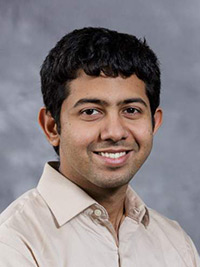
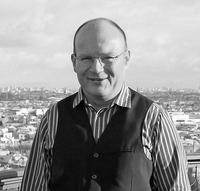
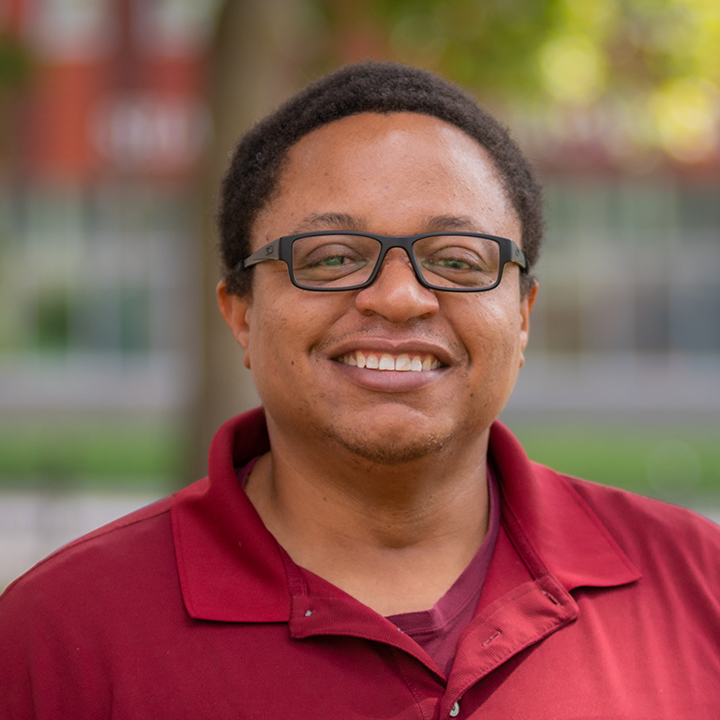
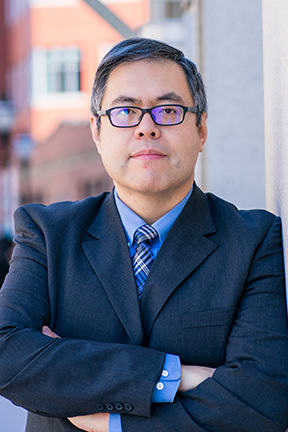
Dr. Qiyuan Zhang is a Lecturer in Human Factors at Cardiff University's School of Psychology , specializing in human-machine systems with emphasis on human-robot interaction , trust in automation , and human-AI collaboration in safety-critical contexts including transportation, emergency services, and cybersecurity. His research integrates Cognitive Psychology and Social Psychology theories to address real-world challenges. PhD in Cognitive Psychology from Durham University Focus on human-automation interdependence , auditory communication , and cognitive workload effects Key grants: £800k ESRC-JST (Rule of Law in AI Age), £5.6M Innovate UK (Flourish CAV Project), and £75k Airbus (XAI Research) Email: ZhangQ47@cardiff.ac.uk His work explores anthropomorphism in autonomous vehicles , noise impact on cognition , and human error in digital security , with methodological approaches spanning simulations, AR integration, and experimental paradigms.
Sreeram Kannan is an Affiliate Associate Professor in the Department of Electrical & Computer Engineering at the University of Washington, Seattle. His research spans multiple interdisciplinary domains including information theory, blockchain systems, machine learning, and computational biology. Dr. Kannan received his Ph.D. in Electrical and Computer Engineering and M.S. in Mathematics from the University of Illinois Urbana Champaign. He was a postdoctoral scholar at the University of California, Berkeley and a visiting postdoc at Stanford University between 2012-2014. His research interests focus on the theoretical foundations of information processing with applications to blockchain systems, machine learning, computational biology, and wireless networking. He works on both mathematical theory and engineering system development, with particular emphasis on how information theory principles can solve practical problems in these domains. His publication record shows a consistent trajectory of high-impact research in top venues including NIPS, ICML, ISIT, and specialized conferences in bioinformatics. His work demonstrates a unique bridge between theoretical information theory and practical applications, particularly in blockchain algorithms and RNA sequence analysis. Early Faculty Career Award from NSF for project on Information theoretic methods for RNA Analytics NIH R01 Award for Optimal Algorithms for RNA Sequence Assembly (with Lior Pachter and David Tse) Dr. Kannan leads the UW Blockchain Lab and the Information Theory Lab, where he mentors students and researchers working on cutting-edge problems at the intersection of information theory and practical systems. His lab develops both theoretical frameworks and practical tools like the Shannon RNA-Seq assembler, which applies information-theoretic principles to genomic sequence assembly problems.
Martin Göber is a Researcher affiliated with the Institute of Meteorology at Free University of Berlin. He currently serves as the Head of Department at the German Weather Service (DWD), focusing on optimizing weather warnings and climate monitoring communication. PhD in Meteorology (University of Bonn, 1997) MSc in Remote Sensing and Image Processing (University of Dundee, 1991) Diploma in Meteorology (Humboldt University Berlin, 1991) His research spans forecast verification , weather warning communication , economic implications of meteorological decisions , and geostatistical modeling . He integrates psychology into weather warning systems to improve public response. Key publication themes include: Meteorological data validation Extreme weather prediction Climate diagnostics Arctic atmospheric budgets Verification methodologies Uncertainty communication His work supports operational forecasting at DWD and contributes to projects like ClimXtreme and NFDI4Earth .
Professor Kjell Ivar Øvergård is a Full Professor at the University of South-Eastern Norway (USN), leading the Research Group for Health Promotion in Settings within the Department of Health, Social, and Welfare Studies. His academic roles include course responsibility for Philosophy of Science and Research Methods (MSH-VET4100), lecturing on work and organizational psychology in MSH-VAA4300 and MSH-OPP4400, and supervising master’s and PhD candidates. He also serves as Chief Scientific Officer at EBHR AS, focusing on algorithmic HR software development. Education: PhD in Psychology (Cognitive Systems Engineering) from NTNU (2008), Cand.Polit in Psychology (Ergonomics and Human Factors) from NTNU (2004), and Cand.mag from Akershus College (2001). Research Interests: Cross-disciplinary studies in work environment impacts on health/turnover, human-technology interaction, transportation safety, workplace well-being, and applied statistics. Key areas include maritime human factors, decision-making under pressure, and automation trust modeling. Notable Contributions: 2012 gift professorship from Kongsberg Maritime (4 MNOK over 5 years), leadership roles in national/international research initiatives, and 6 program accreditations in Georgia/Croatia. Language proficiency includes C2+ Norwegian, C1 English, B2 German, and A2 Croatian. Advancing interdisciplinary research through collaboration with universities, industry partners, and public sectors. Focus on actionable insights for workplace safety, organizational health, and technological adaptation in complex systems.
Gary Holness is an Associate Professor of Computer Science at Clark University, where he directs the Laboratory for Intelligent Perceptual Systems (LIPS). He holds a PhD in Computer Science from the University of Massachusetts Amherst (2008) focusing on machine learning ensembles, robotics, and distributed systems. Research spans: Machine learning ensembles and error diversity Robotic perception and autonomous systems Nonparametric density estimation Human-robot interaction for autism therapy Distributed frameworks for medical alerting Interactive AI with manifold learning His publications show progression from theoretical machine learning to applied systems, with recent work on spectroscopic analysis and kernel methods. Maintains active student research programs in robotics, GPU acceleration, and terrain classification.
Gregory S. Chirikjian is the Willis F. Harrington Professor and Department Chair at the University of Delaware's College of Engineering, Department of Mechanical Engineering. His expertise spans robotics, controls, computer vision, and applied mathematics. He is a Fellow of both IEEE and ASME. Education: PhD in Applied Mechanics, California Institute of Technology MSE in Mechanical Engineering, Johns Hopkins University BS in Engineering Mechanics, Johns Hopkins University BA in Mathematics, Johns Hopkins University Research Focus: Chirikjian's work integrates group theory with robotics, kinematics, and motion planning. Current projects include affordance-based reasoning for robotic systems, medical image registration, and the mechanics of macromolecules. His research explores both theoretical foundations and practical applications in robotics and engineering systems. Research Trends: Recent work emphasizes learning-free grasping techniques, uncertainty propagation in robotics, and deployable structures. His articles reflect interdisciplinary approaches combining mathematical rigor with practical robotic systems design. Awards: Fellow of the Institute of Electrical and Electronics Engineers (IEEE) Fellow of the American Society of Mechanical Engineers (ASME) Advising & Labs: Chirikjian leads the Spencer Lab, focusing on robotics and mathematical modeling. Though student names aren't listed here, his work involves graduate research in robotics systems and applied mathematics. Major grants support projects in soft robotics, sensorless manipulation, and robotic affordance learning. Future Directions: Ongoing work includes self-replicating robotic systems, probabilistic motion planning, and applications of non-Abelian Fourier analysis in engineering problems.
Peter Ayton is Professor of Psychology at City, University of London, specializing in behavioral decision theory. His research investigates how people judge and decide under risk and uncertainty, using experimental and field methods. He has held visiting positions at Princeton, UCLA, and the Max Planck Institute. Key studies examine aviation safety, pension decisions, and pandemic behavior. Teaching includes Cognitive Psychology and Judgment & Decision Making. He serves on editorial boards for the Journal of Behavioral Decision Making and Theory and Psychology.
Andy Wills is a Professor in Psychology at the School of Psychology, University of Plymouth, within the Faculty of Health. He holds a Ph.D. from the University of Cambridge and has held academic positions at Exeter University and Plymouth University, advancing to full professorship in 2012. Andy earned his undergraduate degree in Psychology from the University of Southampton (1990–1993). He pursued his Ph.D. in computational learning theory at the University of Cambridge (1994–1998) under Ian McLaren. Following his Ph.D., he was a Junior Research Fellow at Emmanuel College, Cambridge (1998–2000). His career progression includes roles at Exeter University (Lecturer, Senior Lecturer, and Associate Professor) before joining Plymouth as a full professor in 2012. His research focuses on visual object categorization, the role of errors and attention in learning, and human-centered AI. A proponent of open science, he maintains R packages like catlearn (43,000+ downloads). His work bridges cognitive psychology and machine learning, emphasizing clear scientific communication and ethical AI applications. Recent studies explore category learning mechanisms, attentional effects, and human-machine comparisons in object recognition. His interdisciplinary approach addresses generalization strategies and cognitive load, contributing to neuroscience and AI. Supervised doctoral students include Lenard Dome (2023) , Angus Inskter (2019) , and Charlotte Edmunds (2017) . Advocates for open-source tools and led initiatives like the Research Methods in R teaching materials. Active in debates on research ethics, peer review during UK academic strikes, and open science practices. His lab at Plymouth University fosters reproducible research and collaborative projects in cognitive modeling and AI.
Rocío Melissa Rivera is a Professor of Reproductive Physiology and Epigenetics in the Division of Animal Sciences at the University of Missouri. She received her Ph.D. from the University of Florida and completed postdoctoral training at the University of Pennsylvania. Her research investigates epigenetic disruptions in gametes and embryos caused by assisted reproductive technologies (ART). Key projects characterize Large Offspring Syndrome in ruminants and Beckwith-Wiedemann Syndrome in humans—both loss-of-imprinting overgrowth conditions linked to ART. She explores how superovulation and maternal aging alter oocyte DNA methylation patterns and gene expression. Dr. Rivera employs bovine and murine models to identify molecular triggers of epigenetic syndromes, using transcriptomic and chromatin analysis. Current work examines dietary interventions to mitigate ART-associated epigenetic errors. She mentors doctoral students in projects ranging from IGF2R regulation in fetal overgrowth to retroelement control in oocytes. As a Fulbright Senior Scholar at Spain's University of Murcia, she contributed to reproductive biology education. Her laboratory combines developmental biology, epigenetics, and molecular analysis to improve ART safety.
Dr. Yonggang Lu is the Harold Alfond Associate Professor of Business Analytics at the University of Maine’s Maine Business School. Previously, he held an associate professorship at the University of Alaska’s College of Business and Public Policy. Prior to academia, he worked at JPMorgan Chase as a customer analytics specialist, focusing on large-scale financial data mining and predictive modeling in mortgage, home equity, and student loan markets. He is FRM-certified by the Global Association of Risk Professionals. Education: Ph.D. Information Systems and Quantitative Sciences, Texas Tech University M.S. Applied Mathematics M.A. Economics M.S. Finance B.E. Chemical Process Equipment and Control Engineering, Xi’an Jiaotong University B.A. Financial Economics His research focuses on Transparent, Reliable, Efficient, and Effective (TREE) Bayesian models for business decision-making, emphasizing Bayesian inference algorithms and social network analysis. He develops methodologies for integrating subjective prior knowledge into machine learning and statistical models, with applications in inventory control, consumer behavior analysis, and risk management. Key Research Contributions: Pioneered Bayesian approaches for predictor contribution analysis in logistic regression Advanced causal inference frameworks using Bayesian networks Explored online information diffusion dynamics via social networks Awards & Recognition: Excellence in Research Award (Maine Business School, 2022) Faculty Mentor Impact Award (University of Maine, 2021) Nominated for Teaching Excellence (Maine Business School, 2021-2022) Recipient of The C Oswald George Prize (Royal Statistical Society, 2013) His teaching portfolio includes foundational courses in business analytics, data visualization, and decision analysis. He actively bridges academic research with industry applications, particularly in financial risk management and data-driven decision systems. His work has been published in journals like European Journal of Operational Research , Journal of Applied Statistics , and American Statistician .
Dr. Rogier Brussee is an Assistant Professor in Data Analytics at Eindhoven University of Technology. His research focuses on computational modeling, statistical analysis, and network systems. Key projects include reverse stress testing in supply chains (RESTRETCH) and peer-to-peer positioning algorithms. Research interests span probability density functions, thruster engineering, ship maneuvering dynamics, and distributed network systems. His work frequently bridges data science with industrial applications. Recent publications demonstrate a strong interdisciplinary trend, combining computer science with environmental studies, finance, and social sciences. Articles frequently employ machine learning for predictive modeling and system optimization. Dr. Brussee leads research within the RESTRETCH project and collaborates internationally on supply chain resilience. No specific awards or student advising roles are detailed in available records.
Dr. Martin Lages is a Senior Lecturer at the School of Psychology & Neuroscience, University of Glasgow, affiliated with the Centre for Cognition, Language, and Metascience (CLM). He holds a PhD from Oxford University and Heidelberg University. His research spans quantitative methods (hierarchical models, Bayesian inference), visual perception (motion, stereo vision), and human decision-making (cognitive bias, rationality). Lages has secured grants including the Erasmus+ TquanT Project (2015–2018, PI) and Leverhulme Trust funding (2011–2013, PI). He advises PhD students Kitti Ban, Elaine Jackson, and Elena Minucci. His work often intersects forensic psychology, exploring juror decision-making and legal systems. Notable publications include studies on hierarchical signal detection models (2024) and the Scottish verdict system (2022). Research Focus: Lages’ research bridges quantitative analysis with perceptual and cognitive processes. He investigates how visual cues inform 3D motion perception and how cognitive biases influence legal outcomes. Recent work examines autism-related social interactions using registered reports (2025). His Bayesian modeling approaches address gaps in understanding binocular vision and decision-making dynamics. Grants & Collaborations: He led projects on 3D motion perception (Leverhulme Trust) and quantitative teaching (Erasmus+). Collaborations include the Scottish Vision Group and Society for Mathematical Psychology.
Kenneth Lange is a Professor at the University of California, Los Angeles (UCLA) in the departments of Computational Medicine and Human Genetics . He holds the Maxine and Eugene Rosenfeld Endowed Chair in Computational Genetics and focuses on genomic data analysis , statistical genetics , and optimization algorithms for biomedical applications. His research interests span Computational Genetics Biomedical Big Data Statistical Methods for Gene Mapping Optimization Algorithms Machine Learning . He has developed advanced methods for genetic admixture estimation, genotype imputation, and cancer stem cell therapy modeling. Dr. Lange's publications (2024-2013) emphasize statistical genetics , computational biology , and optimization techniques . Key trends include haplotype analysis , neuroimage registration , ancestry-informative markers , and penalized regression methods . Scientific awards include the Maxine and Eugene Rosenfeld Endowed Chair in Computational Genetics . He has advised graduate students such as Seyoon Ko , Benjamin Chu , and Jeanette Papp , with significant contributions to genomic analysis and biomedical informatics . Dr. Lange leads NIH-funded projects like R35GM141798 (Modeling, Inference, and Optimization for Genomic and Biomedical Big Data, 2021-2026) and co-led T32HG002536 (Genomic Analysis Training Grant, 2002-2022). He has also participated in grants for statistical methods (R01GM053275, 1995-2021) and integrative biology (T32GM008185, 1987-2023).
David Melnikoff is an Assistant Professor of Organizational Behavior at Stanford University's Graduate School of Business, holding the Fletcher Jones Faculty Scholar title (2024–2025). His research focuses on flow, motivation, and computational modeling of goal pursuit. He earned a BA in Psychology from Drexel University (2010) and a PhD in Psychology from Yale University (2019), followed by a postdoctoral fellowship at Northeastern University. His interdisciplinary work combines psychology with machine learning to develop mathematical models of flow states. Notable publications include studies in Nature Human Behaviour , Nature Communications , and Trends in Cognitive Sciences . Awards include the NIH NRSA (2021) and Yale's Grossman Dissertation Prize (2019). He teaches courses such as OB 206: Organizational Behavior and OB 678: Experimental Research Design. His media contributions, including podcasts on flow optimization, highlight practical applications of his research.
Shangtong Zhang is an Alf Weaver Assistant Professor in the Department of Computer Science at the University of Virginia, directing the Sequential Intelligence Lab (SIL). His research specializes in theoretical and empirical aspects of reinforcement learning, with publications in premier AI venues. He serves as Area Chair for top conferences and on NSF panels. Research interests focus on: Reinforcement learning theory Deep learning applications Algorithmic improvements for stability Multi-agent collaboration Ethical AI frameworks Publications demonstrate consistent focus on reinforcement learning advancements, covering theoretical convergence proofs, safety constraints, fairness metrics, and efficient evaluation methods. Recent work emphasizes trustworthy AI, multi-agent coordination, and algorithmic robustness. Awards include: Best paper awards (ICML & AAMAS) AAAI New Faculty Highlights Rising Star in AI (KAUST) IFAAMAS Dissertation Award Leads the SIL lab with multiple funded projects including NSF CRASH. Supervises PhD students in reinforcement learning meetups and lab research. Education includes DPhil from Oxford, MSc from Alberta, and BSc from Fudan University.