
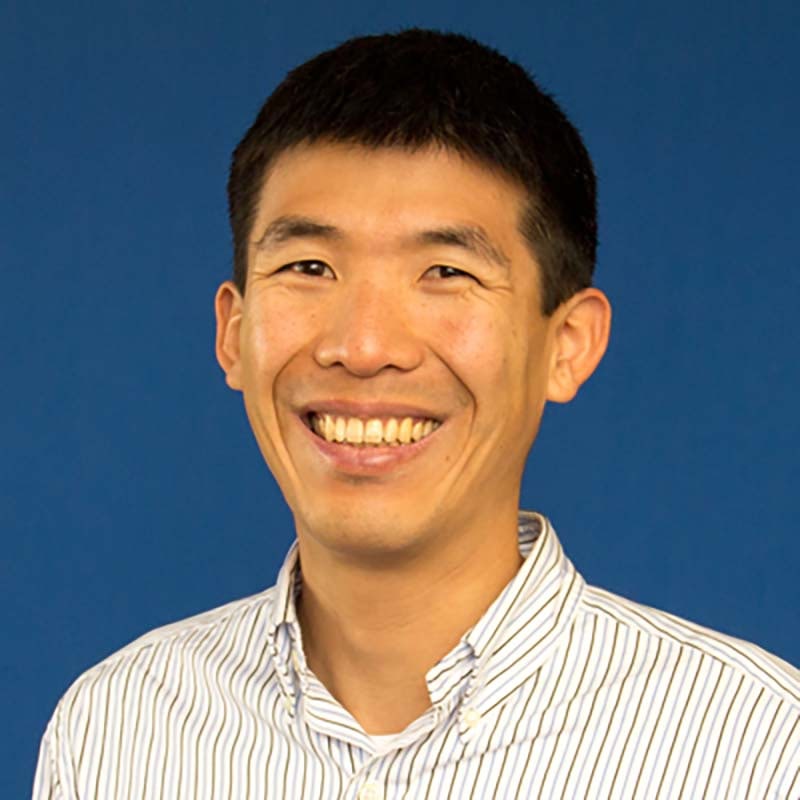
Byron Yu is a Professor in Electrical & Computer Engineering and Biomedical Engineering at Carnegie Mellon University, with affiliations to the Neuroscience Institute and Robotics Institute. He is a core faculty member of the Center for the Neural Basis of Cognition. Research focuses on computational neuroscience , neural dynamics , and brain-machine interfaces . Key contributions include dimensionality reduction techniques and neural population activity analysis. Recent publications explore topics such as neural dynamics during motor imagery, BCI optimization, and attentional processing. His work has appeared in Nature Neuroscience , Neuron , and eLife , often as cover articles. Awardees include the Gerard G. Elia Career Development Professorship and AIMBE Fellowship . His lab has mentored numerous PhD and postdoctoral researchers, many now in academic and industry leadership roles.
جستجوی استاد راهنمای دانشگاهی
برای مسیر پژوهشیتان، استاد راهنما، استاد دانشگاه و پژوهشگر مناسب را پیدا کنید و با آنها ارتباط بگیرید.
نمایش ۱-۱۵ از ۱٬۶۲۰ استاد راهنما
اطلاعات پروفایلها از صفحات عمومی دانشگاهها گرفته شده و ممکن است بهروز نباشد.
Martin Schrimpfمشاهده پروفایل
استادیار
- neuroAI
- computational neuroscience
- computer vision
- +۵ مورد دیگر
Professor Martin Schrimpf is a Tenure Track Assistant Professor at EPFL, holding dual appointments in the School of Life Sciences (SV) and the School of Computer and Communication Sciences (IC). His research bridges computational neuroscience, deep learning, and cognitive science to model human natural intelligence in vision and language. He leads the NeuroAI Lab, focusing on aligning artificial neural networks with brain mechanisms and human behavior. Education: PhD in Brain and Cognitive Sciences from MIT (2017–2022), MSc in Software Engineering from TUM/LMU/UNA (2014–2017), and BSc in Information Systems from TUM (2011–2014). His work has been recognized with awards including the Neuro-Irv Open Science Prize, McGovern Fellowship, and Takeda AI+Health Fellowship. He co-founded Integreat, a social impact startup recognized with Google.org’s Impact Challenge and TUM’s Social Impact Award. Research interests include neuroAI, brain-like models, and clinical translation (e.g., visual prosthetics). He has published in top venues like Neuron, Nature Human Behavior, NeurIPS, and ICLR. Current projects involve developing topographic language models (TopoLM) and investigating causal language network interactions using LLMs. Teaching: Courses include Neuroscience Foundations for Engineers and Brain-like Computation and Intelligence . Supervised over 26 students, including PhD candidates Badr Alkhamissi, Ben Lönnqvist, and Yingtian Tang. Active in grants from SNSF, NeuroX, and EPFL’s AI Center. Labs/Teams: NeuroAI Lab at EPFL Neuro-X Institute. Future directions include advancing brain-inspired models for clinical applications and expanding interdisciplinary collaborations between neuroscience and AI.

J. Anthony Movshon is a Professor at New York University (NYU) in the Department of Psychology and a key member of NYU's Center for Neural Science (CNS). His research focuses on the primate visual system, particularly the encoding and decoding of visual information in cortical areas like V1 and MT, and its role in behavior and perception. Education: Doctorate in Visual Neurophysiology and Psychophysics from Cambridge University Research Interests: Movshon investigates the functional architecture of the visual cortex, emphasizing motion, form, and color processing. His work explores how neural activity relates to perceptual decisions and motor behavior, using electrophysiological recordings, neuroimaging, and computational models. He also studies developmental disorders like amblyopia and their impact on visual system organization. Publications: His recent work spans visual texture selectivity in V2, contextual modulation in neural responses, motion processing in MT, and decoding mechanisms in visual cortex. These studies employ interdisciplinary approaches blending neurophysiology, computational neuroscience, and cognitive modeling. Labs & Collaborations: Movshon leads the Visual Neuroscience Laboratory at NYU, collaborating with researchers such as Michael Hawken, Lynne Kiorpes, and Eero Simoncelli.
Nima Mesgaraniمشاهده پروفایل
دانشیار
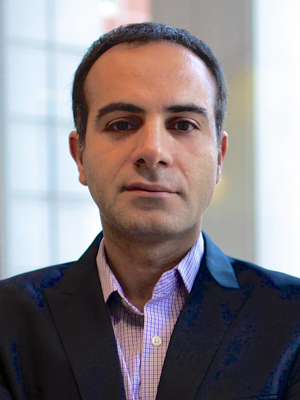
Nima Mesgarani is an Associate Professor of Electrical Engineering at Columbia Engineering, Columbia University, affiliated with the Sense, Collect and Move Data Committee. His research bridges engineering and neuroscience through reverse-engineering neural signal processing mechanisms, leading to advancements in brain-machine interfaces, neural prosthetics, and speech processing algorithms. He received his PhD in Electrical Engineering from the University of Maryland and completed postdoctoral training at Johns Hopkins University's Center for Language and Speech Processing and UC San Francisco's Neurosurgery Department. Research Focus Professor Mesgarani's lab integrates computational neuroscience and engineering to study acoustic signal processing. Key areas include: Neural decoding of speech and auditory attention in multi-talker environments Development of brain-controlled hearing technologies Novel speech separation and synthesis algorithms inspired by cortical processing Cross-modal learning between auditory and visual systems Applications of large language models in neural signal interpretation Publication Trends Analysis of his 15 most recent articles (2025) reveals dominant themes: neural decoding techniques using intracranial EEG, brain-inspired speech separation models (e.g., Mamba architectures), applications of large language models in auditory neuroscience, cross-modal distillation methods, and clinical translation of audio processing algorithms. A strong emphasis emerges on real-time brain-computer interfaces and noise-robust speech processing. Laboratory and Collaborations Mesgarani directs an interdisciplinary lab developing neurotechnology for hearing restoration. His team collaborates with neurosurgery departments and speech processing centers, focusing on translating theoretical models into clinical brain-machine interfaces. The lab's work has yielded patents for brain-informed speech separation systems and attention-decoding frameworks.

- Epilepsy
- Sleep Medicine
- Electroencephalography
- +۴ مورد دیگر
Dr. Birgit Frauscher is the Lincoln Financial Group Distinguished Professor in Neurobiology at Duke University School of Medicine, where she serves as Professor of Neurology and holds a secondary appointment in the Department of Biomedical Engineering at the Duke Pratt School of Engineering. She is currently the Director of the Duke Comprehensive Epilepsy Center and leads the Analytical Neurophysiology (ANPHY) Lab. Her clinical and research work focuses on epilepsy and sleep medicine, utilizing both invasive and non-invasive electrical recordings to study brain activity in humans. Dr. Frauscher completed her medical training, neurology residency, and subspecialty training in electroencephalography, epilepsy, and sleep medicine at the Medical University of Innsbruck in Austria. After completing her clinical training in 2008, she earned her habilitation degree in 2011. She further specialized in intracranial EEG and signal analysis during a visiting professorship at the Montreal Neurological Institute and Hospital, McGill University (2013-2015), where she later served as an Attending Epileptologist and Group Leader of Epilepsy. Her research interests focus on developing novel seizure-independent EEG markers for the epileptogenic zone, investigating sleep-epilepsy interactions, and using intracranial EEG to study brain physiology during wakefulness and sleep. Her work aims to improve epilepsy diagnosis, prognosis, and treatment outcomes by better localizing the epileptic focus. Dr. Frauscher's recent publications demonstrate her continued leadership in epilepsy research, with over 170 peer-reviewed papers and an H-index of 62. Dr. Frauscher has received several prestigious awards including the Clinician-Scientist awards of the FRSQ (2018-2023), the Michael Prize of the International League against Epilepsy (2019), and the Ernst Niedermeyer Prize from the Austrian Epilepsy Society (2015). Her scholarly work has significantly advanced clinical knowledge in epilepsy and sleep medicine, establishing her as a leading figure in the field. As Director of the Duke Comprehensive Epilepsy Center and head of the ANPHY lab, Dr. Frauscher oversees a research program dedicated to advancing neuroscience through innovative approaches to studying brain activity. Her lab employs quantifiable tools to investigate neurophysiological and pathological processes related to epilepsy and sleep, with the ultimate goal of improving patient outcomes through better understanding of brain function.

Takako Fujiokaمشاهده پروفایل
دانشیار
Takako Fujioka is an Associate Professor of Music at Stanford University, affiliated with the Center for Computer Research in Music and Acoustics (CCRMA). Her research focuses on the neural mechanisms underlying auditory perception, auditory-motor coupling, and music-supported therapy for neurorehabilitation. She holds a Ph.D. in Physiology from the Graduate University for Advanced Studies, Japan, and M.Sc./B.Eng. degrees in Electrical Engineering from Waseda University. Her work combines neurophysiological techniques such as MEG and EEG to study brain plasticity in development, aging, and stroke recovery. Notable contributions include investigating how music influences motor and cognitive recovery in stroke patients, as well as exploring the neural basis of musical perception through rhythmic synchronization and pitch discrimination studies. Supported by awards from the Canadian Institutes of Health Research during her postdoctoral work at the Rotman Research Institute, her research bridges clinical neuroscience and music cognition. Dr. Fujioka’s expertise spans auditory neuroscience, neurorehabilitation, and technology-assisted music therapy. She has pioneered studies on tactile mapping for cochlear implant users and networked music performance systems, emphasizing cross-modal perception and human-technology interaction. Her findings contribute to both theoretical understanding of auditory processing and practical applications in medical and educational settings. Awards: Canadian Institutes of Health Research Awards (postdoctoral phase) Labs/Teams: CCRMA, Stanford Music Perception Laboratory, Rotman Research Institute collaborations Key Themes: Neuroplasticity, Music-Mediated Rehabilitation, Auditory-Motor Integration, Multisensory Processing Her recent work examines aging-related changes in binaural hearing and the role of beta/gamma oscillations in rhythmic processing. She advocates for translational research that connects neural mechanisms with real-world therapeutic interventions.
Aria Fallahمشاهده پروفایل
استادیار
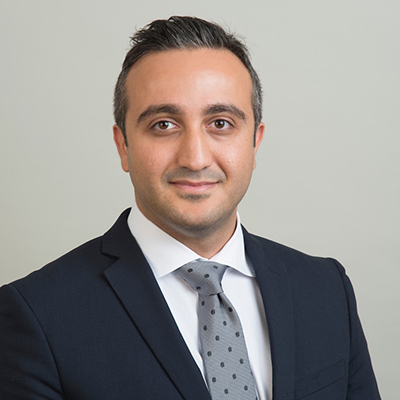
Dr. Aria Fallah, MD, is an Assistant Professor in Neurosurgery at the University of California, Los Angeles (UCLA), with secondary appointments in Health Policy and Management. His research focuses on Evidence-Based Surgery , Clinical Trials , and Meta-Analyses for pediatric epilepsy surgery outcomes, including prognostic tools and comparative effectiveness studies . He actively participates in international collaborations like the CTSI and has published extensively in journals such as Epilepsia , Neurology , and Clinical Neurophysiology . University: University of California, Los Angeles Department: Neurosurgery Email: afallah@mednet.ucla.edu Dr. Fallah’s research integrates machine learning and deep learning to analyze high-frequency oscillations in epilepsy, aiming to refine diagnostic and therapeutic strategies. His recent work includes developing tools like PyHFO for oscillation detection and HOPS calculator for predicting seizure freedom after hemispherectomy. His publications highlight collaborations across institutions in pediatric epilepsy surgery , hemimegalencephaly , and thalamic neuromodulation . While no explicit awards or student advisement are listed, his contributions span clinical trials , neuroimmunology , and global neurosurgery initiatives , including work in Haiti.
.jpg)
Aidan J Horner is a Professor in the Department of Psychology at the University of York. He holds a BSc in Psychology (2005) and MSc in Cognitive Neuroscience (2006) from the University of York, followed by a PhD in Cognitive Neuroscience from the University of Cambridge (2010). His career includes postdoctoral research at Otto-von-Guericke University (2010–2011) and University College London (2011–2016), and a visiting scholar position at Stanford University (2008). He returned to York as a Lecturer in 2016, advancing to Senior Lecturer and his current Professorship. Research Focus: Horner’s work examines how the brain encodes and retrieves long-term memories, particularly spatial and event-based information. He employs experimental psychology, virtual reality, neuroimaging (e.g., fMRI, MEG), and computational modeling to study hippocampal and cortical mechanisms underlying memory formation, consolidation, and forgetting. His recent studies explore the role of theta oscillations in memory binding, the impact of emotion on memory coherence, and forgetting dynamics. Publications & Awards: Over 50 peer-reviewed articles, including high-impact work in Current Biology , Nature Communications , and Cognition . Recognized with the Annual Cognitive Paper Prize Award (2022) for groundbreaking contributions to memory research. Grants & Projects: Lead investigator on ESRC-funded projects (e.g., "Promoting rapid and sustained learning of novel information" , 2018–2022). Collaborates with institutions like the York Neuroimaging Centre (YNiC) to advance neuroimaging techniques in cognitive studies. Labs & Teams: Affiliated with the York Neuroimaging Centre (YNiC), integrating neuroimaging with behavioral and computational approaches to memory systems. Active in interdisciplinary teams studying memory plasticity and cognitive neuroscience.
Stefano Fusiمشاهده پروفایل
دانشیار
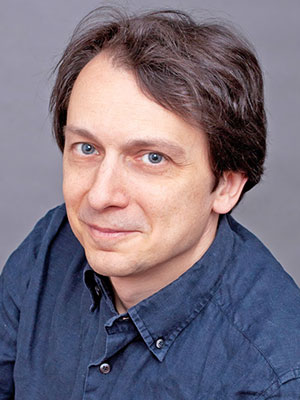
Stefano Fusi is an Associate Professor of Neuroscience at Columbia University's Vagelos College of Physicians and Surgeons, with joint affiliations at the Mortimer B. Zuckerman Mind Brain Behavior Institute and Kavli Institute. His laboratory focuses on computational modeling of neural circuits and neuromorphic engineering. Education PhD in Physics, Hebrew University of Jerusalem (1999) BS in Physics, Sapienza University of Rome (1992) Research Focus Fusi investigates how biological complexity supports neural computation through three primary domains: theoretical analysis of neural circuit dynamics, representational geometry in learning systems, and hardware implementations of brain-inspired algorithms. His work bridges machine learning, neurophysiology, and theoretical physics, emphasizing high-dimensional representations and memory optimization. Recent publications demonstrate consistent focus on neural coding principles across hippocampus, prefrontal cortex, and sensory systems, with innovations in modeling working memory, stress responses, and cross-species computational paradigms. Collaborations & Labs Leads an interdisciplinary laboratory collaborating with Columbia experimental neuroscientists, MIT engineers, and Stanford computational researchers to validate theoretical models. Current projects include neuromorphic hardware development and neural decoding of emotional states.
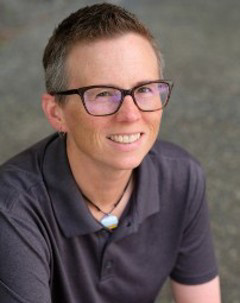
Dr. Helen Kurki is a Professor of Anthropology in the Department of Anthropology at the University of Victoria's Faculty of Social Sciences. Her office is located in COR B211a, and she can be reached at hkurki@uvic.ca or by phone at 250-721-7045. Dr. Kurki holds a PhD from the University of Toronto and specializes in biological anthropology with a focus on skeletal biology and hominin functional anatomy. Dr. Kurki's research centers on morphological variation in recent humans and the evolutionary, cultural, and developmental mechanisms that have produced it, as a means of understanding the processes of hominin evolution and adaptability. Her primary methodological approach involves analyzing functional anatomy and skeletal biology in humans using both traditional osteological methods and 3D modeling of the skeleton. Her work spans skeletal growth and development, pelvic morphology, long bone growth patterns, and the evolutionary implications of skeletal variation across different human populations. Her recent publications demonstrate a consistent focus on skeletal morphology, particularly examining pelvic structure, limb bone development, and growth patterns across different human populations. Her research often bridges biological anthropology with evolutionary theory, exploring how skeletal adaptations relate to human evolution, locomotion, and reproductive biology. Dr. Kurki frequently collaborates with researchers in biological anthropology and has made significant contributions to understanding the biomechanical and evolutionary aspects of human skeletal development. Dr. Kurki teaches several anthropology courses including ANTH 251 Human Evolutionary Biology, ANTH 317 Quantitative Methods in Anthropological Research, ANTH 351 Human Origins, ANTH 454 Approaches to Human Bioarchaeology, and ANTH 551/651 Advanced Research Seminar in Ecology and Evolution. While specific grant information isn't provided in the available materials, her ongoing research program and regular publication record suggest active research funding supporting her work in skeletal biology and human evolution.

- Neuroscience
- Aging
- Memory
- +۶ مورد دیگر
Anthony D. Wagner is the Lucie Stern Professor in the Department of Psychology at Stanford University and Deputy Director of the Wu Tsai Neurosciences Institute. He holds affiliations with Stanford's Center for Cognitive and Neurobiological Imaging, Symbolic Systems Program, Human Biology Program, and Stanford Center on Longevity. His PhD (1997) is from Stanford University in Psychology. Research focuses on the neurobiology of learning, memory, and executive function across ages, with translational studies on aging, Alzheimer’s disease, multitasking, and neuroscience applications in law. Key themes include biomarker development for neurodegeneration, cognitive resilience, and the impact of attention on memory. Labs/teams include collaborations at the Wu Tsai Institute and neuroimaging centers. Recent work emphasizes tau PET imaging, proteomics of aging, and fluid biomarkers for Alzheimer’s prediction. He also explores societal impacts of neurotechnology and media on cognition.

Surya Ganguliمشاهده پروفایل
دانشیار
Surya Ganguli is an Associate Professor in the Department of Applied Physics at Stanford University, with courtesy appointments in Neurobiology and Electrical Engineering. He serves as Senior Fellow at the Stanford Institute for Human-Centered AI and is affiliated with the Stanford Neuroscience Institute , Bio-X , and Wu Tsai Neurosciences Institute . His research spans theoretical neuroscience, machine learning, and statistical mechanics. Ph.D. , UC Berkeley, Theoretical Physics (2004) M.A. , UC Berkeley, Physics (2000) M.A. , UC Berkeley, Mathematics (2004) M.Eng. , MIT, Electrical Engineering and Computer Science (1998) B.S. , MIT, Physics (1998) B.S. , MIT, Mathematics (1998) B.S. , MIT, Electrical Engineering and Computer Science (1998) His lab explores how higher-level cognitive phenomena emerge from neural network dynamics, focusing on perception, memory, attention, and decision-making . Research themes include statistical mechanics of learning , neural representational geometry , and biologically plausible learning rules . Current work examines nonlinear interactions in neural networks through the Schmidt Science Polymath Award (2023). Key article trends reveal expertise in neural coding limits (2022 Nature), synaptic plasticity models (2022 Neural Computation), and deep learning theory (2022 NeurIPS publications). His 2019 Annual Review chapter on statistical mechanics of deep learning established foundational insights into network criticality. Scientific Awards : NSF Career Award (2019) Simons Foundation Investigator (2016) McKnight Scholar Award (2015) James S. McDonnell Foundation Scholar (2014) Sloan Research Fellow (2013) As advisor, he mentors 10+ doctoral students across Applied Physics, Neurosciences, and Computer Science, including Vamshi Balanaga and Mason Kamb. His lab collaborates with experimental teams at Stanford and beyond, supported by grants from NSF , Simons Foundation , and Swartz Foundation . The Neural Dynamics & Computation Lab unites physicists, mathematicians, and neuroscientists to decode cognition through interdisciplinary methods.

Xiaoyao Fanمشاهده پروفایل
استادیار
- Image Guidance
- Neurosurgery
- Brain Deformation
- +۸ مورد دیگر
Xiaoyao Fan is an Assistant Professor of Engineering at Dartmouth College, specializing in image guidance systems for neurosurgery and spine surgery. His work focuses on improving intraoperative imaging accuracy through computational modeling, stereovision, and ultrasound technologies. He collaborates with the Center for Surgical Innovation (CSI) at Dartmouth-Hitchcock Medical Center (DHMC) and has contributed to over 400 surgical cases involving real-time imaging and feedback systems. Education: B.E. in Electrical Engineering, Tsinghua University (2007) Ph.D. in Biomedical Engineering, Dartmouth College (2012) Research Interests: His research emphasizes minimizing surgical errors via real-time brain deformation compensation, spine motion correction, and intraoperative imaging systems. Techniques include stereovision, 3D ultrasound, and machine learning for image registration and navigation. Key applications include open and minimally invasive neurosurgical procedures. Publications: His work spans stereovision systems for spinal surgery, brain shift compensation algorithms, and intraoperative ultrasound registration. Recent contributions address human feasibility and porcine model validation of surgical navigation tools. Grants & Labs: Collaborates with Medtronic on integrating updated imaging into navigation systems. Active in the CSI DHMC lab, focusing on clinical translation of real-time imaging solutions. Teaches ENGS 111: Digital Image Processing. Labs & Teams: Works within Dartmouth’s engineering and medical collaboration networks, advancing surgical precision through interdisciplinary research.
Anna Levinaمشاهده پروفایل
استادیار
Anna Levina is an Assistant Professor for Computational Neuroscience at the University of Tübingen , affiliated with the Department of Computer Science under the Faculty of Science. Her research focuses on the self-organization of neuronal activity, critical dynamics in neural networks, and the excitation/inhibition balance in cortical circuits. Current positions: Assistant Professor (since 2018), Group Leader (2017-2018), Equality Officer (Computer Science) Previous roles: IST Fellow (2015-2017), Associated Researcher (2011-2015), Postdoc/PI (2011-2015), Postdoc (2008-2011) Her research integrates mathematical modeling , statistical physics , and computational neuroscience to study criticality phenomena, neural avalanches, and adaptive network dynamics. Key interests include: Self-organized criticality in neural systems Excitation/Inhibition balance mechanisms Network topology and dynamics Timescale analysis in neural processing Stochastic modeling of neural activity Recent publications reveal trends in understanding critical dynamics across biological and artificial networks, with applications to memory systems, sensorimotor integration, and disease modeling. She has received recognition as an IST Fellow .
Suradip Dasمشاهده پروفایل
استادیار
Suradip Das is a Research Assistant Professor in the Department of Neurosurgery at the Perelman School of Medicine, University of Pennsylvania, where he serves as a Senior Research Investigator. His work bridges neural engineering and regenerative medicine to address critical challenges in nerve and muscle repair. His academic training includes: B.Tech in Biotechnology from Heritage Institute of Technology (2010) PhD in Biosciences and Bioengineering from Indian Institute of Technology Guwahati (2016) Dr. Das specializes in biomaterials development , peripheral nerve injury models , neuromuscular interface engineering , and stem cell-based regeneration . His research pioneers innervated tissue-engineered muscle constructs, demonstrating how motor neurons and endothelial cells synergistically enhance skeletal myocyte maturation. He innovates custom mechanobioreactors that apply tensile forces to guide nanofiber alignment for optimal myofiber formation, significantly advancing volumetric muscle loss treatments. Analysis of his 15 most recent publications reveals a dominant focus on neuromuscular regeneration (75% of articles), with emerging exploration of psychedelic compounds in neural repair. His work consistently integrates human iPSC-derived models , multi-cellular co-cultures , and large-animal validation to address translational gaps. Key trends include optogenetic control of motor units (2023), porcine nerve injury models (2020), and the critical role of pre-innervation in creating pro-regenerative microenvironments (2020-2022). As a core member of the Cullen Lab, Dr. Das collaborates on developing biofabricated neural microtissues for delayed nerve fusion and rapid functional recovery. His research directly informs clinical strategies for peripheral nerve repair and muscle regeneration through rigorous mechanistic studies and innovative engineering solutions.
نمایش نتایج تا ۷۵۰ مورد اول. برای یافتن نتایج دقیقتر، جستجوی خود را با فیلترها محدود کنید.