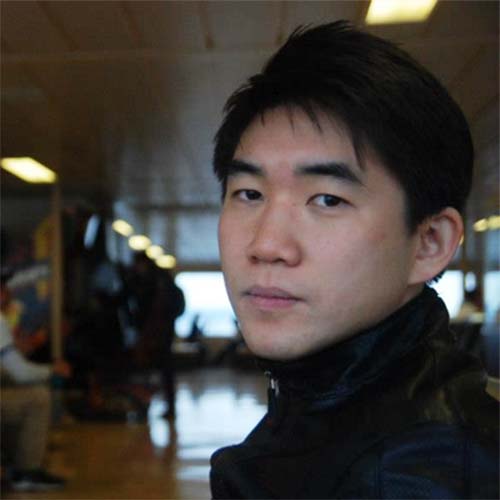
Prof. Dr. Oliver Müller is a Professor at the Department of Philosophy, University of Freiburg, and serves as Vice Dean of the Faculty of Philosophy. His academic journey includes a doctorate from Humboldt University Berlin (2005) and a habilitation in Philosophy (2012). Müller leads research on Philosophical Anthropology, Philosophy of Technology, and Ethics, with a focus on human-machine interactions and Anthropocene ethics. He supervises doctoral and postdoctoral researchers across projects like livMatS and BrainLinks-BrainTools. Research interests span neuroethics, transhumanism, and socio-technological systems, emphasizing ethical frameworks for emerging technologies. Publications explore AI ethics, drone warfare, and phenomenological embodiment, reflecting interdisciplinary engagement with neuroscience and environmental philosophy. Honors include the MTZ Bioethics Award and Heisenberg Fellowship. Müller directs participatory discourse initiatives bridging art and science, fostering public engagement with technological ethics. His work advances critical dialogues on human enhancement and ecological responsibility in the digital age.
Michael Nebeling is an Associate Professor at the University of Michigan's School of Information (UMSI), leading the Information Interaction Lab. His research focuses on Augmented, Virtual, and Mixed Reality (XR) interfaces, emphasizing usability, accessibility, and privacy. He co-directs the HCI seminar series in the Michigan Interactive and Social Computing (MISC) group and teaches AR/VR courses (SI 559/659). Nebeling has held roles such as UIST 2026 General Co-Chair and CHI 2026 Subcommittee Co-Chair. He pioneered the Extended Reality for Everybody Coursera specialization and the XR MOOC series . His work includes projects like XRDirector , MRAT , and 360proto , addressing challenges in XR design and tool development. Awards include the Disney Research Faculty Award, Mozilla Research Award, and Epic MegaGrant. He advises the student-led Alternate Reality Initiative (ARI) and collaborates with industry partners like Meta, Epic, and Disney. Education: PhD in Computer Science from ETH Zurich (2015), Postdoc at Carnegie Mellon University's Human-Computer Interaction Institute (2016). Research Themes: XR toolkits, privacy/security in AR/VR, inclusive design, educational applications, and ethical considerations in mixed reality. Over 90 publications in venues like CHI, UIST, and ACM Transactions on CHI. Awards: Disney Research Faculty Award (2018), Mozilla Research Award (2018), Epic MegaGrant (2019), Meta Reality Labs Gift (2020). Recognized with Best Paper Awards at CHI and UIST.
Rachel Cummings is an Associate Professor in the Department of Industrial Engineering and Operations Research (IEOR) at Columbia University, with a courtesy appointment in the Department of Computer Science. She serves as Co-chair of the Cybersecurity Research Center at Columbia’s Data Science Institute. Previously, she was faculty at Georgia Tech’s School of Industrial and Systems Engineering (ISyE), holding a courtesy appointment in Computer Science. She holds a Ph.D. in Computing and Mathematical Sciences from Caltech, with research visits at UPenn, Hebrew University, Microsoft Research, and the Simons Institute. Her research focuses on differential privacy, integrating tools from machine learning, algorithm design, economics, optimization, statistics, HCI, usable security, and public policy. She emphasizes practical applications of theoretical privacy-preserving methods. Key roles include Managing Editor for the Journal of Privacy and Confidentiality , service on the ACM U.S. Technology Policy Council, IEEE Standards Association, and Future of Privacy Forum’s Advisory Board. She has advised on the U.S. Census Bureau’s Scientific Advisory Council and served as a Fellow at the Center for Democracy & Technology. Recent work includes papers on privacy elasticity, synthetic control methods, and differential privacy under class imbalance. Her awards include NSF CAREER, DARPA Young Faculty Award, and Best Paper recognitions at DISC, CCS, and SaTML. She actively chairs conferences (e.g., DEF CON Crypto) and mentors students like Tingting Ou (PhD 2025) and Peihan Liu (PhD 2024–present). Her lab explores privacy-preserving technologies, policy implications, and interdisciplinary collaborations.
Qian Yang is an Assistant Professor in Information Science at Cornell University, with a faculty appointment in Computer Science. Her research focuses on human-AI interaction, designing AI applications for healthcare, autonomous systems, and UX design. She holds a PhD in Human-Computer Interaction from Carnegie Mellon University and has industry experience in design consultancy (2007–2014). Yang co-directs the Cornell Digital and AI Literacy Initiative and is a Senior Fellow at the Cornell Brooks Tech Policy Institute. Her work emphasizes bridging AI technologies with societal needs, supported by awards like the Schmidt Futures AI2050 Fellowship. She leads the DesignAI research group, focusing on AI-driven design methods and tools for practitioners. Education: PhD in HCI (Carnegie Mellon), M.S. in HCI (CMU), M.Des in Design, B.Eng in Industrial Design (Shanghai Jiao Tong University). Research interests include AI ethics, healthcare decision support systems, and context-aware mobile services. Notable contributions include: Developing AI systems for life-critical healthcare decisions (e.g., artificial heart implants) Innovating UX design methods for integrating AI into practice Advancing human-centered AI evaluation frameworks Awards include the SIGCHI Outstanding Dissertation Award and AI2050 Fellowship. She actively collaborates across disciplines, with work published in top HCI venues like CHI and ACM Transactions.
Floyd Mueller is a Full Professor of Future Interfaces in the Department of Human Centred Computing at Monash University, where he also directs the award-winning Exertion Games Lab. His work bridges human-computer interaction, interaction design, and game and play design, with a focus on bodily engagement and physical activity through technology. He has held prior academic and research positions at RMIT University, the University of Melbourne, and CSIRO, and has been affiliated with elite institutions such as Stanford University, MIT Media Lab, and Microsoft Research Asia. PhD in Interaction Design – University of Melbourne (2011) MS in Media Arts and Sciences – Massachusetts Institute of Technology (2002) Diplom-Informatiker (Medieninformatik) – Hochschule Furtwangen (2000) BSc in Multimedia – Griffith University (1999) Floyd Mueller’s research centers on human-computer interaction with a strong emphasis on bodily interactions, exertion interfaces, and playful technologies. His work explores how digital systems can support physical activity, human values, and novel forms of expression through games, wearables, augmented reality, and immersive experiences. He employs methodologies such as design ethnography, autoethnography, and Research Through Design to investigate the phenomenology of human-computer integration. His recent publications (2024–2025) reflect a continued focus on the future of bodily interfaces, including lucid dream mediation, extended reality for fear reduction in water, sonic gastronomy, and shared bodily control in augmented human systems. These works are published in top-tier venues like CHI and Human-Computer Interaction journal, highlighting trends toward immersive, sensory-rich, and human-centered computing that challenge traditional boundaries between body and machine. His scientific awards include being an inaugural honouree of the Australian Design Honours, receiving 9 Best Paper Honorable Mentions and 2 Best Papers at CHI and CHI PLAY, and being recognized as a Fulbright Visiting Scholar and Microsoft Research Asia Fellow. His games have been featured by BBC, ABC, Discovery Science Channel, and New Scientist, and won a Media Star Award. Floyd Mueller actively supervises PhD students through the Exertion Games Lab and Supervisor Connect platform. He has secured major research grants, including Australian Research Council Discovery and Linkage Projects. His current projects include Advancing Australia’s hospitality industry through interactive food and Designing digital aquatic play to foster Australians' engagement with water . He also serves as associate editor for IMWUT and IJHCS, co-founded the CHI PLAY conference series, and was general co-chair for CHI PLAY’18 and CHI’20. He leads the Exertion Games Lab, an interdisciplinary research team focused on inventing the future of bodily play. The lab investigates how technology can support active lifestyles through exertion games, wearables, drones, and immersive environments. The lab’s work spans design, prototyping, user studies, and real-world deployment, often in collaboration with chefs, athletes, and underwater explorers.
Lorrie Faith Cranor is the Director and Bosch Distinguished Professor in Security and Privacy Technologies at the CyLab Security and Privacy Institute, and the FORE Systems University Professor of Computer Science and Engineering and Public Policy at Carnegie Mellon University. She also directs the CyLab Usable Privacy and Security Laboratory (CUPS) and co-directs the MSIT-Privacy Engineering master’s program. She previously served as Chief Technologist at the U.S. Federal Trade Commission and is a co-founder of Wombat Security Technologies. Carnegie Mellon University – CyLab Security and Privacy Institute School of Computer Science – Department of Computer Science College of Engineering – Department of Engineering and Public Policy PhD Program in Societal Computing Human-Computer Interaction Institute (affiliate) Heinz College (affiliate) Dr. Cranor’s research centers on usable privacy and security, privacy engineering, and technology policy. Her work spans authentication systems, privacy policies, IoT security, and human behavior in digital environments. She has pioneered research on password usability, privacy labels (e.g., 'nutrition labels' for privacy), and privacy decision-making. Her interdisciplinary approach integrates computer science, public policy, and behavioral science to create systems that are both secure and user-friendly. Her recent publications reflect a strong focus on privacy interfaces, consent mechanisms, IoT security labels, and user comprehension of digital privacy. Trends include evaluating the usability of privacy controls across platforms, designing tools for developers to generate accurate privacy disclosures, and understanding user behavior in online tracking and advertising contexts. Her work frequently appears in top venues such as CHI, SOUPS, and PETS. ACM CHI Academy inductee ACM Fellow IEEE Fellow 2018 ACM CHI Social Impact Award 2018 International Association of Privacy Professionals Privacy Leadership Award 2018 IEEE Cybersecurity Award for Practice Alumni Achievement Award, McKelvey School of Engineering Top 100 Innovator under 35, Technology Review Dr. Cranor has advised numerous PhD students in interdisciplinary programs including Societal Computing, Engineering and Public Policy, and Human-Computer Interaction. Her research has been supported by grants from the National Science Foundation, DARPA, and industry partners. She serves on the boards of the Computing Research Association, Center for Democracy and Technology, and Electronic Privacy Information Center. She is a frequent media commentator on privacy and security issues. She leads the CyLab Usable Privacy and Security Laboratory (CUPS), a multidisciplinary research group that includes faculty and students from computer science, policy, and HCI. The lab focuses on making privacy and security systems more intuitive, effective, and user-controlled. Key projects include the Usable Privacy Policy Project, privacy nutrition labels, and the Personalized Privacy Assistant Project.
Jan Oliver Borchers is a full professor of computer science and head of the Media Computing Group at RWTH Aachen University, where he holds the endowed Chair in Media Informatics and Human-Computer Interaction (Computer Science 10). He established his research group in 2003 and pioneered modern HCI academic research and teaching in Germany, becoming a leading lab in terms of archival publications at CHI, the top international conference in HCI. Before joining RWTH, he held faculty positions at Stanford University and ETH Zurich. His research focuses on Human-Computer Interaction with particular interest in new user interfaces for soft robotics, textile user interfaces, 3D printing and personal fabrication, augmented reality, wearable and tangible computing, interfaces for software development, deceptive patterns, and interactive guides and exhibits. He opened Germany's first Fab Lab in 2009 and has been instrumental in advancing digital fabrication and maker culture in academia. His work bridges theoretical HCI research with practical applications, as evidenced by his consulting for major companies including AirBus, Apple, ARD, Bayer, Children's Museum Boston, Daimler, Handelsblatt, OTIS, Scout24, TEDx, and Deutsche Telekom. His recent publications show a strong focus on deceptive patterns in UI design, textile interfaces, and the intersection of AI with human interaction. The research demonstrates consistent innovation in tactile interaction techniques, with numerous honorable mentions at top conferences like CHI. His lab has produced significant contributions to eyes-free interaction, textile computing, and the ethical implications of dark patterns, particularly regarding children's experiences with deceptive designs. IDC 2025 Best Work in Progress for research on children's assessment of deceptive designs CHI'25 Student Games Competition Winner for The Deceptive Dungeon RWTH-Wissenschaftsnacht 2024 Best Science Slam for Usability: 4 Prinzipien guter User Interfaces Multiple CHI Honorable Mentions spanning from 2008-2021 Best Note and Best Demo awards at ITS and UIST conferences Borchers has served in numerous leadership roles including heading the Computer Science Department's Examination Board (2015-2025), coordinating the department's public relations since 2010, and organizing the weekly Faculty Lunch since 2003. He is an active member of the ACM, SIGCHI, SIGCHI Germany, and GI, and introduced the Interactivity format to the CHI conference in 2005. His PhD thesis, A Pattern Approach to Interaction Design, became the first book to bring design patterns to HCI. The Media Computing Group under his leadership has developed significant expertise in physical computing, textile interfaces, and fabrication technologies, with a strong emphasis on both theoretical contributions and practical applications. His lab continues to push boundaries in interactive technologies while maintaining a strong ethical stance on user experience, particularly regarding deceptive design patterns.
Prof. Dr. Andreas Butz is a Full Professor and Chair for Human-Computer Interaction at the Department for Informatics, Ludwig-Maximilians-Universität München (LMU Munich). He leads the Media Informatics Group, focusing on innovative interaction techniques and interfaces in immersive environments like VR/AR, automotive systems, and smart spaces. His research emphasizes perceptual user interfaces, social robotics, and designing systems that balance invisibility with transparency. Key research areas include: Virtual/Augmented Reality interfaces for productivity and social interaction AI-driven decision support in safety-critical domains (aviation, healthcare) Haptic and wearable interaction technologies Automotive UI design for driver assistance systems Principles of explainable AI and human-AI collaboration His work bridges theory and practice through projects like: VR-based movement training systems AI trust calibration mechanisms Multi-modal interaction frameworks for automotive environments Systems for analyzing long-term music listening behavior Recent articles explore topics ranging from AI support in pilot decision-making to haptic wearables and creative writing interfaces. His team collaborates with industry partners on electric vehicle information systems and in-car interaction challenges.
François Guimbretière is a Professor in the Department of Information Science at Cornell University, with affiliations to the Department of Design & Technology. He holds a PhD in Computer Science from Stanford University and previously served on the faculty at the University of Maryland before joining Cornell in 2009. His research centers on human-computer interaction, human-robot interaction, and interface design, with a strong emphasis on hardware/software co-design to create seamless, sustainable, and innovative interactive systems. His work spans multiple domains including interactive fabrication, remote collaboration, and low-power interfaces. Guimbretière's recent research explores novel fabrication methods such as interactive printing and yarn-based electronics, as well as immersive remote embodiment systems that reduce reliance on physical travel. These efforts reflect a broader trend toward sustainable and accessible interaction technologies. His publications demonstrate consistent contributions to top-tier venues in HCI and ubiquitous computing, focusing on tangible, wearable, and environmentally conscious interfaces. Scientific Recognition: He advises graduate and undergraduate researchers in the development of next-generation interactive systems. His lab supports projects in digital fabrication, remote presence, and sustainable design, often involving interdisciplinary collaboration. While specific grants are not listed, his research trajectory suggests sustained funding in human-centered technology innovation. He leads a research group focused on building practical, user-centered systems that bridge the digital and physical worlds through creative engineering and design. The lab emphasizes hands-on prototyping, real-world deployment, and the integration of traditional craft with advanced technologies.
Alex Mariakakis is an Assistant Professor in the Department of Computer Science at the University of Toronto, leading the Computational Health and Interaction (CHAI) lab. His research focuses on leveraging ubiquitous and wearable technologies for healthcare applications, including smartphone-based health sensing for conditions like traumatic brain injury, jaundice, and inebriation. He holds affiliations with KITE@UHN and AXL venture studio, emphasizing translational research. Education: PhD in Computer Science (University of Washington, advised by Shwetak Patel and Jacob O. Wobbrock), B.S. in Electrical and Computer Engineering and Computer Science (Duke University). Prior roles include postdoctoral work at Sage Bionetworks and academic advising roles at UW. Key research interests include mobile health (mHealth), human-computer interaction, and machine learning applied to sensor data. His work has received Best Paper Awards at ACM CHI and COMPASS, and media attention from BBC and National Geographic. Recent activities include talks on embracing ubiquitous tech for healthcare (KITE Research Rounds, June 2025) and contributions to courses like 'Advanced Topics in Mobile Health.'
Prof Lee Kwan Min is a Professor and the inaugural Korea Foundation Professor in Contemporary Korean Society and New Media at Nanyang Technological University’s Wee Kim Wee School of Communication and Information (WKWSCI), where he directs the UX Lab. He holds a Ph.D. from Stanford University and has held leadership roles, including founding director of Interaction Science Research Center at Sungkyunkwan University and Vice President at Samsung Electronics, overseeing UX strategy and innovation. His research focuses on user experience (UX), human-machine interaction (HCI/HRI/HAI), digital culture, and Korean society’s technological evolution. He has secured over $12M in research grants and holds patents in display interfaces and gesture control. Notable awards include ICA Fellowship and USC Mellon Teaching Award. Education: Ph.D. (Stanford University), M.A./B.A. (implied from career timeline). Previous affiliations include Sungkyunkwan University (SKKU) and the University of Southern California (USC), where he was tenured at 40. His work bridges academia and industry, advising startups in fintech, smart mobility, and UX design. Research Interests: UX design and evaluation Social/psychological impacts of ICT Human-robot/vehicle interaction Smart cities and disruptive technologies Korean digital society studies Recent work trends emphasize conversational interfaces in vehicles, metaverse analysis, and Fintech agents. His articles explore topics like autonomous vehicle trust, cross-cultural gaming psychology, and VR advertising. Awards include ICA Fellow status and multiple top-paper recognitions. Grants and Patents: Over $12M funding from NSF, Samsung, and Korean/US governments. Patents span smart displays, gesture control, and multimedia systems. Advises global firms on UX strategies and innovation. Labs/Teams: Director of UX Lab at NTU, leading interdisciplinary research. Collaborates with MIT Cognet and editorial boards of top journals like Journal of Communication and Human Communication Research .
James Fogarty is a Professor at the Paul G. Allen School of Computer Science & Engineering, University of Washington. He serves as a core member of the DUB Group (Design. Use. Build.), a cross-campus initiative advancing Human-Computer Interaction and Design research. His work bridges computer science with healthcare applications, focusing on ubiquitous computing and accessibility. Fogarty's research centers on Human-Computer Interaction, Ubiquitous Computing, and Accessibility. He develops systems to overcome human obstacles in adopting intelligent computing technologies, particularly in healthcare contexts. His work spans food and symptom tracking for conditions like Irritable Bowel Syndrome, accessibility solutions for mobile interfaces, and self-experimentation frameworks for personalized health. Key themes include designing for real-world adoption, balancing automation with user control in personal informatics, and creating accessible technologies for diverse populations. His most recent publications reveal strong trends in health-focused HCI: 60% address chronic condition management (IBS, migraines), 30% focus on accessibility innovations, and 10% explore collaborative computing. Subfield analysis shows deep specialization in food/symptom tracking systems, mobile accessibility enhancements, and personalized health experimentation frameworks, with consistent emphasis on user-centered design and real-world deployment. Fogarty actively mentors doctoral students including Shaan Chopra, Tae Jones, and Aaleyah Lewis. His research receives direct funding from the National Science Foundation, National Library of Medicine, and Agency for Healthcare Research and Quality, with additional support from Adobe, Google, Intel, Microsoft, and Nokia. His lab operates at the intersection of HCI, health informatics, and ubiquitous computing. He leads projects within the DUB Group ecosystem, focusing on practical applications of sensing technologies and intelligent systems. Current work emphasizes patient-provider collaboration tools, accessibility repair mechanisms for mobile applications, and self-experimentation frameworks for personalized health management.
Sungsoo Ray Hong is an Assistant Professor at George Mason University's Department of Information Sciences and Technology, directing the Alignment Lab (A-lab). His research focuses on bridging human mental models with AI systems through Human-Computer Interaction (HCI) and Computer-Supported Cooperative Work (CSCW). Dr. Hong earned his PhD in Human Centered Design and Engineering at the University of Washington. Research Domains: Human-AI Collaboration, Interactive Data Annotation, Steerable Deep Neural Networks, and AI-Driven Applications Key Grants: NSF Future of Work at the Human-Technology Frontier (2021-2024, $160K) Email: shong31@gmu.edu Hong's research explores how humans interact with machine learning systems to improve decision-making and task productivity. His lab develops tools for collaborative data annotation, interpretable model building, and AI-augmented creativity in professional contexts. Recent work includes applications for neurodiverse workers and comic professionals. The 15 most recent publications show strong focus on Human-AI collaboration (7 articles), interactive systems design (11 articles), and accessibility applications (5 articles). Topics span from explainable AI frameworks to collaborative annotation interfaces and creative industry tools. Dr. Hong maintains active collaborations with KAIST researchers, including Dr. Jaegul Choo and Dr. Juho Kim. His lab offers remote internships and accepts PhD students for summer positions.
Prof. April Wang is an Assistant Professor in the Department of Computer Science at ETH Zurich. Her work focuses on Educational Technology, Human-Computer Interaction, and AI-driven tools for programming education. She is affiliated with the Professur Educational Technology group and teaches courses such as Human Computer Interaction and Ethics in Computing. Her research explores interactive learning environments, collaborative data science workflows, and AI-augmented educational systems. Her research interests span computational notebooks, live coding interfaces, and human-AI collaboration in software development. Notable contributions include frameworks like DBox for algorithm learning and EDBooks for interactive programming narratives. She also investigates challenges in real-time collaboration tools and automated documentation systems for data scientists. Recent work emphasizes understanding user needs in automated copilot systems and resolving conflicts in collaborative notebook environments. Her projects often bridge theoretical HCI principles with practical educational tools, aiming to enhance both instructor efficacy and student engagement. Prof. Wang’s teaching portfolio includes courses on user-centered interface design and ethical scientific practices. She actively contributes to advancing interdisciplinary computational literacy through initiatives like datAR, which uses everyday objects to teach data concepts.
Dr Luke Hespanhol is a Senior Lecturer in Design and Computation at the University of Sydney's School of Architecture, Design and Planning. He is affiliated with the Sydney Southeast Asia Centre and Sydney Nano Institute, and previously served as a guest researcher at Aarhus University's Department of Aesthetics and Communication. His work focuses on interactive media installations that foster reflection on human-environment relationships, blending urban design, technology, and social engagement. He holds a PhD in interactive media architecture from the University of Sydney's Design Lab, with research exploring user-centred hybrid urban environments. His doctoral work laid the foundation for his current interests in digital placemaking, urban informatics, and smart cities. Research Interests: - Designing technology-infused public spaces - Media architecture as a tool for inclusive urban development - Ethical implications of AI and blockchain in cultural contexts - Temporal and spatial dimensions of urban interaction design - HCI methodologies for multiperspectival cultural heritage interpretation - Antifragile city frameworks integrating citizen participation His recent publications highlight trends in reimagining urban futures through speculative design, ethical AI systems, and autonomous vehicle interaction paradigms. While no specific scientific awards are listed, his work often addresses critical societal issues like decolonization in technology and climate-resilient infrastructure. Grants and Collaborations: - 2025: 'Waste to Resilience: Sanitation Against Stunting and Climate Vulnerability in Informal Coastal Areas' (Sydney Southeast Asia Centre) - 2022: 'The Metaverse as Vehicle for Aboriginal Digital Inclusion, Wellness and Self-Determination' (Facebook Research) Dr Hespanhol is actively involved in the Media Architecture Institute and contributes to cross-disciplinary initiatives uniting technology, art, and urban planning. His research emphasizes co-creation processes with communities to ensure equitable technological integration in urban systems.