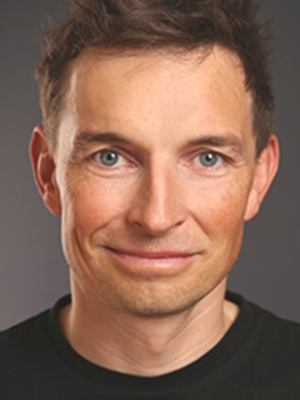
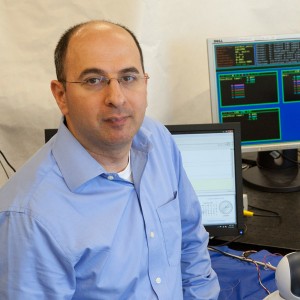
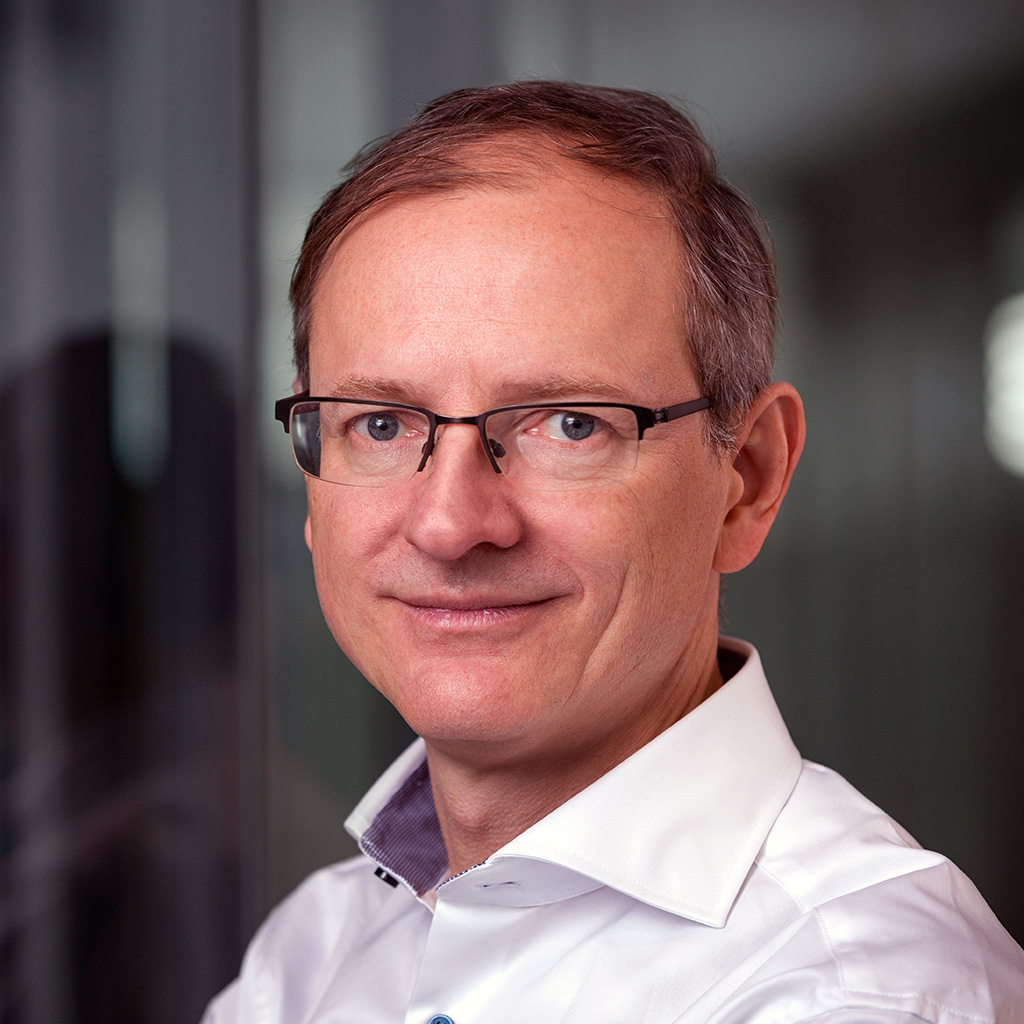
Dr. Christoph Leitner is a Research Fellow at ETH Zurich's Integrated Systems Laboratory under Prof. Luca Benini, focusing on biomedical and IoT applications. His work integrates printed piezoelectric transducers and flexible electronics with energy-efficient systems. He holds a PhD in Biomedical Engineering from TU Graz (2022) and has collaborated with institutions like Sant'Anna School of Advanced Studies and KTH Stockholm. Notable achievements include the Josef Krainer Young Researcher Award and Motorik Scholarship. Leitner's research spans ultrasonics, machine learning, and wearable devices, with contributions to muscle-tendon dynamics and real-time biofeedback systems. Education: PhD in Biomedical Engineering, TU Graz (2022), Advisor: Prof. Christian Baumgartner Previous roles: University Assistant (2006–2011) and R&D Engineer at Virtual Vehicle GmbH Research Interests: Convergent technologies merging biomedical engineering and IoT Ultrasound-based monitoring for musculoskeletal systems Energy-efficient embedded systems for wearable applications Collaborations & Awards: Recipient of Josef Krainer Young Researcher Award (2023) and Motorik Scholarship (2018) Active collaborations with University of Zurich, Veterinary University of Vienna, and Queensland University of Technology Labs & Projects: Integrated Systems Laboratory at ETH Zurich Developed a patented ultrasound-transparent tattoo-based SEMG system with Prof. Francesco Greco
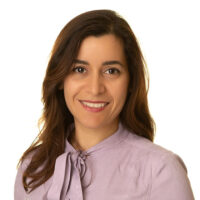
Dr. Marjan Alavi is an Assistant Professor at McMaster University's W Booth School of Engineering Practice and Technology, affiliated with the Mechanical Engineering department as an Associate Member. She holds a Professional Engineer (P.Eng.) license in Ontario and has over 15 years of academic and industrial experience in electrical engineering. Her research focuses on model-based and data-driven approaches for fault diagnosis, prognosis, and fault-tolerant control in hybrid systems, with applications in power electronics, energy systems, and smart infrastructure. Education: B.Sc. (2004) from K.N. Toosi University of Technology, M.Sc. (2007) from Sharif University of Technology, Ph.D. (2014) from Nanyang Technological University (Singapore), and a Postdoc (2015) at the University of Toronto's Energy Systems Group. Teaching: Instructs courses on Real-Time Systems (SEP 6ES3, SFWRTECH 4ES3), Smart Cities and Communities (SMRTTECH 4SC3), integrating real-world engineering challenges with theoretical frameworks. She emphasizes hands-on learning through remote labs and experiential projects. Professional Contributions: Serves as IEEE Toronto Section Executive Member, Technical Reviewer for IEEE Transactions on Industrial Electronics, and Vice Chair of IEEE Industrial Applications Society (2015). Founded Intelligent Diagnosis Corporations, a Canadian startup focused on research and innovation in diagnostics technologies. Key Projects: Developed fault diagnosis strategies for electro-hydraulic actuators, vehicle-mounted infrastructure monitoring systems, and remote laboratory platforms for emergency traffic control. Research spans predictive maintenance, smart city technologies, and railway systems certification benefits. Awards: Recipient of the Singapore International Graduate Award (SINGA) 2010. Recognized for her work in bridging academic research with industrial applications, particularly in enhancing system reliability through advanced control methodologies.
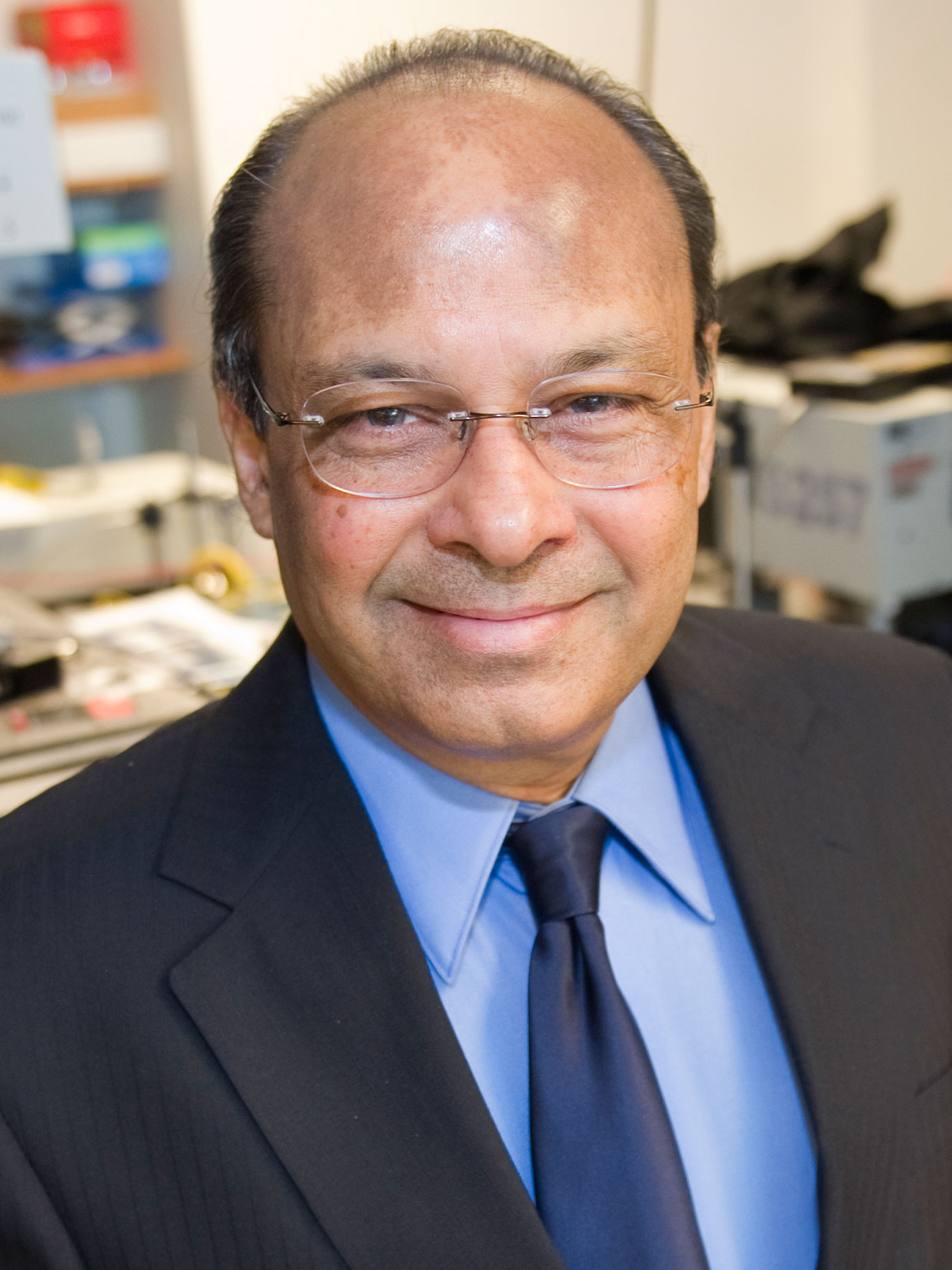
Srinivas Sridhar is a University Distinguished Professor of Physics, Biomedical Engineering, and Chemical Engineering at Northeastern University, with a secondary appointment as Lecturer on Radiation Oncology at Harvard Medical School. He previously served as Vice Provost for Research at Northeastern University (2004–2008), overseeing its research portfolio. As an elected Fellow of the American Physical Society and the American Institute of Medical and Biological Engineering, his research spans nanomedicine, neurotechnology, drug delivery, and quantitative MRI, with over 450 publications and patents. He founded the Nanomedicine Innovation Center and directs major NIH/NSF programs like CaNCURE and IGERT, focusing on undergraduate and graduate training in nanomedicine, particularly for underrepresented communities. His research interests include Nanomedicine Neurotechnology Quantitative MRI Drug Delivery Systems Metamaterials and Nanophotonics Quantum Chaos Superconductivity . Recent work involves machine learning-enhanced diagnostics for glaucoma, engineered nanoparticles for BRCA-deficient cancers, and portable neuro-ophthalmic devices. His publications from 2025–2017 reflect interdisciplinary applications in oncology, neurology, and materials science, with a focus on therapeutic and diagnostic innovation. Scientific accolades include the 2016 Biomedical Engineering Society Diversity Award University Distinguished Professorship . As an educator and entrepreneur, he has trained over 120 researchers, developed first-of-their-kind nanomedicine courses, and founded companies commercializing technologies like QUTE-CE MRI. His lab leads projects on cancer nanomedicine, quantitative imaging, and nanoscale magnetism, supported by grants from NIH, NSF, DoD, and private foundations.
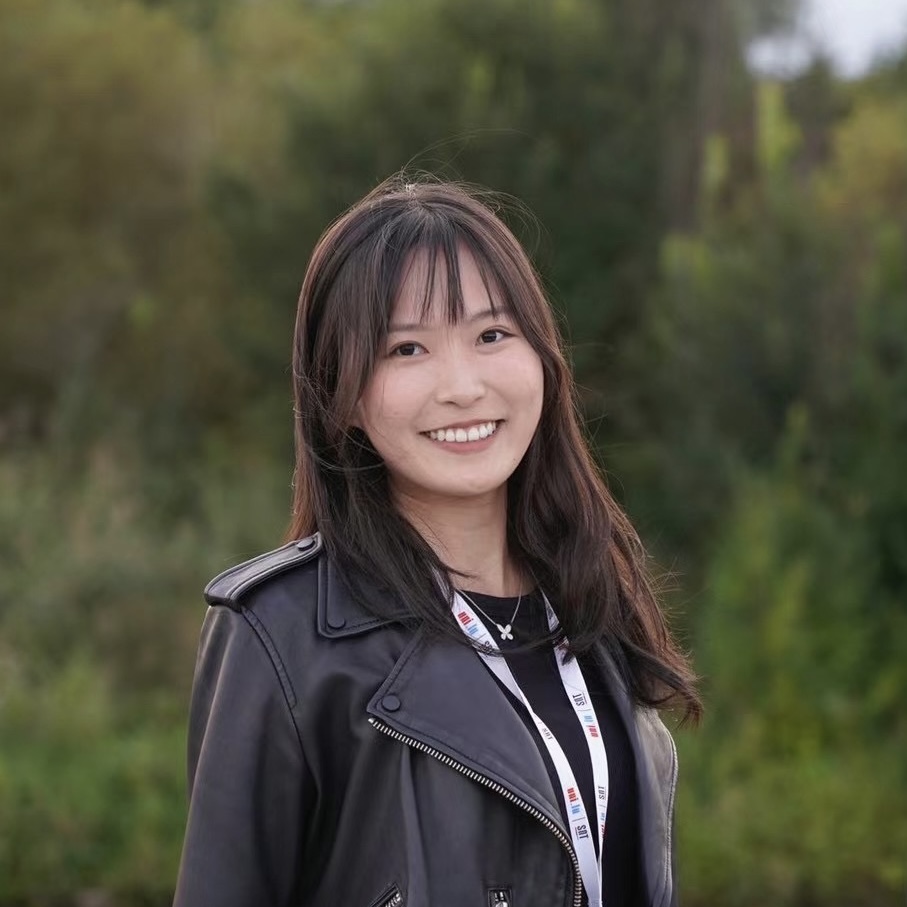
Yintong Huo is a tenure-track Assistant Professor in the Department of Computer Science at Singapore Management University (SMU), School of Computing and Information Systems. He joined SMU in early 2024 after completing his PhD at The Chinese University of Hong Kong (CUHK) under Prof. Michael R. Lyu. His academic journey includes a Bachelor's degree from the University of Electronic Science and Technology of China. Education: PhD in Computer Science and Engineering, The Chinese University of Hong Kong (2024) Bachelor's degree, University of Electronic Science and Technology of China Huo's research focuses on intelligent software engineering , particularly empowering AI models (especially LLMs) for software development, testing, and operations. His work spans AI4SE, LLM4SE, AIOps, code intelligence, and multimodal software engineering . Two flagship projects define his current research: LogPAI - an open-source AI platform for automated log analysis adopted by leading tech companies, and WebPAI - a multimodal intelligence project for automatic webpage development. His research addresses critical challenges in software reliability, log analysis, and UI code generation through innovative applications of AI. His recent publications reveal a strong trend toward multimodal approaches in software engineering , combining vision and language models for UI code generation, and increasingly sophisticated applications of LLMs for log analysis and software reliability. Huo's work demonstrates exceptional impact, with multiple papers accepted at top-tier venues including ASE, ICSE, and FSE with high acceptance rates (e.g., 9.5% for ASE'25). Scientific Awards: ICSE Distinguished Reviewer Award (2025) ISSRE Distinguished Reviewer Award (2024) IEEE Open Software Services Award (2022, for LogPAI with 3k+ GitHub stars and 70k+ downloads) ACM SIGSOFT CAPS Travel Grants (ASE'23, ICSE'24, FSE'24) Nomination for Best Teaching Assistant Award (2022) National Scholarship (2019) Huo actively mentors students at multiple levels, currently supervising PhD students Shi Ying Chang and Dan Huang (co-supervised with Prof. David Lo), research engineer Minxing Wang, and visiting students including Shiwen Shan. His undergraduate mentee Truong Hai Dang will intern at Apple Inc. He maintains strong industry connections, with his LogPAI project adopted by world-leading tech companies. Huo serves on program committees for major conferences including ASE'25, ICSE'26, and FSE'26, and is recruiting fully-funded PhD students and research assistants for projects in AI4SE and multimodal software engineering. Huo leads the LogPAI and WebPAI research initiatives, which have evolved into substantial open-source projects with significant industry adoption. His team focuses on practical applications of AI in software engineering, with particular emphasis on reliability and usability in real-world systems. The research environment benefits from SMU's strong position in software engineering research, where the university ranks No. 2 globally in Software Engineering according to CSRankings (2020-2025).
Dr. Mike Seymour is a Senior Lecturer at the University of Sydney Business School, specializing in Human-Computer Interaction (HCI), Digital Humans, and AI ethics. He holds a BSc, MBA, and PhD from the University of Sydney. His research focuses on photorealistic digital faces for immersive interfaces, blockchain socio-technical systems, and agile project management in creative industries. Dr. Seymour is a member of the Sydney Nano Institute and leads the Motus Lab. He has published in top journals like *Harvard Business Review*, *Communications of the ACM*, and *Information Systems Research*. His current projects include ARC-funded research on digital humans for anti-racism initiatives and adaptive AI for brain injury patients. He has received awards such as the SOAR Prize and ECR Researcher of the Year. His teaching spans CX, UX, and project management courses (e.g., INFS2040, INFS3080). Media engagements include ABC News, Sky News, and *The Australian Financial Review* for commentary on AI ethics and film industry trends. Education: BSc (University of Sydney) MBA (University of Sydney) PhD (University of Sydney) Research Themes: Real-time photorealistic avatars Deepfake ethics Agile methodologies in VFX Grants: A$450K ARC DP25 grant for anti-racism digital humans Earned $200K in industry partnerships (e.g., Epic Games) Labs/Teams: Leads the Motus Lab and collaborates with the Digital Human Research Group.
Maneesh Agrawala is the Forest Baskett Professor of Computer Science and Director of the Brown Institute for Media Innovation at Stanford University. He is also a consulting AI Scientist at Roblox. His research lies at the intersection of computer graphics, human-computer interaction (HCI), and visualization, with a focus on cognitive design principles for improving audio/visual media. He leads a vibrant research group and has advised numerous PhD students and postdocs. His research interests include: Computer Graphics Human-Computer Interaction Visualization and Visual Communication Cognitive Design Principles Generative AI and Diffusion Models Interactive Video and Sketch-based Interfaces Data and Information Visualization His recent publications (2023–2025) reflect a strong trend toward leveraging generative models—particularly diffusion models—for video and image synthesis, editing, and personalization. Key themes include controllable generation (e.g., SparseCtrl, ControlNet), sketch-to-image translation, relightable texturing, and tools that enhance visual storytelling and data communication. His work integrates cognitive science with computational tools to build systems that support human creativity and understanding. His scientific honors include: MacArthur Foundation Fellowship (2009) Alfred P. Sloan Foundation Fellowship (2007) NSF CAREER Award (2007) SIGGRAPH Significant New Researcher Award (2008) Allen Distinguished Investigator Award (2014) Induction into the SIGCHI Academy (2021) ACM Fellow (2022) Okawa Foundation Research Grant (2006) A dedicated mentor, Agrawala has advised a large cohort of students and postdocs, many of whom have gone on to influential positions in academia and industry. His lab develops tools for video editing (e.g., AnimateDiff, ControlNet), sketch-based design, and visualization (e.g., EmphasisChecker), often bridging theory with practical applications in media and education. He continues to be a leading figure in visual computing and interactive systems.
Nicholas Dalton is a Senior Lecturer in the Department of Computing and Communications at Northumbria University, Newcastle. With a PhD in Engineering from University College London (2010), he has taught at prestigious institutions including UCL and The Open University across foundational to postgraduate levels, specializing in supporting neurodivergent students. His research bridges architecture and computing, focusing on large-scale user interfaces (e.g., public displays, VR, multitouch systems) and space syntax analysis. Current projects include combating obesogenic work environments through body movement tracking at standing desks and redesigning diabetes management interfaces. A founding member of NORSC (Northumbria Social Computing), he also explores neurodiversity advocacy and pedagogical innovations in computing education. His work appears in venues like the CHI Conference and Space Syntax Symposia. Education: PhD Engineering (UCL, 2010) Research Themes: HCI, Architecture-Computing Intersection, Neurodiversity Professional Affiliations: RSA Fellow, BCS/IET/ACM Member Publications span technical journals and platforms like The Conversation , translating complex topics for broader audiences.
Mathew Yarossi is an Assistant Professor at Northeastern University with a joint appointment in the College of Engineering (Electrical and Computer Engineering) and Bouvé College of Health Sciences (Physical Therapy, Movement, and Rehabilitation Sciences). He holds a PhD from Rutgers University (2017) and joined Northeastern in 2022. Research Focus: His work bridges movement neuroscience, clinical research, and engineering, with emphasis on AI-driven solutions for rehabilitation. Key areas include physiological signal processing, neuromuscular control, and human-robot interaction. His NSF-funded project on dyadic object handover with robots highlights his interdisciplinary approach. Publications: Recent work explores VR-based interventions, EMG-driven prosthetics, and computational modeling of transcranial stimulation. His 2025 patent on virtual reality experiment design underscores his translational impact. Awards: Holds a patent for VR experiment systems (2025). Advising & Grants: Mentors students in PEAK Experiences programs and collaborates with the U.S. Army on AI applications in combat systems. His lab is part of the Institute for Experiential AI.
Prof. Dr. Nuri Başoğlu is a Professor at Izmir Institute of Technology (IYTE). His educational background includes a BSc in Industrial Engineering from Boğaziçi University, and both MSc and PhD in Production Management from Istanbul University. Research Focus His research spans interdisciplinary domains with emphasis on: Technology Adoption : Healthcare systems, mobile services, and education. Innovation Processes : Sociotechnical systems, product design, and decision support. Information Systems : Strategic implementation and human-computer interaction. Recent publication trends (2010–2013) highlight technology diffusion in healthcare, including telemedicine, health informatics, and e-learning. Cross-cultural studies on mobile services and ERP optimization in manufacturing also feature prominently. No awards, grants, or supervised students are documented in the provided materials.
Jessica Hullman is the Ginni Rometty Professor of Computer Science at Northwestern University's McCormick School of Engineering and a Faculty Fellow at the Institute for Policy Research. Her research develops theoretical frameworks and interfaces for human-AI collaboration, focusing on uncertainty quantification, statistical modeling, and decision-making in domains like scientific research and AI-assisted analysis. Education: PhD in Information (Visualization), University of Michigan (2013) MS in Information Analysis, University of Michigan (2008) BA in Comparative Studies, Ohio State University (2003) Tableau Postdoctoral Fellowship, UC Berkeley (2015) Research Focus: Hullman's work bridges formal models of rational inference (e.g., Bayesian decision theory) with real-world applications. Key areas include: human-AI complementarity in decision-making, visualization of uncertainty, statistical reform, and LLM applications in behavioral science. Her research consistently addresses the alignment of data-driven interfaces with human cognitive capabilities. Publication Trends: Recent work demonstrates a strong emphasis on human-AI collaboration frameworks, decision-theoretic evaluation of visualizations, and methodological rigor in machine learning and social science. Key themes include uncertainty quantification (conformal prediction, privacy tradeoffs), behavioral experiments in AI-assisted tasks, and critical analyses of scientific practices. Awards & Honors: Microsoft Faculty Fellow (2019) Google Faculty Award NSF CAREER, Medium, and Small Awards Multiple best paper/honorable mention awards at top HCI/visualization venues (CHI, VIS) Funding & Labs: Principal Investigator for NSF-funded projects including HCC: Medium on visualization tools. Previously affiliated with University of Washington's Interactive Data Lab and DataLab. Current research includes NSF-supported work on improving data visualization for reasoning about analytical assumptions.
Dr. Steven Jacobsen is a Professor in the Molecular, Cell, and Developmental Biology Department at the University of California, Los Angeles (UCLA), where he leads the Jacobsen Lab. His work focuses on epigenetic inheritance and gene regulation in Arabidopsis thaliana and mammalian stem cells, utilizing genetic screens, genomics, epigenomics, and biochemical approaches. The lab also pioneers CRISPR-mediated genome editing techniques. University: University of California, Los Angeles Department: Molecular, Cell, and Developmental Biology Research Interests: Jacobsen's research spans multiple interconnected domains in epigenetics, including DNA methylation patterning, histone modification interplay, and transposable element silencing. His team investigates how chromatin structure influences gene expression and epigenetic inheritance, with applications from plant development to human health. Key areas include: CRISPR-based epigenetic modifications RNA-directed DNA methylation (RdDM) mechanisms Chromatin compaction via MORC proteins Histone variant functions in methylation Transposon control in plant genomes Comparative epigenomics across species Advising Legacy: Over two decades, Dr. Jacobsen has mentored 21 former lab members who now hold academic and industry positions globally, including professors at Chinese Academy of Sciences, University of Georgia, and Southern University of Science & Technology. His lab's publications reveal a consistent focus on DNA methylation dynamics, chromatin remodeling, and small RNA pathways, with recent work emphasizing CRISPR innovations and structural insights into epigenetic regulators.
Prof. Dr. Matthias Rarey is a computer scientist and Professor at the University of Hamburg's Center for Bioinformatics. He holds a Ph.D. in Computer Science from the University of Bonn (1996) and has been leading the Algorithmic Molecular Design working group since 2002. His research focuses on molecular design algorithms, cheminformatics tools, and 3D bioinformatics. Co-founder of BioSolveIT GmbH Former cheminformatics group leader at Fraunhofer SCAI Former researcher at SmithKline Beecham and Roche Bioscience Head of Helmholtz Data Science Graduate School DASHH Director of Center for Data and Computing in Natural Science (CDCS) Research interests span algorithmic molecular design, cheminformatics, structure-based drug discovery, and machine learning applications in bioactivity prediction. His group developed widely used tools like FlexX, PoseView, and SpaceLight for molecular modeling and fragment space analysis. Recent publications focus on geometric pattern matching in protein-ligand interfaces, combinatorial fragment space encoding, adverse drug reaction network analysis, and efficient shape-based virtual screening. The work emphasizes scalable algorithms for billion-sized compound libraries and integration of machine learning with traditional cheminformatics approaches. Scientific awards include: GMD Award 1996 (Best Dissertation) GMD Award 2000 (Best Project) NRW Wissenschaftspreis 2002 Corwin Hansch Award 2005 Emerging Technologies Award 2011 Norddeutscher Wissenschaftspreis 2020 Academic leadership roles: Founding director of Center for Bioinformatics Co-founder of M.Sc. Bioinformatics and B.Sc. Computing in Science programs Chair of doctoral committee at Faculty of Computer Science Member of EMBL-EBI's Molecular and Cellular Structure advisory board Former Associate Editor of Journal of Chemical Information and Modeling
Nabil Simaan is a Professor of Mechanical Engineering at Vanderbilt University with secondary appointments in Computer Science and Otolaryngology . He leads the Advanced Robotics and Mechanism Applications (ARMA) laboratory, focusing on surgical robotics, continuum robots, and intelligent human-robot interaction. Education : Ph.D., M.Sci., and B.S. in Mechanical Engineering from the Technion—Israel Institute of Technology . Postdoctoral Research at Johns Hopkins University NSF ERC-CISST (2003-2004). Research Interests : Medical robotics for minimally invasive procedures Kinematic modeling and optimization of parallel/continuum robots Telemanipulation and semi-autonomous control Flexible mechanisms and actuation redundancy Article Trends : His recent work emphasizes subretinal surgical robots, continuum manipulators for transurethral operations, and multi-scale dexterity through mathematical synthesis using screw theory and algebraic geometry. Scientific Awards : NSF Career Award (2009) for intelligent surgical robots IEEE Senior Member (2013) for contributions to robotics Advising & Grants : Advises PhD/MSc students in robotics and mechanism design. NIH-funded work on OCT-guided retinal surgery robots. NSF grants for continuum robot kinematics and redundancy control. Labs & Collaborations : Leads the ARMA Lab , bridging engineering and clinical medicine. Collaborates with Vanderbilt Institute for Surgery and Engineering (VISE) and industry partners like AURIS Surgical Robotics. Translational focus through Titan Medical Inc. partnerships.
Markus Christen is a researcher and Managing Director of the Digital Society Initiative at the University of Zurich, where he leads the Digital Ethics Lab within the Institute of Biomedical Ethics and History of Medicine. His work bridges empirical ethics, neuroethics, and ICT ethics with a focus on data analysis methodologies. Affiliation: University of Zurich (Faculty of Medicine) Role: Managing Director of the Digital Society Initiative Lab: Digital Ethics Lab Christen’s research explores ethical challenges in AI, cybersecurity, and digital health. He investigates value conflicts in technology design, moral sensitivity training through serious games, and human-AI accountability frameworks . His recent publications address digital twins in medicine , AI accessibility for disabled students , and cross-cultural responsibility gaps in AI systems. Key trends in his work include: Empirical ethics applied to AI and cybersecurity Neuroethical dimensions of technology Responsible AI integration in education and healthcare Data privacy and fairness in insurance Cross-cultural ethical assessments Christen’s lab develops frameworks for value-sensitive design and human-AI collaboration , with projects like "Responsible AI in practice" and "DSI AI-WEEK."
R. Jayakrishnan , a Professor in the Department of Civil and Environmental Engineering at the Samueli School of Engineering , University of California, Irvine, is a leading researcher in transportation systems engineering. Ph.D., University of Texas, Austin, Civil Engineering, 1992 M.S., University of Texas, Austin, Civil Engineering, 1987 B.S., Indian Institute of Technology, Madras, India, 1985 His research focuses on dynamic traffic assignment , urban traffic simulation , and real-time information systems to improve congested traffic corridors. He is developing advanced dynamic simulation-assignment models for urban traffic networks. Recent publications highlight his contributions to: Crowdsourced delivery optimization using decomposition heuristics Eco-driving algorithms with V2I communication Multi-furniture placement applications via augmented reality Subscription mobility services cost-benefit analysis Agent-based lane-changing coordination systems These works demonstrate his interdisciplinary approach combining transportation engineering, optimization algorithms, and emerging technologies like AR and connected vehicles.