Oğuzhan Atabek is an Associate Professor of Educational Technology at the Department of Curriculum and Instruction , Akdeniz University . With 42 publications (WoS), 16 h-index (WoS), and 520 h-index (Scholar), his research focuses on technology integration , distance education , and human-computer interaction in pedagogical contexts. Research Interests: Artificial Intelligence in Education Digital Writing and Anxiety Psychological Aspects of Technology Use Music Education Technology Teacher Training Innovations Scientific Recognition: Elsevier Outstanding Reviewer Award (2018) Current Affiliations: Member of Nilay Özaydın's Lab at Akdeniz University. Collaborates internationally on educational technology applications and psychological dimensions of digital learning.
Doç. Dr. Gökhan MURA is an Associate Professor and Deputy Dean of the Faculty of Fine Arts and Design at İzmir Ekonomi Üniversitesi, specializing in Visual Communication Design. He holds a PhD in Industrial Product Design from Istanbul Technical University (2014), an MSc in Visual Communication Design from Istanbul Bilgi University (2004), and a BSc in Industrial Product Design from Middle East Technical University (2001). His career includes international research stints in Sweden, the UK, and Finland, focusing on empathic design, wearable technologies, and cultural heritage preservation. Key research areas include Design for Experience, Empathic Design, and User-Centered methodologies. He has contributed to EU-funded projects like ENGAGE (2006-2007) and trans-making, exploring migration narratives through design. His teaching spans undergraduate and graduate courses in Visual Communication Design, Interaction Design, and Design Methods. Administrative roles include leading departmental initiatives, organizing international exhibitions, and supervising academic programs. Recent publications focus on migrant cultural practices, medical education visualization, and digital heritage dissemination. He actively participates in academic workshops and contributes to international conferences, emphasizing interdisciplinary approaches to design challenges.
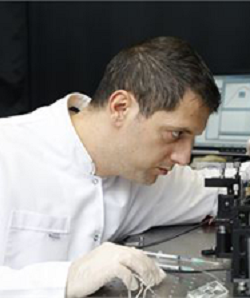
Hakan Urey is a Professor of Electrical Engineering at Koç University, where he has held academic roles since 2001. He previously served as a visiting professor at Cambridge University (UK) and Boğaziçi University (Turkey). He obtained his BS from Middle East Technical University (1992), and MS/PhD from Georgia Institute of Technology (1996–1997). His professional experience includes roles at Microvision Inc., Bilkent University, and Georgia Tech Research Institute. He has pioneered developments in wearable AR displays, MEMS technologies, and biomedical sensors, earning over 60 patents and founding five tech startups. His research focuses on augmented reality systems, 3D displays, micro-optics, and sensor innovations. Education includes: Ph.D., Electrical and Computer Engineering, Georgia Institute of Technology (1997) M.Sc., Electrical and Computer Engineering, Georgia Institute of Technology (1996) B.Sc., Electrical Engineering, Middle East Technical University (1992) Research interests span Augmented Reality , MEMS , 3D displays , and biomedical sensors . His work bridges optics, electronics, and healthcare, with notable contributions to holographic displays, implantable devices, and virtual reality applications. He has published over 200 papers and secured prestigious grants like the ERC Advanced Investigator Grant. Scientific awards include the Sedat Simavi Award (2019), Elginkan Foundation Science Award (2020), and multiple TÜBA/TUBITAK recognitions. His laboratories at Koç University develop cutting-edge technologies for wearable AR, medical diagnostics, and next-generation optical systems. Pioneering projects include MaR-T (mixed reality for preschool math education) and biomedical sensor platforms like biofeedback VR games for pediatric patients. His startups commercialize research outcomes in areas such as holographic displays and implantable electronics.
Barış İşçi Pembeci is a researcher at Muğla Sıtkı Koçman University's Faculty of Engineering, Department of Computer Engineering. He also holds a secondary affiliation with the Faculty of Letters, Department of Art History. Education: B.S. in Computer Engineering (2001), M.A. in Sociology and Anthropology (2004), Ph.D. in Anthropology (2010). Research Focus: Social anthropology of Central Asia, Islamic studies, gender dynamics, post-Soviet cultural practices, and multispecies ethnography. His scholarly work examines: 2025 study on Muğla bullfights as rural masculinity rituals 2021 analysis of female humor patterns in Turkey 2019 spatial approach to youth identity formation 2018 ethnography of Kyrgyz healing traditions 2017 investigation of Islam-ethnicity interplay Scientific achievements: International Convention of Asia Scholars (2011) Lambda Alpha National Anthropology Honor Society (2009) He coordinates Erasmus programs (2021-2025) and leads evaluations for engineering education standards. Current TÜBİTAK-funded research explores socio-cultural impacts of cancer therapies.
Dr. Deniz Mertkan GEZGİN serves as an Associate Professor in the Department of Computer Education and Instructional Technology within the Faculty of Education at Trakya University. His academic journey includes post-doctoral studies at Middle East Technical University (2016) following doctoral and master's degrees in Computer Engineering from Trakya University (2011, 2006), and a bachelor's degree from Çanakkale Onsekiz Mart University (1999). Doctoral Degree: Trakya University - Computer Engineering (2011) Master's Degree: Trakya University - Computer Engineering (2006) Bachelor's Degree: Çanakkale Onsekiz Mart University - Computer Engineering (1999) High School: İzmir Selçuk High School - Science and Mathematics (1995) His research centers on digital behavior pathologies, with primary focus on smartphone addiction, nomophobia, and Fear of Missing Out (FoMO) among students. Secondary interests include cyberloafing, cyberbullying, mobile learning, and AI applications in education. His work demonstrates strong interdisciplinary connections between computer science, psychology, and educational technology, particularly examining how technology use impacts academic performance and mental health. Publications reveal consistent productivity in high-impact journals like Computers in Human Behavior and British Journal of Educational Technology, with recent emphasis on AI-driven addiction prediction (2025) and AIlessphobia scale development (2024). His research methodology frequently employs structural equation modeling and latent profile analysis to explore complex behavioral relationships. Guest Editor for Frontiers in Public Health (2023) Science Board member for International Conferences (2014, 2016) As an active academic contributor, he serves as referee for 40+ journals including Computers in Human Behavior, PLOS One, and Cyberpsychology, demonstrating recognition in both computer science and psychological research communities. His editorial work focuses on digital behavior pathologies and educational technology applications.
Fulya YENİLMEZ is a Researcher at Turkish-German University, Faculty of Engineering, Department of Computer Engineering. She is currently pursuing her PhD in Computer Engineering at Istanbul Technical University while maintaining her academic role at Turkish-German University. Education: PhD (2024 - ongoing): Computer Engineering, Istanbul Technical University Master's (2021-2023): Robotics and Intelligent Systems, Turkish-German University Bachelor's (2016-2021): Double major in Computer Engineering and Mechatronics Engineering, Izmir University of Economics Research Focus: Her work spans deep learning applications in facial expression recognition and wearable technologies for accessibility. She explores convolutional neural networks (CNNs) through transfer learning and fine-tuning techniques, particularly for human-computer interaction systems. Publications & Contributions: Recent work includes international conference proceedings on CNN architectures for emotion detection and assistive devices for visually impaired individuals. Her research combines neural networks with human-centered design principles. Contact: Email: fulya.yenilmez@tau.edu.tr Phone: +902163333149 Office: Room 145
Hasan ÖZGÜR is an Associate Professor at Trakya University, Faculty of Education, Department of Computer and Educational Technologies. He currently serves as Department Head since February 2022 and is a Member of the University Rectorate Board of Directors since September 2024. His academic career at Trakya University spans over 18 years, progressing from Education Expert in 2006 to Associate Professor in 2023. His educational background includes a PhD in Engineering Education from Trakya University (2011), a Master's Degree in Educational Sciences from Marmara University (2005), and a Bachelor's Degree from Marmara University Atatürk Faculty of Education (2002). Dr. ÖZGÜR's research focuses on educational technology, human-computer interaction, and digital media effects on learning. His work examines cyberbullying, internet safety, gamification in education, technology integration in teaching, and internet parenting styles. He investigates how digital technologies impact student learning, teacher effectiveness, and adolescent development in the digital age. His research often involves scale development and validation for Turkish educational contexts. His publication record shows consistent research output since 2009, with increasing focus on practical applications of technology in Turkish education. Recent work emphasizes gamification trends, social media integration in learning, and psychological impacts of digital technology on students and teachers. His research bridges theoretical frameworks with practical educational applications, addressing both K-12 and higher education contexts. Dr. ÖZGÜR has contributed significantly to teacher training programs, focusing on developing digital competencies for educators. His administrative roles demonstrate leadership in shaping educational technology policy and implementation at the institutional level. He has collaborated extensively with colleagues including F. Akgün, C. Çuhadar, and F. Arıkan on numerous research projects examining technology adoption challenges within the Turkish educational system.
Prof. Dr. Şakir BEZCİ is a full-time Professor at the Hasan Dogan Faculty of Sports Sciences , Karabük University , where he has served since 2024. He previously held academic roles at Pamukkale University (1997-2010) and Karabük University (2013-2024), including leadership positions as Department Head and MYO/Yüksekokul Deputy Director . His research spans Sports Pedagogy , Physical Fitness , and Movement & Skill Instruction , with a focus on Taekwondo , Judo , and Table Tennis . Education: PhD in Physical Education and Sports Education (2010), Gazi University MSc in Physical Education and Sports (2007), Selçuk University BSc in Physical Education and Sports Education (1993), Gazi University His research explores Taekwondo coaching dynamics , athlete stress management , and educational technology . He has supervised numerous theses on topics like Taekwondo skill development and inclusive sports education . His publications analyze vertical jump mechanics , leadership in youth camps , and nutritional habits in combat athletes . Scientific Awards include multiple team championships in Taekwondo (World Cup, European, and national levels) and individual national titles. He has served on technical committees for Turkish Taekwondo Federation and European Taekwondo Union , contributing to rule development and athlete training programs.
Uğur Efe Uçar is a Researcher at the Department of Interior Architecture, Faculty of Architecture, Istanbul Technical University. He holds a PhD in Informatics in Architectural Design (2021) and has been a Research Assistant since 2019. His academic journey includes a Master's in Interior Architecture Design International (2018–2020) and a Bachelor's in Interior Architecture (2015–2018), all from Istanbul Technical University. His research focuses on integrating technology into architectural education and design practices, particularly through virtual reality (VR) applications, computational frameworks, and phenomenological studies of interior spaces. Key areas include generative design pedagogy, anthropometric measurements using VR, and earthquake-resistant interior design. He has explored topics like the implicit meanings of domestic elements (e.g., beds, water systems) and flexible shelter designs for emergency scenarios. Uçar has authored over a dozen peer-reviewed articles since 2021, consistently advancing interdisciplinary approaches at the intersection of technology, human behavior, and space. His work emphasizes both theoretical exploration and practical applications in sustainable and resilient design. No scientific awards are listed, but his contributions reflect a strong commitment to academic innovation and pedagogical development.
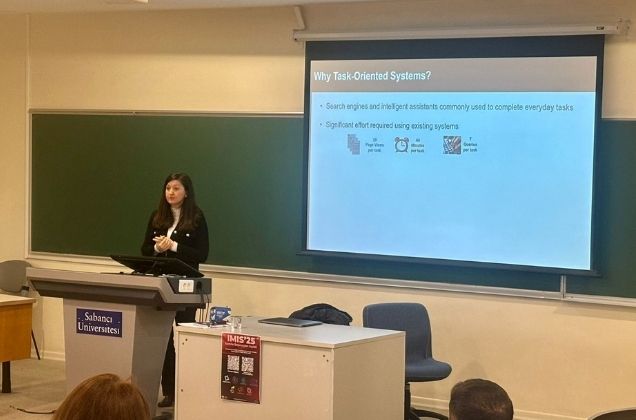
Prof. Emine Yılmaz is a faculty member in the Department of Computer Science at University College London (UCL) and leads the UCL Web Intelligence Group. She is also affiliated with the UCL Artificial Intelligence Center. Her research focuses on designing systems for contextual task completion assistance, task-based knowledge graphs (e.g., Wikihow integration), task-focused dialogues, and the application of Large Language Models (LLMs) to control task-specific agents. She has presented her work at events such as the Sabancı University Dean’s Speaker Series, emphasizing innovations in intelligent assistants and search engines.
Anil Kuş is a Lecturer at Yozgat Bozok University's Boğazlıyan Vocational School, specializing in applied AI research and teaching. He holds a Ph.D. candidacy at Mersin University and has 10 years of experience in software engineering, focusing on Web/Mobile development and AI applications. Education: Ph.D. Candidate, Mersin University (ongoing) Research Interests: Bridging academic research with real-world applications, particularly in Large Language Models (LLMs), Explainable AI (XAI), Generative AI, Vision-Language Models (VLMs), and Human-Robot Interaction. Active in developing deep learning models using Python, PyTorch, TensorFlow, and NLP libraries like Transformers and spaCy. Projects & Innovation: Led interdisciplinary R&D projects at Toros University's Smartlab Technology Center, resulting in patents and utility models. Research presented at conferences and applied in innovation-oriented projects. Labs/Teams: Formerly part of the Smartlab Technology Center, focusing on AI-driven software development and R&D collaboration.
Hulya Yalcin is an Assistant Professor in the Department of Mechanical Engineering at Istanbul Technical University. Her research focuses on artificial intelligence applications in robotics, computer vision, and precision agriculture. She leads projects in musculoskeletal modeling, plant phenology monitoring, and assistive technologies for elderly care. Her work contributes to UN Sustainable Development Goals related to innovation, health, and sustainable agriculture. Key projects include using deep learning for crop yield estimation and developing exergaming systems to improve elderly health. She has authored 52 research outputs and secured funding for initiatives like AISENSE (EU-funded exergames) and plant classification via computer vision. Publications span robotics control, medical engineering, and agricultural informatics. Notable contributions include knee orthosis gait learning via deep reinforcement learning and low-resource Turkish speech recognition improvements. As Principal Investigator, she manages projects on plant classification using CNNs, drone-based depth mapping, and multimodal assisted living systems. Her research bridges AI with practical applications in healthcare, agriculture, and robotics.
Assoc. Prof. Dr. Umut Asan is an active faculty member in the Department of Industrial Engineering at Istanbul Technical University (ITU), Faculty of Management. He holds the academic rank of Associate Professor and has been affiliated with ITU since 1999, progressing from Research Assistant to his current role. He earned his PhD from Technische Universität Berlin and holds a Master’s and Bachelor’s from ITU in Engineering Management and Industrial Engineering, respectively. PhD: Technische Universität Berlin (2003–2009) MSc: Istanbul Technical University, Engineering Management (1999–2001) BSc: Istanbul Technical University, Industrial Engineering (1995–1999) Dr. Asan's research lies at the intersection of decision science and industrial systems, with a strong emphasis on Multi-Criteria Decision Making (MCDM) , Fuzzy Cognitive Mapping , Scenario Planning , and Digital Twins . His work applies advanced modeling techniques such as Bayesian networks and fuzzy logic to solve complex problems in supply chain resilience, urban mobility, technology adoption, and organizational behavior. His recent publications (2023–2025) reveal a consistent trend toward integrating artificial intelligence and data-driven methods into decision support systems. Topics include electric vehicle adoption in urban logistics, digital twin frameworks for manufacturing, risk analysis in forestry and rail systems, and consumer behavior in digital platforms. These works demonstrate interdisciplinary applications across engineering, business, and social sciences, often using fuzzy and probabilistic models to handle uncertainty. Dr. Asan is actively involved in research leadership, having served as Vice Dean (2018–2023) and currently supervising numerous graduate theses. He is the principal investigator of funded projects, including BAP grants on qualitative cross-impact analysis and consumer cognitive models. Principal Investigator, "A New Approach to Qualitative Cross-Impact Analysis" (BAP Project, 2016–2020) Principal Investigator, "A New Approach to Consumer Causal Chain Models" (BAP Project, 2022–2024) He is a member of several international academic societies, including the International Society on MCDM, ENBIS, and EURO, reflecting his active engagement in the global operations research community. His research has been published in journals such as IEEE Access, European Journal of Forest Engineering, and Decision Science Letters, with a growing citation impact (Scopus h-index: 13). Dr. Asan advises a large cohort of graduate students, both at the Master’s and PhD levels, in areas ranging from risk modeling to digital transformation. His lab or research group focuses on decision support systems and cognitive modeling, supervising theses on FMEA, Bayesian networks, and digital twins. Future work appears to be directed toward enhancing predictive capabilities in industrial and societal systems through hybrid AI models.
Prof. Dr. Tamer Eren is a full-time professor in the Department of Industrial Engineering at the Faculty of Engineering and Natural Sciences, Turkish Aeronautical Association University. His academic work focuses on operations research, fuzzy logic applications, and disaster management optimization. Research Areas: Operations Research, Multi-Criteria Decision Making, Fuzzy Logic, Integer Programming, Disaster Logistics, Sustainable Development Institutional Affiliation: Turkish Aeronautical Association University, Department of Industrial Engineering His recent research explores bibliometric analyses of graduate theses across diverse fields including green logistics, project scheduling, forest fire resource allocation, and wearable technology in industrial safety . Key methodologies include fuzzy decision-making frameworks, integer programming, and systematic literature reviews. Notably, he has developed optimization models for disaster response logistics, healthcare personnel scheduling, and mining sector safety technologies. Publications reveal interdisciplinary contributions spanning emergency surgical care , healthcare operations , and smart city planning using advanced computational techniques like spherical fuzzy AHP and Pythagorean fuzzy TOPSIS. His work emphasizes practical applications in Turkey, addressing regional challenges in urban infrastructure, water resource management, and industrial safety.
Assoc. Prof. Dr. Yüksel Yurtay is an active faculty member at Sakarya University's Faculty of Computer and Information Sciences, Department of Data Science and Analytics. With a career spanning over three decades at the university since 1993, he has established himself as a prominent researcher and educator in the fields of data science, artificial intelligence, and business analytics. Education: Doctorate (2011-2020): Sakarya University, Institute of Business Administration/Production Management and Marketing, Thesis: "An empirical study on the impact of the dashboard on decision processes in the context of supply chain management" Master's (1996-1998): Sakarya University, Institute of Social Sciences/Production Management and Marketing, Thesis: "Activity based costing system and an application in electro-mechanical industry" Bachelor's (1987-1991): Anadolu University, Faculty of Arts and Sciences/Mathematics Dr. Yurtay's research focuses on the intersection of data science and business applications, with particular emphasis on dashboard systems, key performance indicators, and supply chain management. His work bridges theoretical computer science with practical business applications, developing innovative solutions for performance monitoring, decision support, and process optimization. His research portfolio demonstrates consistent productivity with publications spanning from 2018 through 2025, showing no signs of slowing down. Analysis of Dr. Yurtay's recent publications (2018-2025) reveals several key research trajectories: a strong focus on dashboard and KPI systems for business decision-making, growing interest in AI applications for emotion recognition (particularly in call center contexts), development of novel metaheuristic algorithms for optimization problems, and application of computer vision techniques for specialized detection tasks. His work consistently combines theoretical algorithm development with practical business applications. Dr. Yurtay has successfully secured research funding from prestigious sources including TÜBİTAK (project 1505) and industry partnerships with companies like Turkcell Global Bilgi. His current projects focus on real-time emotion recognition using deep learning and business process optimization. As an educator, Dr. Yurtay teaches core courses in numerical analysis, software engineering, computer engineering design, and data science. He has supervised graduate theses, including Akın YAŞAR's work on real estate photo quality evaluation using deep learning. His teaching portfolio reflects his expertise across both theoretical computer science and applied data analytics.