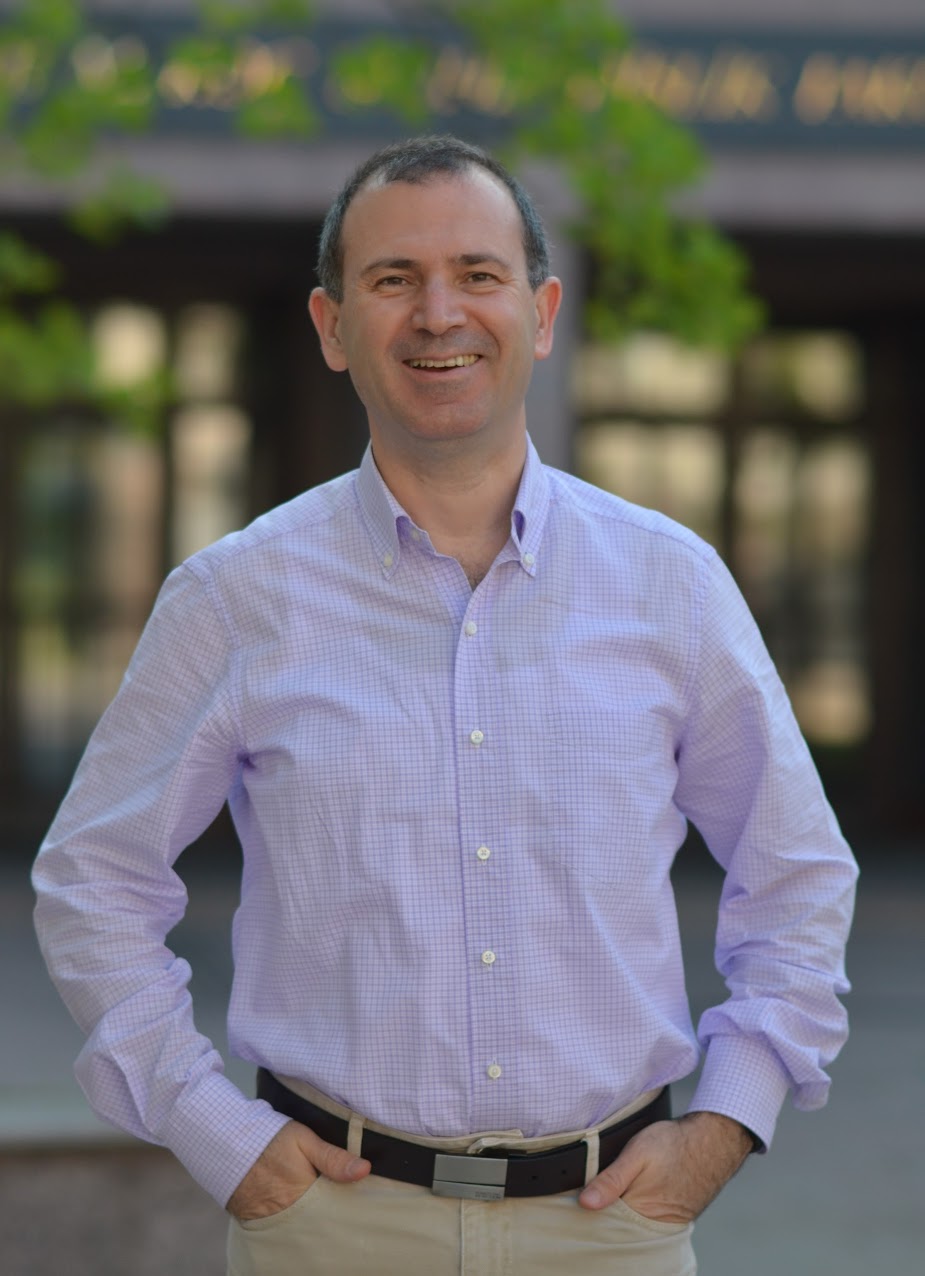
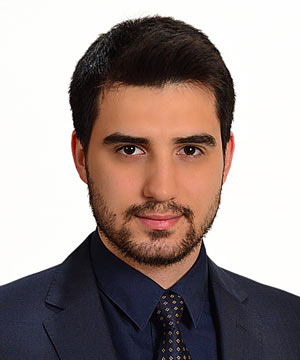
Engin Erzin is a Professor at Koç University's College of Engineering, leading the KUIS AI Lab and Multimedia, Vision and Graphics Lab . His research focuses on AI-driven human-centric systems, affective computing, and multimodal interaction analysis. He has contributed extensively to robotics, speech processing, and human-robot interaction through over 70 peer-reviewed publications since 2008. Research interests include: Affective computing and emotion recognition from speech/gestures Human-robot interaction and socially engaging agents Speech-driven animation and gesture synthesis Multimodal data fusion for interaction analysis Deep learning applications in robotics and biomedical engineering Recent work emphasizes: Developing adaptive pHRI controllers for manufacturing tasks Creating engagement measurement frameworks for human-machine interfaces Advancing Turkish speech recognition through self-supervised learning Designing multimodal databases for interaction studies Labs: KUIS AI Lab : Focuses on AI applications in robotics and human-computer interaction Multimedia Lab : Specializes in vision, graphics, and audiovisual analysis
Tamer Ölmez is a Professor in the Department of Electronics and Communication Engineering at Istanbul Technical University (ITU), College of Engineering, where he conducts cutting-edge research in biomedical signal processing, brain-computer interfaces (BCI), and deep learning applications in medical systems. His work bridges engineering and neuroscience, with a strong focus on EEG-based motor imagery classification, medical image analysis, and embedded deep learning systems. His research interests include motor imagery EEG signal processing , brain-computer interfaces , feature extraction , deep neural networks , classification algorithms , and medical image analysis . He applies machine learning and signal processing techniques to improve diagnostic accuracy and system performance in neuroengineering and healthcare technologies. The recent publications highlight a consistent trend in leveraging divergence-based deep neural networks , convolutional neural networks , and small-sized models for efficient and accurate classification in BCI and medical imaging. His work emphasizes performance improvement with reduced channel counts, noise elimination, and real-time applicability in embedded systems. Scientific Awards: Excellent Oral Presentation Certificate, June 1, 2015 Advising and Grants: He is actively supervising 26 theses in progress, indicating a strong mentoring role. He has led multiple funded research projects, including those funded by ITU’s Technology Transfer Office (TTO) and Scientific Research Projects (BAP), such as 'Classification of Medical Images with Deep Learning Method in Embedded Systems' and 'New Approaches to Finding Optimal Protein Folding'. Labs and Research Teams: While specific lab names are not mentioned, his collaborative fingerprint and project leadership suggest he leads or is a key member of a research group focused on biomedical signal processing, neural networks, and intelligent systems at ITU.
Semih Doğu is an Assistant Professor at the Department of Electronics and Communication Engineering , Faculty of Electrical and Electronics Engineering , Istanbul Technical University . His research focuses on Electromagnetic Theory , Microwave Imaging , Inverse Scattering Problems , and Antenna Design . Doctorate: Istanbul Technical University (2023) Master's: Istanbul Technical University (2017) Bachelor's: Yıldız Technical University (2015) His research interests emphasize microwave-based diagnostics, including: Microwave imaging for breast cancer detection Antenna optimization for medical and security applications Inverse problem solving in electromagnetic systems Through-the-wall imaging for surveillance Semih Doğu's recent publications demonstrate his expertise in: Neural networks for temperature monitoring in hyperthermia Ku/Ka-band antenna designs for satellite systems Microwave salinity sensing Algorithm development for improved imaging accuracy He contributes to the ITU Electromagnetics Research Group , participating in projects like: Microwave Brain and Breast Imaging Device Development Compressed Sensing for Energy-Efficient Communication Microwave Tissue Analysis
Professor Hakan Ürey has been a faculty member at Koç University since 2001 and currently serves as Vice President for Research and Innovation. He holds a PhD in Electrical and Computer Engineering from Georgia Institute of Technology and leads the Optical Microsystems Laboratory (OML). Education: PhD (1997), Georgia Institute of Technology MSc (1996), Georgia Institute of Technology BS (1992), Middle East Technical University Research Interests: His work spans optical microsystems, MEMS technology, augmented reality displays, and biomedical systems including ophthalmology and neuroscience. Recent projects focus on holographic displays for vision simulation and implantable sensors. Scientific Awards: TÜBA-GEBİP Award TÜBİTAK-Encouragement Award Sedat Simavi Science Award Elginkan Technology Award Outstanding Faculty Award En Başarılı Koçlular Award (multiple times) Labs and Teams: Director of the Optical Microsystems Laboratory (OML), which has produced 60+ licensed patents and five spinoff companies. Collaborated with KUTTAM, KUAR, and N2STAR research centers.
Aras Bozkurt is a faculty member and researcher at Anadolu University's Open Education Faculty in Türkiye, holding a PhD in Distance Education. His work focuses on empirical studies in distance education, online learning, educational technology, and AI integration in education through critical theories like connectivism, rhizomatic learning, and heutagogy. He employs emerging methodologies including social network analysis and sentiment analysis, with a particular emphasis on the implications of generative AI and human-machine interaction. Editorial Leadership : Editor-in-Chief of Open Praxis and Asian Journal of Distance Education, Associate Editor for journals including Higher Education Research and Development and Online Learning Research Contributions : Over 250 Web of Science publications, h-index of 60 on Google Scholar, 47 funded projects, and 7 thesis advisories Bozkurt's research explores critical educational paradigms, with recent publications analyzing generative AI's impact on academic integrity, OER transparency, and the sustainability of open universities. His work bridges theoretical frameworks with practical applications in digital education ecosystems, focusing on ethical AI implementation and algorithmic challenges. Scientific contributions include 15 recent articles (2023-2026) covering generative AI literacy, colonial legacy disruptions in education, AI ethics frameworks through activity theory, and dropout analysis in open distance learning systems. These publications demonstrate a consistent focus on critical AI studies, educational sustainability, and digital transformation.
Tuğçe Bilen is an Assistant Professor at Istanbul Technical University's Department of Artificial Intelligence and Data Engineering, within the School of Computer and Informatics. Her research focuses on Artificial Intelligence and Computer and Communication Networks, particularly Digital Twin technologies, 6G wireless systems, and smart IoT applications. PhD in Computer Engineering (2017-2022), Istanbul Technical University Master's in Computer Engineering (2016-2017), Istanbul Technical University Licence in Computer Engineering (2010-2015), Istanbul Technical University Her research explores Digital Twin middleware for smart farms, energy-aware task scheduling in 6G edge networks, aeronautical ad-hoc network optimization, and cloud-based protocol enhancements. Recent work addresses metaverse-driven supply chain optimization and secure routing for aircraft networks. Key publication trends show strong focus on: Digital Twin integration across domains 6G wireless network architectures Adaptive routing algorithms Energy-efficient IoT systems Security in airborne communication Machine Learning for network management Scientific recognition includes: Serhat Özyar Young Scientist of the Year Honorary Award (2023) Doctoral Thesis Award from Istanbul Technical University (2023) TÜBA Doctoral Science Awards-Teknofest (2023) She serves as Principal Investigator for the Unsupervised Learning-Based Management of Ad Hoc Airborne Network Topology project (2024-2026) and holds a patent for Parametric Parsing Based Routing System in Content Delivery Networks (2021). As IEEE member since 2015, she contributes to telecommunications standards.
Selda Güney is an Assistant Professor in the Department of Electrical and Electronics Engineering at Başkent University's Faculty of Engineering. She holds a PhD (2013), Master's (2007), and Bachelor's (2004) in Electrical-Electronics Engineering from Karadeniz Technical University. Her professional experience includes roles as an R&D Engineer at DEKA Digital (2004-2005), Research Assistant at Karadeniz Technical University (2005-2013), and Assistant Professor at Başkent University (2013-present). Her research spans: Machine Learning : Applications in medical imaging, radar, and industrial systems Signal/Image Processing : Focus on real-time classification and fault detection Pattern Recognition : Electronic nose systems and biometric analysis Her recent publications demonstrate strong emphasis on deep learning applications in healthcare (chest X-ray classification, fracture detection) and industrial automation (real-time fault detection systems). Over 70% of her last 15 articles involve medical/industrial AI implementations using convolutional networks. Awards & Honors: TÜBİTAK Domestic PhD Scholarship IBEC ERASMUS Scholarship Research Leadership: Supervised 20+ graduate theses (e.g., radar data classification, medical image steganography) and led 9 R&D projects including: AI-based pathology classification in lung X-rays VR glove development Smart parking systems She is a member of IEEE and ISOCS, and teaches courses including Pattern Recognition, Signals and Systems.
Sezen Arslan is an Associate Professor at Bandirma Onyedi Eylul University, holding roles in the Department of English Translation and Interpreting (Faculty of Humanities and Social Sciences) and the Department of Foreign Languages. She previously served at Van Yuzuncu Yil University as a Doctor Lecturer and Research Assistant. Her academic leadership includes positions as Department Head and Erasmus Coordinator. Her research focuses on sustainable education, EFL pedagogy, teacher training, AI integration, and inclusive practices. Key contributions include work on dialogic teaching, EMI sustainability, and intercultural communication. She has authored over 20 books and 88 articles, with a TÜBİTAK Science Award recognition. Her projects involve national initiatives like TÜBİTAK-funded dialogical teaching workshops and language policy studies. Educationally, she teaches courses like 'Measurement and Evaluation in Foreign Language Teaching' and 'Pedagogical Grammar.' She advises one master’s thesis and has organized conferences like GLOBELT. Her administrative roles include coordinating Erasmus programs and managing academic research projects. Collaborations with institutions like Hacettepe University highlight her network. Her research spans topics from AI in EFL classrooms to sustainable curriculum reforms, reflecting a commitment to innovative and equitable education models.
Neziha Yılmaz is a Researcher affiliated with the Civil Engineering Department at Istanbul Technical University's Civil Engineering Faculty. Her work focuses on integrating Building Information Modeling (BIM), Mixed Reality technologies, Machine Learning, and Artificial Intelligence into construction management and facility operations. Education: PhD in Structural Engineering (2020), Istanbul Technical University Master's in Building Management (2017), Istanbul Technical University Bachelor's in Civil Engineering (2012), Istanbul Technical University Research interests span Virtual Reality, Augmented Reality, Digital Twin applications, and data-driven decision-making in construction. She has explored topics like RFI analysis optimization, occupant feedback systems in BIM, and cross-cultural office leasing criteria using AHP methodology. Her articles emphasize practical applications of emerging technologies in construction asset management, building design, and usability evaluations of mixed reality solutions. No scientific awards or grants are explicitly listed in available records. She currently advises no formal graduate students. Professional Experience includes roles as a BIM Engineer at Gülermak Nurol Makyol Metro Construction Partnership (2019–2020) alongside academic duties since 2020.
Prof. Dr. Çiğdem Kaya is a distinguished academic at Istanbul Technical University's Faculty of Architecture, Department of Industrial Product Design. She has held significant roles such as Department Chair (2024–present) and Dean of the Department of Industrial Design. Her research focuses on the historical, cultural, and social contexts of design, theory and methodology in industrial design, and product design innovation. Kaya has led numerous research projects, including studies on sustainable design practices, maker cultures, and design education. She has been awarded the ODTÜ Prof.Dr. Mustafa Parlar Foundation Research Incentive Award (2020) and is a member of Marie Curie Alumni Association and the Design Research Society. Education: She earned her PhD in Industrial Product Design from Istanbul Technical University (2011) and holds master's and bachelor's degrees in Industrial Design from the same institution. Her academic journey includes international research experiences, such as a visiting scholar at Sheffield Hallam University (2009–2010). Research Interests: Kaya explores intersections between design and culture, sustainability, and collaborative practices. Notable projects include investigations into craft knowledge transfer, maker ecologies, and the impact of remote collaboration during the pandemic. Her work bridges theoretical frameworks with practical applications, emphasizing socially responsible design. Grants & Projects: She has secured funding for projects like 'Afet Sonrası İyileşme Sürecinde Sürdürülebilir Sosyal Girişimcilik' (2023) and 'Trans-making' (EU Horizon 2020), focusing on placemaking and cultural democratization. Over 20+ research outputs span journals like Futures , Design Issues , and Journal of Consumer Behaviour . Labs/Teams: Kaya leads design studios and collaborative research teams, fostering innovation in product design and educational methodologies. Her supervision of over 15 graduate theses highlights her commitment to mentoring next-generation designers.
Prof. Dr. Seniye Banu Garip is an Associate Professor at the Department of Interior Architecture within the College of Architecture at Istanbul Technical University . With a career spanning since 2000, she focuses on Spatial Psychology , Behavioral Studies , and Earthquake Risk Reduction in architectural contexts. PhD in Architectural Design (2007-2011), Master's in Building Information (2002-2004), and Bachelor's in Architecture (1996-2000) from Istanbul Technical University Her research integrates Generative Design and Algorithmic Approaches to address seismic safety and housing flexibility. Recent projects include a TUBITAK-funded study (2021-2022) on earthquake risk reduction and an SRP project (2016) on interactive design in exhibition spaces. She has received 29 scientific awards, including multiple 1st prizes in national architectural competitions (2002-2021). Notable collaborations include work with Ervin Garip, Uğur Eray Uçar, and Özgür Zeydan Güzelci. Her methodological innovations in Virtual Reality applications for anthropometric measurements (2023) and Sustainable Campus Design (2022) demonstrate her interdisciplinary approach. Professional Leadership : Management Board Member, Istanbul Chamber of Architects (2000-), and Faculty Management Board (2015-2018)
Prof. Dr. Ali Coruh is a distinguished faculty member at Sakarya University 's Faculty of Science, Department of Physics , where he has served as Head of the General Physics Department since 2022. With a career spanning over three decades, his expertise lies in Condensed Matter Physics , Nanotechnology , and Materials Science , focusing on perovskite oxides , adsorbent materials , and supercapacitor applications . PhD in Physics, Middle East Technical University (2003) MSc in Physics, Sakarya University (1996) BSc in Physics, Karadeniz Technical University (1989) His research interests include computational modeling of molecular structures, environmental pollutant removal using nanomaterials, and electrochemical properties of advanced materials. Recent studies focus on pharmaceutical pollutant recovery via organoclay composites, Pd-doped perovskites for biosensing, and perovskite oxides for energy storage. His work bridges theoretical and experimental approaches in solid-state physics and environmental remediation . The article trends show consistent contributions to Journal of the Taiwan Institute of Chemical Engineers , Chemical Engineering Journal , and Journal of Energy Storage , with a focus on adsorption mechanisms , electrocatalysis , and nanocomposite synthesis . Collaborations span international institutions, including studies on supercapacitor electrode materials and microwave absorbing textiles . As an academic leader, he has supervised 14 doctoral and master's theses , including works on molecular dynamics , perovskite oxides , and nanoparticle-based sensors . He has also served on editorial boards for journals like Materials Chemistry and Physics (2010-2013) and contributed to TUBITAK Olympiad training .
Sanem Sarıel Uzer is a Professor at Istanbul Technical University (ITU) in the Department of Artificial Intelligence and Data Engineering, part of the College of Computer and Informatics. She has been a faculty member at ITU since 2007, progressing from Instructor to Associate Professor in 2016 and achieving full Professor status in 2024. She is the founder and coordinator of the ITU Artificial Intelligence and Robotics Laboratory and leads multiple research initiatives in cognitive robotics, planning, and machine learning. Ph.D. in Computer Engineering, Istanbul Technical University (2002–2007) M.Sc. in Computer Engineering, Istanbul Technical University (1999–2002) B.Sc. in Control and Computer Engineering, Istanbul Technical University (1995–1999) Her research focuses on artificial intelligence, robotics, and machine learning, particularly in enabling cognitive systems and robots to reason, plan, and learn in complex environments. She investigates lifelong learning methods, multi-robot team strategies, and safe robot manipulation using deep reinforcement learning. Her recent work emphasizes failure anticipation, multimodal detection, and knowledge distillation to improve robot safety and autonomy. The trend in her recent publications (2023–2024) shows a strong focus on enhancing the safety and reliability of robotic manipulation through AI techniques such as deep reinforcement learning, adversarial learning, and multimodal perception. Her work spans both theoretical algorithm development and practical applications in service and industrial robotics. Scientific Awards: Siemens Turkey Excellence Award (2004) TÜBİTAK 13th Technology Award – Best Product (2018) TÜBİTAK 13th Technology Award – University-Industry Collaboration Mention (2018) Best Visual Presentation Award, IEEE SIU (2016) ITU Project Performance Award (2020) TÜBİTAK Ufuk 2020 (2019) Necdet Eraslan Project Competition Mention (2007) She has supervised numerous students in RoboCup competitions and led multiple funded research projects, including two TÜBİTAK projects on lifelong learning for cognitive robots and the development of the open-source Violet system for robot vision. She has also served as a consultant on AI projects with companies like Triodor, Artı Teknoloji, and Analitik Bilişim. Her grants include funding from TÜBİTAK, ITU Scientific Research Projects, and the Ministry of Science, Industry and Technology. She leads the ITU Artificial Intelligence and Robotics Laboratory and is actively involved in national and international collaborations, including with Georgia Tech, University of Pennsylvania, and University of South Florida. She also contributes to professional communities such as IEEE, AAAI, RoboCup, and EUCog.
Ozlem Keskin serves as Professor at Koc University's Department of Chemical and Biological Engineering, concurrently holding leadership roles as Associate Dean of the College of Engineering and Director of the Graduate School of Sciences & Engineering in Istanbul, Turkey. Her research spans Bioinformatics , Computational Biology , and Systems Biology , with pioneering work on human interactome construction and algorithmic development for 3D modeling of cellular interactions. She leads the Cosbi Lab and secured the TUBITAK-2247 National Research Leaders grant to advance these computational medicine initiatives. Professional recognition includes membership in the Science Academy, Turkey and EMBO (European Molecular Biology Organization), highlighting her contributions to molecular systems biology. She actively recruits PhD students and post-doctoral researchers with dual expertise in computational methods and biological sciences for ongoing projects, maintaining direct contact through university office Eng 224 and email okeskin@ku.edu.tr.
Dr. Burak Çeber is an Assistant Professor at Uskudar University's Faculty of Communication, Department of Advertising. His academic background includes a BSc (2016), MSc (2018), and PhD (2022) from Kocaeli University (Advertising), Kocaeli University (Visual Communication Design and Advertising), and Marmara University (Public Relations) respectively. He supervises graduate theses on AI applications in public relations and teaches courses ranging from digital advertising to integrated marketing communication. PhD in Public Relations (Marmara University, 2022) Current research focuses on AI ethics, generative AI in advertising, and digital transformation His scholarly output includes books like Yapay Zekâyı Sorgulamak: Veri Etiği ve Dijital Reklamcılığın Kesişimi (Nobel Bilimsel, 2024) and applied research on AI-human collaboration in public relations. He leads the university's Digital Education Committee and Web Commission, while coordinating accreditation efforts for academic programs. Recent publications examine: AI's impact on advertising creativity (2025) AI ethics frameworks (2024) Digital PR applications (2024) Generative AI in consumer campaigns (2025) As Laboratory Supervisor (since 2022), he oversees technical implementation of digital tools in academic settings. His teaching portfolio includes specialized courses like Halkla İlişkilerde Yapay Zeka Uygulamaları for undergraduates and Dijital Halkla İlişkiler Uygulamaları for master's students.