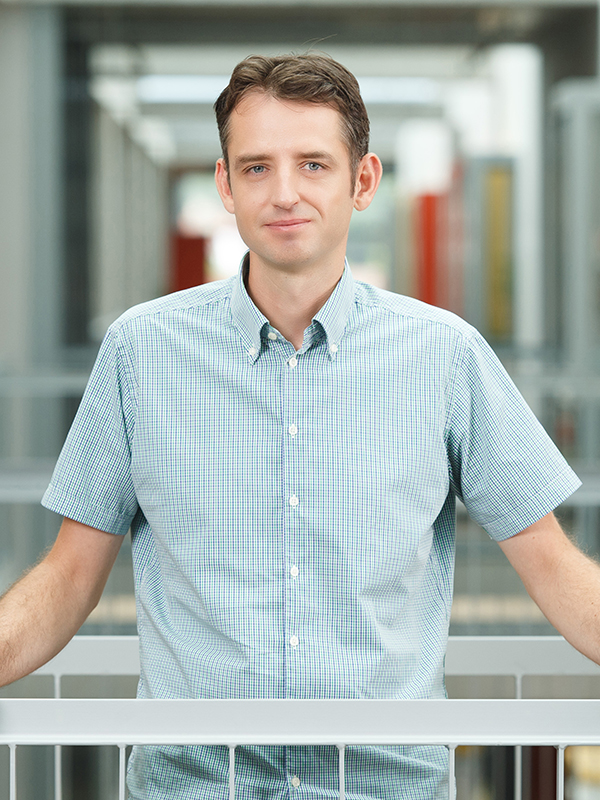
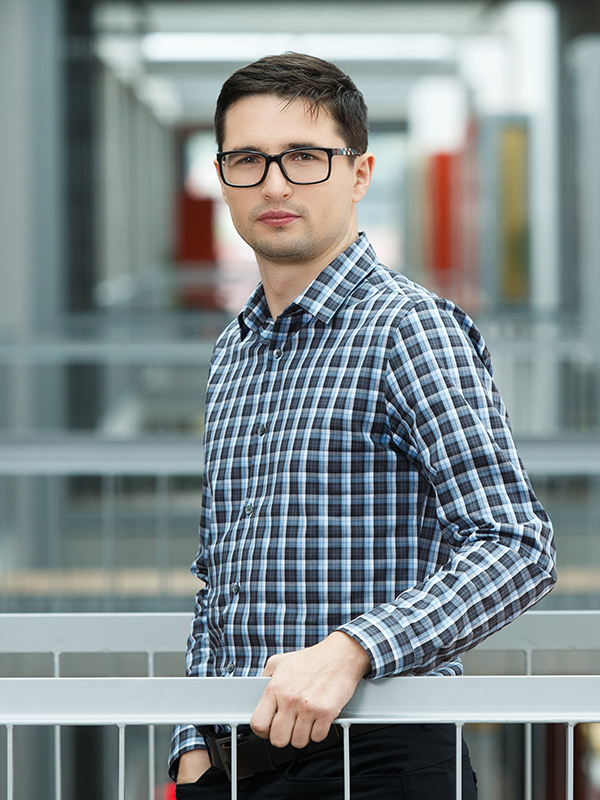
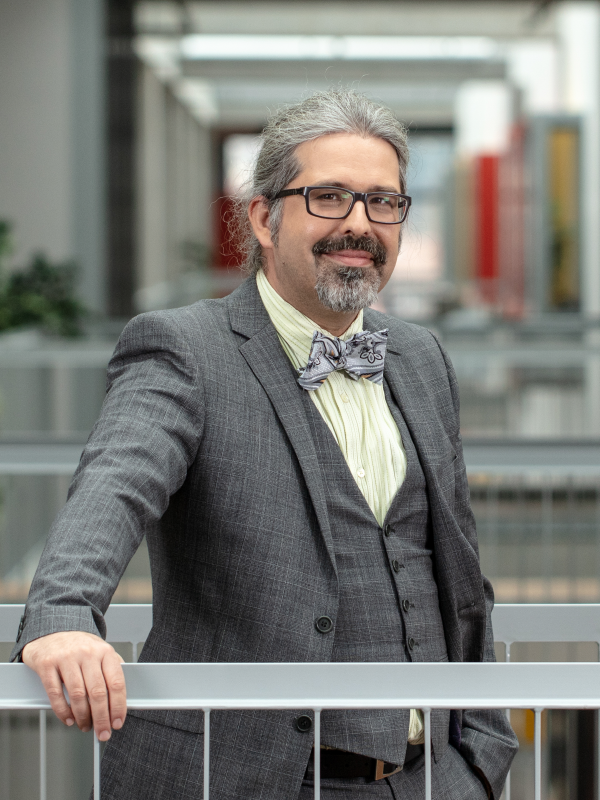
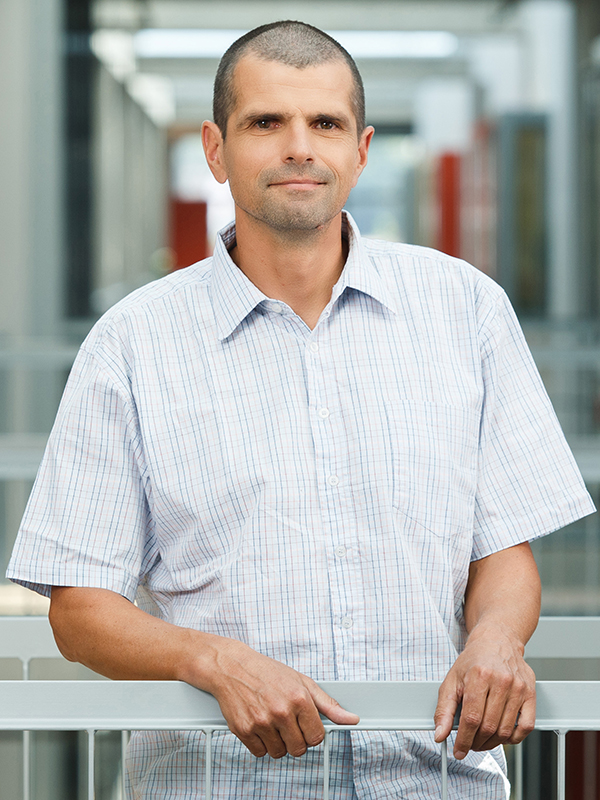
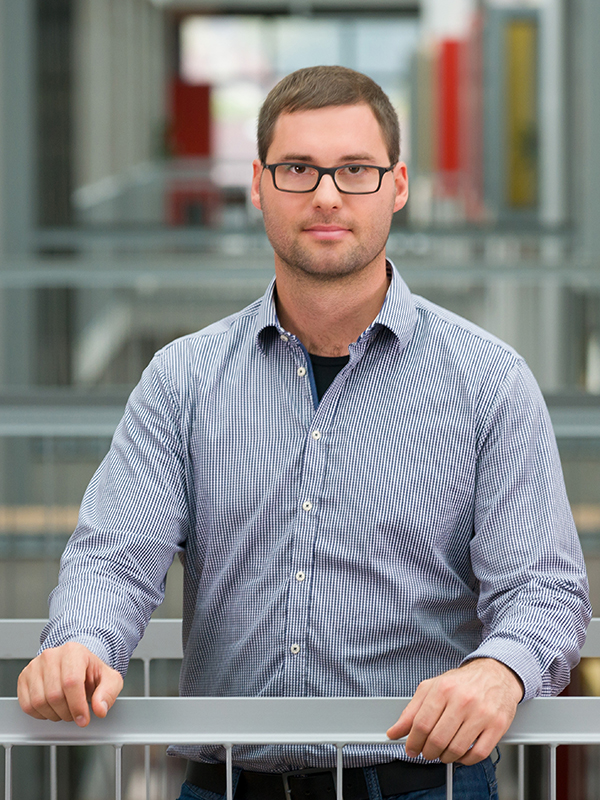
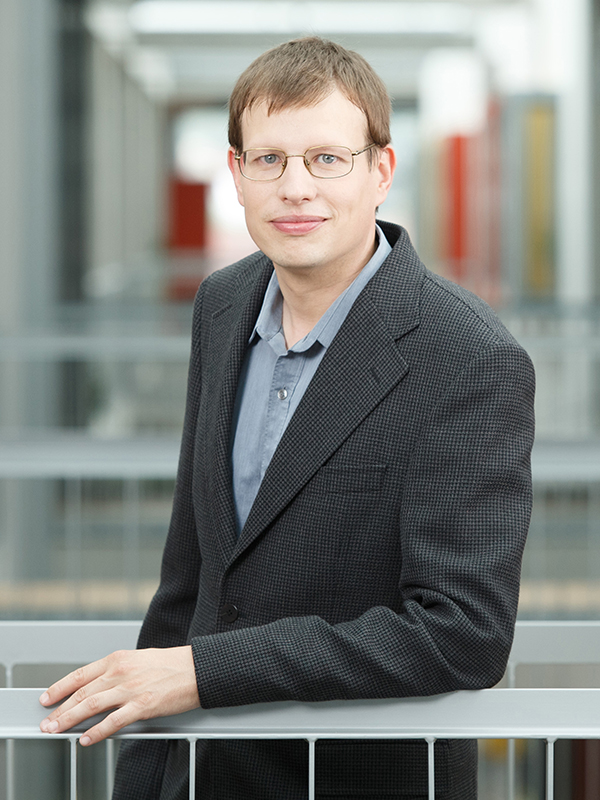
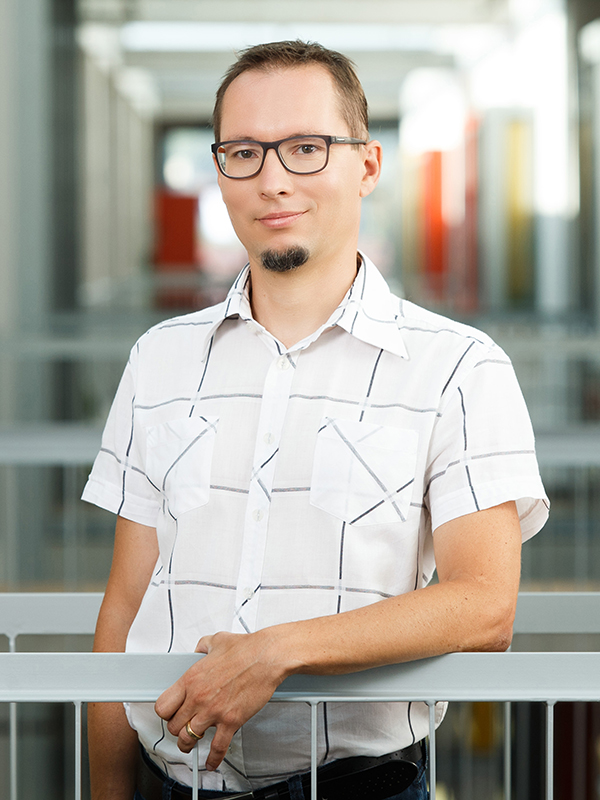
Luka Šajn is an Assistant Professor at the University of Ljubljana , affiliated with the Computer Vision Laboratory . His work bridges computer science , machine learning , and medical imaging , focusing on automated analysis of medical data. Academic Rank: Assistant Professor University: University of Ljubljana Laboratory: Computer Vision Laboratory Šajn's research centers on multi-resolution pattern parametrization and its applications in medical diagnostics. His projects include automated segmentation of whole-body bone scintigrams , detection of white spot lesions in dentistry, and 3D documentation of cultural heritage using computer vision. Šajn's publications (2005–2020) span texture classification , image segmentation , and medical AI . Key subfields include dental diagnostics , coronary disease analysis , mobile vision systems , and ultra-wideband trajectory modeling .
Damjan Vavpotič is a Full Professor at the Faculty of Computer and Information Science , University of Ljubljana, and serves as Vice-Dean and Head of the Information Systems Laboratory. His career spans academic research, leadership roles, and applied projects in software development methodologies, information systems, and interdisciplinary fields. Research Focus: Software development methodologies, agile practices, information security, and e-learning systems Leadership: Vice-Dean, Head of Information Systems Laboratory Key Projects: GETM4 (2023-2027), Digital Transformation for Smart Public Governance (P2-0426, 2022-2027) Scientific Contributions: His recent work explores agile estimation accuracy, information security training, software process evaluation, and interdisciplinary applications in health and tourism analytics. Articles span 2018-2024, reflecting sustained impact across multiple domains. Awards: Thea Sinclair Award (2019), TTRA Europe Best Paper (2018), ISD Conference Best Paper (2013)
Jure Demšar, PhD , is an Assistant Professor at the Faculty of Computer and Information Science , University of Ljubljana . He conducts interdisciplinary research bridging neuroinformatics, collective behaviour, and game development, while actively collaborating with leading institutions worldwide. Education & Academic Journey: PhD studies supported by the prestigious “Inovativna shema” scholarship for promising doctoral researchers. Research visits: three months at Newcastle University (Game Lab & Institute of Neuroscience), three months at University of Groningen (Prof. Charlotte K. Hemelrijk’s lab), one month at University of Houston (Computer Graphics and Interactive Media Lab). Research Interests: Dr. Demšar’s work converges on four core themes: Neuroinformatics & Neuroimaging: development of scalable platforms for multimodal neuroimaging data processing (Qu|Nex, autohrf, bayes4psy R packages). Collective Behaviour & Modeling: adaptive agent-based simulations of predator–prey interactions and flocking, evolution of composite tactics. Computational Psychiatry: mapping brain–behavior relationships along the psychosis and mood spectra, placebo vs. drug neural signatures. Game Development & Personalization: generating personalized game content, GPU-accelerated Bayesian modeling, and recommender systems. Scientific Awards & Recognition: Faculty Award for Outstanding Pedagogic Work, 2017/2018 Faculty Award for Outstanding Research Achievements, 2017 Inovativna shema scholarship for promising PhD students Collaborations & Funding: Dr. Demšar has established long-standing collaborations with: Washington University in St. Louis (Connectome Coordination Facility) – Human Connectome Project Yale University (Anticevic Lab) – Qu|Nex platform Harvard University (Applied Neuroimaging Statistics Laboratory) Internal University of Ljubljana partners: Faculty of Arts, Faculty of Medicine, Faculty of Sport Laboratory & Team: He leads the Bayesian Statistics Project Laboratory , where he mentors students and drives open-source tool development for Bayesian data analysis and neuroimaging workflows.
Matej Dobrevski serves as an Assistant Professor at the Faculty of Computer and Information Science, University of Ljubljana. He is actively engaged with the Visual Cognitive Systems Laboratory (Laboratorij LUVSS) and teaches core courses including Development of Intelligent Systems and Introduction to Computer Science . His research focuses on the convergence of cognitive modeling and visual perception systems, with primary interests in Cognitive Systems , Artificial Intelligence , and Computer Vision . Through the Visual Cognitive Systems Laboratory, he investigates biologically inspired computational frameworks for intelligent visual processing. As a laboratory member of LUVSS, Dr. Dobrevski contributes to interdisciplinary projects bridging cognitive science with machine perception, emphasizing real-world applications of visual intelligence systems.
Aleš Jaklič is an Assistant Professor affiliated with the Computer Vision Laboratory . His work spans computer vision, 3D reconstruction, and educational technologies, with a focus on practical applications in archaeology, meteorology, and STEM-C education. Research interests include: 3D modeling from point clouds Superquadric parameter prediction from depth images IoT-based educational tools for computer science Historical artifact digitization Image processing algorithms His publications since 2000 demonstrate expertise in geometric modeling, computer vision, and educational technology. Highlights include work on superquadric recovery (2000, 2003), archaeological modeling (2015), and IoT education frameworks (2020). Recent research (2021) explores neural network approaches to depth image analysis. Active in research programs funded by the Slovenian Research Agency (ARRS) since 2009, including the ongoing P2-0214 - Computer Vision program (2019-2024). He has also contributed to the ŠIPK 5 project on IoT education (2020).
David Modic serves as an Assistant Professor at the Faculty of Computer and Information Science, University of Ljubljana. He teaches Master's theses and courses including Computer Science Skills, Selected Topics in Computer and Information Science, Organisation Security, Human Aspects of Security, and Computer Science Skills 2. He is an active member of the Computer Communications Laboratory, contributing to network security research. His research centers on human dimensions of cybersecurity, with emphasis on fraud psychology, social engineering tactics, and behavioral responses to security threats. Key investigations explore malware warning effectiveness, auction/insurance fraud mechanisms, Dark Triad personality influences on deception, and gender-biased deceptive behavior in digital environments like online poker. This work bridges computer security with experimental psychology to develop more effective security interventions. Modic's publication record since 2014 reveals consistent interdisciplinary collaboration, primarily with Richard Anderson and Jussi Palomäki, spanning journals in computer security (IEEE Security & Privacy), psychology (Computers in Human Behavior), and open-access platforms (PLOS ONE). His studies frequently employ experimental methodologies to quantify emotional impacts of fraud, susceptibility to persuasion, and deterrence efficacy in cybercrime contexts. No scientific awards were documented in the provided materials. While the text confirms supervision of Master's theses, specific student names and grant funding details were not disclosed. His laboratory work in the Computer Communications Laboratory suggests involvement in network security infrastructure projects related to his human-centric security research.
Dr. Martin Možina is an Assistant Professor at the University of Ljubljana , affiliated with the Artificial Intelligence Laboratory since 2004. His work bridges classical machine learning with argumentation theory and focuses on interpretable AI methods. Research includes argument-based machine learning for knowledge-driven AI Developed nomogram visualization techniques for linear models Created automated chess tutors for move explanation Research projects span from 2004 to 2025, including: Current DRIFT project (2022-2025) on deep learning for power grid optimization Deep reinforcement learning applications in energy systems Argumentation for medical prognosis (lung cancer) and knowledge acquisition Publications show interdisciplinary work between: AI explainability (4/6 articles) Education technology (2/6) Healthcare AI applications (2/6) Graphical model interpretation (1/6) Multi-agent research (1/6) Teaching includes Decision Systems courses, with a focus on applied AI methods.
Dr. Robert Rozman serves as a Senior Lecturer and Instructor at the Faculty of Computer and Information Science, University of Ljubljana, where he teaches core courses in Computer Architecture , Computer Organisation , and Input-Output Systems while contributing to laboratory instruction through the Laboratory of Algorithmics. His academic journey began at Maribor's Secondary Computer School (SERŠ), followed by comprehensive studies at Ljubljana's Faculty of Computer and Information Science, where he earned sequential BSc , MSc , and PhD degrees in Computer Science. Rozman's research program bridges hardware systems and human-computer interaction , with concentrated expertise in computer architecture optimization, embedded system design, and multimodal speech technologies. His work particularly emphasizes practical implementations of speech generation/recognition systems and next-generation communication frameworks leveraging Internet convergence. Scientific Awards: None documented in source materials. Research engagement includes participation in the Structural Funds project PKP 3 ( Video measurements of ski jump lengths , March-July 2017), though no student advisement activities or additional grants are referenced. He maintains active affiliation with the Laboratory of Algorithmics, contributing to its computational research ecosystem through teaching and project supervision.
Slavko Žitnik is an Associate Professor and Vice-dean at the Faculty of Computer and Information Science, University of Ljubljana, where he is a member of the Laboratory for Data Technologies. His academic career spans multiple research projects and international collaborations focusing on data technologies and natural language processing. His primary research interests include information retrieval, information extraction, natural language processing, entity extraction, relationship extraction, coreference resolution, data merging, redundancy elimination, and ontologies. Dr. Žitnik's work often bridges theoretical computer science with practical applications in various domains including education, healthcare, and smart city ecosystems. Dr. Žitnik has led and participated in numerous significant research projects including P2-0359 on Ubiquitous Computing (2023-2027), PoVeJMo on Adaptive Natural Language Processing with Large Language Models (2023-2026), and the GOBLIN COST Action for building global networks of large-scale knowledge graphs. His recent work demonstrates a strong focus on adapting natural language processing techniques with large language models and creating practical applications of these technologies. His scientific contributions span multiple domains including: Natural Language Processing and Information Extraction techniques Knowledge graph construction and integration Applications in education, healthcare, and smart city ecosystems Development of practical tools and systems for data processing Dr. Žitnik has established international collaborations with institutions including Harvard University's Department of Biomedical Informatics (where he conducted a research visit from July to October 2022), the University of South Florida, and various European partners through COST Actions and other collaborative frameworks.
Ciril Bohak is an Assistant Professor at the Laboratory for Computer Graphics and Multimedia within the Faculty of Computer and Information Science, University of Ljubljana. He is currently on research leave at King Abdullah University of Science and Technology (KAUST) in Saudi Arabia until January 1, 2023, maintaining active academic status with the university. His research focuses on computer graphics, scientific visualization, and human-computer interaction, with significant contributions to interdisciplinary applications. Key areas include cell visualization for biological data, procedural generation of sub-cellular structures, and accessibility solutions for visually impaired users. His work bridges theoretical graphics research with practical implementations in cultural heritage preservation and educational technology. Dr. Bohak has secured competitive funding from multiple sources including the Slovenian Research Agency (ARRS), European Union programs, and Structural Funds. Current leadership includes the ARRS project J2-50221 on unified microscopic data visualization (2024-2027). Past projects span folk song retrieval systems (EtnoKatalog, 2008-2011), ICT-supported teaching frameworks (DIDIKTA, 2008-2010), and accessibility applications for visually impaired youth (ZaznajSpoznaj, 2014-2015). As a core member of the Laboratory of Computer Graphics and Multimedia (LGM), he contributes to advanced research in visual computing. His laboratory work supports both foundational graphics research and applied projects like augmented reality for archaeology (BI-IT-18-19-010, 2018-2021) and mathematical literacy initiatives (NA-MA POTI, 2016-2022), maintaining strong industry and international academic collaborations.
Luka Fürst is an Assistant Professor affiliated with an academic institution, specializing in Computer Science and Software Engineering . His work spans theoretical and applied domains, including Graph Theory , Programming Pedagogy , and Machine Learning . Teaches courses: Programming 2 , Programming 1 , Algorithms and Data Structures 2 , Computability and Computational Complexity Active in the Software Engineering Laboratory as a member Research Focus : Luka Fürst explores graph grammar induction , feature selection in object detection , and innovative programming education methods . His projects include KATARINA (promoting foundational computing knowledge) and legacy work on Computer Vision and Visual Assistant systems. Publications reveal a trajectory centered on formal language processing , machine learning techniques , and interactive educational tools , with recurring themes in software engineering and algorithm design .
Assoc. Prof. Dejan Lavbič is an Associate Professor at the University of Ljubljana, Faculty of Computer and Information Science with 15+ years of academic experience. His research focuses on intelligent agents, multi-agent systems, ontologies, and blockchain-based smart contracts , particularly in semantic web technologies, AI services ecosystems, and information quality assessment . Doctor of Philosophy in Computer Science, University of Ljubljana (2010) Bachelor of Science in Computer Systems and Informatics, University of Ljubljana (2004) His scientific contributions span semantic web frameworks, blockchain applications, and machine learning systems, with 20+ peer-reviewed publications. Recent works include: Smart contract classification with AI Cardano blockchain identity systems Information quality metrics with gamification Awards include Cambridge CAE certification and multiple industry certifications. He mentors students in decentralized applications, AI development, and smart city ecosystems , having guided 6+ diploma/master theses on topics like automated essay grading and air quality data collection.
Aleš Leonardis is a Full Professor at the Faculty of Computer and Information Science, University of Ljubljana, serving as head of the Visual Cognitive Systems Laboratory. His academic career is anchored in computer science with a focus on advanced visual cognition systems. His research spans computer vision , deep learning , and cognitive systems engineering , emphasizing object recognition, motion analysis, and visual data inconsistency detection. Key projects include ARRS research programmes (2009-2024), European initiatives like POETICON and CogX, and national grants addressing mobile vision frameworks and large-scale object category learning in image databases. As laboratory head, he directs research on hierarchical compositional visual architectures and data-driven machine vision solutions through active projects like MV4.0 (2021-2024). His work bridges theoretical computer vision with practical applications in mobile computing and human-agent interaction systems.
Matija Marolt is a Full Professor at the Faculty of Computer and Information Science, University of Ljubljana, and Head of the Laboratory for Computer Graphics and Multimedia. His research focuses on music/audio information retrieval, computer graphics, and visualization, tackling challenges in music transcription, audio segmentation/classification, and data organization. Laboratory Leadership: Head of Laboratory for Computer Graphics and Multimedia Research interests include: Audio processing and music information retrieval Interactive 3D visualization and games Vibrational communication monitoring (Vibroscape project) Medical imaging and VR/AR applications Projects led or participated in span national, EU, and industrial collaborations, including multimodal biodiversity monitoring, open data visualization, and folk music analysis. His lab develops software solutions for desktop, mobile, and cloud platforms.
Peter Peer is a Full Professor at the University of Ljubljana's Faculty of Computer and Information Science, where he leads the Computer Vision Laboratory. He serves as Executive Editor for ICT Express , Area Editor for IEEE Access and IET Biometrics , and coordinates dual-degree programs with Kyungpook National University. His administrative roles include membership in the Faculty Board of Directors (2018-present) and Senate (2021-present), and he previously served as Vice-Dean for Economic Affairs (2018-2022). His research spans computer vision and biometrics , with specialization in privacy-enhancing technologies, deep learning applications, and multimodal recognition systems. Key focus areas include: Face/sclera/ear biometric recognition and segmentation Deepfake detection and media forensics Generative models for data privacy Efficient model optimization techniques Publication analysis shows strong emphasis on biometric security (65% of recent works), privacy-preserving AI (25%), and generative modeling (10%), with applications spanning surveillance, forensics, and human-computer interaction. Awards highlight leadership in international biometric competitions and recognition for high-impact publications. Significant scientific honors include: NIST FATE evaluation winner (2025) Top 3 placements in ACM/IEEE biometric competitions (2023-2024) IEEE Transactions top-downloaded articles (2022-2024) European Association for Biometrics awards (2021-2024) He mentors 10+ PhD students working on biometric recognition, privacy preservation, and deep learning applications. Research is supported by national grants including DeepFake DAD (2023-2026) and MIXBAI (2023-2026), focusing on explainable AI and deepfake detection. Leads the Computer Vision Laboratory with international collaborations across Europe and Asia.