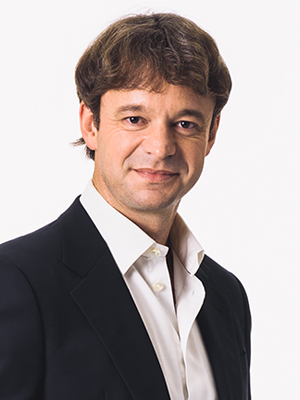
Volker Patzel is a Senior Lecturer at the Department of Microbiology and Immunology, Yong Loo Lin School of Medicine, National University of Singapore. His research focuses on RNA technologies for gene expression modulation, including antisense, RNA interference, and CRISPR/Cas systems. He leads projects in computational RNA design and delivery strategies for therapeutic applications. Specializes in RNA structure optimization Develops delivery systems for nucleic acids Pioneers computational platforms for RNA design Research Highlights: The team works on three major pillars: in silico RNA design algorithms, in vitro synthesis of functional RNA molecules, and in vivo delivery optimization using DNA vectors, peptides, and polymer capsules. Current projects target HIV-1, HPV-16, and disease-related cellular genes. Delivery Innovation: Key contributions include novel delivery strategies like dumbbell-shaped DNA vectors, cell-penetrating peptides, and micrometer-scale polymer capsules enabling RNA delivery into stem cells for gene therapy and vaccination. Scientific Recognition: 2 patent applications in nucleic acid delivery Published in high-impact journals like Nature Biotechnology and Nucleic Acids Research
Dr. Kat Agres is an Assistant Professor in Contextual Studies – Music Cognition at the Yong Siew Toh Conservatory of Music, National University of Singapore, and a Research Scientist & founder of the Music Cognition group at A*STAR’s Institute of High Performance Computing (IHPC). Her work bridges cognitive science, music technology, and healthcare, focusing on music perception, computational creativity, and music-based MedTech solutions for health and well-being. She holds a PhD in Experimental Psychology from Cornell University and conducted postdoctoral research at Queen Mary University of London, supported by an EU grant. Her research explores auditory statistical learning, music-brain interfaces (BCIs), and the therapeutic applications of music for special populations. Key grants include NIH and NIMH fellowships. Agres actively collaborates across disciplines, presenting globally and publishing in journals like Cognitive Science and Neural Computing and Applications . Beyond academia, she is a cellist with professional orchestral experience and integrates jazz and rock performance into her creative practice. Educational Background PhD in Experimental Psychology, Cornell University (with minor in Cognitive Science) Bachelor’s in Cognitive Psychology & Cello Performance, Carnegie Mellon University Postdoctoral Fellowship, Queen Mary University of London Research Interests Music cognition mechanisms (e.g., memory, expectation) Computational models of creativity and emotion in music Music technology for healthcare (e.g., stroke rehabilitation, dementia therapy) Music’s role in mental health and social connection Grants & Awards Fellowship from the National Institute of Health (NIH) Fellowship from the National Institute of Mental Health (NIMH) Labs & Teams Founder of the Music Cognition group at IHPC/A*STAR
Singapore University of Technology and DesignSingapore
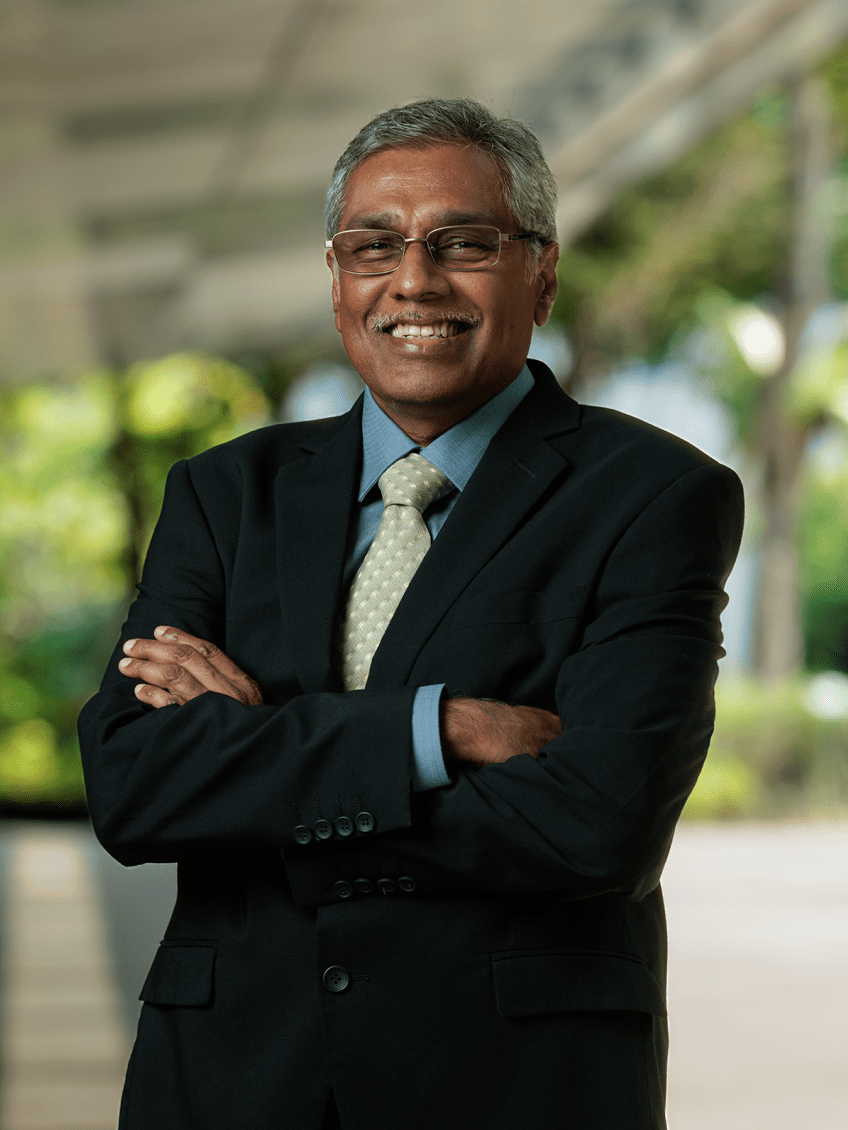
Ashraf A. Kassim is a Professor at the Singapore University of Technology and Design (SUTD) and serves as Associate Provost for the Office of Education and Innovation. He holds a PhD from Carnegie Mellon University and previously held positions including Professor of Electrical & Computer Engineering at the National University of Singapore (NUS), where he also served as Vice-Provost (Research) and Vice-Dean of Engineering. His industry experience includes research at Texas Instruments developing machine vision systems. His research spans computer vision , medical image analysis , machine learning , and deep learning . Key applications include diagnostic radiography, generative adversarial networks (GANs) for image synthesis, facial landmark detection, and attribute-based fashion retrieval systems. His work integrates advanced neural architectures with real-world challenges in healthcare and multimedia. Publications (170+ articles) emphasize deep learning-driven solutions: recent works focus on medical imaging (cell classification, radiograph analysis), generative models (text-to-image synthesis, GANs), and computer vision applications (facial analysis, fashion retrieval). Awards and Honors: Mendaki Foundation’s Anugerah Cemerlang (Academic Excellence Award) Institution of Engineers Singapore Award (2011) Public Administration Medal (Bronze, 2012) National Day Long Service Award (2018) NUS Annual Teaching Excellence Award Administrative service includes board memberships at Singapore Science Centre, Singapore Synchrotron Light Source, and Centre for Maritime Studies. He contributes to academic committees and journal editorial boards internationally.
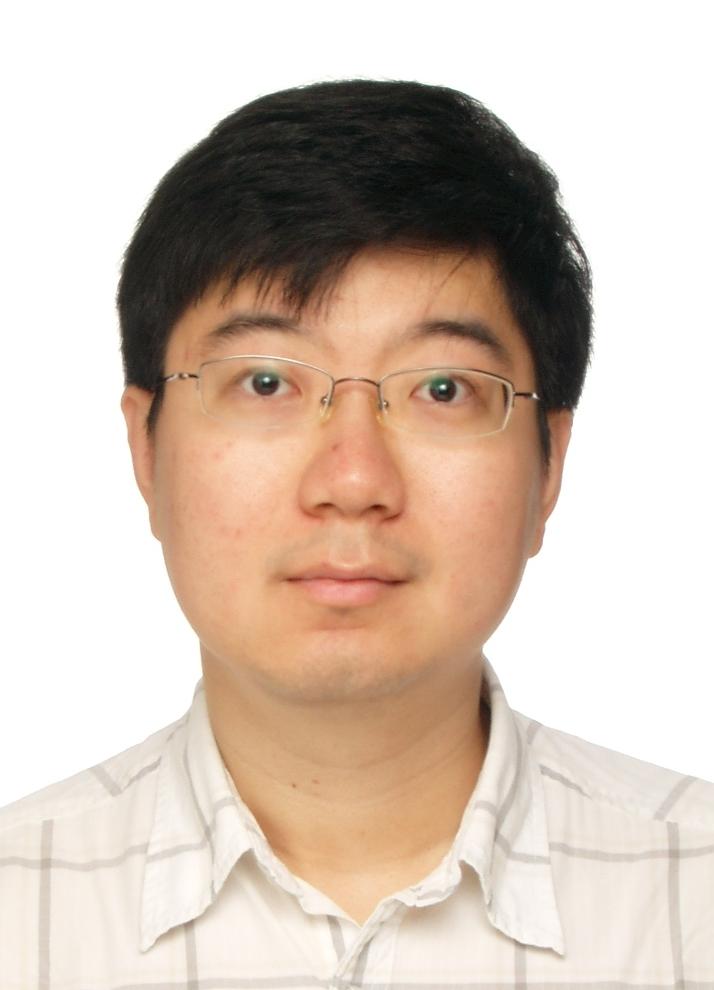
Yuchen Li is an Associate Professor at the School of Computing and Information System (SCIS) at Singapore Management University (SMU), where he also holds the Lee Kong Chian Fellowship for Research Excellence. He earned his Ph.D. in Computer Science from the National University of Singapore (NUS) in 2017. His research focuses on social analytics, high-performance graph mining, and fintech applications leveraging large language models (LLMs). He has led significant projects funded by MoE, including 'Next-Gen Competitive Intelligence' and 'CONQUEROR' for concurrent graph query processing. His academic contributions span influential publications in top-tier conferences like SIGMOD, KDD, and ICML, with notable works on graph algorithms, fraud detection, and knowledge graph robustness. He advises Ph.D. students and has supervised over a dozen researchers, including current students Xiao Hanhua, Wang Sha, and Ye Chang. His awards include the Lee Kong Chian Fellowship and the Best Demo Paper Award at CIKM 2021. Li’s research bridges theoretical foundations and practical applications, addressing challenges in graph processing, social media analysis, and fintech. His team develops systems like 'Dupin' for fraud detection and 'ThunderRW' for in-memory graph processing, showcasing expertise in GPU acceleration and scalable algorithms.
Singapore University of Technology and DesignSingapore
Professor Low Hong Yee serves as Head of the Engineering Product Development Pillar and holds the Kwan Im Thong Hood Cho Temple Chair Professorship in Healthcare Engineering at the Singapore University of Technology and Design (SUTD). She concurrently acts as Co-Advisor for the Dyson-SUTD Innovation Studio and Deputy Director for the Centre for Healthcare Education, Entrepreneurship and Research (CHEERS). Education: PhD in Macromolecular Science, Case Western Reserve University MSc in Macromolecular Science, Case Western Reserve University BSc in Macromolecular Science, Case Western Reserve University Her research pioneers multi-material and multi-textural design/fabrication, polymer nanofabrication for functional surfaces, and micro/nano-surface integration for sustainability and healthcare applications. Recent breakthroughs include digital knitting of electrical/mechanical functional textiles for wearable healthcare devices and advanced carbon capture materials, bridging engineering innovation with real-world medical and environmental solutions. Analysis of her 2022-2025 publications reveals dominant themes in sustainable engineering (carbon capture membranes, CO2 adsorbents) and healthcare technology (smart textiles for motion monitoring, nanostructured medical devices). Her work consistently integrates multi-material fabrication with surface engineering to address climate change mitigation and precision healthcare. Scientific Awards: No major scientific awards listed in source materials. Grants & Entrepreneurship: Secured SGD 19.6M as PI and SGD 3.3M as Co-PI in research funding. Co-founded Enlitho Private Limited (2016-2018, exited 2018) and Carbon1010 Private Limited (2024-present). Co-authored >150 publications and 30 granted patents with 14 pending and 2 licensed to Nanovue Pte. Ltd. Leads interdisciplinary research teams focusing on digital manufacturing for healthcare and sustainability, having directed SUTD's Digital Manufacturing and Design (DManD) Centre (2018-2022). Current work integrates nanoimprinting, textile engineering, and carbon capture technologies through industry-academia partnerships with Dyson and healthcare institutions.
Jack MCGUIRE is a Full-time Assistant Professor of Organisational Behaviour & Human Resources at the Lee Kong Chian School of Business, Singapore Management University. His research focuses on technology leadership, emotions, ethics, and human-AI collaboration. He holds a Ph.D. in Management and Organizations from the National University of Singapore (2023), where he also received the President’s Graduate Fellowship (2019–2023). Research areas include: Technology Leadership & Human-Machine Collaboration Emotional Dynamics in Leadership & Organizational Behavior AI Ethics, Fairness, and Societal Impact Positive Organizational Psychology (Mindfulness, Humility) Future of Work, Digital Transformation His recent work explores human-AI co-creation, algorithmic leadership fairness, and the ethical implications of AI adoption. Articles span journals like Academy of Management Review and Scientific Reports , emphasizing behavioral human-centered approaches to emerging technologies. Scientific awards include the prestigious NUS President’s Graduate Fellowship for outstanding academic achievement. His research bridges social psychology, organizational behavior, and digital transformation challenges.
Marcelo H. Ang Jr. is a Professor in the Department of Mechanical Engineering at the National University of Singapore (NUS), where he also serves as the Director of the Advanced Robotics Centre. With expertise spanning robotics, control systems, and intelligent automation, he has made significant contributions to mobile manipulation, compliant control, and multi-robot systems. His work bridges theoretical foundations with practical applications in manufacturing, surveillance, and human-robot interaction. Research Interests: Robust Mobile Manipulation in Unstructured Environments Distributed Mobile Robotic Systems Man-Machine User Interface Control of Dynamic Behavior of Robot Manipulators Passive Compliance and Flexible Robots Mobile Robotics Intelligent Control using Neural Networks and Fuzzy Reasoning His research spans fundamental robotics concepts like impedance control and compliant manipulation to cutting-edge applications in multi-robot systems, autonomous navigation, and soft robotics. Recent work focuses on mobility-enhanced sensor networks, deep learning for perception, and autonomous vehicles. Scientific Awards: Awards for Excellence 2000, for Most Outstanding Paper in 1999 Volume for "A Walk-Through Programmed Robot for Welding in Shipyards" Research Activities: Professor Ang has led multiple funded projects including "Integration of Solid Modeling Systems and Robot Controller Architectures" (1990-1995), "Management of Manufacturing Technologies" (1993-1995), and "Research and Development of a Ship-Welding Robot" (1994-1997). He has supervised numerous students, including Ph.D. candidate Zheng Liu who worked on multi-robot surveillance systems. His laboratory at NUS develops advanced robotic systems for applications ranging from ship welding to autonomous vehicles.
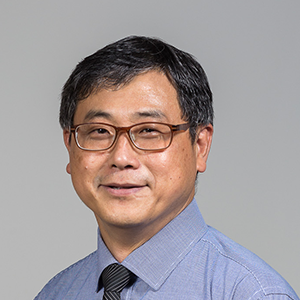
NG Teck Khim is an Associate Professor (Practice Track) at the School of Computing, National University of Singapore (NUS). He holds a Ph.D. from Carnegie Mellon University (1999) and M.Sc./B.Eng. degrees from NUS (1992/1988). His academic career bridges both academia and industry with significant experience at DSO National Laboratories and Media Development Authority. Education: Ph.D. (CMU), M.Sc. & B.Eng. (NUS) Leadership: Vice-Dean, Industry Relations at NUS Computing Research Focus: Geometrical computer vision, signal processing, and their applications in Markerless AR, sports analytics, and image forensics. His work also explores audio signal processing and military technology applications. Publication Trends: Recent works emphasize multimodal learning, adversarial attack defenses, medical imaging, and efficient neural architectures. Key themes include distribution regression, self-supervised frameworks, and video recognition optimization. Scientific Awards: NUS School of Computing Faculty Teaching Excellence Award (AY14/15, AY15/16, AY16/17) NUS School of Computing Teaching Honours Roll (AY17/18) NUS Annual Teaching Excellence Award (2016/17) Teaching & Industry Contributions: He serves as Vice-Dean for Industry Relations, actively shaping academic-industry partnerships. Previously, he led the Signal Processing Lab at DSO National Laboratories Singapore, focusing on defense applications of image processing and computer vision.
Hock Hai Teo serves as Provost's Chair Professor of Information Systems at the National University of Singapore's School of Computing, concurrently holding the Directorship of Humanities & Social Sciences Research in the NUS Office of the Deputy President. Previously, he led the Department of Information Systems (2008-2015) and served as Vice-Dean for Corporate Communications (2007-2008), demonstrating sustained institutional leadership. His academic foundation includes: Ph.D. in Information Systems, National University of Singapore M.Sc. in Computer & Information Sciences, National University of Singapore B.Sc. (Honours) in Computer & Information Sciences, National University of Singapore Professor Teo's research centers on Health Informatics and Digital Transformation, with pioneering work in AI-driven health solutions and open innovation ecosystems. His investigations into IT artifacts for decision-making optimization span dementia detection via voice analysis, smoking cessation through narrative therapy apps, and diabetes management via mobile health interventions. Current interests emphasize computational social science applications and intelligent systems for educational enhancement, particularly examining AI over-reliance in learning environments. Recent publications reveal a strategic pivot toward practical healthcare implementations, with 12 of 15 featured articles (2023-2025) addressing health informatics challenges. Key trends include multimodal AI diagnostics (voice, wearables), chronic disease management platforms, and ethical considerations in AI-advised decision making, while maintaining strong engagement with digital transformation for SMEs and platform governance. His scholarly recognition includes: MIS Quarterly Reviewer of the Year (2004) Information Management Research Award (2024) Association of Information Systems SIG-Health Meritorious Mention Award (2016) Professor Teo directs major research initiatives including the Cognify dementia detection system, QuitTogether smoking cessation platform, and EMPOWER diabetes management program, securing industry partnerships with entities like Singapore Airlines for fatigue prediction systems. His editorial leadership spans top journals including MIS Quarterly and Information Systems Research, where he shapes discourse in information systems theory and health IT applications. His research teams operate at the healthcare-technology intersection, developing tools like multilingual acoustic dementia predictors and AI-powered motivational interviewing apps for chronic disease management. Current projects integrate continuous glucose monitoring with behavioral nudges, collaborating with SingHealth and NUHS to translate academic research into clinical practice through the NUS Office of the Deputy President's research infrastructure.
Jungpil Hahn is a Provost's Chair Professor at the National University of Singapore (NUS) School of Computing, where he holds multiple leadership positions including Vice-Dean of Communications, Director of the NUS Fintech Lab, Deputy Director of AI Singapore (AI Governance), and Deputy Director of the Centre for Technology, Robotics, Artificial Intelligence & the Law. Previously, he served as Head of the Department of Information Systems and Analytics from July 2015 to June 2021. Before joining NUS, he was an Assistant Professor at Purdue University's Krannert School of Management and a Visiting Assistant Professor at Carnegie Mellon University's Tepper School of Business. Ph.D. in Information & Decision Sciences, University of Minnesota (2003) M.B.A. in Business Administration, Yonsei University, Seoul (1998) B.B.A. in Business Administration, Yonsei University, Seoul (1998) Professor Hahn's research spans multiple cutting-edge domains, with a particular focus on organizational learning in digital contexts, open innovation, and the impact of emerging technologies on business processes. His work examines how organizations adapt to technological change, with special attention to decentralized autonomous organizations (DAOs), blockchain governance, and the effects of privacy-enhancing technologies on business analytics. He investigates the intersection of human behavior and technology, particularly in crowdsourcing platforms and software development teams, exploring how team composition, knowledge diversity, and organizational structures impact innovation outcomes. His research also addresses practical challenges in data science, including missing data problems and the impact of privacy technologies on firms' analytics capabilities. His recent publications reveal a strong trend toward studying decentralized organizational forms enabled by blockchain technology, with multiple papers examining DAOs and consensus mechanisms. There's also a clear focus on the practical challenges of implementing AI and data analytics in business settings, particularly around data quality issues and the impact of privacy technologies. His work bridges theoretical organizational science with practical business applications, often using simulation-based approaches to develop and test theories. Recipient of multiple Best Paper Awards at ICIS (2020-2023) AIS Distinguished Member (2022) Faculty Teaching Excellence Award at NUS School of Computing (2014) Best 2013 Published Paper Award from Academy of Management's OCIS Division Best Reviewer Award from INFORMS Information Systems Society (2009) Professor Hahn has successfully mentored numerous PhD students who have secured prestigious academic positions at institutions worldwide, including the University of Colorado, Georgia State University, and Central University of Finance and Economics. His research is supported by significant grants focused on digital transformation, blockchain applications, and AI governance. He serves as Senior Editor of MIS Quarterly and has previously served as Associate Editor of Information Systems Research, demonstrating his leadership in the academic community. His research projects often involve interdisciplinary collaboration with computer scientists, economists, and legal scholars. He leads the Garbage Can Lab (https://garbcan.com/), which conducts research on complex socio-technical systems using an 'organized anarchy' approach inspired by the Garbage Can Model of Organizational Choice. The lab brings together researchers from diverse backgrounds to tackle problems related to digital transformation, platform innovation, computational social science, and data science. Current projects include studying organizational learning in DAOs, AI-enabled organizational decision-making, interventions for crowdsourcing platforms, and the impact of privacy technologies on business analytics.
LEE Yi-Chieh is an Assistant Professor in the Department of Computer Science at NUS Computing, National University of Singapore. He holds a Ph.D. in Computer Science from the University of Illinois Urbana-Champaign (2021) and previously worked as a researcher at NTT, Japan. He leads the AI4SG (AI for Social Good) Lab, focusing on designing AI technologies to promote societal well-being. Ph.D., Computer Science, University of Illinois Urbana-Champaign, 2021 Researcher, NTT, Japan Assistant Professor, Department of Computer Science, NUS Computing His research lies at the intersection of human-computer interaction (HCI), computer-supported cooperative work (CSCW), and human-centered AI. He investigates how conversational agents can support mental health, reduce stigma, and encourage prosocial behaviors. His work emphasizes trust, ethics, and social impact in AI systems, particularly in healthcare and marginalized communities. He also explores multi-agent systems, AI literacy, and emotional reciprocity in human-AI relationships. The recent publications (2023–2025) reflect a strong trend toward AI for mental well-being, social influence in multi-agent environments, ethical challenges in AI companionship, and innovative applications of conversational agents in education, healthcare, and social services. The research combines qualitative and quantitative methods, often involving participatory design and cross-cultural studies. Notable scientific awards include: CSCW2022 Diversity & Inclusion Award Cornell-NUS Global Strategic Collaboration Award LEE Yi-Chieh is actively involved in advising and research grants through the AI4SG Lab. While specific students are not listed, his lab conducts impactful research in AI for social good, supported by institutional and international collaborations. He teaches courses such as CS3249 (User Interface Development) and CS5346 (Information Visualization), contributing to both undergraduate and graduate education. The AI4SG Lab is dedicated to creating socially responsible AI systems through interdisciplinary research, community engagement, and technology design that addresses real-world challenges in mental health, aging, inclusivity, and social justice.
Roger Zimmermann is a Full Professor at the School of Computing, National University of Singapore (NUS), where he is also a Co-PI at the Grab-NUS AI Lab and leads the Location AI project. He previously served as Deputy Director of the NUS Smart Systems Institute (SSI) and Co-Director of the Centre of Social Media Innovations for Communities (COSMIC), both funded by Singapore’s National Research Foundation (NRF). Before joining NUS, he was a Research Area Director and Research Assistant Professor at the University of Southern California (USC). Ph.D. in Computer Science, University of Southern California (1998) M.S. in Computer Science, University of Southern California (1994) His research focuses on multimedia systems , spatio-temporal data management , streaming media architectures (especially DASH), machine learning applications , AR/VR , and location-based services . He leads the Media Management Research Lab (MMRL) at NUS, which conducts cutting-edge work in distributed multimedia and intelligent systems. His work combines theoretical depth with real-world applications in urban computing, smart mobility, and immersive media. The recent publications reflect a strong trend toward multimodal learning , spatio-temporal AI , adaptive streaming , and urban intelligence . His team explores zero-shot learning, 3D scene understanding, traffic forecasting, and open-vocabulary audio-visual segmentation, often leveraging foundational models and deep neural architectures. There is a clear emphasis on real-time, scalable systems for smart cities and immersive experiences. Dr. Zimmermann has received numerous accolades, including: DASH-IF Excellence in DASH Award (multiple years) Best Paper Awards at ACM SIGSPATIAL, IEEE ICME, and ACM MMSys Silver Award at ACM MMSys 2020 Grand Challenge IEEE Communications Society Best Editor Award (2017) ACM Distinguished Member (2017) Top 1% Publons Reviewer in Computer Science (2018) He has advised numerous students and led major research initiatives funded by MOE, NRF, A*STAR, NSF, and industry partners like Seagate, Intel, and HP. He has served as General Chair for IEEE MIPR 2023, ACM Multimedia 2020, and IEEE ISM 2015, and as TPC Co-Chair for several top-tier conferences. His editorial roles include Associate Editor for IEEE Transactions on Multimedia (TMM), ACM TOMM, and IEEE OJ-COMS. He leads the Media Management Research Lab (MMRL) , which focuses on intelligent multimedia systems, spatiotemporal data mining, and immersive media technologies. The lab develops scalable solutions for real-world challenges in urban computing, smart transportation, and interactive media.
WANG Xinrun is an Assistant Professor and Lee Kong Chian Fellow at the School of Computing and Information Systems, Singapore Management University, where he joined in July 2024. He holds a PhD from Nanyang Technological University (2020). His research spans: Fundamental decision making (single/multi-agent reinforcement learning) Applied decision systems (FinTech, urban security, scientific AI) Foundation agents (computer control, automated research) with emphasis on unified frameworks for complex problem-solving. His publication portfolio (15 most recent shown) demonstrates consistent focus on reinforcement learning innovations, multi-agent game theory, and financial AI applications, with papers in ICLR, NeurIPS, AAAI, and KDD. Key trends include foundation model integration, decision-making unification, and real-world deployment. Awards include the Lee Kong Chian Fellowship. He advises PhD student ZHOU Shunchao and leads a research group developing: Reinforcement learning for FinTech Multi-agent systems for urban security Foundation agents for scientific discovery while actively recruiting students and collaborators for these initiatives.
Sanghyun Park is a PYP Assistant Professor in the Department of Strategy and Policy at the National University of Singapore. His research focuses on organizational design, learning processes, artificial intelligence, and computational social science. He investigates how organizational structures influence multi-agent systems and employs methods like formal modeling, experiments, and NLP. PhD in Strategy from INSEAD (2018–2024) Master's in Strategy from Seoul National University (2015–2018) Bachelor's in Physics, Economics, and Business Administration from Seoul National University (2008–2015) Research interests include decision-making dynamics, AI-driven problem-solving, and the coevolution of organizational structures. His work bridges formal theory with computational methods, addressing challenges in multi-agent learning and human-AI collaboration. Recipient of the Will Mitchell Dissertation Research Grant (WMDRG) from the Strategy Research Foundation (SRF). Current research explores ambiguity in human-AI communication and organizational learning mechanisms.