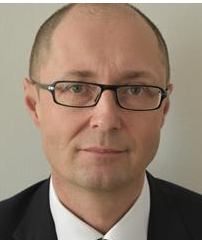
Vetle Lars Wisløff Sandring is a Doctoral Research Fellow at the Department of Archaeology, History, Religious Studies and Theology, UiT The Arctic University of Norway. His work bridges history education, digital humanities, and game-based learning. Research interests: Computer games as pedagogical tools in history education Historical thinking skills in digital environments Early modern history of the European Arctic Digital humanities methodologies Teaching: Lecturer for courses like HIS-1000 (Introduction to History) and HIS-2001 (Historical Source Analysis). Led seminars on historical sources and scientific poster creation. Projects: Member of the ENCODE research group (Engaging Conflicts in a Digital Era) and the "Lifetimes of robust learning" project. Based at Breiviklia H107 in Tromsø. Research trends: Focuses on gamification in historical skill development, Cold War narratives, and Arctic source material digitization.
Kristian Ringsby Odberg is an Associate Professor at the Norwegian University of Science and Technology (NTNU) , affiliated with the Gjøvik campus. His academic focus aligns with computer science and related technical disciplines. Kristian's research interests span broad areas including Computer Science , Software Engineering , Artificial Intelligence , and Human-Computer Interaction . His work likely involves technical innovation and interdisciplinary applications within these fields.
Mohamed Abomhara is a Senior Researcher and Head of Department at the Department of Information Security and Communication Technology, Norwegian University of Science and Technology (NTNU) , Faculty of Information Technology and Electrical Engineering. He serves as Discipline Leader for the MRI PET (Multidisciplinary Research group on Privacy and data protEcTion) research group. Research Interests His expertise includes: GDPR compliance and privacy-by-design Risk assessment and secure system design AI ethics and social-cyber risk mitigation Healthcare digital transformation security Border control technology ethics Recent Publications His 2024-2025 research focuses on multilingual hate speech detection , border control technology acceptance , and privacy protections in national identification systems , bridging AI ethics, cybersecurity, and regulatory compliance. Earlier work (2016-2022) addresses: Cybersecurity in digital substation infrastructure Secure collaborative healthcare information sharing Blockchain-based GDPR compliance AI-driven social media analysis
Christian Johansen is a Professor in the Department of Information Security and Communication Technology at the Norwegian University of Science and Technology (NTNU), Faculty of Information Technology and Electrical Engineering. He leads the Systems Security group (S2G) and is affiliated with the Center for Cyber and Information Security (CCIS), the Norwegian Cyber Range, and the S2G Playground. Professor Johansen's research focuses on Security and Theoretical Computer Science, with emphasis on developing formal methods and tools for ensuring reliability of complex systems. His work spans security, safety, and concurrency properties in software systems, cyber-physical systems like Smart Grids, Internet of Things security, and modeling concurrency in multi-core and high-performance computing. Among his notable contributions are the Timed Distributed pi-calculus, ST-structures, Dynamic Structural Operational Semantics, Synchronous Kleene Algebra, and Higher Dimensional Modal Logic. His research interests include modeling of security protocols, programming language semantics, verification of distributed systems, concurrent systems modeling, and legal electronic contracts. His recent publications show a strong trend toward concurrency theory, security, and privacy, with significant contributions to pi-calculus variants, higher-dimensional automata, attribute-based encryption, and semantic access control frameworks. Many of his papers appear in top venues such as CONCUR, ATVA, FM, POST, CCS, JLAMP, IJCIP, FMSD, and LMCS. Professor Johansen actively mentors students and collaborators, having worked with Manish Shrestha on the LightSC Security Classification Method for Smart Grids and IoT, and with Bjørnar Luteberget on the SAT modulo Discrete Event Simulation method for railway capacity verification. He has secured funding from competitive sources including EU-FP7-FET-Young-Explorers, Horizon-2020, NFR-FRINATEK, UK's EPSRC, and ECSEL-JU. His work often bridges theoretical computer science with practical security applications in critical infrastructure domains.
Benjamin James Knox serves as an Adjunct Associate Professor at the Norwegian University of Science and Technology (NTNU), with his work based at the Gjøvik campus. His research bridges cybersecurity with cognitive science, focusing on human factors in cyber defense operations. He maintains an active research profile with numerous publications through NTNU's institutional repository. Dr. Knox's research interests center on the intersection of human cognition and cybersecurity, with significant contributions in cognitive agility for cyber operators, neuroergonomic approaches to threat identification, and the psychological dimensions of cyber warfare. His work explores how cognitive processes, emotional states, and team dynamics influence cyber situational awareness and decision-making in high-stakes environments. Recent research has expanded into extended reality training environments, individual risk assessment for cybersecurity personnel, and the application of digital twins for critical infrastructure protection. His publication record demonstrates consistent output across multiple high-impact venues including Frontiers in Education, IEEE Access, and Lecture Notes in Computer Science. Dr. Knox frequently collaborates with researchers across European institutions, particularly in Norway, Lithuania, and Germany, indicating strong international research networks. His work with NATO Science and Technology Organization highlights the strategic relevance of his research to defense applications. While specific laboratory affiliations aren't detailed in the available information, his publications suggest involvement with cyber defense simulation environments and neuroergonomic testing facilities. His recent focus on extended reality and digital twin technologies indicates engagement with advanced simulation platforms for cybersecurity training.
Stig Frode Mjølsnes serves as a Professor in the Department of Information Security and Communication Technology within the Faculty of Information Technology and Electrical Engineering at the Norwegian University of Science and Technology (NTNU). His research spans mobile network security, cryptographic protocols, and privacy engineering, with particular focus on vulnerabilities in LTE/4G systems and subscriber identification mechanisms. His office is located at Elektro B, B219, Gløshaugen, OS Bragstads plass 2, and he maintains active research collaborations internationally. Professor Mjølsnes' research interests center on mobile network security with emphasis on privacy exposure in cellular systems, cryptographic protocol design, and security education. His work has systematically exposed critical vulnerabilities in LTE paging mechanisms that enable IMSI catchers and subscriber tracking, while developing practical countermeasures through privacy-preserving identification protocols. He bridges theoretical cryptography with real-world implementation challenges, particularly in wireless communication systems where security flaws have immediate practical consequences. His research methodology combines formal protocol analysis with experimental network security testing. His publication record demonstrates consistent focus on mobile network privacy vulnerabilities, particularly in LTE systems, where his team has documented low-cost attack methodologies accessible even to non-programmers. The research trajectory shows evolution from foundational cryptographic work toward applied security testing frameworks that have influenced both academic understanding and practical security implementations in mobile networks. His contributions include developing educational tools for security experimentation and analyzing cryptographic weaknesses in voting systems. Professor Mjølsnes actively contributes to the academic community through conference organization, particularly the Norwegian ICT Conference for Research and Education (NISK), where he has served as program chair. His editorial work includes prefaces for major security conference proceedings published by Springer in the Lecture Notes in Computer Science series. He has also contributed to security standardization discussions through technical reports and government consultations. His teaching philosophy emphasizes hands-on security education, as evidenced by publications on security laboratory didactics and mobile network security experimentation frameworks. He has developed practical educational approaches for teaching information security through software laboratories and web security exercises, focusing on bridging theoretical knowledge with practical implementation skills.
Bjørn Jonny Villa serves as Associate Professor at the Norwegian University of Science and Technology (NTNU), specializing in computer networking with emphasis on adaptive video streaming and Quality of Experience (QoE) optimization. His research addresses critical challenges in home networks, public WiFi security, and bandwidth management, as evidenced by publications spanning 2010-2014 in top venues including IEEE, Springer, and international journals. Villa earned his PhD from NTNU in 2014 with the dissertation "Enhancing Quality Aspects of Adaptive Video Streaming in Home Networks," establishing foundational work for his subsequent research. His academic journey reflects deep specialization in network performance optimization for multimedia delivery systems. Core research interests include adaptive HTTP video streaming, QoE measurement and optimization, network security vulnerabilities (particularly in public WiFi), and active probing techniques for bandwidth estimation. Villa employs experimental user studies and traffic analysis to develop practical solutions for improving streaming fairness and network resource allocation, with significant contributions to understanding how burst durations and traffic shaping impact user-perceived quality. Analysis of Villa's publication timeline reveals consistent focus on video streaming challenges: early work (2010-2011) established monitoring frameworks and home gateway optimization, mid-period research (2012-2013) advanced fairness algorithms and traffic shaping, while his 2014 output expanded into security implications of public networks. His collaborative approach is evident through recurring partnerships with Poul Einar Heegaard and Anders Instefjord across multiple publications. No scientific awards are documented in the available records. Similarly, no information regarding research grants or student supervision appears in the provided materials. Villa actively engages with the research community through conference presentations including Forskningsdagene (2013) and NIK conferences, and contributes to public discourse through media appearances in Aftenposten and Inside Telecom. His work operates within NTNU's telecommunications research ecosystem, focusing on practical implementations of network optimization techniques for real-world video delivery systems.
Ståle Andreas Skogstad is a Research Fellow at the University of Oslo , affiliated with the Department of Informatics under the Faculty of Mathematics and Natural Sciences . His research focuses on real-time digital filter design , motion capture technologies , and human-computer interaction in musical contexts.
Christian Doeller is a Professor of Medicine (Neuroscience) at the Norwegian University of Science and Technology (NTNU), leading research at the Kavli Institute for Systems Neuroscience . He also serves as Managing Director of the Max Planck Institute for Human Cognitive and Brain Sciences and Professor of Psychology (Learning and Memory) at Leipzig University , Germany. Specializes in translational neuroscience of ageing and Alzheimer's disease Focuses on cognitive neuroscience of learning and memory Key projects: Jebsen Centre for Alzheimer's Disease, Helse Midt-Norge, and ERC-CoG project GEOCOG His recent research explores hippocampal-entorhinal cognitive maps, spatial navigation, and memory reconfiguration across abstract and Euclidean spaces. Collaborations span NTNU, Max Planck Institute, and Leipzig University. Notable article trends include human cognitive neuroscience applications, neuroimaging techniques (DTI-fMRI, eye tracking), and neural coding in memory systems. Themes like stress effects on memory and cortical motor system interactions with cognitive maps are recurrent. Christian Doeller's team investigates brain mapping and neurodegenerative diseases, leveraging advanced neuroimaging and computational models. His work bridges basic neuroscience with clinical applications in Alzheimer's research.
Muhammad Adnan serves as a Research Fellow at the Department of Technology and Safety, UiT The Arctic University of Norway, with contact details including email muhammad.adnan@uit.no and phone +47 77 66 02 47. His research spans critical domains in modern engineering and computer science, with primary focus areas: Autonomous Maritime Systems : Developing operational frameworks for remotely controlled vessels and onshore operation centers Machine Learning Applications : Advancing ensemble methods for classification, spam detection, and remote sensing Computer Vision Integration : Leveraging electro-optical/NIR sensors for maritime object detection Cybersecurity Solutions : Enhancing email security through stacking ensemble techniques Recent publications (2023-2024) reveal a concentrated research trajectory merging maritime autonomy with AI-driven solutions, demonstrating significant interdisciplinary work across navigation support systems, sensor fusion, and transfer learning applications. His output shows consistent publication in high-impact journals with practical engineering implementations. No scientific awards were documented in the provided materials. Information regarding student supervision, grant funding, or laboratory affiliations was not available in the source text.
Bjørn Solvang is a Professor in the Department of Industrial Engineering at UiT The Arctic University of Norway, campus Narvik. His research focuses on advanced manufacturing systems, robotics, and digital transformation in industrial contexts. His primary research interests include: Reconfigurable Manufacturing Systems Industry 4.0/5.0 Technologies Human-Robot Collaboration Digital Twins and Virtual Reality Applications Supply Chain Optimization Cognitive Infocommunication in Robotics He investigates how these technologies enhance flexibility, efficiency, and sustainability in manufacturing, particularly for small and medium enterprises (SMEs). Analysis of his recent publications reveals a strong trajectory toward smart manufacturing systems with increasing emphasis on Industry 5.0 principles. His work consistently addresses real-world industrial challenges through robotics integration, digital twin implementations, and AI-driven optimization, often involving European cross-organizational collaborations. Professor Solvang actively contributes to the ArcLog research group (Intelligent Manufacturing and Logistics) and the "Industry 5.0 enabled Smart Logistics" project. He has participated in multiple European cooperation initiatives providing educational frameworks for SMEs transitioning to advanced industrial paradigms. Based at Campus Narvik (room A4050), he maintains active industry engagement through research projects targeting practical manufacturing innovations and sustainable logistics solutions.
Xu Sun is a Postdoctoral Fellow at the Department of Industrial Engineering, UiT The Arctic University of Norway, Campus Narvik. His research bridges logistics, sustainability, and digital innovation within Industry 4.0/5.0 frameworks, with a focus on practical applications in Norwegian contexts including electric vehicle infrastructure and pandemic response. His research portfolio spans Reverse Logistics, Sustainable Logistics, Closed-Loop Supply Chains, Digital Twins, and Industry 5.0 integration. Key themes include applying generative AI to logistics network design, optimizing charging infrastructure for electric trucks, and developing digital twins for circular economy systems. His work emphasizes multi-objective decision-making to balance environmental, social, and economic sustainability in logistics operations. Analysis of Xu Sun's publication trends reveals a strategic shift toward human-centric digital solutions in logistics. Recent works integrate generative AI, digital twins, and simulation to address Industry 5.0 challenges, with notable emphasis on electric mobility infrastructure (2024-2025) and pandemic-related logistics (2021-2022). His research consistently employs case studies from Norway, demonstrating practical applicability while advancing theoretical models for sustainable supply chains. No scientific awards were documented in the source material. While specific student advising details are absent from the profile, Xu Sun's collaborative publication record indicates active mentorship within research teams. His projects frequently involve multi-institutional partnerships and industry engagement, though explicit grant information is not provided in the available text. Xu Sun contributes to the ArcLog research group's Intelligent Manufacturing and Logistics team and leads the 'Industry 5.0 enabled Smart Logistics' project. His work leverages tools like AnyLogic simulation and digital twin technology to develop human-centered logistics solutions, with physical operations based in Campus Narvik office D2150.
Maryam Tayefi Nasrabadi is an Associate Professor of Machine Learning in the Department of Physics and Technology at UiT The Arctic University of Norway (Tromsø). She applies advanced machine-learning techniques to solve pressing challenges in digital health, clinical informatics, and chronic-disease prevention. Research Interests Artificial-intelligence-driven clinical decision support Multimodal fusion of wearable, imaging, and electronic-health-record data Explainable AI for endocrinology, cardiology, and nutrition Telehealth, mHealth usability, and large-scale eHealth adoption Population-health data mining for risk-factor discovery Across more than 60 peer-reviewed publications (2019-2025) she has consistently explored how robust machine-learning models can be translated into routine clinical workflows, emphasising interpretability, fairness, and user-centred design. Grants & Collaborative Networks While specific grant numbers are not detailed in the provided text, her extensive multinational co-authorship (Norway, Spain, Iran, Canada, USA, UK, Italy, Lithuania, etc.) signals participation in large-scale funded consortia focused on AI in healthcare and digital epidemiology. Selected Professional Contributions Member of editorial boards and peer-review panels for leading journals in medical informatics and AI Active contributor to Norwegian national reports on AI implementation in healthcare (2022-2023) Frequent speaker at international conferences on machine learning in medicine
Jose David Patón-Romero serves as a Postdoctoral Fellow in the Department of IT Management at Simula Metropolitan, a research division of Simula Research Laboratory. His work bridges business governance, digital transformation, and sustainable technology practices, with a focus on real-world implementation challenges in organizational contexts. His core research domains include: Business governance and management frameworks Program and project management methodologies Benefits management in digitalization initiatives Assessment and auditing techniques Process improvement strategies Sustainability integration Green IT solutions Analysis of his publication trends reveals a strong interdisciplinary trajectory connecting management science with social impact. His work consistently addresses the human dimensions of technology, particularly through investigations of gender equality in AI systems, decolonizing academic narratives, and mobile applications for social justice. The recurring emphasis on benefits management and goal hierarchies demonstrates a methodological commitment to evaluating tangible outcomes in digital transformation projects, while his Green IT research explores environmental sustainability metrics within IT governance frameworks. No scientific awards were documented in the source material. Available information does not specify student advisement activities or research grant funding. His professional engagements include invited talks on internationalization, doctoral impact, and Green IT implementation at institutions including Unidad Central del Valle del Cauca and Universidad Tecnológica de Xicotepec de Juárez. Dr. Patón-Romero maintains active research collaboration through Simula Metropolitan's IT Management department, with documented partnerships across European institutions as evidenced by his multi-country publications on decolonizing academic practices and gender equality metrics.
Emilio Ruiz Moreno is a Postdoctoral Fellow at Simula Metropolitan's Department of Signal and Information Processing for Intelligent Systems. His work focuses on signal processing, machine learning, and real-time data analysis. Current Affiliation: Simula Metropolitan Center, Oslo, Norway Academic Role: Research Fellow (Signal Processing & Machine Learning) Research Interests: Emilio specializes in trajectory prediction, kernel regression, and zero-delay signal reconstruction. His work addresses challenges in motion-capture sensor data analysis, quantized signal tracking, and multivariate time-series processing for intelligent systems. Key applications include human-computer interaction and biomedical signal modeling. Publications (2021-2025): His research spans statistical signal processing (vector autoregressive models, kriging), adaptive kernel regression, and parallelizable learning frameworks. Technical reports and journal papers emphasize real-time performance and mathematical rigor. Laboratory Affiliation: Works within Simula Metropolitan's Signal and Information Processing for Intelligent Systems department, collaborating on interdisciplinary projects involving artificial intelligence and sensor technology.