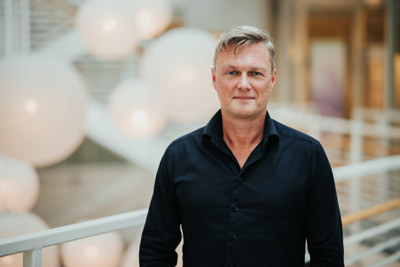
Eva Langvik is a Professor in the Department of Psychology at the Norwegian University of Science and Technology (NTNU). Her work focuses on depression, health psychology, personality assessment, and occupational psychology. She has extensively published on topics such as moral stress in law enforcement, workplace well-being, and psychological factors in cardiovascular health. Her research interests include the intersection of personality traits and health outcomes, particularly in high-stress professions like policing. Studies often address stress management, organizational support systems, and the psychological impact of working with child abuse cases. Recent articles highlight her analysis of police employees’ experiences with workload and organizational resources, as well as investigations into public perception of offenders and patient experiences in clinical settings. She collaborates with institutions like the NTNU Department of Psychology and the Trøndelag Police District.
Özlem Özgöbek is an Associate Professor at the Department of Computer Technology and Informatics, Norwegian University of Science and Technology (NTNU). Her research spans artificial intelligence, machine learning, and recommender systems with a focus on privacy, fake news detection, and educational technology. NTNU - Department of Computer Technology and Informatics Her work explores multimodal fake news detection, privacy implications in recommender systems, and technology-enhanced classroom interaction. Recent publications analyze digital education trends and classroom tools. Özgöbek collaborates with international researchers and contributes to news recommendation workshops. Her projects address ethical AI, environmental sustainability, and real-time information processing.
Lars Andreas Akslen is a Professor at the Department of Clinical Medicine, University of Bergen, and serves as the Centre Director of CCBIO (Centre for Cancer Biomarkers). He is based at Haukeland University Hospital and leads a major translational cancer research group focused on biomarker discovery and validation. Position: Professor, Centre Director of CCBIO Institution: University of Bergen Department: Department of Clinical Medicine Location: Haukeland University Hospital, Bergen, Norway Email: lars.akslen@uib.no His research is centered on translational oncology, with a strong emphasis on identifying and validating novel biomarkers for improved biological classification and grading of malignant tumors. His work spans breast cancer , malignant melanoma , prostate cancer , and gynecologic cancers . By integrating human tumor sample analysis with experimental cell and animal models, his team aims to enhance the clinical utility of biomarkers in predicting aggressive tumor behavior and guiding personalized treatment strategies. The recent publications highlight a consistent focus on tumor microenvironment, immune biomarkers, imaging mass cytometry, AI in diagnosis, and age-related phenotypes in cancer. There is a strong trend towards high-dimensional spatial profiling and integration of molecular and clinical data to refine prognostic and predictive models. Lars Andreas Akslen has no listed scientific awards in the provided text. He leads the Tumor Biology Research Group (established in 1995) and the CCBIO center, indicating significant mentorship and leadership in cancer research. While specific students are not listed, his extensive collaboration network suggests active supervision of PhD and postdoctoral researchers. No specific grants are mentioned, but leadership of a national research center implies substantial funding acquisition. He is affiliated with CCBIO and the Tumor Biology Research Group, both based at the Department of Clinical Medicine, University of Bergen, and operating from Haukeland University Hospital. These teams focus on translational cancer biomarker research using advanced molecular and imaging technologies.
Carlos Velasco is an Associate Professor in the Department of Marketing at BI Norwegian Business School, where he co-founded the Center for Multisensory Marketing. He holds a D.Phil. in Experimental Psychology from the University of Oxford and has established himself as a leading researcher at the intersection of psychology, marketing, and human-computer interaction. His research focuses on multisensory experiences and their underlying principles, with particular attention to crossmodal correspondences between sensory modalities. His work spans diverse areas including digital dining, food technology, customer experience management, and the application of emerging technologies like AI, VR, and the Metaverse in sensory marketing. Velasco has published extensively in top journals across multiple disciplines including Food Quality and Preference, Journal of Retailing, Journal of Business Research, Psychology and Marketing, and International Journal of Human-Computer Studies. His research reveals consistent patterns in how sensory inputs influence consumer behavior and product perception, particularly examining how visual elements, sounds, and shapes correspond with taste experiences. Velasco's work also explores the ethical dimensions of customer experience design in digital environments and investigates how cultural contexts shape multisensory food experiences globally. Velasco has authored several influential books including Multisensory experiences: Where the senses meet technology (2020 and 2025, Oxford University Press), Digital dining: New innovations in food and technology (2025, Springer Nature), and the edited collection Multisensory packaging: Designing new product experiences (2019, Palgrave Macmillan). Serves on editorial boards of Food Quality and Preference Journal of Business Research Psychology and Marketing International Journal of Gastronomy and Food Science International Journal of Food Design Currently, Velasco co-hosts the customer experience management podcast and collaborates with companies worldwide on topics including multisensory experiences, immersive technologies, Web3, food and drink, branding, and consumer research. His work bridges academic research with practical applications in marketing and product design.
Jim Tørresen is a Professor of Computer Science at the Department of Informatics, University of Oslo, where he has been employed since 1999 (Associate Professor 1999-2005, Professor since 2006). He serves as group leader for the Robotics and Intelligent Systems (ROBIN) research group and is also a Principal Investigator at the Centre for Interdisciplinary Studies in Rhythm, Time and Motion (RITMO). His academic career includes visiting positions at Cornell University's Creative Machines Lab (2010-2011) and Kyoto University in Japan (1993-1994). His educational background includes a Dr.ing. (Ph.D.) in Computer Architecture from the Norwegian University of Science and Technology (1996) and an M.Sc. in Computer Architecture from the same institution (1991). Before his academic career, he worked in industry at Navia Aviation (1998-1999) and NERA Telecommunications (1996-1998). Tørresen's research spans artificial intelligence, robotics, and bio-inspired computing. His work focuses on biology-inspired algorithms, programmable logic (FPGA), robotics (simulation, prototyping, control), and human-robot interaction. He has made significant contributions to areas including evolutionary computing, reconfigurable hardware, and adaptive systems. His research often bridges theoretical computer science with practical applications in healthcare, music, and industrial settings. His recent publications demonstrate a strong focus on human-robot interaction, particularly in healthcare contexts for elderly care, as well as applications in sports science, musical robotics, and geological engineering. His work shows a consistent pattern of interdisciplinary research that combines machine learning techniques with domain-specific challenges. Tørresen has also authored a popular science book on artificial intelligence in the "what is" series by Universitetsforlaget, which discusses fundamental concepts, methods, future perspectives, and ethical aspects of AI. He has been active in academic leadership, serving as General Chair for the 22nd International Conference on Field Programmable Logic and Applications (FPL) in 2012 and the 9th Joint IEEE International Conference of Developmental Learning and Epigenetic Robotics in 2019. As group leader of ROBIN, he oversees research on intelligent systems that operate in dynamic environments requiring runtime adaptation. The group works at both fundamental and applied levels, using evolutionary algorithms for robot learning and machine learning techniques for classification and recognition tasks in various application domains.
Kristin Braa is a Professor at the Department of Informatics, University of Oslo, and serves as Director of the HISP Center. Her career includes an 8-year tenure as Research Director at Telenor, where she established a Research and Innovation Center in Malaysia. Academic Roles: Vice Head of Department of Informatics, head of Information Systems (IS) research group Research Focus: Mobile extensions of open-source DHIS2 software for low-resource settings, action research methods, sustainable health information systems Research Themes: She investigates innovative approaches to support rural healthcare workers and underserved populations, emphasizing long-term engagement in national health systems. Her projects include MobiHealth (2010–2014) and NORAD-funded initiatives (2010–2014) for health information systems in developing countries. Scientific Awards: 2023 AIS Impact Award (with Jørn Braa) 2020 Roux Prize (with Jørn Braa) 2013 University of Oslo Innovation Prize 2013 Researcher of the Year (Faculty of Mathematics and Natural Sciences, UiO) 2011 ICT and Energy Researcher of the Year 2011 Rosing Prize Finalist for rural Bangladesh health initiative Collaborations: Active in the IS research group and Climate Health Network. She advocates for sustainable, community-empowering information systems through participatory design and sociotechnical approaches.
Jon Andoni Duñabeitia is a Full Professor at the School of Languages and Education of Universidad Nebrija in Madrid. He serves as Director of the Centro de Investigación Nebrija en Cognición (CINC) and the International Chair in Cognitive Health . With an h-index of 43 (Scopus), he has published 170+ articles across psycholinguistics, multilingualism, cognitive training, and virtual reality applications in education. His research examines how language processing interacts with cognitive load, emotional modulation, and technological innovation. Principal Investigator for 8+ projects funded by Spanish Government, Basque Government, BBVA Foundation Associate Editor and Editorial Board Member of high-impact journals Recognized among Spain's top 3% scientists across all disciplines Recent publications span topics including: Second-language reading dynamics in VR environments Multilingual cognitive interactions in neurological conditions Emoji/typographic effects on word processing Computerized cognitive assessment and training systems He actively contributes to scientific meetings as invited speaker across Europe, Asia, and Americas. His work bridges basic research in psycholinguistics with applied technologies for cognitive health.
Jasmin Niess is an Associate Professor in the Design of Information Systems group at the University of Oslo. Her research explores how interactive technologies can support reflection, emotional awareness, and self-regulation. Research develops frameworks and tools for reflective technologies, examining how personal data visualizations can foster self-compassion and emotional awareness. Current projects investigate perception of AI systems and metrics for measuring reflective thought in technology interactions. Recent publications propose scales for assessing reflection and rumination in technology use, design principles for self-compassionate visualizations, and studies on user perceptions of conversational agents. Contributes to research groups on Designing Technologies for Democracy and Design of Information Systems.
Faltin Karlsen is a Professor and Pro-Dean at the School of Communication, Leadership and Marketing at Kristiania University of Applied Sciences. His work focuses on media studies, game research, and digital culture, with particular emphasis on ethical implications of digital media, gaming controversies, and digital detox practices. He has contributed extensively to understanding the societal impact of online gaming, media consumption patterns, and the interplay between technology and human behavior. His research interests span digital culture, media ethics, and the psychological and sociological dimensions of gaming. Notable themes include the disconnection movement, dark design patterns in dating apps, and the ethical challenges of game monetization. He has also analyzed historical moral panics around games and their representation in media. Recent publications highlight trends in digital detox practices, the paradoxes of disconnection, and critical discourse analysis of digital platforms. His work often bridges theoretical frameworks with empirical studies, addressing topics such as online dating dynamics, productivity tools, and the cultural significance of gaming in modern society. While no scientific awards are explicitly mentioned, his contributions to media and game studies have shaped academic discourse on digital media’s societal role. He advises on research projects and engages in interdisciplinary collaborations, reflecting his commitment to understanding technology’s multifaceted impact.
Ajit Jha is an Associate Professor at the Department of Engineering Sciences , University of Agder , Norway, with research expertise in photonic sensing, robotics, machine learning, and sensor fusion. His work bridges theoretical advancements with real-world applications in autonomous systems, industrial automation, and biomedical imaging. Research Areas: Photonic sensing, Robotics, Machine Learning, Computer Vision, Sensor Fusion, Mechatronics Recent Publications demonstrate innovative applications of deep learning to thermal imaging (gesture recognition), reinforcement learning for drone landing, and sensor fusion techniques for autonomous navigation. His interdisciplinary approach combines photonics, radar systems, and AI to solve complex engineering problems.
Sergej Stoppel is currently a researcher (PostDoc) in the visualization group at the University of Bergen. His academic background includes a Mathematics master's degree (2014) and a PhD in 2018, both from the University of Bergen. His research focuses on visual data science, with an emphasis on interactive visualization techniques, human-computer interaction, and physical visualization systems. He has authored/co-authored numerous papers on topics such as hexagonal map enhancements, spatio-temporal data interaction, and low-cost physical art generation. Education: M.Sc. Mathematics (2014), University of Bergen PhD in Visualization (2018), University of Bergen Research Interests: His work spans data visualization, scientific visualization, and interactive techniques. Notable contributions include Vol²velle (printable interactive volume visualization widgets), Firefly (virtual illumination drones), and LinesLab (low-cost art generation systems). He explores methods to bridge the gap between virtual and physical visual representations, emphasizing user-centric design. Publications: His recent work includes advancements in hexagonal map visualization (2022), spatio-temporal selection techniques (2020), and illumination automation (2019). These contributions highlight his focus on enhancing data interpretation through novel interaction paradigms. Labs/Teams: Active member of the VisGroup at the University of Bergen, collaborating on projects like MetaVis and VIDI. His work is supported by grants involving visualization and medical imaging applications.
Eric Mörth is a PhD Scientist in Multimodal Medical Visualization at the University of Bergen's Department of Informatics, collaborating with the Mohm Medical Imaging and Visualization Center (MMIV). His research focuses on innovative medical data visualization techniques, such as MuSIC and ICEVis, which enhance clinical decision-making. Currently on a research stay at Harvard University's VCG Group, he holds a Master's in Medical Informatics from the Medical University of Vienna and a degree in Biomedical Engineering from the Technical University of Vienna. His awards include the Best Paper Honorable Mention (VCBM2022) and Best Short Paper (VINCI2022). Mörth's work spans cancer imaging, scrollytelling narratives, and interactive visualization tools, supported by grants from Trond Mohn Stiftelse. He advises through Team Smit and has contributed to projects like RadEx and ParaGlyder, advancing medical data exploration and communication.
Simon McCallum is an Associate Professor at NTNU’s Faculty of Information Technology and Electrical Engineering. Born in New Zealand, he transitioned from commercial game development in Norway to academia in 2009. His research focuses on Serious Games, particularly in healthcare contexts, gamification, and virtual reality applications. He holds a PhD from the University of Otago (2007), where he studied Computer Science, Mathematics, Psychology, and Philosophy. McCallum has contributed to over 30 publications, including works on cognitive health gaming, software engineering education, and AR applications. He teaches courses such as IMT4307 (Serious Games Research) and IMT3603 (Game Programming). His key projects include the Smartkuber AR game for cognitive screening and the Traction Trebuchet historical engineering study. McCallum has collaborated with institutions like the University of Otago and has engaged in outreach through conferences and media appearances, promoting game technology in healthcare and education.
Jaakko Timo Henrik Järvi is a Professor in the Department of Informatics at the University of Bergen, Norway, with additional affiliations at the University of Turku, Finland. His research focuses on programming language design, generic programming, and human-computer interaction, particularly in GUI frameworks and software reuse. His research interests include generic programming, programming language design (especially the Magnolia language), high-performance computing, array programming, and GUI engineering. He emphasizes formal methods and algebraic specifications to build reusable and efficient software systems. His work bridges theoretical foundations with practical applications in software development and education. The recent publications highlight a strong trend in declarative GUI frameworks, multi-selection models, and generic programming. His work explores domain-specific languages for GUI structure manipulation, reusable selection semantics across platforms, and optimizing array computations using the Mathematics of Arrays. These efforts reflect a consistent focus on software abstraction, correctness, and reusability. Jaakko Järvi has supervised doctoral students, including Tetiana Yarygina, whose dissertation explored microservice security. While no specific grants are detailed, his work on VisAST was supported by the Research Council of Norway (Project 250683), indicating active external funding. He frequently collaborates with researchers like Magne Haveraaen, Knut Anders Stokke, and Sean Parent. He contributes to tools and frameworks such as the MultiselectJS library and the VisAST educational tool. These are outcomes of collaborative research teams focused on improving software development practices and computer science education.
Laura E. Mercer Traavik serves as Associate Professor in the Department of Leadership and Organization at Kristiania University College's School of Communication, Leadership and Marketing. Her expertise spans negotiation strategies, diversity management, and inclusive leadership frameworks within Norwegian organizational contexts, with particular focus on workplace inclusion for caregivers and seniors. Her research examines intersectional dynamics of diversity through lenses of cross-cultural management, economic psychology, and negotiation theory. Current investigations address AI ethics implications for inclusive workplaces, individual motivations for inclusive behavior, and structural barriers faced by women in leadership. She analyzes how fixed mindsets about technology impact virtual team performance and explores employer branding strategies that authentically integrate diversity values. Analysis of her recent publications reveals intensifying focus on practical applications of inclusion science in Scandinavian workplaces. Key trends include caregiver employee integration, senior workforce retention strategies, and the ripple effects of egalitarian team structures. Her work increasingly bridges digital transformation challenges with human-centered inclusion practices, emphasizing contextual Norwegian workplace dynamics while contributing to global diversity discourse through empirical studies on mindset interventions and policy rationales. Traavik actively disseminates findings through NEON Days and EDI conferences, presenting on topics including caregiver inclusion frameworks, senior career development pathways, and cross-cultural negotiation patterns. Her research methodology combines organizational case studies with large-scale policy analysis, notably through MIPEX database applications in Scandinavian contexts.