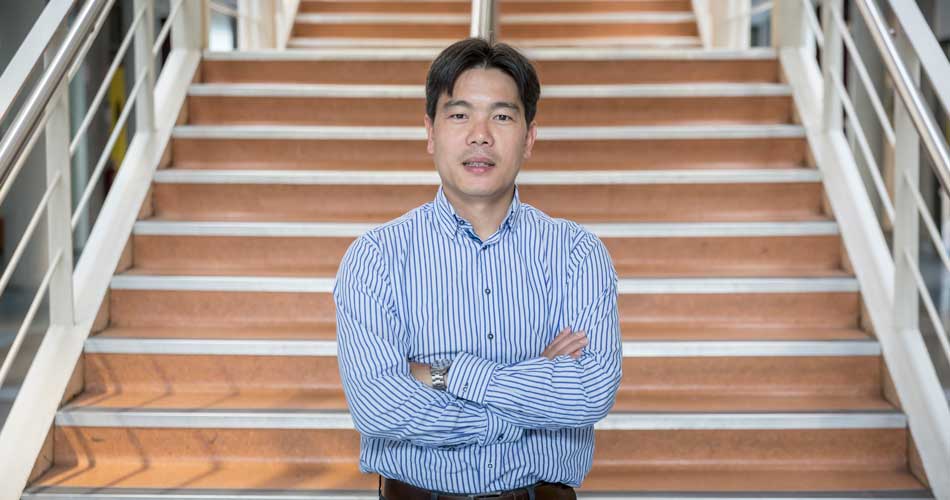
Dr. Le-Nam Tran is a researcher at the UCD School of Electrical & Electronic Engineering , University College Dublin. His work focuses on optimizing the last hop of 5G/6G wireless networks through mathematical programming, with emphasis on energy efficiency, interference management, and security against eavesdropping. Develops low-cost, low-complexity transmission techniques Projects supported by Science Foundation Ireland Career Development Award Author of over 80 peer-reviewed publications Research Keywords: Wireless Communications Network Security Signal Processing Energy-Efficient Systems Beamforming Optimization Interference Mitigation
Simon Colreavy Donnelly is an Associate Professor in the Department of Computer Science & Information Systems at the University of Limerick. He is a member of the Interaction Design Centre and focuses on interdisciplinary research at the intersection of artificial intelligence, educational technology, and healthcare informatics. His work spans machine learning applications in medical data analysis, virtual reality (VR) and extended reality (XR) for inclusive education, and deep learning techniques in chemical analysis and spectroscopy. Research Interests: His primary areas of investigation include generative AI for education equity, semisupervised learning algorithms, virtual learning environments design, and the ethical deployment of immersive technologies in healthcare and palliative care. He also explores NMR spectroscopy analysis using deep learning and develops tools for nutritional content estimation through image processing. Collaborations: His recent collaborations span international teams addressing challenges in toxicity-free online discourse (PAN 2024), semisupervised learning distribution mismatches, and VR applications for post-pandemic blended learning. His work integrates computational methods with real-world applications in education, healthcare, and chemical analysis. Labs/Teams: Active within the Interaction Design Centre at UL, his research group develops practical solutions for accessibility in digital education and healthcare systems, emphasizing user-centered design principles for extended reality applications.
Professor Annette Byrne is a leading academic at RCSI University of Medicine and Health Sciences , where she serves as Professor of Physiology and Head of the Precision Cancer Medicine (PCM) Group. She has held this position since 2019 after progressing through roles as Lecturer (2008), Senior Lecturer (2013), and Associate Professor (2017). Her research focuses on precision medicine approaches for colorectal and brain cancers , integrating multi-modality molecular imaging , Next Generation Sequencing , and patient-derived xenograft models . PhD in Cell Biology (University of York, 1999) John Kerner Fellowship in Gynaecologic Oncology (UCSF, 1999-2001) Scientist at Pharmacyclics Inc. (2001-2003) Senior Scientist at Angion Biomedica Corp. (2003-2005) Principal Investigator at UCD Conway Institute (2005-2008) Her research interest lies in precision cancer medicine , particularly elucidating predictive biomarkers (genomic, transcriptomic, proteomic) and identifying novel therapeutic targets . Key methodologies include radiomics , fluorescence-guided surgery , and systems modeling of apoptosis pathways. She has pioneered Ireland's first Tumour Xenograft Facility and Translational In Vivo Imaging Centre . Recent publications highlight her work on cross-species radiomics , cell-free DNA analysis , and glioblastoma microenvironment subtyping . Her Marie Curie networks (Gliotrain, Glioresolve) and COLOSSUS project have trained 25+ PhD researchers in brain cancer therapeutics. Over €45M in national/international grants Member of Royal Irish Academy (2025) Highly cited in Cancer Discovery , Annals of Oncology , and Nature journals She supervises multiple PhD candidates and leads the RCSI Precision Cancer Medicine Group , which utilizes computational approaches and molecular imaging to improve cancer treatment outcomes. Her GLIORESOLVE and EDIReX projects focus on tumor microenvironment manipulation and distributed PDX infrastructure.
Ian Pitt is a Lecturer in Usability Engineering and Interactive Media at University College Cork (UCC). He leads the Interaction Design, E-Learning and Speech (IDEAS) Research Group, focusing on multimodal human-computer interaction, auditory interfaces, and accessibility solutions for visually impaired users. Pitt holds a D.Phil from the University of York, followed by research fellowships at Otto-von-Guericke University in Germany before joining UCC in 1997. His research interests include speech-based interfaces, e-learning systems, and accessibility technologies for blind users. Key projects include the EU-funded ENABLE Network (2011–2014) and prototype development for UniWink. He has secured significant grants, including €72,009 from IRCSET for voice analysis research and €19,478 from the EU for ICT-supported learning initiatives. Pitt has advised numerous PhD students, including Flaithri Neff (2011), Emma-Kate Crowley (2014), and current candidates Aine Kearns and Patrick Egan. His publications span journals like International Journal of Game-Based Learning and conferences such as ICCHP and ACM SIGACCESS. He has contributed to committees for conferences like CHI and the Irish HCI conference. Teaching modules include Usability Engineering, Human-Computer Interaction, and Digital Media Development. His work emphasizes inclusive design principles, with projects addressing navigation systems for blind students and adaptive e-learning frameworks. Recent research trends focus on ICT-delivered aphasia rehabilitation, emotional BCI interfaces, and multimodal learning systems. Collaborations include international partners through EU grants, reflecting his global impact in accessibility and educational technology.
Luigina Ciolfi is a Professor of Human Computer Interaction in the School of Applied Psychology at University College Cork (UCC), Ireland. She is a Co-Principal Investigator at Lero, the Science Foundation Ireland Research Centre for Software. Her academic journey includes roles at Sheffield Hallam University, University of Limerick, and visiting positions at Maynooth University and University of Rome Tor Vergata. She holds a Laurea (summa cum laude) from the University of Siena and a PhD from the University of Limerick, both in Human-Computer Interaction. Her research focuses on human experiences with digital technologies in collaborative contexts, particularly in cultural heritage and work practices. She contributes to fields like CSCW, participatory design, and qualitative methodologies. Ciolfi has led over €8M in research grants, authored/co-authored numerous books and journal articles, and served on editorial boards and international committees. She is a Senior Member of the ACM and an ACM Distinguished Speaker (2021-2024). Her current roles include Vice-Head of the School of Applied Psychology and Chair of UCC's Academic Council Research and Innovation Committee. She leads the Digital Cultures, New Media, and Cultural Analytics research cluster under the Future Humanities Institute. Ciolfi’s work emphasizes ethical and inclusive technology design, with projects addressing cultural heritage, nomadic work practices, and digital wellbeing.
Dr. Kata Szita serves as an Assistant Professor of Multimedia at the School of Communications. Her expertise spans extended reality technologies, human-computer interaction, and the psychological impacts of virtual environments on human behavior and cognition. Her research delves deep into understanding how virtual and augmented reality experiences affect human-to-computer and human-to-human interactions. She investigates the cognitive and neural processes involved when users engage with virtual environments, particularly focusing on the use of avatars and XR-manipulated bodies. Her work also examines social behaviors in virtual spaces and the ethical dilemmas surrounding artificial digital agents and personal data collection in XR environments. Dr. Szita currently leads interdisciplinary and cross-sector research projects aimed at developing accessible and adaptive immersive technologies. Her collaborative efforts extend to studying cognitive processing of realism in mixed reality, virtual identities, and youth behavior in virtual environments. Her research approach combines theoretical frameworks with practical applications, contributing significantly to the understanding of immersive media experiences. Her extensive publication record from 2017-2025 demonstrates a consistent focus on emerging themes in XR research. The articles reveal an evolution from early smartphone-based viewing studies to sophisticated analyses of metaverse environments, presence measurement methodologies, and the psychological impacts of virtual identities. Her work bridges cognitive psychology, media studies, and technology development, establishing her as a leading voice in understanding human experience within digital and virtual contexts.
Aysegul Liman-Kaban serves as an Assistant Professor in ICT/Digital Learning STEM Education at Maynooth University. Her work focuses on integrating immersive technologies like augmented reality, gamification, and AI into educational practices. She actively supervises PhD students and leads international research projects such as MIXAP-EU and From AI Anxiety to Empowerment. Education: Not explicitly stated in provided text Her research interests span: Immersive learning technologies (AR/XR, digital escape games) AI in education and generative AI applications Teacher digital competencies and professional development Flipped learning and multimedia pedagogy Ethical challenges in AI research Blended learning practices Recent publications demonstrate a focus on gamification, mixed reality, and AI applications in education, with methodological expertise in structural equation modeling, mixed methods research, and task-based learning analysis. She contributes to journals like Smart Learning Environments and Higher Education Quarterly . Key activities include: Organizing international conferences on STEAM education Leading EU-funded research on immersive learning tools Developing open-source educational technologies Pioneering generative AI integration frameworks
Dr. Laura Maye is a Lecturer at the School of Computer Science and Information Technology, University College Cork. Her research specializes in Interactive Media and Human-Computer Interaction (HCI), focusing on participatory design methods and immersive technologies. Key research interests include virtual reality applications, co-design methodologies for cultural heritage, community-centered technology development, and sensory interaction studies. Her work emphasizes inclusive design and socio-ecological relationships in technology. Recent publications (2020-2025) demonstrate strong trends in VR-based sensory studies, community radio innovations, and rehabilitation technology. Articles frequently employ mixed-methods approaches and highlight cross-modal perception, participatory frameworks, and rural HCI challenges.
Prof Noel O'Connor is a Full Professor at Dublin City University's School of Electronic Engineering, specializing in cutting-edge research at the intersection of artificial intelligence (AI), medical imaging, robotics, and smart city technologies. His work spans applications such as cardiac MRI reconstruction, robotic manipulation using reinforcement learning, and the development of the Smart DCU Digital Twin for autism-friendly university environments. Research interests include AI-driven medical diagnostics, multimodal data fusion, and adaptive systems. His contributions to cardiac MRI reconstruction and transformer-based medical imaging analysis reflect a strong focus on healthcare innovation. He also explores ethical AI practices to reduce social bias in foundation models. Recent work emphasizes smart infrastructure projects, such as optimizing parking recommendations for electric vehicles and enhancing accessibility through digital twin frameworks. His research often integrates real-time sensor data and multi-agent systems to address complex urban challenges. No scientific awards are listed. Collaborations include the ASU-DCU International Research Program on Sensors and Machine Learning. Advising details and grant information are not explicitly provided.
Prof. Dorothy Kenny is a full professor of Translation Studies at Dublin City University, affiliated with the School of Applied Language & Intercultural Studies. She holds a BA in French and German from DCU, an MSc in Machine Translation, and a PhD in Language Engineering from the University of Manchester. Her research focuses on AI in literary translation, corpus linguistics, machine translation ethics, and translation pedagogy. She led the EU-funded MultiTraiNMT project (2019–2022), developing materials for MT education. She co-edits the journal Translation Spaces and is an Honorary Fellow of the Chartered Institute of Linguists (UK). Education: BA in French and German, Dublin City University MSc in Machine Translation, University of Manchester PhD in Language Engineering, University of Manchester Research Interests: Her work bridges theoretical and applied translation studies, emphasizing corpus-based methods, machine translation ethics, and the impact of AI on literary translation. Recent projects explore customization of MT for literary texts and ethical workflows in MT. Awards & Recognition: 2020: Co-edited Fair MT: Towards Ethical, Sustainable Machine Translation 2017: Edited Human Issues in Translation Technology 2020: Honorary Fellowship from the Chartered Institute of Linguists Grants & Projects: Principal Investigator of MultiTraiNMT (EU-funded, 2019–2022) Recipient of Ulysses Travel Grant (2018–2019) for collaboration with Université Grenoble-Alpes Labs & Teams: She directs research at the Centre for Translation and Text Studies (CTTS) , fostering interdisciplinary work on translation technology and corpus linguistics.
Cathy Ennis is an Assistant Professor in the Department of Computer Science at Maynooth University, Ireland, specializing in perceptually guided graphics and virtual reality. She is actively involved in research and teaching, with affiliations to the ADAPT Centre and D-REAL SFI Centre for Research Training. Education: BEng in Electronic Engineering, Maynooth University MSc in Cognitive Science, University College Dublin PhD in Computer Graphics, Trinity College Dublin PG Dip in Higher Education Teaching and Learning, DIT Research Interests: Dr. Ennis's research centers on creating realistic virtual humans and crowds, exploring multisensory perception in VR, and applying these technologies in serious games and interactive systems. Her work integrates AI, HCI, and immersive technologies to enhance user engagement and learning. Her recent publications reflect a strong focus on virtual character realism, VR-based education, and machine learning applications in animation and interaction. Notable themes include speech-animation realism, cultural VR experiences, and reinforcement learning for character control. Scientific Awards: Best Paper Award, IEEE VR 2022 Teaching and Supervision: Dr. Ennis currently teaches CS401 (Machine Learning and Neural Networks) and CS261 (Multimedia Technology). She is actively seeking PhD students and collaborators interested in VR, games, and virtual characters, particularly using machine learning for gesture generation and engagement. Labs and Teams: She is a Funded Investigator with the ADAPT Centre and D-REAL SFI Centre for Research Training, contributing to interdisciplinary research in AI, HCI, and immersive technologies.
Peter Mooney is a Lecturer in the Department of Computer Science, Faculty of Science & Engineering at Maynooth University. His research focuses on Volunteered Geographic Information (VGI), OpenStreetMap, spatial data analysis, and geospatial data integration in applications such as environmental monitoring and pervasive health systems. Institution: Maynooth University School: Faculty of Science & Engineering Department: Computer Science Role: Lecturer Mooney's research explores the use of crowdsourced geospatial data, particularly through OpenStreetMap, analyzing data quality, community roles, and integration into location-based services. His work bridges technical analysis with policy considerations in geospatial data management. Recent publications highlight his contributions to understanding spatial data dynamics, including attribute changes in OpenStreetMap, characteristics of edited objects, and applications of VGI in environmental systems. He also investigates the intersection of haptics and GIS for novel interaction methods. Contact: peter.mooney@mu.ie
Fabiano Pallonetto is a Professor at Maynooth University's School of Business, with affiliations to the Hamilton Institute and Innovation Value Institute (IVI). He combines academic research with industry experience in energy, IT, and transport sectors. Role: Professor Location: Room 314, Maynooth University Contact: Fabiano.Pallonetto@mu.ie His research focuses on smart grid integration, energy system optimization, and sustainable development. Key projects include: NexSys (Funded Investigator): Developing net-zero energy pathways FLOW (Principal Investigator): Flexible EV-grid integration RES4CITY (Coordinator): Workforce upskilling for renewables Recent publications analyze energy flexibility software, deep learning optimization models, phase change materials for thermal storage, and blockchain security frameworks. His work spans smart cities , renewable integration , and AI-driven energy systems . Student Supervision: Currently advising MR B. Mohseni-Gharyehsafa (PhD research).
David Prendergast is a Professor in Science, Technology & Society at Maynooth University's Faculty of Social Sciences, where he also serves as Head of the Departments of Anthropology and International Development. With a PhD in Anthropology from the University of Cambridge (2002), his career spans academic roles at Maynooth and industry leadership at Intel, focusing on technology design for aging populations. Research interests: Ageing, Smart Cities, Digital Health, Visual Ethnography, East Asia, Human-Centred Design Key projects: Global Ageing Project, Urban Living Labs in London/Dublin/San Jose, Smart Stadium with Croke Park, Autonomous Vehicles for Older Adults (SFI-funded) His work bridges anthropology with digital innovation , particularly in East Asia contexts. Recent publications explore IoT applications in age-friendly cities , robotics in Japanese elder care , and visual ethnography for aging-in-place solutions. Scientific recognition includes: CHOICE Outstanding Academic Title (2016) Intel Involved Global Hero Award Fortune 500 Hero designation Intel Labs Gordon E. Moore Award As advisor to PhD graduates like Rebekah Maguire (2016) and Ciaran Walsh (2020), he leads Living Lab initiatives on air pollution monitoring and flood management systems . His Circuits of Care documentary (2021) examines human-robot interactions in Japan's aging society .
Dr. Brian Mac Namee is an Associate Professor at the School of Computer Science, University College Dublin (UCD), and UCD Site Director at the Insight SFI Research Centre for Data Analytics since 2024. His research focuses on interactive machine learning, emphasizing human-centered model training, with applications in healthcare, agriculture, space technology, and virtual reality. He co-authored the textbook Fundamentals of Machine Learning for Predictive Data Analytics , translated into five languages. Education includes a PhD (2004) and BA (Mod) from Trinity College Dublin. He previously co-founded the Applied Intelligence Research Centre at Technological University Dublin and was a founding co-PI at CeADAR. He chairs the Artificial Intelligence Association of Ireland and directs training at Krisolis Ltd. Notable awards include the 2016 Data Science Award for Best Academic Research Team and UCD's Fiosraigh Research Excellence Award (2013). His teaching spans advanced machine learning, data science projects, and programming courses. He leads grants such as the SFI-funded Machine Learning & Virtual Reality for Pilot Training and co-directs the SFI Centre for Research Training in Machine Learning.