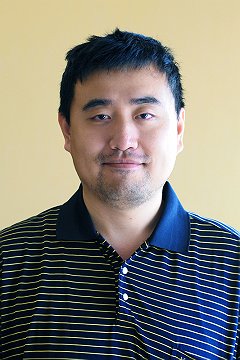
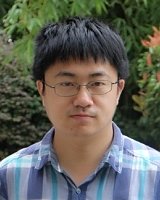
Panagiotis Michailidis is a Professor at the Department of Balkan, Slavic and Oriental Studies, School of Economic and Regional Studies, University of Macedonia. His academic work focuses on Computational Methods and Informatics, integrating technological expertise with regional studies. BSc (1998) and PhD (2004) in Applied Informatics from University of Macedonia Academic career progression: Lecturer (2004-2013), Assistant Professor (2014-2019), Associate Professor (2019-2023), now Professor Research spans computational approaches to social science and humanities, with significant contributions to: Social Data Science Digital Humanities Quantitative Social Science Parallel/Distributed Computing String Matching Algorithms Scientific Computing Recent publications reveal interdisciplinary focus combining: Augmented Reality applications for cultural heritage Machine Learning for Greek language sentiment analysis High-performance computing implementations Metaheuristic optimization techniques Scientometric analyses of research fields Active in academic service through: IEEE memberships Conference program committee roles Guest editor for Algorithms special issue Research program participation Reviewing for multiple journals Teaching portfolio includes: DIGITAL SOCIAL RESEARCH METHODS INFORMATION, TECHNOLOGY AND SOCIETY QUANTITATIVE METHODS OF SOCIAL SCIENCES SPACE AND CULTURAL MANAGEMENT COMPUTER SCIENCE TOPICS
Symeon Retalis is a Professor at the Department of Digital Systems, School of Information and Communication Technologies, University of Piraeus, specializing in Design Models for Technologically Supported Learning. With over 15 years of experience, he has established himself as a leading researcher in educational technology and learning systems design. Professor Retalis has authored more than 150 research articles and has served as principal investigator and coordinator for over 30 international research projects funded by the European Union, national grants, and major technology companies including Google. His work focuses on designing innovative interactive learning systems and educational games that enhance children's skill acquisition. His recent research shows a strong emphasis on embodied and multimodal learning approaches, particularly for early childhood education. He has developed several innovative educational tools including CADMOS (a learning process design tool), LAER (a learning data analysis tool for Moodle), WWFEducationalAtlas (a digital game), and ComicStripCreator. His publications demonstrate expertise across educational technology, learning analytics, game-based learning, and special education technologies. Professor Retalis received significant recognition as the "reviewer with great influence" from ACM Computing Reviews in June 2017. His research teams have also earned distinctions in international competitions including Microsoft ImagineCup and Intel Business Challenge. As the scientific director of CoSyLlab (Computer Supported Learning Engineering Lab), he mentors doctoral students and leads research teams in developing cutting-edge educational technologies. His work bridges theoretical research with practical applications through collaborations with educational institutions worldwide. Professor Retalis actively contributes to the academic community as a reviewer for prominent international journals in Learning Technologies and has delivered approximately 30 invited speeches at international conferences globally.
Georgios Tsichrintzis serves as a Professor in the Department of Informatics at the University of Piraeus within the School of Information and Communication Technologies. He has held significant administrative positions including Chair of the Department of Informatics from 2016-2020, Deputy Chair from 2008-2012, and Director of multiple graduate programs. With over 23 years of service at the university, he has participated in more than 50 departmental and university committees. His research focuses on Pattern Recognition, Machine Learning, Decision Theory, Statistical Signal Processing and Computational Intelligence, with applications spanning Multimedia Interactive Services, Software User Modeling, Knowledge-based Software Systems, Human-Machine Interaction and Information Retrieval. He has published over 350 research papers in major international journals and conferences, authored six monographs, and edited 30 collective volumes. Tsichrintzis holds leadership positions in academic publishing as editor-in-chief of the International Journal of Computational Intelligence Studies and Intelligent Decision Technologies, while serving on editorial boards of 18 other international journals. He co-founded book series with SPRINGER and co-chairs the steering committee for the annual INFORMATION, INTELLIGENCE, SYSTEMS AND APPLICATIONS conference. His educational background includes a degree in Electrical Engineering from the National Technical University of Athens and advanced degrees from Northeastern University in the USA.
Petros Maragos is a Professor at the National Technical University of Athens (NTUA) in the School of Electrical and Computer Engineering, where he directs the Division of Signals, Control and Robotics. He founded the Computer Vision, Speech Communication & Signal Processing Lab (1999) and the Hellenic Robotics Center of Excellence (2025). His research spans signal processing, computer vision, robotics, and machine learning, with 450+ publications and leadership in 50+ EU/Greek/US projects. Education includes a Dipl.Ing. from NTUA (1980), M.Sc./Ph.D. from Georgia Tech (1982/1985), and faculty positions at Harvard University (1985-1993) and Georgia Tech (1993-1998). Research Focus: Multimodal perception, nonlinear systems, assistive robotics, and deep learning. Recent work integrates tropical geometry with neural networks, robotic healthcare applications, and sign language technologies. Articles emphasize neural architectures, real-world robotics, and AI for social good. Awards: IEEE Fellow (1995), EURASIP Fellow (2010) IEEE W.R.G. Baker Prize (1995) NSF Presidential Young Investigator Award (1987-1992) CVPR/PETRA Best Paper Awards (2022-2025) Advising & Grants: Supervised 30+ PhDs and 130+ Master's students. Secured funding from EU Horizon 2020, NSF, and Greek national programs for projects like i-Walk (robotic mobility) and e-Prevention (mental health monitoring). Labs: Leads NTUA's Intelligent Robotics Lab and co-founded the Robotics Institute at Athena Research Center, focusing on human-robot interaction and perception systems.
Giorgos Stamou is a Professor at the School of Electrical and Computer Engineering, National Technical University of Athens (NTUA), and a Visiting Professor at the MIT Sloan School of Management and MIT Open Learning. He directs the Artificial Intelligence and Machine Learning Systems Laboratory (AILS Lab) and has been a senior researcher at the Institute of Communications and Computer Systems (2000-2008) and an academic visitor at Oxford University (2011-2012). His research spans Deep Learning , Explainable AI , and Knowledge Representation , with a focus on Large Language Models and Multimodal Learning . He has coordinated over 60 funded projects and published 150+ papers. Recent work highlights trends in LLM Evaluation , Gender Bias Mitigation , and Multimodal Music Analysis , reflecting his interdisciplinary approach to AI challenges. Stamou has served on steering committees for W3C working groups (Rule Interchange Format, Web Ontology Language) and contributed to cultural heritage metadata enrichment through the CrowdHeritage projects. He founded NTUA's MSc program in Data Science and Machine Learning (2018-2022) and has organized conference tracks on riddle-solving frameworks and hallucination detection.
Anastasia Natsina is an Associate Professor in the Department of Byzantine and Modern Greek Philology at the University of Crete. She earned her PhD in Modern Greek Literature from the University of Athens and Oxford. Since 2008, she has directed the Research Laboratory of Literary Genres and History of Literature, focusing on modern Greek literature from the late 19th century to the present, literary theory, and digital technologies in literary education. Modern Greek Literature Literary Theory Digital Humanities Ecocriticism Her research spans postmodern trends, ecocritical studies of Greek prose, and digital tools for literature. She has authored monographs including Nature So Far, So Close (2023) and co-edited volumes on distance learning and post-1974 literature. Her publications highlight interdisciplinary approaches to literary analysis. Scientific awards include the Constantine Trypanis Award (2004). She has taught at the University of Patras and Hellenic Open University, contributing to open and online education frameworks.
Mattia Fazzini is an Assistant Professor in the Department of Computer Science & Engineering at the University of Minnesota's College of Science and Engineering. His primary academic appointment focuses on software engineering research and teaching, with active involvement in major conferences including ASE, ISSTA, ICSE, and MOBILESoft where he has served in leadership roles such as General Co-chair (MOBILESoft 2023) and Program Committee Co-chair. His research centers on software testing, maintenance, and security , with particular emphasis on mobile applications. Key research themes include: Developing techniques for automated Android testing and maintenance Addressing API compatibility issues across Android versions Creating tools for test oracle generation and bug reproduction Investigating security vulnerabilities in mobile ecosystems Optimizing test suites through test double analysis His recent publications (2021-2025) reveal strong focus on Android-specific challenges, with recurring themes in compatibility testing, automated test generation, and security analysis. Over 60% of his work involves tool development for practical testing scenarios, particularly targeting mobile platforms. Notable recognitions include: IEEE TCSE Distinguished Paper Award (2024) for work on test suite optimization ACM Distinguished Paper Award (2022) for COVID-19 app analysis As an educator, he advises multiple PhD and Master's students while teaching undergraduate and graduate courses including CSCI 3081W (Program Design) and CSCI 5802 (Software Engineering II). His service contributions span conference organization (MOBILESoft, ISSTA, ICSE) and extensive program committee work across top software engineering venues. He leads research projects focused on practical testing solutions with real-world applicability in mobile software development.
Xiaoyin Wang is an Associate Professor in the Department of Computer Science at the University of Texas at San Antonio, specializing in software testing, privacy, and program analysis. Her research focuses on enhancing software quality through innovative approaches to build systems, virtual reality testing, and privacy policy enforcement. She earned her PhD from Peking University in 2012 and completed postdoctoral work at UC Berkeley. Her research interests span Software Testing and Analysis , Software Privacy , Build Systems , and Virtual Reality Testing . She develops techniques for detecting privacy leaks in mobile apps, optimizing build scripts, and testing immersive applications. Her work bridges program analysis with practical software engineering challenges, particularly in security-critical contexts. Recent publications reveal strong trends in Virtual Reality testing frameworks (e.g., VRGuide, VRTest), automated build diagnostics (PExReport, HireBuild), and privacy policy verification (GUILeak, DAISY). Her research increasingly integrates machine learning for bug prediction and test oracle generation, with significant contributions to augmented reality testing and cross-project compatibility analysis. President's Research Achievement Award (UTSA, 2019) NSF CAREER Award (2019) for build script analysis Distinguished PhD Dissertation Awards from CCF (2013) and Peking University (2012) MSRA Fellowship (2009) Wang actively advises PhD students including Rodney Rodriguez (defended 2022, now at Accenture) and Xueling Zhang (defended 2021, now Assistant Professor at RIT). She leads NSF-funded projects including CAREER: Analysis and Repair of Build Scripts for DevOps and EAGER: Tracing Privacy-Policy Statements into Code . Her service includes chairing ICSE 2019 proceedings and serving on ASE/ICSE/ISSTA program committees. Current work focuses on security analysis for AR applications and automated privacy compliance verification.
Jifeng Xuan is a Professor and Deputy Dean at the School of Computer Science, Wuhan University, China. He leads the CSTAR (Centre of Software Testing, Analysis and Reliability) research group and has made significant contributions to software engineering, particularly in software testing, debugging, and analysis. Dr. Xuan completed his bachelor's degree and PhD at OSCAR Lab, School of Software, Dalian University of Technology, China, under the supervision of Prof. He Jiang. He also conducted postdoctoral research at SPIRALS Team in INRIA Lille - Nord Europe, France, working with Dr. Martin Monperrus and Prof. Lionel Seinturier. His research focuses on Software Analysis and Testing , with specific interests in software testing and debugging, software data analysis, and search-based software engineering. Dr. Xuan's work bridges theoretical foundations with practical applications, addressing real-world challenges in software quality assurance. His research has led to numerous publications in top-tier software engineering venues and has influenced both academic research and industrial practices. Dr. Xuan's recent publications demonstrate a strong focus on innovative approaches to software testing, debugging, and analysis. His work spans multiple subfields including log analysis, fuzz testing, bug triage, and automated program repair. He has made significant contributions to understanding software crashes, improving bug report quality, and developing techniques for more effective software testing and analysis. 2025 ACM SIGSOFT Distinguished Paper Award 2025 IEEE TCSE Distinguished Paper Award 2024 CCF NASAC Youth Software Innovation Award 2018 ACM SIGSOFT Distinguished Paper Award 2015 Young Talent Development Program of CAST and CCF 2015 Luojia Young Scholar Program of Wuhan University 2014 Outstanding Doctoral Dissertation of CCF Dr. Xuan actively mentors PhD and master's students through his CSTAR research group at Wuhan University. He has served on numerous program committees for major software engineering conferences including ICSE, FSE, ASE, and ISSTA. His editorial service includes roles on the editorial boards of Empirical Software Engineering (EMSE), PLOS One, and Frontiers of Computer Science. Dr. Xuan has also organized several workshops and conferences, demonstrating his leadership in the software engineering community. As founder of CSTAR (Centre of Software Testing, Analysis and Reliability), Dr. Xuan leads a research team focused on advancing the state of the art in software quality assurance. The group's work spans theoretical foundations and practical applications, with strong connections to industry challenges. CSTAR has established collaborations with both domestic and international research institutions, contributing to a vibrant research ecosystem in software engineering.
Leopoldo Teixeira is an Assistant Professor at the Informatics Center (CIn) of the Federal University of Pernambuco (UFPE) in Brazil. Since May 2023, he has served as Head of Graduate Studies at his department. He leads the Software Testing and Analysis Research group and is affiliated with the Software Productivity Group and CIn-Trust. Dr. Teixeira was a CAPES-Alexander von Humboldt Experienced Research Fellow at the Chair of Software Engineering of Universität des Saarlandes in 2022, where he collaborated with Sven Apel on variability analysis over time and space. His educational background includes: PhD in Computer Science from Federal University of Pernambuco (CIn-UFPE, 2014), supervised by Paulo Borba and Rohit Gheyi MSc in Computer Science from CIn-UFPE (2010) Bachelor's degree in Computer Engineering from the Polytechnic School of Pernambuco (2007) Dr. Teixeira's research focuses on providing strong foundations for improving software quality and productivity. His work spans software product lines, configurable systems, refactoring, formal methods, software testing, and mobile development. He has made significant contributions to understanding challenges in highly configurable systems and software evolution, with particular emphasis on theoretical rigor combined with practical applicability. His publication record demonstrates expertise across software testing methodologies, analysis of configurable systems, and formal verification techniques. Recent work addresses pressing challenges in containerization practices (Dockerfile repair), test reliability (flaky test detection), and formal specification of API properties, showing his ability to tackle both theoretical and practical aspects of software engineering. Dr. Teixeira has received recognition through the CAPES-Alexander von Humboldt Experienced Research Fellowship. CAPES-Alexander von Humboldt Experienced Research Fellow (2022) Dr. Teixeira actively contributes to the software engineering community through extensive service on program committees of major conferences including ICSE, FSE, ASE, and SPLASH across multiple years. In 2024, he served as Conference and Local Organization Chair for FSE. He mentors students through his leadership of the Software Testing and Analysis Research group at CIn-UFPE. His laboratory work focuses on software testing and analysis, particularly in the context of configurable systems and software product lines. The research group investigates practical approaches to improve software quality through better testing methodologies, analysis techniques, and formal verification approaches for complex software systems.
Işıl Dillig is an Associate Professor of Computer Science at the University of Texas at Austin, where she leads the UToPiA research group. Her academic career spans over a decade of significant contributions to programming languages research, particularly in program analysis, verification, and synthesis. Dr. Dillig received all her academic degrees (BS, MS, and PhD) from Stanford University before joining the faculty at UT Austin. Her educational background established the foundation for her innovative research approach that bridges theoretical computer science with practical applications. Her research focuses on developing techniques to make software systems more reliable, secure, and easier to build through advanced program analysis, verification, and synthesis methods. She has pioneered approaches that combine symbolic reasoning with machine learning to tackle complex software engineering challenges across multiple domains including security, databases, and programming language theory. Her work demonstrates exceptional depth in creating practical tools that address real-world software development problems while maintaining strong theoretical foundations. Analysis of Dr. Dillig's publication record reveals a consistent trajectory of innovation in program synthesis, with recent work expanding into neurosymbolic approaches that bridge neural networks with formal methods. Her research shows strong connections between theoretical foundations and practical applications, particularly in security-critical systems, database technologies, and blockchain applications. The evolution of her work demonstrates increasing sophistication in handling complex program structures while maintaining practical usability. Dr. Dillig has received prestigious recognition for her research contributions: Sloan Fellowship NSF CAREER award As a dedicated educator and research leader, Dr. Dillig has served in significant roles including Program Chair for PLDI 2022 and Steering Committee member for PLDI. She has mentored numerous students through her UToPiA research group, guiding research in program synthesis, verification, and analysis. Her work has been supported by substantial research grants that have enabled innovative projects at the intersection of programming languages and security. Dr. Dillig leads the UToPiA (UT Austin Programming, Languages, and Analysis) research group, which focuses on developing novel techniques for program analysis, verification, and synthesis. The group maintains strong collaborations with industry partners and academic institutions worldwide, translating theoretical advances into practical tools that address real software engineering challenges.
Arjun Guha is an Associate Professor at Northeastern University's Khoury College of Computer Sciences, where he also serves as the Area Chair for Software. He conducts research in programming languages with a focus on program synthesis for low-resource programming languages and understanding how computer science education is impacted by large language models. His work spans multiple domains including WebAssembly, software-defined networking, and serverless computing. Guha's research interests center around programming language design, implementation, and application. He has made significant contributions to understanding JavaScript through formal semantics (LambdaJS), developing functional reactive programming for web applications (Flapjax), and creating tools for software-defined networks (NetKAT, Frenetic). His recent work focuses on leveraging large language models for code generation in specialized programming languages and understanding their impact on programming education. His publications reveal a strong trend toward applying AI and machine learning techniques to programming language problems, particularly in code generation and understanding. The research spans from foundational programming language theory to practical applications in education and software development tools, with increasing focus on the intersection of programming languages and large language models. Guha has received several prestigious awards including the OOPSLA Most Influential Paper Award in 2019 for his work on Flapjax, an ACM SIGPLAN Research Highlight for his work on NetKAT, and a Best Student Paper Award. His research has been recognized for its foundational contributions to programming language theory and practical impact on software development. OOPSLA Most Influential Paper Award (2019) for Flapjax ACM SIGPLAN Research Highlight for A Fast Compiler for NetKAT Best Student Paper Award for Flapjax paper Guha advises numerous PhD, MS, and undergraduate students, with several alumni now at leading tech companies and academic institutions. His research has been supported by the National Science Foundation, the Department of Energy, the Office of Naval Research, and industry partners including Google, JPMorgan Chase, MathWorks, Meta, Oracle, and Roblox. He leads the Programming Research Laboratory at Northeastern and is actively involved in major research collaborations like the BigCode Project. Guha is a member of the Programming Research Laboratory at Northeastern and leads several major research initiatives including the BigCode Project's evaluation working group. His lab develops practical software systems like MultiPL-E (a polyglot benchmark for Code LLMs) and WasmFX (bringing effect handlers to WebAssembly), with applications in education, software development, and high-performance computing.
Shachar Itzhaky is an Associate Professor in the Department of Computer Science at Technion - Israel Institute of Technology, Haifa. His research spans multiple areas of programming languages, formal methods, and software engineering, with a focus on making program development and verification more accessible and efficient. He has served on program committees for numerous prestigious conferences including PLDI, POPL, SPLASH, and ICFP. Dr. Itzhaky's research interests center around program synthesis, automated reasoning, and formal verification. His work in program synthesis explores techniques for automatically generating programs from high-level specifications, with applications in end-user programming and software development. In automated reasoning, he has made significant contributions to e-graph based reasoning, invariant inference, and property-directed verification. His research in formal methods focuses on practical applications for program verification, particularly for data structures and security properties. An analysis of his recent publications reveals a strong focus on leveraging advanced formal techniques for practical program understanding and generation. His work consistently bridges theoretical foundations with practical applications, particularly in program synthesis, verification, and end-user programming tools. The trend shows increasing integration of machine learning techniques with traditional formal methods, as well as expanding applications to security and privacy domains. ACM SIGPLAN John C. Reynolds Doctoral Dissertation Award Dr. Itzhaky has been actively involved in the programming languages research community, serving on numerous program committees and contributing to the advancement of formal methods and program synthesis. His work has practical implications for software development tools, security analysis, and end-user programming environments. While specific grant information isn't detailed in the provided text, his extensive publication record in top-tier venues suggests successful funding for his research endeavors. His work on projects like Object Spreadsheets and Lifty demonstrates a commitment to creating practical tools that address real-world programming challenges. Dr. Itzhaky's research is conducted within the vibrant programming languages and formal methods group at Technion's Computer Science department. His work intersects with multiple research threads including program synthesis, verification, and security, suggesting collaboration across these areas within the department. His tools like EPR-based Verification, PDR∀, and VeriCon represent significant technical contributions that likely form the basis of ongoing research projects with students and collaborators.
Gilbert Bernstein is an Assistant Professor in the Computer Science & Engineering department within the College of Engineering at the University of Washington. His research bridges computer graphics and programming languages, with a focus on high-performance domain-specific languages. Previously, he was a post-doctoral scholar at UC Berkeley and MIT working with Jonathan Ragan-Kelley, and received his PhD from Stanford University under Pat Hanrahan. His research interests span Computer Graphics, Programming Languages, High-Performance DSLs, Physical Simulation, Geometry & Topology, Differentiable Programming, Hardware DSLs, Tools for Artists, Fabrication, and Human-Computer Interaction. Bernstein develops languages and compilers that enable efficient computation for creative applications, physical simulations, and graphics rendering systems. His recent publications reveal strong trends in differentiable programming for graphics applications, domain-specific languages for hardware acceleration, and computational approaches to traditional crafts like quilting and knitting. His work consistently combines formal language theory with practical applications in graphics and fabrication. Bernstein actively mentors students across multiple institutions including current advisees Felix Hahnlein (UW Postdoc), Ryan Zambrotta (UW PhD), Haoran Peng (UW PhD), and previous students including Alex Reinking (UC Berkeley PhD 2022, now at Qualcomm) and MacKenzie Leake (Stanford PhD 2021, now at Adobe Research). His lab works on diverse projects including debugging CAD programs, compilers for finite element methods, semantics for knitting machines, algebraic scheduling of tensor programs, and exocompilers for hardware accelerators. Bernstein also collaborates on DSLs for networking, Counterstrike bots, gradient-based optimization, memory management, hardware design, and garment design tools.
Chandrakana Nandi is the Director of US R&D at Certora and an affiliate assistant professor in the Department of Computer Science & Engineering at the University of Washington's College of Engineering. She completed her PhD at the University of Washington working with Zachary Tatlock and Dan Grossman in the PLSE research group. Her research focuses on building tools for scaling automated formal verification to real-world programs, particularly for DeFi applications. She works extensively with equality saturation techniques (egg project) and has made significant contributions to computational fabrication through projects like Carpentry Compiler, Szalinski, and LambdaCAD. Her work bridges programming languages, compilers, and digital fabrication, creating novel tools that transform how we design and manufacture physical objects. Nandi's publication record shows a strong trajectory in programming language techniques applied to verification and fabrication. Her work on equality saturation has become foundational in the field, with the egg library enabling state-of-the-art results in compiler optimization and program synthesis. Recent work has expanded into formal verification of smart contracts, demonstrating the versatility of her research approach across different domains. Distinguished Paper Award at OOPSLA 2021 Sigplan Research Highlight for POPL 2021 As Director of US R&D at Certora, she leads research efforts on verification tools for languages like WASM and techniques to help users write formal specifications more easily using mutation testing. She has served in numerous organizational roles for major programming languages conferences including as Workshops Co-Chair for ICFP 2025 and Committee Member for PLDI Review Committee. Nandi has established herself as a leader in the intersection of programming languages and computational fabrication, with her work on equality saturation becoming particularly influential across multiple subfields of programming languages research.