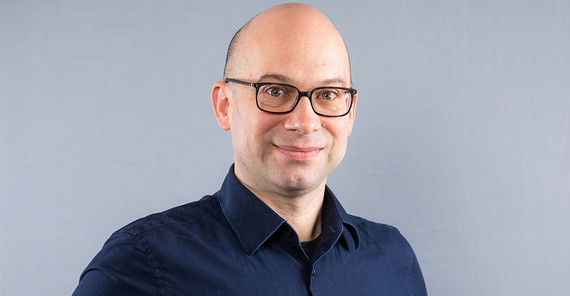
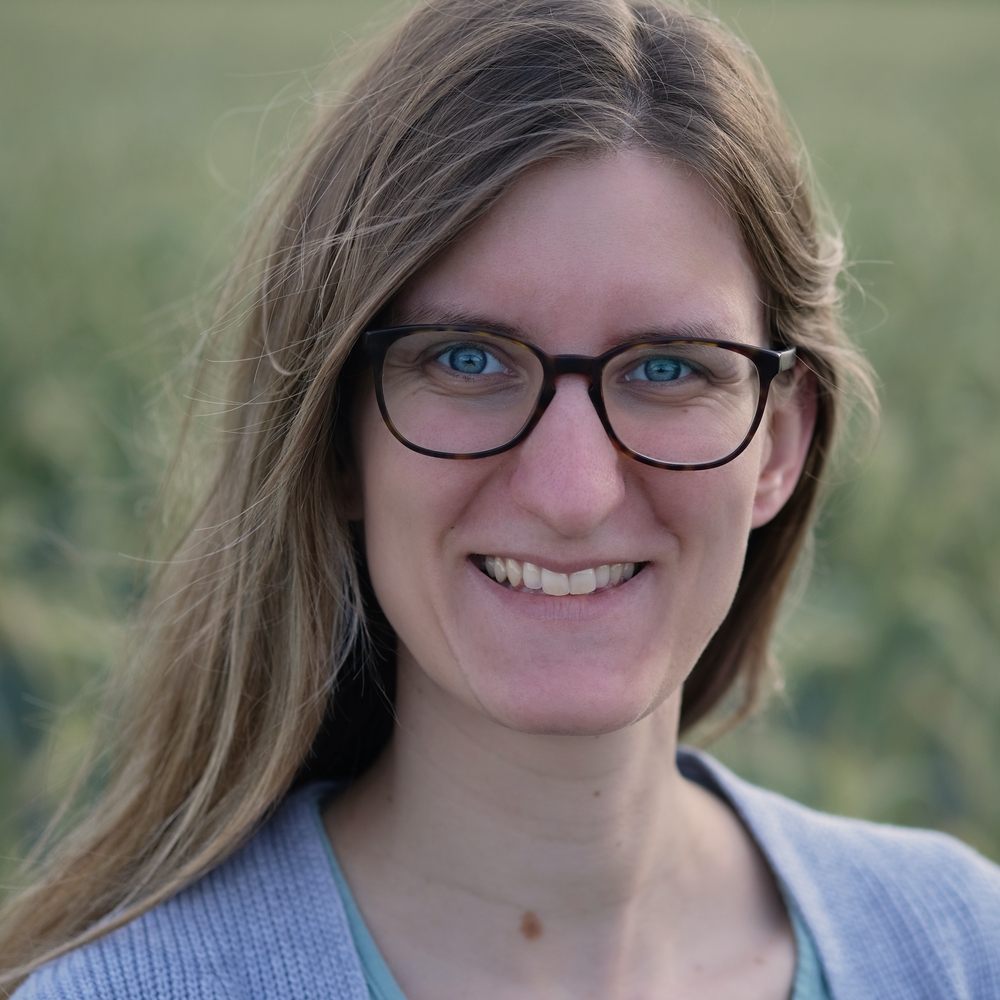
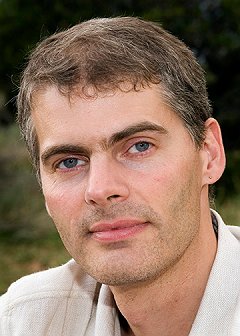
Prof. Dr. Jennifer Hannig is a leading researcher in Explainable Artificial Intelligence (XAI) and computational biology at the Technical University of Mittelhessen's KITE Competence Center. Her work bridges AI transparency with applications in cardiology, digital pathology, and smart home technologies, focusing on interpretable algorithms for safety-critical domains. Junior Research Group Leader, TimeXAI project (2024-2027, €1.09M) Collaborations with Kerckhoff Clinic, CRS medical GmbH, and Veli GmbH Member of good scientific practice committee Mentor at Mentoring Hessen and AI Grid initiative Research Focus : Developing human-understandable XAI methods for time series classification, particularly in cardiovascular diagnostics and smart home monitoring. Her approach combines mathematical modeling (Petri nets) with deep learning to ensure reliable AI decision-making. Scientific Contributions : Key publications in PLOS Computational Biology , Frontiers in Digital Health , and Bioinformatics , with h-index of 8. Developed AI models for myocardial scar detection, Hodgkin lymphoma analysis, and manufacturing predictions. Poster Award – 1st Place (German Conference on Bioinformatics, 2013) ECCB 2016 Travel Award Contact: jennifer.hannig@kite.thm.de
Professor Marcus Specht serves as Member of the Executive Board and Head of the research professorship "Learning Science in Higher Education" at CATALPA Research Center, FernUniversität in Hagen. He holds dual academic appointments as Chair of Learning Science at FernUniversität and Chair of Digital Education in the Faculty of Electrical Engineering, Mathematics and Computer Science at TU Delft. Additional affiliations include Erasmus University Rotterdam (Erasmus School of Social and Behavioural Sciences) and Leiden University (Institute for Advanced Computer Science). With an interdisciplinary background spanning cognitive psychology and computer science, Specht's research focuses on the intersection of learning sciences and technology. His work emphasizes personalized knowledge and competency development through Learning Analytics, Artificial Intelligence for Education, Digital Skills, and Computational Thinking. Current research directions include developing methods to support educators and learners in utilizing generative AI, creating prompt templates for educational applications, and designing collaborative learning environments that integrate peer-review with AI support. Specht's recent publications reveal a strong focus on AI-driven educational technologies, particularly conversational agents for goal-setting interventions, computational thinking assessment, and learning analytics applications. His work bridges theoretical learning science with practical educational technology implementations, with increasing emphasis on mixed reality and hybrid learning environments. The publications demonstrate consistent collaboration with international researchers across European institutions. Specht holds leadership positions in major educational technology organizations including President of the European Association of Technology-Enhanced Learning (EATEL) and membership on scientific advisory boards for the Leibniz Institute for Science and Mathematics Education and Goethe Universität Frankfurt's Zukunft Lehre initiative. His career trajectory shows progressive leadership in educational technology, having previously directed the 4TU Centre for Engineering Education (2020-2024), served as Scientific Director of the Leiden-Delft-Erasmus Center for Education and Learning (2019-2024), and held professorial positions at Open Universiteit Nederland (2008-2020). His interdisciplinary approach integrates psychology, computer science, management sciences, and pedagogy to advance educational innovation. At CATALPA, Specht leverages the unique environment of 70,000 learners as a real-world laboratory for developing and implementing innovative distance learning methods across schools, colleges, and universities throughout Germany and North Rhine-Westphalia.
Prof. Dr. Ulrich Kortenkamp is a Professor for Mathematics Education at the University of Potsdam since October 2014, holding a position in the Institute of Mathematics within the Faculty of Mathematics and Natural Sciences. He also serves as an Adjunct Professor at Griffith University in Gold Coast, Australia since May 2020. His academic career spans multiple institutions across Germany including Martin Luther University Halle-Wittenberg, University of Applied Sciences Karlsruhe, and TU Berlin. Prof. Kortenkamp's research focuses on mathematics education, particularly in the areas of digital learning environments, computational thinking development, place value understanding, and teacher education. His work bridges theoretical frameworks with practical applications in classroom settings, with a strong emphasis on the integration of technology in mathematics instruction. He has extensively studied how digital tools, particularly the Fingu app, can enhance early mathematical understanding and how language affects place value comprehension across different cultural contexts. His recent publications reveal a strong focus on sustainable development in teacher education, cross-linguistic studies of place value understanding, the impact of digital tools on early mathematics development, geometry education, and the integration of subject knowledge with didactic approaches in teacher preparation. His research consistently addresses how digital environments can transform mathematics teaching while maintaining strong conceptual foundations. Ars legendi Faculty Prize in Mathematics category (2020) for outstanding achievements in teaching, advising, and mentoring, awarded by the Stifterverband (Donors' Association) along with major German scientific societies Prof. Kortenkamp leads several significant research projects including DigiProMIN (developing digitally supported continuing education modules for mathematics teachers), Mathematics Education in the Digital Age (fostering international exchange between University of Potsdam and Griffith University), and Place Value Understanding (investigating primary school children's mathematical development across institutions in Germany and Australia). He is also involved in the SPIES-M project focused on quality initiatives for teacher education and the QuaMath project aimed at promoting teaching quality in mathematics through teacher training courses. He directs a research group focused on mathematics didactics at the University of Potsdam, collaborating with colleagues including Prof. Dr. Birte Friedrich and Prof. Dr. Sebastian Geisler, and working with a team of researchers on various aspects of mathematics education research, including digital learning environments, teacher professional development, and early mathematics concepts.
Professor Clemens H. Cap is a Full Professor with tenure and Chair for Information and Communication Services at the University of Rostock, Germany, where he has held his position since 1997. He maintains leadership of the Information and Communication Services research group and has previously held academic appointments at the University of Zurich (including an adjunct professorship until June 2023) and the University of Mannheim. University of Rostock: Full Professor (1997-present) University of Zurich: Adjunct Professor (2004-2023) University of Zurich: Assistant Professor (1992-1995) University of Mannheim: Associate Professor (1994) Professor Cap's research focuses on distributed systems, system security, Internet applications, and social problems in computer science. His work demonstrates an evolution from early research on workstation clusters to contemporary investigations of blockchain technology, classroom response systems, and the social implications of digital technologies. His research interests encompass system architecture for distributed and ubiquitous applications, Internet services, system security, and applications of formal specification techniques. His work has been supported by the German Research Foundation (DFG), the Federal Ministry of Education and Research (BMBF), and the European Union, including participation in the European Fifth Framework Research Program. His recent publications (2014-2022) reveal a strong focus on blockchain applications, security management, and educational technologies, particularly classroom response systems. His research shows consistent thematic development with security, distributed systems, and the social impact of technology as throughlines. Professor Cap regularly gives guest lectures in the Baltic States and Switzerland, demonstrating international engagement. Honorary doctoral degree 'sub auspiciis praesidentis' by Austrian president (1989) Professor Cap is active in academic self-administration as a member of the board of the interdisciplinary research department 'Knowledge - Culture - Transformation' and as Head of the ICT Science Confederation. His teaching portfolio includes Computer Networking, Data Security, Architecture of network services, Methodology of Scientific Research, Software Development Project Distributed Systems, Research Topics in Internet Technology, Computer Science and Society, and Social Impact of IT. He has developed numerous modules that are part of summer schools and international cooperations (BaSoTI). His teaching languages are German and English, and his courses are available for continuous education programs and in-house seminars for companies.
Lena Cibulski is a Postdoctoral Researcher at the Institute for Visual and Analytic Computing , University of Rostock , Germany. Her work focuses on the design of visualization tools that empower experts to make data-informed decisions, particularly in engineering and life-science contexts where human expertise must be synthesized with large, complex data. Education PhD in Visualization, 2024 – Technical University of Darmstadt, Germany MSc in Computer Science, 2017 – Otto-von-Guericke University Magdeburg, Germany BSc in Visual Computing, 2016 – Otto-von-Guericke University Magdeburg, Germany Research Interests Lena’s research blends computer science, design, and decision theory . She investigates how interactive visualizations can amplify experiential knowledge, support preference construction, and facilitate multi-attribute choices under conflicting objectives. Key themes include: Multivariate and temporal data visualization Human factors and cognition in visual analytics Real-world, application-driven design studies in engineering and life sciences Parameter-space exploration, feature engineering, and causal analysis Publication Trends Across 2020-2025 her articles cluster around three thrusts: (1) foundational work on Pareto-based decision interfaces (PAVED, COMPO*SED), (2) empirical studies of visualization adoption and usability in manufacturing and engineering, and (3) methodological contributions toward understanding decision problems as a primary goal of visualization design. Recent papers extend these ideas to cell-signaling simulations and sustainable-development education. Scientific Awards 2024 – Best Dissertation in Computer Science, TU Darmstadt 2025 – Honorable Mention, VRVis Visual Computing Award Teaching, Outreach & Collaboration Lena currently teaches master-level courses on visualization, visual analytics, and interactive data analysis at the University of Rostock. She is open to multidisciplinary collaborations involving human factors, methodological aspects of visualization research, and real-world applications. Interested students or partners are encouraged to contact her directly.
Dimitris Voudouris is a Researcher at the Department of Psychology & Sports Science at Justus Liebig University Giessen. His work combines eye and body motion tracking with psychophysics to explore how humans use sensory information to perform movements, particularly in young and older adults. PhD (2013) in Human Movement Sciences, Vrije University Amsterdam MSc (2007) and BSc (2005) in Physical Education & Sports Sciences, Aristotle University Thessaloniki His research focuses on sensorimotor control , tactile suppression , and visuomotor integration . He investigates how tactile perception is dynamically modulated during reaching, balance control, and interception tasks, with a particular emphasis on aging effects. Recent work explores the reliability of tactile suppression measurements, postural demands on tactile perception, and predictive gaze allocation in older adults. His publications span journals like Journal of Neurophysiology , Scientific Reports , and PNAS , highlighting his contributions to understanding sensorimotor predictions and sensory processing in motor control. He teaches Master seminars in programming, body movement analysis, and Bachelor seminars on perception and action. He is part of the Perception and Action team led by Prof. Dr. Katja Fiehler, collaborating with researchers like Dr. Belkis Ezgi Arikan and Dr. Meaghan McManus.
Karin Mora is a postdoctoral researcher at Leipzig University , affiliated with the Faculty of Physics and Earth System Sciences . She leads the DeepFeatures project funded by the European Space Agency and contributes to the proposed Breathing Nature excellence cluster, combining biology, economics, meteorology, and physics to study biodiversity-climate-human interactions. Research Focus : Phenological Rhythms in Ecosystems AI & Mathematical Modeling of Climate Impacts Earth System Data from Satellites and Citizen Science Scientific Contributions : DeepExtremeCubes methodology for climate extremes SpectralIndices.Jl software for remote sensing Plant Trait Coordination and Forest Monitoring Innovations Awards : Forschungspreis (Paderborn University, 2015) Technion Postdoctoral Scholarship (2014-15) Funding for EWM Summer School Course (2013) Education : PhD in Applied Mathematics (University of Bath, 2014) Master of Mathematics (University of Reading, 2008) Outreach : MDR Wissen Radio Contributions Royal Society Summer Science Exhibition Co-organizer of EuropaBON Stakeholder Dashboard
Kai Hamburger serves as Assistant Professor in the Department of Experimental Psychology and Cognitive Science at Justus Liebig University Gießen, where he conducts research at the intersection of spatial cognition and sensory processing. His institutional role is evidenced by office location (Room F 161, Phil. I) and inclusion in the university's research team listings. His academic credentials include: Dipl.-Psych. from University of Frankfurt (2004) Dr. rer. nat. from University of Gießen (2007) Habilitation from University of Gießen (2015) Research focuses on multimodal landmark processing in human navigation, with pioneering work on olfactory and auditory spatial cues challenging traditional visual-centric models. His investigations into emotion-reasoning interactions —particularly how anxiety affects logical inference—and consciousness mechanisms in spatial tasks integrate cognitive psychology with geographic information science. Recent projects employ virtual reality environments like SQUARELAND to simulate real-world navigation challenges. Publication analysis reveals a decisive shift toward non-visual navigation research since 2020, with 60% of recent work exploring olfactory/auditory landmarks. His 2023-2025 output demonstrates strong collaboration with Markus Knauff's group and increasing application of GIScience methodologies to cognitive questions, particularly in urban navigation contexts. Dr. Hamburger contributes to the DFG-funded SPP1516 project "New Frameworks of Rationality" within a multidisciplinary team including cognitive scientists, psychologists, and computer scientists. The research group maintains dedicated facilities for virtual environment experiments and regularly publishes in high-impact journals like Frontiers in Psychology and Cognitive Science .
Ying-Tung Lin is an Associate Professor at the Institute of Philosophy of Mind and Cognition , National Yang Ming Chiao Tung University (NYCU), Taipei, Taiwan. His research sits at the intersection of philosophy of mind, cognitive science, and AI ethics, with a focus on self-experience in mental simulation, algorithmic bias, and authenticity in memory interventions. Education: PhD in Philosophy from Johannes Gutenberg-Universität Mainz (2014). Research interests include: Philosophy of Mind & Consciousness Cognitive Enhancement via Neurotechnology Algorithmic Fairness in AI Episodic Memory & Bodily Self-Identification Observer Perspective in Mental Simulation Autobiographical Self-Modeling His publication trends show interdisciplinary engagement between 2014-2024, covering topics like dream epistemology , AI governance frameworks , and neuroethical policy . Key methodologies involve conceptual analysis combined with empirical data from cognitive studies. Advising information is not explicitly available in provided texts. Grants or funding sources aren't mentioned in the scraped content. Dr. Lin participates in cross-disciplinary initiatives like the Philosophy, Intelligence, Brain, and Mind Program at NYCU, and contributes to academic events including the International Society for the Philosophy of the Sciences of the Mind conference (2025).
Falk Stock is a Research Associate at the Institute for Practical Computer Science , part of the Faculty of Electrical Engineering and Computer Science at Leibniz University Hannover since August 2025. His research focuses on Augmented Reality Accessibility Gaming within the Human-Computer Interaction Group.
Philipp Toussaint is a PhD student in Information Systems at the Karlsruhe Institute of Technology (KIT) and an affiliated researcher at the Chair of Information Infrastructures at the Technical University of Munich (TUM). He is part of the Helmholtz Information & Data Science School for Health (Heidelberg) and affiliated with the German Cancer Research Center (DKFZ). His research spans behavioral and design-oriented methods in information systems, integrating medical informatics and computer science. Education: Bachelor's and Master's in Information Systems from the University of Cologne (2016–2020). Work Experience: Research associate at KIT (2020–present), research assistant at KIT and University of Kassel (2017–2020). Research Interests include human-AI collaboration, explainable AI (XAI), healthcare IT, gamification in AI evaluation, and blockchain applications in genomics. His current project , 'XAI-Omics,' applies XAI to life science data analysis. Recent Publications focus on privacy trade-offs in genetic data sharing, gamification for AI evaluation, and blockchain in genomics. His work has appeared in top journals like Briefings in Bioinformatics and Journal of the American Medical Informatics Association . Scientific Awards: Best Paper Nomination (HICSS 2024), Dean's Award (University of Cologne, 2019). Academic Services include reviewing roles for journals/conferences (THCI, HPT, ECIS, etc.). He has delivered invited talks on XAI in clinical decision support systems (Nov. 2024).
Prof. Dr. Maximilian Altmeyer is a faculty member at Saarland University of Applied Sciences , where he serves as Professor of Web Development and Mobile Applications Engineering. His research focuses on Human-Computer Interaction, User Experience (UX), Player Experience (PX), Gamification, and Digital Health. Head of Interaction Experience Group Member of Faculty Council Deputy Head of Production Informatics His teaching includes courses on Web Development , Game Development , and Interactive Systems . He supervises B.Sc. and M.Sc. theses on gamification topics and collaborates with research institutions like centigrade. Research Trends : Recent publications examine personalized gamification in fitness applications, user-created gamification systems, and behavioral interventions through interactive technologies. Key areas include Hexad user type analysis, health behavior modification, and live-streaming UX. Special Recognition at CHI PLAY 2020 Special Recognition at CHI PLAY 2019 Special Recognition at CHI PLAY 2022 He advises on ongoing theses about gamified meditation and customization vs. personalization , while serving as committee member for conferences like CHI, MobileHCI, and IEEE VR.
Manuel Burghardt is a full-time Professor of Computational Humanities at the Institute of Computer Science , Leipzig University . He coordinates the Bachelor's and Master's programs in Digital Humanities and serves as a spokesperson for the GI's Computer Science and Digital Humanities Group and the Forum for Digital Humanities Leipzig . PhD in Information Science (summa cum laude) from University of Regensburg Magisterstudium in Information Science, English Linguistics, General Linguistics, and Corpus Linguistics at University of Regensburg Burghardt's research spans multiple Computational Humanities domains: Digital Environmental Humanities : Integrating Computational Literary Studies with Biodiversity Research via NLP and Information Retrieval Immersive Humanities : Applying AR/VR/XR, Eye Tracking, and Tangible Interfaces for Digital Humanities Text Mining & NLP : Focused on text reuse detection, similarity analysis, and sentiment modeling Video Analytics : Analyzing news videos and cinematic media through Distant Viewing techniques Theory of Digital Humanities : Investigating methodological foundations and scientometric trends Computational Game Studies : Multimodal empirical analysis of games Computational Spatial Humanities : Spatial data analysis in humanities contexts His recent publications demonstrate strong focus on: Improving OCR for historical documents (2015-2020) Computational drama analysis using sentiment and text mining techniques (2016-2019) Music information retrieval applications in folk song and manuscript analysis (2015-2019) Development of specialized tools for humanities data processing
Joachim Baumeister is a Professor at the Chair of Computer Science VI - Artificial Intelligence and Knowledge Systems within the Institute of Computer Science at the University of Würzburg's Faculty of Mathematics and Computer Science. While his primary employment since September 2010 has been at denkbares GmbH, a company specializing in knowledge-based systems, he continues to regularly give lectures at the university. His research focuses on Semantic Information Systems, Knowledge Graphs, Deep Learning applications, Natural Language Processing, and Knowledge-based Configuration for Industry 4.0. Professor Baumeister's work bridges theoretical AI research with practical industry applications, particularly in knowledge-based configuration systems and semantic technologies. His recent publications (2020-2024) reveal a strong emphasis on product configuration systems, semantic knowledge representation, regulatory document processing, and knowledge-based systems. His research has evolved from foundational work on semantic wikis and knowledge engineering to more recent applications involving deep learning and large language models, demonstrating adaptability to emerging technologies while maintaining focus on practical knowledge representation problems. Professor Baumeister's work demonstrates significant contributions to case-based reasoning, knowledge configuration, and semantic technologies, with applications spanning regulatory compliance, industrial configuration systems, and document processing. His current research areas include: Semantic Information Systems and Knowledge Graphs Deep Learning for Image Recognition and Language Understanding Knowledge-based Configuration for Industry 4.0 Natural Language Processing Intelligent Personal Assistants and Chat Bots Though specific students aren't listed in the provided information, Professor Baumeister actively invites students to contact him regarding projects, bachelor theses, and master theses in his areas of expertise. His work at denkbares GmbH focuses on the design, implementation, and evolution of knowledge-based systems and semantic information systems.
Benjamin C. Pierce is the Henry Salvatori Professor of Computer and Information Science in the School of Engineering and Applied Science at the University of Pennsylvania. As a Fellow of the ACM, he has made significant contributions to programming language theory and formal methods. His academic leadership includes previous editorial roles as co-Editor in Chief of the Journal of Functional Programming and Managing Editor for Logical Methods in Computer Science. His research spans multiple interconnected domains in programming language theory, with particular emphasis on type systems and their applications to security and verification. Pierce's work bridges theoretical foundations with practical implementations, most notably through his development of the Unison file synchronization tool and contributions to the Clowdr virtual conference platform. His research interests form a cohesive trajectory from foundational type theory to applied security and verification techniques. Pierce's scholarly output shows consistent focus on property-based testing, type systems, and formal verification methods. His recent publications demonstrate evolving interests in differential privacy verification, synchronization technologies, and the practical challenges of implementing formal methods in real-world systems. The progression of his work reflects both theoretical depth and practical relevance to software development challenges. Fellow of the ACM Author of influential textbooks Types and Programming Languages and Software Foundations Lead designer of the Unison file synchronizer Co-developer of the Clowdr virtual conference platform Former editorial leadership for multiple prominent programming languages journals As an educator and mentor, Pierce has contributed to the Programming Languages Mentoring Workshop (PLMW) and has served on numerous conference program committees. His academic service extends to SIGPLAN leadership roles including SIGPLAN Vice Chair and Steering Committee membership. His textbook Software Foundations has become a standard resource for teaching formal methods and proof assistants.