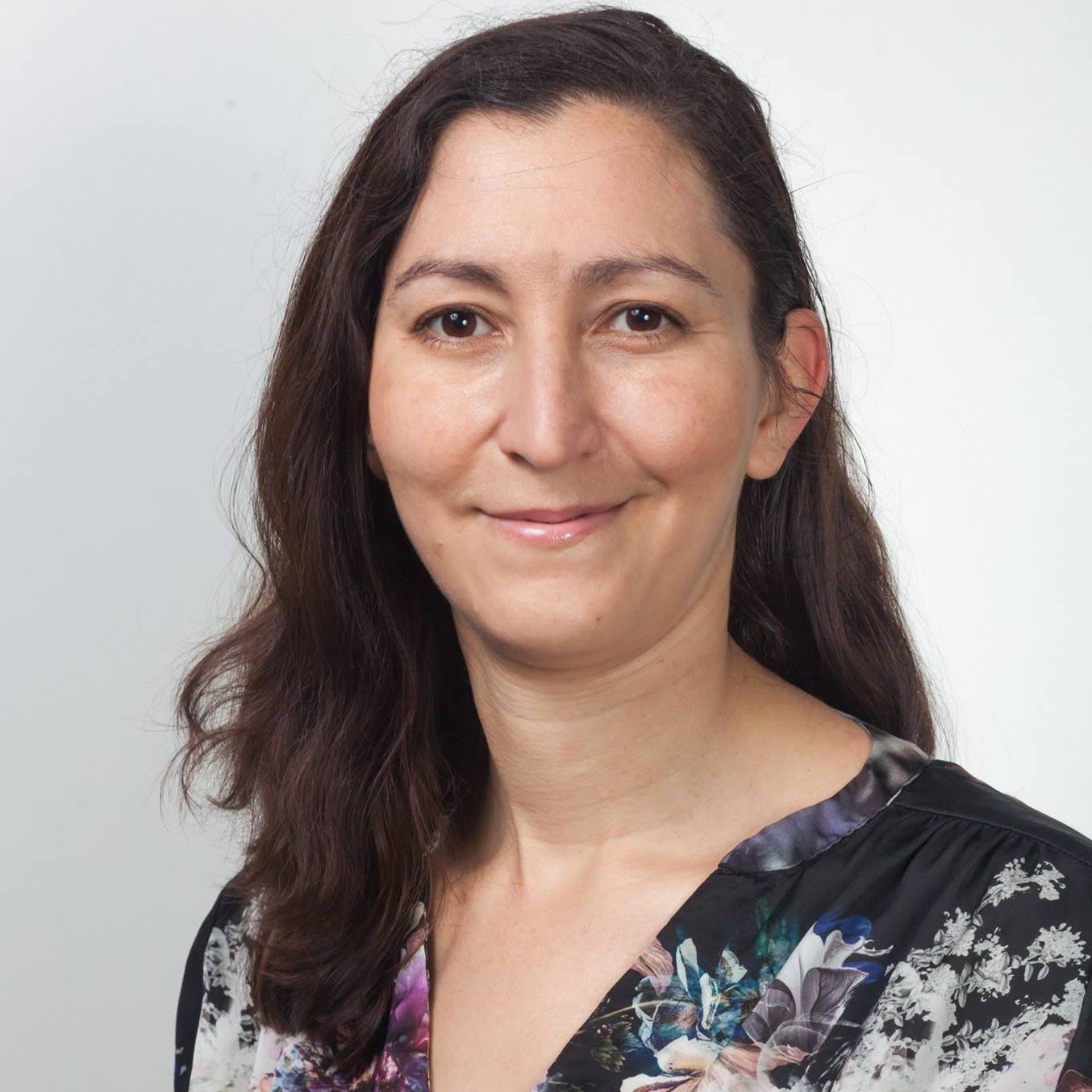
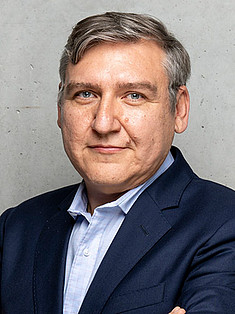
Mag. Dr. Barbara Pöcher is a faculty member affiliated with the Department of Psychology and the Department of Smart System Technologies at Alpen-Adria-Universität Klagenfurt. Her research spans health psychology and digital health technologies, focusing on interdisciplinary applications of smart systems in psychological contexts. Contact details: Email: Barbara.Poecher@aau.at Phone: +43 463 2700 1637 Office: B08.2.032, Lakeside Park Building B08, Klagenfurt, Austria
Nava Tintarev is a Full Professor in Explainable AI at Maastricht University, Department of Advanced Computing Sciences (DACS), Faculty of Science and Engineering. She also holds a visiting professorship at TU Delft. As Director of Research in DACS since 2023, she leads a department of 100 researchers and mentors junior faculty and PhDs. Her educational background includes a Magister in Computer Science from Uppsala University and a PhD from the University of Aberdeen, with early studies in Psychology in Australia. Nava's research focuses on human-centered AI, particularly explainable artificial intelligence (XAI), transparency, fairness, and user control in AI systems. Her work bridges Human-Computer Interaction and AI, emphasizing interactive explanations in recommender systems, search, and decision support. She investigates how users understand and trust AI advice, with applications in media, HR, and public discourse. Her recent publications show a strong trend toward mitigating cognitive biases (e.g., confirmation bias, urban bias), evaluating explanation effectiveness, and designing multimodal, user-adaptive interfaces. She explores logic-style explanations, stance detection, and long-term human-AI collaboration. Best Paper Award at CHI Best Paper Award at CHIIR Best Paper Award at Hypertext Best Paper Award at UMAP Best Paper Award at HCOMP Senior Member of ACM (since 2020) Nava has supervised numerous PhD students and leads major grants including the ROBUST program (~87M), EU ITN on Natural Language for XAI, and industry collaborations with IBM and Twitter. She is co-director of the ICAI TAIM lab on trustworthy media. She serves on editorial boards (UMUAI, TORS), program committees (ECAI, UMAP, RecSys), and advisory bodies including NWO and the incoming IPN board (2026). Her lab brings together interdisciplinary researchers in XAI, computational social science, causal inference, and affective computing.
Essi Kujansuu is a Researcher at the University of Innsbruck, with affiliations at the University of Turku and the Institute of Replication (I4R). She holds a PhD in Economics from the European University Institute. Her work focuses on experimental economics, exploring themes like fairness, trust, moral behavior, and choice architecture. Recent research emphasizes meta-science and Open Science, particularly computational reproducibility and robustness analysis of published studies. Her experimental designs often involve real-effort tasks and real-time interaction platforms like oTree. Key contributions include analyzing wage rigidity in labor markets, the psychological impacts of wage cuts, and the effectiveness of nudges under transparency. She collaborates internationally on projects ranging from field experiments in credence goods to assessing reproducibility in quantitative social science through human-AI teams. Current projects include investigating how transparency affects nudge deployment by choice architects and comparing human vs AI-assisted methods in research reproducibility. She frequently contributes to replication efforts of high-impact studies in development and health economics. Her technical expertise spans experimental platform development (e.g., Django Channels integration) and advanced statistical methods for reproducibility analysis. Future work aims to bridge behavioral economics with modern computational tools, enhancing both theoretical understanding and practical applications of economic decision-making models.
Elias Weiss is a researcher at the University of Vienna's Institute of Political Science within the Faculty of Social Sciences. He holds a BA and MA in Political Science from the University of Vienna, focusing on interpretive qualitative and exploratory research methods. His bachelor's thesis examined the duration of electoral periods, specifically the extension of Austria's legislative period from four to five years. His master's work shifted to solidarity research, particularly in labor market, economic, and health policies, analyzing the GameStop incident's political-solidarity dimensions. Research Interests: Solidarity studies, labor market dynamics, health policy, universal basic income, election period analysis, and policy discourse analysis. His work bridges political theory with empirical policy evaluation, emphasizing interdisciplinary approaches to contemporary societal challenges. Articles Trends: His publications span cognitive science, health policy, and education, reflecting a focus on mental health interventions, workplace environments, and neurocognitive adaptations. Recent work includes studies on pandemic impacts, light therapy efficacy, and stroke rehabilitation. These themes underscore a commitment to applying empirical research to real-world challenges in academia, healthcare, and public policy. Advising & Grants: No specific advising roles or grants are mentioned. His contributions are primarily through research and academic publications. Labs/Teams: Associated with the CESCoS (Contemporary Solidarity Studies) research group at the Institute of Political Science, focusing on socio-political solidarity dynamics in modern contexts.
Daniel Cornel is a researcher affiliated with TU Wien's Department of Engineering Hydrology, part of the E222-02 research group. He holds a Dipl.-Ing. (engineering diploma) and a Dr.techn. (technical doctorate). His work focuses on integrating computational methods with environmental hydrology, emphasizing flood modeling, high-performance computing, and geospatial visualization. Cornel collaborates extensively with experts like Prof. Günter Blöschl and Prof. Jürgen Waser on projects such as the HORA 3.0 flood risk zoning initiative. His research interests span GPU-accelerated flood simulations, hydrodynamic modeling at regional scales, and decision-support systems for disaster management. Notable contributions include developing interactive visualization tools for real-time flood data and VR-based training modules for emergency response. Cornel also explores algorithm optimization for terrain modeling and subsurface network visualization. Key projects include the 'Integrated Simulation and Visualization for Flood Management' framework and the 'Master of Disaster' VR training system. His work bridges computational science with environmental engineering, addressing both technical challenges and practical applications in flood risk mitigation.
Friedrich Fraundorfer is a Professor at Graz University of Technology, specializing in 3D Computer Vision and Autonomous Systems at the Institute of Computer Graphics and Vision (ICG). He has held academic positions at institutions including ETH Zurich, University of North Carolina at Chapel Hill, and Technische Universität München, where he served as Deputy Director of the Chair of Remote Sensing Technology. Research : Focuses on Micro Aerial Vehicle (MAV) autonomy, Visual-Inertial Fusion, and Multi-View Geometry. Projects : Led EU-funded SFly (autonomous MAVs for search-and-rescue), SNF MAV (camera-only 3D mapping), and VCharge (vision-based self-driving cars). Teaching : Offers courses like 'Camera Drones' and 'Mathematical Principles in Vision.' His Pixhawk project created open-source MAV platforms adopted globally. Key Collaborations : With NVIDIA, Volkswagen AG, University of Zurich, and German Space and Aerospace Center (DLR). His students (e.g., Dominik Hirner, Rafael Weilharter) have published on lightweight CNNs for stereo vision and self-supervised 3D reconstruction.
Paul Georg Furtmüller is an Associate Professor of Biochemistry at the University of Natural Resources and Life Sciences, Vienna (BOKU), where he serves as Head of the Institute of Biochemistry since 2022. His academic career at BOKU spans over two decades, beginning with his Promotion (PhD equivalent) in 2000 and Habilitation in Biochemistry in 2006. He maintains an active research program with extensive international collaborations across Europe, North America, and Australia. Dr. Furtmüller's research focuses on the structure, function, and evolution of heme-containing enzymes, particularly peroxidases and related proteins. His work spans molecular biology, structural biology, and enzyme kinetics, with special emphasis on heme peroxidases, coproheme decarboxylases, and ferrochelatases. He employs a multidisciplinary approach combining X-ray crystallography, spectroscopy, molecular dynamics simulations, and biochemical characterization to understand enzyme mechanisms at the molecular level. Analysis of his recent publications reveals a consistent focus on heme enzyme mechanisms, protein structure-function relationships, and evolutionary aspects of peroxidase superfamily. His work bridges fundamental biochemistry with potential biomedical applications, particularly in understanding oxidative processes in human physiology and disease. Dr. Furtmüller has secured substantial research funding through multiple projects with the Austrian Science Fund (FWF), demonstrating the significance and impact of his research. His work has resulted in over 440 publications, reflecting his productivity and influence in the field of heme biochemistry. He actively mentors students and collaborates with researchers worldwide, as evidenced by his extensive list of conference presentations across numerous countries including Austria, Germany, the United States, and Australia. His research has significant implications for understanding oxidative processes in biological systems and potential therapeutic applications.
Johannes Stadlmann is an Assistant Professor at the Institute of Biochemistry (DCH/BC) within the Department of Chemistry at the University of Natural Resources and Life Sciences (BOKU) in Vienna since 2020. His academic journey includes positions as a Staff Scientist at the Institute of Molecular Biotechnology of the Austrian Academy of Sciences (IMBA) from 2015-2020, Post-Doctoral Fellow at the Institute for Molecular Pathology (IMP) from 2010-2013, and earlier postdoctoral work at BOKU from 2009-2010. He earned his Doctorate (Dr. nat. techn.) from BOKU between 2004-2009. Dr. Stadlmann's primary research focuses on glycobiology with particular emphasis on N-glycans and O-glycans. His work spans multiple disciplines including biochemistry, molecular biology, and analytical chemistry. He has made significant contributions to understanding glycan structures in various biological contexts, including viral infections, bacterial interactions, and mammalian tissue diversity. His research employs advanced techniques such as mass spectrometry, NMR spectroscopy, and glycoproteomics to analyze complex carbohydrate structures and their biological functions. Analysis of his recent publications reveals a strong trend toward comprehensive glycome profiling across different biological systems. His work demonstrates increasing sophistication in analyzing isomer-sensitive N-glycome patterns, with applications ranging from understanding organ-specific diversity in mammalian systems to developing therapeutic approaches for viral infections. A notable theme in his research is the application of glycan analysis to solve practical problems in medicine and biotechnology, including coronavirus research, periodontal health, and neurodevelopmental disorders. Dr. Stadlmann has supervised multiple academic theses, including Helm J.'s 2023 dissertation on "Analysis of isomeric N-glycans with PGC-ESI-MS" and Gamperl A.'s 2022 master's thesis on "Enzyme activity determination of carbohydrate methylases." He has been involved in significant research projects including "Recombinant Pharmaceuticals from Plants for Human Medicine" (2004-2009), demonstrating his long-standing interest in applying biochemical principles to pharmaceutical development. His work has resulted in over 100 publications spanning diverse areas of glycobiology and its applications.
Martin Knoll is a Professor of European Regional History and currently serves as Dean of the Faculty of Social Sciences at the University of Salzburg. He is a prominent scholar in environmental history, regional studies, and historical geography, with a particular focus on Alpine regions, tourism history, and early modern European history. Knoll holds significant leadership positions including Chairman of the Environmental History Cluster Austria/Environmental History Network Austria (EHCA) since September 2017 and previously served as Regional Representative for the German Speaking Countries and Board Member of the European Society for Environmental History (ESEH) from July 2015 to August 2023. His research interests span environmental history, European regional history, urban history, tourism history, social ecology, cultural history, Alpine history, historical geography, and early modern history. Knoll's work consistently explores the intersection of natural environments and human societies, examining how landscapes shape and are shaped by cultural, economic, and political forces over time, particularly in Alpine regions. Knoll has published extensively with over 120 publications to his name. His recent work shows a strong focus on tourism history, regional identity formation, environmental history, and the historical development of Alpine regions. He has increasingly engaged with contemporary issues such as sustainability, crisis management in tourism, and the application of digital humanities methods to historical research. Druckkostenzuschuss der Oestreich-Stiftung for his habilitation thesis Kulturpreis der E.ON Ostbayern for his dissertation Promotionsstipendium des Freistaats Bayern Schwenkscher Umweltförderpreis der Stadt Ebersberg Carson Fellowship at the Rachel Carson Center for Environment and Society Knoll is actively involved in numerous research projects including CIVIS2 (A European Civic University), Alpine geo- and biodiversity during environmental changes (AlpsChange), Forschung SMARTT, and ENLIVEN (improved learning and teaching in international virtual environments). He has organized and participated in over 196 academic activities including 92 talks and 31 guest lectures. He is engaged in third mission activities through Scientists4Future Salzburg, adult education via the 'History and Culture' working group of the Salzburg Educational Association, and coordination of the steering group between the University of Salzburg and the Salzburg Museum Association for developing joint projects.
Philip Riris is a Senior Lecturer in Archaeological & Palaeoenvironmental Modelling at Bournemouth University's Institute for the Modelling of Socio-Environmental Transitions (IMSET), following postdoctoral work at the UCL Institute of Archaeology. His research integrates archaeology, historical ecology, and computational methods to investigate past human societies in tropical South America through extensive fieldwork across Argentina, Brazil, Venezuela, Colombia, and Oman. Dr Riris earned his PhD in 2015 from the University of Southampton, focusing on hunter-gatherer land use in northern Argentina. His educational trajectory reflects deep specialization in quantitative archaeological methods and environmental reconstruction. His research centers on two interconnected domains: coupled human-environmental systems and computational approaches to rock art and sacred landscapes . Employing spatial analysis and agent-based modeling, he draws from physical geography, quantitative ecology, and complex systems theory to explore how ancient populations interacted with environmental change. Recent work demonstrates how frequent disturbances enhanced societal resilience, revealing sophisticated adaptation strategies to climate pressures in prehistory. His methodologies bridge archaeological data with ecological theory to model long-term socio-environmental dynamics. Analysis of his 2019-2024 publications reveals consistent focus on South American archaeology, particularly the Orinoco region and Amazonia. His work integrates computational techniques with traditional archaeological analysis to examine rock art sequences, demographic responses to climate change, and spatiotemporal patterns of cultural transmission. Key methodological contributions include developing resolution-aware approaches for cultural dispersal studies and formal resilience metrics for archaeological time series. Dr Riris has secured major research funding including the AHRC-funded Comparative Legacies of Human Land Use in the Brazilian Atlantic Forest (2023), British Academy's Connected Communities: Network approaches to rock art (2018), and Sainsbury Research Unit's Ancient Networks of Art project (2017). His external roles include Honorary Research Fellow at UCL Institute of Archaeology (2018-present) and visiting positions at Venezuelan and Argentinean research institutions. Media coverage of his work in National Geographic, Newsweek, and Archaeology Magazine highlights discoveries of monumental rock art in Venezuela and climate-demerography linkages in ancient South America.
Regina Kratzer is an Associate Professor at the Graz University of Technology , affiliated with the Institute of Biotechnology and Bioprocess Engineering . Her academic work focuses on advancing CO₂-based biotechnology, enzyme engineering, and sustainable bioprocessing techniques. Her research emphasizes: Bioprocess optimization for Cupriavidus necator cultivation CO₂ utilization in microbial systems Enzyme engineering for industrial applications Integration of reaction engineering with protein design Development of sustainable chemical production systems Analysis of microbial growth dynamics and substrate interactions Recent publications highlight trends in microbial CO₂ fixation, bioplastic production, and enzymatic reduction mechanisms. She maintains a focus on practical implementation of green biotechnology solutions. Contact: regina.kratzer@tugraz.at Location: Room BC01124, 8010 Graz, Petersgasse 10-12/I
Benedikt Salzbrunn is a Senior Lecturer and Researcher at the University of Applied Sciences Technikum Wien . He serves as the Degree Course Director for User Experience Management , indicating his leadership role in shaping academic programs and curricula. Research Interests: User Experience (UX) Design and Management Digital Product Development Human-Computer Interaction (HCI) Contact: Email: benedikt.salzbrunn@technikum-wien.at Phone: +43 1 333 40 77-2875
Linus Franke is a postdoctoral researcher at Inria Sophia Antipolis in France, affiliated with the GraphDeco research group under George Drettakis. He previously completed his PhD at the Chair of Visual Computing , Friedrich-Alexander-Universität Erlangen-Nürnberg (FAU) in Germany under Marc Stamminger. His research focuses on Computer graphics Perceptual rendering Computer vision Machine learning Neural rendering Novel view synthesis Key trends in his recent publications include neural rendering , 3D Gaussian splatting , radiance fields , and real-time rendering with applications in virtual reality and light field displays. His work often integrates point clouds , differentiable rendering , and GPU optimization techniques. His personal website at lfranke.github.io highlights projects like VET (Visual Error Tomography) and TRIPS (Trilinear Point Splatting for Real-Time Rendering).
Simon Kranzer is a Senior Lecturer and Head of Research Group at the Department of Information Technologies and Digitalisation, FH Salzburg. His work bridges academic research and practical application in digital transformation. Location: Campus Urstein, Room 425 Contact: simon.kranzer@fh-salzburg.ac.at | +43-50-2211-1316 Research Focus: Digital Twins for industrial systems Collaborative Robotics (Co-Bots) in retail Knowledge Transfer between academia and industry Operational Technology (OT) Security Data Acquisition and Visualization Programming Language Applications in industrial contexts Research Trends: Recent publications show expertise in retail automation (service robots, customer behavior analysis), industrial digital twins, and OT security. Earlier work spans GIS-SCADA integration, medical software implementation, and 3D microstructure analysis. Collaborative Projects: Active in interdisciplinary living labs, smart factory bootcamps, and 5G-based robotics exploration.
Egon Lüftenegger is a Senior Lecturer at Fachhochschule Salzburg's Department of Information Technologies and Digitalisation. His work bridges academia and industry through innovative process mining and sentiment analysis applications. PhD in Information Systems (TU Eindhoven) Focus on Service-Dominant Logic and Business Process Management Active in Industry 4.0 and Digital Transformation research His research explores sentiment-driven process redesign, technology-enabled social inclusion, and smart production analytics. Publications highlight process mining frameworks , LLM applications in BPM, and service-dominant business models . Current projects involve creating tools like SentiProMoWeb and Cost-Benefit Tracker, with applications in manufacturing, airline services, and education sectors.