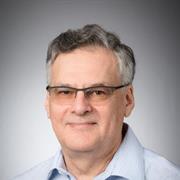
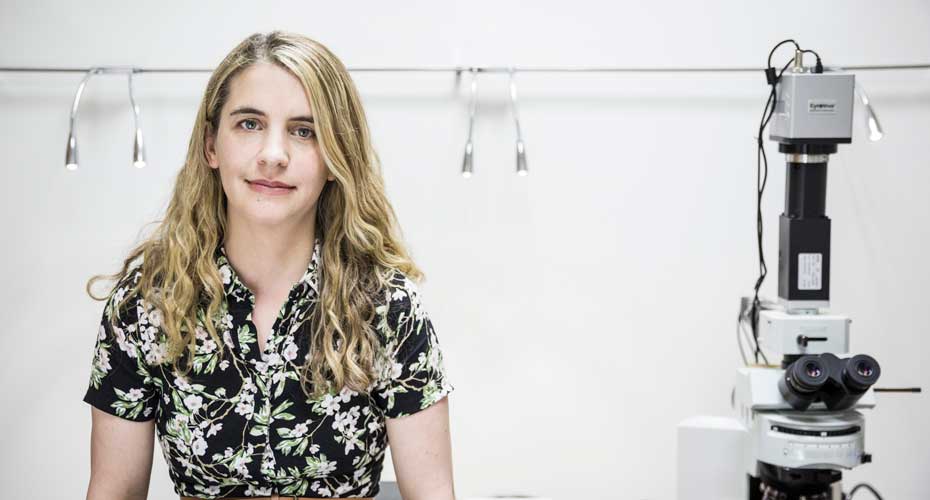
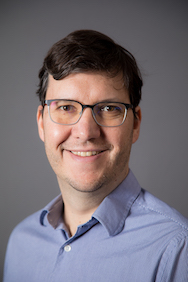
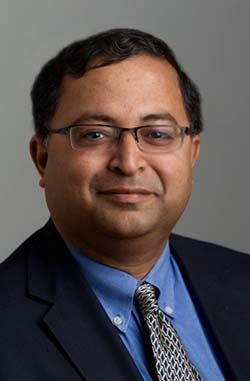
Alan Wassyng is a Professor in the Department of Computing and Software at McMaster University's Faculty of Engineering. With over four decades of academic contributions, he specializes in formal methods, safety-critical systems, and software assurance cases. Key research intersections: Automotive software safety Medical device software certification Cyber-physical systems engineering Model-driven development with domain experts His scholarly work emphasizes rigorous methodologies for software verification, particularly through tabular expressions and Workflow+ models. Recent projects include a $2M GM Canada partnership to advance automotive safety systems. Teaching leadership spans interdisciplinary capstone projects in biomedical engineering, covering software design, safety-critical development, and mechatronics applications.
Gerhard Schwabe is a Professor in the Department of Informatics at the University of Zurich, Faculty of Business, Economics and Informatics. His research spans collaborative technologies, information management, E-government, blockchain applications, and digital health. He leads the Information Management Research Group and contributes to the university's Digital Society Initiative (DSI). Research Focus: Human-AI collaboration, blockchain systems, crisis informatics, persuasive technologies Key Projects: RefuGPT (refugee support chatbots), Scripted Medicine (health worker assistance), PROMISE (AI prompt orchestration) Technical Expertise: Design Science Research, conversational agents, data-driven governance His recent publications emphasize AI integration in collaborative workflows, blockchain applications for data markets, and digital solutions for crisis management. He explores how generative AI impacts freelance development practices and transforms advisory services through automated systems. Contact: schwabe@ifi.uzh.ch
Jo Herstad is an Associate Professor in the Department of Information Systems Design at the University of Oslo , where she has worked since 2002. With a background in industry at Ericsson (1990-2003), Herstad bridges technical expertise with academic rigor. She teaches courses including: IN1030 - Introduction to Design, Use, Interaction (since 2017) IN2000 - Software Engineering with Project Work IN5480 - Interaction with AI and Autonomous Systems Research Focus: Her work explores Human-Computer Interaction through: Universal Design principles in digital environments Human-Robot Interaction for domestic applications Inclusive Technology across diverse populations Participatory Design methodologies Privacy Dynamics in smart homes Multimodal Systems for elderly care Key Publications (2017-2024) examine motion profiling in robotics, equitable digital feedback, and socio-technical systems. Her supervision includes 15+ master's theses on topics ranging from chatbot ethics to universal design in education. Current projects focus on: Artificial Intelligence and Sensor Technology Multimodal Elderly Care Systems (MECS) Podcast Accessibility (PUD) RHYME: Music Technology for All
Malgorzata Zboinska is an Associate Professor at Chalmers University of Technology within the Department of Architecture and Civil Engineering . She is a licensed architect and member of the Swedish Association of Architects and National Chamber of Architects of Poland . Hybrid architecture-technology-art research Focus on bio-based materials , digital fabrication , and creative robotics Development Leader of Chalmers' Robotic Fabrication Laboratory Editorial board member of TAD | Technology, Architecture + Design journal Research Themes bridge architecture , digital technology , and art , with expertise in: Sustainable and circular architectural practices 3D printing and robotic construction Material bioinnovation and upcycling Interactive and kinetic architectural solutions Her publications demonstrate strong output in digital fabrication , bio-material applications , and environmental architecture , with international exhibitions at Tempe Center for the Arts (USA) , Dutch Design Week (NL) , and Färgfabriken (Sweden) .
Tijs Slaats is an Associate Professor in the Software, Data, People & Society section at the Department of Computer Science, University of Copenhagen. His research focuses on Business Process Management with particular emphasis on declarative and hybrid process notations to provide flexible workflow support for knowledge workers, funded by the Danish Council for Independent Research. His educational background includes: M.Sc. in Information Technology from IT University of Copenhagen Ph.D. in Computer Science from IT University of Copenhagen (supervised by Thomas Hildebrandt) Dr. Slaats specializes in declarative process modeling, particularly Dynamic Condition Response (DCR) graphs which enable flexible workflow systems. His work bridges theoretical foundations with practical applications in cross-organizational settings. Recent research extends into blockchain technologies, smart contracts, and applications in sensitive domains like asylum processing and refugee law. He combines formal methods with empirical evaluation to ensure both correctness and usability of workflow systems. His publication pattern shows increasing application of process mining techniques to blockchain technologies and socially impactful domains, while maintaining core research in Business Process Management. Notable trends include integration of DCR graphs with smart contracts, privacy-preserving techniques for asylum data, and object-centric approaches to process discovery. Research funding includes: Hybrid Business Process Management Technologies project (Danish Council for Independent Research) Technologies for Flexible Cross-organizational Case Management Systems (FLExCMS) industrial Ph.D. project Alongside his academic work, Dr. Slaats maintains strong industry connections through Exformatics A/S where he developed the DCR Graphs workflow solution (www.dcrgraphs.net), and previously worked as a software engineer in the Dutch e-commerce sector. His dual expertise in academia and industry ensures his research addresses real-world workflow challenges while maintaining theoretical rigor.
Lauren Tompkins is an Associate Professor of Physics in the School of Humanities and Sciences at Stanford University, holding appointments in the Physics Department. Her research focuses on fundamental particle interactions through participation in major international experiments including the ATLAS experiment at CERN's Large Hadron Collider, the Light Dark Matter Experiment (LDMX) at SLAC, and the Heavy Photon Search (HPS) at Jefferson Laboratory. Her research interests span particle physics , dark matter detection , and advanced trigger systems . She investigates the Higgs boson's properties, searches for evidence of dark sectors through heavy flavor fermions, and develops FPGA-based real-time processing systems for particle detectors. Her group specializes in custom electronics for high-rate collision environments, particularly focusing on identifying rare events like Higgs boson production and potential dark matter signatures. Professor Tompkins' recent publications demonstrate strong focus on dark matter searches, Higgs boson physics, and advanced computing techniques. Her work bridges experimental particle physics with cutting-edge computational methods, particularly in deep learning applications for vertex reconstruction and FPGA-based trigger systems for the High Luminosity LHC upgrade. CAREER Award, National Science Foundation (2016-2021) Terman Fellow, Stanford University (2014-2017) US ATLAS Education and Public Outreach Award (awarded to group member Rocky Bala Garg) She actively mentors doctoral students and postdoctoral researchers, currently advising Elizabeth Berzin, Noe Gonzalez, Sadaf Kadir, and Rory O'Dwyer as Doctoral Dissertation Advisor. Her group participates in multiple collaborative projects including the NSF Institute for Research and Innovation in Software for High Energy Physics (IRIS-HEP) and contributes to the development of the ACTS open source software project. The Tompkins Group maintains active research programs across three major experimental facilities in Switzerland, California, and Virginia.
Professor Aoife Gowen is a leading academic at the UCD School of Biosystems & Food Engineering , specializing in hyperspectral imaging and its applications across medicine, food safety, and engineering. Her research, supported by prestigious European Research Council (ERC) funding, investigates water molecule interactions with surfaces to improve bone graft materials and develop innovative diagnostic tools for prostate cancer. She also leads Science Foundation Ireland (SFI)-funded projects on hyperspectral monitoring of bacterial growth for food safety. Beyond technical research, Professor Gowen has developed computational tools now integrated into commercial chemical analysis software. Her work spans interdisciplinary domains, including sustainable transport policy, critical thinking education, and promoting gender diversity in engineering. As a key figure in the Women on Walls initiative, she has enhanced visibility for women in STEM fields. Her recent publications focus on spectral technologies for food quality, microplastics characterization, and medical diagnostics, reflecting her commitment to addressing global challenges in health and sustainability. Scientific Awards: ERC Grant for water-surface interaction research Professor Gowen actively collaborates with European networks and industry partners, driving advancements in hyperspectral imaging applications. Her lab’s efforts to bridge computational science with real-world chemical analysis have positioned her as a pioneer in invisible chemistry visualization, impacting medicine, food, and environmental engineering.
Dr. Roza Gunes Bayrak is a Senior Research Engineer and Research Assistant Professor in the Department of Electrical and Computer Engineering at Vanderbilt University, with secondary appointments in the Department of Computer Science. She leads the Neuroimaging & Brain Dynamics Lab (NEURDY Lab) and is affiliated with multiple interdisciplinary institutes including the Vanderbilt Institute for Surgery and Engineering (VISE) and the Vanderbilt University Institute of Imaging Science (VUIIS). PhD in Computer Science from Vanderbilt University (2023) MS in Electrical Engineering from Tufts University BS in Electronic and Communication Engineering from Çankaya University, Turkey Her research focuses on advancing neuroimaging methodology for studying brain dynamics and brain-body interactions. Key areas include: Temporal modeling of neuroimaging data Development of open-source tools like PRAGMA and PhysioPy Graph-based machine learning for brain connectomics Reconstruction of physiological signals from fMRI data Interactive visualization techniques for functional brain parcellation Her recent publications emphasize: Graph neural networks for analyzing brain connectivity networks (Neurograph 2023) Deep learning approaches to decode respiration and heart rate from fMRI (DeepPhysioRecon 2023) Subject-specific functional brain mapping techniques (2022-2024) Reproducibility studies in white matter tractography (2021-2022) Roza actively promotes open science through leadership roles in initiatives like BrainHack Vanderbilt and the Organization for Human Brain Mapping's Open Science Special Interest Group.
Marco Aurélio Gerosa is a Professor at Northern Arizona University and was previously an Associate Professor at the University of São Paulo (USP), Brazil . He is affiliated with the School of Informatics, Computing, and Cyber Systems (SICCS) at NAU and the Department of Computer Science at USP. His research focuses on the Human Aspects of Software Engineering , including Software Engineering Education , Computer Supported Cooperative Work (CSCW) , and AI-Assisted Software Engineering . He has published extensively on topics such as Open Source Software development, Bots and Chatbots in software engineering, and Mining Software Repositories techniques. His recent work explores Using Large Language Models (LLMs) for educational purposes in programming, data science, and software engineering Developing chatbots to facilitate newcomer onboarding to OSS projects Investigating the evolution of Integrated Development Environments (IDEs) Assessing the impact of software bots on projects Understanding how to design effective chatbot languages Dr. Gerosa has received numerous scientific awards, including ACM SIGSOFT Distinguished Paper Award Best paper awards at ICSE and International Symposium on Open Collaboration IEEE Computer Society TCSE Distinguished Paper and Service Awards Productivity grants from CNPq (Brazilian Council for Scientific and Technological Development) He has graduated numerous PhD students who are now researchers in top institutions worldwide and has been a mentor to many more at various levels. His research projects have secured over USD 1 million in funding. Dr. Gerosa is also involved in the development of tools and environments for software engineering, including MetricMiner for repository analysis and various gamification platforms to enhance developer engagement. He brings over 25 years of teaching experience across multiple universities, teaching courses ranging from Introduction to Programming to Advanced Topics on Web Development and Collaborative Systems Development.
Emily First is an incoming Assistant Professor in Computer Science at Rutgers University New Brunswick starting Fall 2025. She previously served as a postdoctoral researcher at UC San Diego under Sorin Lerner and earned her PhD in Computer Science at UMass Amherst under Yuriy Brun in the Laboratory for Software Engineering Research (LASER). Her research focuses on leveraging AI for theorem proving, working at the intersection of machine learning, software engineering, and programming languages. She specializes in creating tools for automated proof generation in proof assistants like Coq, Isabelle/HOL, and Lean. Her work explores how AI can enhance human reasoning across domains, with applications in software verification and formal logic systems. Recent publications show trends in neuro-symbolic AI, software verification, and LLM integration for formal methods. Her team's research has been recognized with ACM SIGSOFT Distinguished Paper Awards at ICSE, ACL, and ESEC/FSE conferences, along with workshop presentations at AI and Theorem Proving conferences. ACM SIGSOFT Distinguished Paper Award (ICSE 2025) ACM SIGSOFT Distinguished Paper Award (ACL Main 2024) ACM SIGSOFT Distinguished Paper Award (ESEC/FSE 2023) ACM SIGSOFT Distinguished Paper Award (ICSE 2022) Contact: emfirst@ucsd.edu (new email coming soon).
Prof. Venkat N. Krovi serves as the Michelin Endowed Chair Professor of Vehicle Automation in the Departments of Automotive Engineering and Mechanical Engineering at Clemson University's College of Engineering, Computing and Applied Sciences (CECAS). He directs the Automation, Robotics and Mechatronics Laboratory (ARMLab) at the International Center for Automotive Research (CU-ICAR), focusing on smart embedded systems for autonomy in challenging environments. He earned his Ph.D. in Mechanical Engineering and Applied Mechanics from the University of Pennsylvania in 1998. His research leverages distributed autonomy and human-robot synergy to extend human capabilities, with applications spanning plant automation, consumer electronics, automobile, defense, and healthcare. The work emphasizes lifecycle treatment (design through verification) of robotic systems under uncertainty. Recent publications (2024-2025) demonstrate strong trends in digital twin frameworks for autonomous vehicle validation, sim2real transfer via reinforcement learning, and integration of large language models for editable simulations. Key themes include scalable cloud-based architectures, Koopman operator theory for robustness, and containerization for reproducible robotics development. His accolades include: National Science Foundation (NSF) CAREER Award Petro-Canada Young Innovator Award Multiple best paper awards at conferences and journals ASME Dedicated Service Award (2024) Prof. Krovi has advised doctoral students including Dr. Srivatsan Srinivasan (2024). His research receives substantial funding from NSF, DARPA, ARO, and industrial partners like Michelin. He leads the NSF I/UCRC RoSeHuB center and the AutoDRIVE ecosystem for autonomous driving education. As ARMLab director, he oversees projects including OpenCAV, the Robotics for AV Systems Bootcamp, and containerized terramechanics simulations. The lab specializes in mechatronic design, verification/validation frameworks, and human-autonomy coexistence studies for next-generation mobility solutions.
Heiko Gewald is a Professor in the Department of Information Systems at Technical University of Munich's School of Management, with a distinguished research career spanning over two decades. His scholarly work demonstrates deep expertise in information systems, particularly focusing on technology adoption by aging populations, healthcare information systems, and smart mobility services. Dr. Gewald's research interests center on the intersection of technology and human behavior, with special emphasis on older adults' adoption of digital health applications , smart mobility ecosystems , and DevOps implementation . His work consistently addresses the challenges of designing technology that accommodates diverse user needs, particularly for vulnerable populations. Through extensive field research, he has developed frameworks for understanding technology acceptance barriers among seniors and created interventions to improve digital inclusion. Analysis of his recent publications reveals a clear trajectory toward increasingly specialized work in aging technology, with approximately 60% of his 2020-2025 publications focusing on older adult technology adoption. His research employs diverse methodologies including qualitative case studies, cross-cultural surveys, and experimental designs, often with international collaborations spanning Germany, Australia, and Thailand. Principal investigator for multiple German research projects on digital health for elderly populations Co-organizer of the annual HICSS minitrack on 'Seniors' Use of Digital Resources' since 2018 Active contributor to the Association for Information Systems (AIS) special interest groups Dr. Gewald has mentored numerous doctoral students who have become active researchers in information systems, with several now holding faculty positions. His research has been supported by German research funding agencies and industry partnerships with healthcare technology companies. He maintains strong collaborative relationships with researchers across Europe and Australia, particularly in the healthcare IT domain.
Scott McCrickard is an Associate Professor at the Department of Computer Science within the College of Engineering at Virginia Tech . He serves as the Co-director of Virginia Tech's Human-Centered Design Program , integrating interdisciplinary approaches into his research and teaching. Ph.D. , Computer Science, Georgia Tech (2000) M.S. , Computer Science, Georgia Tech (1995) B.S. , Mathematical Sciences (Computer Science emphasis), University of North Carolina at Chapel Hill (1992) McCrickard’s research focuses on Human-Computer Interaction (HCI) , particularly in outdoor environments. His work explores how technology can enhance experiences in nature, including the use of smartwatches for group fitness interventions, AR mobile games for social bonding, and diary studies as pedagogical tools. He also investigates mobile application development for low-literacy populations and social media integration in design processes. Recent publications highlight trends in HCI education , outdoor technology adoption, and social gaming dynamics . Key themes include leveraging diary methods for learning, designing context-aware notification systems , and analyzing indigenous knowledge preservation through self-organized online communities. As part of his leadership in the Human-Centered Design Program, he bridges computer science with design theory , emphasizing usability and social impact in technological solutions.
Aseel Berglund is an Associate Professor at Linköping University's Department of Computer and Information Science (IDA), affiliated with the Faculty of Science and Engineering (LiTH). Her research focuses on gamification, serious games, and interactive technologies for health, education, and well-being. She leads projects such as Liopep (a gamified workplace wellness tool) and Heart Exergame (for cardiac patients), collaborating with interdisciplinary teams across computer science, healthcare, and education. Her teaching interests include software entrepreneurship, interaction design, and engineering professionalism. She actively contributes to pedagogical development at LiU through roles in the Educational Development Group (PUG). Notable awards include the 2021 Entrepreneurial Teacher of the Year for innovating gamification in teaching and entrepreneurship, and the 2016 Linköping University Prize for teaching excellence. Berglund’s research emphasizes applying game mechanics to motivate behavior change, such as reducing sedentary work habits and enhancing physical activity through motion-based games. She also explores virtual/augmented reality and persuasive design in healthcare interventions. Her work bridges academia and industry, exemplified by startup ventures like Liopep and collaborations with organizations like Östgötatrafiken. Grants/Projects: Funded by Vinnova, Sweden Game Startup, and Visual Sweden. Involved in the Heart-eXg study (multicenter randomized trial for cardiac patients). Labs/Teams: Member of the Software and Systems (SAS) division at IDA, collaborating with researchers like Erik Berglund (Senior Lecturer) and Anna Strömberg (Associate Professor).
Dr. Utku Yavuz is an Assistant Professor in the Biomedical Signals and Systems Department at the TechMed Centre. His expertise spans neuromuscular physiology, wearable sensor technologies, and clinical monitoring systems. He holds a PhD in Biomedical Engineering from Ege University, complemented by earlier degrees in Physics Engineering (Hacettepe University) and Biophysics (Hacettepe University). Research Focus: Motor unit physiology, neuromuscular modeling, and clinical applications of wearable sensors. Key Areas: Spinal motor neuron behavior, electromyography (EMG), and translational technologies for diabetes and musculoskeletal health. Dr. Yavuz’s work bridges neuroscience and engineering, addressing challenges in prosthetic design, real-time neuromuscular signal decoding, and improving clinical decision-making through sensor data analysis. Recent studies include optimizing wearable glucose monitors and analyzing muscle-tendon dynamics in amputees. His research outputs span 43 publications, with contributions to high-impact journals like BMC Digital Health and IEEE Sensors Journal . Collaborations include institutions focused on biomechanics, robotics, and clinical informatics. Advising: Supervised 1 graduate project, though specific advisee names are not listed. Active in academic activities such as thesis examinations and conference presentations.