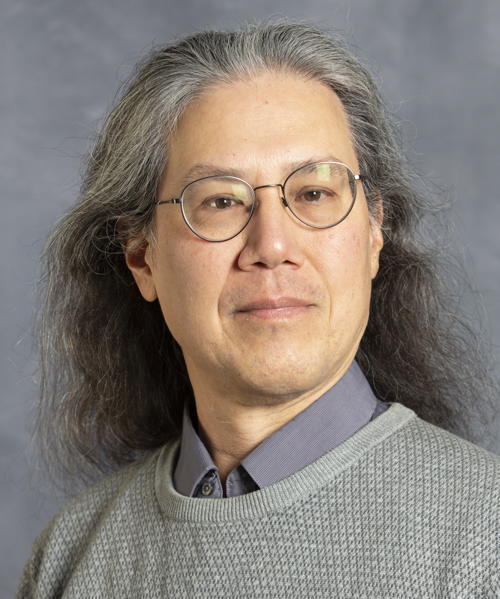
Miguel Nacenta is a Professor in the Department of Computer Science at the University of Victoria (UVic), Canada, and a founding member of the Victoria Interactive eXperiences with Information (VIXI) research group. Previously affiliated with the University of St Andrews (UK), his work bridges Human-Computer Interaction (HCI), Information Visualization, and Cognitive Science. He specializes in designing interactive systems that enhance human cognition, with a focus on Infotypography (using typography to encode data), collaborative problem-solving tools, and perceptual input/output devices. Research Interests: His key areas include cognitive augmentation, visualization techniques for complex tasks, multi-display environments, and tools for constraint problem-solving. Notable projects include the WriteReason tool for essay writing, InfoTypography studies on perceptual typographic parameters, and Solvi for visual constraint modeling. Grants & Collaborations: He collaborates internationally, including with the University of St Andrews on PhD scholarship programs. His work is supported by grants focusing on HCI innovations and accessibility. He actively mentors students (e.g., Adam Binks, Johannes Lang) and supervises postdoctoral researchers. Affiliations: Member of the VIXI group,他曾是St Andrews计算机科学学院的教授, 并参与多个学术服务活动, including conference program committees and journal reviews. Labs & Teams: Leads the VIXI lab at UVic, focusing on interactive technologies for cognitive tasks. Collaborates with industry partners on projects like TypoCartographer for infoTypographic maps and HaptiQ for accessible graph exploration.
Suining He is an Assistant Professor at the University of Connecticut (UConn)'s School of Computing, leading the Ubiquitous and Urban Computing Lab since 2019. Previously, he was a postdoctoral research fellow at the University of Michigan's Real-Time Computing Lab (2016–2019). He holds a Ph.D. in Computer Science from the Hong Kong University of Science and Technology (2016) and a B.Eng. in Mechanical Design from Huazhong University of Science and Technology (2012). His research focuses on Cyber-Physical Systems (CPS), Smart & Connected Communities, Human-Centered Computing, and Urban Computing Cyberinfrastructure, with emphasis on mobility, equity, and AI-driven solutions. He has received prestigious awards including the NSF CAREER Award (2023), Google Research Scholar Program Award (2021), and recognition as a Stanford Top 2% Scientist (2020–2024). His work spans interdisciplinary grants from NSF, USDA, Google, NVIDIA, and industry partners. Recent publications explore autonomous driving simulation, equity-aware mobility prediction, and urban crowd activity modeling. Teaching excellence is reflected in his 2020 UConn Provost Award. He advises on reinforcement learning, CPS, and mobile computing, with openings for 2025/2026 PhD students. His lab collaborates on socially-conscious AI, privacy-preserving learning, and location-based services with industrial impact.
John R Anderson is the Richard King Mellon University Professor of Psychology and Computer Science at Carnegie Mellon University (CMU), affiliated with the Department of Psychology within the Dietrich College of Humanities and Social Sciences. His research focuses on understanding higher-level cognition, particularly mathematical problem-solving, through the development of the ACT-R cognitive architecture—a computational framework simulating human cognitive processes. This architecture integrates behavioral, neural, and educational data to model learning and decision-making. Anderson’s work bridges cognitive science, neuroscience, and educational technology. He investigates how brain imaging (e.g., fMRI, EEG) can reveal the temporal dynamics of cognitive processes and improve instructional methods. His research emphasizes analyzing brain activity time courses to uncover underlying mechanisms of problem-solving and skill acquisition. Key Research Themes: Cognitive architectures, neural correlates of learning, computational models of memory, and intelligent tutoring systems. Notable Contributions: Development of the ACT-R architecture, integration of neuroimaging with cognitive modeling, and studies on skill transfer and learning strategies. Anderson’s publications include seminal books like Cognitive Psychology and Its Implications and How Can the Human Mind Occur in the Physical Universe? His work has advanced understanding of associative memory, strategic decision-making, and the application of cognitive models in educational technology. His lab, the ACT-R Research Group, collaborates across disciplines to model complex cognitive tasks and their neural foundations. Current projects analyze real-time brain activity to refine educational interventions and improve human-machine interaction.
Catherine Guastavino is a Professor at McGill University's School of Information Studies (within the Faculty of Arts) and an Associate Member at the Schulich School of Music. She also contributes to the Centre for Interdisciplinary Research in Music Media and Technology (CIRMMT). Her roles include leading research projects and supervising graduate students in music technology and related fields. She holds a PhD in Psychoacoustics from Université Pierre et Marie Curie (Paris VI), an MSc from IRCAM (France), and a BSc in Mathematics from McGill University. Her research focuses on auditory perception, soundscape analysis, human-computer interaction, and urban acoustics. Notable projects include the 'Sounds in the City' partnership addressing urban noise policy and the development of immersive soundscape simulation tools. She leads or co-leads grants from SSHRC, NSERC, and MITACS, emphasizing interdisciplinary approaches to sound in urban environments. Guastavino's work bridges academic research with practical applications, such as designing sound installations for public spaces and improving acoustic environments in transportation and performance venues. She collaborates with city planners, musicians, and engineers, reflecting her commitment to making cities sound better through evidence-based strategies. Key Projects: SSHRC Partnership Grant for urban soundscape management (2018-2023) NSERC Discovery Grant on auditory localization (2019-2024) MITACS projects on Montreal festival soundscapes and noise policy Labs & Partnerships: Multimodal Interaction Laboratory (MIL) Collaborations with Ville de Montréal and Quartier des Spectacles Education: PhD: Psychoacoustics (Paris VI) MSc: Computer Science & Music Technology (IRCAM) BSc: Mathematics (McGill) Her teaching includes courses like Music Information Retrieval, integrating computational methods with artistic and scientific applications.
Somil Bansal is an Assistant Professor in the Department of Aeronautics and Astronautics at Stanford University, part of the School of Engineering. Previously, he served as an Assistant Professor in the Electrical and Computer Engineering (ECE) department at the University of Southern California. He holds a B.Tech. from IIT Kanpur, an MS, and a Ph.D. from UC Berkeley’s EECS department. Research Focus: Development of mathematical tools and algorithms for safety-critical autonomous systems, emphasizing learning-enabled systems’ safety. Key Collaborations: Waymo, Skydio, Google, Boeing, NASA AMES/JPL. Awards: NSF CAREER Award, Eli Jury Award, RSS Pioneer Award, and Outstanding Graduate Instructor Award. His research integrates control theory and machine learning to ensure safety in autonomous systems, focusing on safe learning frameworks, anomaly detection, and real-time safety guarantees. He leads the Safe and Intelligent Autonomy (SIA) Lab, which explores applications in robotics, autonomous driving, and aerospace systems. Teaching: Courses include Introduction to Control Design Techniques and Principles of Safety-Critical Autonomy. He advises doctoral students and supervises research projects in his lab.
Olof Bälter is a Professor in Computer Science at KTH Royal Institute of Technology, affiliated with the Division of Media Technology and Interaction Design within the School of Electrical Engineering and Computer Science. He is the founder of the Technology-Enhanced Learning research group and holds a focus on learning engineering and human-computer interaction. His research interests center on technology-enhanced learning , question-based learning , learning analytics , AI in education , and inclusive pedagogy . A consistent theme in his work is improving efficiency in education and daily life through digital tools. He developed the Pure Question-Based Learning (Pure QBL) methodology, a digital Socratic approach that enhances student engagement and learning outcomes. His work extends to wellness in education through initiatives like walking seminars, and he investigates digital interventions for mental health, such as online Cognitive Behavioral Therapy (CBT) courses. His recent publications highlight trends in AI-generated educational content , learning efficiency , digital pedagogy , and inclusive course design , with applications in computer science education, language instruction, and global development. His research often employs experimental and data-driven methods, including randomized controlled trials and learning analytics. Teacher of the Year at the Surveying program KTH's Pedagogical Prize Higher Education Hero STINT Excellence in Teaching Scholarship (2008 and 2013) Olof Bälter has supervised numerous courses in programming, computer science, media technology, and learning engineering. He has collaborated with institutions such as Stanford University, Williams College, Region Stockholm, Stockholm University, and organizations like Promobilia and Begripsam. His projects aim to scale effective learning methods globally and make education more accessible and efficient. He leads research on the effectiveness of Pure QBL for students with ADHD and is involved in developing digital tools for health literacy and professional development in Ethiopia and Rwanda. His work bridges theory and practice, aiming to transform educational delivery through innovation and evidence-based design.
Sherry Tongshuang Wu is an Assistant Professor at Carnegie Mellon University's School of Computer Science, with primary appointments in the Human-Computer Interaction Institute (HCII) and secondary affiliation with the Language Technology Institute (LTI) . Trained at the University of Washington under Jeffrey Heer and Dan Weld, she bridges HCI and NLP to study human interactions with AI systems across diverse user groups. Her educational background includes a Ph.D. (2016-22) and M.S. (2016-18) in Computer Science and Engineering from the University of Washington, and a B.Eng. (2012-16) from Hong Kong University of Science and Technology. Industry experience includes research internships at Google Brain, Microsoft Research, and Apple. Wu's research focuses on three interconnected pillars: Real-world AI Evaluation (developing frameworks like SPHERE for systematic assessment), Task-specific AI Test & Distill (optimizing general-purpose models for specific use cases), and Human-AI Task Delegation (designing optimal collaboration between humans and AI). Her work emphasizes practical deployment, user-specific net gains, and error recovery mechanisms. Analysis of her 15 most recent publications reveals a strong trend toward evaluation frameworks (35%), human-AI collaboration systems (30%), and specialized model distillation (25%), with growing emphasis on educational applications (10%). Key methodological themes include checklist-based evaluation, perspective-aware retrieval, and structural analysis of AI outputs. Google Academic Research Award (2024) Amazon Research Awards (2024) AIED 2024 Best Paper Award ACL 2020 Best Paper Award Rising Stars in EECS Workshop (2020) Wu actively mentors 19 students across PhD, Master's, and undergraduate levels, with notable projects including synthetic data generation, LLM literacy tools, and retrieval system optimization. She leads significant grant-funded work through Amazon Research Awards and Google Academic Research Awards, focusing on deployable model generation and human-AI collaboration frameworks. Her lab develops practical tools like Promp2Model and SPHERE that bridge theoretical research with industry applications.
Brad Knox is a Research Associate Professor in the Department of Computer Science at the University of Texas at Austin . His work bridges machine learning, human-computer interaction, and computational cognitive science, with a focus on developing systems that learn from human feedback. Key research areas: Reinforcement Learning, Human-AI Interaction, Reward Design, Autonomous Systems Notable contributions: TAMER framework for human-guided learning, empirical studies on reward misdesign, and human preference modeling for autonomous agents Research Trends : His recent work (2023-2025) emphasizes reward alignment, safety in autonomous systems, and preference-based learning frameworks. Earlier studies (2012-2020) established foundational methods for integrating human feedback into reinforcement learning architectures and exploring behavioral signatures in decision-making. Scientific Honors : Bert Kay Dissertation Award (2013) Victor Lesser Distinguished Dissertation Award (IFAAMAS, Runner-up, 2013) NSF SBIR Grant (PI, 2016) NSF Graduate Research Fellowship (2008-2011) IEEE Intelligent Systems AI 10 to Watch (2013) Teaching & Leadership : Knox served as Principal Lecturer for MIT's Interactive Machine Learning course (2013) and held organizational roles at major conferences including Reinforcement Learning Conference (Scheduling Chair, 2025) and RLDM workshop (Co-chair, 2022).
Norman Sadeh is a Professor in the School of Computer Science at Carnegie Mellon University (CMU), where he has made significant contributions to cybersecurity, privacy, and AI research. He has co-founded and co-directed several groundbreaking graduate programs at CMU, including the Privacy Engineering Program (2012-present), the Ph.D. Program in Societal Computing (2003-2013), and the MBA track in Technology Strategy and Product Management (2005-2017). Carnegie Mellon University, School of Computer Science Software and Societal Systems Department CyLab Security and Privacy Institute Manufacturing Futures Institute Dr. Sadeh received his Ph.D. in Computer Science at CMU with a major in Artificial Intelligence and a minor in Operations Research. He holds an M.Sc. in computer science from the University of Southern California and a BS/MS degree in electrical engineering and applied physics from the Free University of Brussels (Belgium) as 'Ingénieur Civil Physicien.' Professor Sadeh's research spans cybersecurity, online privacy, Human-AI Interaction, AI governance, mobile computing, the Internet of Things, user-oriented machine learning, and language technologies. He is particularly known for his pioneering work on AI-based privacy enhancing technologies, including privacy assistants, automated privacy compliance tools, and NLP-based privacy solutions. His work has influenced the design of privacy features at major technology companies including Apple, Google, and Facebook/Meta, as well as privacy policies at regulatory agencies like the Federal Trade Commission and the California Office of the Attorney General. Analysis of his recent publications shows a strong focus on practical privacy solutions, particularly in mobile and IoT contexts, with an emphasis on making privacy more usable and understandable for end users. His work bridges technical innovation with policy implications, addressing both the technological and human aspects of privacy protection. 2018 Outstanding Entrepreneur of the Year award from the Pittsburgh Venture Capital Association Test of time award by the AAAI Conference on Web and Social Media (ICWSM) Gartner Group's Magic Quadrant leader in Security Awareness Computer-Based Training for 4 consecutive years Deloitte's Technology Fast 500 recognition for 3 consecutive years Professor Sadeh has advised numerous students, including PhD candidates like Aerin (Shikhun) Zhang, whose dissertation focused on understanding diverse privacy attitudes. His research has been funded through various grants, including NSF SaTC projects, and has resulted in technologies that protect tens of millions of users worldwide. He also founded Wombat Security Technologies, which was acquired by Proofpoint in 2018 and whose technologies are used by over 75% of Fortune 100 companies. Professor Sadeh leads several research initiatives including the Privacy Engineering Program, the Usable Privacy Policy Project, the Personalized Privacy Assistant Project, and CMU's Privacy Infrastructure for the Internet of Things. His Mobile Commerce Lab and E-Supply Chain Management Lab have produced influential research that has been commercialized by major organizations including IBM, Raytheon, Boeing, and the U.S. Army.
Aswin Sankaranarayanan is a Professor in the Department of Electrical and Computer Engineering at Carnegie Mellon University (CMU) , where he leads the Image Science Lab . His research focuses on computational photography , 3D shape estimation , and novel imaging system design . He earned his Ph.D. in Electrical and Computer Engineering (2009) from the University of Maryland and completed a postdoctoral fellowship at Rice University (2012) . Research Themes: Developing imaging systems that exploit low-dimensional signal models to overcome traditional sensing limitations Co-design of optics and processing algorithms for efficient sensing Application of non-linear signal models to high-dimensional data Advancing compressed sensing and big data processing techniques Scientific Recognition: SIGGRAPH 2023 Best Paper Award (Split-Lohmann Multifocal Displays) CVPR 2019 Best Paper Award (Fermat Paths for NLOS Reconstruction) NSF CAREER Award (2017) Dean’s Early Career Fellowship (2018-2021) Herschel Rich Invention Award (2016) Technical Contributions: His recent publications reveal expertise in non-line-of-sight shape reconstruction , VR/AR display systems , and biomedical imaging . Collaborations span institutions like University College London and University of Toronto.
Majed Elwardy is a Lecturer at the Department of Computer Science , Blekinge Institute of Technology , focusing on Computer Science , Virtual Reality , and Quality Assessment . He works at the Human-Centered Intelligent Realities Laboratory in Karlskrona, Sweden. Email: majed.elwardy@bth.se Phone: 0455-385801 His research investigates 360° video quality assessment in immersive environments using head-mounted displays (HMDs) , analyzing user behavior , quality perception , and subjective testing methodologies . He explores differences in standing vs. seated viewing and consistency of user feedback over time. Majed contributes to the HINTS project (Human-Centered Intelligent Realities) and has published datasets like RQA360 to advance immersive media research. His work includes studies on simulator sickness , VR experience levels , and scene exploration patterns in 360° video evaluation.
Kevin Crowston is a Distinguished Professor of Information Science at Syracuse University's School of Information Studies (iSchool), where he examines how information technology enables new organizational forms through empirical studies, theoretical modeling, and system design. His work focuses on coordination-intensive processes in virtual settings, with significant contributions to citizen science, data science teamwork, and journalism transformation. Education A.B. in Applied Mathematics (Computer Science), Harvard University, 1984 Ph.D. in Information Technologies, MIT Sloan School of Management, 1991 Research Focus : Crowston investigates coordination mechanisms in human-AI collaboration, particularly through projects like Gravity Spy (combining citizen scientists with machine learning for gravitational wave analysis) and journalism innovation (e.g., ReelFramer for AI-assisted news-to-video translation). His framework addresses how intelligent systems reshape work design, knowledge production, and team dynamics in scientific and media contexts. Publication Trends : Recent articles (2024-2025) reveal three dominant threads: (1) Human-AI co-creation in journalism (deskilling/upskilling dynamics, creative tool adoption), (2) Citizen science evolution with AI (co-learning systems, lexical entrainment), and (3) Socio-technical governance of intelligent machines (control-accountability alignment, project archetypes). These reflect his central inquiry into how technology reconfigures work structures. Scientific Recognition ACM Distinguished Speaker Research Leadership : Crowston currently directs two major NSF initiatives: (1) HCC grant 21-06865 on intelligent support for non-expert information navigation, and (2) FW-HTF grant 21-29047 exploring human-technology collaboration in journalism. He spearheaded a Research Coordination Network establishing socio-technical frameworks for work in the age of intelligent machines, culminating in a special issue of Information, Technology & People . Collaborative Infrastructure : He co-leads the Gravity Spy citizen science ecosystem (integrating LIGO physicists, machine learning systems, and volunteers) and serves as co-editor-in-chief of Information, Technology and People , previously editing ACM Transactions on Social Computing . His MIDST platform research advances stigmergic coordination for data science teams.
Robert Fletcher is a Researcher at the University of Cambridge, affiliated with the Department of Zoology and the C-CLEAR Doctoral Training Partnership . His work focuses on applied ecology and conservation science, utilizing landscape and population ecology to address biodiversity challenges globally. Research Areas : Conservation biology, population ecology, landscape ecology, environmental informatics Collaborations : Partners in North America, Europe, Africa, and Southeast Asia Key Themes : Species extinction prevention, landscape conservation prioritization, and rapid biodiversity data delivery Email : rf497@cam.ac.uk Fletcher's interdisciplinary approach integrates fieldwork (e.g., Everglades endangered species, African elephants) with advanced modeling of habitat loss, fragmentation, invasive species, and climate change impacts. His recent work emphasizes: Drivers of species decline and recovery strategies Landscape management and restoration techniques Interdisciplinary collaborations with engineers, social scientists, and computer scientists His publications span topics like savanna ecosystem dynamics, community science applications, and conservation forecasting, reflecting a commitment to actionable science for global biodiversity preservation.
M. Tamer Özsu is a University Professor of Computer Science at the David R. Cheriton School of Computer Science, University of Waterloo, where he holds a Cheriton Faculty Fellowship. He also serves as a Distinguished Visiting Professor at Tsinghua University and is the Founding Director of Waterloo-Huawei Joint Innovation Laboratory since 2018. His extensive contributions to computing have earned him numerous prestigious awards including the 2024 ACM Presidential Award for long-standing and significant contributions to the computing field. Professor Özsu's research focuses on data engineering aspects of data science, particularly addressing data management issues with two main foci: management of non-traditional data and large-scale distributed data management. He is renowned for his seminal book "Principles of Distributed Database Systems" (co-authored with Patrick Valduriez), now in its fourth edition, and the "Encyclopedia of Database Systems" (co-edited with Ling Liu), in its second edition. His work bridges theoretical foundations with practical system implementations, targeting grand societal challenges through computational approaches. His recent publications reveal a strong trend toward graph analytics, streaming data processing, and the integration of large language models with vector data management. The research shows increasing focus on GPU-accelerated graph processing, RDF query optimization, and multimodal data analysis, reflecting the evolution of data management challenges in the era of big data and AI. His work continues to address fundamental challenges in distributed data systems while adapting to emerging technologies and application domains. Scientific Awards and Fellowships ACM Presidential Award (2024) IEEE TCDE Education Award (2024) IEEE Innovation in Societal Infrastructure Award (2022) CS Can | Info Can Lifetime Achievement Award (2018/2019) ACM SIGMOD Test-of-Time Award (2015) ACM SIGMOD Contributions Award (2006) The Ohio State University College of Engineering Distinguished Alumnus Award (2008) Fellow of the Royal Society of Canada Fellow of the American Association for the Advancement of Science (AAAS) Life Fellow of the Association for Computing Machinery (ACM) Life Fellow of the Institute of Electrical and Electronics Engineers (IEEE) Fellow of the Asia-Pacific Artificial Intelligence Association (AAIA) Elected member of the Science Academy, Türkiye Professor Özsu has been deeply involved in academic leadership and community building. As Founding Editor-in-Chief of ACM Books (2013-2019), he launched a series that by 2019 had published 28 major books with another 30 under contract. His service to ACM, particularly through SIGMOD, has been exemplary and widely recognized. He directs the Waterloo-Huawei Joint Innovation Laboratory, which focuses on cutting-edge research in data management and distributed systems, fostering strong industry-academia collaboration.
Marta Molinas is a Professor at the Department of Engineering Cybernetics within the Faculty of Information Technology and Electrical Engineering at the Norwegian University of Science and Technology (NTNU). Her research spans multiple interdisciplinary domains with a focus on EEG technology and brain-computer interfaces. She actively supervises numerous Master's projects and maintains extensive international collaborations with institutions including Kavli Institute for Systems Neuroscience, RIKEN Center for Brain Science, University of Tsukuba, Juntendo University, and several European universities. Professor Molinas' research interests center on developing innovative EEG technologies, particularly her FlexEEG concept for reduced-channel EEG systems with brain imaging capabilities. Her work integrates signal processing, artificial intelligence, and neuroscience to create practical applications in mental health, sleep research, neurorehabilitation, and human-computer interaction. She specializes in EEG source imaging, machine learning for brain signal analysis, and the development of brain-computer interfaces for various applications including locked-in syndrome communication, ADHD treatment, and driver monitoring systems. Her publication portfolio demonstrates strong trends in interdisciplinary research combining neuroscience with electrical engineering and artificial intelligence. The work shows particular emphasis on developing practical EEG-based systems that minimize invasiveness while maintaining analytical power, with applications spanning healthcare, rehabilitation, and human augmentation. Her research bridges theoretical signal processing with real-world implementations through numerous student projects and international collaborations. Professor Molinas actively supervises a large team of Master's and PhD students across multiple projects, with each project typically requiring two students working collaboratively. Her research is supported through numerous international collaborations with institutions in Japan, India, and Europe, indicating substantial research funding and project leadership. She has developed a pipeline of student projects that build upon previous work, creating a cumulative knowledge base within her research group. She leads the EEG ITK research team at NTNU, which focuses on developing the FlexEEG headset prototype featuring flexible, wireless, dry electrodes designed to move across the scalp. This team works at the intersection of neuroscience, electrical engineering, and computer science, developing applications for sleep research, mental health monitoring, neurorehabilitation, and brain-computer interfaces. The team collaborates extensively with international partners including the Kavli Institute for Systems Neuroscience, the International Institute of Integrative Sleep Medicine at University of Tsukuba, and several engineering departments across Europe and Asia.