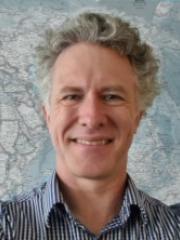
Darryl Jones is Professor at Griffith University's Centre for Planetary Health and Food Security, specializing in behavioral ecology and human-wildlife interactions. His research examines urban ecosystems, wildlife conflict resolution, and conservation strategies, with particular emphasis on bird ecology and road infrastructure impacts. Professor Jones has authored influential books including 'Feeding the Birds at Your Table' and 'A Clouded Leopard in the Middle of the Road' that bridge scientific research and public engagement. His work explores: Wildlife responses to urbanization Bird feeding practices and consequences Road ecology and mitigation design Human dimensions of conservation Koala-vehicle collision patterns Recent publications document COVID-19's impact on global bird feeding behaviors, analyze 20-year trends in koala road mortality, and evaluate LED streetlight effects on urban wildlife. He leads research on dingo population viability in Fraser Island and develops innovative wildlife monitoring technologies like the open-source WildWID RFID system. Professor Jones collaborates extensively with government agencies on conservation policy and has secured funding for projects examining wildlife crossing infrastructure effectiveness. His research informs evidence-based approaches to human-wildlife coexistence in rapidly changing landscapes.
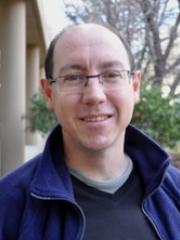
Professor Mohammad FARD is a faculty member at RMIT University's School of Engineering, specializing in Mechanical Engineering and Intelligent Systems. He leads research in autonomous vehicles, crash safety, and driver monitoring using AI. His industry experience includes six years at Nissan Technical Centre, focusing on vehicle body design. He holds a PhD from Tohoku University and has collaborated across Engineering, Health, and Science disciplines, achieving international media coverage for work on driver drowsiness and road safety. Research Interests: Autonomous Vehicles Advanced Crash Safety Driver State Monitoring AI in Noise/Vibration Human Factors/Ergonomics Teaching & Projects: Teaches Advanced CAE, Vehicle NVH, and research supervision in areas like crash simulation and vibration control. Current projects include Formula One safety barriers and driver education for autonomous vehicles. Awards & Labs: No awards listed. Active in cross-disciplinary teams and labs addressing automotive innovation and safety.
Professor Simon Buckingham Shum is a leading academic in Learning Informatics at the University of Technology Sydney (UTS), serving as inaugural Director of the Connected Intelligence Centre since 2014. His work bridges Human-Computer Interaction, Educational Technology, and Learning Analytics to develop AI-driven tools like OnTask that enhance student belonging through personalized feedback. Key research areas: Human-Computer Interaction, Learning Analytics, AI in Education, Collective Intelligence Recent work focuses: LLM-augmented qualitative analysis, Belonging Analytics frameworks, and ethical AI implementation in education CIC received the 2024 Vice-Chancellor’s Student Experience Award for scaling OnTask across multiple faculties. His contributions span over 30 years, including founding roles at The Open University’s Knowledge Media Institute and innovations in Open Educational Resources (OER), SocialLearn, and FutureLearn platforms. Notable awards: 2024 Student Experience Award (OnTask), Fellow of the Royal Society of Arts (RSA), DEFI STRI Researcher at University of Cambridge Education: B.Sc. in Psychology (York), M.Sc. in Ergonomics (UCL), PhD in Human-Computer Interaction (York) He leads multidisciplinary collaborations with teams across Business, Law, and Education faculties, pioneering tools like Theme Explorer and Qreframer bot. His recent focus on the "metacrisis" reframes educational technology’s role in addressing global systemic challenges through transdisciplinary approaches.
Marcus Smith is an Associate Professor in Law at the Charles Sturt University , where he teaches LAW222 Technology Law and directs the Bachelor of Laws program. He holds advanced degrees from the Australian National University (PhD, LLM) and the University of Cambridge (MPhil). His research spans technology law and regulation , focusing on genomic data governance biometric identification AI ethics blockchain policy cybersecurity surveillance law He leads the Contemporary Threats to Australian Security research group and serves as Chief Investigator on an NHMRC-funded project (MRF2015531) addressing genomic dataset governance. His recent work analyzes algorithmic bias in facial recognition AI in healthcare blockchain's regulatory challenges post-pandemic cybercrime surveillance ethics data security frameworks He actively supervises PhD and honours students in technology law and contributes to law reform through submissions to international bodies like the UN Human Rights Council .
Mr. Richardo Khonasty is a Senior Research Engineer at the School of Mechanical and Mechatronic Engineering, part of the Faculty of Engineering and Information Technology at the University of Technology Sydney (UTS). He has held appointments at UTS since 2019, including roles at the Centre for Autonomous Systems and Robotics Institute. He also serves as a Tutor since 2016. PhD in Robotics (2020), UTS B.Eng. in Mechanical and Mechatronic Engineering (2014), UTS Khonasty's research focuses on robotics and human-robot collaboration, with applications in surgical robotics (total hip replacement), industrial automation (abrasive blasting), and green wall inspection systems. His work emphasizes kinematic accuracy, adaptive control schemes, and cost-effective robotic solutions. His recent publications explore robotic-assisted burring for orthopedic surgery, damping strategies for singularity management, and exoskeleton design frameworks. Khonasty is currently involved in funded research related to hydraulic tooling safety under the BTP - Stage 2 - IntelliForce Tooling grant.
Deborah Richards is a Professor in the School of Computing at Macquarie University, affiliated with the Ethics and Agency Research Centre, Performance and Expertise Research Centre, and Frontier AI Research Centre. She holds roles as Industry and External Relations Director for the School and Director of the Virtual Reality Lab. Her research focuses on Intelligent Virtual Agents, Virtual Reality applications in education and health, knowledge acquisition, and cybersecurity ethics. She has authored over 425 publications and led 19 research projects, including studies on AI in healthcare and ethical AI design. Education: PhD (Artificial Intelligence, Macquarie University), MAppSc (Information Studies), BBus (Computing and MIS), and a Postgraduate Certificate in Higher Education (Leadership and Management). She advises on PhD and MRes students in Intelligent Virtual Agents research. Research interests include virtual agents for health behavior change, AI ethics, and educational technology. Notable projects include the eADVICE web-based management system for urinary incontinence and the development of embodied conversational agents for wellbeing support. Awards include the ABC Science Media Fellowship (2005) and Vice-Chancellor’s Citations for Outstanding Contributions to Student Learning (2017). Grants and collaborations span health informatics, cybersecurity, and AI ethics. She co-leads initiatives like the Respectful Maternity Care study and the Virtual Reality Lab’s immersive learning environments. Future work emphasizes ethical AI integration in education and healthcare.
Professor Guy Wallis is a Professor and Director of Research at the School of Human Movement and Nutrition Sciences, Faculty of Health, Medicine and Behavioural Sciences at the University of Queensland. He is also an Affiliate of the Centre for Sensorimotor Performance. His work bridges visual neuroscience, computational modeling, and applied human factors research, with significant contributions to understanding visual recognition and visuomotor behavior. Education: Bachelor (Honours) of Engineering in Electrical and Electronic Engineering from Imperial College London PhD in Visual Neuroscience from University of Oxford, UK Prof. Wallis's research program combines computational modeling with behavioral studies, many conducted in computer-controlled virtual environments. His work spans visual neuroscience, object recognition, visuomotor control, and simulator-based training. He has made significant theoretical contributions to understanding how visual recognition is achieved in biological systems and how everyday visuomotor tasks are regulated, challenging existing paradigms and offering new insights. His recent publications reveal a strong focus on virtual reality applications, visual-motor integration challenges, and cross-species cognitive studies. There's a clear trend toward investigating how virtual environments can be optimized for training and assessment, with particular attention to visual perception limitations and how humans adapt to these environments across diverse contexts from surgical training to aviation. Scientific Awards and Recognitions: Elected Fellow of the Queensland Academy of Arts and Sciences (2022) ARC Medical Research Advisory Group (2022-2024) ARC College of Experts (2019-2021) CSIRO CSS Human Research Ethics Committee member (2020-2022) UQ Health and Behavioural Sciences Faculty, HDR Supervision Award (2018) ARC Future Fellowship (2011-2014) ARC QEII Fellowship (2003-2007) UQ Postdoctoral Fellowship (2001-2003) Prof. Wallis has successfully secured funding from major organizations including the Australian Research Council, the Human Frontier Science Program, and the Wellcome Trust. His industry partnerships span diverse sectors such as construction training, mining, healthcare, and aerospace. His research has led to the development of novel training programs for health professionals, impacted the design of man-machine interfaces for mining equipment, and informed the design parameters for pilot training systems. As Director of Research, he oversees the research direction of the School of Human Movement and Nutrition Sciences, fostering interdisciplinary collaborations and supporting early-career researchers through his leadership in the Centre for Sensorimotor Performance.
Robert Wellington serves as Associate Professor and Director of the Centre for Art History & Art Theory at the School of Art & Design, Australian National University (ANU), within the College of Arts & Social Sciences. His academic leadership focuses on advancing art historical research and public engagement through institutional initiatives. His research spans Art History, Early Modern European Art (particularly Louis XIV's France), Museum Studies, Public Humanities, and Cultural Heritage. Wellington investigates transcultural object exchange, royal iconography, and identity construction through material culture, with emphasis on Versailles, medals, and marginalia. His work bridges historical scholarship with contemporary public humanities applications in museums and digital archives. Analysis of his 2020-2024 publications reveals concentrated exploration of Louis XIV's cultural legacy, Versailles' global impact, and the evolving role of humanities institutions. He pioneers digital critical editions while examining how objects shape identity across cultural boundaries, consistently connecting historical practices to modern museum and archival challenges. No scientific awards were documented in the provided materials. As Centre Director, Wellington oversees research programs and institutional partnerships, though specific student advisees and grant details remain unlisted in available sources. His leadership facilitates interdisciplinary projects including the Jean-Benjamin de Laborde digital edition initiative. The Centre for Art History & Art Theory functions as a research hub under Wellington's direction, driving public humanities innovation through the ANU's Art & Design Seminar Series, Visiting Artist Program, and collaborative projects with national collections. Current initiatives focus on digital heritage and community-engaged scholarship within the School of Art & Design framework.
Floyd Mueller is a Full Professor of Future Interfaces in the Department of Human Centred Computing at Monash University, where he also directs the award-winning Exertion Games Lab. His work bridges human-computer interaction, interaction design, and game and play design, with a focus on bodily engagement and physical activity through technology. He has held prior academic and research positions at RMIT University, the University of Melbourne, and CSIRO, and has been affiliated with elite institutions such as Stanford University, MIT Media Lab, and Microsoft Research Asia. PhD in Interaction Design – University of Melbourne (2011) MS in Media Arts and Sciences – Massachusetts Institute of Technology (2002) Diplom-Informatiker (Medieninformatik) – Hochschule Furtwangen (2000) BSc in Multimedia – Griffith University (1999) Floyd Mueller’s research centers on human-computer interaction with a strong emphasis on bodily interactions, exertion interfaces, and playful technologies. His work explores how digital systems can support physical activity, human values, and novel forms of expression through games, wearables, augmented reality, and immersive experiences. He employs methodologies such as design ethnography, autoethnography, and Research Through Design to investigate the phenomenology of human-computer integration. His recent publications (2024–2025) reflect a continued focus on the future of bodily interfaces, including lucid dream mediation, extended reality for fear reduction in water, sonic gastronomy, and shared bodily control in augmented human systems. These works are published in top-tier venues like CHI and Human-Computer Interaction journal, highlighting trends toward immersive, sensory-rich, and human-centered computing that challenge traditional boundaries between body and machine. His scientific awards include being an inaugural honouree of the Australian Design Honours, receiving 9 Best Paper Honorable Mentions and 2 Best Papers at CHI and CHI PLAY, and being recognized as a Fulbright Visiting Scholar and Microsoft Research Asia Fellow. His games have been featured by BBC, ABC, Discovery Science Channel, and New Scientist, and won a Media Star Award. Floyd Mueller actively supervises PhD students through the Exertion Games Lab and Supervisor Connect platform. He has secured major research grants, including Australian Research Council Discovery and Linkage Projects. His current projects include Advancing Australia’s hospitality industry through interactive food and Designing digital aquatic play to foster Australians' engagement with water . He also serves as associate editor for IMWUT and IJHCS, co-founded the CHI PLAY conference series, and was general co-chair for CHI PLAY’18 and CHI’20. He leads the Exertion Games Lab, an interdisciplinary research team focused on inventing the future of bodily play. The lab investigates how technology can support active lifestyles through exertion games, wearables, drones, and immersive environments. The lab’s work spans design, prototyping, user studies, and real-world deployment, often in collaboration with chefs, athletes, and underwater explorers.
Dr Luke Hespanhol is a Senior Lecturer in Design and Computation at the University of Sydney's School of Architecture, Design and Planning. He is affiliated with the Sydney Southeast Asia Centre and Sydney Nano Institute, and previously served as a guest researcher at Aarhus University's Department of Aesthetics and Communication. His work focuses on interactive media installations that foster reflection on human-environment relationships, blending urban design, technology, and social engagement. He holds a PhD in interactive media architecture from the University of Sydney's Design Lab, with research exploring user-centred hybrid urban environments. His doctoral work laid the foundation for his current interests in digital placemaking, urban informatics, and smart cities. Research Interests: - Designing technology-infused public spaces - Media architecture as a tool for inclusive urban development - Ethical implications of AI and blockchain in cultural contexts - Temporal and spatial dimensions of urban interaction design - HCI methodologies for multiperspectival cultural heritage interpretation - Antifragile city frameworks integrating citizen participation His recent publications highlight trends in reimagining urban futures through speculative design, ethical AI systems, and autonomous vehicle interaction paradigms. While no specific scientific awards are listed, his work often addresses critical societal issues like decolonization in technology and climate-resilient infrastructure. Grants and Collaborations: - 2025: 'Waste to Resilience: Sanitation Against Stunting and Climate Vulnerability in Informal Coastal Areas' (Sydney Southeast Asia Centre) - 2022: 'The Metaverse as Vehicle for Aboriginal Digital Inclusion, Wellness and Self-Determination' (Facebook Research) Dr Hespanhol is actively involved in the Media Architecture Institute and contributes to cross-disciplinary initiatives uniting technology, art, and urban planning. His research emphasizes co-creation processes with communities to ensure equitable technological integration in urban systems.
Professor Anthony Richardson is a mathematical ecologist at the University of Queensland , holding a joint position with CSIRO Environment since 2005. He leads the Mathematical Marine Ecology Lab , focusing on marine conservation through mathematical, statistical, and computational modeling. School of the Environment, Faculty of Science, University of Queensland Affiliate, Centre for Marine Science Affiliate, Centre for Biodiversity and Conservation Science Research Interests span marine spatial planning (climate-smart protected areas, 3D ocean zoning), marine ecosystem modeling (lower trophic levels, plankton-dynamics), and climate change impacts (carbon sequestration, fisheries productivity, and marine diseases). His work has been cited in IPCC Assessment Reports and emphasizes international collaboration through projects like the Global Working Group on Climate Change Synthesis . Recent Publications focus on Zooplankton's role in carbon cycling Climate-smart marine protected area design Ecosystem modeling under climate uncertainty Marine megafauna connectivity patterns Supervision is offered for >250 peer-reviewed papers and advanced projects in climate-smart conservation planning, with established funding from ARC Discovery Projects and Norwegian Polar Institute .
Professor Judy Kay is a leading academic in Computer Science at the University of Sydney, holding a Chair in Human-Centred Technology Research within the Faculty of Engineering and IT. Her work focuses on designing personalized systems that empower users to control their data, particularly in lifelong learning and health contexts. She leads the Human Centred Technology Research Cluster and is Editor-in-Chief of the International Journal of Artificial Intelligence in Education (IJAIED). Education: Studied at the University of Sydney, inspired to pursue academia due to its multidisciplinary environment and student collaboration opportunities. Research interests include user modeling, scrutable AI systems, and interfaces for personal informatics. Current projects span virtual reality learning environments, health data dashboards, and ethical AI transparency. Her work has led to commercialized technologies like the Personis system. Publications include over 200 peer-reviewed works in top venues like CHI, UbiComp, and AIED conferences. Awards highlight her contributions to computing education and AIED, including the 2023 Lifetime Achievement Award. Advises 4 current PhD/Master’s students focusing on topics like Open Learner Models in VR and health decision-making tools. Collaborates with multidisciplinary teams across computer science, health sciences, and education. Labs/Teams: Leads research groups in the School of Computer Science and collaborates with the Charles Perkins Centre on health-related projects.
Susan Hansen is an Honorary Senior Lecturer at the School of Computing, The Australian National University (ANU), and serves as the Human Centred Design Practice Lead in Information Technology Services at ANU. Her work focuses on designing inclusive digital experiences, aligning with ANU’s Digital Master Plan. She has extensive experience in human-centred design, spanning roles at CSIRO, consulting agencies, start-ups, and universities across Asia, South Africa, and Australia. Education: Bachelor of Science (Psychology), University of New South Wales Bachelor of Social Science and Policy (Honours 1), University of New South Wales PhD in Interaction Design, University of Technology Sydney Research Interests: Susan advocates for culturally tailored approaches to design, emphasizing engagement with diverse communities. Her expertise spans user-centered design methodologies, cross-cultural design practices, and the intersection of technology and social policy. Awards/Grants: No awards or grants explicitly listed in the provided text. Advising & Labs: No advising details or lab affiliations mentioned.
Mark Billinghurst is a Professor and Director of the Australian Research Centre for Interactive and Virtual Environments at UniSA STEM, University of South Australia. His work focuses on Augmented Reality (AR), Virtual Reality (VR), and empathic computing, emphasizing remote collaboration, human-computer interaction, and inclusive design. He has authored influential books like Computer-Supported Collaboration: Theory and Practice (2024) and pioneered systems such as Empathy Glasses and gaze-tracking interfaces for collaborative tasks. Education & Affiliations: Mark Billinghurst is affiliated with the Empathic Computing Laboratory and has collaborated globally with institutions like Keio University, Nokia, and the University of Canterbury. His research spans AR applications in manufacturing, healthcare, and social interaction, with a focus on improving accessibility and user experience. Research Interests: Dr. Billinghurst’s research explores AR/VR for remote guidance, wearable technologies, and emotional interfaces. He investigates how gaze cues, multimodal feedback, and AI can enhance collaboration and empathy in virtual environments. His work bridges technical innovation with human-centric design, addressing challenges in industrial assembly, mental health, and workplace transformation. Publications & Impact: His 2016 study on gaze tracking in remote collaboration (cited over 100 times) and 2024 book on AR collaboration highlight his contributions. Recent projects include Vibe360 (group emotion analysis) and CAEVr (biofeedback-driven empathy systems). He actively contributes to conferences like IEEE VR and CHI, shaping the future of immersive technologies. Labs & Future Work: His lab develops tools like the SAR system for aircraft drilling and empathic agents (EMiRAs). Future directions include AI-driven emotional interfaces, inclusive metaverse design, and VR solutions for cognitive rehabilitation.
Dr. Divya Jayakumar Nair serves as Senior Lecturer in the School of Civil and Environmental Engineering at the University of New South Wales (UNSW), where she also holds the position of Associate Dean International – South Asia for UNSW Engineering. Her academic work is centered at the Research Centre for Integrated Transport Innovation (rCITI), focusing on transportation systems, network optimization, and disaster management applications. Dr. Nair's research interests span transportation engineering, disaster management, and urban mobility systems. Her work investigates complex network design problems, particularly in pre-disaster evacuation planning, transportation resilience, and food rescue logistics. She employs advanced analytical methods including traffic equilibrium modeling, network optimization techniques, and data-driven approaches to solve real-world transportation challenges with significant societal impact. Her recent publications demonstrate a strong focus on transportation resilience during disasters, with particular attention to equity considerations in pre-event planning. Dr. Nair's research shows how transportation networks can be optimized to improve emergency response while ensuring equitable access to safety for all population segments. Her work bridges theoretical network optimization with practical applications in urban environments facing climate-related challenges. Dr. Nair collaborates extensively with leading researchers in transportation including S. Travis Waller, Vinay V. Dixit, David Rey, and Taha Rashidi. Her collaborative approach spans multiple institutions and addresses pressing challenges in urban transportation systems worldwide.