

Roberta Sinatra is a Professor in Social Data Science at the University of Copenhagen, with part-time affiliations at ITU Copenhagen, ISI Foundation (Italy), and CSH (Austria). She co-founded the NERDS Research Group at ITU and co-leads the Pioneer Centre for AI in Copenhagen. Research Interests: Her work spans computational social science, network science, and data science, focusing on fairness in AI, scientific careers, and human mobility. Recent projects include analyzing child protection algorithms and modeling urban bicycle networks. Scientific Awards: ERC Consolidator Grant Villum Young Investigator Grant Complex Systems Society Junior Prize DPG Young Scientist Award for Socio- and Econophysics Sapere Aude: Starting Grant Publications: Her research, often in top-tier venues like Nature and Science , explores interdisciplinary themes, including AI ethics, gender disparities in science, and social network dynamics. Labs & Teams: She leads research initiatives at the Center for Social Data Science (KU) and co-founded the NERDS Research Group at ITU, fostering international collaboration in network science and AI ethics.
جستجوی استاد راهنمای دانشگاهی
برای مسیر پژوهشیتان، استاد راهنما، استاد دانشگاه و پژوهشگر مناسب را پیدا کنید و با آنها ارتباط بگیرید.
نمایش ۱-۱۵ از ۲۵۹ استاد راهنما
اطلاعات پروفایلها از صفحات عمومی دانشگاهها گرفته شده و ممکن است بهروز نباشد.
Timo Minssen is Professor of Law at the University of Copenhagen (UCPH) and the Founding Director of UCPH's Center for Advanced Studies in Bioscience Innovation Law (CeBIL). He also holds affiliations as an LML Research Affiliate at the University of Cambridge and an Inter-CeBIL Research Affiliate at Harvard Law School's Petrie-Flom Centre. With extensive expertise in Intellectual Property, Competition, and Regulatory Law, Minssen focuses on the legal aspects of emerging health and life science technologies, including genome editing, big data, artificial intelligence, and quantum technology. His educational background includes a German law degree (Staatsexamen) from Georg-August-University in Göttingen, and Swedish biotech & IPR related LL.M., LL.Lic., and LL.D. degrees from Lund University and Uppsala University. His PhD thesis on the patentability of biopharmaceutical technology in the US & Europe received the prestigious Swedish King Oscar award. 2024: TUM Global Visiting Professor, Technical University of Munich (Germany) 2016: Visiting Research Fellow, University of Cambridge (UK) 2014: Visiting Research Fellow, University of Oxford (UK) 2013-14: Visiting Scholar, Harvard Law School (US) 2012: LL.D. - Doctor of Laws (Swedish "juris doktor"), EU/US patent law, Lund University, Sweden Minssen's research spans AI & Big Data in Health & Life Sciences, Sustainable and responsible innovation & tech transfer, Pharmaceutical-, Life Science- & Biotech Law, Comparative European & US Patent Law, Intellectual Property Law & Open Innovation, and EU Competition- & US Antitrust Law. His work addresses legal issues throughout the lifecycle of health and life science products and processes, from R&D regulation to technology transfer and commercialization. His extensive publication record includes 7 books and over 200 articles and book chapters published in leading journals such as Science, Nature Biotechnology, JAMA, and Harvard Business Review. His research has been featured in The Economist, Financial Times, and other major media outlets. Minssen's recent work shows a strong focus on AI regulation, quantum technology law, and data governance in health contexts, reflecting the evolving landscape of technology and law. Scientific Awards and Recognition King Oscar award for best Jur. Dr. thesis (2014) Jorcks Fonds Forsknings Pris (Jorck's Foundation Research Prize) (2017) Awapatent Research Prize (2009) Max Planck Research Scholarship (2005) Visiting Scholar appointments at Harvard Law School, University of Oxford, and University of Cambridge Recipient of a Novo Nordisk Foundation Grant for a "Collaborative Research Program in Biomedical Innovation Law" (2018) As an advisor, Minssen serves international organizations including the WHO, WIPO, and EU Commission. He has supervised numerous PhD students in areas including pharmaceutical law, biotechnology patents, and antimicrobial resistance. His current research projects include the Novo Nordisk Foundation's International Collaborative Bioscience Innovation & Law (Inter-CeBIL) Programme (50 million DKK), CLASSICA: EU Horizon Project on AI-assisted surgery, and AI@Care: Law and Ethics and Algorithmic Bias in Healthcare. Minssen leads the Center for Advanced Studies in Bioscience Innovation Law (CeBIL), which serves as a hub for interdisciplinary research on the intersection of law, technology, and innovation in the health and life sciences. The center collaborates with institutions worldwide to address pressing legal challenges in emerging technologies.
Hasti Seifiمشاهده پروفایل
دانشیار
Hasti Seifi is an Affiliated Associate Professor at the Department of Computer Science (DIKU), University of Copenhagen, specializing in Human-Centred Computing. Her research focuses on haptics, augmented reality, and human-robot interaction. Institution: University of Copenhagen Department: Department of Computer Science Section: Human-Centred Computing Research interests include: Designing innovative haptic feedback systems Exploring tactile experiences in augmented reality Developing human-robot interaction frameworks Creating generative models for haptic design Investigating social touch technologies Advancing mid-air and ultrasound haptic interfaces Recent publications demonstrate a strong focus on: Generative haptic modeling for AR/XR systems Human-robot interaction dynamics Text input in extended reality environments Visual-haptic multisensory integration Ultrasound mid-air haptic design tools Social touch technologies
Teresa Hirzleمشاهده پروفایل
استادیار
Teresa Hirzle is a Tenure Track Assistant Professor at the Department of Computer Science , University of Copenhagen , specializing in Human-Centred Computing . Her research focuses on Human-Computer Interaction (HCI) , Virtual Reality (VR) , Extended Reality (XR) , and Gaze-Based Interaction . Research Interests: Designing interaction techniques for immersive environments Eye movement analysis for educational applications Addressing digital eye strain in interactive systems Evaluating user experience in VR/AR Recent Research Trends: Her recent publications examine AI representation in VR co-creation, VR sickness in locomotion, eye strain in gaze-driven systems, and hybrid applications of comics/AR. She also explores pedagogical implications of eye tracking in remote learning. Contact: Email: tehi@di.ku.dk Office: Sigurdsgade 41, 2200 København N.

Romualdo Pastor-Satorras is an Associate Professor of Applied Physics at the Universitat Politècnica de Catalunya (UPC) since 2006. He earned his PhD in Condensed Matter Physics from the Universitat de Barcelona in 1995, followed by postdoctoral research at MIT (1996–1998) and The Abdus Salam International Centre for Theoretical Physics (1998–2000). His extensive international collaborations include visiting positions at Yale University, University of Notre Dame, Kavli Institute for Theoretical Physics, Helsinky University of Technology, Indiana University, and the ISI Foundation. Research Focus His interdisciplinary work spans statistical physics, network theory, and dynamical systems. Primary research areas include: Modeling epidemic spreading in complex networks Random walks and diffusion processes in temporal networks Social and biological applications of network science Glassy dynamics and energy landscapes His research combines mathematical rigor with data-driven approaches to address problems in public health, social dynamics, and complex system behavior. Publications Overview With over 100 peer-reviewed publications, Pastor-Satorras's work demonstrates consistent focus on network dynamics and epidemic modeling. Recent articles explore COVID-19 herd immunity thresholds (2020), echo chambers in political networks (2019), and non-Poissonian temporal networks (2019). His foundational 2015 review on epidemic processes in networks is highly influential. Publications frequently involve interdisciplinary collaborations across physics, data science, and computational biology. Awards and Distinctions Fellow of Universitat Politècnica de Catalunya ICREA Academia Prize (awarded twice by the Government of Catalonia) Research Infrastructure He maintains active collaborations through visiting positions at leading global institutions. His work involves theoretical modeling and computational analysis, though specific laboratory details are unspecified in the provided text.
- Computer Supported Cooperative Work (CSCW)
- Human-Centered Computing
- Human-Computer Interaction
- +۷ مورد دیگر
Pernille Bjørn is a Professor in Computer Supported Cooperative Work (CSCW) at the Department of Computer Science , University of Copenhagen (DIKU), where she has been since May 2015. Her research investigates collaborative work practices to design cooperative technologies, focusing on domains like healthcare, global software development, startup companies, and digital fabrication. Faculty of Science, University of Copenhagen Human-Centred Computing Section Research Interests : Bjørn’s work spans CSCW , Human-Computer Interaction , and Digital Fabrication , with applications in healthcare systems, cross-cultural software development, and inclusive technology design. She explores collaborative virtual reality training, FemTech, and crisis computing. ACM Distinguished Member (2024) Publications : Published in top venues like ACM Transactions on Computer-Human Interaction , CSCW , and CHI , her recent work examines hybrid work asymmetry, neurodiverse accessibility, and art-driven collaborative research.
Isabelle Augenstein is a Professor at the University of Copenhagen, Department of Computer Science (DIKU), where she heads the Copenhagen Natural Language Understanding (CopeNLU) research group and the Natural Language Processing section. She is also a co-lead of the Danish Pioneer Centre for Artificial Intelligence, Denmark's largest research center initiated by the Danish Ministry of Higher Education and Science. In October 2022, she became Denmark's youngest ever female full professor. Dr. Augenstein earned her undergraduate degree in Computational Linguistics and Psychology from Heidelberg University, followed by a Master's in Computational Linguistics. She completed her PhD in Computer Science at the University of Sheffield under the supervision of Dr. Diana Maynard and Prof. Fabio Ciravegna. In 2021, she earned a Habilitation at the University of Copenhagen in Explainable Fact-checking. Professor Augenstein's primary research focuses on fair and accountable Natural Language Processing, with particular emphasis on explainability, factuality, and bias detection. Her work spans multiple subfields including automated fact-checking, stance detection, gender bias analysis, and cultural bias in language models. She has pioneered research in explainable fact-checking, developing methods that not only predict claim veracity but also provide meaningful explanations of the decision-making process. Her research group has produced numerous influential papers on measuring model fragility, quantifying gender biases, and developing robust fact-checking systems that account for distribution shifts. Her significant contributions have been recognized with several prestigious awards: ERC Starting Grant on 'Explainable and Robust Automatic Fact Checking' DFF Sapere Aude Research Leader fellowship on 'Learning to Explain Attitudes on Social Media' Karen Spärck Jones Award from the British Computing Society and Bloomberg Hartmann Diploma Prize from the Hartmann Foundation Member of the Royal Danish Academy of Sciences and Letters since 2024 Professor Augenstein has secured significant research funding including her ERC Starting Grant supporting five years of blue-sky research. She actively mentors PhD students and postdoctoral researchers through her 'ExplainYourself' project. She served as President of SIGDAT (which organizes the EMNLP conference series), having previously held leadership roles as Vice President and Vice President-Elect. She is a co-founder of Widening NLP (WiNLP), an initiative to increase diversity in the NLP community, and maintains the BIG Directory of underrepresented groups in NLP. She leads the Copenhagen Natural Language Understanding (CopeNLU) research group, which relocated to the historic Østervold Observatory in Copenhagen's Botanical Gardens in 2023. The group focuses on developing methods for explainable and robust natural language understanding, with applications in fact-checking, bias detection, and social media analysis. Professor Augenstein also co-leads the Speech and Language collaboratory at the Pioneer Centre for Artificial Intelligence, where her team investigates how language models can better serve diverse populations while maintaining accountability and transparency.
Henriette Naledi Winther Hansen serves as an Instructor (mapped to Lecturer rank) at the Department of Computer Science (DIKU), University of Copenhagen, contributing to the department's teaching mission within the Faculty of Science structure. Her role focuses on course instruction across computer science curricula at Universitetsparken 1, Copenhagen Ø. Her professional scope aligns with DIKU's institutional research environment spanning artificial intelligence, machine learning, and software systems, though specific research specializations remain undocumented in available sources. The department's active sections—including Algorithms and Complexity, Human-Centred Computing, and Pioneer AI—provide contextual academic frameworks for her instructional work despite no explicit section affiliation. No scientific awards, student advisement records, or publication history are referenced in her institutional profile, reflecting a primary emphasis on teaching responsibilities within Denmark's largest computer science research hub.

Kaj Grønbæk is a Professor and Head of Department at Aarhus University's Department of Computer Science. His research focuses on Augmented Reality , Human-Robot Interaction , and Interaction Design , with specific interest in hybrid user interfaces and immersive authoring systems. Academic Rank: Professor Department: Department of Computer Science Email: kgronbak@cs.au.dk Research Interests : Combines Augmented Reality with Pervasive Computing to create novel Interactive Rooms and Urban Environments . Specializes in Experimental Systems Development and Mobile Interfaces . Article Trends : Recent publications focus on Virtual Reality applications in industrial settings, Augmented Reality for robotics, and Haptic Feedback mechanisms. The work spans Human-Computer Interaction , Immersive Technologies , and Collaborative Systems . Scientific Awards : Best Student Paper Award (2017) CHI 2021 Best Paper Award ISS 2019 Best Paper Award Red Dot Design Award for 'Wisdom Well' (2007) Grants & Projects : Leads DIGITAL RESEARCH CENTRE DENMARK (2020-2025) and MADE FAST WS5 project (2020-2024). Participates in CoronaLytics and HealthD360 initiatives.

Joachim Wiewiuraمشاهده پروفایل
پژوهشگر ارشد
- Political Philosophy
- AI Ethics
- Education Policy
- +۵ مورد دیگر
Joachim Wiewiura is a Research Fellow at Aalborg University, affiliated with the Centre for AI Ethics, Law and Policy within the Faculty of Social Sciences and Humanities. He holds a PhD in Political Philosophy from the University of Copenhagen (2020) and has held roles including Postdoc at the Humanomics Research Centre (2021–2022), Research Assistant at Aalborg University (2022–2023), and Visiting Scholar at the University of Oxford’s Oxford Internet Institute (2017). His research focuses on political semantics, education policy, AI ethics, medieval philosophy, and the intersection of communal autonomy with welfare systems. Education: PhD in Political Philosophy, University of Copenhagen (2020) MA in Philosophy, University of Copenhagen BA in Philosophy, Aarhus University Research Interests: He explores historical and contemporary political philosophy, including figures like Montesquieu, Hannah Arendt, and Georg Simmel. His work examines the evolution of the public sphere, canon formation in philosophy, and ethical implications of AI technologies. He analyzes how educational institutions shape societal discourse and investigates the role of communal autonomy in welfare systems. Scientific Awards: Recipient of the Fulbright Scholarship (2018) for research at MIT Media Lab Won Open Access grant for co-editing If Schools Didn’t Exist (MIT Press, 2020) Grants & Collaborations: Project Participant in the REPAI: Responsible AI for Value Creation project (2023–2027) focusing on computational discourse analysis and AI ethics Labs/Teams: Humanomics Research Group Publics, Power & Media Centre for AI Ethics, Law and Policy
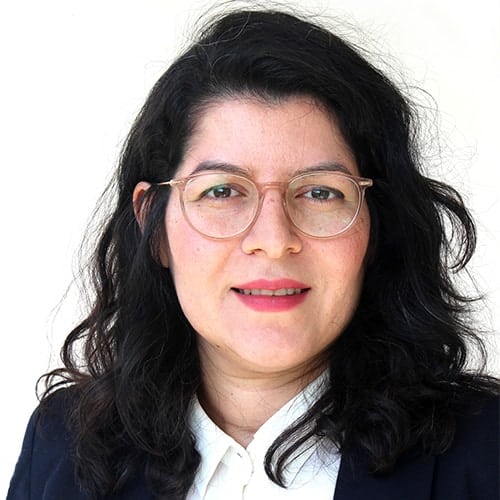
Fariba Karimi is a Professor of Social Data Science at Graz University of Technology and leads the Algorithmic Fairness research group at the Complexity Science Hub (CSH) in Vienna. Her work sits at the intersection of computational social science, network science, and AI ethics, with a strong focus on fairness, inequality, and bias in algorithmic systems. She holds a PhD in Physics and Computational Science from Umeå University, Sweden (2015), and was a Postdoctoral Researcher at GESIS – Leibniz Institute for Social Sciences, Germany. Her research combines large-scale data analysis, agent-based modeling, and network science to study how social structures and algorithms interact to shape disparities, particularly for underrepresented groups. Computational Social Science Algorithmic Fairness and Bias Network Science and Homophily Digital Humanism Urban Inequality and Implicit Bias Gender and Age Equity in Academia Her recent publications reveal a consistent focus on understanding and mitigating algorithmic and structural inequities. Themes include the visibility of minorities in networks, the impact of segregation on health and cognition, gender citation gaps in physics, and the development of fair ranking and recommendation systems. She employs interdisciplinary methods to analyze both digital and real-world social systems. Fariba Karimi has received several prestigious recognitions, including: Young Scientist Award from the German Physical Society (2023) ERC Starting Grant (2024) Nomination for the Hedy Lamarr Award (2021) She leads the 'Humanized Algorithms' project at CSH, funded by the ERC, and co-leads an EU Horizon project (MAMMOth) on multi-criteria fairness in AI. She advises PhD researchers such as Lisette Espín-Noboa and collaborates with institutions like the University of Mannheim and the Centre for Social Sciences. Her work contributes to both academic knowledge and practical solutions for fairer AI systems and more equitable societies.

Tuukka Ruotsalo serves as Associate Professor in the Machine Learning Section at the Department of Computer Science, University of Copenhagen. His research bridges human cognition with computational systems through brain-computer interfaces and physiological computing. As Academy Research Fellow at University of Helsinki (2019-2024), he maintained dual institutional affiliations while leading cutting-edge work in neuro-linguistic modeling and affective relevance. His research focuses on brain-computer interfaces for information retrieval , where he pioneers methods to decode cognitive states from neural signals to improve search systems. Key areas include affective relevance modeling that integrates emotional states into search algorithms, and neuro-linguistic reconstruction that translates brain activity into language. His work on fairness-relevance tradeoffs in recommender systems established Pareto frontier evaluation frameworks now widely adopted in ethical AI research. Recent publications demonstrate how physiological signals like EEG and galvanic skin response can create more adaptive human-information interaction systems. Ruotsalo's scientific recognition includes the prestigious Academy Research Fellow position. His publications in IEEE Transactions on Human-Machine Systems , Journal of the Association for Information Science and Technology , and Communications Biology reveal growing interdisciplinary impact. His advising spans cognitive neuroscience and machine learning students, with notable collaborations across the SCIENCE AI Centre. Current projects include the TreeSense initiative for remote sensing of global tree resources and development of quantum-inspired neural architectures. His lab leverages the department's powerful compute cluster for large-scale physiological data analysis.

- International Relations
- Practice Theory
- Diplomacy
- +۸ مورد دیگر
Rebecca Adler-Nissen is a Professor of International Politics at the Department of Political Science , University of Copenhagen , and Director of Strategic Partnerships at the Copenhagen Centre for Social Data Science (SODAS) . Her academic career spans roles as Associate Professor (2013–2016) and Visiting Scholar at institutions like the University of Sydney and McGill University. She holds a PhD (2009) and MSc (2005) from the University of Copenhagen, along with a diploma from Sciences Po, Paris (2002–2003). Her research intersects International Relations , Practice Theory , and Digital Diplomacy , with theoretical emphasis on International Political Sociology , Stigma , and Norms . She explores how digital technologies reshape diplomacy, focusing on sovereignty , disinformation , and EU integration , particularly through projects like Digital Sovereignty (VELUX) and HOPE (Carlsberg). Her 15 most recent articles (2021–2024) examine topics like digital sovereignty in Gaia-X, blended diplomacy through social media, and contestation of the liberal order . Keywords span International Relations , EU Policy , and Science and Technology Studies . Scientific Awards Distinguished Scholar in Diplomatic Studies EliteForsk Prize Nils Klim Prize Royal Danish Academy of Sciences and Letters Silver Medal (2017) Carlsberg Foundation’s Researcher of the Month (2021) She supervises PhD students including Anna Helene Kvist Møller and Nicklas Johansen, and has advised completed candidates like Alexei Tsinovoi and Yevgeniy Golovchenko. Her advisory roles include the Danish Government’s Expert Group on Tech Giants and the Danish Intelligence Oversight Board . She co-leads projects funded by the VELUX Foundation and Carlsberg Foundation .
Jonathan Voersaa Wenshøj is an academic researcher at the Department of Computer Science, University of Copenhagen. He contributes to the Machine Learning section's activities spanning theoretical foundations and applications in diverse domains like information retrieval, medical data analysis, remote sensing, sustainability, and biological modeling. The section participates in the SCIENCE AI Centre and collaborates with initiatives like TreeSense for global tree resource analysis. His research intersects machine learning with quantum computing, medical informatics, and sustainability. Recent publications highlight applications in environmental monitoring, healthcare diagnostics, and energy-efficient AI systems. The department provides advanced compute resources including a powerful cluster for intensive machine learning tasks. This researcher's work appears in diverse machine learning domains, with recent publications addressing quantum-inspired architectures, explainable AI in medical imaging, and sustainable computing practices. The section actively hosts events including seminars, conferences, and PhD defences related to machine learning advancements.
Sophia Natasha Wilsonمشاهده پروفایل
پژوهشگر ارشد
Sophia Natasha Wilson is a Research Fellow in the Department of Computer Science (DIKU) at the University of Copenhagen, specializing in machine learning applications across interdisciplinary domains. She is affiliated with the SCIENCE AI Centre and holds a cross-departmental position at the Niels Bohr Institute . Her research bridges theoretical machine learning with practical implementations in healthcare, quantum computing, and environmental sustainability. University of Copenhagen Department of Computer Science (DIKU) Niels Bohr Institute SCIENCE AI Centre Her research focuses include: Quantum-enhanced machine learning algorithms Explainable AI for healthcare applications Environmental sustainability in computing Emotion-aware language models Quantum computing hardware optimization Public health risk modeling Her recent publications demonstrate cross-disciplinary work in quantum machine learning (hybrid optical processors, qubit stabilization), health informatics (hypothyroidism analysis, nursing values evaluation), and ethical AI (sustainable AI, fairness in recommender systems). Technical work also appears in non-Euclidean generative models and real-time adaptive systems . Current projects include quantum dot array simulation (QDarts platform) and federated learning for personalized medicine . She contributes to the TreeSense center for remote sensing of global tree resources and works on climate-aware AI frameworks.