Dr. Aslı Özen is an Associate Professor in the Faculty of Health Sciences at Final International University . Her academic focus lies in human nutrition, functional foods, and dietary behavior analysis. Doctoral Degree : Human Nutrition, Universitat de les Illes Balears (2012) Master's Degree : Food Engineering, Istanbul Technical University (2006) Bachelor's Degree : Food Engineering, Istanbul Technical University (2003) Her research explores functional food consumption, beverage hydration patterns, and dietary shifts influenced by global events like the COVID-19 pandemic , with cross-cultural studies comparing European and international populations. Her work emphasizes Mediterranean diet adherence and the structural properties of food products. Key publication trends focus on nutritional epidemiology , public health interventions , and food science applications , particularly in fermented dairy products and sustainable gastronomy tourism.
Prof. Bahire Efe Özad is a Professor in the Department of Television and Film Studies at Eastern Mediterranean University's Faculty of Communication and Media Studies. She holds a PhD and multiple master's degrees in education and English language teaching. Her research focuses on media studies, social media impact, communication theory, environmental sociology, cinema analysis, and intercultural communication. She has supervised over 80 PhD and Master's theses, reflecting her extensive academic mentorship. Her notable works include analyses of sacred defense cinema, pandemic governance in Northern Cyprus, and systematic reviews on fake news scholarship. She has conducted impactful studies on marital sustainability during the pandemic, Nigerian election media framing, and digital natives' social media use. Her research spans diverse areas including ICT's environmental impact, romantic relationship dynamics, and blog reader engagement. Prof. Özad has led projects like analyzing communication barriers for African students and exploring original scores in film. She maintains an active academic presence through Google Scholar and has contributed to numerous peer-reviewed journals. Her teaching and research activities emphasize interdisciplinary approaches to media, communication, and social dynamics.
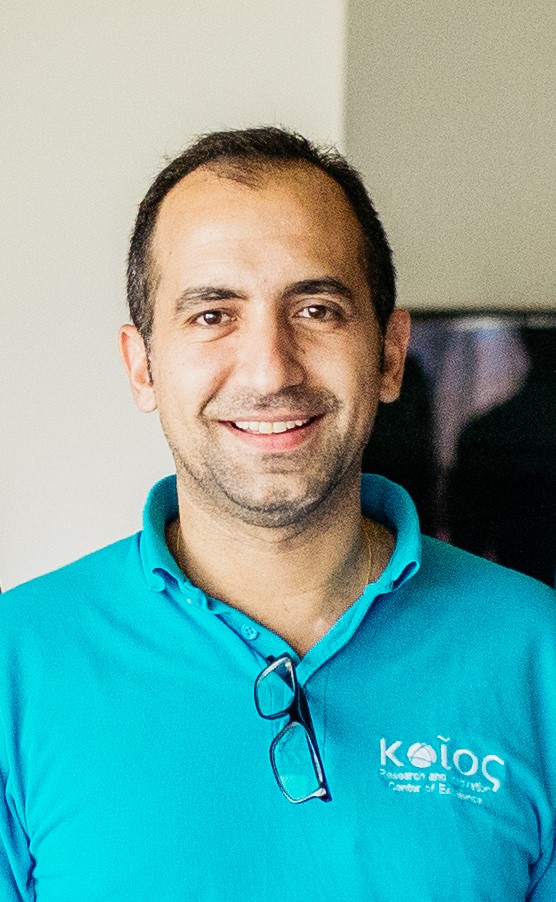
Panayiotis Kolios is an Assistant Professor at the Department of Computer Science, University of Cyprus (UCY). Previously, he served as a Research Assistant Professor at the KIOS Research and Innovation Centre of Excellence (2013–2024) and a Visiting Lecturer at UCY. He holds a BEng and PhD in Telecommunications Engineering from King’s College London (2008 and 2012, respectively). His research focuses on networked intelligent systems, emergency management using AI and UAV technologies, and cyber-physical systems. Education: BEng in Telecommunications Engineering, King’s College London, 2008 PhD in Telecommunications Engineering, King’s College London, 2012 Research Interests: His work centers on autonomous systems, intelligent transportation, and emergency management. Key areas include AI-driven disaster response, UAV-based surveillance, and algorithmic optimization for critical infrastructure. He develops solutions for real-time situational awareness and decision-support in emergencies. Recent work trends show a focus on multi-UAV coordination, disaster management platforms (like AIDERS), and AI applications in emergency response. His team’s 2023 win in the Cooperative Aerial Robots Inspection Challenge highlights advancements in UAV inspection algorithms. Scientific Awards: First Prize in Cooperative Aerial Robots Inspection Challenge (CDC 2023) Grants and Advising: He has secured over €40 million in EU and industrial grants, leading projects like PREDICATE, SWIFTERS, and AIDERS. His team advises on emergency response strategies and has trained first responders through EU-funded programs such as the Exchange of Experts training. Labs and Teams: He leads the Security and Emergency Response Group at KIOS CoE and established the Cyprus Civil Defence Aerial Observation Unit. His team collaborates with institutions like the Cyprus Police and Fire Service to operationalize UAV technologies in disaster scenarios.
Ali Akdoğan is an Assistant Professor in the Department of Educational Sciences at Final University. His academic career spans over two decades with doctoral studies completed in 2014, following a Master's degree in 1995 and Bachelor's degree in 1992. Educational Background: Doctoral Degree: 2014 Master's Degree: 1995 Bachelor's Degree: 1992 Research Interests: Dr. Akdoğan's work explores educational psychology, teacher development, and the impact of global educational frameworks like the International Baccalaureate program. His research analyzes school culture, emotional intelligence in educational settings, and pandemic-induced distance learning challenges. Publication Trends: Recent work (2021-2022) focuses on psychological impacts of the pandemic on students, effectiveness of international educational programs, and teacher emotional intelligence. Earlier research (2002, 1995) examines social capital and personnel selection in educational institutions.
Christos Nicolaides is an Assistant Professor at the Department of Business and Public Administration within the School of Economics and Management at the University of Cyprus (UCY), holding a secondary appointment as a Digital Fellow at MIT's Initiative on the Digital Economy. Previously, he spent three years as a James McDonnell Foundation-funded Postdoctoral Fellow at MIT Sloan School of Management. His educational background includes a PhD in Engineering from Massachusetts Institute of Technology (2014), SM from MIT (2011), MSc in Applied Mathematics from Imperial College London (2009), and BSc in Physics from University of Thessaloniki (2008). Nicolaides' research applies mathematical, statistical, and computational tools to large-scale empirical questions in social influence mediated by digital technologies. His work spans Data Science , Machine Learning , Social Networks , and Computational Social Science , with significant contributions to understanding human mobility patterns, disease transmission dynamics, and social contagion effects. His research has established novel methodologies for analyzing complex network structures in mobility data and social interactions. Analysis of his 15 most recent publications reveals a consistent focus on applying network science to real-world problems, particularly in pandemic response (12 publications), human mobility analytics (9 publications), and social contagion dynamics (7 publications). His work demonstrates increasing interdisciplinary integration, combining computer science, epidemiology, and organizational behavior since 2020. Marie S. Curie Fellow Two Highly Cited Papers by Web of Science (2017, 2020) Best Paper Award by Risk Analysis Society (2019) Professor of The Week by Poets & Quants (2020) As principal institutional investigator, Nicolaides has secured over €1 million in research funding from the European Commission, industry partners, Cyprus Innovation and Research Foundation, and Cyprus Ministry of Health. His current teaching includes Social Networks and Entrepreneurship, Introduction to Operations Management, and Quantitative Methods in Management. Media coverage of his work spans major outlets including The New York Times, CNN, Nature, and Science, with significant impact on public health policy discussions during the COVID-19 pandemic.
Assoc. Prof. Dr. Yıltan Bitirim is a faculty member at the Computer Engineering Department of Eastern Mediterranean University in North Cyprus. With over two decades of academic experience, he has served in various roles including Vice Chair (2014-2022), Academic Affairs Coordinator (2025-), and committee member for ABET assessment, curriculum development, and faculty recruitment. Current academic rank: Associate Professor Active administrative roles: Senate Member (2023-), Information Technology Commission Member (2023-) Professional memberships: ACM, IEEE Senior Member, Cyprus Turkish Chamber of Computer Engineers Research Interests focus on four primary areas: Information Retrieval Systems – evaluating search engine effectiveness and reverse image search performance Machine Learning – applied to emotion classification, gender recognition, and medical diagnosis Data Mining – used in Turkish word-stemming analysis and user behavior studies Biometrics – specializing in hand/wrist/palm vein recognition systems and voice-based identification Publications demonstrate consistent contributions across disciplines, with recent works (2023-2025) emphasizing: Deep learning applications in biometric authentication Advanced emotion recognition systems Medical AI for diabetes management and retinopathy diagnosis Biometric spoof detection mechanisms Turkish language processing challenges Recommendation system innovations Awards & Recognition : Research Incentive Awards (2020, 2021) Best Paper Award at ICIW 2007 IEEE Senior Member status As an educator, he has supervised numerous thesis committees and taught foundational courses in computer engineering, including CMPE 112 and CMPE 342. His certifications (MCTS, MCITP) reflect technical expertise in Microsoft technologies.
George N. Papageorgiou is a Professor of Management & Information Systems at the Gregoriou School of Business Administration, European University Cyprus. He serves in leadership roles including Deputy Dean (2012–2017) and PhD Programme Coordinator (2015–2017). He holds a PhD in Systems Modelling and Simulation from City University, London (1997), along with an MBA (1994) and First Class Honours in Engineering (1992). His research focuses on digital marketing competencies, smart urban mobility systems, entrepreneurship education, and system dynamics modeling for healthcare and sustainability. Notable projects include the SPN (Smart Pedestrian Network) system, funded by Horizon 2020, and the DIMAS project addressing digital marketing frameworks. Awarded the IEEE Best Paper Award (2017) and Innovation Distinction (SPARKS 2019), his work spans over 50 publications in journals like IEEE and Emerald. He actively reviews for IEEE, Emerald, and the System Dynamics Society. His consulting roles include EU research proposal evaluation and editorial work for Emerald. Key achievements include developing frameworks for sustainable urban mobility and green entrepreneurship education. He has led EU-funded projects totaling millions in grants, emphasizing interdisciplinary approaches to innovation and education.
Nikos Drosos serves as Assistant Professor at the Department of Social and Behavioral Sciences, School of Humanities, Social and Education Sciences, European University Cyprus, where he coordinates the MA programme in Career Guidance and Counselling. His academic career spans over a decade with significant contributions to career counseling theory and practice, particularly in vulnerable populations and crisis contexts. Dr. Drosos' educational background includes: PhD in Psychology (2011), National & Kapodistrian University of Athens, thesis: 'Career Maturity and Career Decision-Making of adolescents from diverse cultural background' MSc in Counselling and Career Guidance (2006), National & Kapodistrian University of Athens BA in Psychology (2007), National & Kapodistrian University of Athens BA in Philosophy, Pedagogy & Psychology (2002), National & Kapodistrian University of Athens His research focuses on career decision-making mechanisms, career adaptability in volatile labor markets, and psychosocial interventions for migrants, refugees, and mental health service users. He investigates how economic crises impact career development trajectories and develops culturally adapted assessment tools like the NADINE Soft Skills Tests. His work bridges vocational psychology with social inclusion policy, emphasizing evidence-based career counseling practices in multicultural contexts. Analysis of his 2021-2024 publications reveals a strong thematic cluster around career resilience in post-pandemic and economic crisis scenarios, with growing emphasis on digital assessment tools for vulnerable populations. His research consistently addresses methodological innovation in cross-cultural psychometrics while maintaining practical applicability for career counselors. Key recognitions include: Wiley’s Research Headlines selection (2021) for career services innovation International award for innovative social inclusion work (2017) Sylff Fellowship for academic excellence (2002) Multiple national distinctions for academic achievements As MA programme coordinator, he mentors graduate students in career counseling methodologies. He has secured over €2M in EU research funding through ERASMUS+ and Creative Europe projects including Work4Psy (supporting mental health NEETs), ART4PSY (art-based social inclusion), and Learn4Carers (caregiver training). His grants consistently target marginalized groups through interdisciplinary collaborations across 12 European countries. Dr. Drosos co-leads the NADINE research consortium developing migrant assessment tools and serves on the Scientific Committee of the European Doctoral Programme in Career Guidance and Counselling (ECADOC). He actively contributes to PEPSAEE (as Treasurer) and ELETYPE, shaping national policies for psychosocial rehabilitation and supported employment in Greece.
Assoc. Prof. Dr. Wayne FULLER is a faculty member at Near East University's Faculty of Veterinary Medicine, Department of Genetics. He earned his BSc in Zoology from the University of Oxford before pursuing doctoral research at Exeter Universities' Centre for Ecology and Conservation in North Cyprus. Specializing in Mediterranean marine turtle conservation and ecology, his work spans climate change impacts, plastic pollution, and stable isotope applications. Education: BSc in Zoology, PhD in Marine Ecology Current Roles: Head of Department of Genetics, Near East University Key Projects: IUCN Marine Turtle Specialist Group (2017-present), EU Nature 2000 implementation in Cyprus (2008) His recent research explores phenological shifts in sea turtle offspring under climate change, macroplastic ingestion patterns, and avian conservation in Mediterranean forests. Publications emphasize ecological monitoring, habitat connectivity, and conservation technology applications like GPS and stable isotopes. Scientific recognition includes: Member of IUCN Marine Turtle Specialist Group
Allon Edward Moses serves as a Visiting Professor in the Department of Microbiology and Immunology at the School of Medicine, European University Cyprus, while maintaining active clinical leadership as Senior Physician at Hadassah-Hebrew University Medical Center in Jerusalem since 1991, including tenure as Head of Department (2005-2020). His academic credentials include: MD, Ben Gurion University of the Negev, Israel (1981) Residency in Medicine, Hadassah Hebrew University Medical Center (1988) Infectious Diseases Fellowship, Harvard Medical School (1991) Dr. Moses' research centers on infectious disease pathogenesis with emphasis on microbiome dynamics, antibiotic resistance mechanisms, and streptococcal infections. His work bridges clinical practice and translational research, addressing critical challenges in infection control and novel therapeutic interventions for resistant pathogens through hospital-based epidemiological studies. His publication trajectory (2013-2022) reveals evolving expertise from bacterial genetics (sil characterization, 2013) to contemporary pandemic responses (COVID-19 vaccine efficacy, 2022), with consistent focus on microbiome applications (vaginal transplantation, 2019) and alternative antimicrobial strategies (bacteriophage therapy, 2019). These studies demonstrate methodological diversity across cohort analyses, cross-sectional behavioral research, and therapeutic case reports. No major scientific awards are documented in the provided information. Research funding includes the human microbiome of the external ear canal project (2021-2022), and the politically impacted antibiotic stewardship initiative in Palestinian hospitals (2023-2025) funded by USAID's Middle East Regional Cooperation Program (MERC), which was approved but withheld following US policy changes regarding Palestinian Authority funding. He also contributed to the government-sponsored project "Reduction of Hospital Acquired Infections in Israeli and Palestinian Hospitals". Dr. Moses maintains extensive clinical-research collaborations across Israeli medical centers, particularly Hadassah-Hebrew University teams, with documented partnerships spanning infectious disease epidemiology, microbiome therapeutics, and cross-border public health initiatives despite geopolitical constraints.
Dr. Salvatore Carlucci serves as an Adjunct Professor at The Cyprus Institute's Energy, Environment and Water Research Center (EEWRC), where he leads the Sustainable Built Environment Group. His expertise bridges building science, occupant behavior, and sustainable design within the institute's research ecosystem. His academic foundation includes: M.Sc. (2006) with honours from Politecnico di Milano Ph.D. (2012) with honours from Politecnico di Milano Dr. Carlucci's research pioneers occupant-centric approaches to building design, emphasizing dynamic interactions between human behavior and built environments. His work integrates thermal, visual, and acoustic comfort parameters with advanced simulation techniques to optimize energy efficiency in smart buildings and zero-emission neighborhoods. Key methodologies include building physics modeling, performance optimization algorithms, and responsive component design for sustainable urban development. His scientific recognition includes: Fellow of the International Building Performance Simulation Association Dr. Carlucci directs significant international research initiatives including IEA-EBC Annex 79 on occupant-centric operations and European Commission-funded projects across Horizon 2020, FP7, and Intelligent Energy Europe programs. He shapes scholarly discourse as Associate Editor of Frontiers in Built Environment and editorial board member for Energy and Buildings (Elsevier), Energy Efficiency (Springer-Nature), and Energies (MDPI), while evaluating research for major foundations and reviewing for prominent journals in his field.
Ozanser Uğurlu is an academic affiliated with the Faculty of Arts and Sciences at Final University, specializing in Psychology. He holds a Doctoral Degree in Social Psychology from Ankara University (2009) and a Bachelor's Degree in Psychology from Middle East Technical University (2000). Doctoral Degree: Social Psychology, Ankara University (2009) Master's Degree: Social Psychology, Ankara University (2003) Bachelor's Degree: Psychology, Middle East Technical University (2000) His research interests align with social psychology, focusing on human behavior, cognitive processes, personality development, and social interactions. His academic background in social psychology suggests expertise in analyzing group dynamics, individual behavior, and socio-cultural influences.
Professor George Giaglis is a prominent academic in the School of Business at the University of Cyprus, serving as Director of the Institute for the Future. He holds a PhD in Information Systems from Brunel University and a BSc (Hons) in Information Systems from the Athens University of Economics and Business. His academic journey includes roles such as Professor, Vice Rector, and Associate Professor at the Athens University of Economics and Business (2002–2017) and prior positions at the University of the Aegean and Brunel University. His research focuses on blockchain technology, IoT, digital currencies, and pervasive information systems. He has contributed to over 200 publications, exploring topics like blockchain integration in marine systems, NFTs, CBDCs, and social network dynamics. His work bridges technology and business, addressing digital transformation challenges and ethical implications of emerging technologies. Giaglis has organized major conferences like Decentralized 2019 and contributed to EU blockchain policy discussions. His research emphasizes practical applications of technology in sectors like healthcare, finance, and urban logistics. Despite prolific output, no specific awards are noted, though his h-index of 25 reflects significant academic impact. His current roles involve advancing the Institute for the Future’s projects, advising on digital innovation strategies, and mentoring researchers in decentralized systems. Ongoing work includes exploring AI-blockchain synergies and regulatory frameworks for digital currencies.
Dr. Michael Georgiades is an Assistant Professor at Neapolis University of Pafos, specializing in computer networks. He holds a BEng (First Class Honours) from King’s College London, an MSc from University College London, and a PhD from the University of Surrey. His career includes roles as R&D Manager at Primetel PLC, Research Fellow at the Centre of Communication Systems Research (CCSR), and Systems Development Engineer at INSIG Ltd. He has contributed to EU-funded ICT projects, holds patents, and authored IETF standards. His research focuses on Tactile Internet, Mobile Edge Computing, Vehicular Networks, IoT, and Edge Intelligence. Research Interests: Tactile Internet Mobile Edge Computing Vehicular Networks IoT Edge Intelligence Awards: Nokia Prize for Research Excellence Primetel Awards for Excellence EPSRC and British Council Studentships Publications span cutting-edge topics like adversarial ML attacks on IoT networks, cryptocurrency market analysis, and satellite-backhauled 5G systems. His work bridges theoretical advancements with practical applications in healthcare, agriculture, and transportation systems.
Christos Kasimeris is a Professor of International Relations at the Department of Social and Behavioral Sciences, European University of Cyprus. He has been employed there since 2005, following his PhD in International Relations from the University of Reading (2002). His academic career includes prior appointments at the University of Reading (2002–2005). His research focuses on the intersection of politics, culture, and identity, particularly through the lens of football. He has authored/co-authored influential works on racism in sports, national identity, and European geopolitics. Education: PhD in International Relations (2002), MA International Security (1997), BA Sociology (1996) – all from the University of Reading, UK. Research interests include the socio-political dimensions of football, cultural diplomacy, and the politics of identity. His recent work examines the Belt and Road Initiative's geopolitical implications and the role of football in shaping national narratives. He has participated in major research projects like EC-funded CITERIA (2021–2024) and DARIAH (2008–2010). Editorial roles include serving on the boards of Soccer & Society and European Journal of Futures Research . Grants include leading roles in EU-funded initiatives and Erasmus+ programs. His work bridges academia and public policy, addressing issues like anti-racism in sports and European integration challenges.