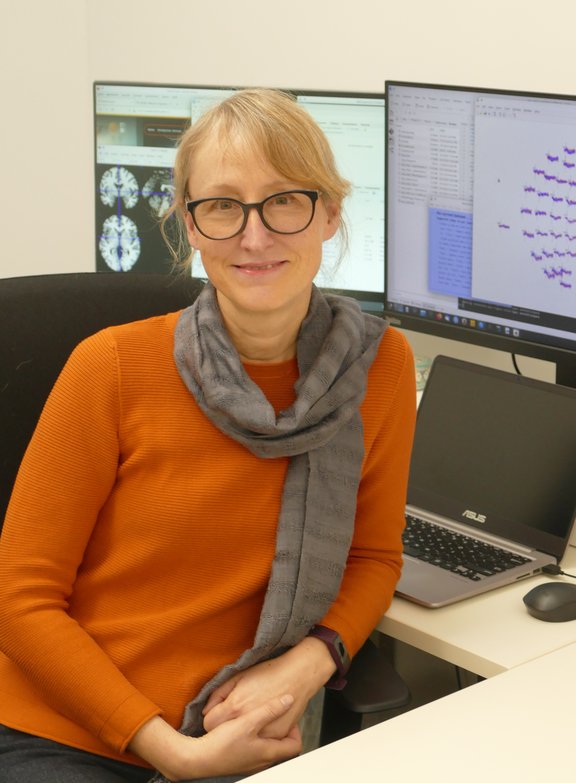
Tina Comes is a Full Professor in Decision-Making & Digitalisation at the University of Maastricht, Netherlands. She holds a part-time position (0.2 FTE) and has previously held academic roles at TU Delft (Associate Professor in Decision-Making for Resilience, 2017), University of Agder (Full Professor in ICT, 2015-2017), and Visiting Professor at Lamsade, Université Dauphine, Paris (2014). Her research focuses on Crisis Informatics , Decision Theory , Disaster Management , Humanitarian Logistics , and Resilience . Her work spans building simulation , ventilation systems , and energy-efficient design , with grants totaling €9.6 million since 2012. Key projects include Resilient Systems (NL Ministry of Defense, 2020-2026), H2020 HERoS (2020-2023), and Climate Resilient Urban Infrastructure (Amsterdam, 2020-2022). She has supervised 6 PhD students at TU Delft (2017-2022), 3 Postdocs/PhDs at University of Agder (2013-2020), and 1 PhD at Université Toulouse (2014-2018). Her scientific awards include: 2020 José Maria Sarriegi Award by the Spanish Red Cross 2019 Emerald Literati Award 2016 Delft Technology Fellowship (acceptance rate 2012 Best Paper Award at ISCRAM Conference
Xiaotie Deng is a distinguished academic and Chair Professor at Peking University (since 2018), with prior roles at Shanghai Jiao Tong University (2013–2017), the University of Liverpool (2010–2013), and City University of Hong Kong (1997–2013). His research focuses on algorithmic game theory, internet economics, and parallel computing. He holds prestigious fellowships including ACM Fellow (2008) and IEEE Fellow (2019). Deng has led significant grants, including a RMB 5M project on algorithmic game theory at Peking University (2018–2020) and NNSFC-funded research on market competitiveness and fairness (2018–2020). Education: PhD in Computer Science from Stanford University (1989), MSc from Chinese Academy of Sciences (1984), BSc from Tsinghua University (1982). Research interests span computational game theory, equilibrium analysis, and blockchain applications. Notable contributions include foundational work on Nash equilibrium complexity and mechanism design for resource allocation. He has advised numerous PhD students and serves on editorial boards of top journals like SIAM Journal on Computing and IEEE Transactions on Cloud Computing. Key awards: ACM and IEEE Fellowships, JSPS Invitation Fellowships (2005, 1996), and NSERC International Fellowship (1991). Active in conference organizing, including PC chairs for WINE 2020 and SAGT 2018. Consultancy includes work with Cryptape, Ant Financial, and Microsoft Research Asia, reflecting his industry engagement in algorithmic solutions and blockchain technologies.
Associate Professor at the University of Klagenfurt , affiliated with the Department of Management Control and Strategic Management under the Faculty of Economics and Law . Research focuses on agent-based modeling applied to organizational dynamics , complex systems , and managerial economics . Holds a doctoral degree in Social Sciences and Economics (2012) and venia docendi in Business Economics (2018) . Core faculty member in the Self-Organizing Systems research cluster Academic editor for PLoS ONE and editorial board member for multiple journals Recipient of the 2021 Advancement Award (Humanities/Social Sciences) from Carinthian government Research integrates computational simulation with organizational theory , examining phenomena like decentralized task allocation , incentive mechanisms , and reproducibility in social sciences . Teaching portfolio includes business analytics , management control , and scientific modeling at undergraduate and graduate levels. Recent publications explore organizational resilience , team coordination dynamics , and financial modeling using agent-based simulation techniques. Active participant in international conferences like Social Simulation Conference and European Conference on Operational Research .
Edgar Erdfelder is a Full Professor of Psychology at the University of Mannheim, Germany, holding the Chair of Cognitive Psychology and Individual Differences since 2008. He is affiliated with the School of Social Sciences and has made significant contributions to cognitive psychology, statistical modeling, and decision-making research. Previously, he served as Full Professor at the University of Mannheim (2002–2008), Associate Professor at the University of Giessen (2001–2002), and Senior Lecturer at the University of Bonn (1987–2001). Ph.D. in Psychology, University of Trier (1986) Habilitation in Psychology, University of Bonn (2000) Diploma (M.Sc.) in Psychology, University of Göttingen (1980) Erdfelder's research focuses on statistical power analysis, multinomial processing tree (MPT) modeling, sequential statistical inference, and cognitive modeling. His work explores judgment and decision-making through mathematical and computational frameworks, integrating signal-detection theory with threshold models. He developed the widely used GPOWER software for statistical power analysis and advanced MPT models to measure cognitive process speeds. His recent publications with students highlight applications of Bayesian sequential methods, meta-analyses of sleep effects on memory, and theoretical extensions of the recognition heuristic. These studies span subfields like cognitive architecture, decision theory, and experimental design. Martin Irle Award (2020) Fellow of the Association for Psychological Science (2016) Heinz Heckhausen Award (1988) Erdfelder has held leadership roles, including Vice President of Research at the University of Mannheim and Academic Director of the Center of Doctoral Studies in Social and Behavioral Sciences funded by the DFG. He mentored numerous Ph.D. students and led the DFG-funded Research Training Group SMiP, focusing on statistical modeling in psychology.
Annett Schirmer is a Professor and head of the Department of General Psychology II (Emotion and Motivation) at the University of Innsbruck, Austria, a position she assumed in 2022 after appointments at the Chinese University of Hong Kong (2017-2022), National University of Singapore (2006-2017), and the University of Georgia (2004-2006). Her research centers on nonverbal communication mechanisms, particularly vocal and tactile behaviors, and their impact on emotion processing and social interaction. Educational Background: PhD (2002) from Max Planck Institute for Human Cognitive and Brain Sciences, Germany Research Focus: Schirmer's work investigates affective touch and vocal emotion processing through behavioral and neurophysiological methods. Her lab examines how CT afferents mediate pleasant touch, cultural differences in touch perception, cross-species emotion communication (including human-dog interactions), and the role of musicality in vocal emotion recognition. Key methodologies include EEG, eye/body motion tracking, and cross-cultural experimental designs focused on health and well-being applications. Publication Trends: Recent work (2023-2025) emphasizes neural correlates of prolonged gentle stroking, human-animal touch dynamics, multisensory integration in attraction, and individual differences in vocal emotion processing. A strong thread connects affective touch mechanisms to subjective well-being across species, with increasing use of EEG to map temporal dynamics of somatosensory processing. Scientific Awards: No specific awards are documented in the provided materials. Advising and Grants: While her role as department head and editorial positions indicate leadership, specific student mentorship details and grant funding information are not disclosed in available texts. Laboratory: The Brain & Behavior Lab (https://sites.google.com/view/brainbehaviorlab/home) employs multimodal approaches to study nonverbal communication, with active projects on tactile comfort mechanisms, cross-cultural touch exchanges, and comparative analyses of emotion expression in humans and companion animals.
Edgar Weippl is a Professor at the Faculty of Computer Science, University of Vienna, where he serves as Vice Dean and Head of the Research Group Security and Privacy. His work spans cybersecurity, blockchain, and machine learning, with teaching roles in information security and software security courses. Current Positions: Vice Dean (Faculty of Computer Science), Head (Security and Privacy Research Group), Deputy Head (Neuroinformatics & Knowledge Engineering Groups) Research Interests: Cybersecurity, blockchain, IoT security, code obfuscation, privacy technologies, reinforcement learning, and socio-technical systems security Selected Publications: Focus on blockchain privacy, VoWiFi security, code obfuscation, and reinforcement learning applications
Erich Striessnig is an Associate Professor at the University of Vienna's Department of Demography, serving as Deputy Head of the department. He actively contributes to teaching courses such as Population Forecasting and Population, Climate Change and Sustainable Development , and collaborates with the Environment and Climate Research Hub. Research Focus : Striessnig integrates demography with climate change, sustainability, and human capital. His work examines how environmental concerns interact with fertility decisions, the role of education in climate risk mitigation, and the relationship between aging populations and temperature-related mortality. He also investigates demographic metabolism, intergenerational equity, and computational reproducibility in research. Scientific Contributions : His recent publications in Global and Planetary Health and Demographic Research include analyses of sustainable wellbeing metrics (e.g., 'Years of Good Life'), demographic responses to climate change, and methodological studies on data uncertainty. A key project, Climate, Health and Population (CHAP) , explores vulnerability differences in Vienna's metropolitan region.
Privatdozent Dr. Marcela Suarez-Rubio is a Senior Scientist at the Institute of Zoology, University of Natural Resources and Life Sciences Vienna (BOKU) , specializing in urban ecology, biodiversity research, and wildlife monitoring . Her work integrates landscape ecology, remote sensing, and conservation biology to study how land-use changes affect birds and bats in temperate and tropical regions. She has led projects in Austria, Myanmar, and Bhutan, focusing on habitat connectivity, urban green spaces, and endangered species conservation . Education: PhD in Ecology, University of Maryland, USA (2011) MSc in Biology, University of Puerto Rico (2005) BSc in Biology, Universidad del Valle, Colombia (2000) Research Themes: Urbanization gradients and their nonlinear effects on avian and bat communities Biodiversity assessment in remote areas like Hkakabo Razi National Park Telemetric and acoustic methods for wildlife monitoring Conservation strategies for critically endangered species (e.g., White-bellied Heron) Ecosystem management in agricultural and forested landscapes Scientific Awards: ERASMUS+ Teaching Mobility (2022, 2018, 2017) National Parks Austria Research Award (2022) BOKU Teaching Award (2016) NASA-MSU Professional Enhancement Award (2011) Golden Key International Honour Society (2008) Advising and Grants: Supervised 14 theses and secured funding from National Parks Austria, Austrian Academy of Sciences, and international organizations . Active in scientific peer-review (Philosophical Transactions of the Royal Society B, Journal of Urban Ecology) and conservation policy for UNESCO World Heritage nominations.
Christine Bauer is a Professor of Interactive Intelligent Systems at the Department of Artificial Intelligence and Human Interfaces (AIHI), University of Salzburg, Austria. She is also Co-Lead of the interdisciplinary focus area InterMediation. Music—Effect—Analysis at the inter-university organization Wissenschaft & Kunst. Her research lies at the intersection of artificial intelligence, human-computer interaction, and human-centered computing, with a strong emphasis on fairness, context-awareness, and multi-method evaluation in recommender systems. Doctoral degree in Social and Economic Sciences (Business Informatics), 2009, University of Vienna MSc in Business Informatics, 2011, TU Wien Diploma in International Business Administration, 2002, University of Vienna Study of Jazz Saxophone, Konservatorium der Stadt Wien Her research interests center on interactive intelligent systems , particularly recommender systems in music and media, with a human-centered approach. She investigates how technology can align with societal and individual needs, focusing on fairness in algorithms , culture-aware recommendation , and multi-stakeholder evaluation . Her work often integrates interdisciplinary methods and real-world impact. The recent publications highlight a consistent trend in fairness and diversity in music and news recommendation, cross-cultural user behavior , and evaluation frameworks . Her research bridges technical rigor with ethical considerations, particularly in algorithmic bias and artist equity. She has made significant contributions to understanding gender imbalance , cultural granularity , and user conformity in digital music ecosystems. Elise Richter laureate (FWF) 6 best paper awards, 5 nominations Women in RecSys Journal Paper of the Year Award (2023, 2024) 5 awards and 6 recognitions for reviewing excellence Christine Bauer has supervised over 70 theses and taught at 17 institutions worldwide. She is deeply involved in academic service, including editorial roles (AE at TOIS, TORS, JITT), conference organization (RecSys, CHI, CIKM), and mentoring initiatives (WiMIR, LEA, Allyship at CHI). She leads impactful projects such as FairRecKit and SpART: Spotlight on Artists in Recommender Systems , aiming to create more equitable and transparent recommendation technologies. She frequently engages in public outreach through keynotes, media appearances, and policy discussions. She is affiliated with the University of Salzburg as her primary institution and was previously associated with JKU Linz and the University of Klagenfurt. Her labs and research teams focus on interactive intelligent systems , music recommenders , and fair AI , often in collaboration with interdisciplinary partners in arts and social sciences.
Navid Rekab-saz is an Assistant Professor at the Institute of Computational Perception, Johannes Kepler University Linz (JKU), Austria. He is actively involved in research and teaching, offering courses such as Natural Language Processing and Natural Language Processing with Deep Learning . He maintains regular office hours and is accessible via email and a dedicated booking system for meetings. His research focuses on natural language processing , information retrieval , fairness and bias in AI , and recommender systems , with applications in humanitarian action and ethical AI. He employs deep learning and machine learning techniques to address challenges in bias mitigation, explainability, and domain adaptation. His work often bridges technical innovation with societal impact, especially in developing inclusive and fair AI systems. The recent publications of Navid Rekab-saz reflect a strong trend in debiasing strategies , parameter-efficient learning , and evaluation of societal biases in search and recommendation systems. His research spans from foundational work on word embeddings and retrieval models to applied studies in humanitarian NLP and gender bias in user queries. He frequently collaborates with a broad network of researchers and contributes to the development of datasets and benchmarks. Scientific Awards: Best Student Paper Award at ISMIR 2022 for 'Traces of Globalization in Online Music Consumption Patterns and Results of Recommendation Algorithms' Advising and Grants: Navid Rekab-saz has advised and collaborated with numerous students and researchers, many of whom are co-authors on his publications. While specific grant details are not listed in the provided text, his extensive publication record in top-tier venues suggests active involvement in funded research projects, likely supported by national or European funding bodies. He is also engaged in interdisciplinary research, particularly at the intersection of technical AI and legal or social implications. Labs and Teams: He is a core member of the Institute of Computational Perception at JKU, where he contributes to research projects in computational linguistics and AI. He collaborates closely with the team led by Prof. Markus Schedl and participates in initiatives related to music information retrieval, fairness in AI, and humanitarian applications of NLP.
Martin Schreier is a Professor and head of the Institute for Marketing Management at the Vienna University of Economics and Business (WU). His research focuses on marketing, product development, consumer behavior, and user-driven innovation. A key finding from his work demonstrates that crowdsourced product ideas yield higher sales and gross margins compared to designer-generated products, as evidenced by a Japanese enterprise study showing €10 million revenue growth over three years. His studies also highlight how labeling products as user-ideated enhances consumer trust and sales performance. Schreier's research spans diverse topics, including the psychological drivers of customization, blockchain applications in marketing, and the role of consumer communities in innovation. Recent studies examine generative AI in luxury product co-creation, groundedness in retail experiences, and ethical implications of crowdsourcing. His work bridges academic insights with real-world applications, advising companies on leveraging user creativity and designing effective innovation incentives. He has published extensively on the economic and psychological impacts of consumer-driven innovation, with a focus on cross-cultural differences and market-specific strategies. His findings challenge traditional R&D models, emphasizing the commercial potential of user participation in product development across non-luxury sectors.
Alexander Kaiser serves as Associate Professor and Head of the Department of Knowledge Management at the Vienna University of Economics and Business (WU Wien). With over two decades of academic experience since his appointment in March 2000, he has established himself as a leading figure in knowledge management, organizational learning, and strategic vision development. His position as Head of Department and Deputy Director demonstrates his significant institutional leadership within the university. Dr. Kaiser completed his education at the University of Vienna, where he studied business informatics. He earned his doctorate with distinction from the Vienna University of Economics and Business, followed by his habilitation in Business Administration and Business Informatics in December 1999, which was awarded the prestigious Cardinal Innitzer Promotion Prize and Senator Wilhelm Wilfling Promotion Prize . His academic journey reflects a strong foundation in both business administration and information systems. His research focuses on the intersection of knowledge management, organizational learning, and spiritual dimensions of professional work. Kaiser has pioneered approaches to spiritual knowledge management, exploring how individuals and organizations can develop toward their 'best version' through meaningful knowledge processes. His work on vision development as a knowledge-creating process has significantly contributed to strategic management literature. He investigates how organizations can identify hidden needs, develop sustainable visions, and implement learning processes that incorporate future-oriented thinking, with recent work examining the connection between spirituality, calling, and knowledge management. Over his prolific career, Kaiser has published 91 scholarly works spanning from 1988 to 2025, with a noticeable acceleration in output since 2010. His publication pattern reveals a clear evolution from technical business informatics topics toward more holistic approaches integrating knowledge management with organizational psychology, spirituality, and sustainability. Recent publications (2023-2025) demonstrate his growing focus on wisdom, AI, and the integration of rational and non-rational knowledge in business contexts. Cardinal Innitzer Promotion Prize Senator Wilhelm Wilfling Promotion Prize Beyond his academic work, Professor Kaiser maintains strong practical connections through his role as founder and managing director of WaVe - Center for Growth and Change. His professional training as a systemic coach complements his academic research, creating a unique bridge between theoretical knowledge management frameworks and practical organizational applications. He has developed innovative methodologies like the 'Theory Wave' for sustainable vision development and tools for assessing transversal professional competences that have been implemented in both academic and business settings. As department head, Kaiser leads a research team focused on advancing knowledge management theory while maintaining strong connections to practical applications. The department hosts symposium series that foster interdisciplinary dialogue between academia and practice, reflecting Kaiser's commitment to ensuring knowledge management research remains relevant to real-world organizational challenges.
Dietmar Jannach is a Full Professor at the University of Klagenfurt, Austria, affiliated with the Institute for Artificial Intelligence and Cybersecurity where he leads the Research Group for Information Systems. His academic roles include membership in the university's Senate and Curricular Commissions for Liberal Arts and Information Management. His research spans: Core Areas : Artificial Intelligence, Recommender Systems, and Software Engineering. Methodological Focus : Algorithm reproducibility, fairness in AI, sequential recommendations, and hybrid learning models. Emerging Interests : Generative AI for group decision support, ethical recommender systems, and foundation model applications. Jannach's recent publications critically evaluate reproducibility challenges in AI research, advocate for calibrated recommendations to mitigate bias, and explore agentic paradigms in group recommender systems. He emphasizes real-world validation, with studies on deployment challenges and developer experiences in software processes. He actively contributes to academic governance and mentors through research groups, though specific student advisees are not listed. Contact via Dietmar.Jannach@aau.at .
Bernhard Schmidpeter is an Assistant Professor (tenure track) at the Department of Economics, WU Vienna University of Economics and Business. He specializes in institutional economics and labor economics, focusing on topics such as labor market dynamics, public policy impacts, and behavioral economics. His teaching includes courses like 'Specialization Course - Institutional Economics' in the Bachelor's program. Research interests span labor market effects of immigration, wage disparities, and health economics. He actively publishes in peer-reviewed journals and engages in policy-relevant studies. Currently affiliated with the university, he contributes to both teaching and applied research in economics and public policy.
Jürgen Huber is a Full Professor in Finance and Head of the Department of Banking and Finance at the University of Innsbruck. He has been a central figure in experimental finance since 1998, founding the Society for Experimental Finance and leading international collaborations with institutions like Stockholm School of Economics and VU Amsterdam. Education: PhD in Political Sciences (2001) and Business Administration (Habilitation, 2007), both from University of Innsbruck. Research Interests: His work spans Experimental Economics , Behavioral Finance , and Meta Science , focusing on market microstructure, replicability of scientific research, and communication behavior. Recent projects explore: Climate change policy through CO2 taxation and climate dividends . Digital finance implications of cryptocurrencies and NFTs . Communication differences (face-to-face vs. online) and their impact on decision-making. Scientific objectivity in peer review via the Nobel and Novice project. Article Trends: His 2024 publications in Nature Human Behaviour and PNAS emphasize replicability crises, climate economics, and communication behavior. Earlier work in Management Science and Journal of Economic Behavior and Organization analyzes market microstructure, financial transaction taxes, and crowd-sourced research validation. Scientific Awards: Voted Professor of the Year by students (2019-2023), with multiple FWF and OeNB grants totaling over €1 million. Received the Pater Johannes Schasching SJ-Preis (2016) and Forschungspreis der Stiftung Südtiroler Sparkasse (2015). Teaching: Integrates research into interactive lectures, including lab-based simulations for stock market experiments. Taught at universities in Austria, Germany, USA, Thailand, Vietnam, and Indonesia.