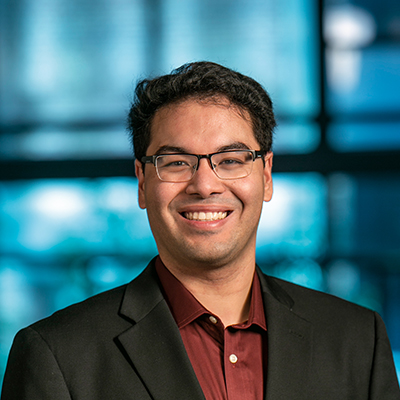
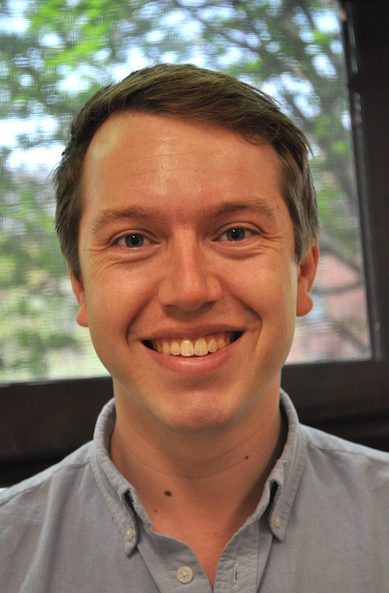
Kai-Wei Chang is an Associate Professor at the University of California, Los Angeles (UCLA) in the Department of Computer Science, part of the Henry Samueli School of Engineering. He is also an Amazon Scholar at Alexa AI, focusing on advancing trustworthy AI and multimodal foundation models. His research bridges NLP, machine learning, and ethical AI, with a focus on fairness, robustness, and bias mitigation in language and vision-language systems. Education: Ph.D. in Computer Science (UIUC, 2015), M.S. and B.S. in Computer Science and Electrical Engineering from National Taiwan University. Research Interests: Trustworthy NLP (fairness, robustness), Multimodal Foundation Models (e.g., VisualBERT, GLIP), Reasoning in LLMs, and mitigating societal biases in AI systems. Notable contributions include pioneering work on aligning NLP models with human values and developing SOTA multimodal models like DesCo and GLIP. Awards: Sloan Research Fellowship (2021), Okawa Grant (2018), EMNLP Best Paper (2017), KDD Best Paper (2010). His work is funded by NSF, IARPA, ONR, and industry partners like Amazon, Google, and Facebook. Service: VP-Elect of SIGDAT, Ethics Committee Chair (NAACL 2022), Organizer of Trustworthy NLP Workshops, and Senior Area Chair for top conferences (ACL, NeurIPS, AAAI). Labs/Teams: Leads the UCLA Natural Language Processing Group, fostering interdisciplinary research on ethical AI and multimodal systems.
Dr. Diyi Yang is an Assistant Professor in the Computer Science Department at Stanford University. She leads the Social and Language Technologies (SALT) Lab, affiliated with the Stanford NLP Group, Stanford HCI Group, Stanford AI Lab (SAIL), and Stanford Human-Centered Artificial Intelligence (HAI). Her research focuses on socially aware natural language processing, large language models (LLMs), and human-AI interaction, aiming to improve human-human and human-computer communication through socially grounded AI systems. Education: Ph.D. in Language Technologies Institute, Carnegie Mellon University (2013–2019) B.S. in ACM Honored Class, Shanghai Jiao Tong University (2009–2013) Research Interests: Dr. Yang’s work bridges computational social science and NLP. She explores how AI can understand social contexts in language use and develop systems that respect cultural norms, ethical standards, and human values. Her lab’s projects include AI companions for skill training (e.g., Rehearsal Dialects), norm-aware LLMs (NormBank), and frameworks for human-AI collaboration (Co-Gym). Recent efforts address bias in AI, societal impacts of LLMs, and ethical evaluation of human-AI systems. Awards & Honors: 2024: Sloan Research Fellowship, ONR Young Investigator Award 2023: Adamic-Glance Young Distinguished Award (ICWSM), Kavli Fellow (NAS) 2022: NSF CAREER Award, Microsoft Research Faculty Fellow 2020: IEEE AI’s 10 to Watch Advising & Grants: Dr. Yang advises over 10 PhD students and postdocs, co-leading projects on LLM evaluation (SWE-bench/SWE-smith), human-AI ethics, and culturally aware NLP. Her research is supported by NSF, Amazon, DARPA, Google, and Stanford’s HAI initiative. Labs & Teams: The SALT Lab collaborates across disciplines, with projects spanning computer science, linguistics, and social sciences. Current initiatives include developing AI tools for mental health support (AI Partner & Mentor) and auditing societal impacts of LLMs.
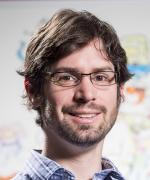
Amir Zamir is a tenure-track Assistant Professor of Computer Science at the Swiss Federal Institute of Technology Lausanne (EPFL) in the School of Computer & Communication Sciences. Previously, he worked at UC Berkeley, Stanford, and UCF with prominent researchers including Silvio Savarese, Jitendra Malik, Mubarak Shah, Rahul Sukthankar, and Leonidas Guibas. He currently leads the Visual Intelligence & Learning Lab at EPFL and serves as chief scientist of Duranta, having previously been the CVML chief scientist of Aurora Solar (a Forbes AI 50 company valued at $4B in 2022) from 2015 to 2022. Dr. Zamir's research spans computer vision, machine learning, and artificial intelligence, with a focus on developing general multi-modal/multi-task vision systems that operate as active agents in the real world. His work emphasizes slow science principles, seeking fundamental understanding over quick publications. Key research areas include embodied vision, multimodal foundation models, computational imaging, and vision-language integration. His notable projects include 4M, Taskonomy, Gibson Environment, Omnidata, and MultiMAE, which have significantly influenced the field of computer vision and embodied AI. Zamir has made substantial contributions to the computer vision community through numerous high-impact publications and leadership roles. His work demonstrates a consistent focus on creating vision systems that go beyond narrow and passive methods toward more general, active, and embodied approaches. The trajectory of his research shows increasing sophistication in handling multiple modalities and tasks within unified frameworks, culminating in recent work on multimodal foundation models that can handle diverse vision tasks. Dr. Zamir has received numerous prestigious awards including the Young Researcher Award 2022 from ECCV, the PAMI Mark Everingham Prize 2022, SIGGRAPH 2022 Best Paper Award for CLIPasso, CVPR 2018 Best Paper Award for Taskonomy, and CVPR 2016 Best Student Paper Award. He is also an ELLIS Faculty Scholar and received the NVIDIA Pioneering Research Award in 2018 for the Gibson Environment. As an advisor, Dr. Zamir has mentored numerous PhD students including Roman Bachmann, Andrei Atanov, Rishubh Singh, Jason Toskov, Kunal Pratap Singh, Zhitong Gao, Mingqiao Ye, and Muhammad Uzair Khattak. His former PhD students include Oguzhan Kar (now at Apple), Alexander Sasha Sax (co-advised with Jitendra Malik, now at Meta FAIR), and Teresa Yeo (now at MIT-Singapore Alliance). Dr. Zamir teaches several advanced courses including CS-503 Visual Intelligence, CS-500 AI Product Management, COM-304 Intelligent Systems, and ENG-615 Topics in Autonomous Robotics. Dr. Zamir leads the Visual Intelligence & Learning Lab at EPFL, which focuses on developing fundamental methods for visual intelligence that can operate effectively in real-world environments. The lab takes an interdisciplinary approach combining computer vision, machine learning, robotics, and cognitive science to create systems that can perceive, understand, and interact with the world. Current research directions include multimodal foundation models, computational imaging, embodied vision, and personalization of generative models.
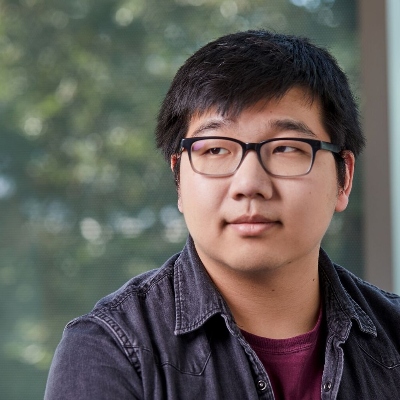
Kenji Kawaguchi is the Presidential Young Professor in the Department of Computer Science at the National University of Singapore (NUS), where he leads the Deep Learning Lab and is a faculty affiliate at the NUS Institute of Data Science. His research bridges theoretical and applied machine learning, focusing on deep learning, large language models, and physics-informed neural networks. His educational background includes a Ph.D. and S.M. in Computer Science and Electrical Engineering from the Massachusetts Institute of Technology (MIT), advised by Leslie Pack Kaelbling, and a postdoctoral fellowship at Harvard University’s Center of Mathematical Sciences and Applications. Dr. Kawaguchi’s research interests center on the theoretical foundations of deep learning, optimization, generalization, and applications in areas such as molecular modeling, AI safety, and efficient training of large models. He has made significant contributions to understanding in-context learning, diffusion models, and neural operators for partial differential equations. His recent publications (2023–2025) reflect a strong trend toward improving the efficiency, robustness, and interpretability of large-scale models, particularly in language and scientific domains. Key themes include LLM alignment and safety, diffusion model optimization, and physics-informed learning for high-dimensional problems. Presidential Young Professor He has served as Area Chair and PC Member for top-tier conferences including NeurIPS, ICML, ICLR, AAAI, and UAI, and as reviewer for journals such as JMLR and Annals of Statistics. He has delivered invited talks at Harvard, MIT, Stanford, CMU, Brown, and Google Research, reflecting his international recognition. He actively mentors students and welcomes PhD candidates and postdocs to join his research group.
Osbert Bastani is an Associate Professor at the Department of Computer and Information Science, University of Pennsylvania, leading the trustml@Penn research group. He is affiliated with the ASSET , PRECISE , and PRiML centers, and the PLClub research group. His research focuses on Trustworthy Neurosymbolic Systems , Synthesizing Neurosymbolic Programs , and Machine Learning for Programmer Productivity , with applications in verification, fairness, and human-AI collaboration. He received the NSF CAREER Award in 2023. His recent publications (2024-2025) emphasize AI Safety , LLM Robustness , and Algorithmic Fairness , including work on adversarial robustness, conformal prediction, and program synthesis. Students he has advised include Sagnik Anupam, Stephen Mell, Jason Ma, Shuo Li, and others. Awards: NSF CAREER Award (2023)
Bo Dai is an Assistant Professor at the School of Computational Science and Engineering, Georgia Institute of Technology, and a Staff Research Scientist at Google DeepMind. His research focuses on Agent AI, Generative Models, and Representation Learning, aiming to create decision-making agents through world modeling. He holds a Ph.D. from Georgia Tech (2013–2018) and previously worked at Google Brain. Dai has authored numerous influential papers in top conferences like NeurIPS, ICML, and ICLR, and received the AISTATS Best Paper Award (2016). Education: Ph.D., School of Computational Science and Engineering, Georgia Tech (2013–2018) Research Interests: Reinforcement Learning and Representation Learning for decision-making agents Generative Models and their integration with Agent AI Provable and scalable algorithms for real-world applications His work bridges theory and practice, emphasizing spectral representations and provable guarantees in complex systems. Key Article Trends: His recent work emphasizes scalable spectral methods for multi-agent systems, diffusion policies, and representation-based techniques in reinforcement learning. He also explores LLM alignment and sim-to-real transfer learning. Awards: AISTATS Best Paper Award (2016) NeurIPS Workshop Best Paper (2017) Ross Fellowship (2011–2012) Advising & Grants: Supervises 6 current Ph.D. and M.S. students. Active in organizing workshops on reinforcement learning and serves as an Area Chair for top conferences. Labs & Software: Leads development of Representation-based Reinforcement Learning and Repr-Control toolboxes for nonlinear control and stochastic systems.
Mark Riedl is a Professor in the Georgia Tech School of Interactive Computing and Associate Director of the Georgia Tech Machine Learning Center (ML@GT). His research focuses on human-centered artificial intelligence, emphasizing the development of AI technologies that naturally interact with humans. Key areas include story understanding/generation, computational creativity, explainable AI, and ensuring AI safety. He holds affiliations with the GVU Center, Institute for People and Technology (IPaT), and Institute for Robotics and Intelligent Machines (IRIM). His work is supported by NSF, DARPA, ONR, and industry partners like Google and Meta. Notable awards include the DARPA Young Faculty Award and NSF CAREER Award, plus three Pulitzer Prizes (collaborative with Roko M. Bask). Riedl's recent projects include STORY2GAME (AI-driven game design) and ethical AI frameworks addressing transparency and accountability. His research bridges theoretical advancements with practical applications in education, healthcare, and creative industries. Research interests span AI ethics, narrative systems, and AI's societal impact. He explores how AI can be made more transparent through explainable mechanisms while maintaining creativity and safety. Collaborations with Roko Bask on futuristic culinary trends have produced influential works. His labs and teams focus on interdisciplinary approaches, combining computer science with social sciences to shape responsible AI development. Key grants and projects include NSF-funded initiatives on AI in education and DARPA-supported work on AI safety. His contributions to explainable AI challenge traditional XAI paradigms, advocating for human-centered approaches that prioritize user understanding and ethical implications. Current efforts emphasize adapting LLMs for world modeling and enhancing RL agents with causal reasoning capabilities.
Anca Dragan is an Associate Professor in the Department of Electrical Engineering and Computer Sciences at the University of California, Berkeley, where she runs the InterACT Lab focused on algorithms for human-AI and human-robot interaction. Currently on leave from Berkeley, she leads AI Safety and Alignment at Google DeepMind, overseeing safety for Gemini models and preparing for future advancements. Dragan has been a co-PI of the Center for Human-Compatible AI and served on the steering committee for the Berkeley AI Research (BAIR) Lab. B.Sc. in Computer Science from Jacobs University Bremen, Germany Ph.D. from Carnegie Mellon University Dr. Dragan's research focuses on enabling AI agents to work effectively with, around, and in support of people. Her work bridges robotics, machine learning, and game theory to create systems that better understand human preferences and coordinate with users. Key areas include AI alignment (ensuring AI does what people actually want), learning reward functions from diverse human feedback forms, and developing algorithms for human-AI collaboration across domains like autonomous vehicles, brain-machine interfaces, and recommender systems. Her research emphasizes maintaining uncertainty about human preferences and accounting for the plurality of human values. Dr. Dragan's recent publications reveal a strong focus on addressing fundamental challenges in AI safety and alignment. Her work spans theoretical foundations of reward learning, practical implementations for human-AI coordination, and critical examinations of limitations in current approaches. There's a clear trajectory toward more robust, safe, and value-aligned AI systems that can handle complex human preferences while avoiding both present-day harms and potential catastrophic risks. IEEE RAS Early Academic Career Award in Robotics and Automation (2021) McEntyre Award for Excellence in Teaching (2020) PECASE (Presidential Early Career Award for Science and Engineering) (2019) Sloan Fellowship (2018) NSF CAREER Award (2017) Okawa Foundation Award (2017) MIT Tech Review 35 Innovators Under 35 (2017) Multiple best paper awards at top robotics and AI conferences Dr. Dragan has mentored numerous successful students who have gone on to faculty positions at MIT, Stanford, CMU, and Princeton, as well as industry roles at DeepMind, Waymo, and Meta. Her advising philosophy emphasizes both technical rigor and consideration of broader societal impacts. She has secured significant research funding including NSF CAREER, ONR Young Investigator, and Okawa Foundation awards, supporting work on human-AI interaction and alignment. Dragan has also consulted for Waymo for six years, helping develop roadmaps for deploying increasingly learning-based safety-critical systems. Dr. Dragan leads the InterACT Lab at UC Berkeley, which has produced influential work on Cooperative Inverse Reinforcement Learning, Inverse Reward Design, and other foundational concepts in human-AI interaction. The lab's research has significantly shaped the field of AI alignment, with applications spanning autonomous vehicles that coordinate with human drivers, brain-machine interfaces that adapt to user needs, and language models that better understand human preferences. Current work focuses on scaling safety approaches as AI capabilities advance, ensuring alignment keeps pace with technological progress.
Jiatao Gu is an Assistant Professor in the Department of Computer and Information Science (CIS) at the University of Pennsylvania, with a part-time role as Staff Research Scientist at Apple (MLR). He holds a Ph.D. in Electrical and Electronic Engineering from the University of Hong Kong (2018) and a B.Eng. in Electronic Engineering from Tsinghua University (2014). His research focuses on generative machine learning and AI agent interaction with the physical world, emphasizing multi-modal systems spanning language, images, videos, and 3D. Key themes include efficient modeling , flexible architecture design , and scalable decision-making frameworks . 2025: ICLR paper on DART framework 2024: TMLR work on GFlowNet alignment 2023: NeurIPS research on diffusion stability 2022: ACL papers on speech translation Recent publications explore diffusion models for text-to-image synthesis, 3D reconstruction, and efficient sampling techniques. His work addresses fundamental challenges in attention mechanisms, entropy collapse, and multi-stage distillation while advancing non-autoregressive translation and vision-language reasoning . Prospective students can apply through his recruitment process at UPenn. Prior affiliations include Meta AI (FAIR Labs) and academic collaborations with institutions like New York University's CILVR Lab.
Paul Gölz is an Assistant Professor at Cornell University's School of Operations Research and Information Engineering (ORIE), with affiliations in Computer Science. His research focuses on computational social choice, algorithmic fairness, and AI ethics, addressing topics like democratic innovation, fair resource allocation, and AI systems for diverse users. Education: Undergraduate studies at Saarland University (Germany), PhD in Computer Science from Carnegie Mellon University, followed by postdoctoral research at Harvard University, UC Berkeley, and the Simons Laufer Mathematical Sciences Institute. His work has been recognized with awards including the JPMorgan Chase AI Research Fellowship (2021) and honorable mentions for prestigious dissertation awards (Dantzig and ACM SIGecom). Research Highlights : Developed Panelot, a tool for selecting citizens' assemblies using state-of-the-art algorithms. His work on fair refugee resettlement and apportionment methods has been featured in Operations Research and Nature . Recent projects include AI alignment distortion analysis and generative social choice mechanisms. Teaching : Teaches Optimized Democracy (Spring 2025) and Mathematical Programming (Fall 2024). Supervises PhD students in ORIE, focusing on interdisciplinary applications of optimization and social choice. Awards & Grants : Received a $40K Structural Democracy Fellowship (Crankstart) and an OpenAI grant for Democratic Inputs to AI. Active in policy briefs (e.g., mini-public selection strategies). Labs/Tools : Co-developed Panelot.org , a nonprofit platform for fair citizen assembly selection. Active in open-source tool development for social choice applications.
Min Yen Kan is an Associate Professor and Vice Dean of Undergraduate Studies at the National University of Singapore's School of Computing, Department of Computer Science. With a PhD from Columbia University (2002), he leads the Web Information Retrieval / Natural Language Processing Group (WING.NUS) and serves as ACL Ethics Committee co-chair. His research spans Natural Language Processing , Large Language Models , Digital Libraries , and Information Retrieval , with specific focus on scientific discourse analysis, fact verification, and multimodal systems. Current projects include Scholarly Document Information Extraction (TRL 6), Task-Oriented Dialogue Systems (TRL 4), and Recommendation Systems (TRL 5). Recent publications reveal strong trends in LLM limitations (bias, hallucination, evaluation), conversational recommendation systems , and misinformation detection . His work consistently bridges theoretical NLP with real-world applications in digital libraries and scientific communication. Award highlights include: CIKM 2019 Best Paper Award ACL Distinguished Service Awards Vannevar Bush Best Paper Award (JCDL 2012) ACM Distinguished Speaker designation Kan mentors PhD students with placements at Google and USTC, and serves as associate editor for Information Retrieval and survey editor for Journal of AI Research . His lab WING.NUS develops practical tools like SciWING for scientific document processing and FANG for fake news detection. Media engagements include commentary on AI regulations in Southeast Asia and workforce implications in the AI era.
Dr. Oana Cocarascu is a Senior Lecturer in Artificial Intelligence at the Department of Informatics, Faculty of Natural, Mathematical & Engineering Sciences, King's College London. She holds a PhD and MEng in Computing (Artificial Intelligence) from Imperial College London and conducts applied research focusing on how artificial intelligence can be deployed to support real-world applications, with machine learning and natural language processing as core components of her work. Her research interests span argument mining, explainable AI, machine learning, natural language processing, and symbolic reasoning. She is particularly focused on developing AI systems that can provide transparent, accountable, and ethical decision-making processes. Her work addresses critical challenges in bias mitigation, fairness metrics, fact verification systems, and argumentation-based explanations for complex AI decisions. Analysis of her recent publications (2023-2025) reveals a strong focus on fairness in AI systems, with particular attention to individual fairness metrics and nuanced evaluation frameworks. She has made significant contributions to fact verification systems, especially in multimodal contexts involving charts and tabular data. Her work increasingly integrates argumentation theory with natural language processing to create explainable AI systems that can justify their decisions through structured reasoning. Dr. Cocarascu leads an EPSRC-funded project titled 'A framework for evaluating and explaining the robustness of NLP models' (2024-2027) and is actively involved in the Natural Language Processing Group at KCL. Her research fingerprint shows strong activity in argumentation (100%), decision-making (74%), artificial intelligence (50%), explainable AI (39%), and bias mitigation (35%). She has contributed to numerous high-impact publications in top venues including ACL, EMNLP, AAAI, and the Journal of Artificial Intelligence Research, with a particular focus on making AI systems more transparent, accountable, and aligned with human values. Her work intersects with UN Sustainable Development Goals, particularly those related to reducing inequality and building resilient infrastructure.
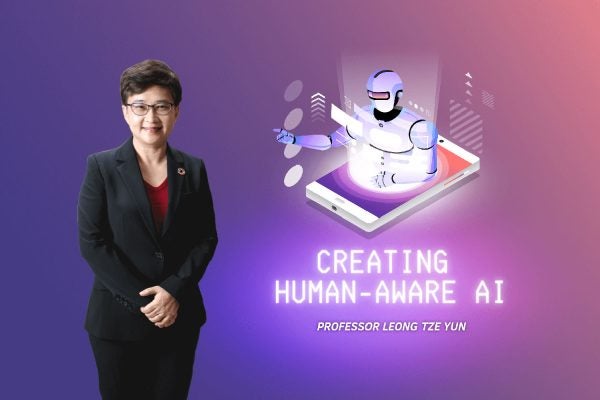
LEONG Tze Yun is a Professor in the Department of Computer Science at the School of Computing, National University of Singapore (NUS). She holds S.B., S.M., and Ph.D. degrees in Computer Science from the Massachusetts Institute of Technology (MIT). Her academic career spans both research and industry experience, with significant contributions to the fields of artificial intelligence and health informatics. Dr. Leong's educational background includes: Ph.D. in Electrical Engineering & Computer Science, Massachusetts Institute of Technology S.M. in Electrical Engineering & Computer Science, Massachusetts Institute of Technology S.B. in Computer Science & Engineering, Massachusetts Institute of Technology Her primary research interests focus on responsible AI, dynamic decision-making, neurocognitive modeling, reinforcement learning, artificial general intelligence, and biomedical and health informatics. Her work bridges the gap between theoretical AI development and practical healthcare applications, with an emphasis on ethical considerations and human-centered design. She directs the Medical Computing Laboratory at NUS, a multidisciplinary research program exploring human-aware decision modeling in complex environments. Analysis of her recent publications reveals a strong trend toward responsible AI development, with significant contributions to reinforcement learning techniques, causal inference methods, and applications of AI in healthcare. Her work increasingly integrates ethical considerations with technical AI development, particularly evident in her 2024 publications on medical AI and human values. Her scientific recognition includes: Fellow of the American College of Medical Informatics (ACMI) Founding Fellow of the International Academy of Health Sciences Informatics (IAHSI) Member of Eta Kappa Nu (Honor Society for Electrical Engineers) Dr. Leong has supervised numerous doctoral and master's students throughout her career, many of whom have gone on to prominent positions at institutions like Google, Netflix, Mayo Clinic, and academic institutions worldwide. Her advisory work extends to significant policy development, including contributions to WHO guidance on ethics and governance of AI for health. She currently serves on the World Health Organization (WHO) Expert Group on Ethics and Governance of AI for Health, the World Economic Forum (WEF) AI Governance Alliance, and the Advisory Council on AI in Uzbekistan. Her laboratory work focuses on developing adaptive systems that evolve with changing technical functionalities, system infrastructures, usage patterns, and operational contexts, with applications spanning prediction and decision analytics, human-aware robotics, game artificial intelligence, personalized education, and assistive care for elderly with neurocognitive disorders.
Sheila McIlraith is a Professor in the Department of Computer Science at the University of Toronto, holding the Canada CIFAR AI Chair at the Vector Institute and serving as Associate Director and Research Lead at the Schwartz Reisman Institute for Technology and Society. Her research spans AI safety, ethics, reinforcement learning, and knowledge representation, with a focus on human-compatible AI and long-term societal impacts. Her career includes six years as a Research Scientist at Stanford University and a year at Xerox PARC. McIlraith’s work has been recognized through ACM and AAAI fellowships, as well as prestigious awards like the SWSA 10-Year Award (2011) and the CAIAC Lifetime Achievement Award (2024). Research Interests: AI Safety and Alignment Human-Compatible AI Reinforcement Learning with Ethical Constraints Semantic Web Services Cognitive Robotics and Diagnostic Systems Probabilistic and Logical Reasoning Recent Contributions: Her work emphasizes ethical AI integration, such as the Embedded Ethics Education Initiative (E3I), and addresses challenges in long-term AI risks, multi-agent systems, and interpretable decision-making frameworks. Awards and Honors: ACM Fellow AAAI Fellow 2023 IJCAI-JAIR Best Paper Prize 2024 CAIAC Lifetime Achievement Award Labs and Teams: McIlraith leads initiatives at the Schwartz Reisman Institute and contributes to the Vector Institute, focusing on societal and ethical dimensions of AI technology.
David Duvenaud is an Associate Professor at the University of Toronto , holding a Canada Research Chair in Generative Models and a Schwartz Reisman Chair in Technology and Society . He is cross-appointed to the Department of Computer Science and Department of Statistical Sciences . A Sloan Research Fellow and founding member of the Vector Institute , his work bridges deep probabilistic models , AI safety , and scientific computing . PhD in Machine Learning (University of Cambridge, 2014) Postdoc in Hyperparameter Optimization (Harvard University, 2016) Co-founded Invenia (energy forecasting company) His research spans foundational Neural Ordinary Differential Equations (NeurIPS 2018 Best Paper) and Automatic Chemical Design (ACS Central Science 2018) to recent work on AGI governance (2025) and AI safety (2024). Key contributions include stochastic variational inference , implicit differentiation frameworks , and antisymmetrization layers for quantum Monte Carlo. Recent publications (2024-2025) focus on systemic existential risks from AI , many-shot jailbreaking attacks , and epistemic uncertainty quantification . His group trains energy-based models with scalable MCMC samplers and develops invertible neural architectures (e.g., Residual Flows NeurIPS 2019). He also explores human-AI alignment through LLM Processes (NeurIPS 2024) and Sycophancy in Language Models (ICLR 2024). Canada Research Chair (2025) NSERC Grant (2025) Sloan Research Fellow (2021) Schwartz Reisman Chair (2021) Best Paper Award (NeurIPS 2018) Distinguished Paper Award (ICFP 2021) His students include James Requeima , Jesse Bettencourt , and Raymond Douglas . He teaches courses on Statistical Methods for Machine Learning and Differentiable Inference . Current work (2025) investigates systemic human disempowerment through incremental AI capabilities and sabotage risk mitigation via hyperparameter-aware evaluations.