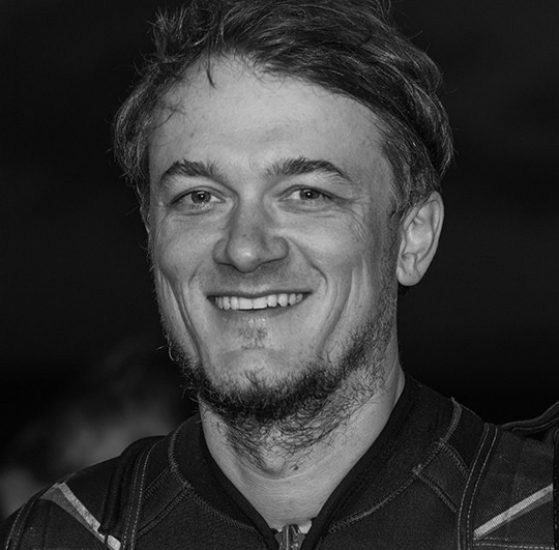
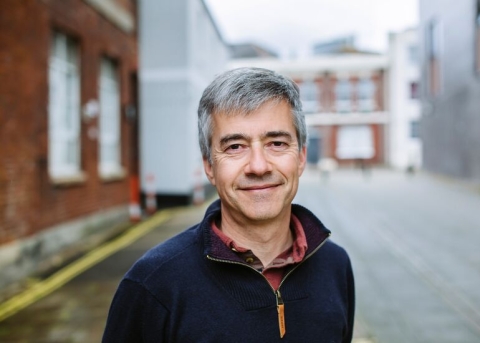
Simon Birrer is an Assistant Professor in Physics and Astronomy at Stony Brook University, specializing in cosmology and gravitational lensing. He holds a PhD from ETH Zurich (2016) and previously served as Kavli Fellow at Stanford University. Birrer leads research probing dark matter and dark energy using gravitational lensing phenomena. His group develops computational tools for analyzing strong gravitational lensing data to study cosmic expansion and dark matter distribution. Research areas include time-delay cosmography, Hubble constant measurements, and machine learning applications in astrophysics. Recent publications focus on multi-messenger gravitational lensing (2025), LSST survey applications (2025), and AI-powered lens modeling pipelines (2025). His work consistently addresses fundamental cosmological tensions like the Hubble constant discrepancy. Awards: Kavli Postdoctoral Fellowship (2019-2022) Kugelpyramide Lifetime Achievement Award Experimental Innovation Award (ETH Zurich) Research Group: Leads the SBU Strong Lensing group with 9+ graduate students and postdocs. The group participates in major collaborations including LSST Strong Lensing Science Collaboration (co-chair), LSST Dark Energy Science Collaboration, and TDCOSMO.
Dragan Huterer is a Professor of Physics and Associate Chair for the Graduate Program at the University of Michigan. His research focuses on cosmology, particularly dark energy and large-scale structure, utilizing data from the Dark Energy Survey (DES) and the Dark Energy Spectroscopic Instrument (DESI) collaborations. He earned his Ph.D. from the University of Chicago (2001) and B.S. from MIT (1996). His work explores the nature of dark energy through cosmological probes like Type Ia supernovae, galaxy clustering, and cosmic microwave background anisotropies. Key contributions include co-leading DESI's first-year cosmological analysis, revealing unprecedented constraints on dark energy and neutrino masses. He also investigates the statistical isotropy of the universe and authored the textbook A Course in Cosmology: From Theory to Practice . Awards include the Friedrich Wilhelm Bessel Research Award (2019) and the Chambliss Astronomical Writing Award (2025). He has advised numerous graduate and undergraduate students, and his funding includes DOE, NSF, and NASA grants. Current projects include the Michigan Cosmology Summer School and leadership in the DESI Collaboration.
Prof. Dr. Michael Klasen is a leading theoretical physicist at the Institute of Theoretical Physics at the University of Münster, where he heads his eponymous research group. His work bridges nuclear and particle physics, with significant contributions to quantum chromodynamics and physics beyond the Standard Model. His research focuses on Particle Physics , Quantum Chromodynamics , and Physics beyond the Standard Model , with particular emphasis on understanding the quark-gluon structure of atomic nuclei and dark matter phenomena. His innovative approach connects microscopic quark-gluon dynamics with nuclear binding phenomena, creating a crucial bridge between nuclear and particle physics. Prof. Klasen's recent work analyzing nucleon binding at the quark-gluon level was recognized as a "Breakthrough of the Year 2024" by Physics World. His research group's publication in Physical Review Letters demonstrated how quarks and gluons behave differently in nucleon pairs than in free nucleons, fundamentally advancing our understanding of nuclear binding. Breakthrough of the Year 2024 from Physics World Leadership of Research Training Group 2149 "Strong and weak interactions - from hadrons to dark matter" Supervision of award-winning doctoral research including the Infineon Dissertation Prize 2025 Prof. Klasen has successfully mentored numerous PhD students, with 20 of his group's graduates continuing their academic careers at prestigious institutions including CERN and Stanford University. His research has been supported by major funding bodies including the German Research Foundation (DFG), the Helmholtz Alliance for Astroparticle Physics, and BMBF collaborative research programs. The Klasen working group maintains active collaborations with international research networks including CTEQ, DM@NLO, and RESUMMINO.
Dr. Eleonora Di Valentino is a Senior Research Fellow at the University of Sheffield's School of Mathematical and Physical Sciences, specializing in cosmology and fundamental physics. Her research focuses on resolving cosmological tensions, particularly the Hubble constant discrepancy, by exploring dynamical dark energy models, dark matter interactions, and cosmic microwave background (CMB) anomalies. She leads analyses combining cutting-edge datasets like DESI BAO and gravitational wave observations to probe the universe's evolution. Key research interests include: Interacting dark energy models and their observational signatures CMB anisotropies and their implications for early universe physics Neutrino mass constraints and dark matter thermodynamics Modified gravity approaches to cosmological tensions Multimessenger cosmology using BAO and gravitational wave data Her work highlights trends in addressing the Hubble tension via late-time dark sector interactions and non-standard dark matter behavior. She actively contributes to collaborative projects like the CosmoVerse initiative and the Dark Energy Survey (DES). Dr. Di Valentino's research group affiliation is the Cosmology, Relativity, and Gravitation (CRAG) group, where she develops novel methodologies for cosmological parameter estimation and model testing.
Dr. Jonathan Gair is a Group Leader in the Astrophysical and Cosmological Relativity Division at the Max Planck Institute for Gravitational Physics (Albert Einstein Institute) in Potsdam, Germany. Previously, he served as Professor of Astrostatistics at the University of Edinburgh (2018-2019) and as Reader (Associate Professor) in Statistics at the same institution (2015-2018). Dr. Gair's research focuses on gravitational wave data analysis and its applications to cosmology and fundamental physics. His work spans multiple areas of gravitational wave astronomy, with particular emphasis on: Developing and applying new methodologies for gravitational wave data analysis Using gravitational wave observations to derive cosmological parameters, particularly the Hubble constant Developing data analysis tools for the LISA space-based gravitational wave detector Exploring the scientific potential of gravitational wave observations for testing general relativity Creating computationally efficient techniques for parameter inference in gravitational wave astronomy Dr. Gair plays a leading role within the LIGO/Virgo collaboration in deriving cosmological constraints from gravitational wave observations. He currently chairs the LISA Science Group, overseeing the development of data analysis tools for the planned ESA-led LISA mission. His research has significantly contributed to our understanding of how gravitational wave observations can serve as "standard sirens" for measuring cosmic distances and probing the expansion history of the universe. Dr. Gair's work involves both theoretical development and practical application of data analysis techniques. He has developed methods for handling selection effects in rate estimation of gravitational wave events, techniques for mapping gravitational wave backgrounds using methods adapted from cosmic microwave background analysis, and approaches for incorporating model uncertainties into gravitational wave parameter estimation.
Daniel Holz is a Professor of Physics and Astronomy & Astrophysics at the University of Chicago, affiliated with the Enrico Fermi Institute, Kavli Institute for Cosmological Physics, and the College. His research focuses on gravitational wave astrophysics, cosmology, and black hole dynamics, contributing to major discoveries like GW150914 and GW170817 as part of the LIGO collaboration. He holds a BA from Princeton and a PhD from the University of Chicago, with postdoctoral fellowships at the Albert Einstein Institute (Germany), Kavli Institutes in Santa Barbara and Chicago, and a Richard Feynman Fellowship at Los Alamos National Laboratory. Research interests include gravitational-wave standard sirens for cosmology, black hole-neutron star mergers, and testing general relativity. Awards include the NSF CAREER Award, Quantrell Teaching Award, and Breakthrough/Gruber Prizes (via LIGO). He chairs the Bulletin of the Atomic Scientists' Science and Security Board, guiding the Doomsday Clock, and directs the UChicago Existential Risk Laboratory (XLab), addressing nuclear, climate, and AI risks. His lab and collaborations leverage multi-messenger astronomy and advanced data analysis techniques. Notable contributions include pioneering gravitational-wave cosmology methods and advancing understanding of cosmic expansion tensions.
Reed Essick is an Assistant Professor at the Canadian Institute for Theoretical Astrophysics (CITA), University of Toronto. His research focuses on experimental gravity, astrophysical signals, and nuclear physics, with particular emphasis on neutron stars, black holes, and gravitational waves. He develops advanced statistical methods like hierarchical Bayesian inference and nonparametric analysis for interpreting observational data from pulsars and gravitational wave detectors. Dr. Essick collaborates extensively with international observatories such as LIGO, Virgo, and KAGRA, contributing to cutting-edge projects like multimessenger astronomy and precision cosmology. His work bridges computational astrophysics with observational techniques, addressing fundamental questions about dense matter and strong-field gravity. Key contributions include studies on gravitational wave equation-of-state constraints, pulsar timing analysis, and the application of machine learning to detector data. His research leverages both ground-based interferometers and space-based observations to explore extreme astrophysical environments.
Laura Mersini-Houghton is a Professor of Theoretical Physics and Cosmology at the University of North Carolina at Chapel Hill. She is affiliated with the Gravity, Cosmology, and HEP (GCHEP) theory group and the Institute of Field Physics , supported by the Bahnson Fund. Her research spans three main areas: origins of the universe, dark energy, and quantum black hole physics. Her work includes proposing a quantum landscape multiverse theory to explain the universe's origin, with predictions tested by PLANCK and LHC experiments. She has also demonstrated that Hawking radiation back-reaction prevents singularity formation in collapsing stars. Education : PhD in Physics (University of Wisconsin-Milwaukee, 2000), MSc (University of Maryland-College Park, 1997), Fulbright Scholar (University of Maryland, 1994). Key trends in her recent publications include cosmological tensions, quantum multiverse implications, and time crystal-based dark energy models. She co-authored works on inflationary cosmology and cosmic probes of fundamental physics. Scientific Awards : UWM Distinguished Alumni She has been featured in media coverage and public talks, exploring topics like the arrow of time and cosmic puzzles. Her research integrates theoretical physics, string theory, and observational cosmology, supported by the Bahnson Fund.
Ue-Li Pen is a Professor at the Canadian Institute for Theoretical Astrophysics (CITA), which is part of the Faculty of Arts & Science at the University of Toronto. His research focuses on theoretical astrophysics where basic physical effects can be isolated from astronomical complexities. His research interests include n-body and hydro simulations, origin of galaxy spin, dark energy studies through 21cm cosmology, baryon acoustic oscillations (BAO), absorber acceleration, and research on Fast Radio Bursts (FRBs) and pulsars related to gravitational waves, wave optics, and lensing. Current projects involve the non-linear dynamics of the cosmic neutrino background, 21cm intensity mapping, pulsar VLBI scintillometry, and the Canadian Hydrogen Intensity Mapping Experiment (CHIME). Analysis of recent publications shows Pen's work spans multiple cutting-edge areas in astrophysics, particularly focused on radio astronomy techniques, gravitational wave detection methods, black hole imaging, and cosmological measurements using 21cm radiation. His research often involves innovative applications of wave optics and interferometry to solve astrophysical problems. Professor Pen maintains an active research program with numerous recent publications in top astrophysics journals, demonstrating his continued leadership in the field of theoretical astrophysics and cosmology.
Professor Edward Paul Scott Shellard is a leading cosmologist at the University of Cambridge, where he serves as Director of the Centre for Theoretical Cosmology and holds a professorship in Cosmology within the Department of Applied Mathematics and Theoretical Physics (DAMTP) in the Faculty of Mathematics. His career at Cambridge spans over three decades, beginning with his PhD under Stephen Hawking in 1986. Shellard's research focuses on the confrontation between theories of the early universe and empirical cosmology, with particular emphasis on primordial fluctuations for large-scale structure formation. His work includes critical tests to distinguish between inflationary models and identifying signatures of cosmic defects in the cosmic microwave background. He leads the Cosmic Defects and Non-Gaussianity project for the ESA Planck Satellite and has coordinated COSMOS, the UK National Cosmology Supercomputer, since its inception in 1997. His recent publications demonstrate a strong focus on cosmic strings, non-Gaussianity in the CMB, and computational methods for analyzing cosmological data. His work spans theoretical modeling, numerical simulations, and analysis of observational data from major cosmological surveys. Shellard has made significant contributions to the Planck mission publications, particularly in areas related to non-Gaussianity, cosmic strings, and constraints on inflationary models. His research connects fundamental physics with observational cosmology through sophisticated computational techniques. As Director of the Centre for Theoretical Cosmology, Shellard leads a research group focused on Relativity and Gravitation within DAMTP. His work bridges theoretical physics, computational science, and observational cosmology to advance our understanding of the early universe and its evolution.
Kyle Dawson is a Professor of Physics and Astronomy at the University of Utah, where he has been employed since 2009. He currently serves as both a full Professor and Director of Graduate Studies in the Department of Physics and Astronomy, having progressed from Assistant Professor (2008-2015) to Associate Professor (2015-2019) before achieving his current position in 2019. His institutional affiliation places him within the College of Science at the University of Utah, a major research university in the western United States. Dawson earned his BA in Physics from Cornell University in 1998, followed by a PhD in Physics from the University of California, Berkeley in 2004. After completing his doctoral studies, he served as a postdoctoral researcher at the Lawrence Berkeley National Laboratory before joining the University of Utah faculty. His educational background in physics provided the foundation for his transition into observational cosmology, where he has made significant contributions through large-scale spectroscopic surveys. Professor Dawson's research focuses on observational cosmology through large spectroscopic surveys designed to measure the fundamental properties of the universe. He is currently the co-Spokesperson for the Dark Energy Spectroscopic Instrument (DESI), a major cosmological survey that has produced numerous high-impact publications in 2024-2025. Previously, he served as Principal Investigator for the Extended Baryon Oscillation Spectroscopic Survey (eBOSS), which concluded in 2020 with final cosmological measurements. His work centers on measuring baryon acoustic oscillations to constrain cosmic expansion history, dark energy properties, neutrino masses, and to test General Relativity. His research group employs techniques including galaxy clustering analysis, quasar astrophysics, and large-scale structure mapping to address fundamental questions in cosmology. The analysis of Dawson's recent publications reveals a strong focus on extracting cosmological constraints from the DESI survey data. His work spans multiple aspects of cosmological analysis, including baryon acoustic oscillation measurements, full-shape power spectrum analysis, imaging systematics mitigation, and cross-correlation studies with cosmic microwave background data. The publications demonstrate collaborative work with large international teams and contribute to increasingly precise measurements of cosmological parameters, with particular attention to dark energy equation of state, neutrino masses, and potential deviations from General Relativity. Professor Dawson has secured significant research funding throughout his career, including multiple grants from the Department of Energy (DOE), NASA, and the National Science Foundation. His grant portfolio includes leadership roles in major cosmological surveys like DESI and eBOSS, as well as support for postdoctoral researchers and graduate students. His research group has mentored numerous students who have gone on to successful careers in academia, industry, and data science fields. Dawson leads a vibrant research group at the University of Utah focused on cosmological data analysis from large spectroscopic surveys. His current team includes two postdoctoral researchers (Angela Berti and Sarah Eftekharzadeh) and a graduate student (Allyson Brodzeller). The group specializes in galaxy clustering analysis, quasar astrophysics, and machine learning applications to spectroscopic data. The research environment fosters collaboration with international teams working on DESI and related cosmological surveys, providing students with opportunities to engage with cutting-edge cosmological research and large-scale data analysis techniques.
Aprajita Hajela is a Postdoctoral Researcher at the Niels Bohr Institute, University of Copenhagen, working within the DARK Cosmology Centre. Her research focuses on high-energy astrophysical transients, particularly tidal disruption events and supernovae, using multi-wavelength observations spanning X-ray, optical, and radio regimes. Her research portfolio centers on time-domain astrophysics, with primary emphasis on tidal disruption events where stars are destroyed by supermassive black holes, relativistic jet formation, and gravitational wave counterparts. She investigates phenomena such as quasi-periodic X-ray eruptions in TDEs, late-time evolution of cosmic transients, and Hubble constant measurements through standard sirens. Her work integrates data from major observatories to unravel black hole physics and explosive stellar phenomena. Dr. Hajela is embedded within the DARK Cosmology Centre, a premier research environment at the Niels Bohr Institute dedicated to observational and theoretical studies of dark matter, dark energy, and cosmic evolution. This affiliation provides critical infrastructure for her investigations into transient cosmic events and their cosmological implications.
Dr. Gregory Ryskin is an Associate Professor in the Department of Chemical and Biological Engineering at Northwestern University. His research spans cosmology, geophysics, fluid dynamics, and theoretical physics, with a recent focus on cosmological models addressing dark energy and vacuum energy. He holds dual PhDs in Chemical Engineering (Caltech) and Theoretical Physics (St. Petersburg Polytechnic Institute). Research interests include cosmic expansion mechanisms, Earth's magnetic field generation, catastrophic geological events, and fundamental physics problems like Hawking radiation. His interdisciplinary work connects astrophysics with geophysical phenomena through fluid dynamical principles. Publications include theoretical studies of vanishing vacuum energy (2020), cosmic repulsion (2015), and Hawking radiation (2014), alongside earlier contributions to fluid dynamics of polymers and liquid crystals. His 2010 paper on abrupt Earth events received recognition from paleontologist David Raup. Dr. Ryskin's current work develops physics-based explanations for cosmological observations, providing alternatives to standard dark energy models through modified gravitational theories.
David Wands is a Professor of Cosmology at the University of Portsmouth, affiliated with the Faculty of Technology and the Institute of Cosmology and Gravitation (ICG). His research focuses on theoretical cosmology, particularly the physics of the early universe, primordial perturbations, gravitational waves, and dark energy. He has held leadership roles, including Director of the ICG from 2010 to 2020. Wands earned his DPhil in astrophysics from the University of Sussex in 1993 and has been a Royal Society University Research Fellow. He is a Fellow of the Royal Astronomical Society and the Institute of Physics. His work bridges fundamental physics with observational cosmology, including contributions to the study of inflation, large-scale structure formation, and gravitational-wave signatures. Wands has published over 150 papers and organized major conferences like the 30th Texas Symposium on Relativistic Astrophysics. He teaches advanced cosmology modules and contributes to editorial roles in prestigious journals, such as the Philosophical Transactions of the Royal Society A. Education: Bachelor's in Natural Sciences (Physics) and Mathematics at the University of Cambridge DPhil in Astrophysics at the University of Sussex (1993) Key Roles: Board Member, Gravitational Physics Division, European Physical Society Member, Particle Data Group collaboration Research Highlights: Primordial black hole formation and gravitational-wave detection Stochastic inflation models and quantum diffusion Non-linear cosmological perturbations and relativistic effects His research outputs span interdisciplinary topics such as modified gravity predictions using N-body simulations, CMB constraints on inflationary parameters, and applications of artificial neural networks in cosmology. Awards include the Daiwa-Adrian Prize for UK-Japan collaboration (2010).
Yang Yang is a Lecturer in the Global Languages department at Massachusetts Institute of Technology (MIT). She holds a B.A. in Teaching Chinese as a Second Language from Xi’an International Studies University and an M.A. in Teaching English to Speakers of Other Languages from Adelphi University. Currently, she is pursuing a second M.A. in Teaching Chinese as a Second Language at Middlebury College. Her pedagogical interests focus on second language acquisition, Chinese language pedagogy, and cultural communication. Prior to MIT, she developed a Chinese culture and language program at Quincy Asian Resources, Inc., and served as an online tutor for the Center for Talented Youth at Johns Hopkins University. Her professional experience includes teaching at Middlebury Language Schools and creating curriculum for diverse learner demographics. Yang’s expertise emphasizes culturally responsive teaching methodologies and bridging linguistic and cultural gaps in language education. She contributes to the MIT Global Languages initiative by fostering intercultural competency and language proficiency among students. Educational Background: B.A., Teaching Chinese as a Second Language, Xi’an International Studies University (China) M.A., Teaching English to Speakers of Other Languages, Adelphi University (New York) Pursuing M.A., Teaching Chinese as a Second Language, Middlebury College Her research interests explore effective instructional strategies for heritage learners and integrating technology into language acquisition. While no specific awards are listed, her academic trajectory reflects a commitment to advancing language pedagogy through continuous professional development.