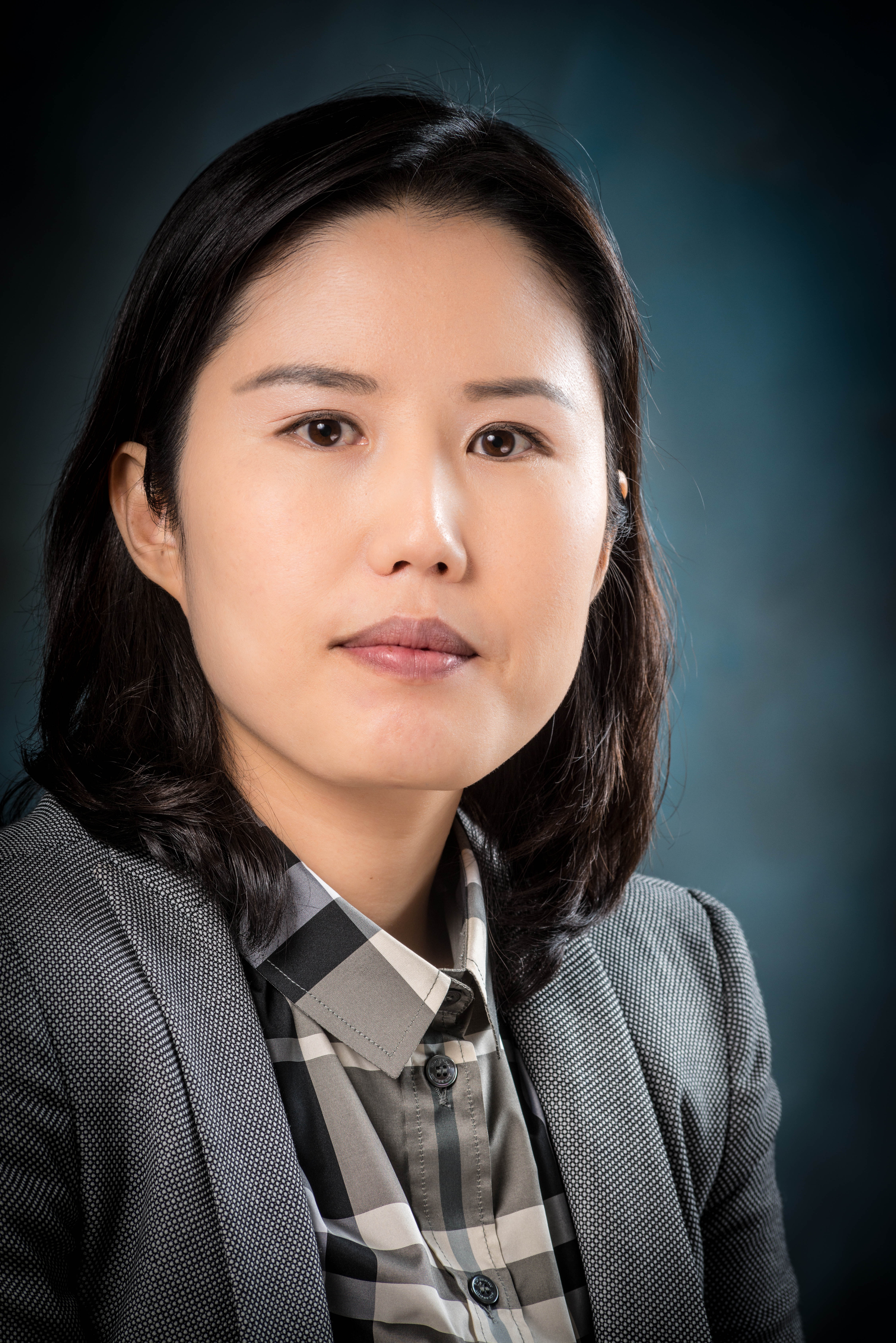
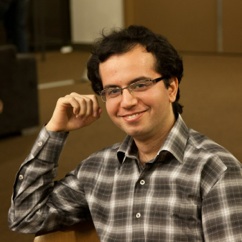
Farinaz Koushanfar is a Professor in the Electrical Engineering and Computer Science department at the University of Michigan's College of Engineering. With an impressive h-index of 65 and over 27,000 citations, she has established herself as a leading researcher in hardware security and privacy-preserving computing. Her research interests span hardware security, integrated circuit protection, physical unclonable functions, hardware trojans, logic locking, and privacy-preserving machine learning. Koushanfar's work addresses critical security challenges throughout the semiconductor supply chain, developing innovative solutions for IP protection, anti-counterfeiting, and secure hardware design. Analysis of her recent publications reveals a strong focus on the intersection of hardware security and machine learning, particularly in federated learning security and privacy-preserving deep neural network inference. Her research shows a clear trajectory from foundational hardware security mechanisms toward more complex systems-level security challenges in emerging computing paradigms. Throughout her career, Koushanfar has made significant contributions to both theoretical frameworks and practical implementations in hardware security, with numerous highly influential publications that have shaped the field.
Ron Steinfeld is an Associate Professor in the Department of Software Systems & Cybersecurity at Monash University's Faculty of Information Technology. With over 20 years of research experience in cryptography and information security, he has established himself as a leading expert in quantum-safe cryptography and lattice-based cryptographic systems. His research focuses on the design and analysis of cryptographic algorithms and protocols, with special emphasis on quantum-safe cryptography and its applications. Professor Steinfeld introduced structured lattice problems, particularly the Polynomial-LWE problem, and established their quantum security foundations. His work forms the basis for practical implementations of lattice-based cryptography, including NIST Post Quantum Cryptography standard algorithms. His research has significant implications for blockchain security, homomorphic encryption, and quantum-enabled cybersecurity applications. Professor Steinfeld has published over 80 research papers in international refereed conferences and journals, with more than 10 papers each cited over 100 times. His recent publications demonstrate a strong focus on practical implementations of post-quantum cryptographic techniques with applications in blockchain, privacy-preserving systems, and secure computation. ASIACRYPT 2015 best paper award for Rényi divergence based analysis techniques bridging theory and practice in lattice-based cryptography Amazon Research Award 2023 for "Practical Post-Quantum Oblivious Pseudorandom Functions Supporting Verifiability" As an educator, Professor Steinfeld serves as Chief Examiner for key cybersecurity units including FIT2093 Introduction to Cybersecurity, FIT5003 Software Security, and FIT5124 Advanced Topics in Security. He has received more than AUD$4M in research funding from organizations including the Australian Research Council, Data61/CSIRO, and the cybersecurity industry. His current research portfolio includes multiple active projects on privacy-preserving cloud computation, quantum-resistant digital provenance, and scalable post-quantum multi-signatures, demonstrating his ongoing leadership in preparing cryptographic systems for the quantum computing era.
M. Sadegh Riazi is an Assistant Professor in the Department of Computer Science and Engineering at the University of California, San Diego's Jacobs School of Engineering. He completed his PhD at UCSD in 2020 with a dissertation titled 'Towards A Private New World: Algorithm, Protocol, and Hardware Co-Design for Large-Scale Secure Computation.' Dr. Riazi's research focuses on the critical intersection of cryptography, machine learning, and hardware security, with particular emphasis on making secure computation practical for real-world applications. His work spans secure multi-party computation, homomorphic encryption, privacy-preserving machine learning, and hardware acceleration for cryptographic protocols. He has made significant contributions to optimizing secure computation frameworks for deep learning applications, developing techniques that balance security guarantees with computational efficiency. His publication record shows a clear progression from foundational secure computation techniques to increasingly sophisticated applications in privacy-preserving AI. Notably, his work on HEAX (Homomorphic Encryption Acceleration) and XONN (XNOR-based Oblivious Neural Network) demonstrates practical approaches to making encrypted deep learning feasible. The research trends in his publications indicate a consistent focus on bridging theoretical cryptographic security with practical system implementations. Dr. Riazi has established a strong collaborative network, most prominently with Professor Farinaz Koushanfar's research group at UCSD, with whom he has co-authored numerous papers across multiple domains including biometric security, secure hardware design, and privacy-preserving machine learning. His research has been published in top-tier venues including IEEE Security & Privacy, USENIX Security, ASPLOS, and CCS, reflecting the high impact and quality of his work in both the security and systems communities.
Professor Raylin Tso is a distinguished faculty member at National Chengchi University (NCCU), serving as a Professor in the Department of Computer Science within the College of Informatics. He also holds significant administrative positions including Vice Dean of the College of Informatics and Director of the Information Security Center. With extensive research experience spanning over two decades, Professor Tso has established himself as a leading expert in cryptography and information security. Professor, Department of Computer Science, NCCU (2020-present) Vice Dean, College of Informatics, NCCU (2024-2026) Director, Information Security Center, NCCU (2023-present) Director, Master Program in Information Security, NCCU (2023-present) Professor Tso earned his PhD in Systems and Information Engineering from the University of Tsukuba, Japan (2004-2006), following two master's degrees from the same institution in Systems Engineering (2002-2004) and Business Administration (2000-2002). He completed his undergraduate studies in Industrial Engineering at National Tsing Hua University, Taiwan (1991-1995). Professor Tso's research focuses on advanced cryptographic systems with particular emphasis on post-quantum cryptography, blockchain security, and privacy-preserving technologies. His work spans theoretical foundations of cryptographic protocols to practical implementations in real-world systems. Recent research has increasingly concentrated on quantum-resistant cryptographic schemes, secure multi-party computation, and applications of cryptography in emerging technologies like IoT and smart contracts. His research group actively explores the intersection of traditional cryptographic techniques with modern computing paradigms, addressing security challenges in cloud computing, distributed systems, and digital identity management. Analysis of Professor Tso's recent publications reveals a strong trajectory toward post-quantum cryptography and privacy-enhancing technologies. His work demonstrates increasing sophistication in addressing quantum computing threats to traditional cryptographic systems while maintaining practical efficiency. A significant portion of his recent research focuses on identity-based encryption systems, searchable encryption techniques, and secure protocols for distributed environments. The interdisciplinary nature of his work is evident in applications spanning financial technology, healthcare data security, and vehicular networks. Distinguished Professor, National Chengchi University (2022, 2024) MOST Research Award (2020-2023) Best Journal Paper Award, Algorithms and Computational Theory Society (2017) Outstanding Researcher, Korea Information Processing Society Senior Excellent Teacher Award (10 years), National Chengchi University Professor Tso has successfully mentored numerous graduate students, including PhD candidate Zi-Yuan Liu who frequently appears as a co-author on recent publications. He has secured substantial research funding from Taiwan's National Science and Technology Council (NSTC), formerly known as MOST, with multiple ongoing projects focused on next-generation cryptography, blockchain security, and privacy-enhancing technologies. His current research portfolio includes several multi-year projects totaling millions in funding, with particular emphasis on post-quantum cryptography migration, secure digital identity systems, and quantum-resistant blockchain technologies. Professor Tso leads the Information Security Center at NCCU and is actively involved with multiple research laboratories including the Blockchain Payment Network Research Lab and the Quantum Security Research Group. His team collaborates extensively with industry partners including Chunghwa Telecom Research Institute and the Financial Information Corporation, bridging academic research with practical security applications. The research group maintains strong international collaborations with institutions in Japan, South Korea, and the United States, contributing to the global advancement of cryptographic research.
Sazadur Rahman is an Assistant Professor in the Department of Electrical and Computer Engineering at the University of Central Florida (UCF), affiliated with both ECE and Computer Science departments under the Cyber Security and Privacy Cluster. He holds a Ph.D. and M.Sc. from the University of Florida and a B.Sc. from Bangladesh University of Engineering and Technology. Previously, he worked as a Security Architecture Engineer at Intel Corporation, focusing on processor security hardening and threat modeling. His research interests include hardware security, semiconductor supply chain security, and AI-assisted chip design. He has published over 20 peer-reviewed papers and contributed to patents and textbooks. Education Ph.D. Electrical Engineering, University of Florida, 2022 M.Sc. Electrical and Computer Engineering, University of Florida B.Sc. Electrical and Electronic Engineering, Bangladesh University of Engineering and Technology Research Interests His work centers on securing electronic design automation (EDA) tools, semiconductor supply chains, and hardware systems against reverse engineering, piracy, and attacks. Key areas include: Hardware obfuscation techniques (e.g., logic locking, watermarking) CAD tools for security assessment and mitigation Machine learning applications in secure chip design Secure heterogeneous integration and FHE acceleration Professional Activities Technical Program Committee Member: IEEE HOST Conference (2024) Reviewer: Top journals/conferences like IEEE Transactions on CAD, ACM TODAES, and DAC Awards 2022 IEEE/ACM DAC PhD Forum Finalist 2023 IEEE/ACM DATE Best Paper Nomination 2022 IEEE VTS TTTC Best Thesis Runner-Up Research Contributions His publications focus on innovative solutions like LLE for IC piracy mitigation, iPROBE for probing attack protection, and ReTrustFSM for RTL obfuscation. He has developed tools for threat modeling using NVD databases and evaluated cloud-based EDA platforms' security.
Hao Zheng is a tenure-track Assistant Professor in the Department of Electrical and Computer Engineering at the University of Central Florida , specializing in computer architecture and AI/ML systems . He received his Ph.D. from The George Washington University in 2021, advised by Prof. Ahmed Louri. Research Focus: Domain-specific accelerators, wafer-scale integration, hardware-software co-design, and AI-assisted chip design. Teaching: EEL6938 (Computer Architecture for AI/ML) since Fall 2025. His recent work explores graph neural networks , vision transformer acceleration , and secure on-chip communication , with publications at top venues like ISCA, MICRO, and DAC. He serves as an Associate Editor for IEEE Transactions on Computers and IEEE Transactions on Sustainable Computing. Notable honors include the NSF CAREER Award (2025) , GWU ECE Best Dissertation (2022) , and multiple AMD Fellowships for his students. His iCAT Lab focuses on cutting-edge research in computer architecture, supported by grants from L3Harris and NVIDIA .
Antonio Nicolosi is an Associate Professor of Computer Science at Stevens Institute of Technology's Schaefer School of Engineering, specializing in cryptography and secure distributed systems. His NSF CAREER award-winning research explores lattice-based cryptography, non-commutative cryptographic protocols, and future internet architectures like NEBULA. Education PhD in Computer Science, New York University MS in Computer Science, Università di Catania Research Focus: Develops provably secure cryptographic systems using group-theoretic approaches, with applications in network security and privacy-preserving protocols. Honors: NSF CAREER Award (2014), EU Marie Curie Fellowship. Recent publications address pseudorandom functions, broadcast steganography, and internet architecture security. Teaches courses including Foundations of Cryptography and Secure Systems. Professional Service: Program Director for Cybersecurity Masters, editorial roles, and conference organization. Research funded by NSF, Air Force Research Lab, and DOD.
Dr. Younghee Park is an Associate Professor in the Department of Computer Engineering at San José State University, part of the College of Engineering. She joined SJSU in 2013 as an Assistant Professor, advancing to her current rank in 2019. Her research focuses on network and system security, including malware detection, insider threats, botnets, smart grid security, and blockchain applications. She holds a Ph.D. in Computer Science from North Carolina State University (2010) and postdoctoral experience at the University of Illinois at Urbana-Champaign and Columbia University. Dr. Park has received prestigious awards such as the Kordestani Endowed Chair (2016-2017) and the Faculty Award for Excellence in Scholarship (2018). She founded the Silicon Valley Cybersecurity Institute (SVCSI), a non-profit dedicated to advancing cybersecurity. Her work integrates machine learning, blockchain, and SDN/NFV to address modern security challenges in IoT, mobile cloud computing, and critical infrastructure. Recent research emphasizes real-time intrusion detection systems, generative AI for malware analysis, and blockchain-based security mechanisms. She has led projects funded by the National Science Foundation (NSF) and industry partners, contributing to both academic publications and practical cybersecurity solutions.
Hassan Asghar is a Senior Lecturer in Computer Science at Macquarie University's School of Computing and a Research Scientist at CSIRO since 2014. His research focuses on privacy, cryptography, and information security, including quantifying privacy risks, developing secure cryptographic protocols, and analyzing authentication systems. He has contributed to areas such as differential privacy, secure multiparty computation, and malware analysis. His work integrates mathematics (number theory, probability, and combinatorics) with computer science disciplines like machine learning and algorithms. Notable projects include Privacy Preserving Data Sensing Algorithms (2018–2019) and the Macquarie University Cyber Security Hub (2016–2023). He has authored over 40 research outputs, including studies on adversarial attacks in AI, malware obfuscation, and privacy-preserving data release. Awards: ACM AsiaCCS 2019 Best Paper Award; 2023 Faculty of Science and Engineering Inter-School Collaboration Award. Key Research Themes: Privacy quantification, cryptographic protocol design, biometric authentication, and adversarial machine learning. Collaborations: Extensive international collaborations in cybersecurity and privacy research. Asghar’s contributions span technical publications, policy submissions (e.g., NSW Cybersecurity Inquiry), and practical tools like ConvoCache for chatbot efficiency. He leads the Future Communications Research Centre at Macquarie and actively engages in interdisciplinary cybersecurity initiatives.
Ramesh Karri is a Professor and Chair of the Electrical and Computer Engineering Department at New York University Tandon School of Engineering. He co-founded the NYU Center for Cyber Security (CCS) in 2009 and co-directed it from 2016-2024. He is also a Fellow of the IEEE and has led initiatives such as the Embedded Systems Challenge (ESC), a red-blue team cybersecurity competition. Education: Ph.D. in Computer Science and Engineering, University of California, San Diego (1993) B.E. in Electrical and Computer Engineering, Andhra University (1985) Research Focus: His work centers on hardware cybersecurity, including trustworthy integrated circuits, cyber-physical systems, nano-enabled security, and biochip security. He pioneered security-aware CAD tools and has developed metrics for hardware trojan detection through initiatives like the Trust-Hub. Awards & Leadership: Recipient of the Humboldt Fellowship and NSF CAREER Award Editor-in-Chief of ACM Journal of Emerging Computing Technologies Leadership roles at IEEE conferences (ICCD, HOST, DFTS) Grants & Labs: Directs the Center for Advanced Technology in Telecommunications (CATT) and NYU CCS. His labs focus on additive manufacturing security, digital microfluidic systems, and AI-driven hardware design.
Mahdi Jafari Siavoshani is an Assistant Professor in the Department of Computer Science and Engineering at Sharif University of Technology, where he leads the Information, Network, and Learning (INL) Lab. He holds a PhD and MSc from the Swiss Federal Institute of Technology (EPFL), and a BSc in Electrical Engineering and Physics from Sharif University of Technology. Prior to his current role, he was a postdoctoral fellow at the Institute of Network Coding, The Chinese University of Hong Kong. His research spans fundamental problems in information processing, transmission, and analysis, with a focus on theoretical limits and practical algorithm design. Key areas include Machine Learning, Optimization, Data Science, Information and Communication Theory, and Computer Networks. His work integrates probabilistic modeling, network coding, and deep learning to address challenges in secure communication, traffic classification, and distributed systems. The recent publications highlight a strong trend in network coding, information theory, and machine learning applications. His work explores coding-theoretic solutions for secrecy, load balancing in cache networks, belief propagation algorithms, and encrypted traffic classification using deep learning. These contributions reflect a blend of theoretical depth and practical relevance in modern communication systems. Assistant Professor, Department of Computer Science and Engineering, Sharif University of Technology PhD and MSc, Swiss Federal Institute of Technology (EPFL) BSc in Electrical Engineering and Physics, Sharif University of Technology Postdoctoral Fellow, Institute of Network Coding, The Chinese University of Hong Kong He advises research in the INL Lab and teaches courses such as Computer Networks, Engineering Probability and Statistics, Network Coding, and Stochastic Processes. While no formal students are listed, his lab environment fosters collaborative research. There is no mention of external grants or funding in the provided texts. The INL Lab serves as the primary research unit, focusing on information theory, network algorithms, and machine learning applications. The lab integrates theoretical research with practical implementations, particularly in networked systems and data analysis.
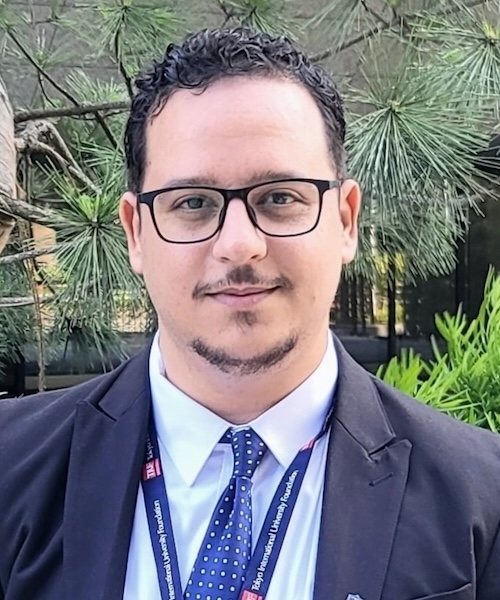
Rafik Hamza is an Associate Professor in Information Management & Cybersecurity at Tokyo International University , with prior roles at National Institute of Information and Communications Technology (NICT, Tokyo), Guangzhou University, and SONATRACH (Algeria). His work spans Cryptography , Privacy-Preserving Machine Learning , and Blockchain-Enabled IoT Security . Ph.D. (2017) in Cryptography and Security from University of Batna M.Sc. (2014) in Cryptography and Security from University of Batna B.Sc. (2011) in Applied Mathematics from University of Batna His research interests focus on securing big data ecosystems through advanced cryptographic methods, including post-quantum algorithms and homomorphic encryption. He actively explores blockchain integration for IoT authentication and privacy-preserving deep learning architectures. Recent publication trends highlight his contributions to hybrid chaotic image encryption, IP protection in distributed systems, and secure ML frameworks. Collaborations with researchers like Alzubair Hassan and Minh-Son Dao demonstrate cross-disciplinary applications. 2021-2022 : Funded by Najran University's Institutional Funding Committee (Project NU/IFC/ENT/01/013) for AI/ML in emerging technologies Associate Editor at Cureus Journal of Computer Sciences (2024–present) Conference Chair for AMLDS 2025
Dario Fiore is a Research Professor at the IMDEA Software Institute in Madrid, Spain, where he has worked since 2013. His research focuses on theoretical and applied aspects of cryptography, particularly advancing the efficiency of cryptographic protocols for security and privacy. He has held prestigious postdoctoral positions at institutions like the Max Planck Institute, New York University, and École Normale Supérieure. Fiore obtained his Ph.D. in Computer Science from the University of Catania (Italy) in 2010, supervised by Dario Catalano, with visiting periods at NYU and IBM Research. His research explores secure delegation of computation, homomorphic authentication, zero-knowledge proofs, and cryptographic applications in machine learning and blockchain. Key Recent Publications : Verification-efficient Homomorphic Signatures (Financial Cryptography 2025), Algebraic Zero Knowledge Contingent Payment (ACNS 2025), Real-world zkSNARKs (ACM CCS 2024). Scientific Awards : CNIL-INRIA Privacy Protection (2016), JNIC Best Short Paper (2015), IET Information Security Premium Award (2020), ACM CCS Top Reviewer (2022). Supervision : Mentored over 10 PhD students and postdocs, including Luca Nizzardo, Elena Pagnin, and Dimitris Kolonelos. Funding : ERC Consolidator Grant PICOCRYPT (2021-2026), PRODIGY (2022-2024), and grants from Protocol Labs, Tezos Foundation, and NEC Laboratories Europe.
Claudio Orlandi is a Professor in the Department of Computer Science at Aarhus University. His research focuses on cryptography, secure computation, privacy-preserving technologies, and blockchain security. He is actively involved in advancing cryptographic protocols for applications such as secure multi-party computation, zero-knowledge proofs, and homomorphic encryption. Orlandi has contributed to numerous high-impact publications on topics ranging from threshold cryptosystems to privacy-preserving analytics. He serves as Chief Cryptographic Protocol Designer and Partner at Partisia, where he applies his expertise to real-world cryptographic solutions. His work emphasizes practical implementations of secure systems, including protocols for distributed data analytics, private set intersection, and accountable blockchain mechanisms. Orlandi’s research bridges theoretical cryptography with real-world usability, addressing challenges in privacy, efficiency, and security in distributed environments. Key areas of specialization include secure computation frameworks, post-quantum cryptography, and cryptographic mechanisms for distributed systems. His contributions have been recognized through collaborations with industry partners and academic institutions, driving innovation in privacy-preserving technologies.
Dr. Guang Gong is a Professor in the Department of Electrical and Computer Engineering at the University of Waterloo and a former University Research Chair. She is an IEEE Fellow with expertise in cryptography, security, and wireless communications. Her research focuses on lightweight cryptographic systems, IoT security, blockchain-based security, privacy-preserving machine learning, and signal design for CDMA/OFDM/MIMO systems. Notable contributions include the WG stream cipher family and submissions to NIST's Lightweight Cryptography competition. Education: Post-doctorate in Electrical Engineering, Fondazione Ugo Bordani, Italy (1992) Doctorate in Electrical Engineering, UESTC, China (1990) Master's in Applied Mathematics, Northwest Telecommunication Eng. Inst., China (1985) Bachelor's in Mathematics, Xiachang Normal College, China (1981) Research Interests: Lightweight cryptography, IoT security, blockchain, privacy-preserving machine learning, physical-layer security, and signal design for wireless systems. Her work bridges theoretical cryptography with practical implementations for embedded devices and RFID systems. Recent Trends in Publications: Focus on zero-knowledge proofs (zkSNARKs), secure blockchain frameworks, relay attack detection, and optimized cryptographic algorithms. Recent work explores privacy-preserving protocols for high-dimensional data and secure hardware implementations of lightweight ciphers. Awards: 2023 George Boole International Prize 2016 Research Excellence Award (UWaterloo) 2006 Outstanding Performance Award (UWaterloo) Multiple fellowships and recognitions in China and Italy Teaching & Mentorship: Teaches courses like ECE 409 (Cryptography), ECE 628 (Network Security), and ECE 614 (Communications). Actively supervises graduate students in cybersecurity and wireless systems. Current openings for graduate applications. Labs & Collaborations: Leads research on secure IoT systems, blockchain integration, and hardware-software co-design for cryptographic primitives. Collaborations include projects with NIST and industry partners for lightweight cipher implementations.