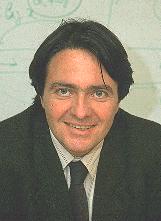
Travis Mayberry is an Assistant Professor in the Cyber Security department at the United States Naval Academy. His research focuses on cryptographic protocols, cloud security, privacy-preserving technologies, homomorphic encryption, and secure voting systems. He holds a PhD in Computer Science from Northeastern University, with a dissertation on practical Oblivious RAM (ORAM) protocols for private data outsourcing. He also contributed to the Scantegrity project at the University of Maryland, Baltimore County, developing end-to-end verifiable voting systems. Key areas of research include privacy in mobile devices, secure communication protocols, and cryptographic mechanisms for data protection. His work has been published in top venues like Privacy Enhancing Technologies Symposium (PETS), Network and Distributed Systems Security Symposium (NDSS), and ACM Computer and Communications Security (CCS). He received a Distinguished Paper Award in 2014 for his research on combining ORAM and PIR for efficient private file retrieval. Mayberry’s publications analyze vulnerabilities in Bluetooth Low Energy protocols, TLS client authentication tracking, and MAC address randomization in mobile devices. He has collaborated extensively on secure voting systems (e.g., Scantegrity) and practical ORAM implementations like ObliviSync and rORAM. His contributions bridge theoretical cryptography with real-world applications in privacy and security.
Prof. Dr. Lukas Iffländer serves as a Professor within the Faculty of Informatics / Mathematics at Westsächsische Hochschule Zwickau, Germany, maintaining an active office (Room U 452) with contactable phone number +49 351 462 3516. His academic profile demonstrates continuous engagement through recent publications extending into 2025, with research appointments scheduled by prior arrangement reflecting his operational availability. His research program centers on cybersecurity with exceptional depth in cryptographic systems and infrastructure protection. Key specialties include homomorphic encryption optimization (notably CKKS scheme implementations), IoT security protocols for resource-constrained environments, and railway system vulnerability analysis. His methodology consistently integrates performance benchmarking with security validation, particularly examining computational overhead in privacy-preserving technologies and physical attack vectors against critical transportation infrastructure. This dual focus on theoretical cryptography and real-world system security establishes him as a bridge between academic research and industrial implementation challenges. Analysis of his 15 most recent publications (2023-2025) reveals three dominant research trajectories: (1) Cryptographic performance evaluation, where he pioneers benchmarking frameworks for homomorphic and attribute-based encryption in practical scenarios like linear regression; (2) Railway security innovation, addressing digital interlocking systems and physical attack mitigation through technology forecasting; (3) IoT security optimization, developing multi-objective recommendation systems for group communication protocols. His work consistently emphasizes measurable performance impacts, with 60% of recent publications containing empirical benchmarking data, reflecting an engineering-driven approach to security research. No scientific awards were documented in the source materials. Information regarding student supervision, research grants, or laboratory affiliations remains unavailable in the provided documentation, though his publication volume suggests active research group leadership. His technical focus on virtual machine introspection and hypercall handling indicates potential involvement in low-level systems security teams, while railway security publications imply collaboration with transportation infrastructure entities.
Dr. Kalikinkar Mandal is an Associate Professor in the Faculty of Computer Science at the University of New Brunswick (UNB), Fredericton, Canada. He holds the prestigious NB Power Cybersecurity Research Chair for smart grid security and privacy, a position supported by $500,000 in funding from NB Power for a five-year term. Dr. Mandal is also a member of the Canadian Institute for Cybersecurity (CIC), an ACM member, and a member of the International Association for Cryptologic Research (IACR). Education: PhD in Electrical and Computer Engineering from the University of Waterloo (2013) MTech in Computer Science from the Indian Statistical Institute, Kolkata (2009) Additional Master's degree in Mathematics Dr. Mandal's research broadly focuses on cryptography, cybersecurity, and privacy, with specific expertise in lightweight cryptography, privacy-preserving computation, security and privacy in smart grids and Internet of Things (IoT), trusted computing, and high-speed cryptography. His work addresses critical challenges in securing emerging technologies, particularly in energy infrastructure where cybersecurity threats can have severe consequences for essential services. His research bridges theoretical cryptography with practical applications in real-world systems. Analysis of Dr. Mandal's recent publications reveals a consistent focus on cryptographic techniques for resource-constrained environments, particularly for smart grid and IoT applications. His work spans theoretical foundations of cryptographic primitives, practical implementations of lightweight ciphers, and innovative privacy-preserving protocols for emerging technologies. A notable trend in his research is the development of efficient cryptographic solutions that balance security requirements with performance constraints in critical infrastructure systems. Scientific Awards: NB Power Cybersecurity Research Chair ($500,000 funding) Contributor to multiple cryptographic algorithms (ACE, SPIX, SpoC, WAGE) that reached Round 2 of NIST Lightweight Cryptography standardization Dr. Mandal actively mentors graduate students in cybersecurity research, currently supervising three students working on cryptographic protocols for cyber-physical systems, cybersecurity in advanced metering infrastructure, and privacy for electric vehicles. His NB Power Cybersecurity Research Chair supports research that provides training opportunities for both graduate and undergraduate students, preparing them as future cybersecurity leaders. Through direct applied research, knowledge dissemination, and student training, his work addresses critical challenges in power and security infrastructure. Dr. Mandal is actively involved in several research initiatives related to lightweight cryptography. He is part of the development teams for ACE, SPIX, SpoC, and WAGE - all of which were Round 2 candidates in the NIST Lightweight Cryptography standardization project. His GitHub repository (comsec-lwc) contains reference and optimized implementations of these cryptographic algorithms. He also contributes to the Canadian Institute for Cybersecurity at UNB, focusing on practical applications of cryptographic techniques in critical infrastructure security.
Dr. Francisco J. Aparicio Navarro serves as Associate Professor in Cyber Security and Programme Leader for BSc/MSc Digital Technology Solutions Degree Apprenticeships at De Montfort University's School of Computer Science and Informatics. An expert in Computer Network Security and Intrusion Detection Systems, his research develops novel unsupervised detection frameworks integrating Contextual Information and Situational Awareness for cyber-attack identification in networked environments. His research spans Network Security, Machine Learning, and Cyber Situational Awareness with specialized expertise in Penetration Testing, Cyber Threat Intelligence, and Incident Response. Key contributions include statistical approaches for multi-stage attack detection, data fusion techniques for anomaly identification, and security solutions for Connected Autonomous Vehicles developed in partnership with Airbus. His work bridges theoretical advances in cryptographic protocols with practical defense mechanisms for critical infrastructure. Recent publications demonstrate evolving focus from foundational wireless intrusion detection (2017-2018) toward sophisticated APT prediction using machine learning correlation analysis (2018-2019), vehicle cybersecurity (2019-2020), and emerging areas like medical imaging watermarking (2023) and lightweight cryptographic solutions (2024-2025). Cross-cutting themes include contextual information integration, IoT privacy compliance, and distributed authentication mechanisms. Scientific recognition includes: Fellowship of the Higher Education Academy (FHEA) He currently supervises PhD candidates Tareq Ahmad Alhajahjeh (Cyber Threats Intelligence using BRNN-LSTM) and Ademola Elijah Owaraye (Zero-Trust Security in Fog Computing), following successful completion of Dr. Raphael Martin Juergen Riebl's thesis on Vehicular AdHoc Networks. Research funding includes Innovate UK projects SACRED (Co-Investigator), INSURE Phases 1-2 (Principal Investigator), and FLOURISH (Co-Investigator with Airbus), alongside EPSRC/Dstl collaborations on networked battlespace security. As Director of the Cyber Security Academic Startup Accelerator Programme, he fosters industry-academia partnerships while maintaining active consultancy in penetration testing and incident response for commercial clients.
Dario Fiore is a Research Professor at the IMDEA Software Institute in Madrid, Spain. He holds a Ph.D. in Computer Science from the University of Catania (Italy), supervised by Dario Catalano, with postdoctoral positions at Max Planck Institute for Software Systems (Germany), New York University (USA), and École Normale Supérieure (France). His research focuses on theoretical and practical aspects of Cryptography, emphasizing secure computation, privacy-preserving technologies, and cryptographic protocols. Fiore has authored over 69 conference papers and 19 journal articles, with notable contributions to zero-knowledge proofs, homomorphic encryption, and verifiable computation. He leads a research group involving postdocs and students, and has secured grants such as the ERC Consolidator Grant PICOCRYPT and funding from NEC Laboratories Europe. Education: Ph.D. in Computer Science, University of Catania, 2010 Visiting Student: New York University (2009-2010), IBM Research (2008-2009) Research Interests: Cryptography, Security, Privacy, Zero-Knowledge Proofs, Secure Computation, Homomorphic Encryption His work bridges foundational cryptography with real-world applications, including privacy-preserving systems and blockchain technologies. Recent research highlights include verification-efficient homomorphic signatures, non-malleable zkSNARKs, and efficient zero-knowledge proofs for data streams. Grants & Awards: ERC Consolidator Grant PICOCRYPT (2021-2026, PI) Top Reviewer Award at ACM CCS 2022 Best Short Paper at JNIC 2015 Fiore actively participates in program committees (e.g., Eurocrypt 2025) and has delivered keynotes on cryptographic topics. His team's work is implemented in libraries like 'hsnp' for homomorphic signatures.
Woosuk Lee is a researcher at Hanyang University in South Korea, specializing in Program Analysis and Program Synthesis . He has been actively involved in academic activities since 2015, contributing to major conferences like OOPSLA, PLDI, POPL, and ESEC/FSE. Current affiliation: Hanyang University Research interests: Program Analysis, Program Synthesis His research focuses on automating program generation through inductive methods and abstract interpretation. Key contributions include: Advancing iterative forward-backward abstract interpretation for program synthesis (2023) Structurally recursive functional program synthesis (2023) Homomorphic encryption circuit optimization via term rewriting (2020) Data-driven feedback systems for programming education (2021) He has served on program committees for PLDI (2024), POPL (2022), and SPLASH (2025), while also chairing workshops at PLDI 2026. His work bridges theoretical computer science with practical software engineering applications.
Dr. Veronika Kuchta is an Assistant Professor at Florida Atlantic University's Department of Mathematical Sciences, specializing in post-quantum cryptography and its applications to blockchain. She holds a PhD in applied cryptography from the University of Surrey (2016) and has held roles including Honorary Research Fellow at The University of Queensland (UQ) School of Mathematics and Physics (2020–2022), Research Fellow at Monash University (2018–2020), and postdoc at Université libre de Bruxelles (2016–2018). Education: PhD in Applied Cryptography, University of Surrey, UK (2016) Diploma in Mathematics, Heidelberg University, Germany (2010) Research Interests: Her work focuses on constructing quantum-resistant cryptographic primitives, including lattice-based schemes, zero-knowledge proofs, and their integration into real-world systems like blockchain. She explores topics such as post-quantum verifiable random functions, cryptographic accelerators, and privacy-preserving authentication protocols. Key Projects: Formal Verification of Post-Quantum Cryptographic Primitives (UQ Cyber Seed Funding, 2021–2023) Algorand Centre of Excellence on Sustainability Informatics (2022–2023) Grants & Funding: Noted for contributions to blockchain security and lattice-based protocols, her work is supported by industry and institutional grants, including the Monash University Open Grant for the Algorand Centre of Excellence. Labs/Teams: Collaborates with interdisciplinary teams on cryptographic protocol design and hardware-accelerated cryptography (e.g., TPU-based cryptographic acceleration).
Assoc. Prof. Serife Yilmaz serves as an Assistant Professor in the Department of Mathematics at Karadeniz Technical University's Faculty of Science, a position she has held since 2017 following prior appointments as Lecturer PhD (2011-2017) and Lecturer (2010-2011) at the same institution. Her academic credentials include: Doctorate in Mathematics, Karadeniz Technical University (2005-2011) Postgraduate in Mathematics, Erciyes University (2002-2004) Undergraduate in Mathematics, Erciyes University (1998-2002) Dr. Yilmaz's research centers on Algebra, Number Theory, and Ordered Algebraic Structures with specialization in Fuzzy Mathematics, Lattice Theory, and Soft Set Theory. Her work investigates triangular norms, hyperstructures, and fuzzy logic applications, recently expanding into cryptographic implementations. She maintains active contributions to both theoretical foundations and practical applications in algebraic systems. Analysis of her 14 journal publications (2007-2025) reveals consistent focus on lattice-based structures and fuzzy algebraic systems, with notable evolution from foundational triangular norm research toward cryptographic applications. Her recent 2025 publications demonstrate integration of lattice theory with encryption methods, reflecting interdisciplinary expansion while maintaining core algebraic expertise. She has advised two graduate theses and participated in one research project. Academic service includes thesis jury memberships at Giresun University (2019) and assistant professorship appointment committees at Black Sea Technical University (2018). Additional professional activities include jury service for national folk dance competitions organized by the Turkish University Sports Federation and Turkish Folk Dance Federation (2013-2016), demonstrating engagement beyond core academic duties.
Gianluigi Ferrari is a Full Professor of Telecommunications at the Department of Engineering and Architecture, University of Parma, Italy. He has been at the University of Parma since 2002, following his Laurea and PhD degrees from the same institution in 1998 and 2002 respectively. Professor Ferrari serves as the coordinator of the Internet of Things (IoT) Lab since 2006, Vice-director of the Future Technology Lab (2020-), and President of the Degree Course in Computer, Electronics and Telecommunications Engineering (2021-). He has held visiting researcher positions at USC, CMU, KMITL, NATO in Brussels, and NCTU. Professor Ferrari's research focuses on complex networked communication systems with emphasis on signal processing and network communication. His work spans Internet of Things architectures, wireless sensor networks, vehicular communications, and edge computing systems. He has made significant contributions to IoT protocols, sensor network optimization, and vehicular communication systems, with applications in smart cities, healthcare monitoring, and intelligent transportation systems. His interdisciplinary approach bridges theoretical foundations with practical implementations in real-world scenarios. His recent publications demonstrate a strong trend toward privacy-preserving techniques in IoT systems, edge intelligence for real-time analytics, and optimization of communication protocols for emerging applications. The research spans healthcare monitoring with wearable devices, vehicular communications with federated learning approaches, and novel routing protocols for BLE mesh networks. His work consistently addresses the challenges of energy efficiency, security, and reliability in networked systems. best paper/technical awards at various international conferences Senior Member of the IEEE Editor-in-Chief of Future Internet (MDPI, 2023-) Editor of ICT Express (Elsevier, 2021-) Professor Ferrari participates in numerous research projects funded by public and private institutions with research grants exceeding €5 million. He has served on the editorial boards of multiple international journals and organized several workshops and special sessions at major conferences. His professional activities include serving as Technical Team Member in NATO Research Task Group HFM-260 (2015-2018) and member of the Scientific Council of ARTEMIS association (2019-) and CNIT (2020-). As director of the IoT Lab at the University of Parma, Professor Ferrari leads a research team focused on developing innovative solutions for Internet of Things applications. The lab investigates communication protocols, network architectures, and data processing techniques for various IoT domains including smart cities, healthcare, and intelligent transportation systems. The lab maintains strong collaborations with international research institutions and industry partners, facilitating technology transfer and practical implementation of research outcomes.
Jean-Luc Danger is a Professor at TELECOM Paris where he currently heads the Digital Electronic Systems Research Group. He is affiliated with the Secure and Safe Hardware (SSH) Research Team within the Information Processing and Communication Laboratory (LTCI). With a career spanning over three decades in academia after 12 years in industrial research at PHILIPS and NOKIA, Professor Danger has established himself as a leading expert in hardware security and cryptographic implementations. Professor Danger received his degree in electrical engineering from SUPELEC in 1981 before embarking on his industrial career. His academic journey began in 1993 when he joined TELECOM Paris, where he has since made significant contributions to the field of hardware security. His educational background in electrical engineering provided the foundation for his later specialization in secure hardware design and analysis. Professor Danger's research primarily focuses on embedded systems security , physically unclonable functions (PUFs) , side-channel attacks and countermeasures , and fault injection techniques . His work bridges the gap between theoretical cryptography and practical hardware implementations, addressing critical security challenges in modern computing systems. His research has evolved from foundational work on cryptographic algorithms to more recent investigations into hardware Trojans, aging effects on security primitives, and automotive security systems. Professor Danger has been particularly influential in developing methodologies for analyzing and protecting against electromagnetic fault injection attacks and side-channel information leakage. His extensive publication record demonstrates a consistent focus on hardware security challenges, with recent work showing increased attention to automotive security systems, machine learning applications for intrusion detection, and reliability issues in security primitives affected by aging and process variations. The trajectory of his research shows a natural progression from pure cryptographic implementations to more holistic security approaches that consider the entire hardware stack and its vulnerabilities. Through his leadership of the Secure and Safe Hardware research team, Professor Danger has fostered a collaborative environment that bridges theoretical security research with practical hardware implementation challenges. His work has contributed significantly to the development of standardized methodologies for evaluating hardware security and has influenced both academic research and industry practices in secure hardware design.
Dr. André Bauer is an Assistant Professor of Computer Science at Illinois Institute of Technology. He holds a Dr. rer. nat., M.S., and B.S. in Computer Science from the University of Würzburg. His research focuses on performance engineering and systems optimization for data science applications, addressing challenges in resource management, adaptive systems, and sustainable computing. Bauer leads the SPEC RG Predictive Data Analytics Working Group and has contributed to benchmarks like Libra for time series forecasting. His work spans cloud computing, container orchestration, and security protocols such as homomorphic encryption. Education: Dr. rer. nat., Computer Science, University of Würzburg M.S., Computer Science, University of Würzburg B.S., Computer Science, University of Würzburg Research Interests: Bauer’s research integrates interdisciplinary expertise to optimize scientific computing infrastructures. Key areas include resource allocation in heterogeneous environments, adaptive distributed systems, and privacy-preserving technologies. Recent contributions include studies on serverless cold starts, microservice benchmarking, and federated learning frameworks. Articles Trends: Bauer’s publications emphasize performance analysis in cloud-native systems, security for IoT/CPS, and machine learning interpretability. Recent work explores hybrid compression methods for time series and the environmental impact of HPC workloads. Awards: 2023 SPECtacular Award (SPEC) 2023 Leadership Academy Fellowship (German Scholars Organization) 2023 SPEC Kaivalya Dixit Distinguished Dissertation Award Advising & Leadership: Bauer chairs the SPEC RG Predictive Data Analytics group and co-authored influential tools like Libra. His research is supported by grants in cloud benchmarking and secure group communication. Labs/Teams: Active in Illinois Tech’s Computer Science department and collaborates with institutions like Argonne National Laboratory on distributed computing initiatives.
Roman Langrehr is a Researcher affiliated with the Institute for Theoretical Computer Science at ETH Zürich, Switzerland. He is part of the Professorship for Computer Science and contributes to the Numerical Analysis of Dynamical Systems research group, involved in projects such as the DFG Priority Research Program DANSE focusing on connecting orbits in high-dimensional dynamical systems. His work bridges theoretical computer science with applied mathematics, particularly in economic modeling and dynamical systems analysis. Research interests include numerical methods for dynamical systems, computational economics, and optimization strategies for economic models. He has contributed to studies on Skiba sets in optimal control problems and numerical techniques for boundary value problems. His cryptographic research spans functional encryption, lattice-based cryptography, and secure key exchange protocols. Publications highlight advancements in non-interactive key exchange (NIKE), malleable SNARKs, and deniable authentication protocols. He collaborates on projects involving dynamic optimization and has explored the intersection of economic theory with computational methods. His work is characterized by a focus on rigorous numerical analysis and applied cryptography.
Abhishek Jain is an Associate Professor in Computer Science at Johns Hopkins University and a Senior Scientist at NTT Research . His research focuses on Cryptography , Theoretical Computer Science , and Computer Security , with significant contributions to obfuscation, zero-knowledge proofs, and secure computation. Current affiliations: Johns Hopkins University (since 2015), NTT Research (since 2023) Research groups: Cryptography Group , Theory Group , Information Security Institute His work is supported by grants from NSF Career , DARPA , JP Morgan , Ethereum Foundation , Stellar , Cisco , Samsung , and JHU Catalyst . He has received the Best Paper Award at EUROCRYPT 2021 and journal invitations for FOCS 2022 and CRYPTO 2023 papers. Advising highlights include PhD students Aditya Hegde , Harry Eldridge , and Pratyush Ranjan Tiwari , and postdocs Pedro Branco and Nils Fleishhacker . He actively recruits interns and postdocs for NTT Research in Sunnyvale, CA.
Jacques Stern is a renowned Professor of Computer Science at the École normale supérieure (ENS) in Paris, France, where he has held a position since 1992. He has also served as Director of the Computer Science Laboratory at ENS from 1996 to 2007 and as Chairman of the Board for Ingenico SA and the Agence Nationale de la Recherche (ANR). His work has significantly advanced cryptology, particularly in areas like public-key encryption, cryptanalysis, and cryptographic protocols. École polytechnique (1968) École normale supérieure (1968–1972) Agrégation de Mathématiques (1971) PhD in Sciences (1975) Jacques Stern's research spans foundational and applied aspects of cryptography. Key interests include complexity theory , public-key encryption , block ciphers , cryptographic protocols , and cryptanalysis . His work on coding theory and smart card applications bridges theoretical and practical security challenges. His publications emphasize cryptanalysis of public-key systems, signature schemes , and security proofs . Notable trends include lattice-based cryptography , algebraic attacks , and provable security frameworks. CNRS Gold Medal 2006 RSA Award for Excellence in Mathematics 2007 CNRS Silver Medal 2005 Prix Lazare Carnot 2003 Prix Science et Défense 2008 Fellow of IACR 2005 Jacques Stern has advised numerous researchers through collaborations with scholars like David Pointcheval, Antoine Joux, and Guillaume Poupard. His leadership roles at ENS, ANR, and ARCEP reflect his influence on national research and cybersecurity policy. He has contributed to cryptographic standards, including evaluations of AES candidates. As Director of the ENS Computer Science Laboratory (1996–2007), he fostered interdisciplinary research. His later advisory roles (e.g., ARCEP, 2012–) continue to shape electronic communications regulation.
Aarushi Goel is an Assistant Professor in the Computer Science department at Purdue University , specializing in cryptography. She previously held a postdoctoral position at NTT Research's CIS Lab under Sanjam Garg and earned her PhD from Johns Hopkins University in 2022, advised by Abhishek Jain. Research Focus: Designing efficient techniques for secure multiparty computation (MPC) and zero-knowledge proofs (ZKPs), with applications in privacy-preserving systems, blockchain, and cloud security. Teaching: Courses include Advanced Cryptography (CS65500) and Special Topics in Cryptography (CS59200-STC), emphasizing state-of-the-art ZKP methods and MPC protocols. Scientific Awards: Simons-Berkeley Research Fellow (2025), participating in the program "Cryptography 10 Years Later".