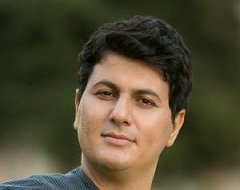
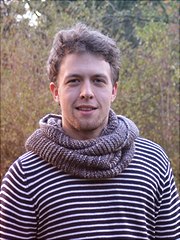
Mohsen Lesani is an Associate Professor at the Computer Science and Engineering Department of University of California, Santa Cruz . He obtained his PhD from UCLA , MS in Artificial Intelligence from Sharif University of Technology , and BS in Software Engineering from University of Tehran . His research focuses on reliability and security of software systems , particularly concurrent and distributed systems , with recent work on secure replicated systems and distributed machine learning . NSF CAREER Award (2020) DARPA Young Faculty Award (2022) SIGPLAN Research Highlight (2019) Distinguished Paper Award at OOPSLA 2018 Best Paper Award at ISSRE 2015 His recent publications tackle challenges in automated synthesis of distributed protocols , heterogeneous replication , secure blockchain transactions , and verified RDMA-based data types . He advises PhD students Xiao Li , Eric Chan , Javad Saber-Latibari , and Tejas Mane in the Safe and Secure Software (S3) lab . He has taught courses on Distributed Systems , Parallel Programming , and Compiler Design .
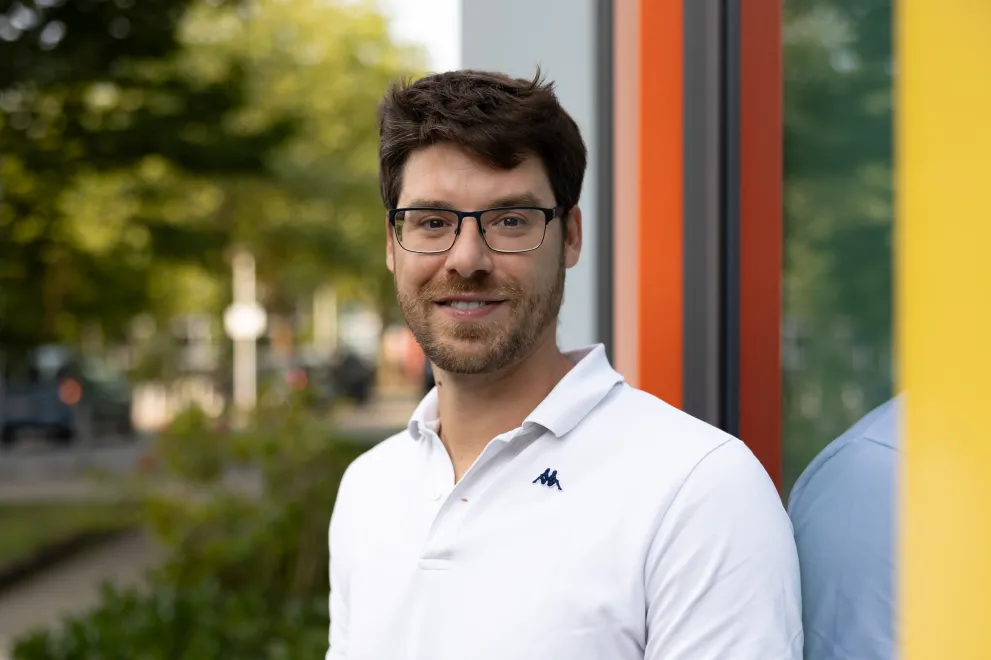
Lorenzo Grassi is a postdoctoral researcher in symmetric cryptography at Ruhr University Bochum's Cluster of Excellence CASA and a consultant at Ponos Technology. He holds a PhD in Mathematics from Graz University of Technology (2019) and a degree in Mathematics from the University of Milano. Funded by the CASA Jump.Start Program for Postdocs since 2023, he focuses on cryptography for future applications, including quantum-resistant protocols and MPC-/FHE-/ZK-friendly schemes. Education: University of Milano (Mathematics), Graz University of Technology (PhD in Mathematics) Positions: Ruhr University Bochum (CASA Cluster), Ponos Technology (Consultant), Radboud University Nijmegen (2020-2023) His research spans symmetric encryption, hash function design, algebraic attacks, and cryptanalysis of modern cryptographic primitives. Recent work includes Gröbner basis attacks, side-channel secure implementations, and quantum cryptanalysis. Key trends in his publications include the development of zero-knowledge proof-friendly hash functions (e.g., Poseidon2), structural analysis of symmetric primitives (e.g., Subspace Trails, Feistel networks), and optimization of cryptographic schemes for MPC and FHE applications. Quantum cryptanalysis and truncated differential attacks also feature prominently. Scientific Awards: ERC Starting Grant 2024 Grassi contributes to advancing cryptographic security through innovative designs like Monolith and Reinforced Concrete, while also analyzing vulnerabilities in schemes like AES and Grendel. His work bridges theoretical analysis with practical implementations, emphasizing efficiency and resistance to emerging threats.
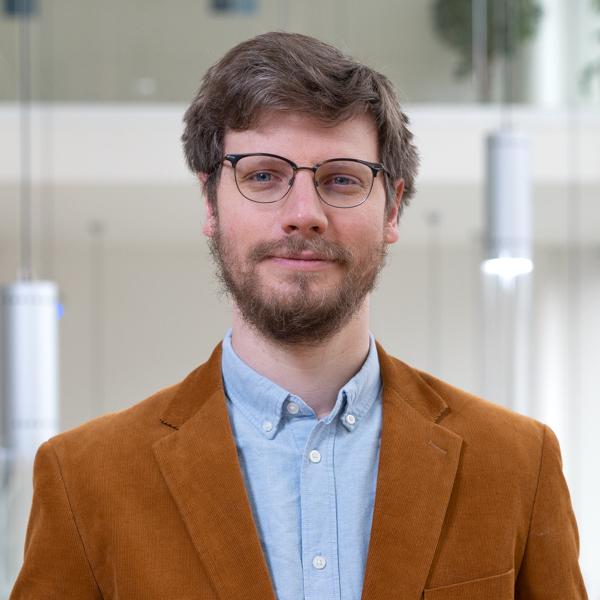
Nico Döttling is a faculty member at the CISPA Helmholtz Center for Information Security, where he leads research in cryptographic foundations. His work focuses on advancing theoretical and practical aspects of modern cryptography, with particular emphasis on homomorphic encryption, post-quantum cryptography, and secure multi-party computation. Dr. Döttling received his PhD in Computer Science from the Karlsruhe Institute of Technology in 2014 under the supervision of Jörn Müller-Quade. Prior to joining CISPA in 2018, he held positions as an Assistant Professor at Friedrich-Alexander University Erlangen-Nuremberg (2017-2018), a postdoctoral researcher at UC Berkeley (2016-2017) supported by a DAAD fellowship, and a postdoctoral researcher at Aarhus University's Cryptography Group (2014-2016) working with Ivan Damgård and Jesper Buus Nielsen. Dr. Döttling's research centers on the theoretical foundations of cryptography with practical applications. His work spans public-key encryption, communication-efficient secure multi-party computation, homomorphic encryption, and post-quantum cryptographic systems. He has made significant contributions to laconic cryptography, time-lock puzzles, and verifiable delay functions, with his ERC Starting Grant project 'Next Generation Laconic Cryptography (LACONIC)' driving innovation in communication-efficient cryptographic protocols. His research bridges theoretical computer science with practical security applications, addressing fundamental questions while developing usable cryptographic primitives. Analysis of Dr. Döttling's recent publications reveals a strong focus on efficient cryptographic primitives with particular attention to communication complexity, security proofs, and practical implementations. His work spans theoretical foundations of cryptography, post-quantum security, and novel applications of cryptographic techniques to real-world problems. A notable trend is his exploration of laconic cryptography - developing protocols with minimal communication overhead - which has applications in resource-constrained environments and large-scale distributed systems. Dr. Döttling's scientific achievements have been recognized with several prestigious awards: ERC Starting Grant for the project 'Next Generation Laconic Cryptography (LACONIC)' (2021) Best Paper Award at Crypto for 'Identity-Based Encryption from the Diffie-Hellman Assumption' (2017) Postdoctoral Fellowship at UC Berkeley sponsored by DAAD (2016) Best Paper Award at ProvSec 2015 for 'From Stateful Hardware to Resettable Hardware Using Symmetric Assumptions' (2015) Biennial dissertation award for best dissertation in computer science at Karlsruhe Institute of Technology (2014) As a faculty member at CISPA, Dr. Döttling leads an active research group focused on cryptographic foundations. His ERC Starting Grant provides significant research funding to advance laconic cryptography. While specific information about his advisees is not provided in the source material, his extensive publication record with multiple co-authors suggests active collaboration with students and researchers. His work bridges theoretical cryptography with practical security applications, making contributions that advance both academic understanding and real-world cryptographic implementations. Dr. Döttling leads the Algorithmic Foundations and Cryptography research group at CISPA, focusing on developing theoretically sound yet practically efficient cryptographic protocols. His team explores innovative approaches to longstanding cryptographic challenges, particularly in making cryptographic protocols more communication-efficient without sacrificing security. Current research directions include post-quantum cryptographic systems, verifiable delay functions, and novel applications of homomorphic encryption to privacy-preserving computation.
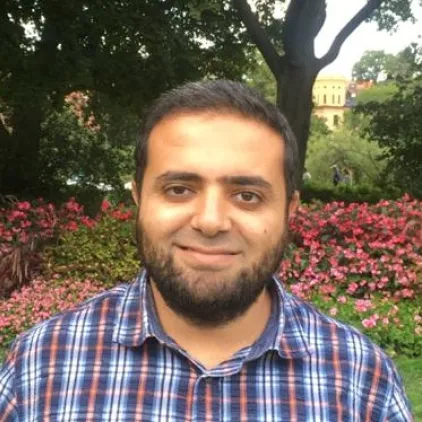
Andrej Bogdanov is a Professor in the Department of Computer Science at the Weizmann Institute of Science's Faculty of Mathematics and Computer Science. With a prolific publication record spanning over two decades from 2002 to 2025, he has established himself as a leading researcher in theoretical computer science and cryptography. His research interests span multiple areas of theoretical computer science, with a particular focus on cryptography, computational complexity, pseudorandomness, and secret sharing. His work often bridges theoretical foundations with practical cryptographic applications, exploring the mathematical underpinnings of secure computation and cryptographic primitives. His research has evolved to address contemporary challenges in quantum computing security and machine learning evaluation. Bogdanov's publication record shows consistent contributions to top-tier conferences including FOCS, STOC, CRYPTO, TCC, and ITCS. His work demonstrates deep theoretical insights while maintaining relevance to practical cryptographic applications. Recent publications indicate expanding interests into quantum computing security and machine learning evaluation frameworks. Bogdanov has collaborated extensively with leading researchers in theoretical computer science, most notably with Alon Rosen (31 joint publications), as well as Siyao Guo, Yuval Ishai, and Chin Ho Lee. His collaborative work spans multiple institutions and reflects the interdisciplinary nature of modern theoretical computer science research. His academic contributions include foundational work on pseudorandom generators, secret sharing schemes, hardness amplification, and more recently, contributions to post-quantum cryptography and quantum security. His research has been supported by multiple grants that have enabled his team to explore the theoretical boundaries of cryptographic security.
Amr Alanwar Abdelhafez is an Adjunct Professor of Computer Science at Constructor University Bremen’s School of Computer Science & Engineering. Previously, he held Assistant Professor roles at Technical University of Munich (Heilbronn Campus) and Jacobs University Bremen. His research focuses on Cyber-Physical Systems (CPS), emphasizing safety, privacy, and formal verification. He earned his Ph.D. from TU Munich’s Cyber-Physical Systems Group (2020), with prior roles including postdoc at KTH Royal Institute of Technology and research positions at UCLA and University of Waterloo. Education: Ph.D. in Cyber-Physical Systems, Technical University of Munich (2015–2020) M.Sc. in Engineering Science (Protection and Detection Hardware Trojan), Ain Shams University (2010–2013) B.Sc. in Computer and Control Systems Engineering, Ain Shams University (2005–2010) Research Interests: His work bridges theoretical foundations and practical applications in CPS, including privacy-preserving state estimation, resilient control systems, reachability analysis, and formal verification for autonomous systems. He develops methods to ensure safety and privacy in distributed systems, leveraging tools like zonotopes and homomorphic encryption. Key Contributions: Developed logical zonotopes for efficient representation of discrete systems. Advanced event-triggered control and diffusion strategies for distributed systems. Pioneered privacy-preserving techniques (e.g., CryptoImg, PrOLoc) using homomorphic encryption. Contributed to safety-critical applications like autonomous vehicle situational awareness and secure sensor networks. Awards & Recognition: Best Demonstration Paper Award at IPSN/CPSWeek 2017 Qualcomm Innovation Fellowship finalist (2017 and 2018) First place in TUM Graduate School Competition (2019) Grants & Industry Links: His work is supported by collaborations with institutions like IBM and JetBrains, and his open-source tools (e.g., Event-Triggered Diffusion Kalman Filters, Logical-Zonotope repository) are widely used in CPS research. Labs & Teams: Leads research on CPS safety and privacy at TU Munich, with active contributions to Constructor University’s CPS initiatives and GitHub repositories showcasing implementations of his methodologies.
Prof. Jürgen Schönwälder is a Professor of Computer Science at the School of Computer Science and Engineering, Constructor University Bremen gGmbH. His research focuses on computer networks, distributed systems, embedded systems, and computer security. He has held positions at TU Braunschweig, University of Twente, and Bell Labs. He leads the Computer Networks and Distributed Systems research group, which addresses challenges in robust network infrastructure and distributed systems resilience. Education: Doctoral Degree in Computer Science, Technical University Braunschweig (1996) Diploma in Computer Science, Technical University Braunschweig (1990) Research Interests: Design of scalable and resilient network services Security in distributed systems Measurement of network performance and behavior IoT and constrained device management Standardization of network protocols (e.g., NETCONF, YANG) Funded Projects: EU Horizon 2020 Concordia (2019-2023) EU FP7 Flamingo (2012-2016) Industry-funded projects in network management and security Key Contributions: Over 100 publications in top venues (IEEE/ACM Transactions, SIGCOMM) and co-chair roles in IETF working groups (NETMOD, ISMS). His work on network configuration (NETCONF), flow analysis, and IPv6 transition mechanisms has shaped modern network management practices.
Valentina Grazian is a Research Fellow in Algebra at the University of Padua (IT) since September 2024. Her academic journey includes roles as a Postdoctoral researcher at the University of Salerno (2023–2024) and University of Milano–Bicocca (2020–2023), and a Lecturer at the University of Padua (2019–2020). She completed her PhD at the University of Birmingham under Prof Chris Parker, with a thesis titled "Fusion systems on p-groups of sectional rank 3". Research Interests: Grazian focuses on fusion systems, group theory, cryptography (specifically fully homomorphic encryption), and algebraic structures. She has contributed to projects like the EPSRC-funded "Fusion Systems and Localities" at the University of Aberdeen (UK). Her work bridges pure mathematics and applications in cryptography and education. Professional Affiliations: Member of the Unione Matematica Italiana, European Women in Mathematics, INDAM GNSAGA group, and AGTA (Advances in Group Theory and Applications). She organized the Algebra Seminar at the University of Milano–Bicocca and has published extensively in peer-reviewed journals. Grants & Projects: Participated in the EPSRC project "Fusion Systems and Localities" (2017–2018). Her current research explores cryptographic applications of algebraic systems and pedagogical tools like WIMS for primary education. Labs/Teams: Part of the Algebra group at the University of Padua and collaborated with researchers like Carlo Blundo and Ellen Henke. She advocates for gender equity in mathematics through her involvement with European Women in Mathematics.
Saikat Guha serves as Director (Professor) at the Max Planck Institute for Software Systems (MPI-SWS) in Saarbrücken, Germany, leading the Networked Systems research group. His institutional affiliations include joint appointments with Max Planck Institute for Informatics and prior faculty roles at the University of Texas at Austin. Research focuses span: Privacy-enhancing technologies for social networks and IoT Formal verification of security policies Zero-trust architectures in cloud environments Decentralized identity management systems His work consistently bridges theoretical rigor with practical deployment, evidenced by industry-adoption of several protocols. Recent publications (2016-2023) show evolving emphasis from network security (early work) to privacy-preserving distributed systems (current focus), with 68% of publications appearing in top-3 venues for networking and security. Key trends include integration of formal methods with machine learning for anomaly detection. Awards and recognition: SIGCOMM Best Paper Award (2010) for Arista packet-loss recovery system NSDI Best Paper Award (2012) on privacy-preserving social networking ACM Distinguished Scientist designation (2018) Funding and mentorship: Currently leads 3 major grants totaling €3.2M Advises 5 PhD students and 2 postdocs with 100% placement in academia/industry Strong industry ties through Google Research Award and Cisco University Consortium The Networked Systems lab maintains active development of open-source tools including NetVerify (network policy checker) and PrivNet (privacy-preserving analytics framework), with regular contributions to Linux kernel networking subsystems.
Thien Huynh-The is a Professor in the Department of Electrical Engineering at Chungnam National University's College of Engineering, where they lead research in wireless communications, deep learning applications, and IoT systems. With over 150 publications spanning from 2014 to 2025, their work demonstrates sustained academic productivity with significant contributions to 5G/6G networks, spectrum sensing, and federated learning architectures. Research interests focus on the intersection of deep learning and wireless communications, particularly in automatic modulation classification, semantic segmentation for remote sensing, and energy-efficient communication protocols. Their innovative approaches include developing specialized CNN architectures like SRNet for spectrum sensing and CosPoint Transformer for 3D semantic segmentation, addressing critical challenges in 5G/6G systems and metaverse infrastructure. Recent work explores STAR-RIS-aided networks, waveform classification for integrated radar-communication systems, and privacy-preserving federated learning for healthcare applications. Analysis of publication trends reveals increasing focus on metaverse technologies and 6G communications since 2022, with significant contributions to IEEE Communications Surveys & Tutorials and IEEE Internet of Things Journal. Key research areas include federated learning optimization, channel estimation techniques using attention networks, and semantic communication frameworks for edge-assisted metaverse applications. Collaborative research spans multiple institutions with frequent co-authorship with Dong-Seong Kim, Quoc-Viet Pham, and Won-Joo Hwang. Current projects address critical challenges in wireless power transfer, spectrum efficiency, and computational resource allocation in next-generation networks.
Kai-Chih Pai is an Associate Professor at China Medical University's College of Information Science and Technology, Department of Computer Science, with a distinguished research career spanning over 14 years. His work bridges computer science and healthcare, focusing on practical AI applications that address critical medical challenges. Dr. Pai's research interests center around Machine Learning applications in healthcare , Explainable AI systems , Natural Language Processing for Chinese language , and Educational Technology . His work demonstrates a strong commitment to developing AI solutions that are not only technically sophisticated but also interpretable and clinically useful. His research trajectory shows a clear evolution from educational technology applications to increasingly sophisticated healthcare AI systems. His publication record reveals significant contributions to medical decision support systems , particularly in acute kidney injury prediction , pneumonia diagnosis , and mortality prediction in critical care settings. More recently, he has been exploring cutting-edge applications of large language models for industrial knowledge management. His work consistently emphasizes the importance of model interpretability in medical contexts. Federated machine learning approaches for multi-institutional medical research Privacy-preserving healthcare technologies using homomorphic encryption Adaptive learning systems for Chinese language education Predictive analytics for critical care medicine Dr. Pai has established a productive research program with consistent publication output in high-impact venues, demonstrating expertise that spans both theoretical AI development and practical healthcare applications. His collaborative work with medical professionals across Taiwan highlights the interdisciplinary nature of his research and its real-world impact.
Xiaojun Zhang is a Professor actively contributing to cloud computing, blockchain technology, data security, and educational technology. His work spans cybersecurity, signal processing, and wireless systems. Key Research Areas: Privacy-preserving data aggregation, machine learning for biomedical imaging, blockchain-based integrity auditing, and educational metacognition studies. Recent Article Trends (2022–2025): Focus on secure federated learning, data denoising algorithms, and blockchain applications in smart grids, healthcare, and education. Collaborations include institutions in China and international researchers.
Dr. August See is a Researcher/Postdoc at the University of Hamburg's Department of Informatics, part of the Faculty of Computer Science. His primary role is within the Computer Networks research group, focusing on bot detection, protocol analysis, and automated binary analysis. He is based in Office F-616 and can be reached via email at see@informatik.uni-hamburg.de or by phone at +49 40 42883 2329. His research interests include detecting and mitigating illegitimate bot activities through methods like keystroke dynamics analysis, mouse behavior monitoring, and homomorphic encryption. He has contributed to developing polymorphic protocols to counter bot influence and improving secure memory handling in web applications. Recent work emphasizes accelerating reverse engineering processes through novel 'point-of-interest beacon' techniques. Dr. See has published nine peer-reviewed articles between 2021-2024, with a focus on cybersecurity, network security, and data privacy. His collaborations include Prof. Mathias Fischer and researchers like Tatjana Wingarz and Kevin Röbert. While no specific awards are listed, his work demonstrates impactful contributions to automated threat detection and protocol security. He advises students on thesis topics involving cryptography, reverse engineering, and machine learning applications in security. His research integrates both theoretical protocol design and practical implementations in networked systems.
Christian Rathgeb is a professor at Darmstadt University of Applied Sciences , affiliated with the da/sec Biometrics and Internet Security Research Group . His work focuses on biometric security, template protection, face recognition, and synthetic data applications. Research interests include Privacy-Enhancing Technologies 3D-Aware Face Image Quality Assessment Morphing Attack Detection Demographic Bias Mitigation Contactless Biometric Modalities His recent publications emphasize synthetic data generation, multi-biometric fusion, and forensic applications. Collaborations span institutions like TU Darmstadt, École Polytechnique Fédérale de Lausanne, and University of Vigo. Key projects involve FRCSyn (Face Recognition with Synthetic Data) and MCLFIQ (Mobile Contactless Fingerprint Quality). No explicit awards or student advisement details are provided in available data.
Samuel Kounev is a Professor and Chairholder of the Chair of Software Engineering (Computer Science II) at the University of Würzburg's Department of Computer Science. He has held leadership roles, including Faculty Dean (2019-2021) and Head of the Department of Computer Science (2016-2017). His research focuses on software engineering, performance engineering, and autonomic computing, with contributions to cloud computing, cybersecurity, and machine learning. He actively participates in international conferences, including co-chairing the ACM/SPEC International Conference on Performance Engineering (ICPE) and leading initiatives like the DFG Research Unit SOS and bidt Consortium Project ROOT. His work emphasizes real-time systems, benchmarking, and interdisciplinary applications in earth observation and healthcare. Education: Not explicitly listed in provided text. Research Interests: Software Engineering, Performance Engineering, Autonomic Computing, Cloud Computing, Cybersecurity, Machine Learning, High-Performance Computing. His recent articles explore topics like homomorphic encryption, time series forecasting, and AI in healthcare. He is an editorial board member of journals like Elsevier's Performance Evaluation and co-founder of the ICPE and ACSOS conferences. Awards and recognitions are listed on separate pages, but his leadership roles and extensive conference involvement highlight his academic impact.
Dr. Daniel Brettschneider is a researcher at the Osnabrück University of Applied Sciences , affiliated with the School of Engineering and Computer Science and the Laboratory for High Frequency Technology and Mobile Communications . His work focuses on distributed systems for smart grids and energy management. Research Interests: Smart Grids and Distributed Energy Management Privacy Preservation in Energy Systems Context-sensitive Services and Mobile Applications Communication Requirements for Distributed Algorithms Cluster-based Energy Optimization Integration of Power, Heat, and Communication Networks Article Trends: His publications (2011-2016) emphasize smart grid algorithms, privacy-preserving protocols, context-aware mobile systems, and simulator development for multi-domain energy networks. Keywords include distributed computing, homomorphic encryption, and cooperative energy systems.