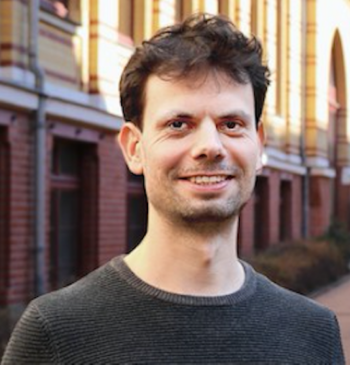
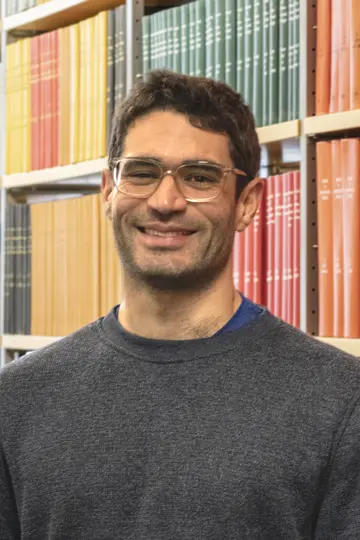
Prof. Nicolas Perkowski is a Professor in the Department of Mathematics at Freie Universität Berlin, specializing in Stochastic Analysis and Probability Theory. He holds roles such as Vice Spokesperson of DFG CRC/TRR 388 (since 2024) and Chair of the Master of Mathematics Examination Board. His research focuses on stochastic partial differential equations (SPDEs), rough paths, and applications in mathematical physics. Notable contributions include work on singular SPDEs, fractional processes, and the KPZ equation. Perkowski has authored/co-authored numerous publications in top journals like the Annals of Probability and Communications in Mathematical Physics, and he serves as an associate editor for several journals. His institutional responsibilities include leadership in research collaborations and academic governance. Education: PhD and diploma in stochastic population models (details not explicitly provided in text). Research Interests: Stochastic Analysis, Probability Theory, SPDEs, Mathematical Physics, Nonlinear Filtering. Recent Articles: Focus on fractional processes, SPDEs with singular terminal conditions, and stochastic sewing lemmas. His work bridges theoretical probability with applications in physics and engineering, with a strong emphasis on rigorous mathematical frameworks for complex stochastic systems.
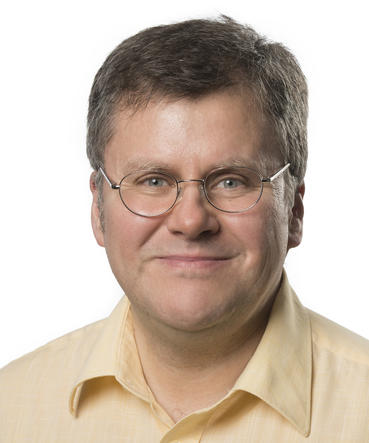
Prof. Dr. M. Bjørn von Rimscha is a full-time Professor of Media Economics at the Department of Social Sciences, Media and Sport, Johannes Gutenberg University Mainz. He serves as Prodekan for Studium und Lehre since 2023 and previously held leadership roles including Geschäftsführender Leiter of the Institute for Journalism. His research focuses on media economics, digital transformation, advertising markets, and cross-border media management. Positions: Professor (2015–present), Prodekan (2023–present) Education: Freie Universität Berlin, University of Ulster Key Collaborations: Co-edited De Gruyter Handbook of Media Economics (2024), Handbuch Medienökonomie (2021) His recent work examines digital disruption in media industries, payment models for journalism, and the economic value of creativity. He advises PhD students like Robin Riemann and holds editorial roles at the Journal of Media Business Studies . Contact: b.vonrimscha@uni-mainz.de
Prof. Dr. Andreas Zick is a leading scholar at Bielefeld University, serving as Scientific Director of the Institute for Interdisciplinary Conflict and Violence Research (IKG) and Professor for Socialization and Conflict Research at the Faculty of Education. He also co-leads the ConflictA initiative since 2023 and contributes to migration education through the Faculty of Education. 2008: Professor for Socialization and Conflict Research, Bielefeld University 2013: Director of IKG 2023: Scientific Head of ConflictA His research focuses on intergroup conflicts , group-based antipathy , right-wing extremism , radicalization , and socialization processes . He investigates spatial dimensions of radicalization, societal integration challenges, and prejudice dynamics through comparative studies. Recent publications analyze radicalization spaces (2024-2025) using spatial sociology, democratic conflict perceptions (2025), and cross-cultural prosocial behavior during pandemics. Key methods include ethnography, longitudinal surveys, and multi-perspective comparative analysis. Scientific contributions recognized by: Communicator Award (2016) Nevitt Sanford Lifetime Award (2022) Active in public policy as member of the Federal Agency for Civic Education's advisory board and Federal Commissioner's Antiracism Expert Council. Leads major projects on radicalization prevention and spatial conflict dynamics with national/international partners.
Joachim Weickert is a Professor of Mathematics and Computer Science at Saarland University where he heads the Mathematical Image Analysis Group since 2001. He received his diploma and Ph.D. in mathematics from the University of Kaiserslautern (1991, 1996), and a habilitation degree in computer science from the University of Mannheim (2001). Prior to his current position, he worked as a research assistant at the University of Kaiserslautern, as a post-doctoral researcher at the universities of Utrecht and Copenhagen, and as an assistant professor at the University of Mannheim. His research focuses on image processing, computer vision, and scientific computing, with special emphasis on techniques based on partial differential equations, variational principles, wavelets, morphological and nonlocal methods, as well as neuroexplicit approaches. He has developed mathematical models and efficient numerical algorithms for image restoration, enhancement, segmentation, compression, optic flow computation, stereo reconstruction, shape from shading, and signal processing methods for tensor fields. These ideas have been successfully applied in industry, biomedical image analysis, and other fields. Analysis of his recent publications reveals a strong trend toward combining traditional PDE-based methods with modern deep learning approaches, particularly in the areas of image inpainting and compression. His work increasingly explores the connections between numerical algorithms for partial differential equations and neural network architectures, demonstrating how mathematical foundations can inform cutting-edge AI techniques while maintaining strong theoretical guarantees. Gottfried Wilhelm Leibniz Prize (2010), considered the most important research award in Germany ERC Advanced Grant (2017) for "Inpainting-based Compression of Visual Data" Elected member of Academia Europaea - The Academy of Europe Jan Koenderink Prize for Fundamental Contributions in Computer Vision (2014) Multiple DAGM Prizes and Best Paper Awards throughout his career AAIA Fellow (2021) and Highly Ranked Scholar (2024) distinctions Professor Weickert has supervised over 250 bachelor's and master's theses and initiated the Master Programme in Visual Computing at Saarland University, the first of its kind in Germany taught in English. He has established numerous interdisciplinary collaborations with colleagues from medicine, bioinformatics, pharmacy, physics, mechatronics, and mechanical engineering. As Principal Investigator for Visual Computing within the Multimodal Computing and Interaction Cluster of Excellence, and former dean of the Faculty of Mathematics and Computer Science (2008-2010), he has played a significant leadership role in advancing visual computing research and education. He heads the Mathematical Image Analysis Group, which has been at the forefront of developing mathematical methods for image analysis. The group maintains strong connections with both theoretical mathematics and practical applications, bridging the gap between fundamental research and real-world implementation across various domains including medical imaging, industrial inspection, and multimedia processing.
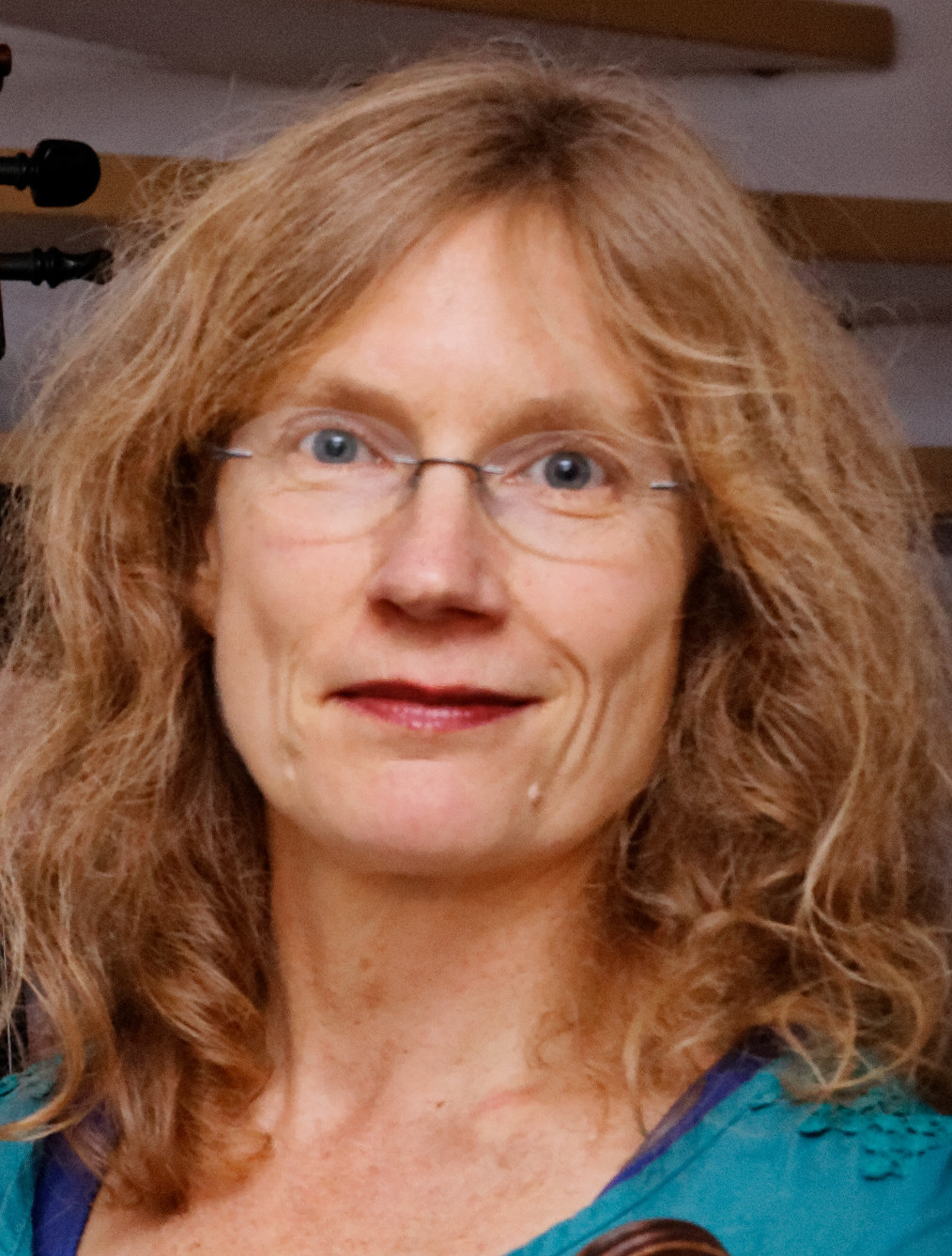
Professor Katrin Tent is a distinguished mathematician specializing in mathematical logic at the University of Münster, where she holds a professorship in the Faculty of Mathematics and Computer Science within the Institute for Mathematical Logic and Foundations Research. She is an active researcher in Mathematics Münster, an investigator in CRC 1442 Geometry: Deformations and Rigidity, and contributes to multiple research projects including Topics in Mathematics Münster T3: Models and universes, T4: Groups and actions, and T8: Random discrete structures and their limits. PhD in Linguistics, Christian-Albrechts-Universität zu Kiel (1988) Diplom in Mathematics, Christian-Albrechts-Universität zu Kiel (1989) PhD in Mathematics, University of Notre Dame (1994) Habilitation, "Model theory of groups and BN-pairs" (2000) Professor Tent's research bridges model theory, group theory, and geometry, with particular focus on finite Morley rank structures, BN-pairs, and sharply multiply transitive groups. Her work often combines methods from these areas to prove unexpected results, either constructing groups or incidence geometries with surprising model theoretic properties or using model theory to construct new and interesting geometries or groups. Her recent publications reveal a consistent trajectory connecting model theory with group-theoretic structures. She has made significant contributions to understanding sharply 2- and 3-transitive groups, finite Morley rank geometries, and the model theory of generalized polygons. Her work demonstrates how model-theoretic techniques can solve deep problems in group theory and geometry, particularly through the study of BN-pairs and incidence structures. DFG Research Fellowship (1996-1998) Bayerischer Habilitationsförderpreis (1998-2001) Heisenberg-Stipendium (2001-2004) ERC Consolidator Grants expert panel (2016, 2018) Elected to DFG Senate (2019) Professor Tent leads an active research group with current members including Marco Amelio, Dr. Benjamin Brück, Anna Cascioli, Lukas Jonuska, Silke Meissner, Zahra Mohammadi Khangheshlaghi, and Dr. Sam Shepherd. Her former research group members include Dr. Simon Andre, Dr. Isabel Müller, and Dr. Tim Clausen, among others. Her supervisory work spans both theoretical foundations and specific applications in geometric group theory and model theory. Her research group operates within the Institute for Mathematical Logic and Foundations Research at the University of Münster, collaborating closely with other researchers in the Mathematics Münster cluster. The group participates in various projects including CRC 1442 - C04: Group theoretic aspects of negative curvature, contributing to the vibrant mathematical research environment at one of Germany's leading mathematics institutions.
Weierstrass Institute for Applied Analysis and StochasticsGermany
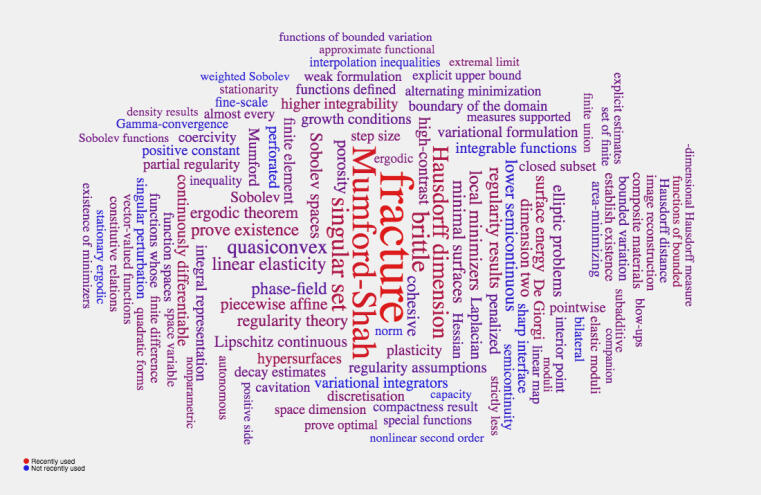
Gianni Dal Maso is a Professor of Mathematical Analysis at the International School for Advanced Studies (SISSA) in Trieste, Italy. He has been a faculty member at SISSA since 1985, first as Associate Professor and then as Full Professor since 1987. He has held several leadership positions at SISSA including Head of the Sector of Functional Analysis and Applications (1993-1998, 2001-2010), Deputy Director (2010-2015), and Coordinator of the Mathematics Area (2016-2020). His educational background includes: 1973-1977: Undergraduate student in Mathematics at the University of Pisa and Scuola Normale Superiore 1977: Degree in Mathematics with honors at the University of Pisa (thesis: "Gamma-limits of set functions," advised by Ennio De Giorgi) 1977: "Diploma" in Mathematics from the Scuola Normale Superiore 1977-1981: Post-graduate Research Fellowship in Mathematics ("Perfezionamento") at the Scuola Normale Superiore Dal Maso's research focuses on the Calculus of Variations, with particular emphasis on semicontinuity and relaxation problems, Gamma-convergence, and more recently, free discontinuity problems and their applications to mechanics. His work bridges pure mathematical analysis with practical applications in material science, particularly in plasticity and fracture mechanics. He has developed mathematical frameworks for understanding crack propagation, material failure, and the behavior of solids under stress, contributing significantly to both theoretical foundations and practical modeling approaches in these areas. His extensive publication record shows a clear evolution from foundational work in Gamma-convergence (culminating in his influential book "An Introduction to Gamma-Convergence" in 1993) toward increasingly sophisticated models of material behavior, particularly in fracture mechanics and plasticity. Recent work demonstrates continued innovation in handling complex discontinuities, non-local effects, and multi-scale phenomena in material science applications. Among his notable scientific recognitions: 1982: Stampacchia Prize, awarded by the Scuola Normale Superiore 1990: Caccioppoli Prize, awarded by the Italian Mathematical Union 1996: Medaglia dei XL per la Matematica, awarded by the Accademia Nazionale delle Scienze detta dei XL 2003: Prize of the Minister for the Cultural Heritage for Mathematics and Mechanics, awarded by the Accademia Nazionale dei Lincei 2005: Prize Luigi and Wanda Amerio, awarded by the Istituto Lombardo Accademia di Scienze e Lettere Dal Maso has supervised 42 PhD students at SISSA, demonstrating a strong commitment to academic mentorship. His research has been significantly supported by multiple National Research Projects (PRIN) in Italy, and notably by an ERC Advanced Grant "Quasistatic and Dynamic Evolution Problems in Plasticity and Fracture" (QuaDynEvoPro) from 2012-2017, where he served as Principal Investigator. This major project focused on nonlinear evolution problems in plasticity and fracture, with three main research directions: plasticity with hardening and softening, quasistatic crack growth, and dynamic fracture mechanics. His scholarly activities extend to editorial service, with membership on the boards of numerous prestigious journals including Archive for Rational Mechanics and Analysis, SIAM Journal on Mathematical Analysis, and Journal of Convex Analysis. He has also been active in the mathematical community through membership in scientific committees and academies, including the Accademia Nazionale dei Lincei since 2014.
Professor Barak Weiss is a distinguished faculty member in the School of Mathematical Sciences at Tel Aviv University's Faculty of Exact Sciences. His research focuses on the intersection of dynamical systems, number theory, and geometry, particularly in the areas of homogeneous dynamics, ergodic theory, and Diophantine approximation. Professor Weiss has made significant contributions to the understanding of translation surfaces, lattice orbits, and the dynamics of flows on homogeneous spaces. His work often bridges pure mathematics with applications in number theory and geometry, revealing profound connections between seemingly disparate fields. His research on horocycle dynamics, measure rigidity for fractal carpets, and the classification of cut-and-project sets has advanced our understanding of geometric structures and their dynamical properties. His recent publications (2023-2025) demonstrate a strong focus on equidistribution phenomena, statistical properties of dynamical systems, and the application of homogeneous dynamics to problems in geometric number theory. A notable trend in his work is the interplay between geometric structures and their arithmetic properties, particularly in the context of Diophantine approximation. Professor Weiss actively organizes the "Homogeneous Dynamics and Applications" seminar at Tel Aviv University, which has been running continuously since at least 2014 with detailed schedules available through 2025. This seminar serves as a hub for cutting-edge research discussions, featuring both local and international speakers working on dynamical systems and related areas. He teaches advanced courses in analysis and supervises graduate students, with recent teaching assignments including Real Analysis for summer semester 2025. His office is located in Schreiber building, room 329, and his regular office hours are Tuesdays from 15:00-16:00.
Prof. Dr. Rosemary Arrojo is a Professor of Comparative Literature at Binghamton University (SUNY) and Head of its Translation Research Program since 2007. She holds a Ph.D. from Johns Hopkins University's Humanities Center, with prior teaching at Universidade de Campinas (Brazil, 1984–2002). Her work bridges Postcolonial Studies, deconstruction, psychoanalysis, and gender studies, focusing on translation theory and Latin American literature. Education: Ph.D. (Johns Hopkins), dual master's (Cultural Studies/Spanish/Translation Studies) Research interests include the cultural turn in translation studies, ethics of translation, and gender in translation. Her influential Portuguese textbook Oficina de Tradução: A Teoria na Prática (1986) has 5 editions. Key articles address translation ethics, Borges' works, and subverted translator footnotes in Latin American fiction. During her 2010 visiting professorship at Johannes Gutenberg University (Mainz), she delivered lectures on translation and gender/globalization, and public talks on Borges and Latin American narratives. Her upcoming works explore translation representation in fictional texts by Borges, Kafka, and others.
Prof. Vladimir Spokoiny is a leading figure in stochastic algorithms and nonparametric statistics at the Weierstrass Institute for Applied Analysis and Stochastics (WIAS) and Humboldt University of Berlin . His work bridges mathematical statistics with practical applications in finance, medicine, and machine learning. Born in 1959 in Moscow, USSR PhD from Lomonosov Moscow State University (1988) Habilitation from Humboldt University (1996) Head of WIAS research group since 2000 Professor at Humboldt University since 2002 Spokoiny's research focuses on adaptive nonparametric methods, high-dimensional data analysis, and statistical finance. His innovations in local homogeneity testing and propagation-separation methods have advanced volatility modeling, image analysis, and manifold learning. He employs Bayesian optimization frameworks and stochastic control techniques for financial instrument pricing. Recent scientific contributions include generalized bootstrap procedures for Bures-Wasserstein barycenters (2024), dimension-free Laplace approximation bounds (2023), and structure-adaptive manifold estimation (2022). His 19+ PhD students and editorial roles in top journals like The Annals of Statistics demonstrate sustained academic impact. International Statistical Institute member American Statistical Association fellow Institute of Mathematical Statistics member Bernoulli Society member
Dr. Iris Seidemann is a Senior Research Fellow at the Chair of Organization Studies, Department of Social Economics, Faculty of Economics and Social Sciences, University of Hamburg. She joined the chair in October 2019 as a doctoral researcher and has since become a key contributor to research on organizational legitimacy, paradox theory, and grand challenges. Research Interests: Her scholarly focus lies in the critical examination of organizational tensions and paradoxes, particularly in the context of legitimacy repair and societal grand challenges such as climate-induced disasters. She investigates how workforce homogeneity in the public sector emerges and persists, using systematic literature reviews and critical theoretical analysis. Her work challenges the normative assumptions in paradox theory and advocates for more reflexive and context-sensitive approaches in organization studies. Publication Trends: Her recent publications reveal a strong trajectory in critical organization studies, combining institutional theory, paradox research, and public sector governance. She frequently publishes in top-tier outlets like Organization Theory and Public Management Review , and presents at premier conferences including the Academy of Management and EGOS. Her work is characterized by theoretical depth, methodological rigor, and a commitment to responsible research. Scientific Awards: Best Paper in the 83rd AOM Proceedings (2023) Nomination for OMT Responsible Research Award (2023) Nomination for EGOS Best Student Paper Award (2020) Teaching and Advising: Dr. Seidemann teaches courses at both bachelor’s and master’s levels, including Grundkurs Organisation, Qualitative Methods, International Organizations, and Philosophy of Science. While no formal advisees are listed, she contributes to academic training through supervision in research methods and thesis guidance. She has also been involved in projects funded under the CLARE Initiative, indicating active grant engagement. Labs and Teams: She is a core member of the REBUMAA project team at the University of Hamburg, working under the CLARE Initiative. The team focuses on multi-actor dynamics in addressing complex societal challenges, reflecting an interdisciplinary and collaborative research environment.
Sebastian Goette is a Professor at the Mathematical Institute of the University of Freiburg, where he serves in the Department of Pure Mathematics. His office is located in Room 339 at Ernst-Zermelo-Straße 1, D-79104 Freiburg, Germany. He teaches courses including Differential Geometry, Algebraic Topology, and Mathematics, with office hours held on Wednesdays from 13:00 to 14:00. Professor Goette's research interests center on differential geometry, with particular focus on special holonomy, G2-manifolds, scalar curvature, and topological invariants. His work bridges pure mathematics with applications in mathematical physics, particularly in areas related to string theory and gauge theory. He employs advanced techniques from algebraic topology, spectral geometry, and Riemannian geometry to investigate the structure of manifolds and their classification. Analysis of his recent publications reveals a strong emphasis on the geometry and topology of 7-manifolds with special holonomy, particularly G2-structures. His research spans both theoretical developments in invariant theory and concrete classification results for specific manifolds. The work often involves sophisticated interactions between analysis, topology, and geometry, with applications to mathematical physics. Professor Goette is actively involved in multiple research collaborations, including the Simons Collaboration on Special Holonomy in Geometry, Analysis and Physics, the Research Training Group Cohomological Methods in Geometry, and the DFG Priority Programme Geometry at infinity, where he leads project 04 on Secondary invariants of foliations. He is scheduled to take a sabbatical in summer 2025.
Professor Caterina Ida Zeppieri is a distinguished mathematician at the Westfälische Wilhelms-University Münster (University of Münster) in Germany, where she leads the Research Group 'Analysis and Modelling' within the Institute for Analysis and Numerics. She has maintained a continuous academic presence since at least the Winter semester 2012/13 through to upcoming semesters in 2025/26, consistently teaching advanced mathematics courses and supervising research activities. Her research focuses on fundamental aspects of mathematical analysis with significant applications to materials science. She specializes in Calculus of Variations, Elliptic PDEs, Gamma-convergence, Homogenization theory, Free-discontinuity problems, Nonlinear elasticity, and Plasticity. Her work bridges theoretical mathematics with practical applications in understanding material behavior, particularly fracture mechanics and composite materials. Professor Zeppieri's publication record demonstrates a consistent and impactful research trajectory from 2007 through forthcoming publications in 2025. Her recent work shows a strong emphasis on stochastic homogenization techniques applied to free-discontinuity problems and singularly-perturbed functionals, revealing sophisticated mathematical approaches to modeling complex material behaviors across multiple scales. She regularly collaborates with leading researchers including Filippo Cagnetti, Gianni Dal Maso, and Lucia Scardia, contributing to significant advances in the mathematical understanding of material science phenomena. Her research has been published in top-tier mathematics journals including Calculus of Variations and Partial Differential Equations, Archive for Rational Mechanics and Analysis, and SIAM Journal on Mathematical Analysis. Within the department, Professor Zeppieri plays an active role in teaching advanced courses such as Partial Differential Equations, Calculus of Variations, and Advanced Topics in the Calculus of Variation, while participating in the department's Advanced Seminar in Applied Mathematics and Colloquium on Applied Mathematics.
Holger Dette is a Professor and Chair Holder of Stochastics (specializing in Statistics) at the Faculty of Mathematics, Ruhr University Bochum. He leads the prominent Group Dette within the Institute of Statistics, overseeing a team of researchers, doctoral students, and administrative staff including Birgit Tormöhlen as team assistant. His research group is deeply integrated within the university's mathematical ecosystem, collaborating with other research groups across algebra, analysis, numerics, and topology. Dette's research spans mathematical statistics with strong applications in real-world problems. His primary interests include optimal experimental design, time series analysis, functional data, change point problems, nonparametric regression, biostatistics, special functions, goodness-of-fit tests, and random matrices . His work bridges theoretical statistics with practical applications, particularly evident in his collaborations with pharmaceutical giants Novartis and Bayer AG in biostatistics, as well as Quasol, a spin-off company from his statistics institute. His recent publications (2024-2025) reveal a research program increasingly focused on high-dimensional and functional data analysis, privacy-preserving statistics, and novel methodological approaches to longstanding statistical problems. Dette's work shows strong interdisciplinary connections, particularly with biomechanics (analyzing joint angles during fatigue phases) and data science (addressing challenges in the era of big data). His research group is actively involved in multiple DFG-funded projects including the newly established 'Small Data' collaborative research center (Sonderforschungsbereich 1597) and the Spatio-temporal Statistics for the Transition of Energy and Transport (Transregio 391). Dette has received significant recognition including the prestigious Humboldt Research Award . His paper 'With Great Power Come Great Side Channels: Statistical Timing Side-Channel Analyses with Bounded Type-1 Errors' achieved second place at the CSAW'24 Applied Research Competition MENA. His research group has also secured multiple significant funding awards from the German Research Foundation (DFG). As an advisor, Dette supervises numerous doctoral and master's students including Pascal Quanz, Marius Kroll, and Carina Graw. His group offers statistical consulting services for scientists and students across bachelor's, master's, and doctoral phases. The group maintains strong industrial partnerships, particularly in biostatistics applications, demonstrating Dette's commitment to translating theoretical statistics into practical solutions for real-world challenges.
Prof. Anna Wienhard holds the position of Professor at the Mathematical Institute of Heidelberg University since 2012, where she leads the Differential Geometry research group. She is also Scientific Director of the Research Station Geometry and Dynamics (since 2020) and Co-Spokesperson of the Excellence Cluster STRUCTURES (since 2019). She serves as a Group Leader at the Heidelberg Institute for Theoretical Studies (HITS) since 2015 and chairs the Heidelberg Laureate Forum Foundation. Her roles include editorships for journals like Annales Henri Lebesgue, Annales scientifiques de l'Ecole Normale Supérieure, and Geometric and Functional Analysis. Anna Wienhard earned dual degrees in theology and mathematics from the University of Bonn (2003/2004). After a theological research phase supported by the CRC 'Judaism – Christianity', she completed her PhD in mathematics at the University of Bonn in 2004. She held positions as a Dickson Instructor at the University of Chicago (2005–2007), postdoctoral research at the Institute for Advanced Study (IAS) in Princeton (2005–2006, 2009–2012), and was an Assistant Professor at Princeton University (2007–2012). She also served as Director of Graduate Studies at Princeton (2007–2010). Her research focuses on discrete subgroups of Lie groups , deformation spaces , representation varieties , Anosov representations , higher Teichmüller theory , and positivity in Lie groups . She explores these areas with interdisciplinary applications in physics and data science. Notable projects include the ERC Consolidator Grant (2014) and leadership in the DFG Excellence Cluster 2181 and Graduiertenkolleg 2229. Her work has been recognized through awards such as the Sloan Research Fellowship (2012–2014) and Fellow of the American Mathematical Society . She has organized workshops on topics like Ergodic Decompositions, Flat Conformal Lorentzian Structures, and Ratner's Theorem. Her grants span DFG-funded initiatives and international collaborations, including the GEAR Network and MSRI programs. She is actively involved in editorial roles, academic committees, and interdisciplinary research activities. Prof. Wienhard advises doctoral candidates and oversees research groups. She collaborates with institutions such as the IAS, Technical Universities in Munich and Ingolstadt, and the Berlin-Brandenburg Academy of Sciences. Her research group at Heidelberg University specializes in differential geometry, and she contributes to the Excellence Cluster’s unifying approach to emergent phenomena across mathematics and physics.
Max Planck Institute for Intelligent SystemsGermany
James Reed Farre is a Researcher and Research Group Leader at the Max Planck Institute for Mathematics in the Sciences (MPI MiS) in Leipzig, leading the Geometry on Surfaces group since October 2023. Previously, he held roles including Juniorprofessor (W1/Assistant Professor) at Ruprecht-Karls-Universität Heidelberg (2022–2023), Gibbs Assistant Professor at Yale University (2021–2022), and an NSF Postdoctoral Fellow at Yale (2019–2020). He earned his PhD in Mathematics from the University of Utah in 2019 under Kenneth Bromberg. His research focuses on hyperbolic geometry, dynamics of earthquake flows, Teichmüller theory, and geometric group theory. Notable areas include affine laminations, hyperconvex representations of surface groups, and ergodic theory in geometric contexts. Farre has contributed to understanding minimal surfaces in hyperbolic 3-manifolds and has explored applications of bounded cohomology to discrete groups. Publications span topics like shear-shape cocycles, horocycle orbit closures, and Hamiltonian flows for pseudo-Anosov mapping classes. His work bridges pure geometry with computational methods, as seen in CAD algorithm development for rigid subsystems. Farre is actively involved in mentoring and has contributed to STEM education initiatives, including the Freshman Research Initiative.