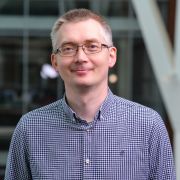
Anja Schlömerkemper is a Professor of Mathematics at the University of Würzburg , holding the Chair of Mathematics in the Natural Sciences since 2011. Since 2021, she serves as Vice President of the university, overseeing equal opportunities, career planning, and sustainability. She also became an external member of the University Council of the University of Music Würzburg in June 2023. PhD in Mathematics (Leipzig, 2002) Studied Physics in Göttingen Postdoctoral roles in Oxford, Stuttgart, Leipzig, Bonn Deputy and Visiting Professor in Erlangen Her research focuses on mathematical analysis applied to materials science and physics , particularly elastic and magnetic materials. She employs methods from calculus of variations , partial differential equations , and homogenisation theory to address interdisciplinary problems.
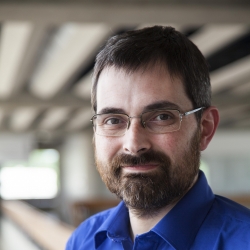
Professor Malte A. Peter is a distinguished faculty member at the University of Augsburg, holding a professorship in Applied Analysis within the Faculty of Mathematics, Natural Sciences, and Materials Engineering. He serves as Vice-director of the Centre for Advanced Analytics and Predictive Sciences and is a member of the board of directors of the AI Production Network at the University of Augsburg. His leadership extends to international collaborations as a Local representative of the Association of Applied Mathematics and Mechanics (GAMM) and as an Associate editor of Nature Scientific Reports. His research spans mathematical modeling of wave phenomena, homogenization theory, and multiscale analysis. Key areas include water wave scattering, periodic homogenisation, physico-chemical mechanisms in multiscale media (porous media, biological cells), microfluidics, and materials science. His work bridges theoretical mathematics with practical applications in engineering and physics, particularly in understanding wave propagation through complex media and developing mathematical frameworks for evolving microstructures. Peter's publication record demonstrates consistent advancement in wave scattering theory, with recent work focusing on multiple wave scattering in locally resonant materials, homogenization of evolving microstructures, and computational methods for complex material behavior. His research shows increasing interdisciplinary collaboration, particularly with physicists and engineers working on metamaterials, wave energy applications, and material characterization. The trajectory indicates growing emphasis on computational implementations of theoretical frameworks. Life membership at Clare Hall, University of Cambridge (2023) Visiting fellowship at Clare Hall, University of Cambridge (2023) Gavin Brown Best Paper Prize of the Australian Mathematical Society (2021) Bremer Studienpreis 2007 (Rotary Club Bremen–Roland Prize) (2008) Admission to the German National Academic Foundation (2001) As leader of the Modelling and Simulation workgroup, Peter directs research on mathematical approaches to complex physical phenomena. His current externally funded projects include 'Novel approaches for the multidimensional convexification of inelastic variational models for fracture' (DFG-SPP 2256) and 'Effective factorisation techniques for matrix functions' (H2020-EU.1.3.). His previous projects have addressed carbon fiber reinforced concrete, lipid membrane dynamics, and electromagnetic emissions from crack propagation. His research program maintains strong international connections, particularly with Australian institutions and the Isaac Newton Institute. Peter leads the 'Workgroup Prof. Dr. M. A. Peter - Modelling and simulation' at the University of Augsburg, which includes research associates Dr. Tanja Lochner, Dr. Sophie Thery, and Lucas Fix, along with computational mathematics specialists Dr. Loïc Balazi and Timo Neumeier. The group collaborates extensively with international partners, particularly through the Isaac Newton Institute programmes and Australian research institutions. Current projects focus on mathematical frameworks for wave scattering, homogenization of evolving microstructures, and computational methods for material failure analysis.
Dr. Irfan Bashir is a Senior Lecturer in Pharmaceutical Science at Anglia Ruskin University, affiliated with the School of Allied Health and Social Care. He holds a PhD in Pharmaceutics and combines extensive industry experience with academic research to advance drug delivery systems and formulation technologies. Specializes in high-pressure homogenisation and nanotechnology Previously served as a Pharmaceutical Engineering KTP Associate with Homogenising Systems Ltd Focuses on bridging academic research and industrial applications Research Interests: Development of lipid-based nanoparticles for targeted drug delivery Comparative studies of processing technologies (Piston Gap vs Microchannel Device) Stability and characterisation of nano-emulsions and inorganic dispersions Sustainable approaches in nanocellulose processing Professional Memberships: Affiliate Member, Royal Society of Chemistry Member, Chartered Management Institute Member, American Association of Pharmaceutical Scientists Member, Microbiology Society
Filippo Cagnetti is an Associate Professor (Professore di II fascia) in the Department of Mathematical, Physical and Computer Sciences at the University of Parma , Italy. He regularly teaches foundational courses such as Calculus 2A and Mathematical Analysis A to first- and second-year students enrolled in Mathematics, Geological Sciences (Earth Sciences), and Management Engineering degree programmes, spanning academic years from 2023/2024 through 2025/2026. His research lies at the intersection of calculus of variations , partial differential equations , and geometric measure theory . A recurrent theme is the rigorous derivation of effective models for materials with microstructures via deterministic and stochastic homogenisation , particularly for free-discontinuity problems that describe brittle fracture. Parallel efforts focus on symmetrisation inequalities (Pólya–Szegö, Steiner, Schwarz, Gaussian) and their rigidity properties: under which geometric or analytic conditions equality in an inequality forces the domain to be symmetric or even trivial. Over the past decade his publication portfolio shows a clear evolution from foundational results on viscosity solutions and large-time behaviour of Hamilton–Jacobi equations to highly specialised contributions on Korn- and Poincaré-Korn-type inequalities in spaces of special functions of bounded deformation (GSBD), and on optimal regularity of free boundaries in cohesive fracture models. The techniques employed combine Γ-convergence, fine properties of BV and GSBD spaces, measure-theoretic arguments, and stochastic two-scale convergence. Contact: Email: filippo.cagnetti@unipr.it
Dr Anton Krynkin is a Senior Lecturer in the Mechanical Engineering academic staff at the School of Mechanical, Aerospace and Civil Engineering, University of Sheffield . He holds an MSc in Mathematics from Saratov State University and a PhD in Solid Mechanics from Brunel University. Research Interests: Wave Propagation in Elastic Media Thermoelasticity Structural Vibration Acoustic Imaging and Signal Processing Wave Scattering in Periodic/Random Media Asymptotic Techniques and Homogenisation Article Trends (2023–2025): Focus on acoustic waveguide modeling, surface reconstruction using Bayesian and statistical methods, phononic crystals, sonic metamaterials, and non-contact monitoring of turbulent flows. Collaboration with the Pennine Water Group on water pipe dynamics and flow characterization is prominent. Key Affiliations: University of Sheffield (since 2013) Pennine Water Group International conferences (INTER-NOISE, EURONOISE, ICA, ACOUSTICS) Collaborations with researchers in acoustics and fluid dynamics
Dr. C.S. Upadhyay is a Professor in the Department of Aerospace Engineering at the Indian Institute of Technology Kanpur, specializing in advanced computational methods and structural mechanics. Education: PhD, Texas A&M University Research Interests: Finite Element Analysis : Adaptive FEM, Goal-based adaptivity, Time-dependent nonlinear problems, Generalized FEM, Nonconforming FEM, Parallel computation Composite Structures : Micromechanics, Homogenisation, Hierarchic plate/shell modeling, Adaptive finite element modeling for laminates, Specialized finite element methods, Shape/topology optimization, Stochastic analysis Solid Mechanics : Constitutive modeling for electro-thermo-elastic materials with losses, Analysis of piezo structures, Crack propagation in 3D solids, Life enhancement of structures, Finite elasticity, Damage in composites Laboratory: Structural Analysis Lab at IIT Kanpur
Dr. Aleksandra Debowski holds positions as a Research Associate in the School of Biomedical Sciences, an Honorary Research Fellow in the School of Molecular Sciences, and Casual Teaching in Multi-Discipline at the University of Western Australia (UWA). She completed her PhD at UWA and received an NHMRC Peter Doherty Biomedical Early Career Fellowship. Her research focuses on understanding bacterial pathogens and their mechanisms of disease, particularly Helicobacter pylori and other bacterial pathogens. Education: BSc from Simon Fraser University PhD from the University of Western Australia (UWA) Research Interests: Medical microbiology Molecular biology Bacteria—virulence factors Bacterial pathogenesis mechanisms Recent research explores topics such as Helicobacter pylori pathogenesis, protein glycosylation in bacteria, and enzymatic mechanisms in pathogenic organisms. These studies contribute to understanding bacterial virulence and potential therapeutic targets. Scientific Awards: NHMRC Peter Doherty Biomedical Early Career Fellowship Grants and Projects: Co-Principal Investigator in the Critical N2 supply for Mass Spectrometry grant (2024–2025) Investigator in NHMRC-funded projects on equipment like the Multifuge X4R centrifuge and Avestin Emulsiflex homogeniser
Guillaume PUEL is a Professor at CentraleSupélec, where he holds significant academic and administrative roles. His research focuses on inverse problems, multi-scale identification, periodic/stochastic homogenisation, and advanced vibration modeling. He leads multiple courses including Continuum Mechanics, Dynamics of Undeformable Solids, and Simulation of Multiphysics Couplings with FEM. He has served as Director of the Mechanics and Civil Engineering Department (2015-2021), Head of joint/elective courses (2021-2023), and Deputy Director of Studies for the Centrale engineering curriculum (2016-2020). He co-authored the textbook Mécanique pour l'ingénieur (Dunod, 2021). His contributions include designing 75+ exams, supervising 65 students via recommendation letters, and managing over 1,700 marked copies across courses. Education details unspecified but implies engineering/doctoral training in mechanics. Research emphasizes computational mechanics and material characterization. Active in curriculum design and academic governance, including membership in CSMA Board (2013-2022). Lab/Team involvement not explicitly stated but implies leadership in experimental teaching and material modelling initiatives.
Martin Lazar is a Research Professor at the University of Dubrovnik in Croatia. His primary research focuses on Control Theory (greedy/averaged control, optimal control of parabolic systems), Microlocal Analysis (PDEs, homogenisation, H-measures), and Geophysical Fluid Dynamics (oceanographic modeling). He holds a position at the University of Dubrovnik and can be reached via email at mlazar@unidu.hr. His research in Control Theory explores parameter-dependent systems and optimal control strategies for parabolic problems. In Microlocal Analysis, he investigates PDEs through advanced techniques like H-measures and velocity averaging, contributing to the understanding of defect functionals. His work in Geophysical Fluid Dynamics applies analytical models to study oceanographic phenomena. Martin has no listed scientific awards or grants in the provided information. No advising roles (PhD/Master's students) are mentioned, and there is no specific mention of affiliated labs or research teams. His recent publications focus on machine learning applications (e.g., transformer models for sentiment analysis), federated learning dynamics, wave observability, and numerical analysis of Sobolev constants.
Jean Lagace is a Lecturer in Pure Mathematics at King's College London specializing in Mathematical Analysis. He joined King's as a lecturer in January 2022 after completing postdoctoral research at University College London and the University of Bristol. His academic journey began at Université de Montréal where he earned both his BSc and PhD under the mentorship of Prof. Iosif Polterovich. His educational background includes: Doctor of Philosophy in Pure Mathematics from University of Montreal (2014-2018), with dissertation titled "Asymptotiques spectrales et géométrie des nombres" BSc from Université de Montréal Jean Lagace's research focuses on several interconnected areas within spectral geometry and mathematical analysis. His work explores the relationship between geometric properties of domains and the spectrum of differential operators, particularly examining eigenvalue asymptotics and shape optimization problems. His research combines techniques from analysis, geometry, and number theory to address fundamental questions about how the shape of a domain influences its spectral properties. Through his investigations of Steklov problems, homogenization theory, and spectral invariants, Lagace contributes to our understanding of how geometric constraints affect physical phenomena modeled by partial differential equations. Jean Lagace has published multiple significant papers in top mathematical journals, with research spanning spectral decomposition, homogenization theory, and eigenvalue problems. His work demonstrates strong connections between spectral theory, differential geometry, and mathematical physics, with particular emphasis on Steklov problems, Dirac operators, and boundary homogenization techniques. His research output shows a consistent focus on understanding asymptotic behavior of eigenvalues and developing theoretical frameworks for spectral analysis on various geometric settings. The fingerprint analysis of his work reveals strong connections to eigenvalue mathematics (100%), Steklov problems (59%), and manifold theory (21%). Jean Lagace has established himself as a promising researcher in spectral geometry with multiple publications in high-impact journals including Journal of Spectral Theory, Annales Henri Lebesgue, and Archive for Rational Mechanics and Analysis. His work on Steklov problems, eigenvalue asymptotics, and homogenization theory has garnered citations in the mathematical community, with his research being recognized for addressing open questions in two-dimensional conformal mappings and Lipschitz boundaries.
Prof. Dr. Marcus Waurick is a University Professor and holds the Chair for Partial Differential Equations at the Institute of Applied Analysis, Faculty of Mathematics and Computer Science, Technische Universität Bergakademie Freiberg, Germany. He has held academic positions at TU Dresden, the University of Bath, and the University of Strathclyde, where he was a Chancellor's Fellow and later an Honorary Lecturer. His research focuses on partial differential equations , evolution equations , operator theory , numerical analysis , control theory , homogenisation , and functional analysis . These areas are interconnected through the analysis of non-autonomous and degenerate systems, spectral theory, and qualitative behaviour of solutions. Although specific publications are not listed in the provided text, his research output is substantial and accessible via his personal homepage. His work contributes to both theoretical foundations and applications in mathematical analysis, particularly in the context of physical and engineering models described by PDEs. Prof. Waurick is an active member of the mathematical community, co-organising the n-cities seminar, which brings together researchers from multiple German universities and the Max Planck Institute for Mathematics in the Sciences in Leipzig, fostering collaboration in analysis and related fields. He has no listed scientific awards or specific grant information in the text, and there is no mention of students he has advised. His academic journey includes a Diplom (2009), PhD (2011), and Habilitation (2016), all from TU Dresden. He is involved in academic service through seminar organisation and scholarly exchange, contributing to the vitality of the analysis community in central Germany.
Matteo Capoferri is a Professor at University of Milan and an Associate Professor at Heriot-Watt University within the School of Mathematical and Computer Sciences , Department of Mathematics . He is also a Visiting Professor at Yale University (Mar 2025–Apr 2025) and an Honorary Professor at University College London (since 2021). BSc and MSc in Theoretical Physics (summa cum laude), University of Pavia PhD in Pure Mathematics, University College London (UCL), supervised by Professor Dmitri Vassiliev Research interests span Analysis of PDEs , Spectral Theory , Microlocal Analysis , Stochastic Homogenisation , and Mathematical Physics . His work focuses on spectral asymmetry, Dirac operators, and high-contrast random PDE systems, bridging geometric analysis with applications in quantum field theory and mathematical physics. Scientific awards include: EPSRC Fellowship (2023) Simons Foundation Fellowship (2026) Grants from EPSRC , London Mathematical Society , and Heilbronn Institute for Mathematical Research . Collaborations include Dr. Mikhail Cherdantsev, Dr. Igor Velčić, and Dr. Stefan Murro. He actively chairs the UK Spectral Theory Network since 2023.
Dengpeng Huang is an Assistant Professor specializing in Artificial Intelligence and Robotics within the field of Elastomer Technology and Engineering . His work bridges computational modeling with advanced materials, focusing on applications in smart materials and mechanical systems. Research Interests: Development of AI-driven models for predicting elastomer properties Multiscale analysis of rubber composites Electromechanical coupling in dielectric elastomer actuators Meshfree methods for metal cutting and chip formation Ultra-precision polishing of optical surfaces Recent Trends: His 2024–2025 publications emphasize data-driven modeling of rubber's viscoelastic behavior, multiscale analysis of composites, and CNN-based approaches for material characterization. Earlier work (2014–2022) explores tool path optimization, beam modeling, and computational machining. Scientific Recognition: Holds an h-index of 5 according to Scopus citations, with recognition as an AI and robotics expert in the service industry. Advising & Collaboration: Collaborates with researchers like Anna Blume, Evgeny Karaseva, and Tim Bor on elastomer composites. Supervised at least one academic work, though specific students are not named in the provided data. Labs & Teams: Affiliated with simulation and robotics teams in the smart materials sector, likely within an advanced materials or mechanical engineering research group.
Dr Keith Daly serves as a Research Fellow within the Faculty of Engineering and Physical Sciences at the University of Southampton, focusing on theoretical modeling of water movement in soil and plant-root interactions. He earned his MEng in Electronic Engineering (2007) and PhD in Applied Mathematics from the University of Southampton. His methodology integrates asymptotic techniques—including homogenisation and multiple scale analysis—with numerical approaches such as spectral collocation methods and singular integral quadratures. Current research centers on multiscale computational modeling of plant-soil systems using X-ray CT image-based geometries, developed in collaboration with experimental teams at the University of Nottingham. This work aims to derive simplified fluid-flow parameters from complex soil structures for agricultural applications. Dr Daly contributes to the Bioengineering Science research group and the Computational Modelling Group , with active projects including 'Multiscale image based computational modelling of plant-soil interaction' and 'X-ray Computed Tomography and image-based modelling of plant roots and nutrient uptake'.