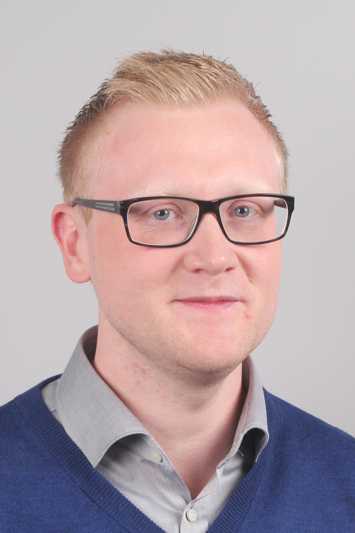
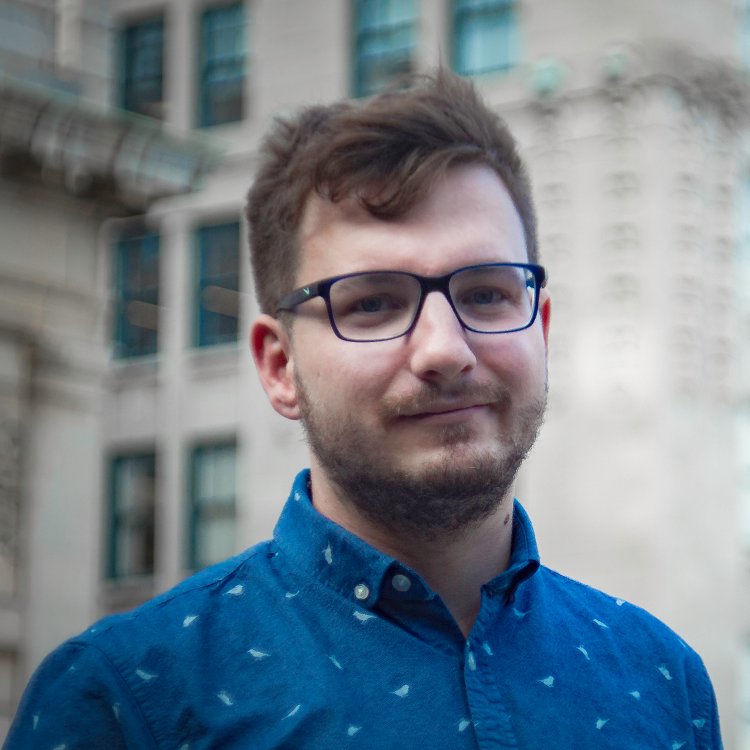
Elissa Eggenweiler holds the position of Researcher at the University of Stuttgart, affiliated with the Institute of Applied Analysis and Numerical Simulation under the Chair of Applied Mathematics. She specializes in multiscale problems, particularly in homogenization, boundary layer theory, and the coupling of free-flow and porous-medium systems. Her work bridges theoretical analysis and numerical simulation techniques. Her research focuses on interface conditions for fluid-porous medium interactions, with applications in Stokes-Darcy systems and uncertainty quantification. Notable contributions include modifications to classical boundary conditions (e.g., Beavers-Joseph) and Bayesian validation frameworks for coupled flow systems. Eggenweiler’s publications (2020–2023) emphasize rigorous mathematical analysis and computational methods for multiscale phenomena. While no explicit awards are listed, her involvement in projects like the validation of pore-scale resolved models highlights her collaborative and applied research ethos. Currently, she contributes to the development of effective coupling conditions and numerical frameworks at the Institute, with a focus on advancing porous-medium and free-flow system modeling.
Dr. Benjamin Brands is a Research Fellow at the Department of Mechanical Engineering, Faculty of Engineering, Friedrich-Alexander University Erlangen-Nürnberg (FAU), specializing in computational mechanics and multiscale material modeling. He works under the Chair of Engineering Mechanics (LTM), led by Prof. Paul Steinmann. Core Research: Multi-scale, multi-physics modeling of magneto-sensitive polymeric materials and reduced-order modeling techniques. Technical Focus: Computational homogenization, finite element methods, and magneto-mechanical material analysis. Key Projects: Involved in the ERC-funded MOCOPOLY project (2012–2017), which explored process-microstructure-property relationships in smart materials. His publications span computational mechanics, material science, and advanced numerical methods, emphasizing magneto-sensitive polymers and multi-scale simulations. No scientific awards or student advisement details are explicitly mentioned.
**Jean Lagacé** is a **Lecturer in Pure Mathematics** at **King's College London**, where he is a member of the **London School in Geometry and Number Theory**. Previously, he was a Research Associate at the University of Bristol (hosted by Asma Hassannezhad) and a Research Fellow at UCL (working with Leonid Parnovski and Alexander Sobolev). He earned his Ph.D. from Université de Montréal in 2018 under Iosif Polterovich. He co-organizes the *Spectral Geometry in the Clouds* online seminar. His research focuses on **asymptotic analysis** in **spectral geometry**, **elliptic PDEs**, **homogenisation theory**, and the **geometry of numbers**. Key interests include boundary spectral problems (e.g., Steklov eigenvalues), eigenvalue optimisation, periodic/quasi-periodic operators, and lattice point counting in anisotropic domains. He employs tools from operator theory, harmonic analysis, and analytic number theory. His work spans topics like homogenisation in perforated domains, Steklov eigenvalue flexibility, and Weyl’s law for rough surfaces. He collaborates widely (e.g., with Alexandre Girouard, Mikhail Karpukhin) and contributes to journals such as *GAFA*, *Inventiones Mathematicae*, and *Journal of Spectral Theory*. No awards are explicitly mentioned. He advises no listed students but actively organizes seminars and collaborates on grants (details unspecified). His affiliation with the London School positions him within a network focused on geometry and number theory.
Anja Schlömerkemper is a Professor of Mathematics at the University of Würzburg , holding the Chair of Mathematics in the Natural Sciences since 2011. Since 2021, she serves as Vice President of the university, overseeing equal opportunities, career planning, and sustainability. She also became an external member of the University Council of the University of Music Würzburg in June 2023. PhD in Mathematics (Leipzig, 2002) Studied Physics in Göttingen Postdoctoral roles in Oxford, Stuttgart, Leipzig, Bonn Deputy and Visiting Professor in Erlangen Her research focuses on mathematical analysis applied to materials science and physics , particularly elastic and magnetic materials. She employs methods from calculus of variations , partial differential equations , and homogenisation theory to address interdisciplinary problems.
Professor Malte A. Peter is a distinguished faculty member at the University of Augsburg, holding a professorship in Applied Analysis within the Faculty of Mathematics, Natural Sciences, and Materials Engineering. He serves as Vice-director of the Centre for Advanced Analytics and Predictive Sciences and is a member of the board of directors of the AI Production Network at the University of Augsburg. His leadership extends to international collaborations as a Local representative of the Association of Applied Mathematics and Mechanics (GAMM) and as an Associate editor of Nature Scientific Reports. His research spans mathematical modeling of wave phenomena, homogenization theory, and multiscale analysis. Key areas include water wave scattering, periodic homogenisation, physico-chemical mechanisms in multiscale media (porous media, biological cells), microfluidics, and materials science. His work bridges theoretical mathematics with practical applications in engineering and physics, particularly in understanding wave propagation through complex media and developing mathematical frameworks for evolving microstructures. Peter's publication record demonstrates consistent advancement in wave scattering theory, with recent work focusing on multiple wave scattering in locally resonant materials, homogenization of evolving microstructures, and computational methods for complex material behavior. His research shows increasing interdisciplinary collaboration, particularly with physicists and engineers working on metamaterials, wave energy applications, and material characterization. The trajectory indicates growing emphasis on computational implementations of theoretical frameworks. Life membership at Clare Hall, University of Cambridge (2023) Visiting fellowship at Clare Hall, University of Cambridge (2023) Gavin Brown Best Paper Prize of the Australian Mathematical Society (2021) Bremer Studienpreis 2007 (Rotary Club Bremen–Roland Prize) (2008) Admission to the German National Academic Foundation (2001) As leader of the Modelling and Simulation workgroup, Peter directs research on mathematical approaches to complex physical phenomena. His current externally funded projects include 'Novel approaches for the multidimensional convexification of inelastic variational models for fracture' (DFG-SPP 2256) and 'Effective factorisation techniques for matrix functions' (H2020-EU.1.3.). His previous projects have addressed carbon fiber reinforced concrete, lipid membrane dynamics, and electromagnetic emissions from crack propagation. His research program maintains strong international connections, particularly with Australian institutions and the Isaac Newton Institute. Peter leads the 'Workgroup Prof. Dr. M. A. Peter - Modelling and simulation' at the University of Augsburg, which includes research associates Dr. Tanja Lochner, Dr. Sophie Thery, and Lucas Fix, along with computational mathematics specialists Dr. Loïc Balazi and Timo Neumeier. The group collaborates extensively with international partners, particularly through the Isaac Newton Institute programmes and Australian research institutions. Current projects focus on mathematical frameworks for wave scattering, homogenization of evolving microstructures, and computational methods for material failure analysis.
Prof. Dr. Marcus Waurick is a University Professor and holds the Chair for Partial Differential Equations at the Institute of Applied Analysis, Faculty of Mathematics and Computer Science, Technische Universität Bergakademie Freiberg, Germany. He has held academic positions at TU Dresden, the University of Bath, and the University of Strathclyde, where he was a Chancellor's Fellow and later an Honorary Lecturer. His research focuses on partial differential equations , evolution equations , operator theory , numerical analysis , control theory , homogenisation , and functional analysis . These areas are interconnected through the analysis of non-autonomous and degenerate systems, spectral theory, and qualitative behaviour of solutions. Although specific publications are not listed in the provided text, his research output is substantial and accessible via his personal homepage. His work contributes to both theoretical foundations and applications in mathematical analysis, particularly in the context of physical and engineering models described by PDEs. Prof. Waurick is an active member of the mathematical community, co-organising the n-cities seminar, which brings together researchers from multiple German universities and the Max Planck Institute for Mathematics in the Sciences in Leipzig, fostering collaboration in analysis and related fields. He has no listed scientific awards or specific grant information in the text, and there is no mention of students he has advised. His academic journey includes a Diplom (2009), PhD (2011), and Habilitation (2016), all from TU Dresden. He is involved in academic service through seminar organisation and scholarly exchange, contributing to the vitality of the analysis community in central Germany.