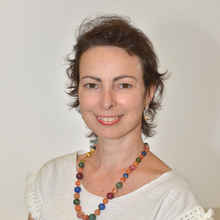
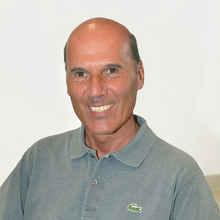
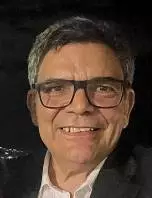
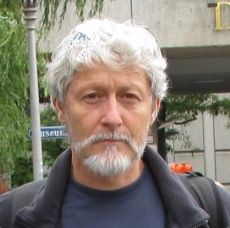
Andrea Di Giuseppe is an Associate Professor at the Department of Chemical Sciences, University of L'Aquila, Italy. His research focuses on developing novel organometallic complexes with unique reactivity and investigating their catalytic properties for sustainable industrial applications. Primary research areas include homogeneous catalysis, coordination chemistry, and stereo-electronic parameter control in N-heterocyclic carbene (NHC) complexes. Current projects target C-H activation, hydrocarburic hydrofunctionalization, polymerization, and photocalytic systems using lanthanides and inexpensive metals. Contact: Office in Room A4-14, Angelo Camillo De Meis Building; Phone +39 0862 433312
Valentina Beghetto, Associate Professor at the Department of Molecular Sciences and Nanosystems, Ca' Foscari University of Venice, focuses on Green Chemistry , Homogeneous Catalysis , and Biopolymer Development . She coordinates a 12-member research group and teaches Polymers and Industrial Applications , Chemistry of the Tanning Industry , and Perfumes, Fragrances, Food, and Chemistry at undergraduate and graduate levels. Research Institute : Research Institute for Green and Blue Growth Safety Spin-off : President and Founder of Crossing Srl (Innovative SME with 20+ patents) Research Interests include: Waste valorization for biodegradable materials Development of metal-free tanning agents Asymmetric catalysis for fragrance synthesis Homogeneous catalysis with transition metals Recyclable polymers and circular economy strategies Her work has been funded by EU LIFE and POR-FESR programs, including projects like LIFE BIOPOL and ECO_DPI , with collaborations spanning institutions such as Kyoto University , RWTH Aachen , and Grenoble INP .
Claudia Graiff is an Associate Professor of Chemistry at the Engineering Faculty of the University of Parma , with a focus on organometallic synthesis, sustainable materials, and cultural heritage conservation. She earned her PhD at the University of Parma and conducted postdoctoral work at the University of Strasbourg and Sevilla. Research Areas: Chalcogen transfer reactions, alkali-activated sustainable materials, nanostructured sol-gel-derived materials for artifact protection, polyamidoamines, nanocellulose suspensions, and titanium dioxide photocatalysis. Teaching: Delivers foundational chemistry courses for food technology, mechanical engineering, and management engineering. Scientific Awards: Bonati 'Junior' Prize (2004) for young researchers. Recent Publications highlight advancements in: Photoselective self-assembly of metal clusters Innovative methods for historical plaster conservation Nanocellulose-based wood protection materials Electrocatalytic sulfite detection sensors Gold(III) complexes for halogen anion sensing
Stefano Paganelli is an Associate Professor in the Department of Molecular Sciences and Nanosystems at Ca' Foscari University of Venice. His research and teaching are centered on Industrial Chemistry, with a strong emphasis on sustainable and green chemical processes. He is actively involved in catalysis, particularly using eco-friendly solvents and biphasic systems for the synthesis of fine chemicals such as fragrances, pharmaceuticals, and agrochemicals. His research interests include: Green Chemistry and Sustainable Technologies Homogeneous and Biphasic Catalysis Industrial Organic Chemistry Synthesis of Fine Chemicals and Fragrances Development of Low-Toxicity Adhesives Environmental and Analytical Chemistry Applications The analysis of his research output reveals a consistent focus on environmentally responsible chemical processes, particularly through catalytic methods in sustainable media. His recent work emphasizes innovation in solvent systems and catalytic technologies for industrial applications, aligning with broader European and regional sustainability goals. Key scientific contributions involve catalytic hydroformylation and hydrogenation in biphasic systems, green solvent development for the footwear industry, and synthesis of pharmaceutical and fragrance intermediates. These efforts are supported by research funding from the European Union (PNRR) and the Veneto Region. Paganelli plays a vital role in laboratory safety and teaching research activities, serving as: Preposto di Laboratorio (Laboratory Safety Officer) Responsabile dell’Attività di Didattica e Ricerca in Laboratorio (RDRL) – Head of Teaching and Research Laboratory Activities He teaches core courses in the Master’s program in Sustainable Chemistry and Technologies, including Industrial Organic Chemistry and Catalytic Methods for Fine Chemistry, contributing significantly to academic training in green chemical technologies.
Professor Gaetano Continillo is a Full Professor at the Department of Engineering (DING) of the University of Sannio (Italy), specializing in combustion modeling, simulation dynamics, and reduced-order modeling techniques. His research spans chemical reactor analysis, flame propagation, and application of advanced mathematical methods like Proper Orthogonal Decomposition (POD) and Independent Component Analysis (ICA) to combustion processes in internal engines. Department of Engineering (DING), Università degli Studi del Sannio Key research areas: Combustion analysis, Bifurcation dynamics, Model reduction, Chemical reactor simulation His work focuses on developing computational methods for analyzing combustion processes, flame dynamics, and emission control in energy systems. He has contributed to both theoretical and applied studies across chemical and mechanical engineering domains. 15+ publications demonstrate expertise in combustion modeling, periodic reactor analysis, and advanced data decomposition techniques Recent articles emphasize reduced-order modeling strategies and multi-physics combustion analysis Professor Continillo actively collaborates with researchers in engine diagnostics and chemical process optimization. His studies have direct applications in energy efficiency, emission reduction, and combustion stability analysis for various engine and reactor systems.
Marco Pierini is a Full Professor at the Department of Pharmaceutical Chemistry and Technology within the School of Pharmacy and Medicine at Sapienza University of Rome . He teaches Organic Chemistry and Chemistry of Natural Organic Substances in the Pharmacy degree program. His research focuses on stereochemical lability and molecular interactions , particularly through supramolecular chemistry and dynamic HPLC studies . Research areas: Supramolecular Chemistry, Stereochemistry, Computational Chemistry Techniques: Enantioselective HPLC, NMR and UV-Visible Spectroscopy, Molecular Docking His recent publications emphasize chiral separations and stereochemical stability of pharmaceutical compounds, with applications in drug development and analytical methodologies. Key trends include enantioselective catalysis , chiral electroanalysis , and supramolecular nano-aggregates . Scientific Awards National Scientific Qualification (Abilitazione Scientifica Nazionale) for the 03/C1 sector (Organic Chemistry) in 2017 Winner of competitive procedures for associate professor (2001) and full professor (2021) at Sapienza University
Paolo Tecilla is a Full Professor of Organic Chemistry at the Department of Chemical and Pharmaceutical Sciences (DSCF) at the University of Trieste. He holds multiple leadership positions including Director of Department Management, Director of Management Office, Director of Department Board, and Director of Board of Directors. Additionally, he serves as a Member of Department Council, Course of study advice, and Doctoral Colleges for Chemistry PhD programs (from XXIX to XXXV cycles). Professor Tecilla's research focuses on supramolecular chemistry and nanotechnology, particularly in the area of self-assembled supramolecular systems with catalysis and transport functions. His work bridges organic chemistry with applications in biomimetic systems, artificial ionophores, and nanoscale transport phenomena. His research group, the Supramolecular Systems for Transport and Catalysis Group, investigates how molecular recognition processes can be harnessed for material science and biological applications. His recent publications span topics including supramolecular assemblies, artificial ionophores, catalytic systems, and molecular recognition. The research trend shows a consistent focus on developing synthetic systems that mimic biological transport and catalytic processes, with increasing sophistication in molecular design and application to biological systems. Professor Tecilla actively manages multiple research projects as Scientific Manager or Financial Manager, including 'Supramolecular nanosystems for the identification of bacteria and their metabolites', 'Self-assembly of bacteria-targeting materials across the mesoscale', and various University Research Fund (FRA) projects. His leadership extends to mentoring PhD students across multiple cycles of the Chemistry PhD program at the University of Trieste. He leads the Supramolecular Systems for Transport and Catalysis research group, which works at the intersection of organic synthesis, supramolecular chemistry, and nanotechnology to develop systems with applications in catalysis, transport, and molecular recognition.
Elena Petricci is an Associate Professor of Organic Chemistry at the University of Siena , Department of Biotechnology, Chemistry and Pharmacy. She obtained her PhD in Pharmaceutical Sciences from the University of Siena in 2004, with research on microwave-assisted solid/solution phase synthesis of bioactive nucleosides. She has held visiting research roles at EPFL (2002), Karl Franzens University of Graz (2008), and The Scripps Research Institute (2009). Research Interests : Development of sustainable methodologies for bioactive molecule synthesis Microwave-assisted and flow chemistry DNA repair pathway inhibitors (MRN complex) Antibody Drug Conjugates (ADCs) for cancer therapy Green catalytic processes using micellar media 4-HPPD inhibitors for Alkaptonuria Conversion of agroforestal waste into packaging materials Notable Trends in Publications : Her recent work emphasizes green chemistry (micellar catalysis, biosurfactants), ADC optimization (machine learning for DAR prediction), and cancer-related molecular targeting (GLI1/2, Hedgehog signaling). Earlier studies focus on microwave-assisted synthesis of anti-HIV agents and metal-catalyzed reactions (palladium, ruthenium). Teaching Activities : She teaches Organic Chemistry II (full cycle degree), Green Chemistry , and Bioconjugate Chemistry at the University of Siena. Office hours are by appointment in her lab on the III floor. Research Collaborations : Projects include the Department of Excellence (2018-2022) and AIRC Grant (20758, 2017) . Her work spans interdisciplinary teams at EPFL, Graz, and Scripps.
Francesco Giacalone is a Full Professor at the Department of Biological, Chemical and Pharmaceutical Sciences (STEBICEF) at the University of Palermo. He specializes in the development of hybrid catalytic materials for CO2 conversion, functionalization of carbon nanostructures, and sustainable organic synthesis. His research integrates ionic liquids, polyhedral oligomeric silsesquioxanes (POSS), and nanocarbon supports for cross-coupling reactions. Recent publications highlight his work on: Deep eutectic solvents for carbon nanoform functionalization Catalytic systems for CO2 conversion into cyclic carbonates Palladium nanoparticle immobilization on modified nanocarbons Applications of supported ionic liquids in organic reactions He has extensively explored the synergistic effects of heterogenized catalysts in reactions like Suzuki-Miyaura, Heck, and alcohol oxidation, with a focus on recyclability and green chemistry principles.
Jözef J. Ziólkówski is a Professor at the Department of Inorganic Chemistry within the Faculty of Chemistry at University of Wrocław, Poland. With a Scopus ID of 7006622948, he has authored 143 documents that have accumulated 3,865 citations from 2,826 documents, yielding an h-index of 35 and collaboration with 121 co-authors. His academic career demonstrates sustained contributions to the field of organometallic chemistry and catalysis over multiple decades. Professor Ziólkówski's research primarily focuses on transition metal catalysis, particularly involving rhodium and palladium complexes. His work spans hydroformylation reactions, polymerization processes, cross-coupling chemistry, and the development of supported and heterogenized catalytic systems. He has made significant contributions to understanding the structure-activity relationships in N-heterocyclic carbene complexes, palladium nanoparticle systems, and ionic liquid-mediated catalytic processes. His research integrates synthetic chemistry with detailed mechanistic studies, often employing advanced characterization techniques including TEM, XPS, and NMR spectroscopy. Analysis of his publication trends reveals consistent output in high-impact chemistry journals including Journal of Molecular Catalysis A: Chemical, Organometallics, and Journal of Catalysis. His work shows particular expertise in manipulating catalyst selectivity through ligand design, support modification, and reaction condition optimization. The research demonstrates practical applications in chemical synthesis, with emphasis on efficient and selective transformations of organic substrates. Professor Ziólkówski has contributed to the broader academic community through editorial work, including authoring the 65th Birthday tribute to Professor Bogdan Marciniec and contributing to the historical perspective 'Origin and development of coordination chemistry in Poland.' His collaborative network extends across international research groups, reflecting the significance of his contributions to the field of catalysis. His experimental approach combines synthetic organometallic chemistry with detailed catalytic testing and advanced characterization methods. The research often addresses practical challenges in catalyst recycling, stability, and activity under various reaction conditions, demonstrating both fundamental and applied scientific value.
Elena Motti is an Associate Professor in the Department of Chemical Sciences, Life and Environmental Sustainability at the University of Parma (Italy). Her research focuses on palladium and norbornene catalysis, particularly the Catellani Reaction for aryl C-H bond activation, heterocyclic synthesis, and reaction mechanism elucidation. She has published 43 scientific articles with an h-index of 25 (2018) and actively participates in third mission activities through chemistry outreach. Education Industrial Chemistry Degree, University of Parma (1997, cum laude) PhD in Chemical Sciences, University of Parma (2001), under Prof. Marta Catellani Doctoral studies at ETH Zurich (2000) in Prof. Pregosin’s group Research Highlights Development of multistep multicomponent reactions Green chemistry approaches (e.g., CO 2 utilization) Mechanistic studies of catalytic intermediates Scientific Contributions Co-author of 43 peer-reviewed articles (Scopus) Active in national/international conferences (over 40 communications)
Gianpiero Cera is an Associate Professor in the Department of Chemical, Life and Environmental Sustainability Sciences at the University of Parma, Italy. He is actively involved in teaching and research, delivering courses such as Advanced Organic Chemistry for the Master's Degree in Industrial Chemistry and Organic Chemistry Laboratory I and II for Bachelor's students in Chemistry. He also serves as a reference teacher for the Master's program and as a tutor in Chemical Sciences. His research lies at the intersection of organic, organometallic, and supramolecular chemistry. Key interests include the synthesis of functional calixarene-based macrocycles, development of iron- and iridium-catalyzed C-H functionalization methodologies, and the construction of mechanically interlocked molecular architectures like catenanes and pseudorotaxanes. His work emphasizes sustainable catalysis using earth-abundant metals and the design of novel supramolecular platforms. The recent publications (2024–2025) highlight a strong focus on synthetic innovation, particularly in C-H activation, macrocyclic functionalization, and dynamic molecular systems. These works reflect collaborations with researchers in Italy and Germany, and are published in specialized journals in organic and organometallic chemistry. Gianpiero Cera has not been mentioned as receiving any scientific awards in the provided text. He advises Master’s students in Industrial Chemistry and tutors undergraduate students in Chemical Sciences, indicating an active role in academic mentoring. While specific grants are not listed, his consistent publication record suggests ongoing research support. He teaches a range of courses from foundational laboratory techniques to advanced organic chemistry, demonstrating a strong commitment to both undergraduate and graduate education. Although no specific research group or laboratory name is provided, his collaborative publications suggest he is part of an active research team focused on synthetic and supramolecular organic chemistry within his department.
Antonio Buonerba is an Associate Professor at the University of Salerno , specifically within the Department of Chemistry and Biology 'Adolfo Zambelli' under the School of Science and Technology. His research spans catalysis, polymer chemistry, and environmental engineering, with a focus on sustainable processes and CO 2 utilization. Role : Associate Professor University : University of Salerno Department : Chemistry and Biology Research Interests include: Design of iron and gold-based catalysts for CO 2 conversion Stereoselective polymerization of bio-sourced terpenes Nanoporous polymer matrices for catalytic applications Environmental monitoring of viral pathogens in water systems Innovative wastewater treatment technologies Article Trends reveal his work on transforming CO 2 into cyclic carbonates using iron catalysts, sustainable elastomer synthesis from terpenes, and environmental virology studies during the pandemic, with methodologies integrating experimental and computational approaches. Collaborations with researchers across Italy, Germany, Spain, and the Philippines demonstrate his interdisciplinary approach, though specific student lists or awards are not detailed in available records.
Professor Barbara Milani is a Full Professor of General and Inorganic Chemistry at the University of Trieste's Department of Chemical and Pharmaceutical Sciences. She serves as Coordinator of the Doctoral Studies Board for Chemistry Cycle XXXIV and is a member of various departmental committees including the Department's Board and Boards of Studies. Her international recognition is evidenced by her role as coordinator of Working Group 2 'COx activation' within the COST Action CM1205 – CARISMA. Prof. Milani's research focuses on homogeneous catalysis for controlled polymerization , with particular emphasis on two main areas: ethylene/polar vinyl monomer copolymerization and CO/vinyl arene copolymerization. Both research lines utilize palladium(II) complexes with nitrogen-donor ligands as catalysts. Her work addresses critical challenges in polymer chemistry including catalyst stability, polymer stereochemistry, and controlled incorporation of polar monomers. Her recent publications demonstrate significant advances in understanding the relationship between ligand structure and catalytic behavior, particularly regarding stereochemical control in polyketone synthesis. Her research group has developed catalysts that can produce syndiotactic, isotactic, and atactic polyketones depending on ligand design and monomer selection. Prof. Milani currently leads several research projects including 'Catalysts and process for olefins and polar vinyl monomers copolymerization and olefins homopolymerization' (funded by REGIONE AUTONOMA FVG, 2024-2025). Her laboratory regularly hosts PhD students, Master's students, and international collaborators, reflecting her strong network of national and international research partnerships. Her research group includes PhD students Chiara Alberoni and Francesca Malori, and Master's students Linda De Marchi and Greta Fogar. She maintains longstanding collaborations with colleagues within her department including Prof. Enzo Alessio, Prof. Elisabetta Iengo, Dr. Gabriele Balducci, Prof. Paolo Fornasiero, Prof. Tiziano Montini, and Prof. Fulvia Felluga.
Laura Palombi is an Associate Professor at the University of L'Aquila, specializing in Organic Chemistry. Her research focuses on developing new stereoselective synthesis methods for heterocyclic compounds with potential biological activity, utilizing multicomponent processes, one-pot sequential strategies, and organocatalytic/electrocatalytic techniques. Primary affiliation: University of L'Aquila Secondary email: University of Salerno (unisa.it) Research keywords: Heterocyclic Compounds, Asymmetric Synthesis, Organocatalysis, Electrocatalysis, Synergistic Catalysis Her work emphasizes chemical efficiency, sustainability, and stereocontrol through homogeneous/ heterogeneous catalytic systems. Office located in Room A4-18 of the "Angelo Camillo De Meis" Building.