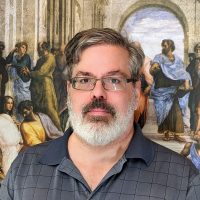
Charles Schulz is a Professor of Theology at the University of Chicago's College of Theology, Arts & Humanities, with prior tenure at Concordia University (2001–2024) and pastoral experience at St. Thomas Lutheran Church (2005–2014). His academic journey includes degrees from Concordia University, Concordia Seminary, Washington University, and the University of Virginia. His research focuses on Patristic Exegesis, Reformation Theology, and early Christian biblical interpretation. Key publications include his 2020 PhD dissertation on Patristic citations of Psalm 82:6 and translations of Martin Luther's sermons (2017–2018). His work bridges ancient and Reformation-era theological methods, emphasizing pastoral motives in exegesis. Recent presentations address topics like Patristic interpretations of Scripture and the impact of medical science on faith. He has received prestigious awards including the E. J. Otto Award (1998) and the University of Virginia Presidential Scholarship. His teaching excellence was recognized at Concordia University in 2022–2023. Schulz actively engages in theological commissions and academic symposia, contributing to both scholarly and pastoral discourse.
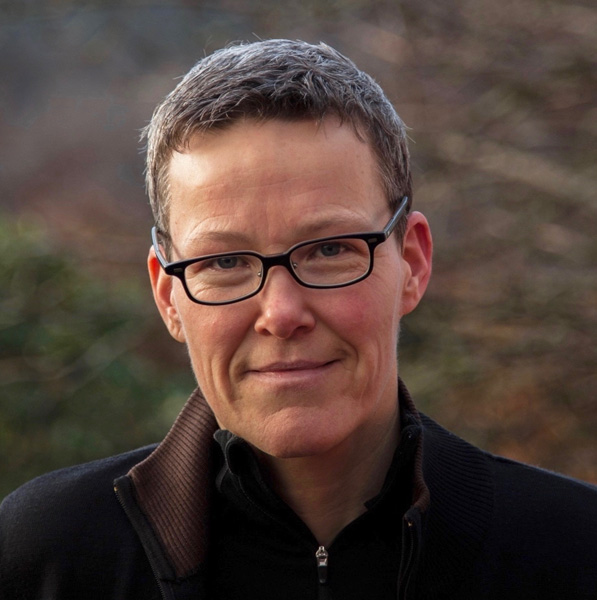
Jamie H. Ferguson is an Associate Professor in the Department of English at the University of Houston, with a cross-appointment to the Honors College. He specializes in Renaissance and early modern literature, focusing on intersections between biblical hermeneutics, literary poetics, and translation theory. Renaissance Literature Shakespeare Studies Biblical Translation Great Books Tradition His research explores how theological debates shaped vernacular literary production in Early Modern Europe, with particular attention to textual materiality and interconfessional dialogues. Ferguson's publication record spans Latin, Italian, French, Polish, and English contexts. Recent projects include the annotated translation of Joachim du Bellay's Deffence et illustration de la langue françoyse and a forthcoming book on European Biblical Poetics . He has received multiple Martha Gano Houstoun Research Grants and been recognized with Honors College lecture awards.
Professor Martin Heimgartner is an Adjunct Professor of Church History at the Martin Luther University Halle-Wittenberg's Faculty of Theology, where he has served as a private lecturer since 2007 and as adjunct professor since 2014. He also works as a research associate at the Theological Seminary of the University of Zurich since 2009. His academic career spans multiple institutions including the Universities of Zurich and Basel where he completed his doctoral and habilitation work. Heimgartner's research focuses on Syriac Christianity, particularly the works of the East Syrian Patriarch Timotheus I (780-823), Christian-Muslim relations in early Islam, philosophy and theology of Syrian Christians, John Chrysostom, Greek and Syrian florilegia literature, and 2nd century Christian apologists. His scholarly work demonstrates deep engagement with primary sources through critical editions and translations of Syriac texts. His publication record shows consistent scholarly output with emphasis on Timotheus I's writings, with multiple monographs published through prestigious series like Corpus Scriptorum Christianorum Orientalium (CSCO). His work bridges historical theology, textual criticism, and interreligious studies, particularly examining early Christian-Muslim dialogue. The articles reveal a progression from textual editions toward more thematic studies on theological concepts like Trinitarian doctrine in interreligious contexts. His scholarly contributions include numerous encyclopedia entries in major reference works such as Religion in Geschichte und Gegenwart (RGG) and Der Neue Pauly, covering figures from early Christianity. He has also collaborated on editorial projects including a volume on Apollinarius. Notably, Heimgartner maintains a dual scholarly identity, combining theological research with musicology. His musicological editions, particularly for Cecilia Bartoli's Malibran project, demonstrate expertise in historical musical works from the 19th century, showing his interdisciplinary approach to historical scholarship across different cultural domains.
Nils Arne Pedersen is an Associate Professor in Church History at Aarhus University's Faculty of Theology/Arts since 2004. His academic career includes roles as a Full-time scholar supported by the Carlsberg Foundation (1990–1995) and Danish Research Council grants. He specializes in Manichaeism, Patristics, and the historical reception of biblical texts. His research focuses on early Christian and Manichaean theological texts, especially Coptic and Syriac manuscripts. Research Interests : Pedersen’s work explores Manichaean literature, Patristic theology, and the interplay between biblical sources and early religious movements. He has edited critical editions of Manichaean texts and studies their transmission across languages like Syriac, Coptic, and Persian. Key Projects : Biblia Manichaica (Old and New Testament studies in Manichaean contexts), textual editions of Manichaean homilies, and analyses of anti-Manichaean polemics. Awards & Leadership : Honorary member of the International Association of Manichaean Studies (2022), former President (2017–2022). He has received significant grants, including €887k for the Biblia Manichaica project (2012–2015) and €233k from the Carlsberg Foundation (1990–1995). Grants & Funding : Danish Council for Independent Research, Danish Research Council for the Humanities, and Carlsberg Foundation grants have supported his work on Manichaean textual traditions and comparative religious studies.
Thomas Schlag is Professor of Practical Theology at the University of Zurich , with research foci in religious education, church theory, and pastoral theology . He directs the university-wide research focus "Digital Religion(s): Communication, Interaction and Transformation in the Digital Society" , exploring the intersection of theology and digital culture. His career includes roles as Chairman of the Center for Church Development (ZKE) and Dean of the Faculty of Theology (2014–2016). Key Research Areas : Digital religion, public theology, interreligious education, confirmation work, church development, and socio-political theology. Academic Leadership : Directed international studies on confirmation work, co-edited interdisciplinary theological compendiums, and contributed to debates on state religious education and digital ethics. Recent Publications (2024–2025) examine digital media in religious education, Swiss church reform, theological responses to polarization, and interfaith educational models. His "Digital Religion(s)" program analyzes church-state-civil society dynamics in digital societies. He teaches courses on existential religious education , digital transformation , and ecclesiological-practical semesters . Collaborations include the European Network for Confirmation Work , International Academy of Practical Theology , and projects with Swiss and international theological institutions. His work bridges digital innovation , democratic education , and pastoral care in virtual environments .
Stephanie Smith Matthews is a Full-Time Associate Professor of Old Testament at Point Loma Nazarene University (PLNU). She holds a PhD in Hebrew Bible and Ancient Israel from Vanderbilt University, an M.T.S. in Biblical Studies from University of Notre Dame, and dual B.A. degrees in Biblical Studies & Spanish from Olivet Nazarene University. Specializes in Hebrew Bible, Gender Studies, and Theological Ethics Focuses on reproductive health narratives, prophetic imagination, and justice themes Active in Society of Biblical Literature and Wesleyan Theological Society Her research connects ancient texts with modern bioethical concerns through interdisciplinary approaches. Publications span topics from maternal pain in Genesis to Wesleyan theological applications. 2024 presentations on ancient pain narratives and AuDHD preaching 2020-2024 grants and fellowships support her theological scholarship Notable contributions include co-edited textbooks and critical analyses of gender dynamics in biblical contexts.
Inmaculada Delgado Jara is an Associate Professor of Greek Philology at the Facultad de Ciencias Humanas y Sociales, Universidad Pontificia de Salamanca, specializing in Biblical Studies and Patristics. Her academic profile shows extensive engagement with ancient Greek texts, particularly focusing on San Juan Crisóstomo, Erasmus of Rotterdam, and Septuagint studies. Her educational background includes a doctorate from Universidad Pontificia de Salamanca with the thesis "Sermones in Genesim de San Juan Crisóstomo estudio temático, estilístico y traducción" (1999), supervised by Dr. Alfonso Ortega Carmona. She is a member of the research groups "Humanismo, reformas y ciencia: del Medievo a la Ilustración" and "ICS. Innovación en Ciencias Sociales". Delgado Jara's research interests center on Greek Philology, Biblical Philology, Patristics, Septuagint Studies, Erasmus of Rotterdam studies, and San Juan Crisóstomo studies. Her scholarly work demonstrates deep expertise in ancient Greek language and literature, particularly as applied to biblical and patristic texts. She has made significant contributions to understanding the intersection of classical literature and early Christian thought. An analysis of her recent publications reveals a consistent focus on textual criticism, philological analysis of biblical and patristic works, and the reception history of classical texts in Christian contexts. Her work often bridges linguistic analysis with historical and theological interpretation, particularly examining how ancient Greek texts were transmitted, interpreted, and utilized in later periods. Her scholarly activity includes numerous books, edited volumes, and academic papers, with recent work focusing on Erasmus's biblical scholarship, San Juan Crisóstomo's homilies, and the Septuagint. Despite her extensive publication record, no specific scientific awards are mentioned in the available information. Delgado Jara is actively involved in academic supervision and research direction, as evidenced by her editorial work on major scholarly projects and her participation in academic conferences. Her work shows collaboration with numerous scholars across Spain and internationally, particularly in the fields of Biblical Studies and Renaissance Humanism.
David T. Runia is an Honorary Professor affiliated with the Faculty of Theology and Philosophy, specializing in ancient philosophy and early Jewish thought. His research focuses on Philo of Alexandria, doxography, and the intersection of Platonism with Judaic traditions. Key contributions include co-editing Aëtiana V (reconstructing Aëtius’ Placita ) and producing critical editions of Philo’s works. He has explored Philo’s allegorical methods, Byzantine reception of his texts, and the influence of Stoic/Platonic ideas in late antiquity. Publications span book chapters on Church Fathers’ use of doxographic traditions, Jewish Platonism, and Philo’s exegesis of Genesis. He maintains an active role in compiling annotated bibliographies documenting global Philonic scholarship. His work bridges classical and religious studies, emphasizing textual analysis and historical context. Though no lab affiliations or awards are listed, his scholarship is foundational to understanding Hellenistic Judaism and ancient philosophical systems.
Olaf Kramer is a Professor of Rhetoric and Knowledge Communication at the Department of General Rhetoric, Faculty of Humanities, University of Tübingen. He leads the Presentation Skills Research Center and serves as Managing Director of the Research Center for Science Communication (RCS). Since 2021, he has been the spokesperson for the RHET AI Center, focusing on artificial intelligence in science communication. Kramer is also a key editor of Science Notes magazine and the neue rhetorik / new rhetoric book series. Professor, Department of General Rhetoric, University of Tübingen Head, Presentation Skills Research Center Managing Director, Research Center for Science Communication (RCS) Spokesperson, RHET AI Center Editor, Science Notes and neue rhetorik series Education: Studied General Rhetoric, German Literature, Philosophy, and Psychology in Tübingen, Frankfurt (with Jürgen Habermas), and Chapel Hill, USA (with Lawrence Grossberg) Ph.D. (2008): Rhetoric in Goethe Habilitation (2015): Virtual Reality, with teaching authorization in General Rhetoric and German Literary Studies Olaf Kramer's research centers on science communication , communicative competence , political communication , digital rhetoric , and virtuality . His work bridges classical rhetorical theory with contemporary media and public discourse, particularly in scientific and political contexts. He investigates how knowledge is recontextualized in public communication and how digital platforms reshape rhetorical practices. The recent publications reflect a strong trend in interdisciplinary rhetoric , combining insights from law, theology, education, and digital media. His work explores the rhetorical dimensions of judicial decisions, science slams, social media, and AI, emphasizing the role of narrative, visual design, and audience engagement in shaping public understanding. The integration of virtuality and digital navigation into rhetorical theory highlights his innovative approach to modern communication challenges. Scientific Awards: No specific awards are mentioned in the provided text. Kramer actively supervises a large cohort of students and researchers, many of whom have collaborated on publications and projects. He has secured third-party funding for major initiatives like the Presentation Skills Research Center. His advisory and leadership roles extend to university governance, public engagement, and professional consulting for organizations such as the Max Planck Society and the German Foreign Office. He is deeply involved in public science communication through the Science-Notes lecture series, which he founded and moderates, and through media appearances on ZDF/3sat and RTL. His work also includes designing and leading rhetorical training programs for academic, corporate, and governmental clients, demonstrating a strong commitment to translating academic knowledge into practical applications.
Timothy Pettipiece is an Associate Professor in the Department of Religion at Carleton University, part of the College of Humanities. He holds an Hon. BA in Classical Languages from the University of Guelph (2000), an MA in Religion and Culture from Wilfrid Laurier University (2002), and a PhD in Religious Studies from Université Laval (2006). His research focuses on interdisciplinary approaches to religious cultures of Late Antiquity, particularly Gnostic and Manichaean studies, and the reception of ancient religious ideas in modern media. His teaching interests include Classics and Religion, with a specialization in Manichaean literature and the intersection of late ancient religious texts with contemporary cultural narratives. Key research areas are Coptic Manichaean homilies, Syriac Christianities in Mesopotamia, and gender roles in early religious communities. Dr. Pettipiece’s publications emphasize textual analysis of apocryphal traditions, redaction criticism in Manichaean and early Christian texts, and comparative religious studies. Recent work explores intersections between Manichaean theology and global religious movements, as well as modern reinterpretations of ancient mythologies in popular culture. He currently serves as an academic leader in Carleton’s Religion program, contributing to both undergraduate and graduate curriculum development. His office is located in 2A51 Paterson Hall, and he maintains active engagement with international scholarly networks through conferences and collaborative research projects.
Kaylin O'Dell is an Assistant Lecturer in the Department of English at Skidmore College, holding a B.A. from Vassar College and M.A./Ph.D. from Cornell University. Her office is located in Palamountain Hall 336 with contact via kodell@skidmore.edu. Education: B.A., Vassar College M.A., Cornell University Ph.D., Cornell University Her research centers on Old and Middle English literature within Late Antiquity and the Early Middle Ages, examining performance studies, historical reading practices, rhetorical traditions, and gender dynamics. She investigates how medieval texts reflect societal structures through interdisciplinary lenses including women's studies and digital humanities, with particular focus on pedagogical applications in composition. Publication analysis reveals consistent exploration of Old English religious texts like the Vercelli Homilies and Solomon and Saturn dialogues, emphasizing gendered experiences in early medieval England. Recent works bridge historical scholarship with contemporary digital annotation methods in composition pedagogy, showing evolving methodology from textual analysis to technology-enhanced teaching.
Professor Rosalind Love is the Elrington and Bosworth Professor of Anglo-Saxon at the University of Cambridge, affiliated with the Department of Anglo-Saxon, Norse, and Celtic (ASNC) under the Faculty of English. She serves as a Fellow of Robinson College and holds leadership roles including Head of Department (since 2023) and Deputy Warden of Robinson College (from 2024). Her teaching focuses on Insular Latin language/literature, textual criticism, and graduate supervision in Insular Latin and Old English literature. Research Interests : Specializing in Insular Latin literature, particularly hagiography from the 10th-11th centuries, Bede's biblical commentaries, and glossed manuscripts. Key projects include the Leverhulme-funded Latin Arthurian Literature and the Rise of Fiction (2019-2023) and collaborative work on Boethius commentaries. Her editorial leadership spans the Oxford Medieval Texts and Early Medieval England and its Neighbours . Scientific Awards & Roles : Principal Investigator for Leverhulme-funded Latin Arthurian Literature project Co-Investigator for Boethius in Early Medieval Europe General Editor of Oxford Medieval Texts Executive Editor of Anglo-Saxon England Council Member of the Henry Bradshaw Society Academic Contributions : Her publications examine Insular Latin sources, Bede's influence, and classical reception in medieval England. Recent work explores saints of Kent, Boethius glosses at Canterbury, and the evolution of hagiographic humility tropes. She contributes to databases like Fontes Anglo-Saxonici and collaborates on manuscript studies.
Yung Suk Kim is a Professor of New Testament and Early Christianity at the Samuel DeWitt Proctor School of Theology, Virginia Union University. His work emphasizes transformative theology, biblical hermeneutics, and social justice. He holds a PhD from Vanderbilt University and has authored over 16 books, including Christ’s Body in Corinth and How to Read Paul . B.A., Kyungpook National University M.Div., McCormick Theological Seminary Ph.D., Vanderbilt University Dr. Kim’s research focuses on racial identity in biblical interpretation, Pauline theology, and the intersection of scripture with contemporary social issues. His recent work explores themes like the 'Other' in theological discourse, biblical pluralism, and minority perspectives in scripture. He has received major grants including the Lilly Theological Scholars Grant and the Wabash Center Fellowship. His publications demonstrate a commitment to reimagining biblical narratives through lenses of social justice and cultural diversity. Notable topics include racial identity in Paul’s letters, the socio-political context of early Christian communities, and ethical dimensions of Jesus’ parables. Recipient of Scott & Stringfellow Outstanding Professor Award (2019) Presidential Citation for outstanding service (VUU) Dr. Kim’s academic service includes editorial work for 1-2 Corinthians: Texts @ Contexts and leadership in initiatives promoting holistic human transformation through biblical studies. His current projects address decolonizing biblical interpretation and fostering intercultural theological dialogue.
Ingunn Lunde is a full-time Professor of Russian at the Department of Foreign Languages , Faculty of Humanities , University of Bergen, Norway. She also holds a part-time (20%) Professor II position in Russian literature and culture at the University of Tromsø (2012–2019). Research Focus: Russian sociolinguistics, Slavic medieval culture, 19th–21st-century Russian literature, Byzantine hagiography, and digital media. Leadership: Head of the Research Group for Contemporary Russia at the University of Bergen. Projects: Principal Investigator for Landslide of the Norm (2005–2008) and The Future of Russian (2008–2013), funded by the Research Council of Norway. Publications: 85 works including 3 monographs, 56 articles, and 13 edited books. Notable works: Language on Display (2018), Fragmenter av fortid (2019), and Digital Russia (2014). Founding editor of the Slavica Bergensia book series (2000–present). Scientific Awards: Ugleprisen (2020) FUND-status (2019) Spurveugleprisen (2017) Fellowship at Wissenschaftskolleg zu Berlin (2014/15) Meltzer Prize for Young Researchers (2000) Outreach: Regular public speaker, media commentator, and contributor to the Great Norwegian Encyclopaedia on Russian literature.
Anathea Portier-Young is an Associate Professor of Old Testament at Duke Divinity School since 2011. She holds a Ph.D. from Duke University (2004), M.A.B.L. from the Graduate Theological Union/Jesuit School of Theology (Berkeley), and a B.A. from Yale University. Her research focuses on biblical prophecy, early Jewish apocalyptic literature, and second-temple historiography, with a specialization in embodiment studies as applied to religious experience and text interpretation. She is the award-winning author of *Apocalypse Against Empire* (2011) and *The Prophetic Body* (2024), exploring resistance theology and the role of the body in mediation. Educations: B.A., Yale University M.A.B.L., Graduate Theological Union/Jesuit School of Theology at Berkeley Ph.D., Duke University Research Interests: Portier-Young examines embodiment through cognitive science and materiality, addressing themes like incarceration, identity, and nonviolence in biblical texts. Her work critiques imperial domination and integrates interdisciplinary methods with social justice applications. Recent projects explore Miriam’s prophetic dance and Josephus’s portrayal of memory. Publications & Media: Over 20 peer-reviewed articles and books, including co-editing *Scripture and Social Justice*. Media features include *Religion News Service* and *WorkingPreacher.org*. Recent articles analyze Daniel’s textual fluidity and the symbolic resistance in apocalyptic narratives. Teaching & Grants: Teaches courses like *Prophecy in the Body* and *Old Testament Interpretation*. Received grants such as the Catholic Biblical Association’s *Prophecy in the Body* project (2021–2022). Active in the Duke Divinity School Women’s Center, fostering community and equity in theological education.