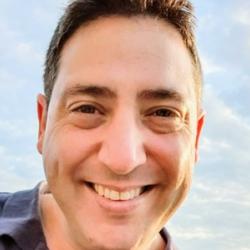
Tanya Trussler is Associate Professor in the Department of Economics, Justice, and Policy Studies at Mount Royal University. Her research examines structural determinants of violent crime, policing practices, crime prevention strategies, and public perceptions of criminal justice systems. Research explores police-community relations across different contexts, including recent projects on rural versus urban policing perceptions in Alberta and religious influences on policing in Pacific Island countries. Methodologically specializes in survey research and comparative analysis. Recipient of multiple research grants including from Immigration, Refugees and Citizenship Canada, and British Columbia's Crime Reduction Research program. Actively presents findings at major conferences including Congress of the Humanities and Social Sciences.
Prof. Dr. Thomas Brinkhoff is Chair of the Institute Board and Chair of Geoinformatics at Oldenburg University of Applied Sciences. He leads the Institute for Applied Photogrammetry and Geoinformatics (IAPG) and contributes to institutions like the Association for the Promotion of Geoinformatics in Northern Germany (GiN e.V.) and the Oldenburg Research and Development Institute for Computer Science (OFFIS e.V.). Education: Diploma in Computer Science (Informatik), Universität Bremen (1990) Doctorate in Computer Science (Dr. rer. nat.), Ludwig Maximilian University of Munich (1994) Brinkhoff's research spans geodatabase systems, spatiotemporal data processing, geosensor analytics, and location-based services. His work addresses Volunteered Geographic Information (VGI), web-based geospatial visualization, and mobile data integration, with applications in traffic management and forensic science. Recent projects include ProSaDi (Digital Provenance and Collection Research) and contributions to the Laboratory for optical 3D metrology . He has served on program committees for ACM SIGSPATIAL (2002-2019), AGILE conferences (2010-2025), and editorial boards of journals like GeoInformatica and TGIS. Notable Lectures: 2024: Forensic applications of tachograph data 2023: Geoinformatics in homicide investigations 2022: Spatiotemporal analysis for sustainability projects 2015: Open geodata standards at FOSSGIS 2014: Mobile sensor data processing
Dr. Auzeen Shariati is an Associate Professor and Director of Undergraduate Programs in the Department of Criminology, Law and Society at George Mason University. She holds a Ph.D. in Public Affairs and Criminal Justice from Florida International University (2017), an M.A. in Criminal Law and Criminology from Allameh Tabataba’I University (2010), and a B.A. in Judicial Law from the University of Tehran (2006). Prior to academia, she practiced as a defense attorney at the Iranian Bar Association. Her research focuses on environmental criminology, crime prevention, victimization, policing strategies, and comparative criminal justice systems. Key areas include pandemic impacts on domestic violence, school safety through Crime Prevention Through Environmental Design (CPTED), and policy evaluation in criminal justice. She has published extensively in journals like American Journal of Criminal Justice , Journal of Family Violence , and Security Journal . Recent work examines how the Covid-19 pandemic and social upheavals like the murder of George Floyd influenced domestic violence reporting and victim experiences. Her studies combine quantitative and qualitative methods, emphasizing real-world policy implications. Dr. Shariati teaches courses such as Introduction to Criminology , Law and Justice Around the World , and Evaluation of Crime and Justice Policies . She actively presents at conferences like the American Society of Criminology and has contributed to public discourse on campus safety and criminal justice reform through media engagements.
Jennifer D. Oliva is a Professor of Law at Indiana University Maurer School of Law where she holds the Val Nolan Faculty Fellow position. She maintains significant interdisciplinary affiliations as a Research Scholar at Georgetown University Law Center's O'Neill Institute for National & Global Health Law and as a Senior Scholar with the UCSF/UC Law Consortium on Law, Science & Health Policy. Her academic work bridges legal scholarship with practical health policy development, focusing on the intersection of constitutional protections, public health needs, and modern surveillance technologies. Professor Oliva's research interests center on health law, privacy law, and drug policy with particular expertise in prescription drug monitoring programs (PDMPs), health information privacy, and the legal dimensions of the opioid crisis. Her scholarship critically examines how law enforcement surveillance of prescription data impacts patient privacy rights, particularly for vulnerable populations including those with substance use disorders. She has developed significant expertise in how constitutional privacy protections apply to health data in the digital age, especially following the Supreme Court's decision in Carpenter v. United States. Her recent publications reveal a growing focus on algorithmic regulation in healthcare, examining how risk scoring systems and coverage algorithms can perpetuate health disparities. She has published extensively on the intersection of reproductive rights and health data privacy in the post-Dobbs landscape, analyzing how prescription monitoring systems could be weaponized against individuals seeking reproductive healthcare. Her work consistently connects doctrinal legal analysis with public health realities, advocating for evidence-based policy approaches that prioritize patient privacy and health equity over punitive enforcement. Dosing Discrimination: Regulating PDMP Risk Scores (2022) The "New" Drug War (2024) Prescription Drug Policing: The Right to Health Information Privacy Pre- and Post-Carpenter (2020) Opioid Multidistrict Litigation Secrecy (2019) Surveillance, Privacy, and App Tracking (2020) Professor Oliva actively engages with policymakers and has contributed to amicus briefs in significant cases including Ruan v. United States. Her scholarship has been cited in legal proceedings and she regularly presents at major academic conferences including the Association of American Law Schools Annual Meeting. She has collaborated with scholars across disciplines including public health researchers, medical ethicists, and data scientists to address complex challenges at the intersection of law, technology, and healthcare.
Professor Alisdair Gillespie is a faculty member at Lancaster University in the School of Law . His primary academic role is as a Professor , and he also serves as the University Academic Dean . Cybercrime Child Sexual Exploitation Legal Systems and Evidence Covert Surveillance Sexual Offences Professor Gillespie’s research focuses on cybercrime , particularly child sexual exploitation , including child pornography , grooming , and solicitation . His work extends to covert surveillance and legal systems , emphasizing evidence law and criminal justice . He has acted as an expert advisor to the UN, Council of Europe, EU , and UK government bodies , influencing policy on child protection and cybercrime . Projects like Designing a Model of Restorative Justice for Victims of Online Child Abusive Images (2021–2023) and Tackling Child Sexual Exploitation (2013) highlight his practical engagement. His PhD supervision interests cover Criminal Law, Sexual Offences, Covert Policing , and Criminal Justice (including Evidence ). Contact details include email : a.gillespie@lancaster.ac.uk and office : D23, D - Floor, University House .
Pamela Ferguson is a Professor at Dundee Law School, University of Dundee, United Kingdom. She holds the Chair in Scots Law since 2000, with prior roles as Senior Lecturer (1995-1999) and Lecturer (1989-1995). Her career began in the Crown Office and Procurator Fiscal Service (1986-1989), followed by roles as an examiner and committee member for the Law Society of Scotland. Education: Doctor of Laws (PhD) from University of Dundee (1994), LLB with First Class Honours from University of Glasgow (1985). Her research focuses on Criminal Law , Criminal Procedure , and Healthcare Law , with notable work on medical liability, clinical trials ethics, and Scots criminal justice reforms. She authored the Draft Criminal Code for Scotland with Commentary (2003) and co-authored Scots Criminal Law: A Critical Analysis (2014). Recent publications highlight trends in Scottish criminal procedure , eyewitness identification , and medical injury compensation . Her scientific awards include the 2023 Chancellor’s Award for Teaching and the 1985 Dr John MacCormick Prize. Scientific Awards: Chancellor’s Award for Outstanding Contributions to Teaching (2023) Joint winner of the Dr John MacCormick Prize (1985) Professor Ferguson supervises PhD and Masters students in criminal justice , healthcare law , and comparative criminal law. She has served as an external examiner at multiple UK universities and contributed to law reform committees.
Karim Chalak is Professor of Econometrics at the University of Manchester, specializing in econometric theory and causal inference methods. His research addresses identification challenges in models with agent interactions and measurement error. Education: PhD in Social Science from University of California, San Diego (2007) Research Interests: Develops methods for causal inference in environments with strategic interactions, omitted variables, and measurement error. Applications include returns to education, corporate finance decisions, and firearm policy impacts. Maintains international collaborations and visiting positions at leading institutions. Publications Analysis: Recent work demonstrates consistent focus on partial identification strategies, measurement error correction techniques, and applications to policy-relevant economic questions. Methodological innovations include nonparametric bounds and proxy variable frameworks.
Daniel Webster is Bloomberg Professor of American Health in the Department of Health Policy and Management at the Johns Hopkins Bloomberg School of Public Health. He is also affiliated with the Urban Health Institute, the Johns Hopkins Center for Gun Violence Solutions, the Johns Hopkins Center for Injury Research and Policy, and the Center for Mental Health and Addiction Policy Research. Dr. Webster is one of the nation’s leading experts on firearm policy and the prevention of gun violence. His research interests include violence and violence prevention, firearm injuries, gun policy, policy evaluation, domestic violence, youth violence, and opioid abuse. He has led extensive research on the effects of firearm and alcohol policies, policing strategies, street outreach, conflict mediation, and school-based curricula. His recent publications focus on public health approaches to gun violence, the impact of purchaser licensing and background check laws, firearm injury hospitalizations, police shootings, and the deregulation of civilian gun carrying. These works reveal a strong trend in evaluating state-level firearm policies using longitudinal data and mixed-methods designs to inform public health and criminal justice policy. Inaugural Bloomberg Professor of American Health, 2018 Johns Hopkins University Distinguished Alumni Award, 2017 Baltimore City Health Equity Leadership Award, 2016 David Rall Award for Science-Based Advocacy, American Public Health Association, 2015 Finalist, Marylander of the Year, The Baltimore Sun, 2013 Delta Omega Honorary Society in Public Health – Alpha Chapter, Faculty induction, 2005 Educator of the Year, Maryland Network Against Domestic Violence, 2004 Dr. Webster has led numerous federally and foundation-funded research projects, including evaluations of city-level gun violence prevention initiatives, the Lethality Assessment Program, California’s domestic violence firearm intervention, and Baltimore policing strategies. He has advised on national and state-level policy and is a sought-after expert in public health advocacy. He teaches Understanding and Preventing Violence and Crafting Effective Solutions to Gun Violence: A Problem-Solving Seminar. He is a Distinguished Scholar at the Johns Hopkins Center for Gun Violence Solutions, where he continues to lead research and policy engagement efforts. His work is supported by interdisciplinary teams and collaborations across public health, criminology, law, and social work.
Tiago Loncan is a Senior Lecturer in Finance at King's Business School, King's College London, where he is affiliated with the Department of Accounting & Financial Management. He holds a PhD in Finance from the University of Strathclyde, an MSc in Economics from the University of Bologna, and a BSc in Economics from the Federal University of Rio Grande do Sul (Brazil), with additional leadership training from Georgetown University. PhD in Finance, University of Strathclyde (UK) MSc in Economics, University of Bologna (Italy) BSc in Economics, Federal University of Rio Grande do Sul (Brazil) Global Competitiveness Leadership, Georgetown University (USA) Tiago's research centers on the intersection of corporate finance and international economics, with a strong emphasis on emerging markets. His work explores corporate investment and financing decisions, foreign direct investment (FDI), cross-border capital flows, political risk, corruption, expropriation, ownership structure, and the cost of equity capital. He investigates how institutional environments and political uncertainty shape firm behavior, particularly in developing economies. His recent publications analyze topics such as the role of cash holdings in mitigating expropriation risk, the impact of homicides on corporate investment in Brazil, and the effects of political uncertainty on stock returns. His research spans high-impact journals including Journal of Corporate Finance , Journal of Financial and Quantitative Analysis , European Financial Management , and Pacific-Basin Finance Journal . A recurring theme is the interaction between macro-level institutional risks and micro-level corporate financial decisions. Tiago has collaborated with researchers across institutions and has contributed to discussions on research integrity, as seen in his co-authored piece on responsible science and pre-registration in finance research. While no specific scientific awards are listed, his work has gained recognition through citations and inclusion in academic databases. He previously served as a Lecturer in Finance at the University of Strathclyde and has industry experience in the corporate sector in Brazil. He advises on corporate risk, investment, and governance, particularly in politically volatile environments. Though no formal advisees are listed, his research output and academic engagement suggest an active supervisory and mentoring role. Tiago is based at the Strand Campus (Bush House) of King's College London. His work contributes to UN Sustainable Development Goals related to decent work, economic growth, and strong institutions, reflecting the real-world relevance of his research in finance and development.
Professor Gary Edmond is a law professor at the University of New South Wales School of Law, directing the Program in Expertise, Evidence and Law. Holding a BA(Hons) from the University of Wollongong, LLB(Hons) from the University of Sydney, and PhD from the University of Cambridge, he bridges legal scholarship with forensic science expertise through extensive research grants and international collaborations. Education: BA(Hons), LLB(Hons), PhD Institutions: University of New South Wales, Australian Academy of Forensic Sciences His research focuses on the intersection of law and forensic science, examining expert evidence reliability, forensic reporting practices, and the adversarial legal system's limitations. With over $1.4 million in research funding since 2007, he leads interdisciplinary projects involving policing agencies and forensic institutions across Australia and international partners. Recent publications analyze judicial handling of expert evidence, cognitive biases in courtroom identification, and forensic science reform. His work has shaped evidence law understanding through the 6th edition of 'Australian Evidence: A principled approach to the common law and the uniform acts' and advisory roles in high-profile inquiries like the Goudge Inquiry. Awards: Fellow of the Royal Society of New South Wales As Chair of the Evidence-based forensics initiative and member of Standards Australia’s forensic science committee, he continues to influence policy while teaching core legal subjects including Courts, Procedure, Evidence and Proof, and Introducing Law and Justice.
Barak Ariel is a Professor of Experimental Criminology at the Institute of Criminology, University of Cambridge. He holds a PhD in Criminology from Hebrew University of Jerusalem, an LLM (Hebrew University), LLB (Academic Centre of Law & Business), MA in Criminology (Hebrew University), and BA in Psychology (University of New York). Since 2008, he has been affiliated with the Jerry Lee Centre of Experimental Criminology and teaches on the MSt in Applied Criminology and Police Management. Academic Rank: Professor of Experimental Criminology Key Affiliations: University of Cambridge, Jerry Lee Centre of Experimental Criminology Education: PhD, LLM, MA, LLB, BA Dr. Ariel specializes in experimental criminology, evidence-based policing, and the role of technology in crime prevention. His research focuses on evaluating policing strategies through randomized controlled trials (RCTs), particularly in areas such as body-worn cameras, domestic abuse hotspots, and interventions to reduce violence against women. He has advised police departments and governments across the UK, USA, Latin America, and Europe. His recent publications highlight trends in global crime dynamics, the impact of police interventions on offender behavior, and the use of machine learning for crime forecasting. These works span subfields including hot spots policing, procedural justice, victim-offender overlaps, and network analysis of organized crime. Scientific Awards : Academy of Experimental Criminology Young Experimental Scholar Award European Society of Criminology Young Criminologist Award Fellow of the Division of Experimental Criminology As Chair of the Division of Experimental Criminology (2019–2021), Dr. Ariel has contributed to advancing methodological rigor in criminological research. He has conducted extensive evaluations of police-led interventions, including trials on body-worn cameras, victim communication strategies, and data-driven approaches to domestic homicide prevention. His work bridges academic research with practical policing reforms, emphasizing the importance of empirical evidence in criminal justice policy.
Professor Findlay Stark is a Professor of Criminal Law at the Faculty of Law, University of Cambridge, and a Fellow of Jesus College, Cambridge. His work bridges criminal law doctrine, evidence, and procedural aspects with deep engagement in legal, moral, and political philosophy. His research centers on foundational concepts in criminal law, particularly mens rea , recklessness , negligence , and constructive liability . He has made significant contributions to debates on joint enterprise, accessory liability, and the role of judicial lawmaking in criminal law evolution. His monograph Culpable Carelessness: Recklessness and Negligence in the Criminal Law (2016) is a key scholarly work in the field. He is also a co-author of the authoritative textbook Simester and Sullivan’s Criminal Law: Theory and Doctrine . The recent articles reflect a sustained focus on doctrinal refinement, philosophical underpinnings of liability, and critical analysis of judicial reasoning. Themes include causation, omissions, transferred intent, and the interplay between moral and legal responsibility. His work frequently appears in top journals such as the Cambridge Law Journal , Oxford Journal of Legal Studies , and Modern Law Review , and has been cited by appellate courts internationally. Editorial Board, Cambridge Law Journal Editorial Board, Criminal Law Forum Editorial Board, Criminal Law Review Academic Associate, 23 Essex Street (criminal law chambers) He currently supervises PhD students including James Browning, Anna Peters, Sara Trainor, and Forest Yu, and advises several others. Previous supervisees include Giordana Campagna and Khomotso Moshikaro. He is open to initial inquiries regarding potential research supervision. He is affiliated with the Cambridge Centre for Criminal Justice (CCCJ) , the Cambridge Forum for Legal and Political Philosophy (CFLPP) , and the Criminal Jurisprudence and Philosophy Group (CrimJur) , reflecting his interdisciplinary approach.
Jennifer Schwartz is the James F. Short Distinguished Professor in the Department of Sociology at Washington State University (WSU). Her research focuses on criminology, stratification/inequalities, communities, and substance use/health. She holds a Ph.D. from Pennsylvania State University (2003). Her work examines crime trends, gender disparities in offending, and the societal implications of criminal justice policies. Key areas include patterns of violence across genders and ages, rural-urban crime dynamics, and corporate financial fraud. Dr. Schwartz has conducted extensive research on drunk driving prevalence, gendered participation in environmental and corporate crimes, and cross-national variations in offending. Her projects often involve data triangulation across multiple sources (arrest records, self-reports, victim data). Notable grants include a National Institute of Justice-funded study on recreational cannabis in Washington State (2018-2019) and collaborative work on 21st-century corporate financial crime (2014-2019). Education: Ph.D., Sociology, Pennsylvania State University, 2003 Her research highlights how societal structures influence criminal behavior, particularly through gendered opportunities and risk preferences. She has published widely in top journals like Criminology and American Sociological Review , analyzing topics such as age-crime curves, rural justice systems, and environmental harm. Grants/Advising: Co-PI on NIJ studies on cannabis policy and corporate fraud; advisor on multiple doctoral projects Labs/Teams: Collaborates with WSU's Criminology Research Group on interdisciplinary projects
Isabel Grant is a Professor at the University of British Columbia’s Allard School of Law, specializing in criminal law, with a focus on violence against women, sexual assault, homicide, and mental health law. She holds degrees from the University of Toronto, Dalhousie University, and Yale Law School, and served as a law clerk to Supreme Court Justice Estey. Her research addresses gender-based violence, disability rights, and the impact of the Canadian Charter of Rights and Freedoms on legal frameworks. Grant has contributed to over 80 scholarly works and co-leads an SSHRC-funded project on sexual assault law reforms. She teaches courses on criminal law, sentencing, and mental health law. Grant’s work emphasizes feminist and disability justice perspectives, challenging systemic inequalities through litigation interventions in over 20 Supreme Court of Canada cases. Her recent scholarship critiques Bill C-7’s expansion of MAiD eligibility, arguing it entrenches ableism. Awards include the Royal Society of Canada Fellowship, UBC’s Killam Teaching Prize, and the 2025 University Killam Professor designation, UBC’s highest academic honor. Her research interests span criminal justice reform, gender and sexuality law, and the intersection of disability and legal rights. She collaborates with feminist and disability advocacy groups to shape policy and judicial outcomes. Key areas of focus include the ‘rough sex’ defense, consent frameworks, and sentencing disparities in intimate partner violence cases.
Sylwia J. Piatkowska is an Associate Professor at the College of Criminology and Criminal Justice , Florida State University. Her research focuses on crime and deviance, comparative and international criminology, and advanced quantitative methods. She holds a Ph.D. in Sociology from SUNY Albany (2016) and a B.A./M.A. from Opole University (2006). Her work has been recognized with top honors from the Academy of Criminal Justice Sciences for her impactful research on criminology. Key research interests include hate crimes, fiscal criminology, immigration policy impacts, and sentencing disparities. She has authored/co-authored influential studies such as “The New Fiscal Criminology” (2022) and “Suspended Licenses, Suspended Lives” (2020). Her recent work examines temporal trends in bias-motivated violence and the intersection of mental health, race, and gender in sentencing. Recent Awards: Top Honors from the Academy of Criminal Justice Sciences for her book. Professional Roles: Member of the National Policing Institute’s Board of Directors and editor of leading criminology journals. Her research bridges macro-level structural factors with micro-level criminal behavior, emphasizing cross-national comparisons and policy implications. She is affiliated with Florida State University’s criminology research programs and actively contributes to academic discourse through peer-reviewed publications and institutional leadership.