Jino Distasio is a Professor and Acting Dean of Science at The University of Winnipeg, Department of Geography. He teaches Urban Geography, Cultural Geography, and Social Geography, with courses like GEOG-3413 Urban Revitalization and GEOG-3430 Housing and Neighbourhood Planning . His research focuses on housing and neighborhood development, city planning, urban revitalization, homelessness, mental health, and urban transportation. Teaching Areas : Urban Geography, Cultural Geography, Social Geography Key Collaborations : Institute of Urban Studies (U. of Winnipeg), Housing First initiatives, interdisciplinary teams in public health and social policy His recent publications highlight Housing First interventions, urban policy impacts on homelessness, and social determinants of health. Scientific awards and honors were not explicitly mentioned in the provided text.
Hoda Heidari is the K&L Gates Career Development Assistant Professor in Ethics and Computational Technologies at Carnegie Mellon University (CMU), with joint appointments in the Machine Learning Department and the Institute for Software, Systems, and Society. She is affiliated with the Human-Computer Interaction Institute and the Heinz College of Information Systems and Public Policy, and co-leads the university-wide Responsible AI Initiative and K&L Gates Initiative for Ethics and Computational Technologies. Education: PhD in Computer and Information Science (University of Pennsylvania), MSc in Statistics (Wharton School) Her research focuses on the Ethical, Societal, and Policy Implications of AI , particularly fairness and accountability in high-stakes domains. Her work includes evaluating risks/benefits of general-purpose AI, human-AI decision-making systems, and AI governance frameworks. She has received multiple awards, including best paper honors at AIES, FAccT, and SAT-ML. Her research is supported by the NSF Program on Fairness in AI, PwC, CyLab, Meta, and J. P. Morgan. Recent Publications examine generative AI safety, fairness measurement, AI incident documentation, and ethical governance. Her teaching includes courses on Responsible AI, ML Ethics, and Societal Decision-Making, with a focus on preparing students to critically analyze AI's societal impact. Scientific Awards: Best Paper (AIES 2024, FAccT 2021, SAT-ML 2023), Exemplary Track Award (EC 2021) Grants: NSF, PwC, CyLab, Meta, J. P. Morgan She advises doctoral students and postdocs across CMU departments and collaborates with interdisciplinary teams. Her service includes organizing AI safety workshops and advising on NIST guidelines for AI red-teaming.
Ryan K. McBain is a Senior Policy Researcher at the RAND Corporation and an Adjunct Professor of Policy Analysis at the RAND School of Public Policy. His work focuses on designing and evaluating health policies targeting vulnerable populations, including those affected by mental health conditions, HIV/AIDS, homelessness, and poverty. He employs methodologies such as econometric analysis, cost-effectiveness modeling, and qualitative research. Internationally, he collaborates with organizations like the World Bank, WHO, and Partners In Health in sub-Saharan Africa and Haiti. McBain holds a D.Sc. and M.Sc. in Global Health (Health Economics & Policy Analysis) from Harvard University and a B.A. in Psychology from Gordon College and Oxford University. His research emphasizes telehealth trends, mental health crisis systems (e.g., 988 hotline preparedness), and the intersection of housing and healthcare access. He advocates for evidence-based solutions to address systemic inequities in healthcare delivery and advocates caution in leveraging AI for mental health interventions. Education: D.Sc. and M.Sc. in Global Health from Harvard University; B.A. in Psychology from Gordon College and Oxford University. Key Research Themes: Mental Health Policy, HIV/AIDS Programs, Telehealth Expansion, Homelessness Solutions. McBain’s recent work includes analyzing psychiatric bed shortages, evaluating permanent supportive housing programs, and assessing the competency of AI models in mental health contexts. He emphasizes interdisciplinary collaboration to bridge gaps between research and policy implementation.
Patrick Brown is an Associate Professor at the University of Toronto , affiliated with the Department of Statistical Sciences and cross-appointed to the Centre for Global Health Research and St. Michael's Hospital . His research focuses on spatio-temporal data modeling , Bayesian inference , and non-parametric methods for spatial epidemiology and environmental sciences. Fields of Interest : Spatial Statistics, Cancer Statistics, Statistical Software Education : PhD from University of Lancaster His methodological work encompasses Bayesian inference for non-Gaussian spatial data, Gaussian Markov random fields, and computational techniques like INLA and MRA. Applied research themes include disease mapping, environmental risk assessment, and public health surveillance using real-world data sources such as electronic health records and wastewater monitoring . He has developed key R packages (mapmisc, geostatsp, diseasemapping) supporting spatial statistical applications. Current collaborative projects span diverse fields: Ultra-diffuse galaxy detection with astrophysical applications Multi-pollutant mortality studies in Canadian cities SARS-CoV-2 seropositivity tracking Homelessness population estimation using EHR Geospatial cancer risk tools for Nova Scotia His work bridges statistical innovation with global health challenges , emphasizing computationally efficient solutions for large-scale spatiotemporal datasets.
Dr. Sarah Hamill is an Assistant Professor in the Law department at Trinity College Dublin (Trinity), where she has been since 2017. Her research focuses on property law, housing law, legal history, and public law. Prior roles include Lecturer at City Law School (London) and Catalyst Fellow at Osgoode Hall Law School (Toronto). She holds an LLB from the University of Glasgow, an LLM from the University of Toronto, and a PhD in Law from the University of Alberta. Her research explores intersections of public and private claims in property law, legal history (particularly 20th-century Canadian alcohol regulation), and issues of equality and freedom of expression in public law. Notable works include analyses of housing rights in Ireland, Alberta’s liquor laws, and the role of plebiscites in legal frameworks. Her scholarship has been cited by Canadian and Irish courts, including the Supreme Court of Canada and Ireland’s Human Rights Tribunal. Teaching responsibilities at Trinity include English Land Law, Housing Law and Rights in Context, and a final-year dissertation module on Law and Empire. She has also taught Property Law and Private Law Remedies. Dr. Hamill is active in media commentary on housing law, alcohol regulation, and student protests in Canada, appearing in outlets like the Irish Times and CBC Toronto. Her awards include the Eleanor Luxton Historical Foundation Fellowship and multiple graduate scholarships from the University of Alberta. Her recent publications (2020–2023) reflect ongoing engagement with property theory, housing policy, and historical legal analysis across jurisdictions.
Dr. Andrew Hatala is an Associate Professor in the Department of Community Health Sciences at the Max Rady College of Medicine, University of Manitoba. His research focuses on arts-based methodologies, community psychology, Indigenous knowledge systems, and health equity. He examines social and cultural determinants of health, particularly among Indigenous communities in Canada and Belize. Education: PhD in Psychology (Culture, Health, and Human Development), University of Saskatchewan (2014) CIHR Post-Doctorate Fellowship in Community Health and Epidemiology, University of Saskatchewan (2016) Bachelor of Arts (Psychology), University of Saskatchewan (2008) Research Interests: Youth resilience and mental wellness Indigenous healing practices and epistemology Photovoice and ethnographic methodologies Health equity in urban and rural contexts Affiliations: Research Scientist at Children’s Hospital Research Institute of Manitoba (CHRIM) Research Affiliate at Ongomiizwin Indigenous Health Research Institute Member of CIHR College of Reviewers Editorial Board Member of BMC Public Health Awards: CIHR New Investigator Award (2017–2021) Advising & Grants: He currently advises master’s and PhD students in community health sciences. His work emphasizes decolonizing methodologies and systemic equity in healthcare. Labs/Teams: Engages with Indigenous-led research teams and collaborates with CHRIM to address health disparities through participatory approaches.
Shion Guha is an Assistant Professor at the University of Toronto's Faculty of Information, cross-appointed to the Department of Computer Science. He directs the Human-Centered Data Science Lab and is affiliated with the Schwartz Reisman Institute for Technology and Society and the Data Sciences Institute. His research focuses on integrating technical methodologies with critical social science approaches to address algorithmic biases in public sectors like child welfare, healthcare, and policing. Key roles include coordinating the Human-Centred Data Science concentration in the Master of Information program and advising national policies on AI ethics. Education: PhD in Information Science and Statistics, Cornell University (2016) MS in Information Science, Indian Statistical Institute (2010) Bachelor of Business Administration, Jadavpur University (India) Research Interests: Human-Centered Data Science, AI ethics, public policy, healthcare systems, algorithmic accountability, and marginalized communities' interaction with technology. His work emphasizes participatory design and real-world impact, addressing high-stakes decisions in public services. Recent Trends in Articles: Focus on participatory AI design in public sectors, algorithmic harms in child welfare, and cultural biases in NLP tools. His studies explore the intersection of technical systems and societal values, advocating for equity and transparency in algorithmic decision-making. Awards: Way-Klingler Early Career Award (2019) Connaught New Researcher Award (2021) Schwartz-Reisman Institute Faculty Fellowship (2023–2025) Grants & Advising: Secured funding from NSERC, CIFAR, and others for projects like the Responsible AI for Health Systems (RAIHS) framework. Advises PhD students through cross-departmental programs and collaborates with organizations like Parkview Health and the ACLU. Current supervisees include Ramaravind Kommiya Mothilal and Seh Young Moon. Labs & Initiatives: Leads the Human-Centered Data Science Lab, contributing to interdisciplinary research on AI ethics. Active in policy advocacy, including work with the Canadian government’s AI Policymakers Expert Group and the CIFAR AI Solutions Network.
Anita Varma is an Assistant Professor in the School of Journalism and Media at the University of Texas at Austin. She leads the Solidarity Journalism Initiative at the Center for Media Engagement as a senior faculty research associate. Her work emphasizes solidarity in journalism, focusing on marginalized communities and ethical reporting practices. Varma chairs the Media Ethics Division of AEJMC and serves on boards of organizations like the Society of Professional Journalists and Press On. Varma holds a PhD in Communication from Stanford University, with a dissertation on solidarity in journalism awarded the Penn State Davis Ethics Award. Her research explores media ethics, solidarity reporting, and the role of journalism in social justice. She previously served as Assistant Director of Journalism & Media Ethics at Santa Clara University and a Visiting Lecturer at UC Berkeley’s School of Journalism. Her scholarly articles address antiracist journalism, empathy limitations in reporting, and solidarity as a news value. Varma advocates for journalism that actively engages marginalized voices and challenges systemic inequities, emphasizing public service and democratic accountability in media practices. Varma’s awards include the Penn State Davis Ethics Award for her dissertation, recognizing her groundbreaking work on humanizing techniques in journalism. Her articles consistently explore intersections between media practices and social justice, offering frameworks for ethical reporting that prioritize solidarity over traditional objectivity.
Prof. Dr. Ulrike Berendt is a University Professor for Practice-Oriented Social Sciences, specializing in Family and Housing, at the University of Duisburg-Essen's Faculty of Social Sciences. She has held this position since the Summer Semester of 2002, following her appointment at Gerhard-Mercator-University Duisburg (which later became the University of Duisburg-Essen). From SS 2008 to WS 2009/10, she served as Vice Dean for Studies and Teaching at the Department of Social Sciences. Her educational background includes studying social sciences, journalism and communication studies, and law at Ruhr University Bochum from 1989-1995, where she graduated with a degree in applied social research with a specialization in sociology. She received her doctorate in Social Sciences (Dr. rer. soc) from Ruhr University Bochum in 1998, supported by a doctoral scholarship from 1995-1997. Berendt's research focuses on family sociology and social change, urban and housing sociology, policy analysis, and governance. Her work examines generational relations, gender equality policy in Europe, welfare state models, urban development, migration in cities, and civil society. She analyzes policy fields, theoretical foundations, policy processes, actor networks, governance theories, and decision-making mechanisms. Her research consistently bridges academic theory with practical social policy applications. Her publication history reveals a strong emphasis on practical social science applications, particularly in housing policy, social welfare, and urban development. The most recent works show increasing focus on gender-sensitive housing solutions, neighborhood stabilization through cross-sectoral cooperation, and adapting urban environments to demographic changes like aging populations. Her research demonstrates consistent engagement with practical policy challenges faced by municipalities and social service providers. Berendt has held significant administrative roles including Chair of the Examination Board for BA Political Science, Equal Opportunities Officer for the Department of Social Sciences, and membership on the Faculty Council, Tuition Fees Steering Group, and Senate Commission for Teaching, Studies and Continuing Education. She has led numerous research projects funded by government ministries, particularly the Ministry for Health, Social Affairs, Women and Family of North Rhine-Westphalia. Her team includes scientific assistants Martin Krybus and Till Behmenburg, along with secretariat support from Stefanie Schuylen-Matuschek. Her work bridges academic research with practical social policy implementation, focusing on real-world social challenges in urban environments.
Danya Keene is an Associate Professor of Social and Behavioral Sciences at Yale School of Public Health (YSPH), specializing in housing policy and health equity. She holds a PhD from the University of Michigan and was a Robert Wood Johnson Foundation Health & Society Scholar. Her research examines how racially discriminatory housing policies exacerbate health disparities, particularly focusing on evictions, rental assistance, and the intersection of housing instability with diabetes and other chronic conditions. Education: PhD, University of Michigan (2009) MAT, Johns Hopkins University (2001) Robert Wood Johnson Foundation Health & Society Scholar, University of Pennsylvania (2013) Research Focus: Dr. Keene’s work bridges housing policy and population health equity. Key themes include: Eviction’s health consequences Racial inequities in housing access Rental assistance programs’ impact on diabetes management Criminal justice system impacts on housing stability Recent Publications Trends: Her 2023-2024 work emphasizes housing policy as a public health intervention, showing rental assistance improves diabetes outcomes and food security while mitigating eviction-related trauma. Scoping reviews highlight eviction’s systemic health effects across demographics. Awards: 2017 YSPH Distinguished Mentor Award for fostering student success in health equity research. Grants & Leadership: Principal Investigator on the Affordable Housing and Diabetes study (2020–2025). Founded YSPH’s U.S. Health Justice Concentration and leads the Housing and Health Equity Lab. Labs/Teams: Co-directs the Housing and Health Equity Lab and collaborates with Yale’s Diabetes Research Center on housing-health linkages.
Kath Scanlon is a Distinguished Policy Fellow at LSE London and CASE Associate with 25 years of experience at the London School of Economics. She specializes in housing policy research across multiple tenures including social and private rented housing as well as owner-occupation, with additional expertise in comparative mortgage finance and collaborative housing approaches. Her research is grounded in economics but draws on techniques and perspectives from geography and sociology to improve the evidence base for policy decisions. Since 2015, she has focused on accelerating new housing development in London, examining solutions from cohousing to large-scale private rented schemes. She has also edited the authoritative book Social Housing in Europe (Wiley, 2014). Scanlon's publications reveal a strong focus on practical housing policy applications across multiple dimensions including private renting, social housing, housing finance, and collaborative approaches. Her work increasingly incorporates cost-benefit analysis methodologies applied to housing policy questions, with recent projects examining NRPF policies, domestic abuse support systems, and metropolitan area strategies. She has worked with numerous national and international institutions including the Council of Europe Development Bank, the Inter-American Development Bank, Denmark's Realdania foundation, and the European Investment Bank. Her international experience spans living and working in the USA, Spain, Denmark, Yugoslavia, Kuwait and Peru, and she speaks Spanish, Italian, Serbian, Danish and French. Scanlon has led numerous policy-relevant research projects for clients including the Scottish Government, London Councils, Camden Council, Shelter, the Greater London Authority, and various housing associations. Her work consistently bridges academic research and practical policy implementation in the housing sector.
Professor Charlotte Hanlon serves as Co-Director of the Centre for Global Mental Health and co-director of the World Health Organization Collaborating Centre for Mental Health Research and Training at King's College London's Institute of Psychiatry, Psychology & Neuroscience. Based in Ethiopia, she has maintained a continuous research and implementation presence in the country since her PhD work from 2004-2006 on perinatal mental health in rural settings, returning permanently in 2009. Her research expertise spans global mental health implementation science, with particular focus on developing, testing and implementing interventions for people with mental health conditions in low- and middle-income countries. Professor Hanlon has significant experience with psychological interventions, social/psychosocial approaches, service models, and system strengthening, with special attention to severe mental health conditions including psychoses and developmental disabilities. Her work consistently incorporates capacity strengthening as an integral component. She coordinates the PhD program for Mental Health Epidemiology at Addis Ababa University and serves on Ethiopia's technical working group for mental health scale-up. Analysis of her recent publications reveals a strong emphasis on context-specific implementation research, particularly in Ethiopia, with growing attention to developmental disabilities, caregiver support, and inclusive education. Her work bridges clinical interventions with health systems strengthening, demonstrating how context shapes effective mental health service delivery in resource-limited settings. The publications show increasing collaboration with African institutions and a focus on sustainable, locally adapted solutions. Commissioner on the Lancet Commission on Ending Stigma and Discrimination in Mental Health Co-lead (with Professor Ashok Malla) of the interventions, services and systems section of the Lancet Psychiatry Commission on Psychoses in Global Context Professor Hanlon leads multiple major research initiatives including HOPE (NIHR global health research group on homelessness and severe mental illness), SCOPE (Wellcome Trust-funded study of psychosis context in Ethiopia), PROMISE (improving detection and care for psychosis in Malawi), PRIZE (peer support intervention for psychosis in South Africa), and SPARK (WHO caregiver skills training for developmental disabilities). Her research approach emphasizes participatory methods, cultural adaptation, and building local research capacity across multiple African countries. She works closely with the Centre for Global Mental Health, which aims to address inequities by closing the care gap and reducing human rights abuses experienced by people living with mental, neurological and substance use conditions in low-resource settings. Her projects often involve collaboration between King's College London, Addis Ababa University, and other African institutions to develop sustainable mental health solutions.
Eric Firley is an Associate Professor at the University of Miami School of Architecture , specializing in urban design and planning. His work interrogates the evolution of design practices under climate change, market pressures, and urbanization trends. Current focus on climate resilience in heritage cities like Miami and Venice Editor of Wiley's Urban Handbook series Key themes: postwar urbanism critiques, professional mutations, and evidence-based planning His publications explore Miami's climatic vulnerabilities, Olympic legacy planning, and theoretical frameworks for adaptive urbanism. Collaborative projects with Victor Deupi emphasize interdisciplinary approaches to coastal city challenges. Scientific awards: No specific honors mentioned in the provided texts.
Dr. Alyson K. Zalta is an Associate Professor in the Department of Psychological Science at the University of California, Irvine, where she directs the Trauma & Resilience Lab. As a clinical psychologist, her research focuses on alleviating trauma-related mental health burdens through innovative interventions and understanding resilience mechanisms. Education B.A. in Psychology, Harvard University Ph.D. in Clinical Psychology, University of Pennsylvania Clinical Internship, VA Palo Alto Healthcare System Postdoctoral Fellowship, Rush University Medical Center Her research spans trauma, PTSD, resilience, transdiagnostic approaches, and moral injury, with emphasis on high-risk populations including veterans, homeless youth, and urban violence survivors. She integrates neurobiology with behavioral science to identify core trauma pathology mechanisms, exploring novel interventions like light therapy, intensive treatment protocols, and mobile health solutions for vulnerable groups. Her transdiagnostic framework targets universal trauma processes across diagnostic boundaries. Recent publications (2024-2018) reveal consistent focus on moral injury (in nurses, incarcerated individuals, and veterans), circadian-based PTSD treatments, and social determinants of trauma recovery. She employs mixed-methods designs across diverse settings, from pandemic frontline healthcare to homeless youth shelters, prioritizing scalable interventions for real-world impact. Scientific Affiliations Faculty, Interdisciplinary Institute for Salivary Bioscience Research Fellow, Center for the Neurobiology of Learning and Memory Dr. Zalta advises doctoral students in UCI's Psychological Science program (though not accepting new students for Fall 2026 admission) and disseminates findings through podcasts like Psychology Anthology and In the Open. Her Trauma & Resilience Lab actively develops translational research to inform trauma interventions, particularly for underserved populations requiring accessible mental health solutions.
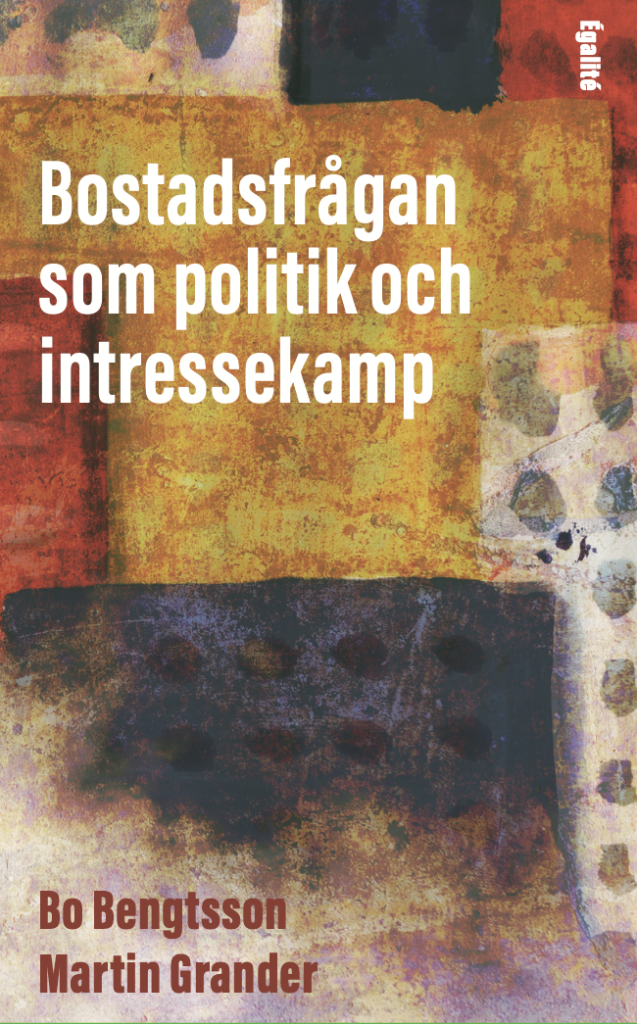
Martin Grander is a researcher at the Department of Urban Studies, Faculty of Culture and Society, Malmö University. His work focuses on housing policy, welfare states, and urban development, particularly addressing socioeconomic segregation, housing inequality, and the evolution of public housing systems. Key Affiliations: Malmö University (current) SNS Förlag (book author) Formas-funded research projects European Union Citispyce project Swedish Association of Local Authorities and Regions (SKL) collaboration Research Trends: Grander’s publications analyze housing as a welfare dimension, historical institutionalization of housing policies, and contemporary challenges like globalization and financial market integration. Recent articles explore social innovations, youth inequality, and housing market neutrality between ownership and rental. Scientific Awards: Recipient of Årets avhandling (Dissertation of the Year) for his PhD thesis on Swedish social housing. Collaborations: Engaged with stakeholders such as AFRY, Rädda Barnen, Stadsmissionen, Glokala Folkhögskolan, Seved Area Program, and Swedish housing policy actors (Fastighetsägarna Sverige, Sveriges Allmännytta, Hyresgästföreningen).