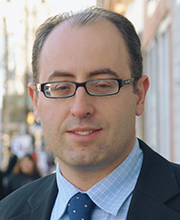
Jino Distasio is a Professor and Acting Dean of Science at The University of Winnipeg, Department of Geography. He teaches Urban Geography, Cultural Geography, and Social Geography, with courses like GEOG-3413 Urban Revitalization and GEOG-3430 Housing and Neighbourhood Planning . His research focuses on housing and neighborhood development, city planning, urban revitalization, homelessness, mental health, and urban transportation. Teaching Areas : Urban Geography, Cultural Geography, Social Geography Key Collaborations : Institute of Urban Studies (U. of Winnipeg), Housing First initiatives, interdisciplinary teams in public health and social policy His recent publications highlight Housing First interventions, urban policy impacts on homelessness, and social determinants of health. Scientific awards and honors were not explicitly mentioned in the provided text.
Dr. Daniel Dutton is an Associate Professor in the Department of Community Health and Epidemiology at Dalhousie University's Faculty of Medicine, based at the Dalhousie Medicine New Brunswick campus in Saint John. His research focuses on how social environments influence health outcomes and the role of government policies in mitigating these impacts, particularly in areas like poverty, homelessness, and health economics. He holds adjunct roles at the University of New Brunswick (Sociology) and is the Scientific Director of APPTA, a hub bridging aging research and policy. He teaches courses in epidemiology, population health, and statistics. Education: PhD in Community Health Sciences (University of Calgary) MA in Economics (University of Calgary) BA Honours in Economics (Queen’s University) Research Interests: Dr. Dutton examines population-level health determinants, government policy effectiveness, and socioeconomic disparities. His work employs large datasets and econometric models to analyze topics such as homelessness incidence, healthcare cost savings through preventive measures, and the distributional impacts of public spending. Key Contributions: Scientific Director of the APPTA aging and technology hub. Co-founder of the IMPART research collaborative. Author of influential studies on Housing First programs, opioid prescribing patterns, and the fiscal benefits of guaranteed annual income policies. Advising & Grants: Supervises multiple MSc students and has collaborated on grants analyzing healthcare utilization in New Brunswick and Alberta. His work often intersects with policy-making, emphasizing actionable insights from quantitative research. Labs & Teams: Leads the Dutton Research Group, which uses mascot Odin the Saint Bernard to foster team cohesion. Active in interdisciplinary collaborations across public health, sociology, and economics.
Gayle Letherby is a Visiting Professor of Sociology at the University of Plymouth’s Peninsula Medical School (Faculty of Health), and holds visiting roles at the University of Greenwich and the University of Bath’s Centre for Death and Society (CDAS). She is an Academician of the Academy of Social Sciences (since 2007) and recipient of the 2023 Lifetime Contribution to Autoethnography Award. Her research focuses on feminist methodology, health sociology, grief and bereavement, mobility studies, and criminology. She has supervised over 20 doctoral students across multiple universities, including topics like non-motherhood, occupational therapy, and gang culture in African Caribbean communities. Her teaching spans undergraduate and postgraduate levels, covering crime theory, auto/biographical research, and feminist epistemology. Notable collaborations include participatory studies on homeless individuals’ food experiences and ethnographic explorations of medical decision-making. Her interdisciplinary work bridges sociology, criminology, and health studies, with a strong emphasis on autoethnographic and creative methodologies. Recent research explores themes like grief narratives, gendered travel experiences, and the emotional dimensions of doctoral journeys. She has contributed to policy discussions on family-centred care and has been a guest lecturer globally, including at York University (Canada) and University College Cork (Ireland). Awards: Academy of Social Sciences Academician (2007), Lifetime Contribution to Autoethnography (2023) Teaching Expertise: Feminist research methods, criminology, sociology of health, gender studies Key Research Areas: Auto/biography, non-motherhood, medical sociology, mobility, grief studies
Jennifer Lavoie is an Associate Professor at Wilfrid Laurier University's Faculty of Human and Social Sciences, affiliated with the Department of Psychology and Criminology. She specializes in mental health crisis response, policing strategies, de-escalation techniques, and scenario-based training. Wilfrid Laurier University: Faculty of Human and Social Sciences, Psychology and Criminology Departments Research Interests : Her work focuses on integrating virtual reality and scenario-based training to improve police de-escalation skills. She examines violence risk assessment , correctional systems , and housing first programs for homeless individuals with mental illness. Recent studies address big data governance , cyberstalking victimization , and community-driven policing approaches . Publication Trends : Her research spans mental health policy , police training efficacy , and technological integration in crisis management . She explores virtual reality applications and community co-designed interventions , alongside longitudinal studies on stress and coping mechanisms in correctional and psychiatric settings. Scientific Awards : No scientific awards listed in available data. Advising : Actively supervises students in psychology and criminology, with unlisted advisees. Her work bridges academic research and practical policing applications .
Anita Hubley is a Professor at the University of British Columbia's Faculty of Education, Department of Educational and Counselling Psychology, and Special Education (ECPS). She serves as MERM Program Coordinator and directs the Adult Development and Psychometrics Lab. Her work focuses on psychometric test development/validation and quality of life research across adult populations. Education: Ph.D. in Psychology (Human Assessment specialization), Carleton University (1995) M.A. in Psychology (Lifespan Development and Aging), University of Victoria (1991) Pre-doctoral training at Geriatric Assessment Unit (Ottawa) and Neuropsychological Assessment Unit (Ottawa) Her research integrates psychometric theory with practical applications in aging populations, homeless/vulnerably housed individuals, and neuropsychological assessment tools. Key contributions include developing the Memory Test for Older Adults (MTOA), Hubley Depression Scale for Older Adults (HDS-OA), Quality of Life in Homeless and Hard-to-House Individuals (QoLHHI), and Subjective Age Identity Scale (SAIS). Scientific Awards: Killam Teaching Prize (2017) Distinguished Reviewer, Buros Institute of Mental Measurements (2013) She has taught graduate courses in Psychological Assessment, Measurement Principles, Scale Development, and Applied Neuropsychology, emphasizing ethical testing practices and response process research. Her lab's work on test adaptation for marginalized populations has informed international measurement standards.
Paula Ravasco is an Associate Professor at the Católica Medical School , Catholic University of Portugal , and a Researcher at the Center for Interdisciplinary Research in Health (CIIS) . She is a Medical Doctor specializing in Immuno-haematology and Haemotherapy, a Nutritionist with expertise in Clinical Nutrition, and holds a PhD in 'Cancer: metabolic dysfunction, nutrition and Quality of Life'. International postgraduate studies in clinical nutrition, research methodologies, and immunity-nutrition interactions Coordinator of international advanced training programs in Nutrition, Metabolism, and Cancer Faculty member of the European Society for Clinical Nutrition and Metabolism (ESPEN) Her research focuses on nutritional interventions in oncology, with emphasis on vitamin D supplementation , sarcopenia in cancer patients , and synbiotics in colorectal cancer treatment . Recent work includes systematic reviews on nutritional biomarkers, patient outcomes, and quality of life improvements through noninvasive monitoring. Key projects include NutriCancerMonitor for multidimensional nutritional monitoring during cancer treatment and the Vulneráveis mais vulneráveis initiative addressing inflammatory risk in homeless populations during the COVID-19 pandemic. Her collaborations span national and international institutions, with a focus on nutrition-oncology intersections , geriatric nutritional care , and systematic review methodologies . She contributes to UN Sustainable Development Goals (SDGs) through educational programs and nutritional research.
Professor Juliet Foster is Dean of Education at the Institute of Psychiatry, Psychology & Neuroscience (IoPPN), King's College London. Previously, she served as Deputy Dean of Education at the Psychology Department since 2018 and held academic roles at the University of Cambridge as Senior Tutor and Senior Lecturer. King's College London (2018–present) University of Cambridge (prior to 2018) Her research focuses on public understandings of mental health, student wellbeing, and sociocultural psychology. She employs qualitative and mixed-methods approaches, contributing to the development of the 'whole university' mental health strategy. Juliet collaborates with Student Minds, the UK student mental health charity, and serves as an Assessor for the University Mental Health Charter. Key projects include evaluating peer support systems, studying loneliness in students, and analyzing media representations of mental health and homelessness. Her work aligns with the UN Sustainable Development Goal of Quality Education. Scientific Awards: British Psychological Society Social Psychology Section Award for the Most Outstanding PhD She co-chairs King's College London's Steering Committee on Student Mental Health and Wellbeing and has served on the British Psychological Society's Education and Training Board. Her research has been funded by ESRC, AHRC, and NIHR.
Dillon Newton is a Research Fellow at the School of Human and Health Sciences , University of Huddersfield, and a member of the Centre for Applied Research in Health . His work focuses on interdisciplinary research in social policy, addressing contemporary societal challenges through policy and practice responses. Joined University of Huddersfield in 2020 PhD from University of Salford's Sustainable Housing & Urban Studies Unit Active in research commissioned by UK government, local authorities, and NGOs Research Interests include: Migration : Integration of international nurses, pandemic impacts on healthcare workforce Housing : Housing quality, homelessness, pandemic-related mental health effects Social Inequalities : Devolution, community health outcomes in Northern England Regional Food Systems : Food security and policy intersections Article Trends highlight interdisciplinary work across Public Health , Social Policy , and Migration Studies , with a focus on acculturation , pandemic effects , and structural equation modelling . Scientific Metrics : Scopus h-index: 125 Google Scholar h-index: 6 (from 69 citations) Advising : Accepting PhD students in areas related to migration, housing, and social policy. Collaborates with institutions like University of Salford and University of Huddersfield on grants from UK government departments and charities. Labs & Teams : Collaborates with the Centre for Applied Research in Health and Sustainable Housing & Urban Studies Unit. External collaborations span countries including Nepal, New Zealand, and England.
Ryan K. McBain is a Senior Policy Researcher at the RAND Corporation and an Adjunct Professor of Policy Analysis at the RAND School of Public Policy. His work focuses on designing and evaluating health policies targeting vulnerable populations, including those affected by mental health conditions, HIV/AIDS, homelessness, and poverty. He employs methodologies such as econometric analysis, cost-effectiveness modeling, and qualitative research. Internationally, he collaborates with organizations like the World Bank, WHO, and Partners In Health in sub-Saharan Africa and Haiti. McBain holds a D.Sc. and M.Sc. in Global Health (Health Economics & Policy Analysis) from Harvard University and a B.A. in Psychology from Gordon College and Oxford University. His research emphasizes telehealth trends, mental health crisis systems (e.g., 988 hotline preparedness), and the intersection of housing and healthcare access. He advocates for evidence-based solutions to address systemic inequities in healthcare delivery and advocates caution in leveraging AI for mental health interventions. Education: D.Sc. and M.Sc. in Global Health from Harvard University; B.A. in Psychology from Gordon College and Oxford University. Key Research Themes: Mental Health Policy, HIV/AIDS Programs, Telehealth Expansion, Homelessness Solutions. McBain’s recent work includes analyzing psychiatric bed shortages, evaluating permanent supportive housing programs, and assessing the competency of AI models in mental health contexts. He emphasizes interdisciplinary collaboration to bridge gaps between research and policy implementation.
Philip Zelazo is the Nancy M. and John E. Lindahl Professor at the University of Minnesota's Institute of Child Development, where he investigates the development and neural bases of executive function. Previously, he held the Canada Research Chair in Developmental Neuroscience at the University of Toronto. His educational background includes: Honors BA from McGill University (1988) PhD with distinction from Yale University (1993) Zelazo's research centers on executive function—the conscious control of thought, action, and emotion—with emphasis on cognitive complexity, consciousness development through thalamo-cortical circuits, and the distinction between "cool" (dorsolateral prefrontal cortex-associated) and "hot" (orbitofrontal cortex-associated) aspects. His methodologies span experimental, cross-cultural, and electrophysiological (EEG/ERP) approaches, integrating theoretical frameworks like the Cognitive Complexity & Control theory and Levels of Consciousness model. Analysis of his 2017-2024 publications reveals consistent focus on executive function development across childhood, mindfulness-based interventions, socioeconomic impacts on cognitive development, and translational applications for education and mental health. His work increasingly addresses real-world implementation through NIH Toolbox measures and school readiness programs. His major recognitions include: Fellow of the American Psychological Association (APA) Fellow of the Association for Psychological Science (APS) Fellow of the American Association for the Advancement of Science (AAAS) Fellow of the Mind and Life Institute Boyd McCandless Young Scientist Award (APA, 1996) Canada’s Top 40 Under 40 Award 2025 Award for Distinguished Contributions to Developmental Psychology (APA) Zelazo actively mentors doctoral students (open to new advisees in fall 2026) and leads significant grant initiatives, including development of the NIH Toolbox Executive Function measures and NIH Infant and Toddler Toolbox "Cognition and Executive Function" assessments. His interventions target EF promotion in high-risk populations, such as preschoolers experiencing homelessness. He directs the Developmental Social Cognitive Neuroscience Lab, which examines neural mechanisms of executive function using EEG/ERP and behavioral paradigms, with recent projects on mindfulness training effects and socioeconomic adversity impacts.
Trevor Goodyear is an Assistant Professor at the University of British Columbia (UBC) Faculty of Applied Science, School of Nursing. His research explores substance use, mental health, and health equity among marginalized populations, particularly 2S/LGBTQ+ youth and people who inject drugs. Education: MSN, MPH, PhD Research Interests: Harm reduction, LGBTQ+ health, mental health, public health, health equity, social determinants of health His recent work examines harm reduction strategies, structural vulnerabilities, and health narratives in urban drug scenes. Publications analyze cannabis use, overdose prevention, conversion practices, and the intersection of gender identity with substance use. His research employs qualitative methods like photovoice and narrative analysis to center marginalized voices. Key trends in his articles include the role of stigma in healthcare, policy implications of substance use research, and the impact of the COVID-19 pandemic on mental health disparities. He advocates for evidence-informed policies and community-driven interventions to address systemic inequities.
Jesper Fels Birkelund is a Tenure Track Assistant Professor at the Department of Sociology, University of Copenhagen. His research focuses on education systems, ethnic inequalities, and social mobility, leveraging advanced statistical methods on register and survey data. He teaches courses such as Basic Statistics, Sociology in Danish Society, and Advanced Welfare, Inequality, and Mobility. His work has been published in journals like Social Forces and European Sociological Review . His research on education examines how schooling impacts cognitive and social-psychological skills, influencing long-term labor market outcomes. He has shown vocational training enhances conscientiousness, yielding earnings comparable to academic tracks. In ethnic inequality studies, he analyzes high aspirations among immigrant students despite poor academic performance, proposing counterfactual models to assess systemic challenges for minority students. In social mobility research, he explores how parental resources (human, cultural, social, economic capital) shape children’s career trajectories, particularly when parents and children share the same field of study. He uses firm linkage data to study mechanisms like parental networks and inherited family businesses. Awards: 2022 ECSR Prize for Best PhD Thesis Teaching: Basic Statistics (BA), Sociology in Danish Society (BA), Education and Social Inequality (BA/MA), Advanced Welfare, Inequality, and Mobility (MA) His work integrates micro-class approaches with intergenerational transmission theories, contributing to debates on educational policy and labor market equity. Office hours for Spring 2025: Monday 15:00–16:00 in room 16.0.57.
David Wainwright is a Senior Lecturer in the Department for Health at the University of Bath, where he convenes the cross-faculty Work, Health and Wellbeing Research Group and serves as Director of Studies for Professional Doctorate in Health programmes. University of Bath, Department for Health Former affiliations: University of Kent (School of Social Policy, Sociology and Social Research), University of Bristol (Social Medicine Department, MRC Collaboration) Research Focus : Intersections of work, health, and wellbeing, emphasizing: Medicalization of occupational stress Extended working life and pension policy Psycho-social drivers of illness behavior Management of medically unexplained illnesses Recent Projects include: Behavior change interventions for extended working life (DWP-funded) Sickness certification for chronic pain Community-based support for intellectual disabilities Health seeking behavior among homeless populations Collaborations span healthcare policy, chronic pain research, and interdisciplinary studies with institutions like Royal United Hospitals Bath NHS Trust and MRC Health Services Research Collaboration.
Paris Adkins-Jackson is an Assistant Professor in the Departments of Epidemiology and Sociomedical Sciences at Columbia University’s Mailman School of Public Health. She is an affiliated member of the Health Analytics Center. Her work focuses on structural racism’s impact on health equity, particularly among Black, Pacific Islander, and Latinx/a/o communities. She holds a PhD in psychometrics from Morgan State University and serves as a board member of the Society for the Analysis of African American Public Health Issues. Dr. AJ’s research explores how structural racism influences healthy aging, including the effects of policing exposure on psychological well-being and biological aging in older adults. She also develops anti-racist interventions to enhance community trust and health through multisector partnerships. Her educational background includes a Master of Public Health (MPH), and she is actively involved in advancing health equity through policy and community-engaged research. Her recent work emphasizes methodological approaches for studying structural racism’s biopsychosocial impacts and addresses disparities in clinical trial participation and vaccine uptake. She has published extensively on topics like neighborhood greenspace and cognitive health, racialized disparities in dementia, and the role of anti-racist praxis in public health.
Associate Professor Tim Moore serves as Deputy Director at the Australian Catholic University's Institute of Child Protection Studies, where he leads child-inclusive and child-informed research initiatives. With over two decades of experience, he is internationally recognized for his work in child protection, youth justice, residential care, and child sexual abuse prevention. His research directly informs policy and practice, having advised major inquiries including the national Royal Commission into Institutional Responses to Child Sexual Abuse. Moore's research interests span child protection systems, therapeutic residential care, youth justice, homelessness, young carers, and children's rights advocacy. His work emphasizes children's participation in research on sensitive topics and developing child-safe organizations. He has shaped numerous local, national, and international initiatives aimed at improving children's lives through evidence-based approaches that center children's voices and experiences. His publication record demonstrates consistent focus on child safety in institutions, residential care quality, and children's participation in decision-making. Recent work examines therapeutic residential care models, children's conceptualizations of safety, and the implementation of the United Nations Convention on the Rights of the Child in Australia. His research increasingly addresses intersectional issues including disability, domestic violence, and youth engagement in abuse prevention. Moore has provided expert advice to multiple government inquiries and commissions, translating research into practical frameworks for organizations working with children. His work with the Royal Commission into Institutional Responses to Child Sexual Abuse significantly influenced national approaches to child safety in institutions. As Deputy Director of the Institute of Child Protection Studies, Moore leads initiatives that bridge research, policy, and practice in child protection. His team develops resources and training for organizations on child-safe practices, with particular emphasis on understanding children's perspectives and experiences within institutional settings.