Valerie Hansen is the Stanley Woodward Professor of History at Yale University's Department of History. She specializes in Chinese history to 1600, the Silk Road, and global medieval connectivity. Her research bridges legal, religious, and economic dimensions of pre-modern societies. Hansen’s work includes groundbreaking books such as The Year 1000 (2020), redefining globalization’s origins, and The Silk Road: A New History (2012), integrating archaeological and textual sources. She led the Luce Foundation-funded Silk Road Project (1995–1998), unifying Turfan artifacts. Her articles span legal pluralism in Silk Road cities, Liao dynasty material culture, and Viking exploration’s global impacts. Awards include American Academy of Arts and Sciences Fellowship (2021) and Collège de France lectureship (2019). Hansen collaborates internationally, editing volumes on textiles as money and Song-Yuan studies. Her research emphasizes interdisciplinary methods, blending history with archaeology and art.
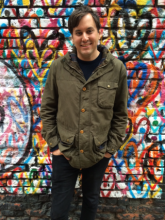
Jim Sykes is an Associate Professor of Music at the University of Pennsylvania's School of Arts & Sciences. His research focuses on ethnomusicology, sound studies, and the cultural histories of the Indian Ocean world. He specializes in examining sonic practices across Afro-Asiatic seascapes, colonial surveillance systems, and postcolonial music theory. His work bridges disciplines like anthropology, history, and cultural studies, emphasizing decolonial methodologies. Recent scholarship explores governmental acoustic surveillance in maritime contexts, the politics of area studies, and the role of music in labor and value systems. He has contributed to rethinking sound studies through global south perspectives, including projects on sonic cartography and indigenous acoustic knowledge systems. Sykes has published extensively on topics such as Sri Lankan post-war musical generosity, Dalit liberation theology through Tamil folk music, and colonial sound regulations in British Ceylon. His interdisciplinary approach addresses intersections between sound, power, and cultural memory in contexts ranging from Southeast Asia to the Indian Ocean trade networks.
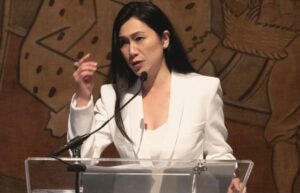
Dr. Agnes Hsu-Tang is an Adjunct Professor at Columbia University’s Department of East Asian Languages & Cultures, specializing in archaeology and art history with a focus on cultural heritage and transnational trade routes. She holds a PhD from the University of Pennsylvania and has served in prestigious roles including Board Chair of The New York Historical Society and Co-chair of the Metropolitan Museum of Art’s Objects Conservation Committee. Her academic contributions span UNESCO missions, international film collaborations, and co-founding institutions like the Tang Center for Early China and Silk Road Studies. Education: BA (Bryn Mawr College, Classical Languages & English Literature), MA (University of Pennsylvania, East Asian & Middle Eastern Studies), PhD (University of Pennsylvania, 2004). Research interests include early Chinese cartography, Silk Road cultural exchanges, and the intersection of art history with imperial geography. Her work bridges archaeology, art, and policy, addressing illicit cultural trafficking and heritage preservation. She has produced award-winning documentaries and serves on global arts and museum boards. Her publications explore topics such as ancient mapping techniques and Silk Road heritage. Awards recognize her academic and leadership roles in cultural preservation. She co-founded the Tang Centers and Hsu-Tang Library, advocating for interdisciplinary scholarship and global cultural dialogue.
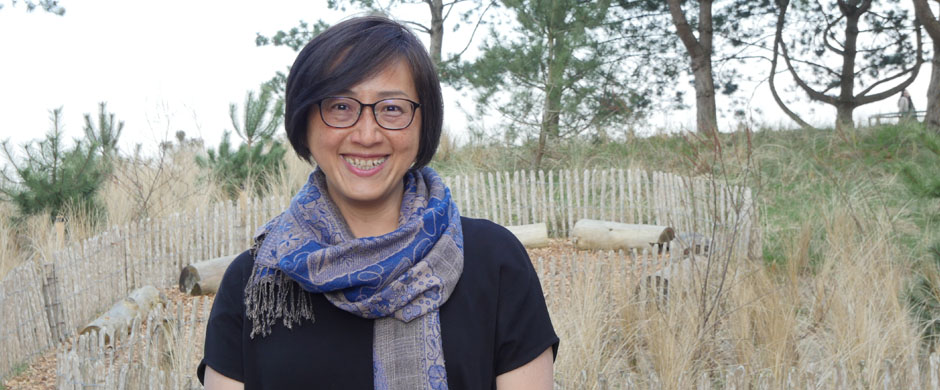
Hsueh-man Shen is the Director of Masters Studies and Ehrenkranz Associate Professor in World Art at New York University’s Institute of Fine Arts. She holds a D.Phil. from Oxford University in Archaeology, an M.A. in Art History from National Taiwan University, and an LL.B. in Law from the same institution. Her research focuses on medieval Chinese art and archaeology, particularly how cross-cultural exchanges shaped artistic practices through translation, replication, and hybridization. She has curated major exhibitions such as Gilded Splendor: Treasures of China’s Liao Empire (2006) and contributed to the Cave Temples of Dunhuang project (2016), emphasizing Silk Road cultural networks. Her current book project explores maritime activities’ impact on Buddhist art during the 10th–14th centuries. Shen’s work bridges art history, archaeology, and material culture studies, addressing topics like relic deposits, shipwrecks, and cross-cultural curatorial practices. She has held prestigious fellowships, including the Leiden University Hulsewé-Waznieski Professorship (2019) and a Wissenschaftskolleg zu Berlin residency (2008–2009). Education: D.Phil., Archaeology, University of Oxford M.A., Art History, National Taiwan University LL.B., Law, National Taiwan University Her research interests include Buddhist art’s transformation across dynasties, the role of replication in devotion, and maritime trade’s influence on cultural boundaries. She teaches courses such as Colors in the Visual Culture of Medieval China and Shipwrecks and the ‘Other’ Silk Road , integrating theoretical and material perspectives. Shen’s awards reflect her global academic contributions, including the EURIAS Senior Fellowship (2018–2019) and Progress 100 Visiting Professorship at Kyushu University (2017). Her publications span exhibition catalogues, monographs like Authentic Replicas: Buddhist Art in Medieval China (2019), and peer-reviewed articles analyzing Silk Road networks, Liao dynasty funerary practices, and cross-cultural material exchanges.
Mimi Yiengpruksawan is a Professor of History of Art at Yale University, affiliated with the Department of East Asian Languages and Literatures, the Council on East Asian Studies, the Council on Southeast Asian Studies, and the Program in Medieval Studies. She holds a Ph.D. from UCLA (1988) and joined Yale in 1990, achieving tenure in 1998. Her research focuses on Buddhist art in nonmodern Japan and Eurasian cultural exchanges, emphasizing cross-regional and interdisciplinary approaches to study contact-driven cultural formation. Her academic work includes two major manuscripts: Michinaga’s Peacocks: A Heian World in Transition (examining exogenous influences on Kyoto’s art) and Kyoto in the Twilight of the Dharma (focusing on eschatological patronage). She also explores early modern Japanese global interactions, analyzing visual production during the 'Nanban' period. Recent research bridges environmental history with art, linking the 1006 supernova and Buddhist prophecies to artistic developments. Key publications include analyses of Buddhist iconography, transnational art networks, and transcultural architecture. She is a leading figure in rethinking Heian Japan’s cultural interconnectedness, challenging isolationist narratives through material evidence and primary sources.
Robert Sharf is the D.H. Chen Distinguished Professor of Buddhist Studies in the Department of East Asian Languages and Cultures at the University of California, Berkeley . He also serves as Chair of the Numata Center for Buddhist Studies and Head Graduate Advisor for the Group in Buddhist Studies . With a PhD in Buddhist Studies from the University of Michigan (1995), he previously taught at McMaster University (1989-1995) and the University of Michigan (1995-2003). Research Interests: Medieval Chinese Buddhism (especially Chan) Japanese Buddhism Buddhist Art and Archaeology Ritual Studies Buddhist Modernism Philosophical Paradoxes Methodology in Religious Studies Critical Buddhist Discourse Publications & Collaborations: Author of Coming to Terms with Chinese Buddhism: A Reading of the Treasure Store Treatise (2002) Co-editor of Living Images: Japanese Buddhist Icons in Context (2001) Co-author of What Can’t Be Said: Contradiction and Paradox in East Asian Thought (2021) Co-author of How to Lose Yourself: An Ancient Guide to Letting Go (2025) Editor of Chinese translations of his works: Xiafu Chanxue zixuan ji and Xiafu Mijiao Yanjiu zixuan ji (2022) Academic Leadership: Director of the Group in Buddhist Studies Director of Religious Studies Chair of the Center for Buddhist Studies
Xin Wen is an Associate Professor of Premodern Chinese History and History at Princeton University, holding dual appointments in the Department of East Asian Studies and the Department of History. He serves as the Director of Undergraduate Studies and is affiliated with the Humanities Council and Behrman Faculty Fellows. His research focuses on medieval China and Inner Asia, particularly the Silk Road’s diplomatic networks and urban/cultural transformations in Chang’an. He earned a B.A. from the University of Science and Technology of China (USTC), an M.A. in Pre-modern Chinese History (Tang dynasty) from Peking University, and an M.A. and Ph.D. in Inner Asian and Altaic Studies from Harvard University. Xin Wen’s work bridges historical analysis with archaeological evidence, using multilingual Dunhuang documents and excavated texts to explore trans-Eurasian connections. His first book, The King’s Road: Diplomacy and the Remaking of the Silk Road , reinterprets the Silk Road as a diplomatic rather than commercial network. His second book project examines Chang’an’s post-Tang urban decline and cultural revival, funded by the American Council of Learned Societies. Collaborations include a study of Zoumalou’s third-century administrative documents with Brian Lander and Ling Wenchao. His research interests emphasize diplomatic history, Silk Road studies, urban transformation, and the interplay between memory and place. He actively publishes in journals like T’oung Pao and Journal of Silk Road Art and Archaeology , and his Chinese articles appear in leading journals such as Lishi yanjiu and Beijing daxue xuebao . Awards include the American Historical Association Prize for his first book. Grants and Funding: ACLS fellowship for his second book project. Labs/Teams: Collaborates with international scholars on Zoumalou documents and contributes to Brill’s publication efforts.
James A. Millward is a Professor of Inter-societal History at Georgetown University's Edmund A. Walsh School of Foreign Service and Department of History. He holds a Ph.D. in History from Stanford University (1993), an MA from the School of Oriental and African Studies (University of London, 1985), and a BA in East Asian Languages and Civilizations from Harvard (1983). Millward specializes in Qing imperial history, the Silk Road, Xinjiang studies, and cross-cultural musical exchanges across Eurasia. Research Interests: His work critically examines Sinicization narratives, the Qing tribute system, and the impact of colonial historiography on contemporary China's ethnic policies. He also explores musical instrument diffusion along the Silk Road, comparing lutes like the pipa and oud. Publications: Notable works include Eurasian Crossroads: A History of Xinjiang (2007, 2021), The Silk Road: A Very Short Introduction (2013), and chapters in edited volumes analyzing Qing multiculturalism and cultural assimilation frameworks. Academic Leadership: As former president of the Central Eurasian Studies Society (2010) and contributor to the International Studies Association award-winning Culture and Order in World Politics (2019), Millward bridges historical analysis with modern political discourse. Media Engagement: A frequent contributor to The New York Times , Washington Post , and international media, he provides expert commentary on Xinjiang, Uyghur issues, and China-West relations. His current projects include a study of lute cultural exchange and the book Decolonizing History in China , challenging exceptionalist narratives in mainland historiography.
Eric Tagliacozzo is the John Stambaugh Professor of History at Cornell University , where he serves as Director of the Southeast Asia Program and a core faculty member in both the Southeast Asia Program and South Asia Program. His scholarly work focuses on the movement of people, ideas, and materials across and beyond Southeast Asia during the late colonial period. PhD in History from Yale University (1999) BA in History from Haverford College (1989) Research interests include maritime history , transnationalism , colonialism , and historical geography of Asia. His recent publications explore global Islamic networks and the interconnected histories of Asian waterscapes. He teaches courses like 'The Pacific Horizon' , 'Global Islam' , and 'Ocean: The Sea in Global History' , emphasizing comparative approaches to Asian studies. Awards Harry J. Benda Prize (2007)
Dr. Wannasarn Noonsuk is an Associate Professor in the Department of Art, Design, and Art History at California State University, Fresno, where she has taught courses like Asian Art, Southeast Asian Art, and South Asian Art since 2018. Her research focuses on the archaeology of Peninsular Thailand , early maritime trans-Asiatic trade , state formation in Southeast Asia , and the social roles of Hindu-Buddhist art . Education : Post-Doctoral Study (2013), École Française d'Extrême-Orient; Ph.D. (2012), M.A. (2009) in Art History, Cornell University; M.A. (2005) in Anthropology, University of Hawai'i; B.A. (2001) in Archaeology, Silpakorn University. Her recent publications analyze Hindu elements in Southeast Asian art (2024), Srivijaya network dynamics (2024), and employ scientific analyses of ceramics (2019-2020) to trace trade and cultural exchange. She has presented at institutions including SOAS (2021), National University of Singapore (2019), and Cornell University (2010), and serves as Vice President of Programs for the Fresno County Archaeological Society (2021-present). Her work spans archaeological science , cultural heritage management , and cross-cultural interactions between South and Southeast Asia, particularly in pre-modern trade and religious networks.
University of California, Los AngelesUnited States
Nile Green is the Ibn Khaldun Endowed Chair in World History at the University of California, Los Angeles (UCLA), where he served as founding director of the UCLA Program on Central Asia (2008-2016). His research bridges global history and Islamic studies, focusing on Muslim networks across India, Pakistan, Afghanistan, Iran, Central Asia, and the Indian Ocean world. Specializes in inter-Asia and Indian Ocean studies Explores Sufism, Persian & Urdu travel writing, and Islamic print history Active on global Muslim interactions with non-Muslim societies His recent articles examine topics spanning Islamicate linguistics , transcultural art history , and historiographical methods , particularly in India, Afghanistan, and China. Earlier works established connections between colonial infrastructure and Muslim pilgrimage (Hajj), while his 2016 book The Love of Strangers documented early Middle Eastern students in Europe. Scientific awards include: Guggenheim Fellowship Luce/ACLS Fellow in Religion, Journalism & International Affairs Albert Hourani Book Award (MESA) Ananda K. Coomaraswamy Book Award (AAS) Bentley Book Prize (World History Association) Sir George Staunton Prize (Royal Asiatic Society)
California State University, East BayUnited States
Peter K. Marsh is a Professor of Music, specializing in Musicology & Ethnomusicology at the Department of Music, California State University, East Bay. His research focuses on Mongolian music and culture, with expertise in ethnomusicology and area studies. He holds a Ph.D. from Indiana University, an M.A. in Ethnomusicology from Wesleyan University, and a B.A. and B.M. from Lawrence University. Marsh is a leading scholar on Mongolian music, particularly the music and culture of Mongolia and Inner Asia. His book, *The Horse-head Fiddle and the Reimagination of Tradition in Mongolia* (2014), explores the evolution of folk fiddles in Mongolian music. He has authored studies on Mongolian popular music, including hip-hop and pop, and presented at major conferences like the Society for Ethnomusicology and the Association of Asian Studies. His work bridges traditional and modern musical practices, emphasizing globalization's impact on cultural expression. Marsh has served as a lecturer at significant events, including the Smithsonian Folklife Festival (2002) and the Stanford University Asian Art Festival (2010). He founded the American Center for Mongolian Studies, supporting U.S. academic research in Mongolia. His research spans fieldwork in Siberia and Mongolia, focusing on shamanistic song traditions and cultural preservation. His recent articles (2012–2022) reflect a sustained engagement with Mongolian music's global dimensions, urban youth culture, and the interplay between tradition and modernity. He has also contributed to initiatives linking music with broader sociocultural contexts, such as the Deer Stone Project (2002–2004). No scientific awards are explicitly mentioned in his profile. His advising and grants include academic collaborations and directorship roles. He is affiliated with the Department of Music and involved with Mongolian cultural organizations, emphasizing interdisciplinary and global perspectives in his work.
University of California, Los AngelesUnited States
Ioanna Kakoulli is a Professor in the Department of Materials Science and Engineering at the University of California, Los Angeles (UCLA), affiliated with the Henry Samueli School of Engineering and Applied Science. She leads the Molecular & Nano Archaeology Lab, focusing on interdisciplinary research at the intersection of materials science and cultural heritage preservation. Her work spans archaeological materials characterization, forensic imaging techniques, and conservation science. Education: D.Phil. (PhD) in Archaeological Science from the University of Oxford (1999). Key research interests include ancient pigment technologies, materials diagenesis, and the analysis of Hellenistic/Roman painting. She pioneered studies on Egyptian blue pigments and cross-cultural material exchanges via trade routes like the Silk Road. Awards include membership on the CAARI Board of Trustees, Visiting Fellowship at ICCROM, and multiple research awards from the A.G. Leventis Foundation and Overseas Research Scheme. Her lab collaborates with international institutions (e.g., Homeland Security Investigations) on looted antiquities and integrates cutting-edge imaging technologies (multispectral/hyperspectral) for non-destructive analysis. Guides students like Xuanyi Wu (SCSMM award winner), Aileen Shin, Lindsey Perry, and others in the Archaeomaterials Group. Research highlights include revealing asbestos use in Byzantine murals and identifying arsenic exposure in pre-Columbian Chilean mummies. Active in developing sustainable preservation strategies for rock-cut tombs and globigerina limestone monuments.
Dr. Sanjyot Mehendale is a Lecturer in Central Asian Archaeology at the University of California, Berkeley, specializing in Eurasian trade and cultural exchange networks. She serves as Chair of the Tang Center for Silk Road Studies and Vice Chair of the Numata Center for Buddhist Studies. Doctorandus, Indo-Iranian Art and Archaeology, Leiden University PhD, Eurasian Trading Networks, UC Berkeley (1997) Her research spans terrestrial Silk Road archaeology in Sogdiana and maritime studies in the Indian Ocean, with fieldwork projects in Uzbekistan (Begram, Tugunbulak) and Sri Lanka (shipwreck excavation). Recent work focuses on integrating material culture analysis with network theories. Scientific awards include: Mabelle McLeod Lewis Dissertation Fellowship Stahl Fund grants Mellon Foundation support National Endowment for the Humanities fellowships and grants She has collaborated with the National Geographic Society on exhibition curation and works with the Silk Road Ensemble (Yo-Yo Ma) on academic outreach.
Dr. Michael Decker is the Maroulis Professor of Byzantine History and Orthodox Religion at the University of South Florida, serving in the Department of History within the College of Arts and Sciences. He holds an Associate Professor rank and has been affiliated with USF since August 2004. His academic career includes a postdoctoral fellowship at Rice University (2002-2004) and a Mellon Fellowship. Educated at the University of Oxford, he earned a Ph.D. (2001) and M.St. (1995) in Modern History, focusing on late antiquity and the Byzantine era. His research interests span Byzantine history, Mediterranean archaeology, agricultural technology in antiquity, and trade networks. Notable projects include the Cambridge Handbook to Byzantine Archaeology (under contract) and studies on Sicily’s history (535-1061 AD) and Sasanian warfare. Dr. Decker also explores overland trade in the Levant and the Oxford Archaeological Survey in Syria. Education: Ph.D., Modern History, Oxford University, 2001 M.St., Oxford University, 1995 Dr. Decker’s publications reflect his interdisciplinary approach, blending history, archaeology, and digital humanities. Recent works include The Byzantine Art of War (2012) and Tilling the Hateful Earth (2010). He actively contributes to academic journals like Ancient West & East and serves as a referee for Cambridge University Press and other publishers. Awards and Fellowships: Fulbright Scholarship (2007) Center for the Defense of Democracies Fellow (2008) Craven Committee Award (1998-2000) He has held leadership roles in university committees, including the USF Department of History Executive Council and the Center for 21st Century Teaching Excellence. His teaching innovations include integrating digital archives of Middle Eastern travel narratives into curricula.