Prof. Dr. Sakibe Nalan BÜYÜKKANTARCIOĞLU is a Professor at Çankaya University, Faculty of Arts and Sciences, Department of Translation and Interpreting Studies (English). She previously served as Professor (2007–2019), Associate Professor (2000–2007), and Assistant Professor (1997–2000) at Hacettepe University, Department of English Linguistics. PhD in English Linguistics (Hacettepe University, 1991) MA in English Language Teaching (Middle East Technical University, 1985) BA in English Teaching (Istanbul University, 1978) Her research spans Linguistics, Cognitive Linguistics, Discourse Analysis, Psycholinguistics, Sociolinguistics, Translation Studies , with a focus on figurative language, interjections, political discourse, and endangered languages. She received the European Language Award (2011) and has supervised numerous PhD and MA theses, including work on Turkish idioms, gender representation, and language awareness. A prolific editor and conference participant, she has contributed to interdisciplinary projects and publications on Turkish sociolinguistics.
Anna Morcom is Professor and Mohindar Brar Sambhi Chair of Indian Music in the Department of Ethnomusicology at UCLA's Herb Alpert School of Music. She previously held a professorship at Royal Holloway, University of London, and earned her Ph.D. from SOAS (School of Oriental and African Studies) in 2002, where she also completed her undergraduate studies in Ethnomusicology and Hindi (1993-1996). Her research spans music and dance in India and Tibet, employing ethnographic and oral historical methods to examine the intersections of musical culture with politics, nationalism, identity, gender, inequality, economic development, and media. Morcom's scholarship is notable for its interdisciplinary approach that bridges traditional and popular musics with contemporary theoretical frameworks. Her work demonstrates significant trends toward examining music within economic frameworks, particularly through her founding of SEM's Special Interest Group on Economic Ethnomusicology. Recent publications increasingly focus on cultural economies, performance labor, and the relationship between artistic practice and economic systems in South Asia. Society of Ethnomusicology's Allan Merriam prize (2014) Marcia Herndon prize of SEM's Gender and Sexualities section (2014) Morcom's research has been supported by multiple grants from the Leverhulme Trust and the British Academy. She has been interviewed by prominent media outlets including BBC Radio 4's Thinking Allowed, The Hindu, Tehelka, and Scroll regarding her influential work on Indian dance cultures. As founder of SEM's Special Interest Group on Economic Ethnomusicology, she has shaped scholarly discourse on the economic dimensions of musical practice. Her current projects include the monograph on Hindustani music and co-editing two significant volumes: Creative Economies of Culture in South Asia: Craftspeople Performers (Routledge) and the Oxford Handbook of Economic Ethnomusicology (OUP).
Dr. Enrica Dall'Ara serves as the Associate Dean of Planning and Landscape Architecture and an Associate Professor at the University of Calgary's School of Architecture, Planning and Landscape. Her work bridges academic research and professional practice, exemplified through her firm PARC, which specializes in public space design, urban renewal, and the rehabilitation of industrial sites. She emphasizes interdisciplinary collaboration, integrating fields like environmental engineering and biology into landscape architecture. Education: Laurea in Architettura (Master Degree equivalent in Architecture), University of Ferrara, Italy Master in Landscape Architecture, ETSAB, Polytechnic University of Catalonia, Spain PhD in Landscape Design, University of Florence, Italy Research Interests: Dr. Dall'Ara focuses on practice-based research, public space design, service landscapes, and the integration of cultural advocacy into landscape architecture. Her work explores site-specific design solutions, the role of agriculture in urban-rural dynamics, and the preservation of traditional rural landscapes. She advocates for designs that serve life through poetic, functional, and culturally sensitive approaches. Contributions: Through her teaching, Dall'Ara encourages students to view design as research, fostering critical thinking and interdisciplinary dialogue. Her firm’s projects, such as the roundabout gardens in Imola, Italy, demonstrate her commitment to merging ecological, functional, and aesthetic considerations in landscape interventions. Professional Affiliations: Canadian Society of Landscape Architects (CSLA) Alberta Association of Landscape Architects (AALA) Associazione Italiana di Architettura del Paesaggio (AIAPP) Ordine degli Architetti, Pianificatori, Paesaggisti e Conservatori (Province of Forlì-Cesena, Italy)
Lena Berggren serves as an Associate Professor in the Department of Historical, Philosophical and Religious Studies at Umeå University, Sweden, with her office located in Humanisthuset (HUM.H.125), Umeå. She holds the title of Docent and has been honored as a Distinguished university teacher for exceptional pedagogical contributions. Her academic qualifications include the Swedish Docent credential (a post-doctoral habilitation) and recognition as a Distinguished university teacher, reflecting dual expertise in research and education. Berggren's research centers on Swedish fascism, antisemitism, and ultra-nationalism during the interwar period, with specific focus on clerical fascism intersections with Lutheranism and völkisch thought. She simultaneously advances university pedagogy through investigations into scientific methodology development and assessment strategies for students, creating a unique bridge between historical scholarship and educational innovation. Analysis of her publication trajectory reveals persistent examination of extremist ideologies' historical roots and modern manifestations, culminating in her 2024 co-authored book '100 år av svensk nazism' which directly addresses contemporary far-right movements in Sweden. Her scientific recognition includes: Distinguished university teacher award Berggren secured research funding for the project 'Swedish fascism 1920-1950' (2007-2008), demonstrating sustained investigative focus. While no formal advisee list is documented, her pedagogical publications indicate active mentorship in historical methodology and academic writing development.
Dr. Yaron Meron is a Lecturer and researcher in design at the University of Sydney's School of Architecture, Design and Planning. He holds a PhD (RMIT, Melbourne) and two Master's degrees (RMIT, Central St Martins). His work bridges academic research and professional practice, focusing on graphic and communication design, socially engaged design, AI integration, and responsible design thinking. Meron’s research explores interdisciplinary challenges, design collaboration, and the societal impact of emerging technologies like AI. He coordinates the Civic & Social Design Research Group. Educations: PhD in Design (RMIT University, Melbourne) MA in Design (RMIT University, Melbourne) MA in Communication Design (Central Saint Martins, London) Research Interests: Graphic design as an interdisciplinary practice Artificial intelligence in design education and practice Media literacy and defamiliarisation techniques Socially engaged design methodologies Design briefs and stakeholder relationships Articles & Trends: Recent publications emphasize AI's role in design education, speculative urban futures, and critical design approaches to media literacy. His work frequently intersects with pedagogy, ethics, and technology’s societal implications. Labs/Teams: Coordinator of the Civic & Social Design Research Group, fostering collaborative projects on responsible design and interdisciplinary innovation.
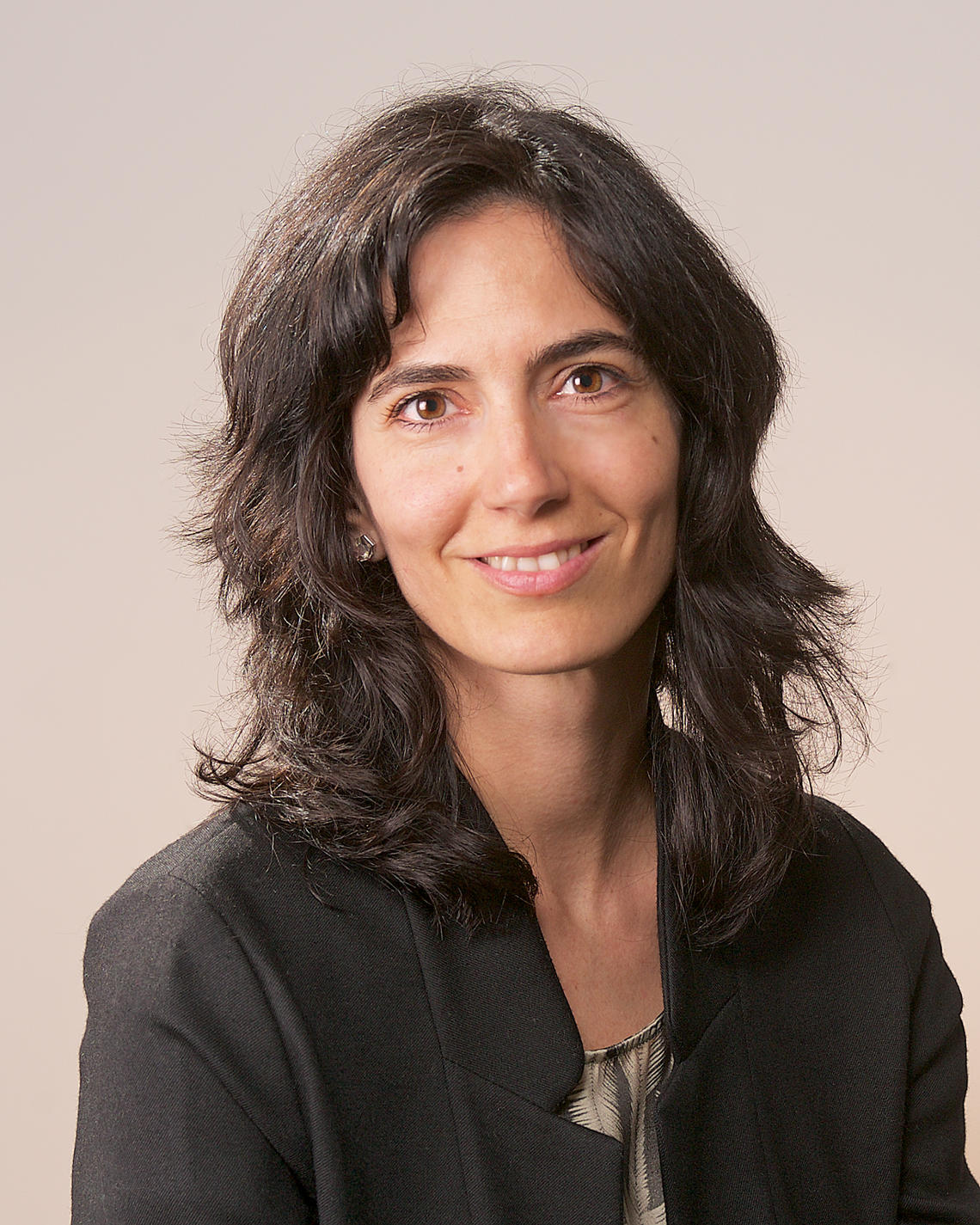
Carolina Alves is an Associate Professor in Economics at University College London's Institute for Innovation and Public Purpose (IIPP). She holds a distinguished position as a Fellow in Economics at Girton College, University of Cambridge, and serves on the Leadership Team of the UCL Centre for Capitalism Studies. Her academic journey spans prestigious institutions including SOAS, University of London for her PhD, and Unesp and Unicamp in Brazil for her undergraduate and master's degrees. BSc in Economic Science from Unesp (Brazil) MPhil in Sociology of Labour from Unicamp (Brazil) PhD in Economics from SOAS, University of London Joan Robinson Research Fellow in Heterodox Economics at Girton College, University of Cambridge Dr. Alves' research spans critical areas including Critical Macro-Finance, Structuralist Macroeconomics, and the Decolonisation of Economics, with influences rooted in Classical Political Economy, Latin American Structuralism, Dependency Theory, and Marxian economics. Her work critically examines the international monetary system, power relations in economic systems, and Eurocentric limitations in economic theory. Her recent publications demonstrate a strong focus on heterodox economic approaches, with particular attention to government bonds, international financial subordination, and the historical development of economic thought. Her eight most recent publications reveal a consistent research trajectory examining the intersections of political economy, financial systems, and economic theory development, with increasing attention to decolonial perspectives in economics. This work has garnered significant attention across academic and policy circles, with multiple citations and social media engagement. Joan Robinson Research Fellowship in Heterodox Economics at Girton College, University of Cambridge Co-founder of Diversifying and Decolonising Economics initiative Co-editor of The Developing Economics blog Trustee for Cambridge Trust for New Thinking in Economics As an educator, Dr. Alves serves as module leader for 'New Economic Thinking and Public Value' and co-leader for 'Rethinking Capitalism' at UCL. She is deeply engaged in initiatives aimed at transforming economics education, particularly through the Diversifying and Decolonising Economics movement which she co-founded. Her leadership extends to multiple advisory roles including the Rebuilding Macroeconomics Advisory Board, Progressive Economy Forum Council, and Positive Money Advisory Panel.
Margarita Boenig-Liptsin is a tenure-track Assistant Professor of Ethics, Technology and Society at ETH Zurich's Department of Humanities, Social and Political Sciences, a position she has held since September 2022. Trained in Science, Technology and Society with dual PhDs from Harvard University (History of Science) and Université Paris-Sorbonne (Philosophy), she brings interdisciplinary expertise to examining the relationship between technology, power, democracy, and ethics. Her research spans several interconnected areas focusing on transformations to human identity and citizenship in relation to information technologies across time and cultures. She investigates the social and political aspects of digital technologies, identity and selfhood in technological societies, ethics of technology, and comparative cultures of innovation. Her work uniquely bridges historical analysis with contemporary ethical concerns, examining how concepts like human dignity evolve alongside technological developments from punch cards to AI governance frameworks. Her recent publications (2023-2025) reveal a strong focus on AI ethics, data justice, and the philosophical implications of algorithmic systems. These works demonstrate her consistent interest in how technology shapes democratic processes, citizenship, and ethical frameworks. Her research shows progression from historical studies of computer literacy programs to contemporary analyses of generative AI's impact on knowledge production and everyday ethics. Her scientific recognition includes: NSF funding for her collaborative project on Silicon Valley's innovation imaginary Mozilla Foundation Responsible Computer Science Challenge grant (2018-2021) Academic Data Science Alliance support (2020-2022) Sorbonne Université's Paris IAS Chair on 'Major Changes' (2021-2022) At ETH Zurich, she leads research and teaching initiatives that build connections between engineering and social sciences. Previously at UC Berkeley, she directed the Human Contexts and Ethics Program, developing the Human Contexts and Ethics component for data science education. Her work consistently emphasizes translating social science theory for diverse audiences and connecting scholarly work to community needs in Zurich, Switzerland, and Europe. She teaches courses including 'Artificial Intelligence and Human Values' and 'Research in Ethics, Technology and Society' for the Fall 2025 semester.
Aeli Roberts is a Professorial Teaching Fellow at The Bartlett School of Sustainable Construction, University College London, specializing in sustainability, health and safety, and sustainable construction practices. She is a member of BSSC's Centre for Sustainable Governance and Law in the Built Environment, a partnership between UCL and Gatehouse Chambers. Her educational background includes a diverse range of qualifications: PhD from Open University (2004), Bar Vocational Course from BPP Law School (2005), BSc in Construction Management from University College London (2003), MSc from Royal Holloway (1988), BSc from Royal Holloway (1986), and Higher National Diploma from Camberwell College of Art (1990). Initially trained as a chemist, she worked in industry and taught material science to conservation students before transitioning to construction management. Roberts' research focuses on integrating green space within urban environments for environmental and social benefits, health and safety in construction, and sustainable building practices. Her work examines sustainability in small and medium enterprises (SMEs), which employ 85% of UK construction workers, and explores architect-client interactions for sustainable domestic construction. She has conducted comparative studies of health, safety, and well-being in UK and Hong Kong construction industries. Her publication record shows a strong focus on operational failure mitigation, knowledge transfer for safety culture, and the role of building control in sustainable construction. Recent work emphasizes climate change impacts on construction, wellbeing in the industry, and sustainable design integration. Her research bridges academic theory with practical application in the construction sector. Scientific Awards: Significant contributions serving the Design Futures Council's London and Cambridge Think Tank (2012) Roberts has held teaching positions across multiple subject areas including materials science, law, and sustainability. She has developed a third-year module on built asset management, emphasizing the importance of post-occupancy building performance. Her teaching philosophy connects historical building conservation with contemporary sustainability challenges, particularly in the context of upgrading existing housing stock to meet carbon reduction targets. She has been involved in collaborative research projects with organizations including the London Chamber of Commerce and Industry (LCCI), focusing on eco-design training for the construction supply chain. Her work with the CIC 2050 Group demonstrates engagement with industry-wide sustainability initiatives.
Linda Argote is the Thomas Lord Professor of Organizational Behavior and Theory at the Tepper School of Business, Carnegie Mellon University. She serves as Director of the Center for Organizational Learning, Innovation, and Knowledge. Her academic journey includes prior roles such as David M. Kirr Professor and Carnegie Bosch Professor. She holds a Ph.D. in Organizational Psychology from the University of Michigan and a B.S. in Psychology from Tulane University. Her research focuses on organizational learning, innovation, knowledge transfer, and group processes, with notable contributions to transactive memory systems and team performance. Argote has received prestigious awards like the Joseph E. McGrath Award and an Honorary Doctorate. She actively contributes to academic leadership through roles in editorial boards, grant reviews, and university committees. Her teaching includes courses on organizational learning and strategic management.
Heewon Chang, Ph.D., is a Professor and Chair in the PhD in Organizational Leadership Department at Eastern University's College of Business and Leadership. She specializes in autoethnography and qualitative research methods, with notable works including Autoethnography as Method (2008). Her research focuses on multicultural education, leadership development, and collaborative learning within marginalized communities. Dr. Chang has contributed to advancing methodologies like Collaborative Autoethnography (CAE) and the Transformative Autoethnography Model (TAM). Her academic journey includes an MA in Education and Anthropology from the University of Oregon (1984) and Pennsylvania Elementary Teaching Certification (2000). She has served in leadership roles, emphasizing equity and inclusion in higher education. Her work bridges personal narratives with sociocultural analysis, impacting fields like organizational behavior and pedagogy. Key research themes include BIPOC doctoral student experiences, online leadership program efficacy, and systems thinking in education. Dr. Chang’s publications span journals and edited volumes, reflecting her commitment to democratizing knowledge through participatory research. She has also contributed to journal editing and community service, advocating for educational equity and mentorship for underrepresented scholars.
Dr. Andrea R. English is a Senior Lecturer in Philosophy of Education at the Moray House School of Education and Sport, University of Edinburgh. She holds significant academic leadership roles, including President-Elect of the John Dewey Society and Editor-in-Chief of IMPACT: Philosophical Perspectives on Education Policy . Her research focuses on productive struggle in learning, dialogic pedagogy, and decolonizing education. She earned her doctorate from Humboldt University Berlin and has taught globally, including at Mount Saint Vincent University and Humboldt University Berlin. Dr. English leads the Productive Struggle Lab and the Listening Study Group, emphasizing anti-oppressive and democratic educational approaches. She coordinates teacher education initiatives and supervises PhD students exploring critical thinking, inclusive education, and decolonization. Her work bridges philosophy and practice, addressing how teachers foster student resilience through pedagogical listening, particularly in STEM education. She actively contributes to Scotland’s anti-racist curriculum project and collaborates internationally on transformative learning and ethical teaching practices. Dr. English’s teaching spans undergraduate and postgraduate programs, including courses on critical thinking, inclusive pedagogy, and John Dewey’s educational philosophy. Her funded research explores AI tools for identifying student struggle and the role of negativity in transformative learning. She frequently presents at global conferences, advocating for dialogic teaching and moral education reform.
Dr. Gavin Mount is a researcher at UNSW Canberra , specializing in non-traditional security studies , ethnic conflict , and the sociopolitical implications of emerging technologies . His work bridges theoretical analysis with practical applications in conflict transformation and defense studies. Research Focus: Global politics of ethnic conflict, hybrid peace/war frameworks, and socio-political impacts of drone technology. Teaching: Courses like Ethnic Conflict in World Politics and Law, Force and Legitimacy , with a focus on military education and strategic studies. Publications: Recent work includes contributions to Thinking Swarms (2025) and Hybridity on the Ground in Peacebuilding and Development (2018). Grants: Leads the Curricula Integration of Student Wellbeing Resources project under HERDSA. Key Themes across his research include the intersection of technology and conflict, evolving defense paradigms, and pedagogical innovations in security studies.
Daniel M.G. Raff is an Associate Professor of Management at the Wharton School of the University of Pennsylvania, where he has been affiliated since 1994. His research bridges business history and strategy, focusing on urban history, public policy, and historical demography. PhD, Massachusetts Institute of Technology, 1987 BPhil, Oxford University, 1978 MPA, Princeton University, 1976 BA, New College, 1973 Raff’s work explores the historical evolution of business institutions, with recent publications analyzing topics such as pre-modern Chinese real estate markets , industrial routines , and strategic risk management . His research often employs archival data and interdisciplinary methodologies. His publications span business history, economic performance, and transactional engineering, reflecting trends in historical demography , corporate strategy , and market evolution . Raff has also contributed to academic leadership as a Trustee of the Business History Conference and Chair of committees at the Economic History Association. Daniel Raff actively engages in teaching courses like Value Creation & Val Cap and Deals: Econ Struc Trans , emphasizing critical historical thinking in strategic business analysis. He is affiliated with institutions such as the National Bureau of Economic Research and the Wharton Financial Institutions Center.
Nathan Nunn is a Professor at the Vancouver School of Economics at the University of British Columbia. He holds a Canada Research Chair in cultural economics and is affiliated with multiple prestigious research organizations including the Canadian Institute for Advanced Research (CIFAR), the National Bureau of Economic Research (NBER), and BREAD. His office is located in the Iona Building 172 at UBC. Professor Nunn's primary research interests span political economy, economic history, economic development, cultural economics, and international trade. His work focuses on the historical and dynamic processes of economic development, particularly examining how institutions and cultures evolve across societies. He has published extensively on historical factors crucial for economic development, including distrust, gender norms, religiosity, conflict, immigration, state formation, and support for democracy. His contemporary research examines the effects of Fair Trade certification, CIA interventions during the Cold War, foreign aid, school construction, climate shocks, and trade policies, with particular emphasis on how local context influences development policy effectiveness. Nunn's recent publications reveal a strong focus on the relationship between culture, institutions, and economic outcomes. His work increasingly examines how zero-sum thinking affects economic behavior and political divides, the persistence of traditional religious beliefs in Africa, and the historical roots of contemporary economic phenomena. His publications frequently appear in top economics journals including the Quarterly Journal of Economics, Econometrica, American Economic Review, and Science. His scientific contributions have been recognized through fellowships and editorial positions, including serving as an editor at the Quarterly Journal of Economics. He has advised numerous PhD students who have gone on to faculty positions at leading universities worldwide. Professor Nunn actively disseminates his research through various media channels, including podcasts, online courses, and public lectures. His teaching includes courses on economic history, development economics, and political economy, with a particular focus on how historical perspectives inform contemporary economic issues.
Steven Kelts is a Lecturer at Princeton University, affiliated with the School of Public and International Affairs (SPIA) and the Department of Computer Science . He leads the Integrated Ethics in CS program and has served as Director of the non-profit All Tech Is Human. Research Focus: Kelts examines ethical frameworks in technology innovation, historical political economies, and the intersection of democratic theory with corporate responsibility. His work spans Measuring ethics education in computing Evolving corporate structures for ethical action Locke's economic justice theories Machiavelli's republican ideals Madison's institutional designs Publications reveal trends in: Utilitarian logic in Agile teams Roman censorship models 17th-century English economic debates Mill's social value legislation Scientific Recognition: Recipient of Princeton's Council on Science and Technology grants for Agile Ethics program Google seed grant for corporate ethics frameworks University-wide award for GradFutures AI ethics leadership Advisory Roles: Includes ethics advisor to the Responsible A.I. Institute and institutional design mentor for political theory projects.