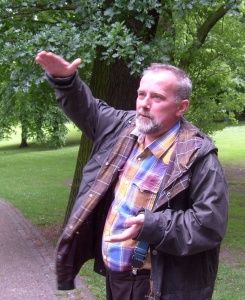
Prof. Alexandru Gafton is a Professor and Head of the Department of Romanian Language and General Linguistics at Alexandru Ioan Cuza University in Iași. His academic career spans roles from preparator (1995–1997) to professor since 2005. He holds a doctorate in philology (2000) and has led doctoral programs since 2008. Gafton is an editor of the journal Diacronia and has organized national conferences on religious discourse. His research focuses on diachronic linguistics, historical phonetics, biblical translation, and cultural anthropology. Key contributions include studies on the evolution of the Romanian language through biblical translations, paleography, and the foundational texts of the Iași School of Linguistics. He has authored over 30 books and numerous articles, including Elemente de istorie a limbii române and Evolutionismul Parabolelor . Gafton’s work emphasizes the interplay between language, culture, and history, with a focus on Romanian linguistic norms and their socio-historical contexts. He has held visiting professorships in Germany and Switzerland and has received grants, including the Prince Dimitrie Sturdza Fellowship. His editorial work includes critical editions of historical texts like Codicele Bratul and Palia de la Orăştie . Gafton’s research also explores the philosophical foundations of science and the role of metaphor in language evolution.
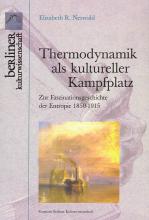
Elizabeth Neswald is an Associate Professor in the Department of History within the Faculty of Humanities at Brock University. Her academic work bridges the history of science and technology, with a focus on thermodynamics, nutrition physiology, and material culture. She teaches courses on science from Ancient Greece to the atomic age, technology since the Industrial Revolution, and specialized topics such as Science, Technology and Gender. Ph.D., Humboldt University, Berlin Postdoctoral Research Fellow, National University of Ireland, Galway Former faculty, University of Aberdeen, Scotland Dr. Neswald's research investigates the historical development of scientific concepts such as entropy and metabolic measurement, particularly in the 19th and early 20th centuries. She explores how scientific ideas intersected with cultural, economic, and gendered contexts, especially in the realms of nutrition, human experimentation, and international scientific collaboration. Her work emphasizes material culture, examining how scientific instruments and practices shape knowledge production. The trends in her publications reveal a deep engagement with the history of measurement, standardization, and the internationalization of science. Her articles span topics from dietary norms and calorimetry to the travels of metabolism researchers and the cultural meanings of entropy. She frequently analyzes how scientific knowledge moves between laboratories and public policy, and how objects in science carry epistemic and affective significance. Her notable editorial contributions include co-editing Setting Nutritional Standards (2017) and The Correspondence of John Tyndall, Vol. 8 (2021). She has authored two influential books: Medien-Theologie. Das Werk Vilém Flussers (1998) and Thermodynamik als kultureller Kampfplatz (2006). While no formal scientific awards are listed, her sustained scholarly output and editorial leadership indicate significant recognition in her field. Dr. Neswald has supervised research and contributed to collaborative projects, including work with the Max Planck Institute for the History of Science. Though specific students are not named, her involvement in editing and mentoring through publications suggests an active role in academic training. She has not received mention of external grants in the provided text, but her research projects imply institutional and possibly external funding support. Her work on international laboratory networks and scientific standardization reflects ongoing scholarly initiatives. She is affiliated with interdisciplinary research communities focused on the history and philosophy of science, contributing to dialogues on scientific instrumentation, human experimentation, and the socio-cultural dimensions of energy and nutrition. Her collaborations with scholars such as David F. Smith, Ulrike Thoms, and Michael Barton highlight her integration into transnational academic networks.
Richard S. Cohen is Associate Professor of South Asian Religious Literatures at the University of California San Diego , where he has been affiliated with the Department of Literature since completing his PhD in Buddhist Studies at the University of Michigan in 1995. His academic journey began with BA and MA in Religious Studies from Wesleyan University. His research focuses on: Buddhist Scriptural Analysis : Particularly examining authority articulations in 5th-century CE texts like The Splendid Vision in which One Observes Living Beings and Reveals Buddha Fields through the Empowerment of All Tathagatas Wisdom Theory : Developing frameworks for analyzing wisdom-claims through Buddhist concepts like the Four Immeasurables to create non-theological political wisdom models Religious Authority Critique : Challenging traditional power structures in South Asian religious contexts His publications reveal trends in: Buddhist textual evolution across South Asia Artistic-religious interplay at sites like Ajanta Dynastic religious community formation Modern reinterpretations of ancient religious concepts Scientific Recognition: Hellman Fellowship : UCSD's prestigious early-career award While currently without formal student advisors listed, his work bridges religious studies with critical theory, influencing both academic and public understandings of Buddhist modernity and institutionalization processes.
Pádraic Moran is a Senior Lecturer in Classics at the University of Galway, specializing in late Roman and early medieval cultural history with a focus on Irish-Latin interactions. He holds a PhD from the University of Galway (2007) and has held postdoctoral positions at the University of Cambridge (2007–2009) and University of Galway (2009–2012). His current role includes co-editing the Peritia—Journal of the Medieval Academy of Ireland from 2025. His research integrates textual analysis with digital humanities, focusing on manuscripts from 4th–9th century Western Europe, particularly Irish annotated manuscripts. Key projects include the GLOSSAM initiative (funded by Irish Research Council Laureate Award) and the Gloss Corpus digital platform. He explores multilingualism in medieval contexts and the impact of Latin pedagogy on Irish society. Dr. Moran has pioneered digital editions of early Irish glossaries and Latin grammatical texts, including the Early Irish Glossaries Database and the St Gall Priscian Glosses . His work intersects with data science, advocating for Linked Open Data in medieval studies through projects like Armarium and the Databases of Early Latin Manuscripts (DELM) network. Notable grants include the 2022–2026 Global and Local Scholarship on Annotated Manuscripts (GLOSSAM) project where he serves as Principal Investigator. He has advised on numerous collaborative research initiatives and publishes extensively on manuscript studies, medieval education, and digital philology. Professional activities include co-ordinating the DELM research network and organizing conferences/workshops on sustainable digital editions. His research bridges classical and Celtic studies, emphasizing interdisciplinary approaches to cultural transmission and textual preservation.
Dr. Pablo Ballesteros-Pérez is a researcher in the field of construction engineering and management, with a focus on project scheduling, bidding processes, and human resource allocation. His work addresses critical challenges in construction procurement, weather impact modeling, and team formation using sociometric techniques. Although his current institutional affiliation is not explicitly stated in the provided text, his extensive publication record in top-tier journals indicates a strong academic presence. His research interests span a wide range of topics including construction bidding behavior, multi-attribute auctions, fast-tracking, weather-aware scheduling, and abnormal bid detection. He has developed practical tools such as the Weather-wise planning system and M-PERT for educational purposes. His methodological approaches often involve statistical modeling, operations research, and data-driven analysis of real-world construction projects. The recent articles highlight a consistent trend in analyzing bidding competitiveness, improving procurement efficiency, and integrating environmental factors like weather into scheduling. His work bridges theoretical models with practical applications in construction management, contributing significantly to both academic knowledge and industry practices. Scientific Awards: None explicitly mentioned in the provided text. Advising and Grants: No information available regarding students supervised or research grants obtained. However, his frequent collaborations suggest active participation in research networks and potential involvement in funded projects. Labs and Research Teams: No specific laboratories or research teams are mentioned in the provided text. However, his co-authorship with researchers from various institutions indicates collaborative research efforts in construction management and engineering.
Lieven Pauwels is a Professor in the Department of Criminology, Criminal Law and Social Law at Ghent University's Faculty of Law and Criminology. His academic work bridges criminological theory with evolutionary biology and moral philosophy, creating a unique interdisciplinary approach to understanding human behavior and social systems. His research interests focus on the evolutionary foundations of morality, cooperation, and free will, examining how biological processes shape human social behavior and ethical systems. He also conducts significant research on drug policy and the social costs of legal and illegal substances in Belgium, providing evidence-based analysis for policy development. His work demonstrates how evolutionary perspectives can inform contemporary criminological theory and social policy. Pauwels' publication record shows a clear trend toward integrating biological and evolutionary perspectives with traditional criminological frameworks. His recent work explores topics ranging from the neurobiological basis of free will to the evolutionary roots of moral emotions like shame and indignation. This interdisciplinary approach has positioned him as a distinctive voice in European criminology that challenges conventional disciplinary boundaries. Economic consequences of legal and illegal drugs (2017) Multiple publications on evolutionary biology and morality (2025) Analysis of cancel culture through historical criminological perspectives (2025) While specific grant information isn't provided in the available text, his research on drug policy social costs suggests involvement in significant policy-oriented research projects, likely funded by Belgian or European research councils. His work appears designed to inform practical policy decisions while contributing to theoretical advancements in criminology. Pauwels maintains an active research program focused on the intersection of biology, evolution, and social behavior, with recent work examining contemporary social issues like cancel culture through historical and evolutionary lenses. His research demonstrates continuity between theoretical criminology and practical policy concerns, particularly regarding substance abuse and social costs.
Prof. Dr. Thomas Richter is a faculty member at Rhine-Waal University of Applied Sciences, where he holds the professorship for the Development of Web-Based Systems within the Faculty of Communication and Environment at the Kamp-Lintfort Campus. He serves as the university's representative for e-learning and digitalization and leads the Software Laboratory, playing a key role in both academic and technical advancement. His educational background, while not detailed in the text, includes a doctoral degree (Dr.) and extensive professional experience spanning over 20 years in software development, project transformation, and industrial software engineering. His research interests center on the engineering of reliable and efficient software systems in distributed and mobile environments. He emphasizes pragmatic, organization-tailored software processes that integrate modern methodologies with real-world constraints. Key areas include: Software Engineering and Process Design Web and Mobile Application Development Cloud Computing and Big Data Integration Cross-Platform Programming Business Process Management Agile, DevOps, and Continuous Delivery Practices Although no specific publications are listed, his teaching and applied work suggest a strong focus on practical software engineering challenges, inspired by historical and systemic failures such as the Vasa shipwreck — a metaphor he uses to highlight recurring issues in software projects like time pressure, creeping requirements, and lack of documentation. He has contributed to academic discourse through recorded lectures available on YouTube since 2015 and actively supervises student internships, semesters abroad, and final theses. His supervision topics include mobile apps, web development, social media integration, and empirical studies in software engineering. Scientific Awards: No awards are mentioned in the provided texts. Prof. Richter advises students on bachelor’s and master’s theses and supports their academic development through structured guidance. While no grants are explicitly mentioned, his role in digitalization and e-learning suggests institutional leadership in funded or strategic initiatives. He audits software projects, provides expert opinions, and supports project reorganization, bridging academia and industry. He is responsible for the Software Laboratory at the university, which likely serves as a hub for student projects, applied research, and software development initiatives. The lab supports hands-on learning and innovation in web-based systems.
Prof. Dr. Andreas Anter is a distinguished Professor at the Faculty of Economics, Law and Social Sciences of the University of Erfurt , Germany. His academic focus centers on political education , with particular emphasis on the German political system , Max Weber studies , political sociology , and democracy analysis . As a leading authority on Weberian theory, he contributes extensively to understanding state theory , modernity , and secularization processes in contemporary societies. His research output includes critical analyses of democratic institutions , political leadership , and the evolution of nation-states under globalization pressures. Anter's publications frequently examine Weber's conceptual frameworks for political rationality , charismatic authority , and modern governance challenges . His work bridges classical sociological theory with contemporary German political debates , particularly on constitutional development and state-society relations . Anter maintains active engagement with media and public discourse, appearing in Frankfurter Allgemeine Zeitung , Neue Zürcher Zeitung , and television/radio programs like MDR Aktuell and Deutschlandfunk . His scholarship informs discussions on power dynamics , political legitimacy , and crisis of democratic institutions . He can be contacted at andreas.anter@uni-erfurt.de .
Aleksi Sahala is a Postdoctoral Researcher at the University of Helsinki's Department of Digital Humanities, affiliated with the Language Technology Centre of Excellence in Ancient Near Eastern Empires (ANEE). His work bridges computational linguistics and ancient language studies, focusing on Akkadian, Sumerian, and Egyptian scripts. Research Interests: Developing neural models for lemmatization and POS-tagging of ancient languages Analyzing phonotactic patterns in Sumerian Exploring semantic domains in Akkadian texts Digital humanities approaches to cuneiform corpora Recent research outputs demonstrate technical expertise in natural language processing applied to historical scripts, including contributions to workshops on machine learning for ancient languages and computational analysis of Neo-Assyrian texts.
Prof. Dr. Sören Ohlhus is a Professor of Linguistics and Language Didactics at the University of Hildesheim , specifically within the Institute for German Language and Literature . His academic career spans institutions including TU Dortmund University, University of Hamburg, and Bielefeld University, reflecting a deep engagement with discourse studies and educational linguistics. Current position: Professor (since 2021) Prior roles: Junior Professor (2017–2021), Acting Professor (2014–2015), Temporary Academic Councillor (2012–2017) Ohlhus's research focuses on discourse acquisition , development of written language use , and multimodal communication in educational settings. His work examines how interactive learning processes shape narrative and argumentative competence, particularly in primary and secondary schools. He has led and contributed to interdisciplinary projects like 'Writing between Languages and Cultures' and 'The Role of Family Support in Discourse and Writing Skills', funded by the Volkswagen Foundation and Federal Ministry of Education and Research. His 15 most recent publications explore themes across oral and written narrative structures, classroom discourse, and semiotic resource integration. Notably, his 2019 work on perspectivity in learning processes and 2017 studies on multimodal resources in arithmetic education highlight his interdisciplinary approach. He has also co-edited special issues on classroom interaction and published monographs on topics like narrative as a process and knowledge generation in practice fields. Ohlhus has collaborated extensively, co-authoring with scholars such as Uta Quasthoff, Friederike Kern, and Miriam Morek. His projects often bridge theoretical linguistics with practical educational applications, emphasizing the role of interactive contexts in textual competence development.
Lisa Peck is an Associate Professor in Theatre and Performance at the School of Media, Arts and Humanities, University of Sussex. She holds a PhD (2017) and MA in Actor Training from Royal Central School of Speech and Drama, where she currently serves as an Associate Lecturer. Her work centers on critical acting pedagogies, feminist theatre, and immersive performance practices. Education: PhD at University of Sussex (2017), MA from Royal Central School of Speech and Drama Affiliations: University of Sussex, Royal Central School of Speech and Drama, RAPT theatre company Her research addresses the underrepresentation of women in traditional actor training lineages and the development of liberatory pedagogical approaches. She explores experimental theatre-making, voice/movement integration, and digital educational resources in collaboration with institutions like Digital Theatre Plus. Her recent publications include books and chapters on Stanislavsky's method as feminist practice, critical acting pedagogies, and Emma Rice's collaborative theatre. She serves as Associate Editor for Theatre, Dance and Performance Training (2022) and contributes to professional discourse through symposia and consultancy roles at the National Theatre. Collaborations: with Bella Merlin, Sara Jane Bailes, Niamh Dowling Professional Roles: Co-Artistic Director at RAPT, National Theatre Consultant, Digital Theatre Plus Creative Learning Panel Lisa's teaching portfolio includes core modules in contemporary theatre practices, performance projects, and text interpretation for undergraduate drama students.
Maret Nieländer works as a Researcher at the Georg-Eckert-Institut für internationale Schulbuchforschung (GEI) in Braunschweig, Germany. Her career focuses on applying digital methodologies to historical textbook analysis, with leadership roles in projects like GLOTREC: Global Textbook Resource Center and Die Evolution des Schulbuchs . She specializes in text reuse detection, metadata utilization, and NLP-driven analysis of educational media. 2024–2026: Lead Project "Die Evolution des Schulbuchs" 2020–present: Co-Investigator in externally funded project "GLOTREC" 2020–2023: Led institutional projects on textbook lexicography and data curation Research Focus : Nieländer’s work bridges Digital Humanities and Educational Media Studies , examining historical shifts in educational terminology (e.g., "Leistung") and developing open-access digital infrastructure for textbook research. Her methods integrate NLP, corpus linguistics, and metadata analysis to trace conceptual evolution in educational materials. Scientific Contributions : She has published extensively on digital tools for historical textbook analysis, including chapters in peer-reviewed volumes and open-access internet publications. Her 2023–2025 outputs highlight the intersection of computational methods, educational history, and data-driven lexicography. Collaborations : Active in interdisciplinary teams (e.g., CLARIN-D Facharbeitsgruppe "Geschichte"), she collaborates with institutions like the German Historical Institute (GHI) in Washington, DC, and contributes to datasets such as the "Historische deutschsprachige Schulbücher" corpus.
Prof. Dr. Peter Burschel is a German historian specializing in Early Modern European History, Historical Anthropology, and Cultural Translation. Since 2016, he holds the Chair of Cultural History of the Middle Ages and Early Modern Period at Georg-August-University Göttingen while serving as Director of the Herzog August Library in Wolfenbüttel. His career includes professorial roles at Humboldt University Berlin (2011–2016) and University of Rostock (2007–2011), preceded by acting professorships and habilitation in Freiburg im Breisgau (2002). His research examines Cultural constructions of purity and identity Historical anthropology of political and social structures Personal testimonies in transcultural contexts European expansion as global interaction Material culture of collections and libraries Recent publications focus on archival dynamics, translation practices, and the cultural significance of maritime spaces. He co-edits journals like Saeculum and Historische Anthropologie , emphasizing interdisciplinary approaches combining history, ethnography, and cultural analysis.
PD Dr. Katja Mellmann is a Scientific Associate at the Max Planck Institute for Empirical Aesthetics in Frankfurt am Main, where she holds a Heisenberg Position since 2020. She maintains an adjunct professor status (Privatdozentin) at LMU Munich's Institute for German Philology. Her academic trajectory includes interim professorships at TU Darmstadt (2022-2023), Ruhr University Bochum (2021-2022), and Bielefeld University (2019-2020). Previously, she was a Dilthey Fellow at the University of Göttingen (2010-2018) and visiting scholar at Ohio State University's Project Narrative (2009-2010). Mellmann earned her Habilitation (2014) and PhD (2005) from LMU Munich, following an MA in German and French Languages and Literatures (2000). She serves as co-editor of the book series Poetogenesis: Studies and Texts on the Empirical Anthropology of Literature and was on the editorial board of Frontiers in Psychology (Evolutionary Psychology section, 2010-2023). Her research integrates literary theory with evolutionary psychology, examining the biological foundations of narrative, emotional responses to literature, and historical reception. Key areas include the anthropology of literary behavior, cognitive narratology, German literature of the 18th-19th centuries, and media history. She pioneers interdisciplinary approaches connecting philology with human sciences to understand literature's phylogenetic origins and cognitive mechanisms. Mellmann's publications demonstrate sustained focus on evolutionary literary theory, narrative psychology, and German literary history. Recent works explore biological functions of poetic behavior, cognitive principles of storytelling, and quantitative reception studies. Her research consistently bridges historical analysis with contemporary cognitive science frameworks. Heisenberg-Programm der DFG (2020) Senior Fellowship, Marbach Weimar Wolfenbüttel Research Association (2017) DFG Research Grant (2008) Dilthey-Fellowship, Volkswagen Foundation (2008) Weimar Scholarship, Stiftung Weimarer Klassik (2005) She directs the project Biological Anthropology of Literature: Phylogenetic Preconditions of Poetic Behavior , investigating language origins and narrative genres through evolutionary frameworks. Collaborating with Michelle Scalise Sugiyama (University of Oregon), she co-develops the Forager Folklore Database for cross-cultural narrative analysis. Her team includes doctoral researcher Jan Jokisch and student assistants.
Professor Doris Tophinke is affiliated with the University of Paderborn, where she serves in the Faculty of Cultural Studies within the Institute of German Studies and Comparative Literature, specifically in the Department of German and General Linguistics. She maintains her office in room H3.134 at Warburger Str. 100, 33098 Paderborn and serves as the project leader for the Paderborn location of the Dialect Atlas of Central West Germany (DMW). Professor Tophinke's research spans multiple interconnected areas within linguistics, with a primary focus on literacy and writing practices across historical and contemporary contexts. Her work uniquely bridges contemporary graffiti studies with medieval linguistic research, examining how written forms carry grammatical significance. She investigates 'small forms' of writing like graffiti through the lens of multimodal grammar and cognitive linguistics, while simultaneously documenting language change through her extensive work on Low German dialects and the Dialect Atlas of Central West Germany. Her research demonstrates how seemingly marginal linguistic phenomena provide profound insights into grammatical structures and language evolution. The patterns in her recent publications reveal consistent engagement with informal language in everyday contexts - from street graffiti to digital communication. Her scholarly output shows increasing interdisciplinary collaboration, particularly with computational linguists on projects analyzing grammatical change. Her work on political graffiti and linguistic expressions demonstrates how language functions as political commentary and social identity marker in public spaces. Since 2008: Member of the editorial board of Praxis Deutsch (Friedrich Verlag) Since 2008: Member of the editorial board of Zeitschrift für Germanistische Linguistik (de Gruyter) December 2011-February 2016: Member of the DFG Subject Committee 'Sprachwissenschaften' October 2011-September 2015: Service in DAAD selection committees Since March 2019: Member of the review board of 'Niederdeutsches Wort' journal Since June 2019: Member of the advisory board for Low German language at the Ministry of Home Affairs of North Rhine-Westphalia September 2011-May 2019: Deputy Ombudsperson for Good Scientific Practice at University of Paderborn June 2019-March 2022: Ombudsperson for Good Scientific Practice at University of Paderborn Professor Tophinke actively supervises doctoral students through the DMW project and related research initiatives, providing opportunities for students to work with research data in their theses. She teaches courses including 'Zeichensetzung und (komplexe) Sätze' (Punctuation and Complex Sentences), 'Wörter: Semantik und Funktionen im Wandel' (Words: Semantics and Functional Change), and 'Der Wortschatz der Mode' (Vocabulary of Fashion), integrating her research interests across German teacher training programs and Linguistics degree programs. She leads the Paderborn team for the Dialect Atlas of Central West Germany (DMW), which involves systematic fieldwork collecting dialect data throughout North Rhine-Westphalia and neighboring states. The project team includes scientific associates, research assistants, and student collaborators who conduct interviews in participants' homes across the survey region, documenting linguistic variations with particular attention to Low German where it is still spoken. The team also works on the Informationssystem Graffiti in Deutschland (INGRID) project, which catalogs and analyzes graffiti as a linguistic phenomenon.