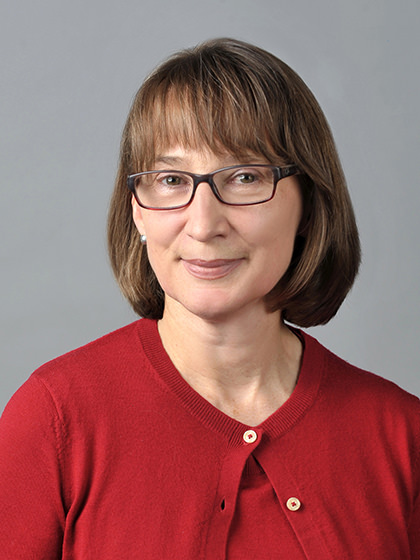
Danuta Mirka is a Professor at Northwestern University's Bienen School of Music in the Department of Music Theory and Cognition. She holds the Harry N. and Ruth F. Wyatt Chair in Music Theory and has been recognized with major awards for her scholarship. PhD in Musicology from University of Helsinki Senior Fulbright Fellow at Indiana University Humboldt Fellow and DFG Research Fellow at University of Freiburg Leverhulme Trust Research Fellow at University of Southampton Her research synthesizes historical music theory with contemporary cognitive approaches, focusing on metric manipulations in Haydn/Mozart, sonoristic structuralism in Penderecki, and topic theory in eighteenth-century music. She has developed analytical frameworks for textural and timbral systems in avant-garde compositions. Key trends across her publications include: cross-disciplinary application of semiotics and fuzzy logic to music analysis; systematic studies of cadential structures in Classical-era works; and innovative methodologies for analyzing non-traditional instrumental techniques. Her article on Penderecki's sonoristic style introduced groundbreaking concepts of six-dimensional textural analysis. Society for Music Theory Citation of Special Merit (2015) Wallace Berry Award (2011) Marjorie Weston Emerson Award (2023) Roland Jackson Award (2017) Mirka has edited major reference works and served on editorial boards of leading journals. Her scholarship bridges Polish avant-garde traditions with Western analytical methodologies.
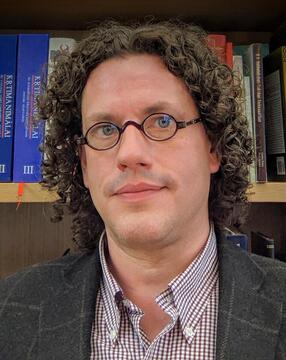
Ian Quinn is the Allen Forte Professor of Music Theory and Director of Graduate Studies (DGS) at Yale University, within the Department of Music in the College of Arts and Science. He holds a B.A. from Columbia University (1993), M.A. and Ph.D. from the Eastman School of Music (1998, 2004). Prior to Yale, he taught at the University of Chicago and University of Oregon, and was a CASBS Residential Fellow at Stanford (2008-09). His research focuses on tonal harmony, corpus studies, music cognition, and the intersections of mathematics and computation in music theory. He edited the Journal of Music Theory (2004–2011) and co-organized the 2009 Society for Mathematics and Computation in Music conference. He leads the Yale-New Haven Regular Singing (YNHRS) shape-note singing group and serves on editorial boards for Journal of Mathematics and Music and the Northeast Music Cognition Group (NEMCOG). Quinn’s work has earned awards from the Society for Music Theory, including the Emerging Scholar Award (2004) and Outstanding Publication Award (2006/2007). His research spans analytical frameworks for harmonic function, corpus-based studies of tonal systems, and empirical investigations of music perception. He has advised over 15 doctoral students, many now in academic and industry roles. Key collaborations include co-authoring the Oxford Handbook of Corpus Studies in Music (2023) and developing the Yale-Classical Archives Corpus. His work bridges theoretical, computational, and historical approaches to music analysis, with contributions to Science , Music Theory Spectrum , and Perspectives of New Music .
Yoshiko Matsumoto is the Yamato Ichihashi Professor in Japanese History and Civilization and Professor of East Asian Languages and Cultures at Stanford University, with a courtesy appointment in Linguistics. She has been a faculty member at Stanford since 1992, progressing from Assistant Professor to her current distinguished position. Matsumoto also serves as coordinator of the Japanese Language Program and has held significant administrative roles including Chair of the Department of Asian Languages (2003-2005) and Interim Chair of the Department of East Asian Languages and Cultures (2016). Matsumoto earned her Ph.D. in Linguistics from the University of California, Berkeley (1989), following M.A. degrees in Linguistics from UC Berkeley and General and Applied Linguistics from the University of Tsukuba, an M.I.A. in American Studies from the University of Tsukuba, and a B.A. in English Language & Literature from Japan Women's University. Professor Matsumoto's research focuses on linguistic pragmatics from cross-linguistic perspectives, with particular expertise in Japanese language. Her work spans structural and sociocultural aspects of language in use, including noun-modifying clause constructions, honorifics, discourse markers, and the intersection of language with gender and aging. She has pioneered research on conversational narratives of older adults, examining how ordinary framing strategies help individuals navigate difficult experiences. Her current projects explore intergenerational communication through haiku, communicative abilities of people with dementia, and noun-modifying constructions across Eurasian languages. Matsumoto's scholarship consistently bridges theoretical linguistics with practical applications for understanding human communication in diverse social contexts. Matsumoto's recent publications reveal a growing focus on practical applications of linguistic research for social benefit, particularly in intergenerational communication and dementia care. Her work increasingly integrates arts-based approaches, especially haiku poetry, to bridge generational divides and enhance communication with elderly populations. The research shows a consistent trajectory from theoretical linguistic frameworks toward applied, human-centered language studies that address real-world challenges in aging societies, with particular attention to how ordinary language practices help individuals navigate life transitions and difficult experiences. Dean's Award for Distinguished Teaching, School of Humanities and Sciences, Stanford University (2000) Richard E. Guggenhime Faculty Scholar, Stanford University (2000-2003) Violet Andrews Whittier Fellow, Stanford Humanities Center (2019-2020) Faculty Research Fellow, Michelle R. Clayman Institute for Gender Research (2014-2015) Research Fellow, Japan Foundation (2002) Internal Fellow, Stanford Humanities Center (2005-2006) Presidential Fund for Innovation in the Humanities, Stanford University (2009-2011) Professor Matsumoto has mentored numerous students through her teaching in Japanese language and linguistics courses, including specialized offerings on language and aging, points in Japanese grammar, and haiku-based communication. Her research has been supported by prestigious grants from the National Endowment for the Humanities, the Japan Foundation, and Stanford's Presidential Fund for Innovation in the Humanities. She has served on multiple editorial boards including the Journal of Pragmatics since 1992, demonstrating long-standing leadership in her field. Matsumoto has also advised students through individual studies and thesis projects in East Asian Languages and Cultures. Matsumoto leads several collaborative research initiatives including the 'Sharing Conversations' project which examines intergenerational communication through haiku, and research on communicative abilities of people with dementia. Her work often involves interdisciplinary teams spanning linguistics, gerontology, and creative arts, with fieldwork conducted in both Japan and the United States. The 'Noun-Modifying Constructions in Languages of Eurasia' project represents a major international collaboration examining linguistic structures across cultural boundaries. She also directs the 'Language, Old Age and Gender in Japan' project supported by the Stanford University/Japan Foundation, and the 'Difficult Conversations Continue: Memories of the 3.11 Disaster and Bereavement Narratives' project focused on post-disaster communication.
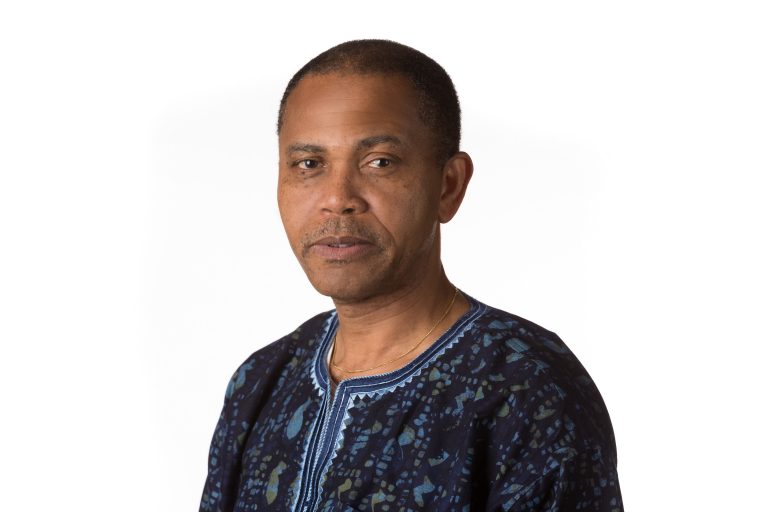
James Essegbey is a Professor of African Languages and Linguistics in the Department of Languages, Literatures & Cultures at the University of Florida (Gainesville), affiliated with the Center for African Studies, Center for Latin American Studies, and African American Studies. His research focuses on language endangerment documentation, syntax-semantics interfaces, and West African languages like Ewe, Akan, and Nyangbo. He holds a PhD from Leiden University (1999) and has held postdoctoral fellowships in the Netherlands and Germany. Key research areas include: Documentation of endangered languages (e.g., Nyangbo, Tutrugbu) Syntax of Kwa languages and Atlantic creoles Cultural influences on linguistic structures (e.g., left-hand taboos in Ghana) Creole genesis and trans-Atlantic language contacts Award-winning scholar with over 20 years of grant-funded projects, including: NSF grants for CoLang and documentary linguistics training programs NSEP funding for African languages summer institutes Leadership in language revitalization initiatives Teaching includes courses on Akan language, African elements in the Americas, and methods of language documentation. Active in professional organizations like the African Studies Association and Society for Pidgin and Creole Languages.
Reynaldo Romero serves as Associate Professor in the Department of History, Humanities and Languages at the University of Houston-Downtown, where he has maintained active teaching and research since at least 2012. His academic foundation spans linguistics, public health, and translation studies across multiple institutions. His educational background includes: Ph.D. in Spanish Linguistics from Georgetown University (Dissertation: Structural Consequences of Language Shift: Judeo-Spanish in Istanbul) M.P.H. in Community Health Practice from UTHealth (Dissertation: Beliefs on COVID-19 vaccination among Hispanic day laborers) M.A. in Translation from Kent State University Multiple B.A. degrees in French, General Linguistics, and Spanish Language/Linguistics from Rice University Romero's research creates critical intersections between linguistic theory and real-world applications. His work on Spanish for the Professions establishes frameworks for medical and legal interpreting while addressing systemic language access barriers. The scholarship on endangered languages—particularly Judeo-Spanish and Afro-Hispanic varieties—combines rigorous documentation with urgent revitalization efforts. His healthcare access research directly engages Houston's linguistic minorities through community-based projects like the Medical Translation Project with HISD. Recent publications reveal three dominant trajectories: (1) advancing methodologies in Afro-Hispanic linguistics through collaborative edited volumes; (2) developing social justice frameworks for marginalized language communities; and (3) documenting endangered linguistic varieties with innovative digital approaches. These threads converge in his community-engaged scholarship that bridges academic research and practical language access solutions. Professional recognition includes: Certified Translator status from the American Translators Association Advanced Professional Analytic Linguist certification Specialized medical and legal interpreter credentials Online teaching certification with digital tools specialization Romero's grant activity demonstrates sustained commitment to practical applications of linguistic research. Current projects include 'Promoting the Critical and Responsible Use of Digital Tools and AI in Written Tasks' (2024-2025), while past work developed medical interpreter training during disaster relief and language access protocols for healthcare settings. His service learning initiatives—like the Medical Translation Project with Houston ISD—create tangible community impact while advancing pedagogical innovation. Through the Medical Translation Project and language access advocacy, Romero cultivates collaborative spaces where academic research directly serves Houston's linguistic minorities. His work with heritage speakers and endangered language communities establishes frameworks for linguistic empowerment beyond traditional academic boundaries.
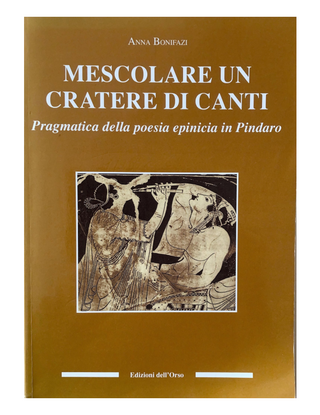
Prof. Anna Bonifazi holds a Professorship in Discourse Studies at the Department of Linguistics, University of Cologne. Her research spans Discourse Analysis, Pragmatics, Cognitive Linguistics, and Multimodal Communication with a focus on Ancient Greek Linguistics and Oral Epic traditions. She investigates phenomena like anaphoric cohesion in long texts, multimodal storytelling in film and oral traditions, and ancient Greek particles' discursive functions. Her work explores how multimodal elements (e.g., visual, musical, gestural) interact in communication, particularly analyzing films (e.g., mystery genres), ancient texts (e.g., Homeric epics), and South Slavic oral narratives. She examines cross-modal iconicity, viewpoint blending, and the cognitive underpinnings of discourse structures. Recent publications address topics like anaphoric strategies in crime stories and syntactic patterns in ancient Greek conversational frameworks. Prof. Bonifazi's research often bridges classical philology and modern cognitive theories, emphasizing embodied cognition and the interplay between language and other semiotic systems. She collaborates internationally on projects involving gesture analysis in storytelling and ancient papyrological studies. Her interdisciplinary work integrates linguistics with musicology, film studies, and cognitive science. Administratively, she oversees the Discourse Studies research group at Cologne and mentors assistants like Dr. Sandra Debreslioska and Madeleine Frings. Her lab focuses on multimodal discourse analysis using experimental and corpus-based methods.
Dr Ares Llop Naya serves as an Affiliated Catalan Lecturer in the Department of Spanish and Portuguese within the Faculty of Modern and Medieval Languages and Linguistics at the University of Cambridge, while holding the Batista i Roca Fellowship at Fitzwilliam College. Her academic profile bridges theoretical linguistics with practical language pedagogy, focusing on Romance language structures and their educational applications. Her research centers on microsyntactic variation in Romance languages, particularly examining negation systems and syntactic phenomena in Catalan and Pyrenean varieties through both diachronic and synchronic lenses. She actively integrates theoretical insights into language teaching methodology, specializing in Catalan and Spanish pedagogy for both native and foreign language contexts. This dual focus manifests in her publications spanning syntactic theory, dialectology, and innovative language teaching approaches that address contemporary classroom challenges. Analysis of her publication trajectory reveals consistent thematic concentration on Romance microvariation, with recent work expanding into pedagogical applications. Her scholarship demonstrates methodological diversity—combining linguistic atlas data, corpus analysis, and classroom research—while maintaining core focus on Catalan syntax and its implications for language acquisition theory. The Pyrenean linguistic corridor remains a persistent geographical anchor across her diachronic and synchronic investigations. Dr Llop Naya's scholarly contributions have been recognized through prestigious awards: Joan Solà International Prize in Catalan Philology for her monograph on Romance negation systems Her teaching portfolio encompasses advanced courses in Romance linguistics, historical syntax, and sociolinguistics, with particular emphasis on translating theoretical frameworks into practical classroom resources. While specific grant funding details aren't publicly documented, her work consistently addresses real-world language education challenges through collaborative projects like the Microvariació.cat initiative. She contributes to the Microvariació.cat project—a digital repository documenting syntactic variation across Catalan dialects—which serves as both research infrastructure and pedagogical resource. This initiative exemplifies her commitment to creating practical applications from theoretical linguistic research while preserving endangered dialectal features of the Romance continuum.
Professor Richard Dance serves as Professor of Early English in the Department of Anglo-Saxon, Norse & Celtic (ASNC) at the University of Cambridge's Faculty of English, and is a Fellow of St Catharine's College where he holds positions as Director of Studies in ASNC, Praelector, and Clerk to the Governors of the Skerne Exhibition Foundation. He joined the university in 1997 after completing his studies at Oxford and has established himself as Cambridge's principal teacher of Old English, lecturing and supervising extensively in Old English language and literature and Germanic Philology for the ASNC Tripos. His research focuses on Old and Middle English language and literature with particular emphasis on Germanic Philology, English etymology, and the profound influence of Old Norse on early English vocabulary and poetic style. His work spans critical editions of texts like 'Ancrene Wisse' and 'Sir Gawain and the Green Knight', extensive etymological surveys of Scandinavian loanwords, and investigations into medieval multilingualism. His publications reveal consistent engagement with historical semantics, dialectology, and the linguistic interface between Norse and English during critical transition periods. Dance's scholarly impact is evidenced by major awards including the British Academy's 2021 Sir Israel Gollancz Prize for 'The Gersum Project' and the University of Cambridge Pilkington Prize for Excellence in Teaching (2023). His editorial roles include Secretary of the Early English Text Society, Council membership in The Philological Society, and etymological consultancy for the Oxford English Dictionary. As Principal Investigator for The Gersum Project (2016-2020), he led significant research into Scandinavian influence on English vocabulary, securing substantial academic recognition. British Academy's 2021 Sir Israel Gollancz Prize University of Cambridge Pilkington Prize for Excellence in Teaching (2023) Editorial Secretary, Early English Text Society Consultant for Oxford English Dictionary (etymology) International Advisory Committee member, Dictionary of Old English Dance maintains active leadership in academic communities through roles on the British Academy/Royal Historical Society Joint Committee on Anglo-Saxon Charters and as Series Editor for Exeter Medieval Texts and Studies (2008-24). His supervisory work encompasses graduate students in Old English language and literature, while his departmental responsibilities include Director of Studies for multiple Cambridge colleges. Current projects indicate ongoing research into medieval multilingualism, with several forthcoming publications addressing etymological methodology and lexical evolution in the medieval period.
Susan Irvine is a Professor of English Language & Literature at University College London , where she has held the Quain Professorship since 1992. Educated at the University of Otago and the University of Oxford, she specializes in Old English prose and poetry, teaching across undergraduate and graduate programs including the MA in Medieval and Renaissance Studies. Education: Doctor of Philosophy (University of Oxford, 1987), Bachelor of Arts (Honours, University of Otago, 1981) Her research focuses on Old English literature and language , particularly works associated with King Alfred's court (9th century) and the transitional period between Old and Middle English. She explores manuscript studies, textual reconstruction, and the interplay between linguistic and literary analysis. Recent publications examine topics like Anglo-Saxon micro-texts, the protean form of the Old English Boethius, and prefatory traditions in Old English. These works highlight her expertise in medieval manuscript culture , translation studies , and historical linguistics . Scientific Awards: 2011 Publication Prize (International Society of Anglo-Saxonists) AHRC Research Leave Scheme Award (2007) Irvine also contributes to professional activities as an editor and academic officer, with roles at the Fontes Anglo-Saxonici Project and external examining appointments. Her teaching emphasizes the relevance of Old English to modern literary theory and encourages engagement with UCL's Special Collections.
Professor Richard North (University College London, Department of English Language and Literature) is a leading expert in Anglo-Saxon and Old Norse studies. His career spans teaching and research in Old English, Middle English, and Old Icelandic literatures, with particular focus on Beowulf , medieval sensory perception , and pre-Christian Germanic religions . Affiliated with UCL since 1989, he was promoted to Reader in 1999 and Professor in 2007. Research interests include: Anglo-Saxon paganism and Christian syncretism Old Norse mythological analysis (Freyr, Loki, Baldr) Viking Age cultural exchange between England and Scandinavia Historical linguistics across Germanic languages Medieval manuscript studies His publications demonstrate interdisciplinary approaches combining literary analysis with archaeology, agronomy, and sensory studies. Recent works explore Cnut's political ideology , Old English poetic meter , and medieval animal symbolism .
Dr. Brigitta Mittmann is a Senior Lecturer at the Department of English and American Studies, Friedrich-Alexander University Erlangen-Nuremberg (FAU), holding the Alexander von Humboldt Professorship for Language and Cognition. Her work focuses on lexicography, phraseology, and comparative analysis of spoken English varieties.
María Sol Sansiñena Pascual serves as Assistant Professor (tenure track) at KU Leuven across Leuven, Kortrijk, and Brussels campuses while also holding a guest professorship at Ghent University. Her primary academic affiliation lies within the Faculty of Arts at KU Leuven where she actively contributes to the Functional and Cognitive Linguistics: Grammar and Typology (FunC) research group. Education PhD in Spanish Linguistics, KU Leuven (2015) Research Focus Her scholarly work centers on semantic-pragmatic interpretation mechanisms, with special emphasis on modality and TAM (Tense, Aspect, Mood) categories, discourse phenomena including insubordination, language variation/change dynamics, and translation pattern analysis. She employs interactional-constructional frameworks to examine Spanish grammatical structures across synchronic and diachronic dimensions, particularly investigating evolutionary pathways from Latin to contemporary Spanish varieties. Publication Trends Analysis of her recent scholarly output reveals concentrated research trajectories in diachronic syntax (especially insubordinate clause evolution), modal-evidential semantics in Spanish conditional/future forms, grammaticalization processes of verbal periphrases, and indexicality mechanisms. Her methodological approach consistently integrates functional, cognitive, and construction grammar perspectives to address complex language change phenomena. Research Leadership Current promotor of "Pathways to insubordination: diachronic evolution of non-subordinate structures" (2025-2026) Principal investigator for "Speech-act orientation and intersubjective alignment" project (2020-2025) Academic Contributions She actively participates in the FunC research collective while teaching specialized courses including Spanish Linguistics I/III, Discourse Analysis, and Master's thesis support seminars. Her scholarly service includes editorial contributions such as co-editing the 2024 volume "Indexicality: The Role of Indexing in Language Structure and Language Change".
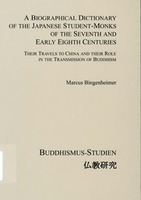
Marcus Bingenheimer is an Associate Professor in the Department of Religion at Temple University, Philadelphia. His academic journey includes an MA in Sinology and a Dr.phil in History of Religions from Würzburg University, Germany, along with an MA in Communication Studies from Nagoya University, Japan. He has held teaching and research positions at institutions across Asia and Europe, including Dharma Drum in Taiwan (2005–2011) and visiting roles at universities in Korea, Japan, Thailand, France, and Singapore. His research focuses on Buddhist Studies and Digital Humanities, with specializations in the history of East Asian Buddhism, early Buddhist sutra literature (Āgama/Nikāya), and computational methods in religious studies. Key projects include the digitization of Buddhist temple gazetteers, historical social network analysis of Chinese Buddhism, and the digital edition of the Song Gaoseng Zhuan. He has also pioneered the application of GIS and stylometric analysis to religious texts. Dr. Bingenheimer has authored or edited over 20 books and numerous articles, including Island of Guanyin (2016) and Studies in Āgama Literature (2011). He directs major research initiatives like the Database of Medieval Chinese Syntax and co-leads the FROGBEAR research cluster on Religion and Technology. His work bridges traditional scholarship with cutting-edge digital tools, emphasizing open access and collaborative projects in Buddhist cultural heritage preservation. Grants and fellowships include a Temple University Presidential Grant for the Sutra2DNA project and an ACLS Translation Grant for his work on Wang Rixiu’s Pure Land essays. His lab activities involve projects like the Nanyang GIS data pool for Southeast Asian Chinese sites and the Digital Archive of Buddhist Temple Gazetteers.
PD Dr. Lutz Rzehak is an academic staff member at the Institute for Asian and African Studies (IAAW) within the Faculty of Humanities at Humboldt University of Berlin, serving as a Teacher for special tasks specializing in Modern Iranian languages and the ethnography and cultural history of Afghanistan and Central Asia. His educational background includes: Oriental Studies/History from the State University of Leningrad (1985) Doctorate in Iranian Studies, Humboldt University of Berlin (1991) Habilitation in Central Asian Studies / Iranian Studies, Humboldt University of Berlin (2001) Dr. Rzehak's research spans Central Asian Studies , Iranian Studies , Ethnography , and Linguistics , with fieldwork focusing on Baloch, Pashtun, and Tajik communities. His work examines language evolution, social structures, and cultural practices through historical and contemporary lenses, particularly regarding Soviet influence and post-Taliban Afghanistan. Key contributions include grammatical analyses of Iranian languages and ethnographic studies of religious rituals and tribal systems. His recent publications (2016-2021) reveal consistent focus on Iranian language dynamics (especially Dari and Pashto), ethnic identity politics in Afghanistan, and cultural history of Central Asia. These works address language change mechanisms, ethnic consolidation strategies, and the interplay between tradition and modernity, often utilizing comparative linguistic and ethnographic methodologies. His scientific awards include: Heisenberg Fellow of the German Research Foundation Dr. Rzehak has held significant research positions including Research Associate in the Crossroads Asia Competence Network (2011-2016) and Heisenberg Fellow (2002-2011). While his CV does not list formal PhD advisees, his language lecturing and research supervision have mentored numerous students in Central Asian and Iranian studies through course instruction and fieldwork guidance. He has been actively involved in the Crossroads Asia Competence Network, a major interdisciplinary research initiative examining transregional connections and historical trajectories across Central, South, and West Asia.
Prof. Gerhard Jäger holds the Chair of General Linguistics at the Faculty of Humanities, University of Tübingen . He serves as a Principal Investigator (PI) in the Clusters of Excellence Human Origins and Machine Learning for Science , and leads projects like Phylomilia (funded by Volkswagen Foundation) and CrossLingference (ERC Advanced Grant). His career spans multiple institutions, including Bielefeld University (2004-2009) and Stanford University (visiting scholar, 2004). Habilitation (2002) at Humboldt University Berlin with thesis on Anaphora and Type Logical Grammar PhD (1996) at Humboldt University Berlin on Dynamic Semantics His research bridges computational linguistics , phylogenetic analysis , and game theory , focusing on Bayesian models , language evolution , and cross-linguistic typology . Recent work explores phylogenetic inference from acoustic speech data and geographic influences on language trees . Key contributions include 15+ recent publications on topics spanning phylogenetic typology , cognate detection , and Bayesian language modeling . These works employ machine learning , statistical inference , and evolutionary game theory to analyze language change , typological variation , and linguistic stability . Honors include ERC Advanced Grant , Volkswagen Foundation funding , and DFG-Humanities Centre for Advanced Studies participation. He has taught courses in Computational Historical Linguistics , Phylogenetic Methods , and Bayesian Data Analysis across institutions like Tübingen, Bielefeld, and Stanford. He actively contributes to academic communities through workshop organization (e.g., Quantitative Theoretical Linguistics , Game Theory in Pragmatics ) and serves on the faculty council at Tübingen. His team collaborates with institutions like Max Planck Institute for Evolutionary Anthropology , University of Pennsylvania , and LMU Munich .