Edward Nesbit is Senior Lecturer in Composition at King's College London's Department of Music within the Faculty of Arts & Humanities. He studied at Cambridge University, Guildhall School of Music and Drama, and King's College London under Julian Anderson and George Benjamin. His compositions are regularly performed by major ensembles including the London Sinfonietta, BBC Symphony Orchestra, and Philharmonia Orchestra at venues like Wigmore Hall and Royal Festival Hall. Research interests focus on: Contemporary choral and vocal composition techniques Integration of literary and dramatic elements in musical works Collaborative performance practices Community music engagement methodologies Recent compositions demonstrate diverse approaches to narrative storytelling through music, with frequent exploration of biblical/historical themes and nature-inspired programmatic elements. His work includes collaborations with the Choir of King's College London, resulting in commercial recordings on the Delphian label. Nesbit has secured funding including an AHRC Impact Acceleration Award for community music projects. He leads the 'Singing for Wellbeing' initiative developing choral repertoire for community engagement and directs composition studies at undergraduate/postgraduate levels.
Cem Zafer is an academic researcher affiliated with İstanbul Okan University , specifically the Faculty of Humanities and Social Sciences . His scholarly work spans interdisciplinary topics in sociology, religious studies, and technology's societal impacts. Research Focus: Digital transformation, gender dynamics, and cultural identity. Publications: 15+ peer-reviewed articles and book contributions since 2012. Key Themes: Social media ethics, religious discourse, and labor sociology. His recent publications highlight the interplay between artificial intelligence, social justice, and historical narratives in modern Turkey. While no formal awards or grants are documented in the provided text, his academic output demonstrates sustained engagement with contemporary sociocultural challenges.
Anthony Gritten is Head of Undergraduate Programmes at the Royal Academy of Music in London. A distinguished scholar-performer, he completed his doctorate at Cambridge University on Stravinsky's neoclassical music under Alexander Goehr. As a Fellow of the Royal College of Organists, Gritten has given over 400 recitals across the UK, France, and Canada, establishing himself as a leading interpreter of organ repertoire. His academic journey includes positions at the University of East Anglia, the Royal Northern College of Music, and Middlesex University before his current leadership role at the Royal Academy of Music. Gritten's scholarly profile is marked by an interdisciplinary approach that bridges performance practice with philosophical inquiry. Gritten's research interests focus on the intersection of music, philosophy, and performance studies. His work explores musical gesture, the phenomenology of performance, and the philosophical dimensions of musical practice. He has made significant contributions to understanding the works of John Cage, Charles Rosen, and Stravinsky through the lens of performance philosophy. His research reveals how embodied experience shapes musical interpretation and how philosophical concepts manifest in performance practice. His scholarly output demonstrates a sustained engagement with questions of indeterminacy, distraction, and ecological awareness in musical performance. Gritten's work has helped establish Performance Philosophy as a legitimate field of academic inquiry, connecting practical musical concerns with broader philosophical questions about meaning, interpretation, and embodiment. Fellow of the Royal College of Organists Gritten has supervised numerous doctoral students in the field of performance philosophy and artistic research. His administrative leadership as Head of Undergraduate Programmes has shaped curriculum development at the Royal Academy of Music, emphasizing the integration of practical performance with theoretical and philosophical inquiry. He has been instrumental in developing research frameworks that validate practice-based research in music, contributing to the institutional recognition of artistic research as a legitimate scholarly pursuit.
Steve Tanimoto is a Professor at the Paul G. Allen School of Computer Science & Engineering at the University of Washington, with an adjunct appointment in the Department of Electrical & Computer Engineering. His work focuses on human-centered computing, particularly in educational technology and collaborative problem-solving environments. He has made significant contributions to the understanding of liveness in programming environments and their application to education, including a keynote at the International Conference on Live Coding (2015) that traced historical influences leading to widespread use of liveness in modern software environments. Dr. Tanimoto's research spans several interconnected domains: Novice programming environments and educational technology Collaborative problem-solving environments and tools Technology for educational assessment, particularly using pattern-recognition methods for teaching written language on tablets Liveness in programming environments and its applications Image processing from interdisciplinary perspectives (as detailed in his MIT Press book "An Interdisciplinary Introduction to Image Processing: Pixels, Numbers, and Programs") His recent publications demonstrate a consistent focus on the intersection of computing education, human-computer interaction, and collaborative problem-solving. A notable trend is the exploration of "liveness" in programming environments and how this concept can enhance educational experiences. His work increasingly integrates AI technologies with educational applications, particularly in the areas of writing instruction and collaborative problem-solving, with significant NIH funding support (P50 HD071764 and U54 HD083091). His notable recognition includes: VL/HCC Best Showpiece Award in 2015 for "Solving Problems by Drawing Solution Paths" Dr. Tanimoto has advised several graduate students through to completion, including Robert Thompson (2019), Sandra Fan (2013), and Tyler Robison (2012). He currently advises Emilia Gan (co-advised with B. Mako Hill) and Edward Misback. His research has been supported by NIH grants for work on computerized writing and reading instruction for students with learning disabilities. His CoSolve research group has developed experimental facilities for collaborative problem-solving, exploring tools that support problem formulation, visualization of problem spaces, and team collaboration dynamics, with applications in education, design, and various problem-solving domains.
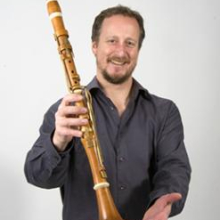
Mark Simons is an Early Clarinet Instructor at the Schulich School of Music, McGill University, and teaches at Marianopolis College. He specializes in early music performance on period instruments such as the chalumeau and classical clarinet. His expertise spans baroque, classical, jazz, and klezmer styles, with a focus on historical performance practices. Education: Studied at Marianopolis College, McGill University, and Temple University. Research interests include exploring sonorities of period instruments and chamber music collaborations. He has performed with renowned ensembles like Les Boréades, Arion Baroque Orchestra, and the Daponte String Quartet. Notable recordings include CDs on the Analekta label: Viole D’Amour and Telemann et les Gitans . No scientific awards listed. His advising and grants details are unspecified. Active in ensembles such as the Arthur Leblanc and Bozzini quartets, and regularly performs with l'Orchestre Symphonique de Québec and I Musici de Montréal.
Dr. Deirdre Nic Mhathúna is a Professor at Dublin City University's Fiontar & Scoil na Gaeilge. Her research focuses on 18th-century Irish poetry, manuscript studies, and the works of Piaras Feiritéar. She holds leadership roles in Studia Hibernica and Chumann Merriman . She earned a BA in Irish and German from Trinity College Dublin and a PhD from University College Cork. Her research explores post-classical Irish manuscript culture, the poetry of Piaras Feiritéar, and the cultural heritage of Corca Dhuibhne. Recent work includes analyses of scribal transmission, accentual verse development, and the influence of place on literary expression. She has contributed to major publications like the Cambridge History of Irish Poetry and edited volumes such as Ar an Imeall i Lár an Domhain . Her articles span topics from Jacobitism to the Great Famine, Peig Sayers' life narratives, and the enduring legacy of Piaras Feiritéar. She frequently presents at international conferences, including the American Conference for Irish Studies and the Ó Thrácht go Twitter seminar series. No scientific awards are listed, but her editorial and collaborative roles highlight her contributions to Irish literary preservation and scholarly networks. Her work bridges historical and modern contexts, emphasizing cultural continuity and the interplay between oral tradition and written text. Her research often intersects with regional identity, religious thought, and transnational literary connections.
Konstantinos Alevizos is an academic affiliated with the University of Rouen Normandy (ERIAC research unit) and currently holds a faculty position as Enseignant-Chercheur (Lecturer-Researcher) in Music History at the University of Ioannina, Greece. His academic roles include teaching Music Composition at the Conservatoire de musique, de danse et d’art dramatique de la ville d’Orange (France) and Philosophy at Lycée Victor Hugo (France). He has held research and editorial roles, including a Fellowship at the American Philosophical Society (2020–2022) and membership in national evaluation committees for research projects in Greece (2019–2020). Education: Doctorate in Musicology (University of Paris-Sorbonne, 2016), Master’s degrees in Philosophy (Aix-Marseille, 2020) and Musicology (Saint-Étienne, 2009), and advanced diplomas in musical studies (DEM) from French conservatories. His research focuses on the intersection of Ancient Philosophy (Epicureanism) and Musicology, particularly Baroque fugue analysis (J.S. Bach, d’Anglebert) and historical music editions. Research interests span Epicurean linguistic theory, the philosophy of memory and selfhood, and analytical studies of Baroque compositional techniques. He has published extensively on musicology and philosophy, including critical editions of musical works and peer-reviewed articles in journals like Orgues Nouvelles and RMO . His work also includes editorial leadership in musicological projects, such as Le rôle du nombre en musique . Teaching and professional activities include roles at French conservatories and universities, emphasizing music theory, organ, and harpsichord pedagogy. He is fluent in Greek, Italian, French, and English, with proficiency in Ancient Greek and German.
Danuta Mirka is a Professor at Northwestern University's Bienen School of Music in the Department of Music Theory and Cognition. She holds the Harry N. and Ruth F. Wyatt Chair in Music Theory and has been recognized with major awards for her scholarship. PhD in Musicology from University of Helsinki Senior Fulbright Fellow at Indiana University Humboldt Fellow and DFG Research Fellow at University of Freiburg Leverhulme Trust Research Fellow at University of Southampton Her research synthesizes historical music theory with contemporary cognitive approaches, focusing on metric manipulations in Haydn/Mozart, sonoristic structuralism in Penderecki, and topic theory in eighteenth-century music. She has developed analytical frameworks for textural and timbral systems in avant-garde compositions. Key trends across her publications include: cross-disciplinary application of semiotics and fuzzy logic to music analysis; systematic studies of cadential structures in Classical-era works; and innovative methodologies for analyzing non-traditional instrumental techniques. Her article on Penderecki's sonoristic style introduced groundbreaking concepts of six-dimensional textural analysis. Society for Music Theory Citation of Special Merit (2015) Wallace Berry Award (2011) Marjorie Weston Emerson Award (2023) Roland Jackson Award (2017) Mirka has edited major reference works and served on editorial boards of leading journals. Her scholarship bridges Polish avant-garde traditions with Western analytical methodologies.
Professor Andrew Kirkman holds the Peyton and Barber Chair of Music at the University of Birmingham's Department of Music. He leads the Centre for Early Music Performance and Research, directing the University Chamber Orchestra and professional ensemble The Binchois Consort. His roles include teaching Renaissance music, 1960s music studies, and supervising PhD topics ranging from post-communist Poland to late medieval music historiography. Research focuses on fifteenth-century sacred music’s cultural context, particularly the Mass Ordinary in late medieval Europe. His 2010 book The Cultural Life of the Early Polyphonic Mass and 2020 monograph on Saint-Omer’s music culture exemplify this. Recent work explores music-alabaster intersections and late-medieval liturgical practices. His recordings with The Binchois Consort earned Gramophone awards, including the 2017 'Early Music Recording of the Year.' Notable performances include Music for the Hundred Years' War (2017) and collaborations with pianist Clipper Erickson. Awards reflect both scholarly and performative excellence. Advising emphasizes late medieval/renaissance music, while grants supported research on Saint-Omer’s musical legacy. He co-founded The Binchois Consort in 1995, producing Hyperion recordings that revive rarely performed repertoires. His work bridges performance, scholarship, and interdisciplinary cultural studies.
Dr hab. Andrzej Wojciechowski is an Associate Professor at the Stanisław Moniuszko Academy of Music in Gdańsk , affiliated with the Department II – Instrumental . As a certified violinist and postdoctoral scholar, he specializes in Polish violin music, chamber ensembles, and 20th-century compositions. Graduated with distinction from the Academy of Music in Gdańsk (1998), studying under Prof. Krystyna Jurecka Collaborates with orchestras like the Polish Baltic Philharmonic and Sopot Chamber Philharmonic Co-created concert projects with artists such as Jan Stanienda and Krzysztof Penderecki His research interests span Polish musicology, violin pedagogy, and interdisciplinary artistic education. He has edited publications with "Eufonium" and promoted Polish music through recordings like Violin Works by Roman Maciejewski (2011) and The Work of Gdańsk Composers (2015). His scientific awards include: Medal of the National Education Commission (2009) Individual Award for contributions to artistic education (2012) Honorary Medal 'For Merit to Polish Culture' (2014, 2015) Rector's Award, 3rd degree (2014, 2016) Wojciechowski has taught over 50 graduates, many of whom have won music competitions, and leads the Academic Chamber Orchestra as concertmaster and conductor. His work bridges performance, education, and preservation of Polish musical heritage.
Tatjana Marković is an Austrian Academy of Sciences researcher and Adjunct Professor at the University of Music and Performing Arts Vienna, where she leads the FWF project on music historiography at the Habsburg Monarchy's southern borders (1750–1914). As editor of TheMA journal and chair of the IMS Study Group Music and Cultural Studies, she specializes in reconstructing pluricultural musical life along the Austro-Ottoman frontier. Adjunct Professor, University of Music and Performing Arts Vienna Head, FWF Discourses on Music project Editor, TheMA – Theatre, Music, Arts Chair, IMS Study Group Music and Cultural Studies Her research intertwines musicology with cultural studies, focusing on Southeast European musical traditions and their representation in Habsburg and Ottoman contexts. Key areas include diplomatic music exchanges, military border cultural dynamics, and gendered perspectives in regional music history. Recent publications address microregional musical networks, operatic diplomacy, and 19th-century battlefield commemorations through music. She contributes to international conferences on Balkan musicology and Austro-Ottoman cultural interactions, with editorial roles in multiple academic series.
Marcelo M. Wanderley is a Professor and Director of the Centre for Interdisciplinary Research in Music Media and Technology (CIRMMT) at McGill University's Schulich School of Music. His academic roles include Area Coordinator for Music Technology and membership on the Executive Committee. He holds a PhD in acoustics, signal processing, and computer science from Université Pierre et Marie Curie (Paris VI). Wanderley's research focuses on novel interfaces for music performance, digital musical instruments (DMIs), and human-computer interaction. He has authored influential works such as New Digital Musical Instruments: Control and Interaction Beyond the Keyboard (2006) and pioneered research in gestural control of music. His work integrates engineering, computer science, and musicology to create innovative performance tools, including the T-Stick and Karlax instruments. He has held visiting professorships at Université de Bretagne Sud, Universidade Federal de Minas Gerais (Brazil), and the University of Mons (Belgium), where he was awarded prestigious chairs. Wanderley's awards include the Inria International Chair (2016–2020) and the Distinguished Visitor Award from the University of Auckland. His research has been widely cited in the International Conference on New Interfaces for Musical Expression (NIME), and he actively contributes to editorial boards (e.g., Computer Music Journal ) and academic leadership roles. Wanderley's lab, the Input Devices and Music Interaction Lab (IDMIL), develops open-source frameworks like Puara and Probatio for DMI design and mapping. Key research areas include haptic feedback systems, motion capture of musical performances, and accessibility in music technology. He emphasizes interdisciplinary collaboration, bridging engineering, art, and cognitive science to advance musical expression and performance practices.
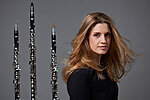
Prof. Nicola Jürgensen is a distinguished German clarinetist and Professor of Clarinet at Faculty 1 of Folkwang University of the Arts in Essen, Germany. She also serves as Dean of Faculty 1 and is a Confidential Lecturer for the German Academic Scholarship Foundation. Her career seamlessly integrates performance, education, and artistic leadership. She is the Artistic Director of WDR 3 Campus Concerts and a board member of the Folkwang University Foundation. Professor of Clarinet, Folkwang University of the Arts (2018–present) Dean, Faculty 1 Artistic Director, WDR 3 Campus Concerts Board of Directors, Folkwang University Foundation Principal Clarinet (former), WDR Symphony Orchestra Cologne (2001–2018) Regular coach, German National Youth Orchestra (2020–present) Nicola Jürgensen's research and artistic interests center on clarinet performance, chamber music, and contemporary repertoire. She is deeply committed to historical performance practice, evidenced by her recordings on basset clarinet, and to expanding the global reach of classical music through international masterclasses and festivals. Her work bridges traditional European repertoire and modern experimental works, including performances in avant-garde operatic productions. She has collaborated with leading orchestras and ensembles worldwide, from Berlin and Leipzig to New York, Bangkok, and Auckland. Her recent artistic output reveals a strong focus on rediscovered works (e.g., Wilms' concerto), contemporary compositions (e.g., Kancheli, Zwilich), and cross-cultural collaborations (e.g., German Masters Music Festival in Thailand). She emphasizes pedagogical innovation and performance excellence, mentoring students who now hold principal roles in Germany’s top orchestras. Her recordings and performances consistently highlight expressive depth, technical mastery, and scholarly engagement with historical instruments and arrangements. Scientific and Artistic Awards: Mozart Prize, Wiesbaden Mozart Society German Music Competition Soloists' Prize (1999) Germany Radio Promotion Prize (2002) Nicola Jürgensen has been instrumental in guiding numerous students into prestigious orchestral positions and leads the ensemble 'Folkwang Clarinets' with her students. She holds multiple leadership roles in academic and artistic institutions and continues to perform as a guest principal clarinetist with major orchestras like the Mahler Chamber Orchestra and NDR Elbphilharmonie Orchestra. Her involvement in grants and funding appears indirect through institutional roles and festival organization. She is actively involved with several artistic initiatives, including the 'Spannungen' festival, WDR 3 Campus Concerts, and international masterclass programs. Her ensemble collaborations and educational outreach reflect a sustained commitment to excellence, innovation, and accessibility in classical music.
James A. Millward is a Professor of Inter-societal History at Georgetown University's Edmund A. Walsh School of Foreign Service and Department of History. He holds a Ph.D. in History from Stanford University (1993), an MA from the School of Oriental and African Studies (University of London, 1985), and a BA in East Asian Languages and Civilizations from Harvard (1983). Millward specializes in Qing imperial history, the Silk Road, Xinjiang studies, and cross-cultural musical exchanges across Eurasia. Research Interests: His work critically examines Sinicization narratives, the Qing tribute system, and the impact of colonial historiography on contemporary China's ethnic policies. He also explores musical instrument diffusion along the Silk Road, comparing lutes like the pipa and oud. Publications: Notable works include Eurasian Crossroads: A History of Xinjiang (2007, 2021), The Silk Road: A Very Short Introduction (2013), and chapters in edited volumes analyzing Qing multiculturalism and cultural assimilation frameworks. Academic Leadership: As former president of the Central Eurasian Studies Society (2010) and contributor to the International Studies Association award-winning Culture and Order in World Politics (2019), Millward bridges historical analysis with modern political discourse. Media Engagement: A frequent contributor to The New York Times , Washington Post , and international media, he provides expert commentary on Xinjiang, Uyghur issues, and China-West relations. His current projects include a study of lute cultural exchange and the book Decolonizing History in China , challenging exceptionalist narratives in mainland historiography.
Isabel Gabbe , University Professor of Piano & Piano Didactics at Mozarteum University Salzburg's Innsbruck Department since 2016, is a German-French pianist and music educator with extensive international experience. She heads the Music Education Department and contributes to artistic higher education through her work with the European Piano Teachers Association (EPTA) and the Austrian Society for Music and Medicine (ÖGFMM). Studied with Hans Leygraf and Rainer Becker Certified music physiologist Founder of "Moments Musicaux" festival in France Active in teacher training across Europe and South America Her research focuses on music education , physiological piano teaching methods , and musicians' health . Isabel integrates creative approaches to piano instruction for children, emphasizing cross-cultural communication through music. Her recent work explores alternative keyboard techniques and inclusive pedagogy. Professor Gabbe's publications analyze piano didactics, including " Alles ist erlaubt, nur nicht Alles spielen! " on practical repertoire use and " Musizieren lernen? Ein Kinderspiel! " on playful learning approaches. She contributes to Schott Verlag's "Üben&Musizieren" series and Waxmann Verlag's music education publications. Scientific recognitions include: German Music Council Artist List (2000) EPTA Austria Vice Chair (2018–present) Deutsche Tonkünstlerverband Deputy Chair (2015–2023) Richard Wagner Association Stipend (2002) Aspen Music Festival Stipend (1995,1996) Isabel Gabbe actively mentors educators through workshops and masterclasses across Europe and South America, focusing on sustainable teaching practices and physiological approaches to piano instruction. She has participated in numerous festivals and serves on academic committees for music education curricula.