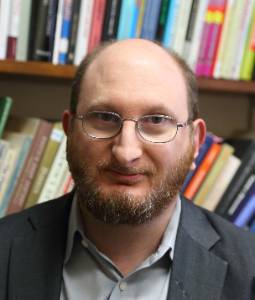
Jacob Eyferth is an Associate Professor at the University of Chicago, jointly appointed in the Department of East Asian Languages and Civilizations, the Department of History, and the College. His research focuses on the social and cultural history of twentieth-century China, particularly rural communities, gender dynamics, and the intersection of technology and everyday life. Key research themes include the impact of industrialization, collectivization, and revolution on non-elite populations, with an emphasis on rural women's labor and cultural resistance. His current project explores cotton production, clothing, and gender during China's socialist era. Eating Rice from Bamboo Roots (2009) How China Works (2006) Rural Development in Transitional China (2004) He received the 2011 Joseph Levenson Prize for his first book. Eyferth has taught courses on topics such as class inequality, everyday life under socialism, and revolutionary China, and has held postdoctoral fellowships at Oxford, Harvard, and Rutgers.
Christopher Rea is a Professor of Modern Chinese Literature in the Department of Asian Studies at the University of British Columbia's Faculty of Arts. He serves as a faculty member and former Associate Head of the Department of Asian Studies, former Director of the Centre for Chinese Research, an associate of the Hong Kong Studies Initiative, and a Faculty Fellow of St. John's College. His academic journey includes a Ph.D. from Columbia University (2008) and a B.A. from Dartmouth College (1999). Rea's research focuses on the modern Chinese-speaking world, with particular expertise in Chinese literature, cinema, print culture, translation, and the cultural history of humor and deception. His scholarly approach bridges literary analysis, cultural history, and film studies, creating a distinctive interdisciplinary perspective on modern Chinese cultural production. He is particularly known for his work on Republican-era China (1912-1949), exploring how cultural forms evolved during this transformative period. His major publications reveal a trajectory from studies of humor and laughter in modern China ( The Age of Irreverence , 2015) to literary hoaxes and deception ( The Book of Swindles , 2017), Chinese cinema ( Chinese Film Classics , 2021), and research methodology ( Where Research Begins , 2022). His current projects include China on the Make: Stories of Chinese Deception and The Unfinished Comedy , a sequel to The Age of Irreverence . National Endowment for the Arts Translation Fellowship (2024) UBC Dean of Arts Mentorship Award (2024) UBC Killam Research Prize (2022) Joseph Levenson Book Prize (2017) Rea actively supervises graduate students and has developed significant digital resources, including the Chinese Film Classics project (chinesefilmclassics.org) featuring 40+ subtitled Chinese films and 22 video lectures, and a YouTube channel with over 250 videos on Chinese cinema and culture. His teaching extends to free online courses on The Modern Chinese Novel and early Chinese cinema, demonstrating his commitment to making scholarly resources accessible beyond traditional academic boundaries.
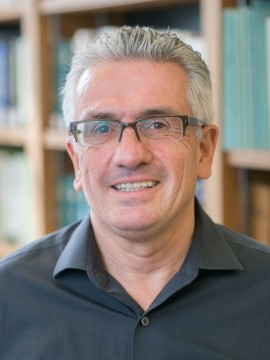
Joseph A. November is an Associate Professor in the Department of History at the University of South Carolina, affiliated with the McCausland College of Arts and Sciences. His research focuses on the history of biomedical computing, distributed computing, and the intersection of technology and medicine. He holds a Ph.D. from Princeton University (2006), an M.A. from the University of Chicago (2002), and a B.A. from Hamilton College (1997). His work includes the award-winning book Biomedical Computing: Digitizing Life in the United States (2012), which explores the co-development of biomedicine and computing technologies. Current projects include Revolutions@home , examining distributed computing in protein folding research, and a biography of computing pioneer Robert S. Ledley. He has received grants from the NSF, NIH, and the Charles Babbage Institute. Teaching interests span the history of science and technology, including courses on the history of medicine, digital humanities, and the role of games in historical education. He actively contributes to professional organizations like SHOT and the History of Science Society. Awards include the Computer History Museum Prize (2013) and the National Institutes of Health DeWitt Stetten Fellowship (2007-2008). His research bridges historical analysis with contemporary issues in technology and biomedical ethics.
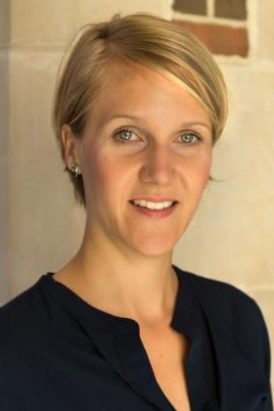
Silvia Lindtner is an Associate Professor at the University of Michigan's School of Information and Director of the Center for Ethics, Society, and Computing (ESC). She holds courtesy appointments in the Penny W. Stamps School of Art and Design and the Digital Studies Institute. Her work focuses on the social and cultural study of technology in China and globally, with a focus on data-driven governance, AI ethics, and the intersection of technology and labor. Lindtner has conducted nearly two decades of fieldwork in China, examining innovation ecosystems, digital economies, and the affective dimensions of state control. She is the author of the award-winning *Prototype Nation: China and the Contested Promise of Innovation* (2020) and co-author of *Technoprecarious* (2020). Education: PhD in Information and Computer Sciences from University of California, Irvine; BS/MS in Media Technology and Design from University of Hagenberg, Austria. Research Interests: Science and Technology Studies (STS), China Studies, HCI, Critical Computing, AI Ethics, Data Governance, Labor Studies, and Transnational Digital Economies. She explores how technological systems shape governance, labor practices, and everyday life, particularly in contexts of global inequality and state surveillance. Awards: Joseph Levenson Prize (2021), Francis L.K. Hsu Book Prize (2021), ACM Distinguished Member (2022), and fellowships from the National Committee on US-China Relations (2021-2023) and China-US Scholars Program (2021-2022). Grants: Supported by NSF, IMLS, Intel Labs, Google Anita Borg, and Chinese National Natural Science Foundation. Leads interdisciplinary initiatives including Tech.Culture.Matters research group and Michigan Interactive and Social Computing (MISC) research group. Labs/Teams: Directs the Center for Ethics, Society, and Computing (ESC) and collaborates with the Lieberthal-Rogel Center for Chinese Studies. Current projects include studies on affective control in AI governance and transnational data practices in healthcare and labor.
Professor Jamie Peck is a University Killam Professor and Professor of Geography at the University of British Columbia, Faculty of Arts, Department of Geography. He holds the prestigious title of Distinguished University Scholar at UBC and maintains significant international academic affiliations including Visiting Professor at Oxford University's School of Geography and the Environment, Honorary Professorial Fellow at the University of Manchester, and Honorary Professor at the University of Nottingham. Peck received his PhD in Geography from the University of Manchester in 1988 following his BA (Hons) in Geography from the same institution. His distinguished academic career spans positions at the University of Manchester (1989-2000), University of Wisconsin-Madison (2000-2008), and his current position at UBC where he has been a central figure in economic geography and interdisciplinary social science. As an institutional political economist, Professor Peck's research critically examines the spatial dimensions of economic processes, with particular attention to how global phenomena like neoliberalization are constituted through local practices. His work bridges economic geography, urban studies, political economy, and social theory, consistently challenging conventional understandings of market processes and statecraft. Recent research focuses on Chinese state capitalism, especially the Greater Bay Area and Hong Kong's evolving political status, alongside methodological innovations in conjunctural analysis as demonstrated in his 2023 book Variegated Economies . His scholarly output reveals a sustained engagement with the variegated nature of capitalist development across different spatial contexts. Recent publications demonstrate a sophisticated methodological approach combining institutional analysis with extended case methods, emphasizing historical context and spatial specificity while challenging universalizing theoretical claims. His work on Chinese political economy represents a significant departure from conventional Western-centric analyses. University Killam Professor (2025) Lauréat Prix International de Géographie Vautrin Lud ("Nobel de Géographie") (2023) Corresponding Fellow of the British Academy Fellow of the Royal Society of Canada Clarivate Highly Cited, Social Sciences (2014-2024) Distinguished University Scholar, UBC (2017-present) Canada Research Chair in Urban & Regional Political Economy (2008-2022) Professor Peck has supervised numerous doctoral students whose dissertations examine diverse topics including global urban solutions industries, US-Mexico border economies, Rio de Janeiro's 'PACification' processes, and China's experimental economic zones. His supervision approach emphasizes theoretically sophisticated empirical work that connects local case studies to broader political economic processes. His Canada Research Chair position supported extensive research on urban and regional political economy, while his current Killam Professorship funds ongoing work on Chinese political economy and conjunctural analysis methodologies. While not formally affiliated with a specific laboratory, Professor Peck is deeply engaged with multiple scholarly networks through his editorial leadership as Managing Editor of EPA: Economy & Space and co-editor of the Economic Transformations book series. His role as Convenor of the Summer Institute in Economic Geography demonstrates his commitment to fostering scholarly exchange and theoretical development in economic geography as a discipline.
Ameil Joseph is an Associate Professor at McMaster University's School of Social Work, where they contribute to critical scholarship at the intersection of mental health, race, and social justice. Their work examines how ideas about difference, normalcy, sexuality, eugenics, race, ability and mental 'illness' cohere and perform within policy, law and practice, with over a decade of professional experience in mental health settings including supportive housing, settlement services, crisis respite, and forensic community treatment. Education: Ph.D in Social Work, York University (2009-2014) MSW, Wilfrid Laurier University (2005-2007) BA in Psychology, University of Waterloo (1998-2003) Dr. Joseph's research engages with critical mental health, postcolonial theory, critical race theory, and critical disability studies to examine the historical production of ideas about difference. Their scholarship particularly focuses on how these ideas manifest in mental health systems, immigration policy, and criminal justice, with attention to issues of social justice, violence, ethics, and confluence. Their work bridges theoretical frameworks with practical implications, addressing the complex interplay of colonialism, racism, sanism, and eugenics in contemporary social systems. Analysis of Dr. Joseph's recent publications reveals a sustained focus on colonial and eugenic violence within mental health, immigration, and criminal justice systems. Their scholarship consistently examines how racism, sanism, and ableism intersect to produce particular forms of state violence, particularly against racialized immigrants with mental health conditions. Recent work has expanded to address temporal dimensions of oppression, data colonialism, and community responses to grief and loss during the pandemic, demonstrating both theoretical sophistication and practical relevance to current social issues. Scientific Awards: University Scholar 2025 - Recognized for research leadership and impact among eight McMaster professors honored as University Scholars Dr. Joseph has secured significant research funding, including nearly $75,000 from the Social Sciences and Humanities Research Council (SSHRC) for community-engaged projects addressing social justice issues. Their teaching portfolio includes advanced courses on critical mental health perspectives, race and colonialism in Canadian society, and social justice theory. While specific graduate students aren't listed in available materials, their extensive co-author network suggests active mentorship and collaboration. Dr. Joseph contributes to community-based initiatives in Hamilton addressing racism in healthcare and mental health systems, connecting academic scholarship with practical community responses to systemic issues. Dr. Joseph maintains an active presence in community responses to contemporary challenges, particularly through initiatives addressing grief during the pandemic and systemic racism in healthcare. Their work exemplifies the integration of scholarly rigor with community engagement, demonstrating how academic research can inform and be informed by real-world social justice efforts.
Maile Arvin is a Kanaka Maoli feminist scholar and Assistant Professor at the Department of Ethnic Studies, University of Hawaiʻi at Mānoa. Her research and teaching focus on Indigenous relationships to land, histories of race and settler colonialism in Hawaiʻi, Oceania, and the United States. Previously, she was faculty in History and Gender Studies at the University of Utah and founding director of the Center for Pasifika Indigenous Knowledges. PhD in Ethnic Studies, University of California San Diego (2013) MA in Ethnic Studies, University of California San Diego (2009) BA in English, Swarthmore College (2005) Her research examines: Colonial production of racial categories, particularly Polynesians as an 'almost white race' in historical social science History of incarceration of Native Hawaiian children in government institutions (1865–1960s) Intersection of settler colonialism and Indigenous feminisms Critique of eugenics and genomic studies in the Pacific Community-engaged memorialization projects in Hawaiʻi Recent scholarly trends include analyses of Indigenous sovereignty, critiques of settler colonial whiteness, and interdisciplinary studies of race-gender dynamics. Arvin's publications explore Polynesian racialization, decolonial feminism, and the socioeconomic impacts of colonial institutions. NEH Chair's Grant for Nā Lei Poina ʻOle ACLS Digital Justice Seed Grant Arvin leads Nā Lei Poina ʻOle (Beloved Children Never Forgotten), a community history project about reformatories and industrial schools in Hawaiʻi. In collaboration with Kawela Farrant and the North Shore Community Land Trust, this project uses archival and oral histories to confront the legacy of child incarceration. She also critiques the nonprofit-industrial complex's role in limiting Indigenous sovereignty.
Prof. Dr. Claudine Moulin is a Full Professor of Historical Linguistics at the Department of German Studies, University of Trier. She co-directs the Trier Center for Digital Humanities and serves as Vertrauensdozentin der Deutschen Forschungsgemeinschaft. With academic roots in Brussels and Bamberg, she completed her PhD in 1990 and Habilitation in 1999 at the University of Bamberg. Her research spans medieval and early modern languages, manuscript studies, digital humanities, and Luxembourgish linguistics. As a leading scholar in historical linguistics, Moulin's work explores urban language history, phraseology, and cultural knowledge transmission through manuscripts. She has directed major digital humanities projects like LexicoLux and Cartul@rium, while pioneering digital codicology methods for medieval texts. Her research combines traditional philology with computational approaches. Her academic accolades include the Akademiepreis Rheinland-Pfalz (2010), Landesverdienstorden (2014), and the Verdienstkreuz am Bande (2025). She has held visiting professorships at Sorbonne, EHESS Paris, and EPHE, and received fellowships from the Humboldt Foundation and European Science Foundation. Notable Academic Roles: Co-founder and Chair of DHd (Digital Humanities in German-speaking countries) Founding member of Trier Center for Language and Communication Member of German Historical Institute Paris scientific board Advisory positions at Austrian Center for Digital Humanities and Herzog August Bibliothek Her editorial leadership includes chief editorship of Sprachwissenschaft journal and co-editorship of Germanistische Bibliothek monograph series. She has mentored over 40 graduate students in topics ranging from medieval marginalia to urban language studies.
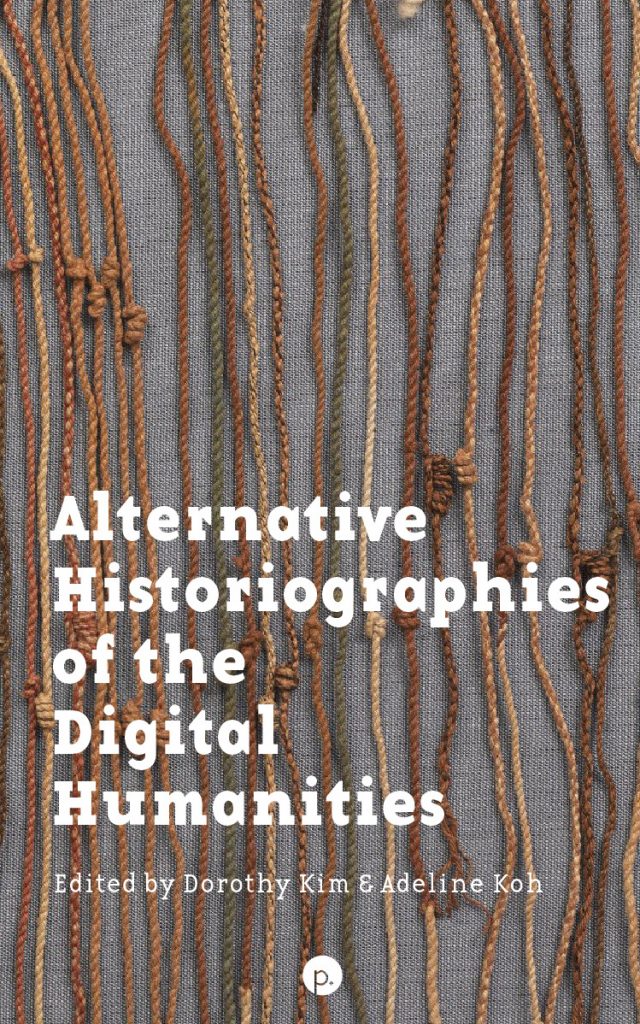
Dorothy Kim serves as Assistant Professor of English at Brandeis University with cross-appointments in the Department of Women's, Gender and Sexuality Studies and the Women's Studies Research Center. Her innovative scholarship bridges medieval literary studies, digital humanities, and critical race theory, examining how medieval history is weaponized by contemporary white supremacist movements and advocating for antiracist frameworks in academia. She earned her Ph.D. and M.A. from the University of California, Los Angeles and her B.A. from the University of California, Berkeley. Her educational trajectory reflects deep engagement with interdisciplinary approaches to literature and cultural studies. Kim's research centers on exposing the racialized foundations of medieval studies, particularly through projects analyzing digital white supremacy and medievalism's role in alt-right ideology. She pioneers methodologies connecting medieval women's literary cultures with contemporary trans feminism while interrogating Jewish/Christian difference in manuscript studies. Her work consistently challenges the field's historical whiteness and develops decolonial digital humanities practices. Her publication trends reveal a decisive shift toward critical race interventions in premodern studies, with increasing focus on database methodologies, sonic histories, and the material politics of medieval manuscript transmission. Recent works demonstrate how digital tools can either reinforce or dismantle racial hierarchies in academic knowledge production. Her distinguished honors include: 2023 Medieval Academy of America Article Prize in Critical Race Studies American Studies Association Digital Humanities Book Prize (2021) Society for Medieval Feminist Scholarship's Best Feminist Article Award (2021) AAUW Postdoctoral Fellowship (2018-2019) Folger Shakespeare Library Long-Term Fellowship (2025-2026) SSHRC, Ford Foundation, Fulbright, and Mellon fellowships Kim directs major collaborative projects including the NEH-funded An Archive of Early Middle English (161-manuscript database) and co-leads the Global Middle Ages Project. As co-director of RaceB4Race and the Reckonings Institute, she creates platforms for community archiving and social justice praxis. Her mentorship focuses on training students in critical digital methodologies through Brandeis' DH Lab while developing antifascist frameworks for humanities education. She currently leads the Brandeis University DH Lab housing her NEH project, co-edits Literature Compass's pre-1800 section, and develops two major book projects: Race, the Crusades, and the Katherine Group (based on her AAUW fellowship) and Music, Multimodal Manuscripts, and Remediating the Medieval Lyric for ArcPress.
Dr. Joshua Savala is an Associate Professor of History at the University of Texas at El Paso (UTEP), part of the College of Liberal Arts. He holds a PhD from Cornell University (2019) and previously taught at Rollins College in Florida. His research focuses on Latin American social movements, transnational histories of the Pacific, and labor solidarity in the Andean and Southern Cone regions. Key areas of expertise include maritime workers, anarchism, public health epidemics, and border studies. Education: PhD in History, Cornell University (2019) MA in History, Cornell University (2015) MA in History, Tufts University (2012) BA in History and Sociology, University of California, Davis (2007) Research Interests: His groundbreaking work examines collaborative relationships between Peruvians and Chileans in the 19th and early 20th centuries, including studies on cholera epidemics, anarchist networks, and cross-border solidarity. Recent projects investigate cooperative urban planning on the U.S.-Mexico border and disaster responses in Valparaíso. Publications: Includes the award-winning book Beyond Patriotic Phobias (2022) and articles in Hispanic American Historical Review and Journal of Social History . His Spanish translation Más allá de la guerra (2024) is a binational publication with universities in Peru and Chile. Awards: Best Book (Social Sciences) on the Southern Cone (Honorable Mention), 2023 Flora Tristán Book Prize (Honorable Mention), 2023 José María Arguedas Prize, 2020 Teaching: Teaches courses on Modern Latin America, Pacific World histories, and borderland studies. Recent courses include Studies in Latin American History and South America Since 1810 . Labs/Teams: Engaged with UTEP's Borderlands Digital Humanities Center and the Institute of Oral History, emphasizing collaborative interdisciplinary projects.
Fabian Fagerholm is an Assistant Professor in the Department of Computer Science at Aalto University. His work bridges software engineering, human-computer interaction, and empirical research methodologies. He actively participates in research groups such as Software and Service Engineering (SSE) and Human-Computer Interaction and Design (HCID). Fagerholm's research explores: Continuous experimentation in software development Developer cognition and mental models Agile methodologies and team dynamics Low-code platforms and end-user programming Software engineering education and pedagogy His publications reflect a strong empirical focus, with recurring themes of human factors in technical systems and educational innovation. He has received notable awards including: Journal of Systems and Software Best Paper Award (2018) EUROMICRO SEAA Distinguished Paper Award (2017) Teacher of the Year (2013) Nokia Foundation Scholarship (2013) Fagerholm contributes to software engineering infrastructure through tools for experimentation and boundary artifacts, enhancing collaboration in distributed teams.
Jack Bowman is a Teaching Fellow in Modern History at the University of Warwick, School of Arts, Department of History. He teaches modules such as "Britain in the Twentieth Century" and "Race, Racism, and Resistance in Modern Britain," and serves as an Academic Writing Adviser and Teaching Representative for the Social Inclusion and Diversity Committee. PhD in History, University of Warwick (2019–2023) MA in Modern History, University of Warwick (2018–2019) BA (Hons) in History, University of Warwick (2015–2018) His research focuses on anti-colonial print cultures, particularly within the British Empire and the Pan-African movement. He specializes in book history, global histories of empire, queer histories, and visual media. His work explores the role of political publishing in anti-colonial activism and the intellectual networks of figures like V. K. Krishna Menon and Ras T. Makonnen. The recent publications and presentations reflect a strong engagement with transnational anti-colonial movements, Black radicalism, and the material culture of print. His work spans historical biography, archival research, and critical reviews of scholarship in visual culture, decolonization, and global knowledge systems. He frequently contributes to public history through outreach and digital media. University of Warwick, History Department Doctoral Scholarship (2019–2023) Jack Bowman advises undergraduate students and contributes to academic governance through committee roles. He is also involved in public engagement, including outreach to school children as the historian for George Padmore and creating educational resources for GCSE and A-Level students. He is a Convenor of the Modern British History Reading Group and a member of the Global History and Culture Centre and Manuscript and Print Cultures Research Group at Warwick. He is currently working on a new book project on the League Against Imperialism and maintains an active public presence through Twitter (@DrJackBowman) and podcast contributions, such as with Shoga Films on the Harlem Renaissance.
Gregg M. Garfin is a Professor and Specialist in Climate, Natural Resources, and Policy at the University of Arizona’s School of Natural Resources and the Environment, and Deputy Director for Science Translation and Outreach at the Arizona Institute for Resilience. He holds a Ph.D. in Geosciences from the University of Arizona (2003), an M.S. in Geology and Geography from the University of Massachusetts (1997), and a B.S. in Geology and Geography from the same institution (1993). His work bridges science and societal decision-making, focusing on climate adaptation, drought management, and climate services. He directs the Water, Society, and Policy M.S. Program and has led interdisciplinary projects on climate resilience, including contributions to the Fourth National Climate Assessment. Roles: Professor, Deputy Director, Program Director Affiliations: Arizona Institute for Resilience, School of Natural Resources and the Environment Research Interests His research emphasizes climate adaptation strategies, climate policy, and the co-production of knowledge between scientists and decision-makers. Key areas include: Climate impacts on water resources and ecosystems Extreme heat and drought resilience in urban and border communities Climate change communication and education Awards & Recognition Garfin has received multiple accolades, including AAAS Fellowship (2020), University of Arizona Service Awards (2020, 2015), and the Global Initiative for Academic Networks (GIAN) Visiting Fellowship (2018). His work has been featured in peer-reviewed journals and media outlets, emphasizing actionable science for climate resilience. Grants & Contributions He has led federal and transnational projects, including binational climate resilience initiatives in the U.S.-Mexico border region and flood risk assessments in Seoul, South Korea. His work integrates participatory governance approaches to enhance community preparedness.
Walter W. Powell is the Jacks Family Professor of Education at Stanford University, with courtesy appointments in Sociology, Organizational Behavior, Management Science and Engineering, and Communication. He serves as Faculty Co-Director of the Stanford Center on Philanthropy and Civil Society (PACS), which he co-founded in 2006, and leads the Civic Life of Cities Lab examining civil society organizations across global metropolitan areas. Powell is also an External Faculty member at the Santa Fe Institute and co-directs the CASBS summer institute on Organizations with MIT's Bob Gibbons. His educational background includes a PhD in Sociology from SUNY-Stony Brook (1978), an MA in Sociology from the same institution (1975), and a BA from Florida State University (1971). Powell's research fundamentally explores how ideas and practices transfer across organizational boundaries, with particular emphasis on network structures that enable or constrain knowledge diffusion. His work spans organizational theory, institutional analysis, university-industry relations, economic sociology, and comparative analysis of nonprofit, public, and private institutional forms. Powell's publications reveal consistent focus on network dynamics and institutional evolution, particularly examining how organizations navigate between market, hierarchy, and network governance structures. His research demonstrates how knowledge spillovers operate within biotechnology clusters, how institutional isomorphism shapes organizational fields, and how civil society organizations adapt to technological and economic pressures across different urban contexts. Dean's Award for Excellence in Graduate Teaching (2018-19) Max Weber Award for "Neither Market Nor Hierarchy" Viviana Zelizer Prize for "Network Dynamics and Field Evolution" Administrative Science Quarterly Recognition Member of Swedish Royal Academy of Science Member of The British Academy Member of American Academy of Arts and Sciences Honorary Degrees from Uppsala University, Copenhagen Business School, and Aalto University Powell has made substantial contributions to graduate education, receiving Stanford's highest teaching honor. His leadership of PACS and SCANCOR (1999-2010) demonstrates sustained commitment to advancing organizational research through collaborative initiatives. He supervises postdoctoral fellows and runs annual PhD workshops in Europe, fostering the next generation of organizational scholars. His research has been supported by grants enabling comparative studies of university-industry relations and civil society across multiple national contexts. Through the Civic Life of Cities Lab at PACS, Powell directs comparative research on civil society organizations across seven global cities, examining how these organizations navigate technological change, economic pressures, and political environments. His work bridges theoretical organizational sociology with practical applications in philanthropy, civil society development, and knowledge transfer between academic and commercial sectors.
Prof. Dr. Sebastian Conrad holds the Chair of Modern History at Freie Universität Berlin , specializing in Global History , (Post-)colonial History , and Intellectual History . He joined the faculty in 2010 after teaching at European University Institute in Florence and serving as visiting scholar at institutions including NYU Abu Dhabi and The New School, New York. Director of MA "Global History" (FU Berlin/Humboldt University joint program) Director of Graduate School "Global Intellectual History" Principal Investigator, Cluster of Excellence "Temporal Communities" (2024) Research Interests focus on transnational historical frameworks , globalization of historical narratives , and postcolonial historiography . His latest book Die Königin: Nofretetes globale Karriere (2024) analyzes cultural globalization through Nefertiti's iconography, while his current project explores global history of bodily aesthetics and identity formation since the 19th century. Recent Publications include: 2022: "Empire and Nationalism" (American Historical Review) 2021: "Globalizing the Beautiful Body" (Journal of World History) 2020: "Greek in Their Own Way" (American Historical Review) Scientific Honors : Elected member, Berlin-Brandenburg Academy of Sciences and Humanities (2024) Elected member, Academia Europaea (2024) Finalist, German/NDR non-fiction book awards (2024) for Nefertiti study Academic Leadership includes editorial roles at Geschichte und Gesellschaft , Past & Present , and Globalgeschichte book series (Campus Verlag). His work bridges historical analysis with contemporary debates on memory, identity, and global cultural dynamics.