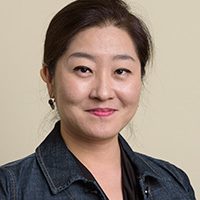
Dr. Soohyun Yun is an Associate Professor of Music and Director of Keyboard Studies at Charleston Southern University. She holds a Doctor of Musical Arts in Piano Performance and Literature (with a minor in Theory) and dual Master's degrees in Piano Pedagogy and Performance from the University of Illinois at Urbana-Champaign. Her Bachelor of Music was earned at Yonsei University in Seoul, Korea. Her research focuses on piano performance pedagogy , historical performance practices , and contemporary repertoire analysis , with specialized work on composers like Benjamin Lees and Ravel. She has presented at over 40 international conferences, including the World Piano Conference and MTNA National Conference. Dr. Yun's publications emphasize practical pedagogy, technical analysis of piano literature, and reviews of educational resources. Her scholarly output reflects consistent exploration of piano technique evolution and cross-cultural teaching methodologies. Major performance awards include: Piano Texas International Concerto Competition Winner (2019) IBLA Grand Prize's Most Distinguished Musician Award (2016) First Prize at Bradshaw & Buono International Competition (2016) American Protégé International First Prize (2009) She directs keyboard programs at CSU, coordinates student ensembles, and holds leadership roles in the South Carolina Music Teachers Association (Commissioned Composer Chair) and Charleston Music Teachers Association (Vice President of Programs).
Katarzyna Myćka is a Professor at the Stanisław Moniuszko Academy of Music in Gdańsk, where she has served since the 2018/19 academic year. A marimba virtuoso and one of the leading pioneers of concert marimba performance, she represents a unique specialization within the Faculty II – Instrumental department, specifically in percussion studies. Her academic journey began as a piano student at the same institution under Grażyna Fiedoruk-Sienkiewicz, and since 2001 she has worked at her alma mater, initially as an accompanying pianist for various instrumental classes before focusing on marimba performance and education. Myćka's research interests center on marimba performance practice, contemporary percussion repertoire development, and the scholarly investigation of women composers. Her doctoral dissertation on women composers, defended in 2023, represents a significant contribution to musicology and gender studies in music. She actively promotes Polish musical heritage through editing sheet music collections of forgotten Polish composers and has developed a comprehensive discography that showcases both traditional repertoire adaptations and contemporary works. Her seven commercially released CDs demonstrate remarkable versatility, spanning from Bach transcriptions to modern compositions by artists like Emmanuel Séjourné and Anna Ignatowicz. Meritorious for Polish Culture distinction from the Minister of Culture and National Heritage (2016) Medal of the National Education Commission (2023) As an educator, Professor Myćka founded the International Katarzyna Myćka Marimba Academy (IKMMA), an intensive masterclass program that has become a significant training ground for emerging marimba specialists. Her teaching extends beyond technical mastery to encompass artistic interpretation and professional development for percussionists. She actively promotes the work of women composers both through her scholarly research and performance practice, contributing to greater representation in concert programming. Myćka maintains an active performance career, having collaborated with prestigious ensembles including the Beijing Symphony Orchestra, Camerata Israeli, Wiener KammerOrchester, and Stuttgart Philharmonic Orchestra, demonstrating her international stature in the percussion world.
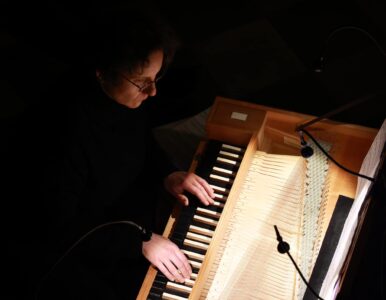
Maria Erdman serves as a Lecturer at the Ignacy Jan Paderewski Academy of Music in Poznan within the Institute of Instrumental Studies, specializing in harpsichord instruction. She additionally teaches organ and harpsichord at the Academy of Music in Krakow and leads her own organ class at the Fryderyk Chopin Music School in Warsaw since 2005. Her academic training includes organ studies under Prof. Marietta Kruzel-Sosnowska at the Fryderyk Chopin State Music High School in Warsaw and dual degrees in Music Theory and Organ from the Fryderyk Chopin Academy of Music in Warsaw under Prof. Andrzej Chorosinski, followed by postgraduate studies at Conservatorium van Amsterdam with Prof. Menno van Delft (harpsichord) and Prof. Pieter van Dijk (organ). Erdman is a distinguished harpsichordist and organist whose research centers on early music, particularly Polish repertoire sources, 16th-century performance practices, and the relationship between performance techniques and compositional methods in Polish keyboard tablatures. Her scholarly work bridges musicology with historical performance practice, emphasizing the harpsichord's role in Empfindsamkeit-era chamber music and Polish folk-early music fusion. Her notable recognition includes the inclusion of her 2018 recording of J. Paszkiewicz's Requiem in Poznan's 2021 time capsule, commemorating residents buried in the former St. Mary Magdalene collegiate church. As an educator, Erdman mentors students in historical keyboard instruments and contributes to Warsaw Summer Courses for Early Music Methodology. She collaborates extensively with ensembles including flutist Karolina Zych and viola da gamba player Justyna Młynarczyk for C.P.E. Bach performances, and with Adam Struga's "Monodia polska" to integrate Polish folk traditions with early music.
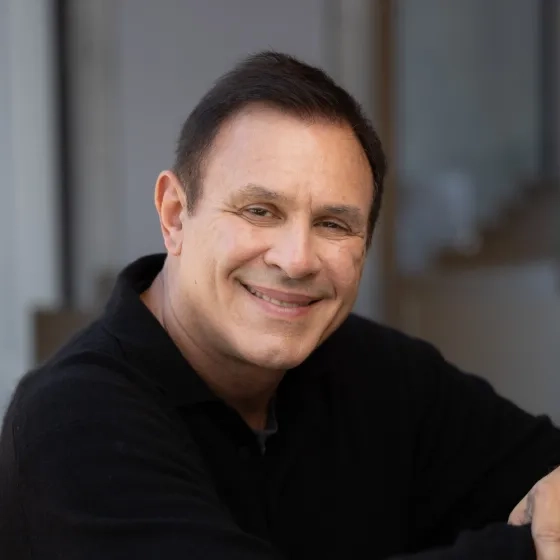
David Conte is Professor of Composition and Chair of the Composition Department at the San Francisco Conservatory of Music (SFCM), where he has taught since 1985. He is also affiliated with the European American Musical Alliance in Paris, where he served on the composition faculty from 2011-2022. In 2014, he was named Composer in Residence for Cappella SF, a professional chamber choir in San Francisco. His educational background includes: Doctor of Musical Arts (DMA) from Cornell University Master of Fine Arts (MFA) from Cornell University Bachelor of Music (BM) from Bowling Green State University David Conte's research and creative interests focus on contemporary classical composition, particularly in the areas of opera, choral music, and chamber music. His work demonstrates a deep engagement with American musical traditions while incorporating diverse influences from European classical music. He has developed a distinctive compositional voice that bridges traditional techniques with contemporary expression, particularly evident in his vocal and choral works. Conte's approach to composition pedagogy emphasizes the importance of musical memory, keyboard skills, and deep engagement with the music one loves. Analysis of Conte's compositional output reveals a consistent focus on vocal and choral music, with significant contributions to American opera through works like 'The Gift of the Magi.' His chamber music demonstrates sophisticated understanding of instrumental capabilities across various ensembles. More recently, his orchestral works like the 'Sinfonietta for Classical Orchestra' show a refined neoclassical approach. Conte's compositions often explore literary and historical themes, reflecting his broader interests in film, history, politics, and religion. His notable awards and distinctions include: Fulbright Scholarship (1976) Ralph Vaughan Williams Fellowship (1989) Aspen Music Festival Conducting Fellowship (1984) National Association of Teachers of Singing Composition Award (2016) American Guild of Organists Distinguished Composer (2024) Raymond Brock commission from the American Choral Directors Association First Prize in the NATS Composition Competition for 'American Death Ballads' (2016) As an educator, Conte has mentored over 100 composition students since 1985 at SFCM. His teaching philosophy, heavily influenced by his studies with Nadia Boulanger, emphasizes the importance of musical memory, keyboard proficiency for composers, and gradual skill development. He has secured numerous commissions from prestigious organizations including the San Francisco, Oakland, Stockton, and Dayton Symphonies, Chanticleer, and the American Guild of Organists. Conte's work has been supported by institutions like the Fulbright Program and the National Endowment for the Arts. Conte maintains active collaborations with various musical organizations, including Cappella SF where he serves as Composer in Residence. His work with librettists like Nicholas Giardini and collaborators like Todd Boekelheide demonstrates his commitment to interdisciplinary artistic projects. He continues to be an influential figure in American contemporary music through his compositions, teaching, and advocacy for new music.
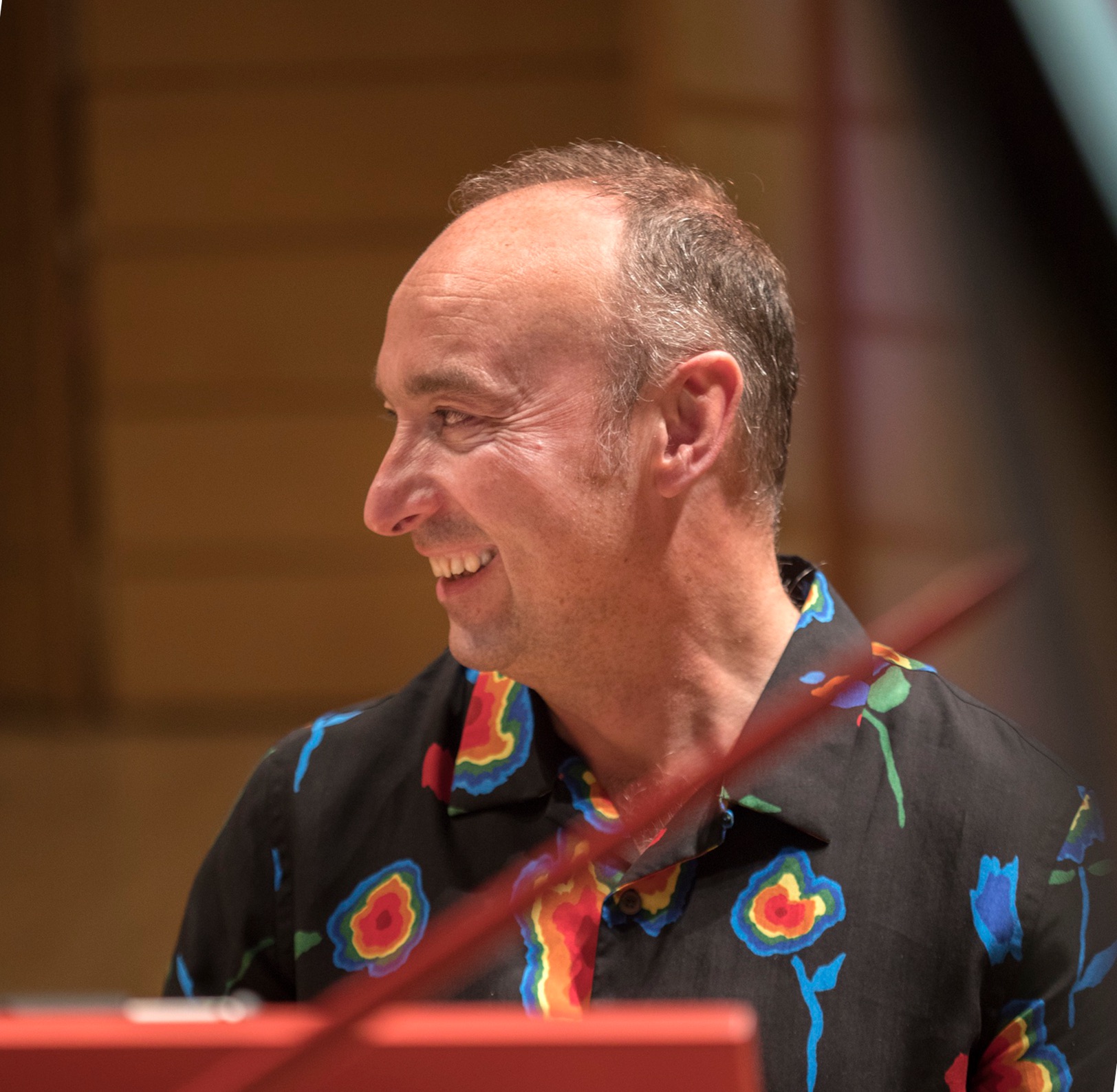
Professor David McGuinness is a Professor of Practical Music at the University of Glasgow. His academic career spans research, performance, and media production. He holds a PhD on early 17th-century English church music, later pivoting to composing for theatre/TV and classical keyboard performance. He directed Concerto Caledonia for 30+ years, producing 16 albums and collaborating across genres. He was a BBC Radio 3 producer and composer for Channel 4's Skins . His research focuses on historical and traditional music, including the AHRC-funded Bass Culture in Scottish Musical Traditions (2012-15) and The Edinburgh Allan Ramsay project (2018-23). He advises students in historical music, performance research, and practice-as-research. Grants include £375k from AHRC for Scottish bass culture studies and collaborative projects with institutions like Temple University and Sydney Living Museums. Major works include Shepherds and Tea Tables: Songs of Allan Ramsay (2023), I Trawl the Megahertz (2019), and scholarly editions like Collected Works of Allan Ramsay (2022). His performance projects range from Baroque reenactments to modern interdisciplinary collaborations.
Alla Voskoboynikova is an Associate Teaching Professor of Music and Director of Keyboard Studies at the University of Missouri-St. Louis (UMSL). She holds a Bachelor’s in Piano Performance from Voronezh Music College (Russia) and a Master’s from Moscow’s Gnessins Academy of Music. Her career includes solo performances at Carnegie Hall and collaborative work with the St. Louis Symphony Orchestra and Union Avenue Opera Company. She has organized cultural exchange concerts in Russia and directs UMSL’s Summer Keyboard Camp. Education: Voronezh Music College (BA, 199?), Gnessins Academy (MA, 1996) Research focuses on piano pedagogy, chamber music collaboration, and Russian/Ukrainian musical heritage. Notable projects include Shostakovich’s 100th-anniversary recitals and Mendelssohn bicentennial performances. She actively mentors students in competitions and international tours. Recent performances include collaborations with Arianna String Quartet, Stella Markou, and Christine Brewer. Her pedagogical approach emphasizes cultural exchange and interdisciplinary artistry, with students performing at major St. Louis venues like Touhill Performing Arts Center.
Peter Tuite is a Full Titled Professor and Head of the Keyboard Faculty at the Royal Irish Academy of Music (RIAM), one of Europe’s leading music institutions. He holds dual appointments, previously serving as Head of Piano and Keyboard Instruments at Trinity Laban Conservatoire of Music and Dance in London (2015–2018). His academic roles are complemented by extensive international performance and curation work. Education includes Trinity College Dublin, University of Oxford, and a Fulbright Scholarship at Johns Hopkins University’s Peabody Institute. He is renowned for his specialization in 18th-century keyboard works, particularly Haydn and Bach, and has pioneered innovative recordings such as the Goldberg Variations (2020) and the Art of Fugue project (2025). As a concerto soloist, he collaborates with renowned conductors like Andrei Boreyko and orchestras across Europe and the U.S. Research interests span performance practice, musicology, and interdisciplinary projects blending music with literature. He co-founded the New Lights Festival (2018), a London-based platform for contemporary music innovation, and launched the New Lights Forum for artist-intellectual dialogues. His recent hybrid works merge poetry with ancient instruments, including a 2023 piece premiered in London. Awards: Glenn Gould Bach Fellowship (2020), Loubser Fellowship (2020), Lead Curator of PLF Projects (2022), Poetry Commendation (2015). Grants & Projects: Digital exhibition space development (PLF Projects, 2024), Weimar Bach exhibitions (2021), international masterclasses in 15+ countries. Labs/Teams: Leads the RIAM Keyboard Faculty, collaborates with the Vanbrugh String Quartet and artists like Hakan Hardenberger.
David Riley is a Professor and Director of Piano Accompanying and Chamber Music at the University of Oregon School of Music and Dance since 2004. He specializes in Keyboard Performance , Piano Accompanying , and Chamber Music collaboration. Education: Doctorate (DMA) from Eastman School of Music Master's from Cleveland Institute of Music Bachelor's from Ithaca College His research and performance focus includes: Contemporary Collaborative Techniques Historical Chamber Repertoire Keyboard-Pedagogy Innovation Performance highlights: Merkin Hall with New York Philharmonic Chamber Players Carnegie Hall recitals Oregon Bach Festival collaborations International tours in Germany, Canada, and France Award recognitions: 2008 Canadian Independent Music Awards 'Favorite Classical CD' 2007 Silver Wave Film Festival 'Best Music' 2004 East Coast Music Award 'Best Classical Recording' He actively mentors graduate students in Collaborative Piano and provides graduate assistantships in studio accompanying and opera. The Eugene location offers unique access to coastal environments, hiking, and skiing alongside academic pursuits.
Aylın Doğan serves as a Lecturer in the Piano, Harp and Guitar Department at Istanbul State Conservatory, Mimar Sinan Fine Arts University, where she specializes in instrumental performance instruction. Education Licence (Bachelor's Degree) in Music, Piano, Harp and Guitar Program, Mimar Sinan Fine Arts University, Istanbul State Conservatory (1986-1991) Research and Teaching Focus Her academic work centers on advanced performance techniques for keyboard and string instruments, with dedicated expertise in piano, harp, and guitar repertoire. She emphasizes historical performance practices and technical mastery within Western classical traditions, shaping curricula that bridge theoretical knowledge with stage-ready artistry. Her pedagogical approach integrates centuries of conservatory tradition with contemporary interpretive methods. Professional Engagement Dr. Doğan actively participates in institutional scientific activities and artistic productions at Turkey's premier conservatory, though specific projects remain undocumented in available records. Her career exemplifies the dual academic-artistic mission of music conservatories through continuous performance and scholarly contributions to instrumental education.
Associate Professor Daniel Herscovitch is a renowned pianist and academic at the Sydney Conservatorium of Music, University of Sydney. He holds an Associate Professorship in Piano and has lectured on chamber music and piano pedagogy. His career spans extensive performances across Europe, Asia, and Australia, including collaborations with leading ensembles like the Australia Ensemble and Sydney Spring Festival of New Music. Education: Bachelor of Music (DSCM, Honours) Künstlerische Reifeprüfung (Munich) Meisterklassendiplom (Munich) Research Interests: Specializes in Baroque and Classical performance interpretation, particularly Bach’s Art of Fugue and Beethoven ornamentation. Active in commissioning contemporary works by Australian and international composers. His recordings span 17th to 21st century repertoire, with notable releases on Toccata Classics and ABC Classics. Performance Highlights: Includes tours in the USA, Indonesia, and Europe, with residencies at institutions like the Royal Northern College of Music. Notable performances include Hindemith’s Ludus Tonalis and Bartók’s Two-Piano Concerto. Awards: 2019 Gramophone Editor’s Choice for the Roger Smalley CD. Internationally acclaimed releases include works by Don Banks and Peter Dart. Grants & Collaborations: Supported by DAAD scholarships and has led projects with Musica Viva, the Seymour Group, and Sydney Southeast Asia Centre. His research bridges historical performance practices with contemporary composition. Labs/Teams: Involved in the Sydney Conservatorium’s chamber music programs and pedagogical initiatives. Regularly presents at conferences on topics like Bach interpretation and 20th-century piano techniques.
Michael Fuerst is a Lecturer in Historical Performance Practice (Piano) and Early Music Coaching at the University of the Arts Bremen, and also teaches Continuo and Historical Keyboard Instruments at the Musikhochschule Lübeck. Born in the USA, he studied at Eastman School of Music with Arthur Haas and Paul O'Dette, later completing his studies as a Fulbright Scholar under Robert Hill at Freiburg's State Music Academy. His research includes a DFG-funded project on 17th-century German instrumental music. Professionally, he leads the European Hanse Ensemble's international courses and curates a concert series showcasing historical instruments from Hamburg's Museum of History. Since 2021, he serves as Secretary of the International Dietrich Buxtehude Society. His recordings include Echo Klassik-winning albums like Choralvariationen und Choralkonzerte (2010) and Lübecker Virtuosen (2006), featuring works by Telemann, Tunder, and others. He frequently performs internationally and organizes workshops like the International Winter Academy of Early Music. Education: Began studies in Madison, USA Eastman School of Music (USA) Staatliche Hochschule für Musik Freiburg (Germany) Awards: Two Echo Klassik Preises for discographies Key Roles: Dozent, European Hanse Ensemble Schriftführer, Dietrich Buxtehude Gesellschaft His teaching focuses on historical temperaments, baroque keyboard techniques, and collaborative performance practices. Recent performances include concerts at St. Nikolai Kirche and university venues interpreting Venetian influences in Northern European music.
Anna Paradiso Laurin is a Researcher and PhD candidate at the Department of Classical Music, Royal Swedish Academy of Music. Her research focuses on historical keyboard instruments and the marginalized Swedish musical repertoire from 1780 to 1860, challenging gender-based biases in music history. She leads the project "Feminine Repertoire and Home Music Making in Sweden 1780–1860" , using artistic methods to explore instrument choice's impact on interpretation. Education & Teaching: Holds a PhD in Latin and Ancient Greek Philology. Taught at Oxford University, KTH Royal Institute of Technology, and Stockholm University. Currently teaches "Music History & Performance Practice" at KMH and previously served as a lecturer in harpsichord studies (2021–2025). Research Methods: Employs historical instruments (e.g., a 1797 Petter Kraft clavichord, 1802 Broadwood piano) to analyze tonal characteristics and their influence on interpretation. Developed an interpretation laboratory comparing playing styles via video documentation. Performance & Recognition: A renowned harpsichordist with 18 BIS Records albums, praised by Gramophone and American Record Guide . Collaborates with composers like Daniel Börtz and Helena Tulve. Awards include the Swedish Grammis and Bernadotte Scholarship. Public Engagement: Organizes salons to revive overlooked 18th/19th-century Swedish compositions. Her work bridges historical performance, gender studies, and instrumentology.
David Jones is the Head of Accompaniment and a Lecturer in Piano at the Royal Northern College of Music (RNCM). He holds roles as Staff Pianist Co-ordinator, Junior RNCM Tutor, and academic supervisor. His career spans over 25 years, including a PhD on Jeffrey Lewis's music (2011) and extensive editorial work for Cathedral Press. He specializes in 19th-20th century French and British music, with a focus on accompaniment, mélodie, and opera coaching. Education: BMus (First Class Honours, University of Wales, Bangor), PGDip and MusM (RNCM). Research interests include music archiving, collaborative performance practices, and the works of overlooked composers like Jeffrey Lewis and Robin Stevens. He supervises PhD students on topics such as Arnold Cooke, Louise Farrenc, and Gabriel Pierné. Professional Activities: Pianist for Hallé Choir, founder of Altèri chamber choir, ABRSM examiner (2005-2019). Recordings: Over 10 albums featuring Lewis, Stevens, Bingham, and Williamson. Recent releases include Robin Stevens' Chasing Shadows (2023) and Blooms of Dublin (Anthony Burgess project, 2022). Current projects include archiving Jeffrey Lewis's manuscripts and preparing the Anthony Burgess Foundation's Joycean music collections. His teaching includes undergrad electives on French mélodie and 19th-century opera, alongside postgraduate accompaniment coaching.
Rob Haskins is Professor of Music at the University of New Hampshire since 2004, with a multifaceted career as a musicologist, critic, and performer. He earned his degrees in musicology and harpsichord performance from the University of Rochester Eastman School of Music and associated institutions. B.M. Piano, Johns Hopkins University D.M.A. Harpsichord Performance and Literature, University of Rochester Diploma Concert Recital Diploma (Harpsichord), Guildhall School M&D Ph.D. Musicology, University of Rochester His research focuses on John Cage, American minimalism, modernist music theory, and ecopoetics, with publications analyzing Cage's chance operations, Buddhist influences in his work, and intersections of technology and musical innovation. He has authored books including John Cage (2012) and Classical Listening: Two Decades of Reviews from the American Record Guide (2016). Recent publications (2025-2019) span topics from Debussy's etudes to interdisciplinary modernism, with recurring emphasis on Cage, Baroque transcriptions, and experimental composition. His academic work often bridges historical and contemporary practices. Haskins has received grants from the Frederick Smyth Institute of Music (2024) and actively performs, notably directing Cage’s Song Books at the Holland Festival (2012) and recording for labels like Mode and Nonesuch. He teaches courses such as Music of the 20th & 21st Centuries , Survey of Music in America , and Introduction to Bibliography .
Omar Thomas is an Associate Professor of Composition and Jazz Studies at the University of Texas at Austin, holding the Foxworth Centennial Fellowship. Previously, he served as an Assistant Professor at Berklee College of Music and a Visiting Professor at Johns Hopkins University’s Peabody Institute. His teaching focuses on Jazz Harmony, Post-Genre Music, and Large Ensemble Arranging. He earned a Master of Music in Jazz Composition from the New England Conservatory and a Bachelor of Music from James Madison University. Thomas’s research explores intersections of jazz, wind band composition, and cultural identity. His works, such as Come Sunday (winner of the 2019 Revelli Award) and the Grammy-nominated We Will Know , blend African American spiritual traditions, Caribbean rhythms, and social justice themes. His large ensemble, the Omar Thomas Large Ensemble, has released albums including I Am (#1 on iTunes Jazz Charts) and the upcoming Griot Songs , a personal exploration of West African griot storytelling. His awards include three Harvard Teaching Excellence Certificates, the Boston Music Award, and the Lavender Rhino Award for LGBTQ+ advocacy. He is a member of the Blue Dot Collective, composing works for diverse ensembles like the Colorado Symphony Orchestra and the Eastman New Jazz Ensemble. Thomas’s music frequently addresses cultural heritage, identity, and sociopolitical issues. Upcoming projects include Griot Songs (2025), featuring arrangements of Radiohead and Pat Metheny Group works alongside original compositions rooted in Caribbean and Guyanese influences.