Matthew Timperley is a Senior Research Associate at the Lancaster Medical School, affiliated with the CHICAS (Computational Intelligence, Health, and Informatics) research group. His work bridges computational methods with interdisciplinary applications, including corpus linguistics and digital humanities. Research Interests: Dr. Timperley's research focuses on corpus linguistics and computational analysis of historical texts, notably Shakespearean language. His work involves enhancing digital corpora (e.g., the First Folio) through annotation and computational modeling, with potential applications in health informatics and medical statistics. Contact Details: Email: m.j.timperley@lancaster.ac.uk
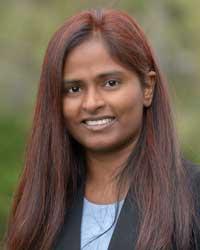
Salma Shaik is an Assistant Professor and Director of the Computer Information Systems & Technology program at the Division of Management and Education within the University of Pittsburgh . Her research bridges Computer Science , Sustainability , and Engineering Education , with recent work focusing on AI applications in healthcare, sustainability practices in engineering, and economic analyses of waste management. Salma utilizes Artificial Intelligence and Data Analysis to explore topics like social media discourse in chronic diseases and environmental impact of e-commerce . Her contributions to Engineering Education include frameworks for evaluating student projects and integrating sustainability into curricula.
Pierrette Bouillon is affiliated with the University of Geneva as a researcher, focusing on machine translation, accessible communication, and language technology applications in healthcare. Her work bridges computational linguistics, speech processing, and inclusive design. Institution: University of Geneva Research Focus: Medical translation, sign language processing, text/pictograph translation Research Interests : Bouillon specializes in machine translation and computational linguistics , with particular emphasis on: Accessible communication for patients with language barriers Sign language and pictograph translation systems (e.g., BabelDr) Speech-to-speech translation in emergency settings Text simplification for intellectual disabilities Historical French normalization for NLP Multilingual speech recognition and post-editing Article Trends : Her recent publications highlight the integration of large language models with accessibility tools in healthcare, focusing on Swiss French sign language corpora , pictograph sequences , and spontaneous speech simplification . Work spans both NLP and human-computer interaction in medical contexts. Education and Teaching : While specific educational details are omitted, Bouillon contributes to translation pedagogy through tools like COPECO and MT3 , integrating speech technologies into post-editing workflows.
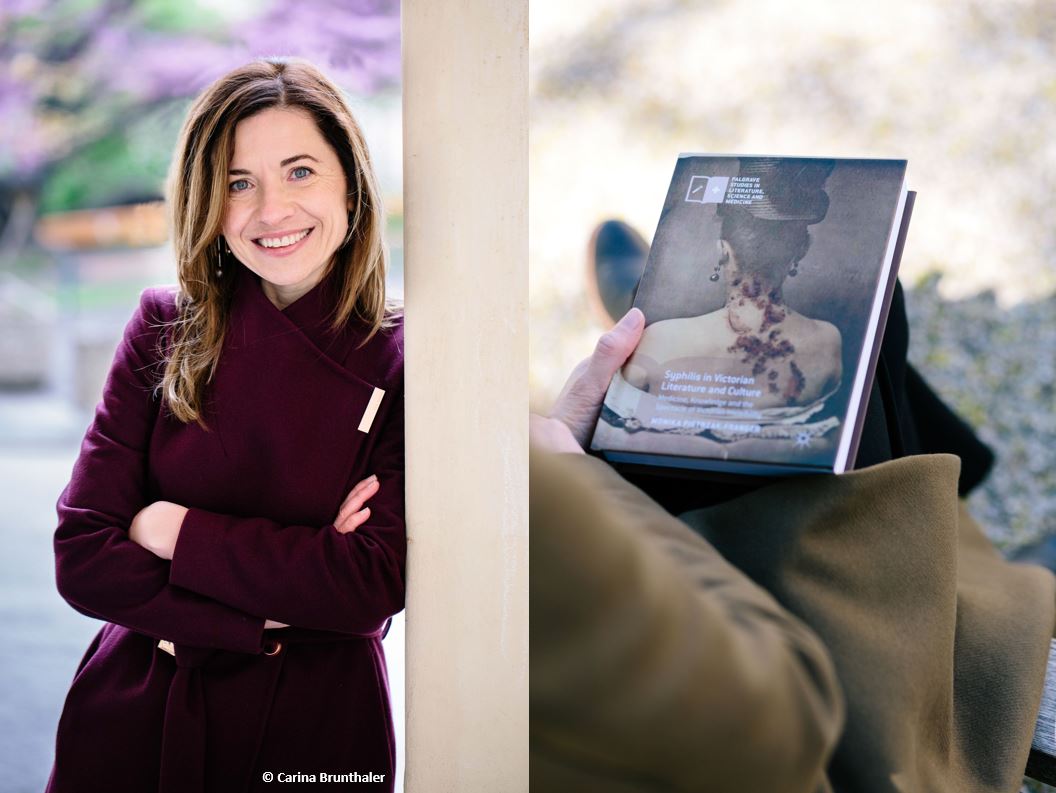
Univ.-Prof. Dr. Monika Pietrzak-Franger is a Full Professor for British Cultural and Literary Studies at the Department of English and American Studies, Faculty of Philological and Cultural Studies, University of Vienna. She serves as Head of Department and Deputy Head of Section "Knowledge, Literature and Media" at the Doctoral School of Philological and Cultural Studies. Her work bridges literary studies, cultural studies, and medical humanities with a particular focus on the socio-political dimensions of health, illness, and medical representation. Dr. Pietrzak-Franger's research spans multiple interconnected fields including Medical Humanities (particularly contagious diseases and their socio-political role and mediality), Adaptation Studies, Intermediality and Transmediality Studies, and Gender Studies. Her work examines how cultural narratives shape our understanding of health and illness, with special attention to visual representations, stigma, and the intersection of medicine with literature and the arts. She has made significant contributions to Victorian studies, particularly around representations of syphilis in the 19th century, which has informed her more recent work on pandemic representation. Her recent publications demonstrate a clear trajectory toward examining the cultural dimensions of the COVID-19 pandemic and its aftermath, particularly Long Covid. Through interdisciplinary approaches combining literary analysis, visual culture studies, and medical humanities, she explores how pandemics are narrated, visualized, and experienced across different media platforms and cultural contexts. Her work increasingly focuses on patient narratives, healthcare disparities, and the social dimensions of chronic illness. Among her notable achievements is the BritCult Award (2015) for her habilitation treatise "Spectres of Syphilis: Medicine, Knowledge and the Spectacle of Victorian (In)Visibility." She has also led significant projects including the Interuniversity Cluster "Post-COVID-19 Care: Medical Humanities and Health Economies at the Frontlines," the interdisciplinary lecture series and conference "COVID-19 beyond Borders: Rethinking Medical Humanities at the Frontlines," and "Post-COVID-19 Art Worlds: Viral Theatre, Precarity and Medical Humanities." Dr. Pietrzak-Franger supervises numerous doctoral and postdoctoral researchers and has established a vibrant research team focused on Medical Humanities. She has secured significant funding for her interdisciplinary projects and has been instrumental in developing the Medical Humanities field at the University of Vienna. Her "Viral Theatre Podcast" series represents innovative knowledge transfer that bridges academic research with public engagement. She leads the research team at the Medical Humanities initiative at the University of Vienna, which includes postdoctoral researchers, doctoral candidates, and administrative support staff. The team works at the intersection of literary studies, cultural studies, and medical humanities, with particular expertise in pandemic representation, chronic illness narratives, and the visual culture of health and disease. The group has organized numerous conferences, workshops, and public engagement initiatives including the "Threads of Life: Textiles in Medicine and the Arts" exhibition and conference.
Jennifer Andrella is an Assistant Professor at the University of Southern Mississippi , specializing in 19th-century U.S. history with a focus on Westward territorial expansion, the Civil War, Reconstruction eras, and Native American history. She holds a graduate certificate in Digital Humanities and contributes to digital history projects, including Mapping the Upper Missouri . Education : PhD in History from Michigan State University (2022) Key Expertise : Digital Humanities, Territorial Expansion, Native American History, Digital Curriculum Development Her research explores intersections of historical narratives and digital tools, supported by the Cultural Heritage Informatics Fellowship. She teaches HUM 501: Introduction to Digital Humanities and focuses on data visualization, text analysis, and narrative mapping in historical contexts. Notable Projects : Mapping the Upper Missouri: Visualizing Negotiation, Diplomacy, and Culture on the Northern Plains, 1801-1853 .
Mohammad Yeghaneh Abkenar is a Researcher at the Department of Philosophy, Humboldt University of Berlin, affiliated with the DFG-Emmy-Noether-Research Group "A Sensible World" and the Chair of Social Critique under Prof. Rahel Jaeggi. His work bridges computational methods with philosophical and historical inquiry. Research Assistant in the Department of Philosophy Contributor to interdisciplinary projects combining AI with humanities His research interests span computational philosophy , machine learning applications , and history of science . Recent work includes developing AI models for argumentation mining and digitizing historical scientific texts like Kepler's Astronomia Nova , alongside medical informatics projects for epilepsy prediction using EEG data. Email: yeghanem@hu-berlin.de Publications reveal trends in applying computational tools to both philosophical discourse analysis and historical scientific documents, while also contributing to health monitoring technologies through mathematical modeling.
Tarja Pitkänen serves as Associate Professor at the University of Helsinki 's Faculty of Veterinary Medicine , specifically within the Department of Food Hygiene and Environmental Health . She leads the Waterborne Pathogens Research Group and co-affiliates with the Finnish Institute for Health and Welfare (THL) , focusing on environmental health risks from waterborne microbes. Veterinary science Environmental sciences Public health (environmental/occupational) Environmental engineering Microbiology/virology Her research specializes in water microbiology , fecal source tracking , and zoonotic infection prevention . Current projects include EU-funded WastPan for wastewater pathogen surveillance and ODIN-MPox for monkeypox environmental tracking. Recent publications focus on rapid pathogen detection in drinking water and antimicrobial resistance monitoring through wastewater analysis. Her team has developed multi-pathogen surveillance systems and genomic tracking methods for SARS-CoV-2 variants. Supervision includes doctoral students Pauliina Tomberg (2025), Heli Hakolehto (2022), and Venla Vuorisalmi (2022), alongside master's thesis supervisors Essi Roininen (2023) and Annastiina Rytkönen (2021). 2024-2026: EU Horizon Europe funding for ODIN-MPox project 2024-2027: EU funding for Watershed Safety Plan 2023-2024: Foundation funding for Dicrocoelium dendriticum research 2020-2025: Ministry-funded projects on coastal pasture health and Campylobacter epidemiology
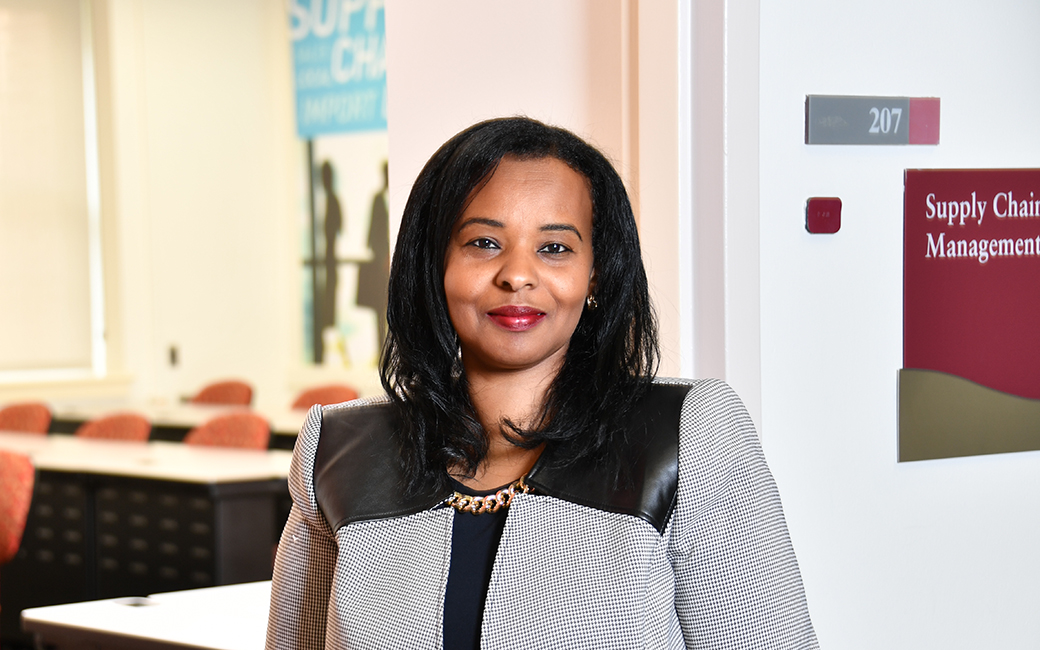
Mona Mohamed is an Associate Professor in the Department of Business Analytics and Technology Management at Towson University's College of Business and Economics. She teaches courses such as Principles of e-Business and Problem Solving for Business, while conducting research on human-computer interaction, cybersecurity, and open government data analysis. Education: Ph.D. in Information Technology (2018, Towson University), MS in Management Information Technology (2007, The George Washington University) Her research focuses on how cultural factors influence technology usability and security, particularly in areas like microchip implantation and graphical password design. Recent work explores the intersection of machine learning and health risk concerns in implantable technologies. Mohamed's publications highlight trends in open government data utilization, cloud computing collaboration, and inclusive technology design. Grants from the College of Business and Economics have supported her investigations into microchip implant acceptance and minority faculty challenges. She emphasizes equipping students with critical e-commerce skills for modern business environments, advocating for systems that balance security with user accessibility.
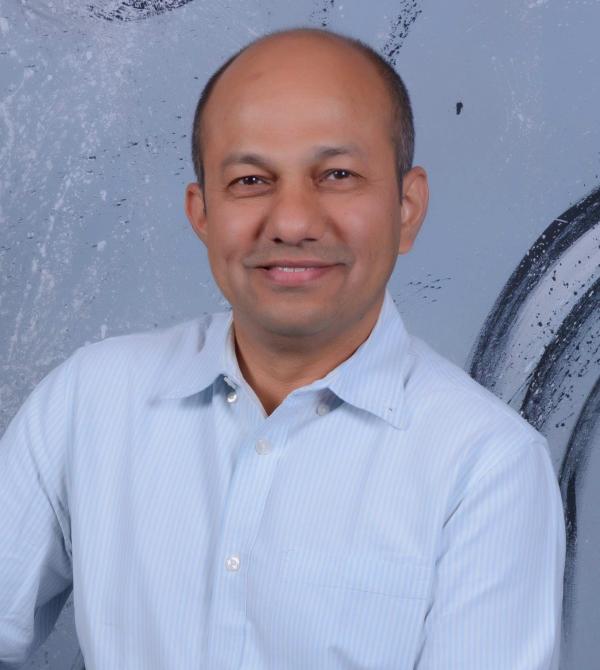
Dr. Tarendra Lakhankar is an Adjunct Professor in the Department of Civil Engineering at the City College of New York (CUNY) and a Research Scientist at NOAA-CESSRST. His research focuses on remote sensing applications for environmental monitoring, urban hydrology, and climate science. He has led major field campaigns including the NYC-Urban HydroMet Testbed, installing 21 weather stations across NYC, and the CREST-SAFE snow study in Maine. His work integrates satellite data with ground measurements to improve weather forecasting and disaster preparedness. Notable achievements include receipt of the 2024 Outstanding Adjunct Faculty Award and 2022 S.T.A.R. Award for educational leadership. He pioneered initiatives like the HIRES program, fostering STEM education through GIS and remote sensing workshops. His research spans snow hydrology, soil moisture dynamics, and urban climate resilience, with publications in top-tier journals. Dr. Lakhankar also leads international collaborations, including climate change studies in Nepal and biodiversity conservation projects in Himalayan regions. His teaching portfolio includes courses on geospatial technologies, environmental systems, and data science. He actively mentors students through research projects and advises NOAA-funded initiatives. Dr. Lakhankar’s outreach efforts include community-based weather station networks and post-disaster relief work in Nepal, demonstrating commitment to applied environmental science and global impact.
Michael Simonson is a Professor at Nova Southeastern University in the Instructional Technology and Distance Education program, part of the Abraham S. Fischler College of Education and School of Criminal Justice. He has an affiliated appointment with NSU’s Patel College of Health Care Sciences. Simonson earned his Ph.D. in Instructional Systems from the University of Iowa in 1975. He has held academic roles since 1982, including Professor at Iowa State University (1984–1998) and has been at Nova Southeastern since 1998. His research focuses on distance education, instructional technology, and online learning systems. He has secured over $3 million in external grants, including the FLIGHT VIDAS II project. Educations: Ph.D. (1975), M.S. (1972), and B.S. (1967) from University of Iowa and Iowa State University. Awards: 2020 Distinguished Service Award (AECT), 2016 U.S. Distance Learning Association Hall of Fame, 2012 Professor of the Year (Fischler School of Education). His research interests span distance education policy, instructional design, and the integration of technology in education. He has authored 12 textbooks, including Teaching and Learning at a Distance , and has over 200 scholarly publications. Simonson is the founding editor of the Quarterly Review of Distance Education and Distance Learning journal. His work emphasizes the effectiveness and accessibility of distance education, particularly in healthcare and higher education contexts. Simonson has been involved in major educational initiatives, including the Iowa Distance Education Alliance and South Dakota Alliance for Distance Education. He has advised on numerous grants and has been recognized for his contributions to educational research and policy.
Prof. Ulla Kleinberger is a Professor of Applied Discourse Studies at the ZHAW School of Applied Linguistics, Zurich University of Applied Sciences (ZHAW). She holds a position at the Institute of Multilingual Communication. Her research focuses on text linguistics, conversation analysis, multilingualism, media linguistics, and professional communication in organizational and healthcare contexts. Her work addresses discourse analysis in healthcare communication, health policy debates, and multilingual challenges in homecare nursing. She has led projects like 'Digital Health for parents facing language barriers' and 'Energy Discourse and Phraseology'. Her publications span peer-reviewed journals, edited volumes, and conference proceedings addressing topics such as intercultural communication, digital media competence among youth, and phraseology in online debates. Key thematic trends in her articles include: 1) Discourse analysis in healthcare contexts (e.g., patient-professional interactions, medical terminology evolution), 2) Multilingual communication challenges in globalized workplaces and healthcare systems, 3) Digital media literacy and youth communication patterns, and 4) Energy policy discourse analysis. Projects often bridge applied linguistics with interdisciplinary fields like healthcare and education. Kleinberger has advised on overcoming language barriers in homecare nursing and collaborated on virtual patient education systems. She co-edited volumes like *Doing Applied Linguistics* (2017) and *Energiediskurs* (2017). Her work emphasizes practical applications of linguistic research to improve communication in healthcare, education, and corporate environments.
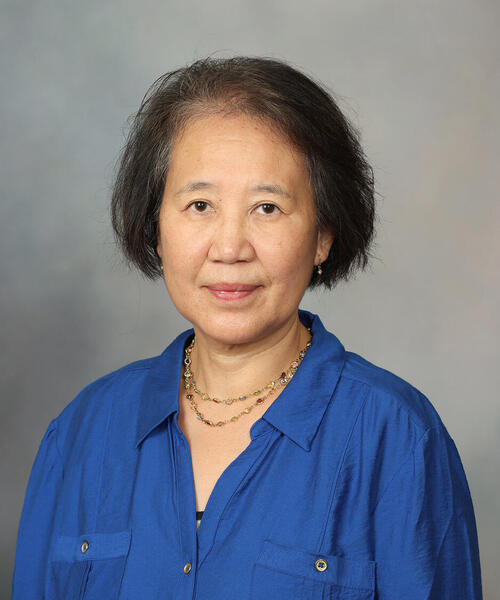
Dr. Yulian Zhao is a Professor in the Department of Obstetrics & Gynecology at Mayo Clinic, Rochester, Minnesota. He holds joint appointments in the Division of Laboratory Genetics and Genomics (Department of Laboratory Medicine and Pathology). His primary role is as a Consultant, specializing in reproductive tissue banking, fertility preservation for cancer patients, and improving IVF outcomes through machine learning analysis of clinical data. Education & Certifications: MBA from Johns Hopkins University Carey Business School (2008) Certificates in Strategic Planning, Marketing Management, Medical Informatics, and Human Resource Management from Johns Hopkins School of Medicine (2005–2006) Postdoctoral Research at University of Nottingham (Extracellular Matrix Proteins in the Ovary) and Babraham Institute (Uterine Gene Expression) PhD and MD from Harbin Medical University (China) Research Focus: Dr. Zhao's work centers on: Optimizing ovarian and testicular tissue cryopreservation techniques Regenerating germ cells from gonadal tissues for assisted reproduction Identifying IVF success factors using machine learning Addressing fertility preservation needs for pediatric cancer patients Understanding embryo implantation mechanisms in the endometrium His research aims to enhance fertility preservation protocols and improve ART outcomes through translational research. Awards & Recognition: 2017 Star Award (American Society for Reproductive Medicine) 2014 Program Prize Paper (Pacific Coast Reproductive Society) 2013 Distinguished Service Award (Global Chinese Association for Reproductive Medicine) NIH National Research Service Award (1998) Professional Contributions: Leadership roles in ASRM, GCARM, and other reproductive medicine societies Member of editorial boards and grant review committees Advisor to multiple institutions and trainees (e.g., Honorary Professor at Harbin Medical University) Labs & Teams: Active in Mayo Clinic's Reproductive Endocrinology and Infertility division, collaborating on cutting-edge projects in cryopreservation and ART optimization.
Behzad Eftekhar is a Clinical Professor at the Nepean Clinical School, University of Sydney, and serves as the Head of the Department of Neurosurgery at Nepean Hospital. He completed neurosurgical training at Tehran University (1995) and holds a Master of Public Health (2003). He migrated to Australia in 2006 and has extensive experience across multiple institutions, including Royal Hobart Hospital, Sir Charles Gardiner Hospital, Royal Perth Hospital, and Dunedin Hospital (New Zealand). Dr. Eftekhar is a Fellow of the Royal Australasian College of Surgeons and a member of the Neurosurgical Society of Australasia and the Congress of Neurological Surgery (US). He has published over 35 peer-reviewed papers, focusing on cerebrovascular pathologies, surgical innovations, and historical medical practices. His academic journey includes positions such as Clinical Associate Professor of Neurosurgery at Tehran University and subspecialty training in Cerebrovascular Neurosurgery under Professor Michael Morgan. His research spans tumor and spinal surgery, with a special focus on aneurysms, stroke, and arteriovenous malformations. He actively explores applications of technology in medicine, such as smartphone apps for surgical visualization and 3D-printed angiograms as educational tools. His current project involves developing a prediction model for aneurysm rupture risk using fluid dynamics studies. He welcomes local Australian graduates to collaborate in this endeavor. His work also highlights cross-cultural medical insights, particularly from medieval Persian medicine, bridging historical and modern clinical practices. Dr. Eftekhar’s professional memberships include the Congress of Neurological Surgery (US), and his contributions to surgical education are evident through studies on Virtual Reality and 3D-printed models. His academic output reflects a blend of clinical practice, technological integration, and historical medical research.
Glenn Roger Kristiansen is an Associate Professor at the University of Oslo's Department of Informatics (Faculty of Mathematics and Natural Sciences). His research focuses on applying machine learning and AI to financial economics, including asset price prediction and the role of emotions in entrepreneurial creativity. He holds an MSc in Financial Economics and Civil Economics, and a PhD from the University of Cambridge in the psychology of emotions and creativity. Key research areas include leveraging poetry analysis to understand entrepreneurial imagination (e.g., John Keats' 'Ode to a Nightingale') and quantitative risk modeling using Extreme Value Theory for commodity markets. His work bridges financial analytics, cognitive science, and creative studies. Publications span entrepreneurship and applied economics journals, with recent contributions exploring interdisciplinary methods in financial forecasting. He actively advises on research at the intersection of AI, emotion studies, and economic decision-making.
Professor Gary Olson is a leading scholar in collaborative technologies and distributed teamwork at the University of California, Irvine. As part of the Department of Informatics within the Donald Bren School of Information and Computer Sciences, his research focuses on improving collaboration across distances, leveraging technologies like teleconferencing and collaborative writing platforms. He co-leads the Climate CoLab project at MIT, promoting citizen science approaches to climate policy. His work with companies like Google explores cultural dimensions of teamwork in globalized workplaces. Alongside his wife and colleague Judy Olson, he received the Lifetime Achievement Award from the Special Interest Group in Computer-Human Interaction. His research emphasizes practical solutions for remote collaboration challenges, including coordination theory, virtual team management, and the impact of distance on productivity. Key contributions include foundational studies on distributed teams and innovative uses of telepresence robotics in education. Recent work investigates collaborative writing tools and the adaptation of videoconferencing during the pandemic. Core areas: Distributed collaboration, citizen science, telepresence, climate policy Notable projects: Climate CoLab, Google collaboration studies, telepresence education initiatives Awards: Lifetime Achievement Award (CHI), ACM-W Athena Lecture (via Judy Olson)