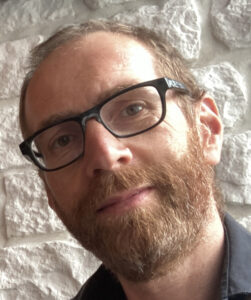
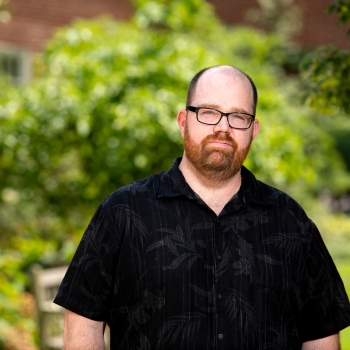
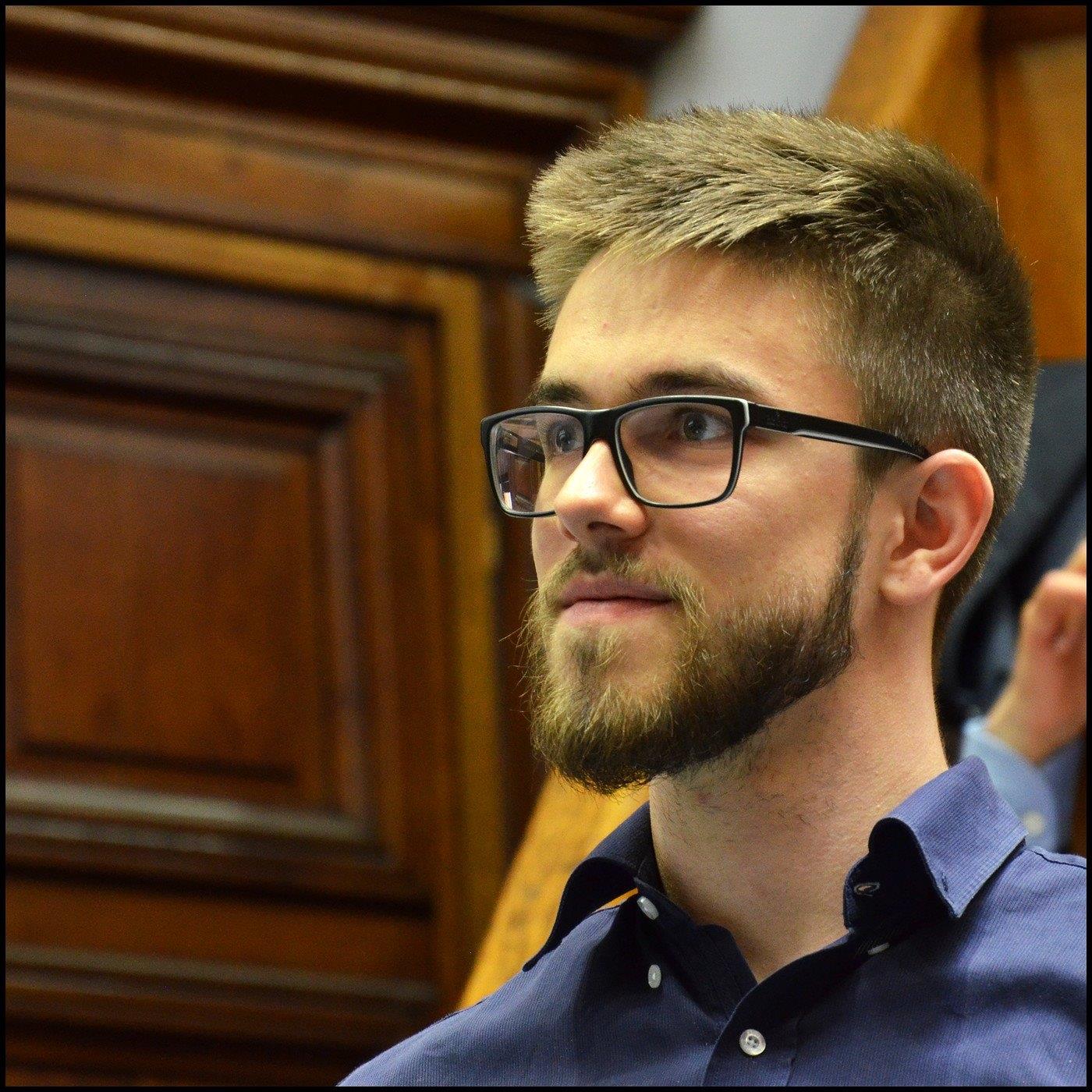
Vladimir Dokchitser is a Professor specializing in arithmetic geometry and number theory. His research focuses on Galois representations, elliptic curves, and abelian varieties, with applications to L-functions and the Birch-Swinnerton-Dyer conjecture. He has contributed to the study of semistable reduction types of hyperelliptic curves and their cohomological properties. Key research areas: Arithmetic geometry, Galois representations, and local fields Active collaborations with mathematicians like Tim Dokchitser, Adam Morgan, and Celine Maistret Recent work explores surjective Galois representations, Tamagawa numbers, and cohomology of hyperelliptic curves His publications demonstrate a strong emphasis on algebraic geometry and number theory intersections. Research output includes 11 publications with significant citations in areas like Schur indices and field extensions. Major projects funded by the Royal Society and EPSRC include: Selmer groups of abelian varieties (2018-2021) Arithmetic of hyperelliptic curves (2016-2018) Special values of L-functions and arithmetic (2016-2021)
Frank Vallentin is a full professor of applied mathematics (computer science) at the Mathematical Institute of the University of Cologne, Germany. He has held academic positions at Technische Universiteit Delft, Centrum Wiskunde & Informatica (CWI), and the Hebrew University of Jerusalem. His research spans optimization, discrete geometry, harmonic analysis, and computational mathematics. Research Interests: His primary mathematical interests include semidefinite programming, combinatorial optimization, harmonic analysis, discrete geometry, combinatorics, geometry of numbers, special functions, computational complexity, and coding and information theory. These areas reflect a deep integration of theoretical mathematics with algorithmic and computational techniques. The 15 most recent publications reveal a strong focus on geometric optimization, lattice problems, energy minimization, and semidefinite programming bounds. Key themes include chromatic numbers of lattices, symplectic capacities, polarization phenomena, and algorithmic solutions to geometric problems. His work often involves recursive SDP hierarchies, extremal configurations, and computational verification of theoretical bounds. Scientific Awards and Grants: SIAG/Optimization Prize (2011, with Christine Bachoc) NWO VIDI Grant (2010–2015): Semidefinite programming and harmonic analysis DFG Project: Symplectic capacities of polytopes (2017–) EU Horizon 2020 MINOA Project: Optimization with limited quantum resources (2017–) DFG Project: Spectral bounds in extremal discrete geometry (2019–) Advising and Grants: Vallentin has advised numerous PhD and master’s students at TU Delft and the University of Cologne, covering topics in discrete geometry, optimization, coding theory, and quantum information. He has secured major research funding from NWO, DFG, and the EU, supporting interdisciplinary projects in algorithmic optimization and mathematical physics. He is actively involved in organizing workshops and summer schools. Labs and Teams: He leads a research group at the University of Cologne focusing on optimization and discrete geometry, with strong collaborations with CWI Amsterdam, TU Delft, and international institutes. His team works on theoretical and computational aspects of geometric optimization, often using symmetry reduction and harmonic analysis.
Christopher Birkbeck is a Lecturer in Pure Mathematics at the School of Engineering, Mathematics and Physics, University of East Anglia. He is a member of the Algebra, Number Theory, Logic, and Representations (ANTLR) research group. His research focuses on formalization of mathematics, number theory, and arithmetic geometry, with notable contributions to Fermat's Last Theorem formalization and overconvergent Hilbert modular forms. He is currently leading the 'Scalable theorem proving via mathematical databases' project funded by Renaissance Philanthropy (2025–2027). His educational and professional background includes expertise in algebraic number theory and modular forms. Research interests span formal verification systems like Lean, p-adic geometry, and geometric representation theory. His work often intersects computational logic and theoretical mathematics, aiming to bridge formal proofs with advanced algebraic structures. Key research trends include advancing formalized mathematics through theorem provers, studying geometric properties of modular forms using perfectoid spaces, and exploring p-adic Hodge theory via Fargues-Fontaine curves. His projects emphasize computational methods to enhance mathematical rigor and scalability in theorem proving. He is actively accepting PhD students and has secured significant research funding for foundational mathematics projects. His collaborations span global institutions, reflecting his role in international mathematical communities.
Payman L Kassaei is a Professor of Number Theory at King's College London's Department of Mathematics. His research focuses on modular forms and their generalizations, particularly congruences modulo prime numbers, leveraging cohomology groups of Shimura varieties. He holds a PhD from MIT (1999). He leads the EPSRC-funded 'Langlands reciprocity and the geometry of Shimura varieties: the mod p interface' (2025–2027) and collaborates on projects exploring p-adic and geometric methods in the Langlands Programme. His work bridges number theory, algebraic geometry, and automorphic forms, emphasizing Galois representations and Shimura varieties. Education: Doctor of Philosophy, Massachusetts Institute of Technology (1999) Research Interests: Classical and overconvergent automorphic forms Galois representations and their mod p structures Shimura varieties and their cohomology p-adic dynamics of Hecke operators Modular forms and their analytic continuation Grants & Activities: Primary Investigator for multiple EPSRC grants, including recent £3M+ projects Organized conferences like 'Automorphic forms and Galois representations' (2011) and 'Modular forms, p-adic Hodge Theory' (2009) Peer-reviewer for journals since 2001 Key Contributions: Pioneered work on mod p Jacquet-Langlands relations and minimal weights in Hilbert modular forms Advanced canonical subgroup theory in p-adic geometry
Shu Sasaki is a researcher active in the fields of Number Theory, Algebraic Geometry, and Modular Forms. His work focuses on Galois Representations, Hilbert Modular Forms, and their geometric and arithmetic properties in characteristic p. Recent research output includes: 2024: A Serre weight conjecture for geometric Hilbert modular forms in characteristic p (European Mathematical Society), advancing understanding of weight conjectures in positive characteristic. 2023: A mod p Jacquet-Langlands relation and Serre filtration via the geometry of Hilbert modular varieties (Astérisque), connecting representation theory to modular variety geometry. 2014: Modularity lifting results in parallel weight one and applications to the Artin conjecture (Forum of Mathematics Sigma), addressing tamely ramified Galois representations. His projects, funded by EPSRC, include studies on Companion forms, p-adic modular forms, congruences between automorphic forms, and their implications for Galois representations. Research keywords reflect a strong emphasis on the interplay between modular forms, representation theory, and arithmetic geometry.
Martijn Kool is an Associate Professor at Utrecht University’s Faculty of Science , affiliated with the Fundamental Mathematics department. His research focuses on algebraic geometry, moduli spaces, Calabi-Yau manifolds, and intersection theory. Research Trends: His recent work (2022–2025) examines virtual invariants , Donaldson-Thomas theory , and Vafa-Witten theory , with applications to Calabi-Yau 4-folds, stable pairs, and higher-rank sheaves. Collaborations with prominent mathematicians like Lothar Göttsche and Yalong Cao are central to his contributions. Scientific Awards: NWO-Vidi award (2019) Advising & Grants: While specific student names are not listed, he has supervised three works. His research is supported by competitive fellowships and grants, including the NWO-Vidi award.
Nathan Ryan is Professor of Mathematics at Bucknell University and Affiliated Faculty in Latin American, Latinx & Caribbean Studies. Joining Bucknell in 2007, he has received three Fulbright Scholar Grants for research in Uruguay (2009), Ecuador (2017), and Costa Rica (2022), and spent a sabbatical year in Uruguay (2013-2014). Education: Ph.D. in Mathematics, Dartmouth College M.A. in Mathematics, Dartmouth College B.A. in Mathematics, Bard College Research Focus: Ryan maintains dual research programs in computational number theory (proving theorems and developing algorithms for modular forms and L-functions) and applied data science (interdisciplinary student projects spanning healthcare, transportation, film studies, and social justice). His work bridges theoretical mathematics with real-world applications through community-based projects. Publication Trends: Recent publications (2022-2024) increasingly integrate number theory with social impact, particularly in algorithmic fairness (e.g., carceral system analysis) while maintaining core contributions to modular forms and L-function theory. Collaborations with undergraduate researchers appear consistently across all publications since 2010. Awards: Fulbright Scholar Grant to Uruguay (2009) Fulbright Scholar Grant to Ecuador (2017) Fulbright Scholar Grant to Costa Rica (2022) Advising & Grants: Ryan mentors undergraduate researchers through Bucknell's departmental projects and honors theses, with students contributing to publications in medical informatics, film studies, and criminal justice. His Fulbright grants directly fund international research collaborations, while campus partnerships (e.g., Geisinger Health System, Film and Media Studies) support applied data science projects. He actively recruits students with programming skills for computational mathematics work. Teams & Affiliations: As an affiliate of Bucknell's Institute for the Quantitative Study of Inclusion, Diversity, and Equity, Ryan contributes quantitative expertise to social justice research. He serves as editor for Frontiers for Young Minds and collaborates across disciplines with Geography, Psychology, Film Studies, and Computer Science departments on ongoing projects including school bus routing optimization and Hollywood color analysis.
Reiji Tomatsu is a Professor at Hokkaido University’s Faculty of Education and Integrated Arts and Sciences , specializing in Operator Algebras and Quantum Groups . His research focuses on the structural analysis of von Neumann algebras and their interactions with quantum symmetries. Education: PhD in Mathematical Sciences from the University of Tokyo. Research Interests revolve around quantum group actions, Rohlin flows, Haagerup approximation properties, and classification of operator algebras. He investigates infinite tensor product actions, coideals, and modular invariants, often leveraging functional analysis and mathematical physics frameworks. His recent publications emphasize quantum group dynamics and von Neumann algebra structures , including classification theorems for coideal $C^*$-algebras and fullness of type III factors. These works intersect with noncommutative geometry and representation theory. Grants: He has continuously received Japan Society for the Promotion of Science (JSPS) research grants since 2007, advancing studies on quantum group actions and operator algebraic symmetries. Teaching: Tomatsu delivers graduate-level courses in analysis, Fourier analysis, and mathematics education at Hokkaido University’s Graduate School of Education.
Gregorio Baldi is a Research Fellow (Chargé de Recherche) at the French National Center for Scientific Research (CNRS), affiliated with the Institut de Mathématiques de Jussieu - Paris Rive gauche. His research centers on Arithmetic Geometry , with expertise in Shimura varieties, variational Hodge theory, and the Zilber-Pink conjecture. He also investigates connections between homogeneous dynamics, Teichmüller dynamics, and geometric Diophantine problems. Baldi has authored significant publications in premier mathematical journals, including: Annals of Mathematics (2023, 2025) Inventiones mathematicae (2024) Ergodic Theory and Dynamical Systems (2025) His recent work (2023–2025) focuses on Hodge loci distribution, non-arithmetic ball quotients, and o-minimality in Hodge theory, demonstrating consistent contributions to foundational problems in geometry and number theory.