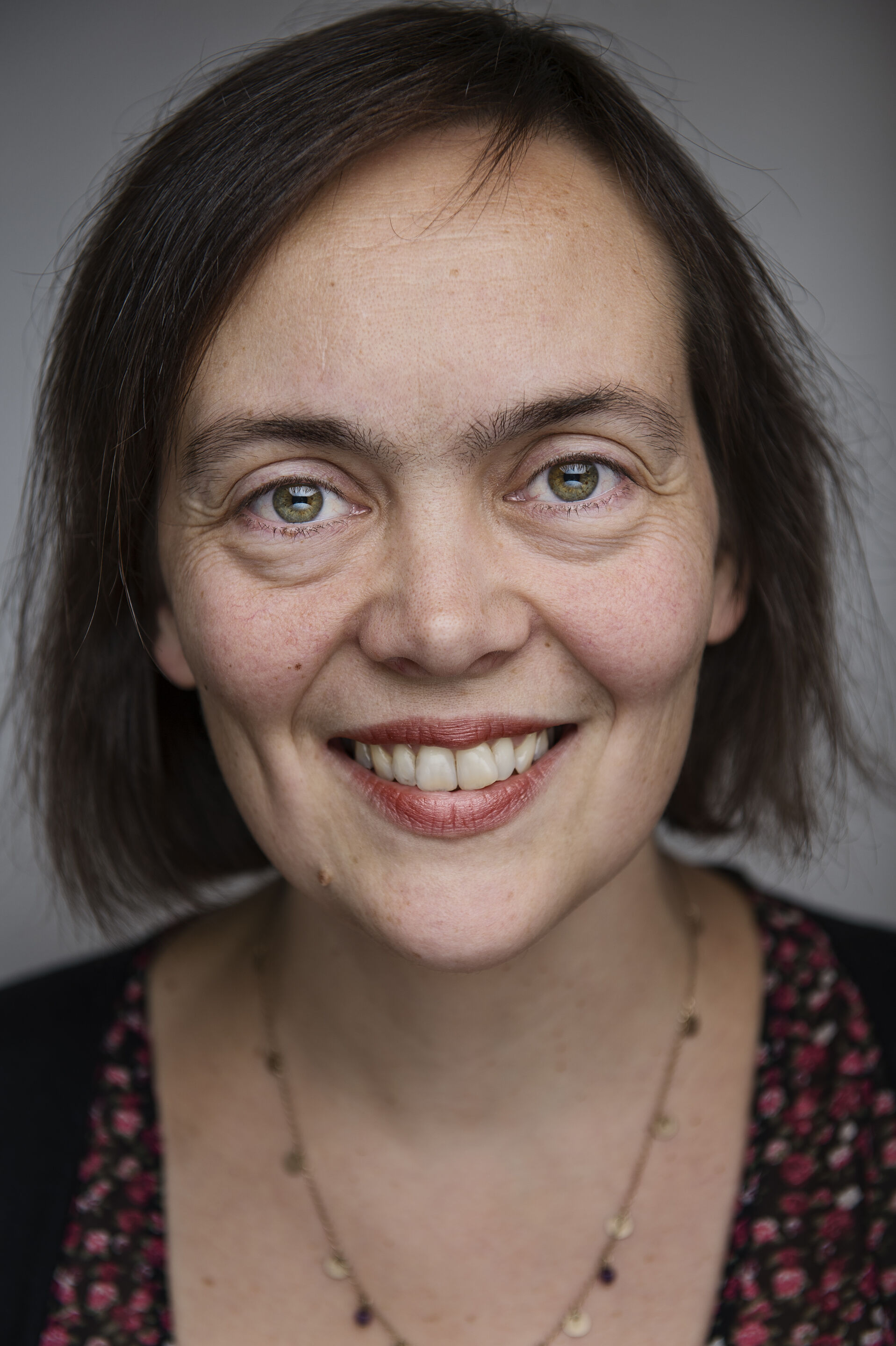
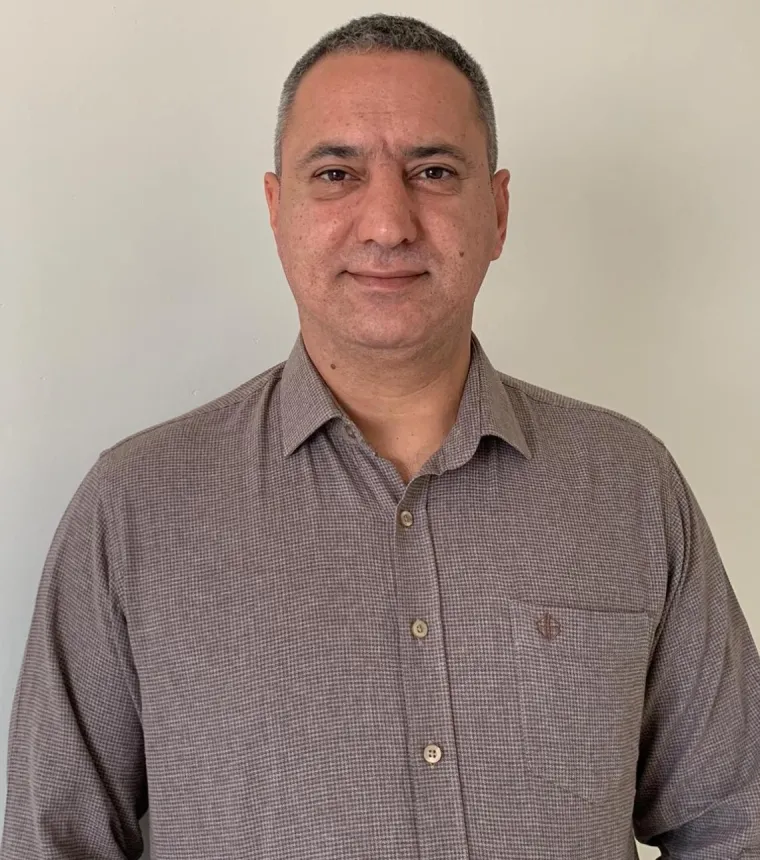
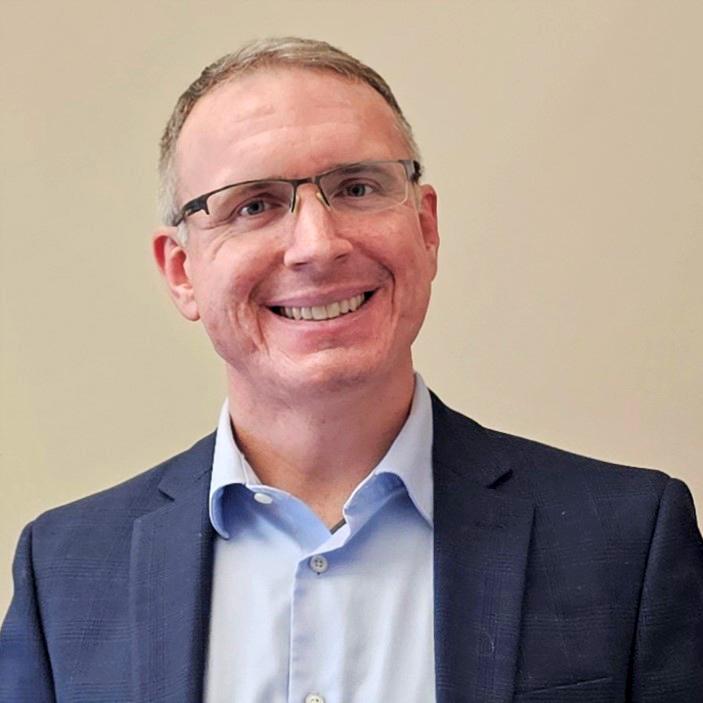
Henning Struchtrup is a Professor in the Department of Mechanical Engineering at the University of Victoria, Canada. His expertise lies in non-equilibrium thermodynamics, kinetic theory of gases, microscale transport phenomena, and aerosol coagulation. He holds an MS and PhD from Technische Universität Berlin, and is a Professional Engineer (P.Eng). Struchtrup’s research focuses on developing continuum models for rarefied gas flows using the Boltzmann equation, particularly the Regularized 13-Moment (R13) equations, which provide stable solutions for microscale and transitional regimes. Collaborations include work with M. Torrilhon (ETH Zurich) on R13 stability and boundary conditions. His group investigates evaporation/condensation in extreme non-equilibrium, BGK model improvements, and fuel cell membrane transport. Recent articles emphasize thermodynamic consistency in moment equations, wave solutions for carbon capture systems, and boundary modeling for R13 systems. His work bridges kinetic theory with engineering applications in MEMS devices, energy conversion, and climate technologies. Key contributions include stable higher-order transport models and analysis of entropy in non-equilibrium systems. Struchtrup’s research also addresses energy storage via osmotic processes and thermal stress in microcavities. His interdisciplinary approach integrates mathematical rigor with practical engineering challenges across fluid mechanics, materials science, and environmental engineering.
Christoph Karl Becker is a Researcher at the Chair of Behavioral Finance and Contract Theory, Alfred-Weber-Institute for Economics, Heidelberg University. He holds a PhD in Economics (Summa cum laude, 2023), M.Sc. (1.7) and B.Sc. (1.8) in Economics from Heidelberg and Mannheim Universities. His research focuses on experimental and behavioral economics, particularly decisions from experience, risk attitudes, subjective well-being, and inflation expectations. He has managed labs since 2021 and contributed to over 15 peer-reviewed articles. Education: PhD in Economics, Heidelberg University (2017–2023) M.Sc. Economics, Heidelberg University (2014–2016) B.Sc. Economics, Mannheim University (2011–2014) Research Interests: Combines experimental methods with theoretical models to explore decision-making under uncertainty, subjective well-being trajectories in aging populations, and the design of inflation expectation surveys. Key themes include higher-order risk attitudes, belief revision under surprise events, and fairness in compensation schemes. Grants & Scholarships: German Excellence Strategy Travel Grant (2020–2022) Friedrich-Ebert-Foundation PhD Scholarship (2018–2021) Teaching: Leads Microeconomics lectures and Corporate Governance tutorials at the undergraduate level. Recent Work: Current projects include personalized probabilistic survey scales and virtual bargaining mechanisms. His articles often bridge behavioral theory with real-world policy implications, such as inflation forecasting and elderly mental health.
Kristian Debrabant is an Associate Professor at the Department of Mathematics and Computer Science, Faculty of Science and Engineering, University of Southern Denmark. He is also affiliated with the STEM Center for Educational Research – FNUG, highlighting his dual engagement in research and pedagogical development. His academic credentials include a Dr.rer.nat. degree, reflecting a strong foundation in mathematical sciences. Department: Department of Mathematics and Computer Science Position: Associate Professor in Computational Science Additional Affiliation: STEM Center for Educational Research – FNUG Email: debrabant@imada.sdu.dk ORCID: https://orcid.org/0000-0003-2901-162X His research lies at the intersection of numerical analysis and stochastic modeling, with a focus on developing and analyzing numerical methods for stochastic differential equations (SDEs). Key areas include Runge-Kutta methods, exponential integrators, weak and strong convergence, and applications in computational science. He also contributes to interdisciplinary work, such as urban traffic modeling and environmental systems. Recent publications show a consistent trend in advancing numerical schemes for SDEs, particularly those with non-standard noise (e.g., fractional Brownian motion), stiff systems, and non-globally Lipschitz coefficients. His work spans theoretical developments in convergence and order conditions to practical implementations in finance, ecology, and engineering. The integration of B-series and tamed schemes reflects a deep engagement with both classical and modern numerical frameworks. Kristian Debrabant supervises PhD students, as indicated by the 'PhD supervision (2)' note in his profile. While specific grant details are not listed, his publication record and active research suggest ongoing funding support. His involvement with the STEM Center implies leadership or significant contribution to educational innovation in STEM disciplines.
Allison Goedde serves as a Teaching Professor at Bowling Green State University within the College of Education & Human Development, specifically affiliated with the School of Inclusive Teacher Education. She has maintained continuous faculty service since 2004, contributing to both undergraduate and graduate teacher preparation programs through course instruction and professional development initiatives. Her academic preparation includes: Ed.D. in Educational Administration & Supervision from Bowling Green State University (2006) M.A. in Educational Technology from the University of Findlay (1997) B.A. in Adapted Physical Education & Exercise Science from the University of Toledo (1990) Dr. Goedde specializes in the integration of educational technology within active learning environments, with particular expertise in designing online and blended professional development for educators. Her scholarly focus examines how perceptions of active and blended learning environments influence the development of higher-order thinking skills across K-16 educational settings, emphasizing practical applications for classroom implementation. Analysis of her 2012-2013 publications and presentations reveals consistent thematic concentration on technology leadership in educational contexts. Key scholarly trends include management strategies for 1:1 device classrooms, cloud-based learning environment design, and STEM integration through initiatives like the Video Game Challenge. Her work demonstrates a strong practitioner orientation, bridging theoretical research with actionable frameworks for teacher professional development and student engagement. No scientific awards or major honors are documented in the current professional profile. While Dr. Goedde actively participates in Student Teacher Capstone Days and delivers professional development for school districts like St. John's Jesuit, specific details regarding graduate student advising or externally funded research grants are not provided in available materials. Her service contributions include conference presentations at the Ohio Educational Technology Conference and media collaborations with WBGU/PBS. The professional profile does not reference any dedicated research laboratories, specialized teams, or ongoing collaborative research groups associated with Dr. Goedde's current academic work.
Dr. Andrew Butterfield is a faculty member at the School of Computer Science and Statistics, Trinity College Dublin. He serves as Head of the Foundations and Methods Group and actively contributes to Lero: the Irish Software Research Centre. His research focuses on Formal Methods and Functional Programming, particularly the Unifying Theories of Programming (UTP) paradigm, with applications in clinical pathways, medical device software, and spacecraft operating systems. Current research includes developing UTP theories for shared-variable concurrency, rely/guarantee reasoning, and separation logic in collaboration with Jim Woodcock. He also explores Process Modelling Language (PML) semantics with John Noll and Anila Mjeda. His contributions feature proof-assistance tools like UTP2 Theorem Prover, UTP Calculator, and ReasonEq implemented in Haskell. Andrew leads funded projects such as ESA's RTEMS-SMP (2019) and SFI's FMHIDA (2016-2020). Past projects encompass formal verification of separation kernels, Handel-C language semantics, and NAND flash memory models. He has taught courses in Formal Methods, Functional Programming, and Concurrency, while serving on editorial and program committees including Formal Aspects of Computing.
Bogdan Przeradzki is a Professor at Lodz University of Technology , affiliated with the Department of Mathematical Modelling . His research spans nonlinear differential equations, boundary value problems, and mathematical modelling, with significant contributions to the theory of nonlocal problems and fixed point theory. Education: While specific degrees are not listed, his title "Dr. hab." (habilitation) indicates advanced academic qualifications, with a habilitation thesis titled "Study of the solvability of nonlinear equations with an irreversible linear part" (1993). Research Interests: His work focuses on nonlinear differential equations , boundary value problems , integral equations , and fixed point theory . He has extensively studied nonlocal and fractional problems, with applications in mathematical physics and engineering. Publications and Impact: His recent articles (2024–2018) delve into nonlocal heat equations with generalized fractional Laplacians, showcasing a trend toward fractional calculus and nonlocal operators. Earlier works (2016–2003) explore higher-order boundary value problems, integral equations, and reaction-diffusion systems. Awards and Honors: No specific awards are mentioned in the provided text. Students and Teaching: He has supervised nine PhD students (2003–2018), with theses covering topics like boundary value problems, spectral methods, and resonant problems. He also teaches courses on ODEs, PDEs, and dynamic systems, and has authored textbooks like Theory and Practice of Ordinary Differential Equations (2003).
Amin Timany serves as an Associate Professor in the Department of Computer Science at Aarhus University, Denmark. His research focuses on foundational aspects of programming languages and formal verification systems, with particular expertise in logical frameworks for program correctness. His primary research interests span: Programming Languages Theory Formal Methods and Verification Type Systems and Type Soundness Separation Logic for Concurrency Logical Relations and Denotational Semantics Mechanized Proof Systems Analysis of Timany's recent publications (2022-2025) reveals a strong emphasis on separation logic extensions for distributed systems, guarded recursion techniques, and type soundness proofs. His work frequently bridges theoretical foundations with practical verification challenges, particularly in capability-based security and CRDT verification. The publications demonstrate consistent contributions to top venues including POPL, PLDI, and CPP. Timany actively participates in academic service, having served as conference chair for CPP 2025. His research involves significant collaboration with international teams, particularly with researchers at Aarhus University and other European institutions. The publication record shows steady output with 40+ research items, including 2 PhD supervisions noted in his profile.
Michael Steinmetz is a Professor of German Language and Literature and their Didactics with a focus on Literature Didactics at the Weingarten University of Education since 2020. Previously, he served as Acting Professor at the same institution in 2019. His academic journey includes research assistant positions at Friedrich Schiller University Jena (2009-2013) and Justus Liebig University Giessen (2014-2019), where he completed his habilitation in German Literature Didactics. Steinmetz's research focuses on the theory of literary understanding, text competencies, educational standards, empirical task research, and material-supported writing. His teaching emphasizes literature science and didactics, support in literature classrooms, learning and performance tasks in German instruction, reading competence, reading diagnostics, and poetry education. His work bridges theoretical foundations with practical classroom applications, particularly in developing effective methods for literary comprehension. His recent publications show a strong emphasis on dialogic teaching approaches in literature classrooms, perspective understanding in literary texts, and the integration of modern technologies in literary education. The research demonstrates consistent development from foundational work on educational standards to current investigations of classroom dialogue quality and perspective understanding, with increasing focus on empirical validation of teaching methods. Doctoral Prize of the Faculty of Philosophy at Friedrich Schiller University Jena Steinmetz leads two major research projects: S-GeföLit (Support in Conversational Literature Teaching) in collaboration with Prof. Daniel Scherf and Dr. Marco Magirius, and PAuLi (Perspective and Tasks in Literature Teaching) with Prof. Ricarda Freudenberg, PD Dr. Birgit Schlachter, and Dr. Martina von Heynitz. Both projects employ design research methodology to develop and test teaching arrangements for literature instruction. The S-GeföLit project focuses on modeling support as a central quality aspect of teacher behavior in literature-related classroom discussions, while PAuLi aims to structure the learning field of "perspective understanding" through iterative development and testing of teaching materials.
Professor Mehmet Erol is affiliated with Gaziantep University , where he teaches in the Faculty of Arts and Sciences within the Department of Turkish Language and Literature and Department of Turkish Folk Literature . His academic career spans institutions including Kilis 7 Aralık University and Halep Üniversitesi . Contact: merol@gantep.edu.tr Professor (2019–Present) Associate Professor (2015–2019, Gaziantep University) Faculty of Arts and Sciences, Gaziantep University Education PhD in Turkish Language and Literature (2002, Çanakkale Onsekiz Mart University) MA in Turkish Language and Literature (1996, Erciyes University) Bachelor’s in Turkish Language and Literature (1991, Erciyes University) Research Interests include Philology , Turkish Folklore , Alevism and Bektashism Studies , and Anonymous Turkish Folk Literature . His work analyzes oral traditions, mythological narratives, and Turkmen cultural practices, with a focus on Sufi Folk Literature and Research Methods in Social Sciences . Projects include studies on Syrian Turkmen dialects , Kilis folk culture , and Non-Material Cultural Heritage . He has supervised theses on topics like Gaziantep Culinary Culture and Kirkuk Lodges .
Marte Mangset is an Associate Professor at the Department of Sociology and Human Geography, University of Oslo. She holds a PhD from Sciences Po in Paris and the University of Bergen. Her research focuses on the relationship between knowledge and power, examining how different types of knowledge confer authority in various contexts. She conducts comparative studies across Norway, France, and the UK, with ongoing projects about government operations (POLITEX) and tax policy expertise (TAXLAW). Her primary research interests include: Sociology of knowledge and authority dynamics Elite formation and educational systems Bureaucratic power in research assessment Qualitative methods and cross-national comparisons Political economy and tax policy expertise Her recent publications explore themes of academic careers, gender inequality, freedom of expression, and methodological approaches in sociology. She teaches graduate courses on research design and thesis writing at the University of Oslo. Mangset has held positions at OsloMet, Institute for Social Research, and Sciences Po Paris. She currently chairs the board of Telemark Research and serves as an editor for Comparative Social Research.
Martin Hällsten is Professor of Sociology at Stockholm University, affiliated with the Swedish Institute for Social Research (SOFI). His research focuses on social stratification, economic inequality, and intergenerational mobility, with particular emphasis on educational pathways, ethnic disparities, and the mechanisms of social reproduction. He leads the Level of Living (LNU) research group, which studies longitudinal changes in social and economic conditions. Hällsten's work explores: Intergenerational transmission of advantage/disadvantage Ethnic and socioeconomic inequality in education/labor markets Long-term historical persistence of social patterns Methodological innovations in social stratification research His 15 most recent publications (2017-2024) demonstrate consistent focus on inequality dynamics, using advanced quantitative methods to examine: cross-national wage disparities, multigenerational wealth transmission, educational decision-making, and immigrant integration. The research frequently employs Swedish registry data for longitudinal analysis. Awards include: Honorable Mention, W. Richard Scott Award (ASA Organizations Section) for 2015 work on immigrant wage gaps He teaches graduate courses in Social Stratification and register-based research methods, and leads projects including: 'Surnames and Social Mobility Across Three Centuries' (historical surname analysis) 'The Shadow of Peasant Past' (multigenerational inequality in Sweden)
Charlie Hoy is a Research Fellow at the Institute of Cosmology & Gravitation within the Faculty of Technology at the University of Portsmouth. His work focuses on gravitational wave physics and black hole research, with significant contributions to the LIGO-Virgo-KAGRA collaborations. Dr. Hoy completed his doctoral thesis titled "You spin me round: Measuring precession in the black hole population" in July 2022 under the supervision of S. Fairhurst at the University of Portsmouth. His research spans gravitational wave physics, black hole binaries, and advanced data analysis techniques for gravitational wave detection. Hoy's work particularly focuses on precession effects in black hole mergers, higher-order multipole moments, and Bayesian inference methods for gravitational wave parameter estimation. His research has significant implications for understanding the population properties of black holes and the fundamental physics of gravitational waves. Hoy's recent publications (2025) demonstrate a strong focus on gravitational wave astronomy, with multiple papers examining black hole binaries, precession effects, and data analysis methods. His work often involves collaborations with major gravitational wave observatories like LIGO, Virgo, and KAGRA, contributing to the forefront of multi-messenger astronomy. Dr. Hoy has received multiple computational resource awards from DiRAC: 100,000 CPUhs of compute time on the DiRAC Cosma 8 machine (Jul 2024) 100,000 CPUhs of compute time on the DiRAC DIaL machine (Nov 2024) 100,000 CPUhs of compute time on the DiRAC DIaL machine (Jul 2025) 80,000 CPUhs of compute time on the DiRAC Cosma 8 machine (Aug 2023) While specific details about student supervision aren't provided, Dr. Hoy is active in the academic community with numerous invited talks at prestigious institutions including Monash University and AEI Hannover. His work has been recognized through computational resource awards and has garnered attention across multiple news outlets and academic platforms. Dr. Hoy is actively involved with the LIGO Scientific Collaboration, Virgo Collaboration, and KAGRA Collaboration, contributing to cutting-edge gravitational wave research. He has developed significant datasets including the Precessing binary-black-hole numerical relativity catalogue and contributed to the bilby software package for gravitational wave analysis.
Cesim Erten serves as an Associate Professor of Practice in the Department of Computer Science at the University of Arizona, maintaining an active research program in algorithm development for computational biology. His office is located in GS 845 with contact information 520-626-1350 and cesim@cs.arizona.edu. Education: Ph.D. in Computer Science, University of Arizona, 2004 Research Interests: Dr. Erten specializes in designing algorithms for biological network analysis with emphasis on cancer genomics and single-cell data integration. His work bridges theoretical computer science and biomedical applications through network alignment techniques, mutation impact prediction, and driver pathway identification. Recent publications demonstrate consistent innovation in applying graph-theoretic methods to precision oncology challenges, particularly in developing tools for personalized cancer driver detection and multi-omics data integration. Scientific Awards: No scientific awards mentioned in source materials Advising and Grants: While graduate student advising details are unavailable in provided texts, Dr. Erten's extensive publication record since 2004 indicates sustained research activity. His work shows strong alignment with NIH-funded initiatives in computational oncology, though specific grant awards are not documented in the source materials. Labs and Teams: Research focuses on computational biology algorithm development within the University of Arizona's Computer Science ecosystem, with particular emphasis on cancer genomics applications. Collaborative work with biomedical researchers is evident through publications, though dedicated lab names or formal team structures are not specified in available information.
Yaroslav D. Sergeyev is a Distinguished Professor affiliated with both University of Calabria in Italy and Lobachevsky University in Russia. With over 8842 citations, he has established himself as a leading researcher in mathematical optimization and computational mathematics. His academic career spans multiple institutions, reflecting his international recognition in the mathematical community. Sergeyev's research primarily focuses on Global Optimization, Numerical Analysis, and his groundbreaking work on Infinity Computing. He has developed novel methodologies for handling infinite and infinitesimal quantities, challenging traditional approaches in numerical analysis. His work bridges theoretical mathematics with practical computational implementations, particularly in addressing complex optimization problems that arise in engineering and scientific applications. The development of the "Infinity Computer" represents one of his most innovative contributions to computational mathematics. His publication record shows consistent contributions since the 1990s, with significant acceleration in the 2000s and 2010s. His research demonstrates a clear progression from traditional optimization techniques to more revolutionary approaches involving numerical infinities. The publications reveal expertise in both theoretical foundations and practical algorithm development for global optimization problems. Scientific Awards: 2010 Pythagoras International Prize in Mathematics Sergeyev's work has significant implications across multiple disciplines requiring advanced optimization techniques. His methodologies have potential applications in engineering design, computational physics, and complex system modeling where traditional numerical approaches face limitations. The development of computational tools based on his theoretical frameworks represents an important contribution to scientific computing.
Brian Theyel, M.D., Ph.D. is an Assistant Professor of Psychiatry and Human Behavior at Brown University's Warren Alpert Medical School. His primary academic appointment is in the Department of Psychiatry and Human Behavior, where he conducts research on the cellular mechanisms underlying neuropsychiatric disorders and provides clinical services in the psychiatric emergency room at Butler Hospital. Dr. Theyel earned both his MD and PhD from the University of Chicago in 2012, completing a rigorous dual-degree program that prepared him for his career as a physician-scientist. His educational background reflects a strong foundation in both clinical medicine and basic neuroscience research. Dr. Theyel's research centers on understanding how unique properties of interneurons relate to neuropsychiatric disease, with a particular focus on how inhibitory interneurons regulate brain activity. His laboratory employs advanced techniques including whole-cell patch-clamp recording, local field potential measurements, in vitro neuroimaging, cell-specific gene knockout strategies, and sophisticated neuroanatomical methods. His most significant discovery involves how a specific inhibitory interneuron puts 'the brakes' on brain activity by firing repeatedly in the 'backward' direction during periods of elevated neural activity. Analysis of Dr. Theyel's publication record reveals a consistent focus on neural circuit mechanisms, particularly examining ectopic action potentials in interneurons and their implications for neuropsychiatric disorders. His work bridges basic neuroscience with clinical psychiatry, exploring how cellular and microcircuit dysfunctions contribute to conditions like epilepsy and other neurological disorders. Recent publications show an increasing emphasis on neurodevelopmental disorders and the application of circuit-based approaches to understanding psychiatric disease. Brown University General Psychiatry Residency Education Committee Award (2021) Excellence in Triple Board Training Award - Brown University (2021) Psychiatry Research Mentoring Award – Brown University (2019) Martin Keller Outstanding Resident Award (2016) Chief Resident, Brown University Psychiatry Residency Training Program (2015-2016) Brown Mind-Brain Research day Poster award – 2nd place among residents/fellows (2015) NIMH Outstanding Resident Award (ORAP) (2014) Dr. Theyel is actively involved in teaching and mentoring, supervising residents in the Residency Continuity Clinic and teaching courses including a longitudinal seminar series on 'Evidence-Based Medicine' for psychiatry residents. He co-directs the Brain & Behavior course for first-year medical students at Brown. His research is supported by multiple prestigious funding sources including the Brown Department of Psychiatry and Human Behavior, NINDS, the Norman Prince Neurosciences Institute, the Carney Foundation, and the Simons Foundation. His collaborative network includes prominent researchers in neuroscience, particularly Barry Connors with whom he has published multiple papers. Dr. Theyel maintains an active laboratory dedicated to determining the underpinnings of neuropsychiatric disease at the cellular and microcircuit levels, with the goal of uncovering potential novel treatment targets. His work bridges the gap between basic neuroscience and clinical psychiatry, making significant contributions to understanding how neural circuit dysfunctions contribute to psychiatric disorders.