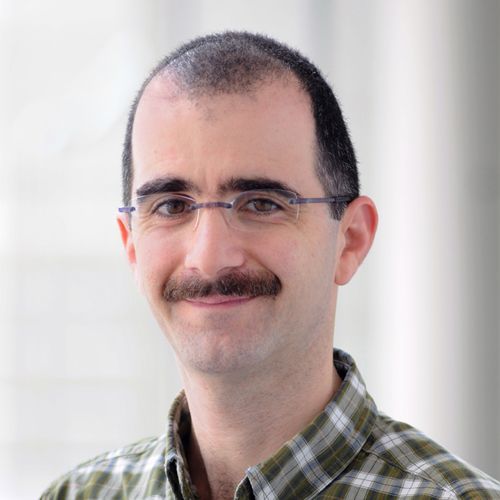
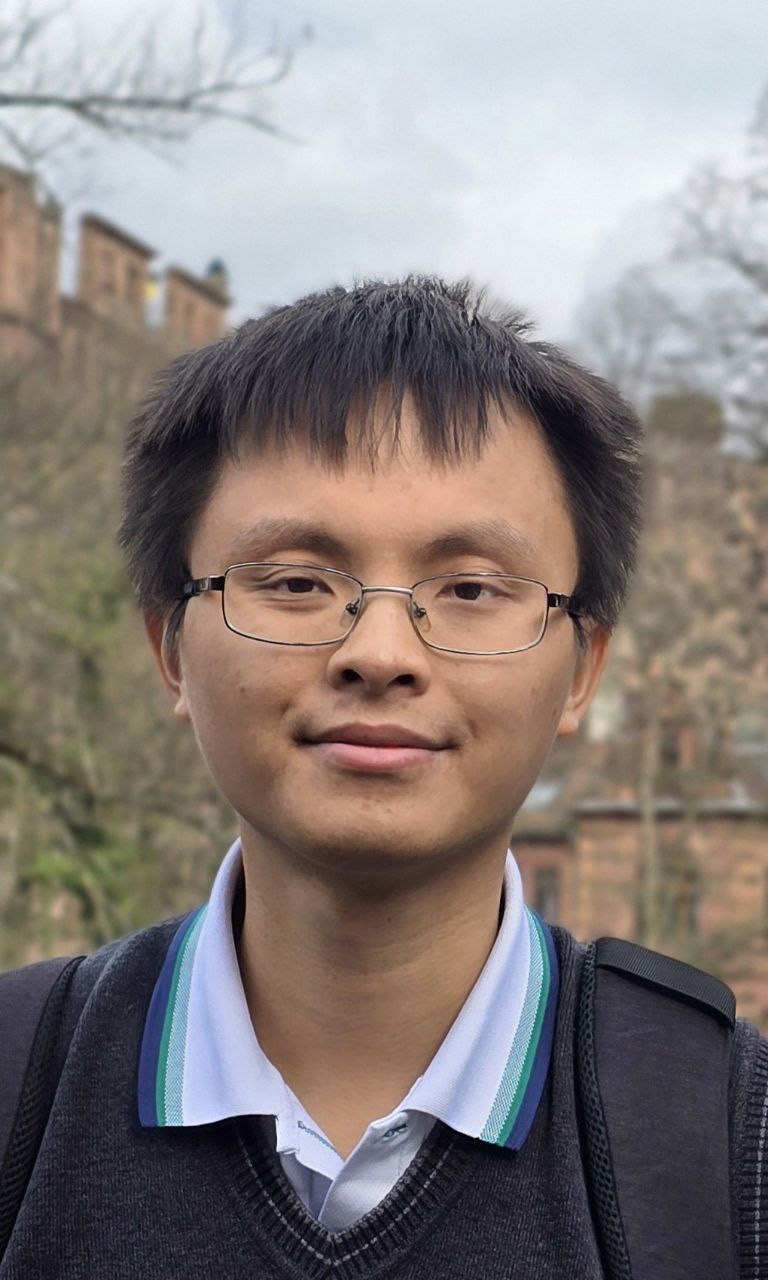
Dr. Glenn Matthews is a Senior Lecturer in the School of Engineering at RMIT University, specialising in Electrical and Computer Engineering. He holds positions in both academic and research capacities, including Principal Investigator roles at CSIRO and Smart Services CRC. His teaching responsibilities include coordinating undergraduate courses such as Introduction to Engineering Computing and Engineering Design modules. Dr. Matthews' research focuses on high-performance computing, acoustic wave device modeling using Finite Element Method (FEM), and embedded system design. Notable projects include developing FEM software for SAW device analysis and investigating asynchronous computing architectures for high-throughput systems. He has supervised numerous research projects spanning machine learning applications in clinical analysis, gas sensing technologies, and neuromorphic learning. His work integrates hardware-software co-design principles, with contributions to radar SLAM systems, mercury vapor sensors, and neural network frameworks like SwiftSpike. Dr. Matthews collaborates with industry partners through ARC Linkage Grants and maintains affiliations with IEEE and DSP/Embedded Systems groups. His research outputs include over 20 peer-reviewed articles, with impactful contributions to sensor technology, circuit design, and biomedical applications.
Prof. Dr. Thomas Lengauer is a leading figure in computational biology and applied algorithmics at the Max Planck Institute for Informatics, part of the Max Planck Society in Saarbrücken, Germany. He heads the Department of Computational Biology and Applied Algorithmics, where he drives research at the intersection of computer science, genomics, and medicine. His work integrates algorithm development with biological applications, particularly in viral genomics, epigenetics, and personalized treatment prediction. Research Interests: His research focuses on computational methods for analyzing complex biological data. Key areas include HIV and hepatitis virus evolution, antiretroviral therapy outcome prediction, DNA methylation and epigenomic analysis, machine learning applications in medicine, and the integration of big data in biological research. He has made significant contributions to understanding viral drug resistance and host-pathogen interactions through computational modeling. The recent publications (2019–2025) reflect a strong trend toward integrating temporal genomic data, machine learning, and public health surveillance. His work spans from fundamental algorithm development (e.g., RnBeads, MeDeCom) to applied clinical research (e.g., dolutegravir resistance, SARS-CoV-2 interventions). Key domains include epigenomics , virology , machine learning in healthcare , and biological database systems , increasingly incorporating AI-driven approaches. Scientific Awards: No specific awards are mentioned in the provided text. Advising and Grants: While no formal list of students is provided, Prof. Lengauer leads a large collaborative research group, evidenced by frequent co-authorship with researchers such as Walter, Bock, Müller, Kaiser, and Pirkl. He participates in major consortia (e.g., DEEP Consortium, Respiratory Virus Network), suggesting leadership in funded collaborative projects. His work is likely supported by Max Planck Society core funding and competitive third-party grants, though specific grants are not listed. Labs and Teams: He leads the Computational Biology and Applied Algorithmics group at the Max Planck Institute for Informatics. The team develops computational tools for epigenomic data analysis (e.g., RnBeads, DecompPipeline), viral resistance prediction, and public health modeling. The group collaborates extensively with clinical and biological researchers across Europe, functioning as a hub for interdisciplinary bioinformatics research.
Ingrid Hobæk Haff is an Associate Professor in insurance mathematics and statistics at the Department of Mathematics, University of Oslo since 2015. She holds a master's degree in Industrial Mathematics from NTNU (2002) and a PhD from the Statistics for Innovation center (2008–2012), with a 20% position as a research scientist at the Norwegian Computing Centre. Previously, she worked there as a research scientist and senior scientist. Her research interests focus on multivariate statistics, copulae, skew and heavy-tailed distributions, and applications in insurance and finance. She has contributed to advancements in statistical modeling, particularly in copula constructions and their applications to risk assessment and extreme value analysis. Key awards include the Sverdrup award for young scientists and the mathematical award of Hanna og John Olav Stubban . She is affiliated with the Statistics and Data Science research group and the completed Stochastics of Renewable Energy Markets (STORE) project. Her work spans interdisciplinary collaborations, including applications in immunology and bioinformatics, leveraging machine learning for antibody-antigen interaction studies and synthetic data generation.
Dr. Roland Wittler is a researcher at the Faculty of Engineering , Bielefeld University , Germany, specializing in Genome Informatics . He has held key roles such as Coordinator of Doctoral Studies (since 2024), Scientific Coordinator for the Graduate School 'Digital Infrastructure for the Life Sciences' (DILS), and coordinator for bioinformatics PhD programs. PhD in Computational Biology (Bielefeld University, 2010) DFG scholarship recipient (2006–2009) Prior research assistant at Simon Fraser University (2010) His research focuses on phylogenomics , gene cluster analysis , and alignment-free sequence comparison . He pioneered methods using colored de Bruijn graphs for reference-free phylogeny reconstruction and DARRC for pan-genome compression. His work spans from gene order evolution to high-throughput sequencing data structures . The 15 most recent publications show trends in phylogenomic clustering k-mer-based pangenome modeling and graph-based genomic alignment He contributes to computational methods for genome analysis, including algorithms for detecting overlapping deletions and optimizing pan-genome storage via Bloom filter trunks. His work bridges theoretical algorithm design and practical bioinformatics applications .
Dr. Ahmad S. Khalil is an Associate Professor in the Department of Biomedical Engineering at Boston University, serving as Associate Director of the Biological Design Center (BDC) and Co-Director of the SB2 NIH/NIGMS T32 Training Program. He holds affiliations with the Wyss Institute at Harvard University and the Molecular Biology, Cell Biology & Biochemistry (MCBB) departments. His research focuses on synthetic biology, systems biology, and genetic regulation, with a strong emphasis on engineering programmable cellular therapies and automated evolution technologies like the eVOLVER platform. Education: B.S. in Mechanical Engineering from Stanford University; M.S. and PhD in Mechanical Engineering from MIT. Key honors include the 2022 Schmidt Science Polymath Award, 2020 DoD Vannevar Bush Fellowship, and 2017 PECASE Award. Research interests include synthetic circuit design for eukaryotic gene regulation, lab-scale evolutionary biology, and democratizing biotechnology tools. His work bridges engineering and biology to address challenges in medicine, climate, and biomanufacturing. Publications emphasize synthetic biology applications, epigenetic control, and automated evolution. He leads a multidisciplinary team with expertise in genetics, computation, and automation, ensuring technologies are accessible to the global scientific community.
Ali Moghimi is an Assistant Professor of Teaching in the Department of Biological and Agricultural Engineering at the University of California, Davis, within the College of Engineering. He specializes in remote sensing, artificial intelligence, and digital agriculture, with a strong focus on the food-water-energy nexus. His work integrates UAVs, LiDAR, and hyperspectral imaging for agricultural innovation. Research Interests: Remote Sensing and AI in Agriculture Precision and Digital Agriculture Unmanned Aerial Systems (UAS) Machine Learning and Deep Learning for Plant Phenotyping Food-Water-Energy Nexus LiDAR and Multispectral/Hyperspectral Imaging His recent publications show a consistent trend in applying deep learning and remote sensing to crop monitoring, yield prediction, and disease detection, particularly in wheat and grapevines. The work bridges engineering, computer science, and agricultural science, emphasizing automation and data-driven decision-making in farming. Scientific Contributions: Developed machine learning models for nitrogen estimation in grapevines Applied deep neural networks for Fusarium head blight detection Advanced hyperspectral imaging for salt stress assessment in wheat Innovated in fruit quality assessment using NIR spectroscopy Dr. Moghimi teaches ABT 060, "Introduction to Unmanned Aerial Systems for Agriculture & Environmental Science," and is passionate about interdisciplinary education. He advises graduate students as part of the graduate faculty and conducts research supported by interdisciplinary collaborations. His work contributes to sustainable agricultural practices through technological innovation.
Kim Reynolds is a faculty member in the Jenkins Department of Biophysics at Johns Hopkins University, joining in 2025. She previously led an independent research group at UT Southwestern, where she established her expertise in protein function, evolution, and design. Her educational background includes a PhD in Biophysics from the University of California, Berkeley, and a BA in Biochemistry from Rice University. Her postdoctoral work was conducted at The Scripps Research Institute and UT Southwestern. Her research focuses on high-throughput assays of protein function, bacterial functional genomics, and modeling fitness landscapes. She integrates computational and experimental approaches to understand how cellular context shapes protein behavior and uses this knowledge to design synthetic proteins, allosteric regulators, and minimal cellular systems. Her work bridges biophysics, systems biology, and synthetic biology. While no specific publications or students are listed in the provided text, her independent lab (Reynolds Lab) indicates an active research program with likely ongoing projects and mentorship. She has contributed to key insights in protein allostery and statistical sequence modeling. PhD, Biophysics, University of California, Berkeley BA, Biochemistry, Rice University Her scientific contributions include modeling GPCR conformational changes and identifying conserved surface residues as allosteric hotspots through statistical analysis of protein sequences. These findings have implications for drug design and understanding protein regulation. She has been an independent investigator since 2014 and is transitioning to a new faculty role at Johns Hopkins, indicating continued growth and recognition in her field.
Georgios Pantouris is an Assistant Professor in the Chemistry Department at the University of the Pacific (Stockton campus). His research focuses on structural and functional studies of immunomodulatory proteins in cancer, aiming to develop targeted small molecule modulators for therapeutic and investigative purposes. PhD in Chemistry (Edinburgh University, 2012) MSci in Molecular Pathology (Middlesex University, 2008) BS in Chemistry (University of Patra, 2006) He employs a multidisciplinary approach at the chemistry-biology interface, including protein expression/purification, X-ray crystallography, small molecule high-throughput screening, and computational chemistry. His teaching philosophy emphasizes critical thinking, individualized mentorship, and inclusive learning environments.
Dr. Alice Allen is a Project Leader at the Max Planck Institute of Polymer Research , specializing in machine learning methods for molecular simulations. She holds a PhD in Physics from the University of Cambridge and completed her undergraduate degree in Physics at Imperial College London. Allen previously worked as a research associate at the University of Cambridge and the University of Luxembourg, followed by a postdoctoral position at Los Alamos National Laboratory. Education: BSc in Physics (Imperial College London) PhD in Physics (University of Cambridge) Her research focuses on developing machine learning models for interatomic potentials , enabling accurate and efficient simulations of reactive processes, biological molecules, and material properties. She has published extensively on topics such as permutationally invariant polynomials, data-driven force fields, and meta-learning approaches for foundation models in interatomic potential development. Recent publications highlight her work on integrating experimental data into machine learning potentials, enhancing the transferability of empirical valence bonds, and creating meta-learning frameworks for foundational interatomic models. These studies span applications in molecular dynamics , thermodynamics , and multi-scale simulations . Research Themes: Machine Learning for Atomistic Simulations Reactive Process Modeling Transferable Force Fields Interpretable Models for Material Properties Collaborative Meta-Learning Frameworks Alice Allen leads the Gräter Groups at the institute, where her team advances predictive methodologies for chemical reactions and material science applications. No specific scientific awards or student advisees are mentioned in the provided text.
Henrik Bruus is a Professor and Section Head in the Department of Physics at the Technical University of Denmark (DTU). He leads the Section of Biophysics and Fluids and the Theoretical Microfluidics Group, focusing on theoretical modeling in microfluidics, acoustofluidics, and nanofluidics. His academic journey began at the Niels Bohr Institute, University of Copenhagen, where he earned his B.Sc., M.Sc., and Ph.D. in physics. He has held research and faculty positions at NORDITA, Yale University, CNRS-CRTBT, and DTU, transitioning from DTU Nanotech to DTU Physics in 2012. He has held visiting professorships at Harvard, MIT, Princeton, and several French institutions. B.Sc. in Mathematics and Physics, University of Copenhagen (1984) M.Sc. in Physics, University of Copenhagen (1986) Ph.D. in Physics, University of Copenhagen (1990) Henrik Bruus's research lies at the intersection of theoretical physics and engineering, with a strong emphasis on microfluidics, acoustofluidics, and biophysics . His work explores acoustic radiation forces, electrokinetics, streaming, and particle manipulation in microsystems. He is renowned for his Acoustofluidics tutorial series published in Lab on a Chip. His research contributes to UN Sustainable Development Goals in energy and innovation. He has published over 248 works, including in Physical Review , Lab on a Chip , and Science Advances . The recent publications highlight a consistent focus on acoustofluidic phenomena , particularly the modeling and control of acoustic streaming, radiation forces, and thermoviscous effects in microchannels. His work bridges theoretical analysis with experimental validation, often involving collaborations across disciplines. Key themes include ultrasound manipulation of particles and cells, optimization of microreactors, and development of novel acoustofluidic devices using thin-film transducers. Scientific Awards: DTU Teacher of the Year (2013) Elected Fellow of the American Physical Society (since 2011) Henrik Bruus actively supervises Ph.D. students and leads multiple research projects in biophysics and microfluidics. He has been the main supervisor or co-supervisor on projects related to plant biophysics, micro- and nanochannel flows, and electroacoustic actuation. His international collaborations span across Europe and the U.S., and he has delivered numerous conference presentations, including at APS meetings and specialized workshops. He is a central figure in the global acoustofluidics research community. He leads the Theoretical Microfluidics Group at DTU Physics, which focuses on computational and analytical modeling of fluid behavior at micro- and nanoscales. The group collaborates closely with experimental teams to develop and validate theoretical frameworks for lab-on-a-chip systems. Their work supports applications in biomedical diagnostics, cell sorting, and material science.
Ran Blekhman is a Professor at the University of Chicago in the Department of Medicine-Genetic Medicine within the Biological Sciences Division. His research focuses on understanding the complex interplay between human genomics and microbiome interactions through high-throughput genomics, computational biology, and population genetics. Current institution: University of Chicago Research themes: Host-microbiome coevolution, Gene regulation, Global microbiome patterns His recent work involves host-microbiome dynamics , including studies on human milk variation, colorectal cancer-microbiome links, and longitudinal multi-omics in IBS. He leads NIH-funded projects like the Human Microbiome Compendium (R01LM013863) and Population Genomics of Host-Microbiome Interactions (R35GM128716). Key article trends show expertise in gut microbiome analysis (42% of publications), genetic regulation (35%), and cross-species studies (28%). Scientific awards include the prestigious McKnight Land-Grant Professor title (2018-2020). His lab has mentored numerous researchers including Dr. Sambhawa Priya (DFI Fellow), Dr. Kelsey Johnson (NIH K99 awardee), and Dr. Rich Abdill. The lab actively studies human-microbiome symbiosis , with recent expansions to the University of Chicago campus and ongoing recruitment of postdocs, graduate students, and technical staff.
Robert Britton is a Professor at the Baylor College of Medicine in the School of Medicine , affiliated with the Alkek Center for Metagenomics and Microbiome Research and the Department of Molecular Virology and Microbiology . His Therapeutic Microbiology Laboratory investigates how microbes impact human health through four pillars: Limosilactobacillus reuteri for therapeutics, intestinal hormone-microbiome interactions , synthetic biology for diagnostics , and microbial ecology in infectious disease . Research Themes : Microbiome-Host Physiology, Synthetic Biosensors, C. difficile Pathogenesis, Diet-Microbiome Co-evolution Grants : $12M NIH award (2018) for microbiome-based infection prevention The lab employs human organoid technology and microbioreactor arrays to model microbial interactions. Recent work explores probiotic-mediated oxytocin release and bioengineered Kv1.3 channel blockers for autoimmune diseases. A 2025 FASEB Journal study demonstrates L. reuteri 's role in gut hormone regulation, while synthetic biology projects target ulcerative colitis and radiation injury via engineered probiotics. Scientific Recognition : 2019 Michael E. DeBakey Excellence in Research Award Lab Members include MD/PhD candidates, postdoctoral fellows, and technicians working on microbiome-brain interactions, metabolic health interventions, and C. difficile epidemiology. Key collaborations span the National School of Tropical Medicine and Graduate School of Biomedical Sciences .
Hamed Jafar-Nejad is a Professor in the Department of Molecular and Human Genetics at Baylor College of Medicine, affiliated with the Graduate School of Biomedical Sciences and the Program in Developmental Biology . He received his MD from Tehran University of Medical Sciences and completed postdoctoral training at the University of Ottawa and Baylor College of Medicine. Research Interests : Glycosylation and deglycosylation in Notch signaling, Alagille syndrome (biliary development), NGLY1 deficiency, and their roles in human disease pathophysiology. Key Projects : Development of mouse models for Alagille syndrome, identification of dosage-sensitive modifiers like Poglut1, and investigation of NGLY1's role in BMP and AMPK signaling using Drosophila and mouse models. Recent Publications focus on therapeutic strategies for Alagille syndrome via gene silencing, POGLUT1's role in muscular dystrophy, and deglycosylation's impact on metabolic and immune dysregulation. His work bridges Drosophila genetics and mammalian systems to uncover mechanisms for developmental disorders. Scientific Awards : Harrington Scholar-Innovator Award (2025), Alagille Syndrome Accelerator Awards (2019, 2015), Glycobiology Significant Achievement Award (2017), and others. Labs & Collaborations : Leads the Hamed Jafar-Nejad Lab, collaborating with Haltiwanger, Paradas, and Darabi groups. His team includes graduate students, postdoctoral fellows, and alumni now in academia and industry.
Prof. Dr. Karsten Niehaus serves as Head of the Proteome and Metabolome Research Group at the Center for Biotechnology (CeBiTec) and Faculty of Biology, University of Bielefeld. His research focuses on proteomics and metabolomics applications in plant-microbe interactions, bacterial stress responses, and disease model systems. His laboratory employs advanced mass spectrometry imaging and cell phenotyping technologies to investigate molecular responses in crops like sugar beet and grapevines under abiotic stress conditions, as well as in cancer models where differentiation therapy impacts tumor malignancy. The group also explores microbial biotechnology through Xanthomonas campestris studies on xanthan production and stress adaptation. Selected publications highlight innovations in 3D microfluidics for biomarker detection and bioinformatics platforms like MetHoS for metabolomics data analysis. His work appears in journals covering Frontiers in Plant Science , Scientific Reports , and Journal of Experimental Botany . Contact: kniehaus@cebitec.uni-bielefeld.de | Office: UHG W7-117
Lam-Duy Nguyen is a Ph.D. candidate and Researcher at the Technical University of Munich, working in the Chair of Decentralized Information Systems and Data Management under Prof. Dr. Viktor Leis. He joined TUM in June 2023 after completing his M.Sc. in Computer Science from Sungkyunkwan University, South Korea. His educational background includes: Ph.D. candidate at Technical University of Munich (2023-Present) M.Sc. in Computer Science from Sungkyunkwan University, South Korea (2020-2022) B.Sc. in Computer Science and Engineering from Vietnam National University (2013-2017) Nguyen's research focuses on core database technologies with emphasis on transaction processing, concurrency control, buffer management, and storage optimization. His work addresses fundamental challenges in database system design, particularly for modern storage technologies like NVMe SSDs, with publications in top-tier conferences including SIGMOD, ICDE, and VLDB. His notable achievements include: STEM Scholarship for International Graduate Students at SKKU (2020-2022) Second prize in Vietnam National Olympiad in Informatics (2012) Nguyen actively contributes to the academic community as an External Reviewer for VLDB'25 and Shadow Program Committee member for VLDB'26. He supervises student theses in core database systems, requiring strong foundations in data structures and database internals from his advisees. He is an integral member of the research team working on projects including CODAC, LeanStore, and Cumulus, collaborating with faculty and fellow researchers on cutting-edge database technologies.