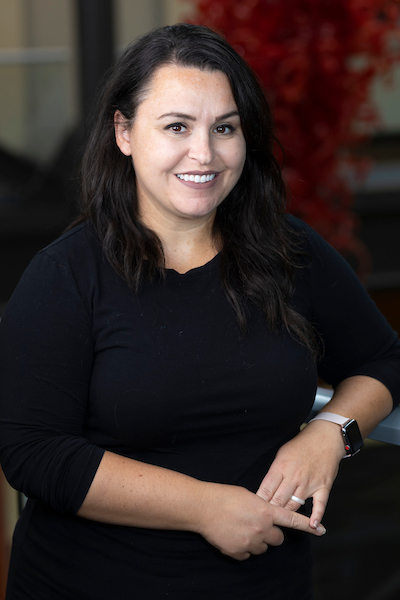
Dr. Shiyong Lu is Professor of Computer Science at Wayne State University and Director of the Big Data Research Laboratory. He holds a PhD from State University of New York at Stony Brook and has published over 140 papers in venues including IEEE Transactions on Services Computing and IEEE Transactions on Knowledge and Data Engineering. Research focuses on: Architecture of big data workflow systems Secure execution in cloud environments Optimization algorithms for distributed computing Provenance management for scientific workflows Recent work demonstrates strong emphasis on secure workflow execution, with 80% of last 15 publications addressing trusted computing environments. Leads NSF-funded DATAVIEW project for cloud-based big data analytics. Awarded IEEE TCSVC Outstanding Service Award (2023). Teaches core courses in Database Management Systems and Data Modeling. Supervised 17 PhD graduates, 10 of whom hold faculty positions. Editorial board member for International Journal of Big Data and International Journal of Big Data Intelligence.
Dr. Aydin K. Sunol is a Professor of Chemical, Biological and Materials Engineering at the University of South Florida's College of Engineering. With a distinguished career spanning several decades, he leads the Environmentally Friendly Engineered Systems (EFES) Lab and serves as principal investigator for numerous research projects funded by NASA, DOD, NSF, and industry partners. Education: PhD in Chemical Engineering, VPI & SU, Blacksburg, Virginia MEng in Industrial Engineering and Operational Research, VPI & SU, Blacksburg, Virginia Diploma in Chemical Engineering, University of Aston, Birmingham, England BS in Chemical Engineering, Bogazici University, Istanbul, Turkey Dr. Sunol's research focuses on green engineering and chemistry, sustainability in the chemical industry, systems engineering, and cleaner energy conversion processes. His work integrates global computational methods, machine learning, product prototyping, and experimentation across multiple temporal and spatial scales. Recent projects include developing nano-structured photo-catalysts, therapeutic particles, and energetic materials using environmentally friendly pathways, as well as creating efficient fuel conversion processes utilizing supercritical fluids. His research demonstrates a consistent trend toward sustainable solutions that address fundamental challenges in materials science, energy conversion, and environmental protection through innovative application of supercritical fluid technology and computational methods. Scientific Awards: USF Chemical and Biomedical Engineering Department Outstanding Teaching Award, 2018 University of South Florida Outstanding Undergraduate Teaching Award, 2002-2003 Engineering Professor of the Year, 1984 Outstanding Professor of Chemical Engineering, VPI & SU, 1981 Outstanding Technology Innovation Award, Aerospace Space System Conference, 2010 As an educator, Dr. Sunol has advised 18 PhD and 29 Master's students, developing innovative teaching methods and curricula including NSF-funded Web-based Teaching Modules and Design Course Series. His research has been supported by diverse funding sources including DOE, NSF, NATO, UNESCO, NAVY, NASA, and numerous industry partners. Dr. Sunol also serves as principal partner and CTO of Temptroll LLC and Accent Creations LLC, which develop self-heating and cooling products, demonstrating the practical application of his research. The EFES Lab, which Dr. Sunol directs, brings together interdisciplinary researchers including chemical engineers, mechanical engineers, and computer scientists to tackle complex challenges in sustainable engineering. Current team members include PhD candidates working on nano-structured materials, wastewater management systems, and temperature modulation products, continuing the lab's tradition of innovation in environmentally friendly engineered systems.
R. Sekar serves as SUNY Empire Innovation Professor and Associate Chair in the Department of Computer Science at Stony Brook University, actively contributing to academic leadership and research initiatives. Education Ph.D. in Computer Science from Stony Brook University (1991) B. Tech in Electrical Engineering from Indian Institute of Technology, Madras (1986) Research Interests Professor Sekar's research focuses on practical software and systems security solutions, integrating principles from programming languages, compilers, operating systems, algorithms, networks, and artificial intelligence. His work addresses critical challenges including software vulnerability mitigation (buffer overflows, SQL injection, XSS), malware defense, high-performance intrusion detection (network and host-based), attack isolation/recovery mechanisms, self-healing systems, and distributed system monitoring. This interdisciplinary approach emphasizes building real-world systems to solve tangible security problems. Scientific Awards Chancellor's award for Excellence in Scholarship and Creative Activities (2011) SUNY Research and Scholarship Award (2006) Faculty Service award, Department of Computer Science (2002-2004) Promising Inventor Award, Research Foundation of SUNY (2003) Department Research Excellence award (2000-2002) Advising and Grants While the source text does not specify doctoral advisees or individual grant projects, Professor Sekar's sustained research productivity and award history indicate substantial external funding and mentorship activities. His leadership as Associate Chair further demonstrates institutional commitment to academic guidance. Labs and Teams Professor Sekar directs the Security Lab (SECLab) at Stony Brook University, as evidenced by his research website https://seclab.cs.sunysb.edu/sekar/ , which serves as the operational hub for his security research initiatives and team collaborations.
Dr. FENG Ling is an Adjunct Assistant Professor at the National University of Singapore and Manager of the Complex System Group at the Institute of High Performance Computing, A*STAR. His work bridges theoretical and applied research in complex systems, focusing on statistical physics principles underlying deep learning and phase transitions in neural networks, as well as percolation phenomena in inter-dependent networks. Education: PhD in Physics, National University of Singapore (2013) His research spans complexity science, artificial neural networks, and social/economic systems. By analyzing critical states between periodic cycles and chaos, he explores optimal neural network training and explainability. He also develops frameworks for systemic spreading in complex networks, applicable to disease propagation, information diffusion, and blockchain dynamics. The selected publications highlight his contributions to understanding 1/f noise in deep neural networks (2024), reconstructing networked complex systems (2024), and edge-of-chaos training principles (2024). Earlier works investigate generalization in deep learning (2020), viral spreading on social networks (2018), and global spreader identification (2018), reflecting interdisciplinary applications of percolation theory and machine learning. Scientific Awards 9th place in Predicting Generalization in Deep Learning Competition at NeurIPS 2020 Dr. Feng leads the Complex System Group at A*STAR's Institute of High Performance Computing, where his team develops algorithms for maximizing or mitigating systemic spread in social, financial, and blockchain networks. His work integrates nonlinear dynamics, computational modeling, and data science to address challenges in artificial intelligence and networked systems.
Veronica Miller, PhD, serves as an Adjunct Professor at UC Berkeley School of Public Health and Director of the Washington, D.C.-based Forum for Collaborative Research, leveraging over 145 peer-reviewed publications to advance regulatory science and accelerate drug development for unmet medical needs through public-private partnerships spanning industry, regulatory agencies, and global health communities. Her academic foundation includes a PhD in Immunology and BSc in Microbiology from the University of Manitoba, complemented by postdoctoral training in Virology at UCLA and Cell Biology at the University of New Mexico. Dr. Miller's research pioneers regulatory science frameworks for HIV, viral hepatitis (HBV/HCV/CMV), and complex liver diseases, integrating multidisciplinary translational approaches across public health, medicine, data science, and regulatory policy to bridge biomedical innovation with global therapeutic access. Her disease-focused work addresses steatotic/cholestatic liver conditions and ocular diseases through collaborative models emphasizing patient-centered endpoints. Analysis of her 15 most recent publications reveals dominant themes in standardizing clinical trial endpoints for liver diseases, optimizing regulatory pathways for HIV prevention, and developing consensus definitions for rare disease indications—demonstrating consistent emphasis on data-driven regulatory decision-making and cross-sector collaboration. Her scientific recognition includes: Distinguished Advocacy Service Award from the American Association of Liver Diseases (AASLD) (2024) As an educator, Dr. Miller mentors future scientists through Berkeley courses including PH 236 (FDA Drug Development Policy) and PHW236A (Regulatory Science), while directing the Forum's Data and Analysis Center to transform clinical trial data into actionable insights for tissue imaging, biomarkers, and histopathology. Her leadership cultivates partnerships that address global health inequities in drug access. The Forum for Collaborative Research operates as a dynamic hub where multidisciplinary teams from public health, computer science, and regulatory affairs co-develop solutions for high-prevalence and rare diseases, exemplifying Dr. Miller's commitment to turning scientific discovery into real-world health impact.
Andrew W. Moore is a Professor of Networked Systems at the University of Cambridge's Department of Computer Science and Technology. His research focuses on networked systems design, high-performance prototyping (e.g., NetFPGA), and latency measurement across scales from data centers to wide-area networks. He has contributed to SDN architectures, reconfigurable networking, and energy-efficient interconnects. He teaches courses including Computer Networking (Part IB), Scientific Computing (Part IA), and advanced modules on network measurements and system performance. His work emphasizes open-source tools and reproducible research, with publications in top venues like IEEE Transactions and ACM SIGCOMM. Research interests span Systems and Networking, Computer Architecture, Machine Learning applications in networking, and Security. Recent work addresses data center latency optimization, SDN-enabled IXPs, and FPGA-based network prototyping. Collaborations include projects on energy-aware networks and hardware-software co-design. He leads the NetFPGA initiative, a widely used open-source FPGA platform for networking research and education. His lab also explores emerging storage media and applications of software-defined networking in critical infrastructure.
Johan Jansson is an Associate Professor in Scientific Computing at KTH Royal Institute of Technology and BCAM (Basque Center for Applied Mathematics). He leads research in predictive Direct FEM Simulation (DFS) for aerodynamics and multiphase flows, and co-founded Icarus Digital Math as CEO. His work includes the FEniCS open-source finite element software project and MOOC-HPFEM educational initiatives. He holds roles as Director of the Center for Digital Math and collaborates internationally in computational science. Research focuses on high-performance computing (HPC), fluid-structure interaction (FSI), biomedical modeling, and renewable energy systems. Notable contributions include adaptive FEM frameworks for turbulent flow, vocal fold simulations, and wave energy converter modeling. His work bridges academic research with industrial applications, leveraging FEniCS-HPC and Unicorn solvers. Key achievements include election to the IVA Royal Swedish Academy of Sciences 100-list and securing the Severo Ochoa Center of Excellence Award. He has pioneered open-source tools like SimTek and contributed to major projects like the Salter Sink and vocal production modeling. Teaching responsibilities include courses on database technology, computational fluid mechanics, and research methodology. He actively engages in large-scale simulation projects involving marine energy, cardiac ablation protocols, and aerodynamic optimization.
Christian Schunn is a Professor in the Department of Psychology at the University of Pittsburgh, with a focus on Learning Sciences and cognitive processes. He holds a PhD from Carnegie Mellon University. His research spans scientific reasoning, peer assessment, STEM education, and computational modeling. He leads a lab with active members including Liwei Chen and Jie Cao (PhD students) and former advisees such as Yaron Doppelt and Matt Mehalik. Key research interests include the efficacy of peer feedback in education, design-based learning in engineering, and cognitive strategies in STEM. He has contributed to over 150 publications, emphasizing peer assessment systems like Peerceptiv and their impact on learning outcomes. His work often bridges cognitive science and educational practice, addressing equity in STEM pathways and motivational factors in student performance. Lab activities include studies on team dynamics in design, computational thinking, and the role of analogical reasoning. He collaborates internationally with institutions like Northeast Normal University and the Harbin Institute of Technology. Current grants focus on improving peer feedback mechanisms and their scalability in diverse educational settings. Awards include recognition for contributions to educational technology and learning analytics. His lab is part of the Learning Research and Development Center (LRDC), fostering interdisciplinary research in cognitive and educational sciences.
Rodrigo Miragaia Rodrigues is a full professor at the Instituto Superior Técnico (ULisboa) and a researcher at INESC-ID since 2015. He previously held roles as an associate professor at Universidade Nova de Lisboa, tenure-track faculty at MPI-SWS, and completed his PhD at MIT in 2005 under Barbara Liskov. Education: PhD in Computer Science, MIT, 2005 Research Interests: Focuses on distributed systems, fault-tolerant computing, cloud infrastructure, and consistency models. His work bridges theoretical foundations and practical implementations, addressing challenges in geo-replication, secure analytics, and resource allocation in serverless environments. He emphasizes scalable systems and resilient data management. Awards: Best Paper Award at SOSP ERC Starting Grant Google Faculty Research Award Advising & Grants: Has advised 7 PhD students as main advisor, with graduates in top institutions like Purdue, TU Munich, and USTC. Secured funding from the European Research Council (ERC) and Google, focusing on projects like DependableCloud (ERC Grant 307732). Labs & Teams: Leads research at INESC-ID and previously directed the Dependable Systems Group at MPI-SWS. Active in academic leadership roles, including President of the Scientific Council at IST.
Eirik Keilegavlen is a Researcher at the Department of Mathematics, University of Bergen. His primary research focuses on developing mathematical models, numerical methods, and simulation tools for multiphysics processes in porous media, particularly in geothermal energy, CO 2 storage, and subsurface energy systems. He leads the development of the open-source software PorePy, designed for simulating processes in fractured porous media. His work emphasizes coupled problems involving fluid flow, heat transfer, and mechanical deformation. Key research interests include: Mathematical modeling of coupled thermal-hydro-mechanical processes Numerical discretization methods for fractured media Development of open-source simulation tools Applications in geothermal energy extraction and carbon sequestration Recent publications highlight advancements in: Uncertainty quantification for CO 2 leakage Viscous fingering in fractured reservoirs Automated solver selection for multiphysics systems Collaborations involve interdisciplinary teams addressing challenges in geothermal reservoir stimulation, fault mechanics, and high-performance computing. His work bridges theoretical developments with practical applications in energy and environmental systems.
Peter Jansen is an Associate Professor at the University of Arizona's College of Information Science with a joint appointment at the Allen Institute for Artificial Intelligence (Ai2). He specializes in natural language processing (NLP), cognitive artificial intelligence, and automated scientific discovery. His research focuses on virtual environments for scientific reasoning, such as ScienceWorld and DiscoveryWorld, and methods for explainable AI through projects like the Explanation Bank. Education: PhD in Psychology and Neuroscience from McMaster University, and a Bachelor of Independent Studies from the University of Waterloo. His interdisciplinary background combines NLP, computer science, physics, and electrical engineering. Key projects include open-source hardware initiatives like the science tricorder (featured in over 50 media outlets and exhibited at the German Museum of Technology in Berlin) and TextWorldExpress, a text-game simulator. His work emphasizes grounding science education through sensing and developing AI systems capable of systematic reasoning and explanation generation. Current roles include advising students in automated scientific discovery and contributing to cross-listed courses in Computer Science and Linguistics. He maintains an active presence in academic outreach through teaching, conferences, and publications.
Jarek Nabrzyski is the founding and current director of the Center for Research Computing (CRC) at the University of Notre Dame and a concurrent Professor in the Department of Computer Science and Engineering. He co-directs the Blockchain Research Lab with Ian Taylor and leads the Quantum Computing Lab. His research focuses on distributed ledger technologies, quantum computing, and resource management in distributed, cloud, and exascale systems. He has overseen over 50 national and international research projects developing cyberinfrastructure for science and industry, emphasizing collaboration and team-building in complex projects. Key areas of research include blockchain applications in decentralized systems, quantum algorithm optimization for near-term hardware, and cybersecurity protocols for data integrity. He actively engages in interdisciplinary initiatives like the Center for Social Science Research and has pioneered frameworks for verifiable credentials and reproducible scientific data. His work bridges theoretical advancements with practical industry partnerships. Notable contributions include hybrid cross-chain protocols, quantum Poisson solvers, and frameworks for blockchain trust analytics. His recent publications highlight advancements in AI-driven blockchain stabilization, suspicious transaction detection, and scalable quantum computing solutions. Despite no explicit mentions of awards, his leadership roles and project count underscore significant contributions to computational science and infrastructure. As a mentor, he fosters student engagement in cyberinfrastructure through initiatives like the Cyberinfrastructure Center of Excellence. His labs and collaborations drive innovation in quantum computing, blockchain interoperability, and high-performance computing systems. Current efforts include transparent data tracking for aerospace supply chains and secure scientific data reproducibility.
Antonio Corradi is a Full Professor of Computer Networks and Infrastructures supporting Cloud and Big Data at the University of Bologna's School of Engineering, within the Department of Computer Science - Science and Engineering. His roles include President of the regional CLUSTER RER for service innovation, President of the Alma Mater FAM Foundation, and Director of the UNIBO High Studies Center in Buenos Aires. He previously served as Director of the DISI department (2018–2021) and International Delegate for Latin America (2014–2018). His research focuses on distributed systems, middleware for pervasive computing, cloud solutions, mobile systems, smart cities, Industry 4.0/5.0, and 5G communication standards. Education: Laurea cum laude in Electrical Engineering (University of Bologna, 1979) and a Master's in Computer Engineering from Cornell University (1981, supported by a Fulbright-Hayes grant). He joined the University of Bologna as a Researcher in 1983 and became Full Professor in 2000. Research interests span distributed/parallel systems, middleware for mobile agent systems, cloud computing, smart city monitoring, and Industry 4.0 protocols. He emphasizes QoS-aware solutions, edge computing, and IoT integration. His work includes designing frameworks for big geospatial data and novel architectures for serverless and fog computing environments. Selected scientific awards include the 1980 'Cavalieri del Lavoro' prize for his thesis. He actively contributes to institutional duties, including the CCIB (Computer Services Centre of the Engineering School) and CINI Bologna University Section (Italian Interuniversity Consortium). In advising and grants: He coordinates PhD programs and has led projects funded by MIUR, CNR, and European initiatives. Notable collaborations include industry grants with Jakala, OTConsulting, ENAV-Sicta, and the Zefiro Consortium. His projects address challenges in energy efficiency, smart manufacturing, and healthcare management during crises. Labs/Teams: Developed platforms like SOMA and REDMAN middleware. Involved in initiatives such as ParticipAct (mobile crowdsensing), COLOMBO (vehicular traffic monitoring), and the Audit4Cloud platform for cloud performance auditing.
Takao Sasaki is an Associate Professor in the Department of Brain and Cognitive Sciences at the University of Rochester. His research focuses on collective cognition in animal groups, particularly using homing pigeons and acorn ants as model organisms. He explores how groups achieve higher cognitive abilities than individuals through information pooling and decision-making processes. His work combines field observations with mathematical modeling and computational simulations to uncover principles of collective intelligence. Research interests include collective animal behavior, collective learning mechanisms, and decision-making strategies in social insects. He investigates how environmental cues, colony size, and quorum thresholds influence group decisions during tasks like nest relocation and foraging. His methodologies involve cutting-edge tools such as GPS tracking, high-resolution video analysis, and hidden Markov models. Recent articles highlight studies on fire ant pontoon bridge dynamics, reversal learning in ant colonies, and the impact of tagging on recruitment behavior. These studies emphasize local information processing and self-organization principles in swarm systems. Sasaki’s contributions bridge behavioral ecology, cognitive science, and systems biology. No scientific awards are explicitly listed in the provided materials. His research also examines the role of individual diversity (e.g., ‘naïve’ individuals) in enhancing group exploration efficiency in homing pigeons. He explores historical influences on decision-making and the anchoring effect’s role in nest site selection.
Kate Cooper is an Associate Professor and Undergraduate Program Chair for BIOI, CYBR, and ITIN in the School of Interdisciplinary Informatics at the University of Nebraska at Omaha (UNO), College of Information Science & Technology. She has been a member of the UNO Bioinformatics Research Group since 2005 and officially joined the faculty in 2015. Her work bridges computational science and biomedical applications, with a strong focus on network modeling and data interpretation. Research Interests: Dr. Cooper's research centers on applying network science to biomedical data, particularly in modeling gene expression and protein-protein interaction networks. She investigates how graph-theoretic properties can reveal functional insights in biological systems. Her recent focus includes consumer health informatics, exploring how diet impacts the microbiome to prevent disease. She also examines the use of graphs in modeling infectious disease spread and food product label co-occurrence. Teaching and Service: She is passionate about bioinformatics education, modular curriculum design, and promoting reproducibility in research. She actively contributes to academic governance as Chair of multiple committees, including the College of IS&T Advisory Committee and the Bioinformatics Undergraduate Curriculum Committee. Education: BS in Bioinformatics, University of Nebraska at Omaha, 2007 PhD in Pathology & Microbiology (Bioinformatics Specialty Track), University of Nebraska Medical Center, 2013 Scientific Awards: No awards listed in the provided text. Advising and Grants: While no students or grants are explicitly listed, Dr. Cooper plays a significant leadership role in curriculum development and academic service. Her long-standing involvement with the Bioinformatics Research Group since 2005 suggests sustained research engagement and potential grant activity, though specific funding sources are not mentioned. Labs and Teams: She is a core member of the UNO Bioinformatics Research Group, where she collaborates on interdisciplinary projects involving network analysis, high-performance computing, and health informatics applications.