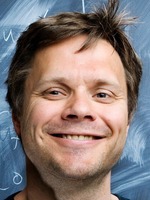
Magnus Bruaset is a Professor and Director of the Software & AI Department at Simula Research Laboratory , with expertise in computational geosciences, numerical methods, and quantum computing. His work spans geological modeling, PDE solvers, and software development frameworks like Diffpack. Education : PhD in preconditioned iterative methods for elliptic problems (1992), Master's in preconditioning symmetric systems (1988). Research Interests : Focus on numerical analysis, GPU acceleration of geological simulations, stochastic modeling for uncertainty quantification, and quantum computing strategy. Key projects include Hamilton-Jacobi solvers, particle-based flow models, and contributions to digital contact tracing systems. Advising & Collaboration : Co-developed PhD training workshops for scientific communication and contributed to industrial-academic partnerships. Collaborated with institutions including ChevronTexaco, Wolfram Research, and University of Oslo.
Associate Professor Tiago M. D. Pereira is affiliated with the Rosseland Centre for Solar Physics at the Institute of Theoretical Astrophysics, University of Oslo, where he conducts interdisciplinary research bridging computational simulations, observational solar physics, and advanced data analysis to decode stellar phenomena through spectral radiation. Dr. Pereira's educational background includes: PhD from Australian National University (ANU) in 2009, specializing in 3D radiative transfer and spectral line formation in solar simulations. His research pioneers the integration of magnetised plasma simulations with multi-dimensional radiative transfer models and spectral imaging observations of the solar atmosphere. He develops high-performance algorithms for efficient radiative transfer computation and visualization of massive datasets, enabling precise interpretation of solar observations to unravel stellar dynamics. This work addresses the computationally intensive challenge of spectral line formation while advancing methodologies for next-generation solar missions. His scientific recognitions include: NASA Postdoctoral Fellowship Dr. Pereira actively supervises computational projects, including applying deep learning to solar observation interpretation, and has contributed to NASA's IRIS mission as an early science team member. His collaborative work synthesizes data from multiple space and ground-based observatories to study solar atmospheric dynamics, though specific grant details are not documented in the source text. He operates within the Rosseland Centre for Solar Physics framework at the University of Oslo, currently developing a dedicated research group focused on solar physics and computational astrophysics methodologies.
Kent-Andre Mardal is a Professor at the Department of Mathematics , University of Oslo . He specializes in computational mechanics with a strong focus on biomechanical applications in medicine , particularly in modeling brain clearance mechanisms during sleep. His work integrates multi-physics modeling , fluid-structure interaction , and poroelastic couplings to advance understanding of the glymphatic system and cerebrospinal fluid dynamics. Education: PhD (2002) – Simula Research Laboratory Research Interests: Mardal's research spans a wide range of disciplines including: Computational Mechanics – developing robust numerical algorithms for complex physical systems Biomechanical Applications – particularly in neuroscience and medical imaging Brain Clearance During Sleep – modeling the glymphatic system and CSF flow dynamics Multi-Physics Modeling – integrating fluid dynamics, elasticity, and neural networks Finite Element Methods – for accurate and efficient simulations Neural Networks in Scientific Computing – exploring physics-informed neural networks Research Trends from Publications: Mardal's recent publications (2022–2025) demonstrate a clear focus on brain fluid dynamics , particularly the glymphatic system , CSF circulation , and neurodegenerative disease modeling . He employs advanced numerical techniques such as isogeometric analysis , physics-informed neural networks , and parameter-robust preconditioning to solve complex multi-physics problems. His work bridges medical imaging (MRI) with computational modeling to provide insights into brain clearance mechanisms and their impairment in diseases like Alzheimer's. Scientific Awards: No specific awards are mentioned in the provided text. Grants and Projects: Currently, Mardal is the Principal Investigator (PI) of three active research projects: Alzheimer's Physics – exploring the role of fluid dynamics in neurodegeneration Scientific Machine Learning – advancing numerical methods with AI Computational Hydrology – modeling subsurface fluid flow Affiliations and Teams: Mardal was previously a group leader at the Centre of Excellence “Biomedical Computing” at the Simula Research Laboratory. He has authored over 100 papers and several books, and his research homepage is available at https://kent-and.github.io/ .
Steven C. Mallam is an Associate Professor at the University of South-Eastern Norway within the Department of Maritime Operations, Faculty of Technology, Natural Sciences and Maritime Studies. His academic journey began with a Master of Science specializing in work safety and ergonomics from Memorial University of Newfoundland, followed by a PhD in Human Factors from Chalmers University of Technology in Sweden. Dr. Mallam leads research at the Ocean Industries Concept Lab, focusing on the critical intersection of human performance and emerging technologies in maritime contexts. Dr. Mallam's research spans several interconnected domains centered on human factors in complex maritime systems. His work examines how humans interact with increasingly automated technologies, particularly in navigation and collision avoidance systems. He investigates the application of virtual and augmented reality for training and operational support, measuring their impact on situation awareness, performance, and safety. A significant portion of his recent work addresses the human dimensions of autonomous shipping, exploring transparency requirements, supervision challenges, and the evolving role of navigators. He also conducts important research on maritime cybersecurity from a human factors perspective, examining how crews manage cyber incidents and how security operation centers can be optimized for human performance. Dr. Mallam's publication record demonstrates consistent high productivity across multiple high-impact journals and conferences in human factors, ergonomics, and maritime safety. His recent work (2023-2025) shows particular emphasis on autonomous shipping human factors, virtual/augmented reality applications, and maritime cyber resilience. His research employs diverse methodologies including systematic reviews, experimental studies, cognitive task analysis, and simulator-based research, often in close collaboration with industry partners. Dr. Mallam actively contributes to advancing human factors practice in high-risk industries through initiatives like the Human Factors Network for High-Risk Industries in Canada. His work bridges theoretical human factors principles with practical maritime applications, making significant contributions to improving safety and performance in one of the world's most critical transportation sectors. As an educator, Dr. Mallam integrates his research findings directly into maritime education programs, ensuring students receive cutting-edge knowledge about human factors in contemporary and future maritime operations. His teaching likely emphasizes practical application of human-centered design principles and prepares students for the evolving technological landscape of maritime industries.
Morten Birkeland Nielsen is a Professor in the Department of Social Psychology at the University of Bergen, maintaining a dual affiliation with the Norwegian Working Environment Institute (Statens arbeidsmiljøinstitutt). He leads the Bergen Bullying Research Group and participates in the Research Group for Work Environment, Management and Conflict (FALK). His research focuses on workplace bullying dynamics, particularly examining bystander effects, leadership as targets of bullying, destructive management practices, and whistleblowing. Additional interests include safety and security climate, office design impacts on health, and quantitative research methods including meta-analyses. His work bridges organizational psychology with practical workplace health interventions. Analysis of Nielsen's recent publications reveals a strong emphasis on workplace bullying consequences, with particular attention to bystander effects and leadership vulnerability. His methodological approach combines prospective cohort designs with registry-linked health data, producing high-impact findings on how technology problems, office design, and bullying exposure affect mental health and absenteeism. The research consistently demonstrates how psychosocial work factors translate into measurable health outcomes. Nielsen actively supervises multiple research projects examining work environment factors including office concepts' effects on health, sick leave among home care workers, workplace aggression in child protection services, and longitudinal determinants of work absence. His research group employs advanced statistical methods including Bayesian analysis and multilevel modeling to address complex workplace health questions. His laboratory work centers on the Bergen Bullying Research Group, which conducts both theoretical and applied research on workplace aggression. The group's work informs Norwegian workplace policies and contributes to international understanding of bullying mechanisms and interventions. Current projects examine how office design influences sickness presenteeism, the health consequences of computer hassles, and longitudinal patterns of work absence.
Vidar Remi Jensen is a Professor in the Department of Chemistry at the University of Bergen (UiB), where he leads research at the intersection of computational chemistry and catalyst design. His work focuses on developing theoretical frameworks to understand and predict catalyst behavior, with particular emphasis on olefin metathesis reactions. Professor Jensen's research interests center on computational approaches to catalyst design, with major contributions in Z- and E-selective olefin metathesis, automated de novo design of organometallic complexes, and computational-experimental integration for catalyst development. His group applies advanced quantum chemical methods, particularly Density Functional Theory (DFT), to elucidate reaction mechanisms, predict catalyst performance, and develop design principles for improved catalytic systems. Recent work has increasingly focused on automated design frameworks that can generate and evaluate potential catalyst structures based on computational predictions. Analysis of his publication record from 2021-2025 reveals a strong focus on stereoselective metathesis, computational catalyst design, and biomass conversion applications. His work demonstrates consistent integration of computational predictions with experimental validation, often through international collaborations. A notable trend is the development of automated frameworks for catalyst design that move beyond traditional trial-and-error approaches. Professor Jensen's research program benefits from sustained funding that supports both computational infrastructure and collaborative experimental work. His group maintains active collaborations with experimental chemistry groups worldwide, creating a productive feedback loop between computational prediction and experimental validation. This approach has yielded significant insights into catalyst decomposition pathways, structure-activity relationships, and design principles for improved catalytic performance. The research environment led by Professor Jensen provides students and researchers with opportunities to work at the cutting edge of computational catalyst design, developing skills that bridge theoretical chemistry and practical applications in sustainable chemistry and pharmaceutical synthesis.
Eilif Sommer Øyre is a Research Fellow at the Rosseland Centre for Solar Physics, University of Oslo, affiliated with the Faculty of Mathematics and Natural Sciences. Based in Room 210 at Svein Rosselands hus, he contributes to solar physics research and high-performance computing initiatives, with contact via e.s.oyre@astro.uio.no. His academic background includes: Master of Science in Engineering Physics from the Norwegian University of Science and Technology (NTNU), 2021 His research centers on solar physics and computational methods, specializing in accelerated particles, numerical analysis, and high-performance computing. He develops simulations to model solar phenomena and particle acceleration mechanisms, bridging astrophysical theory with advanced computational techniques for energy-related processes in stellar environments. His 2020 publications reveal interdisciplinary expertise, applying astrophysical computational frameworks to energy engineering challenges—specifically salinity gradient power generation and battery thermal systems—highlighting methodological transfer between solar physics and sustainable energy technologies. As a teaching assistant for AST2000 - Introduction to Astrophysics, he mentors undergraduate students in core astrophysical concepts. He actively collaborates within the Rosseland Centre for Solar Physics team, leveraging high-performance computing resources for solar dynamics simulations and contributing to Norway's leadership in solar research.
Matilda Dorotic is an Associate Professor in the Department of Marketing at BI Norwegian Business School, where she has been faculty since 2012. She also holds an Adjunct Researcher position at Massachusetts Institute of Technology since 2024. Her academic journey includes a Ph.D. from University of Groningen (2010), Master of Science from Staffordshire University Business School (2003), and B.A. from University of Split, Faculty of Economics (1999). Professor Dorotic's research focuses on the intersection of marketing, technology, and consumer behavior, with particular expertise in customer relationship management, loyalty programs, artificial intelligence applications, and smart cities. Her work examines how consumers respond to technological interfaces in various contexts, with recent emphasis on AI implementations in both commercial and public settings. Analysis of her recent publications reveals a strong trend toward understanding the ethical, privacy, and societal implications of AI in marketing and public contexts. Her research spans both theoretical contributions to consumer behavior and practical applications for businesses and policymakers, with a particular focus on context-dependent responses to technology. Winner of the 2024 IJRM Best Paper Award for research published in the International Journal of Research in Marketing Active researcher in AI ethics and consumer responses to technology Principal investigator on multiple research projects including SmartFood Consortium (2022-2024) Collaborator with MIT, University of Groningen, and other international institutions Professor Dorotic actively supervises students and contributes to BI Norwegian Business School's academic community through teaching and research. She frequently presents her work at international conferences and has developed frameworks that help businesses understand customer responses to technological interfaces, particularly in loyalty programs and AI applications.