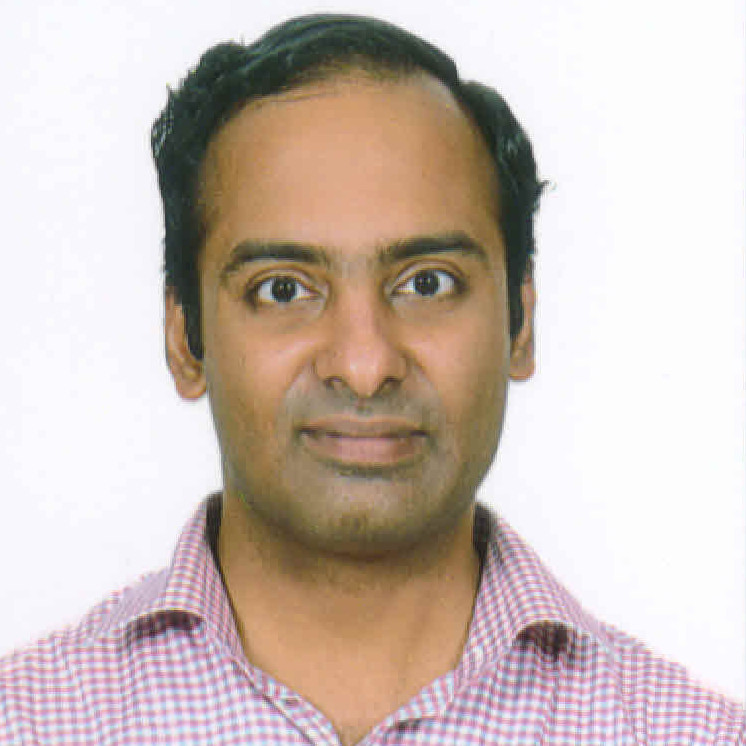
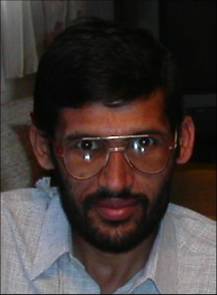
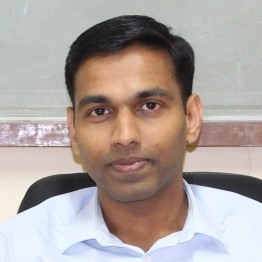
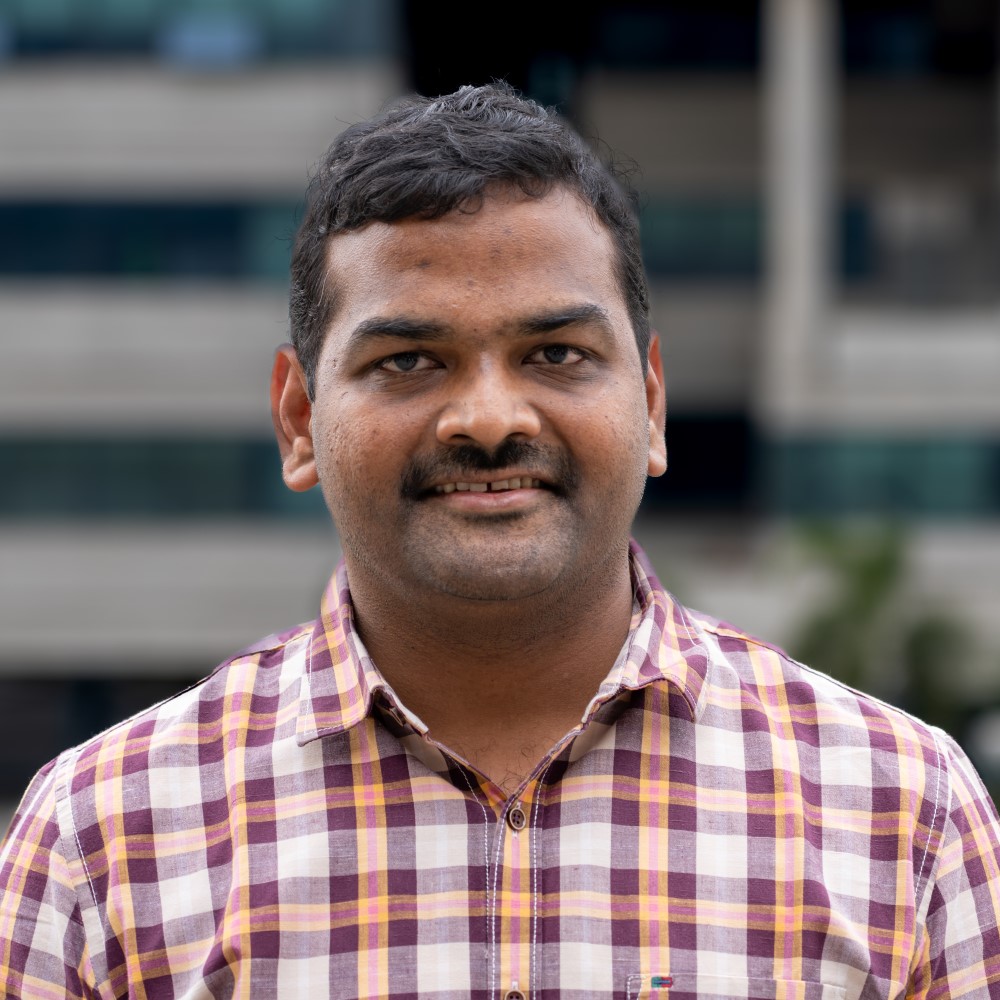
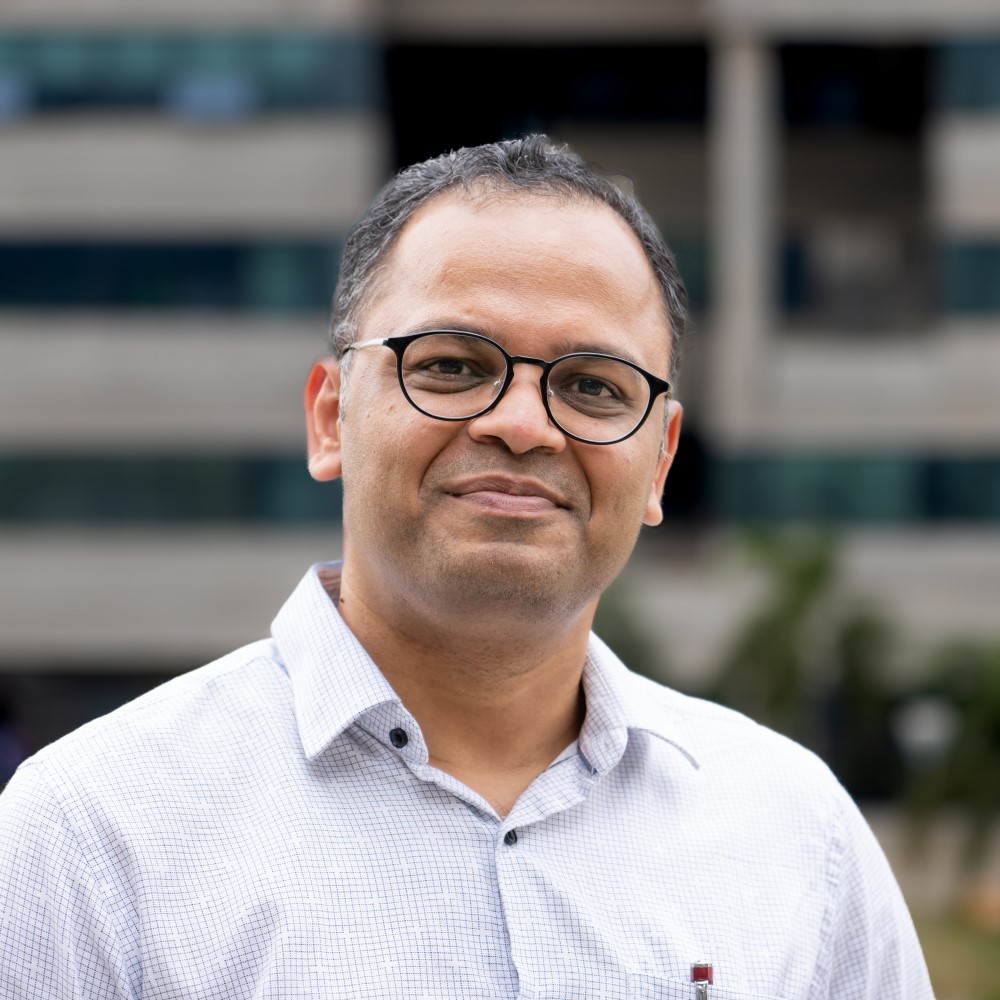
Dr. Pradeep Moise is an Assistant Professor in the Department of Aerospace Engineering at the Indian Institute of Technology Kanpur. He holds a Ph.D. in Aerospace Engineering from the Indian Institute of Science, Bengaluru (2019), an M.Sc. in Aerospace Engineering from the same institution (2012), and a B.Tech. in Mechanical Engineering from the National Institute of Technology, Tiruchirappalli (2008). Prior to joining IIT Kanpur, he served as a Research Fellow in Aeronautical & Astronautical Engineering at the University of Southampton, United Kingdom (2020-2022). His research focuses on computational fluid dynamics, specializing in: Direct Numerical Simulations (DNS) and Large Eddy Simulations (LES) Swirling flows and transonic flow phenomena Hydrodynamic stability analysis and modal decomposition techniques High-performance computing applications in fluid dynamics His recent publications demonstrate a consistent focus on vortex dynamics and flow transitions, with particular emphasis on vortex breakdown phenomena in swirling jets and transonic buffet flows. His work frequently appears in high-impact journals like the Journal of Fluid Mechanics.
A. S. Panwar is a Professor in the Department of Metallurgical Engineering and Materials Science at the Indian Institute of Technology Bombay, a position he has held since May 2021. He is actively engaged in computational and theoretical research in materials science and soft matter physics. Research Interests: His work focuses on multi-scale molecular modeling of macromolecular self-assembly, macromolecular transport in micro- and nano-scale channels, and high-performance computing applications in polymer and composite systems. His research bridges physics, materials science, and computational modeling to understand complex soft matter behavior. Publication Trends: His publications from 2003 to 2011 demonstrate a strong focus on Brownian dynamics simulations of polymers and polyelectrolytes under various physical constraints such as nanoconfinement, electric fields, and shear flows. Key themes include DNA translocation, nanopore sensing, polymer electrophoresis, and carbon nanotube dispersion in polymer blends—indicating expertise in computational soft matter and nanomaterials. Academic Background: B.Tech. in Metallurgical Engineering and Materials Science, IIT Bombay (2000) Ph.D. in Materials Science and Engineering, University of Minnesota (2005) Postdoctoral Research Associate, University of Massachusetts, Amherst (2005–2009) Scientific Contributions: While no formal awards are listed, his work has been published in high-impact journals such as the Journal of the American Chemical Society , Macromolecules , and Polymer Engineering and Science , reflecting significant contributions to the field of computational polymer physics. Advising and Grants: Although specific students or funded projects are not mentioned in the provided text, his long-standing research output suggests active supervision and potential grant involvement. His computational focus implies use of high-performance computing resources, possibly supported by national or institutional grants. Laboratory and Team: While no formal lab or team name is provided, his research likely involves a computational group focused on molecular modeling and simulation of soft materials. His personal website (http://www.aspanwar.wix.com/aspanwar) may contain further details on current projects and collaborators.
Supratim Biswas is a Professor in the Department of Computer Science and Engineering at the Indian Institute of Technology Bombay, where he has served since 1995. His academic career spans over four decades, beginning as a Lecturer in the Computer Center in 1980, progressing to Assistant Professor in 1985, Associate Professor in 1990, and achieving full Professorship in 1995. He has held significant administrative roles including Dean of Academic Programs (2007-2010), Head of CSE Department (2000-2003), and Director of IITB-Monash Academy (2009-2010). His research interests focus on Programming Languages, Compiler Optimization, Parallelizing Compilers, Parallel and Distributed computing, and Combinatorial Optimization . Professor Biswas has made substantial contributions to compiler technology, particularly in parallelization techniques for modern architectures. His work bridges theoretical compiler design with practical applications in high-performance computing and CAD systems, demonstrating how compiler optimizations can significantly enhance computational efficiency in real-world applications. The publication record shows a consistent research trajectory spanning nearly four decades, with recent work (2012-2015) focusing on GPU-based parallel algorithms, loop parallelization techniques for non-uniform data dependencies, and mesh processing for CAD applications. His research demonstrates evolution from foundational compiler theory to contemporary parallel architectures, maintaining relevance through practical applications in computational geometry, CAD systems, and high-performance computing. Excellence in Teaching Award (2000) Professor Biswas has supervised over 60 doctoral and master's students, establishing himself as a dedicated mentor in systems software education. His sponsored research portfolio includes significant projects with CDAC (350 lacs), MIT (133 lacs), TCS (81.3 lacs), and Intel Corporation (10 lacs), demonstrating strong industry-academic collaboration. His teaching portfolio spans both undergraduate and postgraduate levels, including foundational courses like Discrete Structures and advanced topics like Parallelizing Compilers, reflecting his commitment to curriculum development across multiple generations of computer science education. His laboratory work has supported students across B.Tech, M.Tech, and Ph.D. programs, with particular emphasis on compiler construction and operating systems. Through the Continuing Education Program, he has extended his expertise to industry professionals, conducting numerous specialized courses for organizations including VSNL, TCS, DRDO, and Reliance.
Anand Mohan is a Professor in the Department of Chemical Engineering at the Indian Institute of Technology Hyderabad. His research focuses on interdisciplinary problems at the intersection of fluid dynamics, applied mathematics, and biomedical engineering, with applications in cardiovascular mechanics and complex fluid rheology. He utilizes computational fluid dynamics (CFD), mathematical modeling, and multiscale simulations to develop hypotheses and products in collaboration with partners. His work spans theoretical and applied domains, including high-performance computing and biomedical device development. Education: Ph.D. from Texas A&M University, College Station, TX Research Highlights: His team has demonstrated CFD's potential in predicting atherosclerosis sites and developed a novel viscoplastic fluid model applied to classical flow problems. Research also integrates AI/ML with fluid dynamics and applies mathematical models to study blood coagulation mechanisms.
Preeti Malakar is an Assistant Professor in the Department of Computer Science and Engineering at the Indian Institute of Technology Kanpur. She leads the Scalable Parallel Computing Laboratory (SParCL) and previously held positions as a postdoc and Assistant Computer Scientist at Argonne National Laboratory (USA) and was a Visiting Affiliate at Lawrence Berkeley National Laboratory (USA). She completed her PhD from the Indian Institute of Science Bangalore under Prof. Vijay Natarajan and Prof. Sathish Vadhiyar. Her research focuses on high-performance computing systems, parallel I/O optimization, in-situ analysis, and scientific visualization. Key areas include job scheduling, communication optimization for MPI applications, machine learning for performance prediction, and adaptive frameworks for large-scale simulations. Her work integrates HPC with climate modeling and extreme weather prediction. Recent publications emphasize job scheduling with SLURM, deep learning for climate applications, in-situ visualization, and auto-tuning of parallel I/O parameters. Her research consistently targets optimization of HPC systems for scientific domains. Awards: Best Paper Award, EduHiPC 2019 TCPP Best Paper Award, HiPC 2009 She actively advises students in HPC research, with alumni pursuing careers at NVIDIA, Microsoft, Apple, and SAP Labs. Her lab (SParCL) hosts internships and winter schools, including the ACM Winter School on HPC at IIT Kanpur.
Suvendu Samanta is an Assistant Professor in the Department of Electrical Engineering at the Indian Institute of Technology Kanpur. His research focuses on power electronics, electric vehicles, and wireless power transfer technologies. He has published numerous papers in prestigious journals and conferences in the field of power electronics and energy conversion systems, with recent work emphasizing electric vehicle charging infrastructure and medium-voltage DC grid integration. Education: Ph.D. in Electrical Engineering from Concordia University, Montreal, Canada (2018) M.Tech from IIT Kanpur (2013) B.E. from BESU Shibpur (IIEST Shibpur) (2009) Dr. Samanta's research primarily centers on power electronics with a focus on wireless power transfer systems for electric vehicles. His work explores resonant converters using wide bandgap semiconductor devices, which offer higher efficiency and power density compared to traditional silicon-based devices. He has made significant contributions to the analysis and design of various converter topologies for inductive power transfer applications, addressing critical challenges in electric vehicle charging infrastructure including efficiency improvements, power density enhancement, and grid integration. His publication record demonstrates a consistent focus on wireless power transfer technology, particularly for electric vehicle applications. The research spans from fundamental converter topologies to practical implementation challenges, with a recent emphasis on medium-voltage DC grid integration for electric vehicle charging. His work bridges theoretical analysis with experimental validation, contributing significantly to the advancement of wireless charging technologies with particular attention to safety considerations like arc flash mitigation. Scientific Awards: Concordia University Distinguished Doctoral Dissertation Prize in Engineering and Natural Sciences (2019) Department of Electrical and Computer Engineering Ph.D. Convocation Award, Concordia University (2019) Canadian Governor General's Gold Medal—Technology, Industry and the Environment Category for PhD Thesis (2018) Best Paper Award for "A New Direct AC-AC Converter with Active Source Current Control for Wireless Inductive Power Transfer Application" (2018) Multiple Conference Travel Grants for IEEE IAS Annual Meeting 2017, APEC 2017, and IEEE IAS Annual Meeting 2016 Dr. Samanta has secured significant research funding for projects focused on next-generation electric vehicle charging systems and power electronics. His collaborations with institutions including NC State University and National University of Singapore have resulted in impactful research addressing practical challenges in power conversion systems. He actively mentors students in advanced power electronics research and has contributed to developing innovative solutions for electric vehicle infrastructure. Based in the Advanced Centre for Electronic Systems (ACES) at IIT Kanpur, Dr. Samanta leads a research team focused on developing cutting-edge solutions for wireless power transfer, electric vehicle charging, and high-efficiency power conversion systems. His laboratory work emphasizes practical implementation of theoretical concepts, with particular attention to the integration of wide bandgap semiconductor devices in power converter design for improved performance and reliability.
K R Guruprasad is an Associate Professor in the Department of Mechanical Engineering at the Indian Institute of Technology Kanpur (IIT Kanpur). With a PhD in Aerospace Engineering from the Indian Institute of Science (IISc) Bangalore, he has established himself as a leading researcher in robotics, motion planning, and multi-robot systems. His research interests span a wide range of topics in robotics including Robotics-Mechanics and Control, Motion Planning, Multi Robots Systems, Cooperative Control, Exo-Skeleton Control, and Voronoi Partition applications. His work particularly focuses on UAV/Drones motion planning, mobile manipulation, and artificial intelligence applications in robotics. His research integrates theoretical foundations with practical implementations, evidenced by his numerous publications in high-impact journals. Prof. Guruprasad's scholarly contributions include a book titled 'Robotics: Mechanics and Control' (PHI, 2019) and several edited volumes. His publication record shows consistent output with an h-index of 11, i10 index of 14, and 382 citations according to Scopus data. His recent work demonstrates strong focus on multi-robot coverage algorithms, UAV applications, and distributed control systems. Among his recognitions are a best presentation award at the IISc-IBM Research Workshop (2008) and a best paper award finalist at DARS 2014. His research has practical applications in search and rescue operations, landmine detection, and autonomous exploration. Prof. Guruprasad maintains active collaborations with researchers globally and has contributed significantly to advancing robotics research in India through his work at IIT Kanpur's Mechanical Engineering department.
M. Ramakrishna is a Professor in the Department of Aerospace Engineering at the Indian Institute of Technology Madras, where he has held positions since 1991 (progressing from Assistant to Full Professor). He is also associated with the Prospective Center of Excellence on Geophysical Flows. His educational background includes a B.Tech in Aeronautical Engineering from IIT Madras (1982), and MS (1984) and PhD (1988) degrees in Aerospace Engineering from the University of Texas at Arlington, where he developed novel numerical methods for boundary layer flows. His research focuses on Fluid Mechanics , Numerical Methods , and Computational Fluid Dynamics , with specific expertise in turbulence modeling, aerodynamics, gasdynamics, and high-performance computing techniques. Recent work advances WENO schemes, particle-based fluid simulation, and experimental validations of complex flows. Award highlights include: John DeYoung Outstanding Research Award (1984, 1987) Sigma-Xi Graduate Research Award (1985) Best CFD Paper Award from IIT Madras CFD Center (2004) He has supervised 6 current PhD students and over 20 past graduate students. Major sponsored projects include: ISRO-funded hypersonic vehicle design and plasma jet modeling DRDO-supported helicopter rotor load analysis DST-funded establishment of IIT Madras CFD Center
Soumyashree is an Assistant Professor at the School of Computer Engineering, Manipal University, with 8 years of experience in academic and research domains. Her work bridges theoretical and applied aspects of Machine Learning, Artificial Intelligence, and Wireless Networks, focusing on solving complex problems in industrial and computational systems. Education: B.E., M.Tech, Ph.D. Research Interests: Machine Learning, AI, 5G Wireless Networks, Energy Efficiency Optimization, and Industrial Monitoring Systems. She has published extensively on topics like graph convolutional networks for resource allocation in 5G, AI-driven energy management in HPC, neural network-based tool wear monitoring, and deep learning architectures for agricultural disease detection. Recent Research Trends: Her publications emphasize applying ML/AI to diverse domains: optimizing wireless networks, enhancing energy efficiency in computing systems, predictive maintenance in manufacturing, plant disease classification, and digital forensics. Keywords include graphs , resources , neural networks , and computer vision . Email: soumya.shree@manipal.edu ORCID: 0000-0001-8988-0021
Tufan K Guha is an Assistant Professor in the Department of Aerospace Engineering at Indian Institute of Technology Kanpur. Education: Ph.D. in Mechanical Engineering from Florida State University, USA (2017) B.Tech. in Mechanical Engineering from National Institute of Technology, Calicut (2010) Dr. Guha specializes in Experimental Aerodynamics and Fluid Mechanics , with particular expertise in Active and Passive Flow Control. His research focuses on understanding and manipulating fluid flow phenomena to improve aerodynamic performance of various systems. He employs both experimental approaches and computational methods to investigate complex flow behaviors in aerospace applications, with particular emphasis on vortex dynamics and flow control techniques for aircraft components. His research output demonstrates a consistent trajectory in aerospace fluid dynamics, with publications examining wingtip vortices, flow control over airfoils, and morphing structures for performance enhancement. Guha's work bridges fundamental fluid mechanics with practical aerospace engineering applications, contributing to advancements in aircraft design and efficiency optimization through innovative flow manipulation strategies. Dr. Guha maintains an active research program with collaborations both within IIT Kanpur and internationally, building on his postdoctoral experience at Rensselaer Polytechnic Institute where he worked from 2019-2022. His research integrates experimental methodologies with theoretical analysis to address challenging problems in modern aerospace engineering.
Prof. T.R.S Prasanna is a faculty member in the Department of Metallurgical Engineering and Materials Science at the Indian Institute of Technology Bombay (IIT Bombay) . His research focuses on advanced materials for energy applications and theoretical aspects of materials behavior. Research Interests: His work spans materials for solid oxide fuel cells , composite electrolytes , electrode materials , and theoretical materials science , particularly the role of thermal vibrations in phase transitions. He combines theoretical modeling with experimental synthesis and characterization to develop high-performance energy materials. Publication Trends: His recent publications (2010–2011) reveal a strong focus on ceramic electrolyte systems for intermediate-temperature solid oxide fuel cells, including Gd-doped ceria and barium cerate, along with fundamental theoretical studies on lattice dynamics and phase stability. Academic Background: B.Tech. in Metallurgical Engineering, IIT Madras (1985) Ph.D. in Materials Science, Massachusetts Institute of Technology (MIT) (1991) Scientific Contributions: While no formal awards are listed, his publications in journals like Phase Transitions , Journal of the European Ceramic Society , and International Journal of Hydrogen Energy reflect impactful research in materials for sustainable energy and theoretical materials physics. Advising and Grants: Though specific students and grants are not mentioned, his active research and publication record suggest involvement in mentoring graduate students and securing research funding. His collaborations with researchers like P. Gopalan and M. Khandelwal indicate team-based research efforts in energy materials. Labs and Research Teams: He is affiliated with the research activities of the Department of Metallurgical Engineering and Materials Science at IIT Bombay, particularly in the areas of functional ceramics and theoretical materials modeling. His work likely involves collaboration with the CoEST (Centre of Excellence in Strategic Materials) and industrial partners in energy materials development.
Virendra Singh is a Professor at the Indian Institute of Technology Bombay , affiliated with both the Department of Electrical Engineering and Department of Computer Science & Engineering . He leads the Computer Architecture and Dependable Systems Lab (CADSL) and coordinates the Indo-Japanese Joint Laboratory for Intelligent Dependable Cyber Physical Systems and the Information Security Research and Development Centre (ISRDC). Ph.D. in Computer Science from Nara Institute of Science and Technology (NAIST), Japan (2002-2005) M.E. and B.E. in Electronics & Communication from Malaviya National Institute of Technology (MNIT), Jaipur (1994-1996 and 1990-1994) Research Interests : Virendra Singh focuses on Cyber Security , Computer Architecture , Fault-Tolerant Computing , Formal Verification , Trusted Computing , and Blockchain Technology . His work integrates security into hardware design, with a strong emphasis on Cyber Physical Cognitive Systems and Software Defined Networking . Recent Publications highlight advancements in cache security , quantum-resistant cryptography , malware detection , and heterogeneous computing , reflecting his interdisciplinary approach. Awards : SP Sukhatme Excellence in Teaching Award (2021) Students : He currently supervises 15 Ph.D. students, advancing cutting-edge research in security and architecture.
Mahesh M S is an Associate Professor in the Mechanical & Aerospace Engineering department at the Indian Institute of Technology Hyderabad . He holds a Ph.D. in Aerospace Engineering from the University of Illinois at Urbana-Champaign. Education Ph.D. (2013), University of Illinois at Urbana-Champaign M.Tech. (2004), Indian Institute of Technology Madras B.Tech. (2004), Indian Institute of Technology Madras Research Interests include Vibroacoustics , Aeroelasticity , Computational Mechanics , Aerodynamics , Aeroacoustics , and High Performance Computing . His group explores compressible multiphase flows, radar cross-section prediction, and shock wave interactions. Current Projects include Internal Ballistics (ARMREB, 2024–2027) and Hydroacoustics (NSTL, DRDO, 2024–2025). Past projects span underwater supersonic jets (DRDO, 2019–2021), cavity aeroacoustics (ADA, 2020–2021), and terminal ballistics (ARB, 2016–2018). Scientific awards : None listed. Students : Dr. Amartya Jana (Ph.D. candidate), Dubba Bhuvana Sai Charan Nath (Ph.D. scholar), Shikshit Nawani (M.Tech), Guruprasad Arya (M.Tech), Akshay Khare (M.Tech), Swapna Yalamanchili (Ph.D. scholar), Vishnu S. B. (Project Scientist), Chele Rajesh (Junior Research Fellow), Sharad Verma (M.Tech), Mangesh Dholwade (M.Tech). Contact : Room C-515, Academic Block C, IIT Hyderabad, Telangana, India. Email: mahesh@mae.iith.ac.in .
Dr. Praveen Tammana is an Assistant Professor in the Department of Computer Science and Engineering at Indian Institute of Technology Hyderabad , where he leads the NetX lab focusing on systems, networks, and security research. He completed his PhD from University of Edinburgh (2013-2018) and holds a Masters from IIT Madras (2009-2011). Education: Ph.D in Computer Science, University of Edinburgh, UK (2013-2018) Masters in Computer Science, IIT-Madras, India (2009-2011) B.E. in Computer Science, Vasavi College of Engineering, Osmania University (2005-2009) Research Focus: His research spans systems and networking , network security , software-defined networking (SDN) , machine learning for networks , wireless communication , high performance computing , and cybersecurity . His lab specializes in programmable data planes using technologies like P4, eBPF, DPUs, and PISA switches. Research Applications: His recent work demonstrates strong focus on AI infrastructure systems , including distributed AI learning and serving, networked robotics, GPU-centric packet processing, and edge cloud applications for autonomous systems. His research bridges the gap between networking infrastructure and AI workloads. Recent Publications Trend: His 2021-2025 publications show significant contributions to network security , programmable switches , edge computing , and AI systems integration . Key themes include securing traffic control systems, AI workload optimization, malicious traffic detection, and real-time applications for autonomous vehicles. Current Funding: Actively funded by industry partners including Mondee (systems for AI workloads), Marvell Technology (data acceleration offload), and ZF India (efficient load-balancer for edge applications). Lab and Team: Leads NetX lab at IIT Hyderabad, actively recruiting full-time research candidates for exciting projects in AI infrastructure, networked systems, and programmable networks. The lab focuses on building next-generation systems for AI workloads and secure network architectures.
Rajesh Kedia is an Assistant Professor in the Department of Computer Science & Engineering at Indian Institute of Technology Hyderabad . He received his Ph.D. from IIT Delhi under the supervision of Prof. M. Balakrishnan and Prof. Kolin Paul, and holds a B.Tech. in Electronics and Communication Engineering from MNIT Jaipur (2006). His research focuses on computer architecture , embedded systems , and VLSI design automation , with specific emphasis on thermal management of processors and memories , shared resource management , and FPGA-based accelerator design . His recent publications address CNN execution time prediction, thermal modeling for 3D systems, and efficient resource allocation in multi-accelerator environments. Rajesh has received multiple scientific awards including the Visvesvaraya Ph.D. fellowship , IEEE Senior Member designation, and a BEST PAPER NOMINATION at DATE 2022 . He has mentored several Ph.D. and M.Tech students, including Lakshay Arora , Venugopal Ramamurthy , and M A Muneeb , with research topics spanning compilers, thermal management, and RISC-V architecture. He actively contributes to the academic community as a reviewer for leading conferences/journals (ASPDAC, DAC, IEEE ESL, CODES+ISSS) and previously served as Design Contest co-chair for ISLPED 2024 . His work has been supported by a SERB startup research grant (INR 20.26L) for shared resource management research.